
Aciclovir Sandoz
Brand Information
| Brand name | Aciclovir Sandoz |
| Active ingredient | Aciclovir |
| Schedule | S4 |
Consumer Medicine Information (CMI) leaflet
Please read this leaflet carefully before you start using the Aciclovir Sandoz.
Summary CMI
Aciclovir Sandoz®
Consumer Medicine Information (CMI) summary
The full CMI on the next page has more details. If you are worried about using this medicine, speak to your doctor or pharmacist.
1. Why am I using Aciclovir Sandoz?
Aciclovir Sandoz contains the active ingredient aciclovir. Aciclovir Sandoz is used to treat genital herpes; prevent or reduce the number of outbreaks and/or severity of genital herpes in people who experience them often; treat shingles (herpes zoster) and used as part of the management program for certain infections in people who have human immunodeficiency virus (HIV). For more information, see Section 1. Why am I using Aciclovir Sandoz? in the full CMI.
2. What should I know before I use Aciclovir Sandoz?
Do not use if you have ever had an allergic reaction to aciclovir, valaciclovir or any of the ingredients listed at the end of the CMI. Talk to your doctor if you have any other medical conditions, take any other medicines, or are pregnant or plan to become pregnant or are breastfeeding.
For more information, see Section 2. What should I know before I use Aciclovir Sandoz? in the full CMI.
3. What if I am taking other medicines?
Some medicines may interfere with Aciclovir Sandoz and affect how it works.
A list of these medicines is in Section 3. What if I am taking other medicines? in the full CMI.
4. How do I use Aciclovir Sandoz?
Your doctor will tell you how much of this medicine you should take. This will depend on your condition and whether you are taking any other medicines.
More instructions can be found in Section 4. How do I use Aciclovir Sandoz? in the full CMI.
5. What should I know while using Aciclovir Sandoz?
| Things you should do |
|
| Things you should not do |
|
| Driving or using machines |
|
| Looking after your medicine |
|
For more information, see Section 5. What should I know while using Aciclovir Sandoz? in the full CMI.
6. Are there any side effects?
Common side effects: nausea, vomiting, diarrhoea, stomach pain, headache, dizziness, confusion, hallucinations, fatigue, skin reaction after sunlight exposure, fever.
Severe side effects: symptoms of an allergic reaction (shortness of breath, wheezing or difficulty breathing; swelling of the face, lips, tongue or other parts of the body; rash, itching or hives on the skin), depression, agitation, irritability, unusual thoughts or actions, shakiness/trembling, fever, sore throat, swollen glands, blood problems (e.g. feeling tired and weak, fever, frequent infections, unusual bruising or bleeding or swelling around wounds), fluid retention, eye problems (inflamed eye), yellowing of the skin and/or eyes (jaundice), kidney problems e.g. too much or too little urine, or pain when urinating, or pain in the kidneys, chest pain, fast heart beat (palpitations), convulsion (fits)
For more information, including what to do if you have any side effects, see Section 6. Are there any side effects? in the full CMI.
Full CMI
Aciclovir Sandoz®
Active ingredient: aciclovir
Consumer Medicine Information (CMI)
This leaflet provides important information about using Aciclovir Sandoz. You should also speak to your doctor or pharmacist if you would like further information or if you have any concerns or questions about using Aciclovir Sandoz.
Where to find information in this leaflet:
1. Why am I using Aciclovir Sandoz?
2. What should I know before I use Aciclovir Sandoz?
3. What if I am taking other medicines?
4. How do I use Aciclovir Sandoz?
5. What should I know while using Aciclovir Sandoz?
6. Are there any side effects?
7. Product details
1. Why am I using Aciclovir Sandoz?
Aciclovir Sandoz contains the active ingredient aciclovir. Aciclovir Sandoz belongs to a group of medicines called anti-virals. It works by stopping the production of the virus that causes herpes and shingles. It does not get rid of the virus from your body.
Aciclovir Sandoz is used for the treatment of genital herpes.
- It makes an outbreak of genital herpes shorter and less severe;
- prevent or reduce the number of outbreaks and/or severity of genital herpes in people who experience them often.
Aciclovir Sandoz is also used for the treatment of shingles (herpes zoster). Shingles is caused by the same virus that causes chicken pox.
It usually involves nerve pain and a blistery rash, limited to one area of the body. If taken within 72 hours of first getting the rash, aciclovir makes an outbreak of shingles shorter and less severe;
Aciclovir Sandoz is also used as part of the management program for certain infections in people who have the human immunodeficiency virus (HIV).
HIV is the virus that causes acquired immune deficiency syndrome (AIDS). Aciclovir does not cure AIDS or get rid of the HIV virus from your body, but it may prevent further damage to the immune system by stopping production of the herpes viruses.
Ask your doctor if you have any questions about why this medicine has been prescribed for you.
Your doctor may have prescribed it for another reason.
This medicine is not addictive.
This medicine should not be used in children.
2. What should I know before I use Aciclovir Sandoz?
Warnings
Do not use Aciclovir Sandoz if:
- you are allergic to aciclovir, valaciclovir, or any of the ingredients listed at the end of this leaflet. Always check the ingredients to make sure you can use this medicine. Some of the symptoms of an allergic reaction may include:
- shortness of breath
- wheezing or difficulty breathing
- swelling of the face, lips, tongue or other parts of the body
- rash, itching or hives on the skin
- fainting or hay fever-like symptoms. - it is after the expiry date printed on the pack
- the packaging is torn or shows signs of tampering.
Check with your doctor if you have or have had:
- kidney or liver problems
- a blood condition, such as anaemia (a decreased red blood cell count) or neutropenia (lack of white blood cells)
- neurological disorders such as muscle weakness, paralysis, seizures, confusion, etc
- an imbalance of electrolytes (salts) in your body
- severe lack of oxygen from any part of your body
- neurological reactions from a cytotoxic (anti-cancer) medicine.
- have allergies to any other medicines, foods, preservatives or dyes.
During treatment, you may be at risk of developing certain side effects. It is important you understand these risks and how to monitor for them. See additional information under Section 6. Are there any side effects?
Pregnancy and breastfeeding
Check with your doctor if you are pregnant or intend to become pregnant.
It may affect your developing baby if you take it during pregnancy.
Talk to your doctor if you are breastfeeding or intend to breastfeed.
The active ingredient in Aciclovir Sandoz passes into breast milk and there is a possibility that your baby may be affected.
Your doctor can discuss with you the risks and benefits involved.
If you have not told your doctor about any of the above, tell him/her before you start taking this medicine.
3. What if I am taking other medicines?
Tell your doctor or pharmacist if you are taking any other medicines, including any medicines, vitamins or supplements that you buy without a prescription from your pharmacy, supermarket or health food shop.
Some medicines may interfere with Aciclovir Sandoz and affect how it works. These include:
- probenecid, a medicine commonly used to treat gout
- cimetidine, used for stomach problems
- diuretics, also called fluid tablets
- interferon, used to treat multiple sclerosis, hepatitis, leukaemia, Hodgkin's lymphoma and other diseases
- methotrexate given by injection into the spine to treat cancer and leukaemia
- mycophenolate mofetil, used by people with organ transplants.
These medicines may be affected by this medicine or may affect how well it works. You may need different amounts of your medicines, or you may need to take different medicines.
Other medicines not listed above may also interact with aciclovir.
Check with your doctor or pharmacist if you are not sure about what medicines, vitamins or supplements you are taking and if these affect Aciclovir Sandoz.
4. How do I use Aciclovir Sandoz?
Follow all directions given to you by your doctor or pharmacist carefully.
They may differ from the information contained in this leaflet.
If you do not understand the instructions on the box, ask your doctor or pharmacist for help.
How much to take
Your doctor will tell you how much of this medicine you should take. This will depend on your condition and whether you are taking any other medicines.
The doses below may be lower if you are elderly or have kidney problems.
Initial genital herpes
The usual dose is one 200 mg tablet every four hours, while awake, for a total of five tablets daily for ten days.
Recurrent genital herpes
The usual dose is one 200 mg tablet three times a day for up to six months.
Or
One 200 mg tablet every four hours, while awake, for a total of five tablets daily for five days.
Shingles
The usual dose is one 800 mg tablet every four hours, while awake, for a total of five tablets daily for seven days (or up to ten days if your eyes are affected by shingles).
Management of HIV
The usual dose is one 800 mg tablet four times a day at six hourly intervals.
When to take Aciclovir Sandoz
Take your medicine at about the same time each day.
Taking it at the same time each day will have the best effect. It will also help you remember when to take it.
It does not matter if you take this medicine before or after food.
Continue taking your medicine for as long as your doctor tells you.
Make sure you have enough to last over weekends and holidays.
How to take Aciclovir Sandoz
If you need to break Aciclovir Sandoz, hold tablet with both hands and snap along break line.
If you forget to use Aciclovir Sandoz
Aciclovir Sandoz should be used regularly at the same time each day. If you miss your dose at the usual time:
If it is almost time for your next dose, skip the dose you missed and take your next dose when you are meant to.
Otherwise, take it as soon as you remember, and then go back to taking your medicine as you would normally.
Do not take a double dose to make up for the dose you missed.
This may increase the chance of you getting an unwanted side effect.
If you are not sure what to do, ask your doctor or pharmacist.
If you have trouble remembering to take your medicine, ask your pharmacist for some hints.
If you use too much Aciclovir Sandoz
If you think that you have used too much Aciclovir Sandoz, you may need urgent medical attention.
You should immediately:
- phone the Poisons Information Centre
(by calling 13 11 26), or - contact your doctor, or
- go to the Emergency Department at your nearest hospital.
You should do this even if there are no signs of discomfort or poisoning.
If you take too much of this medicine, you may feel or be sick, have a headache and/or feel confused.
5. What should I know while using Aciclovir Sandoz?
Things you should do
Remind any doctor, dentist or pharmacist you visit that you are using this medicine.
If you become pregnant while taking this medicine, tell your doctor immediately.
If you are about to have any blood tests, tell your doctor that you are taking this medicine.
It may interfere with the results of some tests.
Make sure you stay well hydrated whilst taking this medicine.
Keep all of your doctor's appointments so that your progress can be checked.
Your doctor may occasionally do tests on your blood or urine to check for side effects and see how your kidneys are working. Go to your doctor regularly for a check-up.
Things you should not do
- Do not take this medicine to treat any other complaints unless your doctor tells you to.
- Do not give your medicine to anyone else, even if they have the same condition as you.
- Do not stop taking your medicine or lower the dosage without checking with your doctor.
- Do not stop taking your medicine or change your dosage without first checking with your doctor.
Things to be careful of
Genital herpes and HIV can be transmitted to your partner during sexual activity. It is important to remember that this medicine will not keep you from transmitting herpes or HIV to others.
Driving or using machines
Be careful before you drive or use any machines or tools until you know how Aciclovir Sandoz affects you.
This medicine may cause dizziness, tiredness, or drowsiness in some people. If you have any of these symptoms, do not drive, operate machinery or do anything else that could be dangerous.
Looking after your medicine
Keep your tablets in the pack until it is time to take them.
If you take the tablets out of the pack, they may not keep well.
Follow the instructions in the carton on how to take care of your medicine properly.
Store it in a cool dry place away from moisture, heat or sunlight below 25°C; for example, do not store it:
- in the bathroom or near a sink, or
- in the car or on window sills.
Heat and dampness can destroy some medicines.
Keep it where young children cannot reach it.
A locked cupboard at least one-and-a-half metres above the ground is a good place to store medicines.
Getting rid of any unwanted medicine
If you no longer need to use this medicine or it is out of date, take it to any pharmacy for safe disposal.
Do not use this medicine after the expiry date.
6. Are there any side effects?
All medicines can have side effects. If you do experience any side effects, most of them are minor and temporary. However, some side effects may need medical attention.
See the information below and, if you need to, ask your doctor or pharmacist if you have any further questions about side effects.
Do not be alarmed by the following lists of side effects. You may not experience any of them.
Less serious side effects
| Less serious side effects | What to do |
Gastro-intestinal related:
| Speak to your doctor if you have any of these less serious side effects and they worry you. |
Serious side effects
| Serious side effects | What to do |
Brain related:
| Call your doctor straight away, or go straight to the Emergency Department at your nearest hospital if you notice any of these serious side effects. |
Liver related:
| These are very serious side effects. You may need urgent medical attention or hospitalisation. |
Tell your doctor or pharmacist if you notice anything else that may be making you feel unwell.
Other side effects not listed here may occur in some people.
Reporting side effects
After you have received medical advice for any side effects you experience, you can report side effects to the Therapeutic Goods Administration online at www.tga.gov.au/reporting-problems. By reporting side effects, you can help provide more information on the safety of this medicine.
Always make sure you speak to your doctor or pharmacist before you decide to stop taking any of your medicines.
7. Product details
This medicine is only available with a doctor's prescription.
What Aciclovir Sandoz contains
| Active ingredient (main ingredient) | aciclovir (200 mg or 800 mg) |
| Other ingredients (inactive ingredients) | lactose microcrystalline cellulose sodium starch glycollate (type A) copovidone magnesium stearate |
| Potential allergens | lactose |
Do not take this medicine if you are allergic to any of these ingredients.
What Aciclovir Sandoz looks like
Aciclovir Sandoz is available in two strengths.
Aciclovir Sandoz 200 mg – white, round tablets with a break score on one side. They are available in blister packs of 25 or 90 tablets (AUST R 99420).
Aciclovir Sandoz 800 mg – white, biconvex oblong tablets with break scores on both sides. They are available in blister packs of 35 tablets (AUST R 99421).
Who distributes Aciclovir Sandoz
Sandoz Pty Ltd
100 Pacific Highway
North Sydney, NSW 2060
Australia
Tel 1800 726 369
This leaflet was prepared in November 2025.
® Registered Trade Mark. The trade marks mentioned in this material are the property of their respective owners.
Brand Information
| Brand name | Aciclovir Sandoz |
| Active ingredient | Aciclovir |
| Schedule | S4 |
MIMS Revision Date: 01 September 2024
1 Name of Medicine
Aciclovir.
2 Qualitative and Quantitative Composition
Each aciclovir 200 mg tablet contains 200 mg aciclovir.
Each aciclovir 800 mg tablet contains 800 mg aciclovir.
The active ingredient of Aciclovir Sandoz 200 mg and 800 mg tablets is aciclovir. Aciclovir is a white to off-white crystalline powder, which is slightly soluble in water.
For the full list of excipients, see Section 6.1 List of Excipients.
3 Pharmaceutical Form
Aciclovir Sandoz 200 mg Tablets, are white, round tablets with a break score on one side.
Aciclovir Sandoz 800 mg Tablets, are white, oblong, biconvex tablets with a break score on both sides.
4 Clinical Particulars
4.1 Therapeutic Indications
Adults. Treatment of first episode (primary or nonprimary) genital herpes and the management of recurrent episodes of genital herpes in certain patients. Treatment of acute attacks of herpes zoster (shingles) when the duration of rash is less than 72 hours.
The management of patients with advanced symptomatic HIV disease (CD4+ counts < 150 x 106/L).
Genital herpes. Initial episodes. The duration of viral shedding is reduced very significantly; the duration of pain and time to healing are also reduced. The promptness of initiation of therapy and/or the patient's prior exposure to herpes simplex virus may influence the degree of benefit from therapy.
Intravenous aciclovir should be considered in patients in whom prostration, CNS involvement or inability to take oral medication requires hospitalisation and initiation of more aggressive management.
Aciclovir does not prevent the establishment of latency in initial episodes.
Recurrent episodes. Suppression. In patients with frequent recurrences, suppressive therapy prevents or reduces the frequency and/or severity of recurrences in a high proportion of patients. Abortive episodes (prodromal symptoms without vesicle formation) and occasional breakthrough episodes may, however, continue to occur during suppressive therapy.
Suppressive therapy is not considered appropriate for patients in whom attacks are mild, last for short periods and/or occur infrequently (e.g. less frequently than once a month).
Aciclovir is effective only during the period of intake and has no residual beneficial effect. It does not eradicate the body viral pool. Following cessation of therapy, the time to onset of recurrences, their frequency, severity and duration remain generally unaffected. Some patients may experience increased severity of the first episode following cessation of therapy.
The risk of inducing viral resistance and of potential long-term adverse effects (see Section 5.3 Preclinical Safety Data, Genotoxicity, Carcinogenicity; Section 4.6 Fertility, Pregnancy and Lactation, Effects on fertility) should be weighed carefully before initiating suppressive therapy.
Asymptomatic cases of genital herpes are known to shed the virus with a high frequency. However, at present only limited data are available on the extent and frequency of viral shedding in patients receiving suppressive therapy. Therefore, if therapy with aciclovir tablets is being used in the prenatal period (see Section 4.6 Fertility, Pregnancy and Lactation, Use in pregnancy), it should not be assumed that viral shedding has ceased. Pregnancy should be managed according to considerations normally applicable to patients with genital herpes.
In view of the complex and variable natural history of genital herpes, suppressive therapy should be interrupted periodically to ascertain whether the disease has undergone spontaneous change in frequency or severity (see Section 4.2 Dose and Method of Administration).
Intermittent treatment. For certain patients, intermittent short-term treatment of recurrences is effective. Although the average patient would derive limited benefits from such treatment, a minority of patients who have experienced severe, prolonged recurrent episodes or recurrences complicated by eczema, burns or immunosuppression may experience more appreciable benefits. In those patients, intermittent treatment may be more appropriate than suppressive therapy when recurrences are infrequent.
Herpes zoster. In controlled trials, aciclovir tablets were shown to reduce acute pain and rash progression in adult patients of all ages with herpes zoster in whom the duration of rash was less than 72 hours. Aciclovir tablets appeared to be relatively less effective in younger adults, in whom herpes zoster is generally a milder disease.
In ophthalmic zoster, oral aciclovir has been shown to reduce the incidence of stromal keratitis and both the incidence and severity of anterior uveitis, but not other ocular complications or acute pain.
Note. In immunocompetent patients with very severe herpes zoster, immunocompromised patients, or in patients with impaired absorption from the gut, consideration should be given to intravenous dosing.
Advanced symptomatic HIV disease. Studies have shown that oral aciclovir reduced mortality in patients with advanced HIV disease (CD4+ counts < 150 x 106/L). In addition, oral aciclovir provided effective prophylaxis for herpes virus disease. No significant effect was seen on the prophylaxis of cytomegalovirus (CMV) disease or Epstein-Barr virus (EBV) disease.
4.2 Dose and Method of Administration
Dosage. Initial genital herpes. One 200 mg tablet every four hours while awake, for a total of 5 tablets daily for ten days (total 50 tablets).
Chronic suppressive therapy for recurrent genital herpes. One 200 mg tablet three times daily for up to six months. Many patients will, however, respond satisfactorily to one 200 mg tablet twice daily. Occasional breakthroughs have been reported in patients receiving 2, 3, 4 or 5 tablets daily. Suppressive therapy is not indicated for all patients with recurrent genital herpes (see Section 4.1 Therapeutic Indications). Therapy should be discontinued at the end of six months to ascertain whether any change has occurred in the natural course of the disease in the particular patient.
Intermittent therapy for recurrent genital herpes in certain patients. (See Section 4.1 Therapeutic Indications.) One 200 mg tablet every four hours while awake, for a total of 5 tablets daily for five days (total 25 tablets). Therapy should be initiated at the earliest sign or symptom (prodrome) of recurrence.
Herpes zoster in adults. 800 mg (1 tablet of Aciclovir Sandoz 800 mg) five times daily at intervals of approximately four hours, omitting the night-time dose. Therapy should commence as early as possible after the onset of rash but definitely within 72 hours of the appearance of the rash. Treatment should be continued for seven days.
For herpes zoster ophthalmicus, the recommended duration of therapy is seven to ten days. Attention should be given to maintaining adequate hydration in elderly patients.
Advanced symptomatic HIV disease. 800 mg (1 tablet of Aciclovir Sandoz 800 mg) four times daily at intervals of approximately six hours. The duration of treatment in the controlled trials was 12 months. Oral aciclovir was given in conjunction with oral zidovudine in most studies, at a range of doses. In a high percentage of the patients in the controlled trials, an initial zidovudine dose of 2 g daily followed after four weeks by 1 g daily was used. These doses are above the currently recommended dose of 600 mg daily. The safety and effectiveness of oral aciclovir taken in conjunction with other antiretroviral therapies could not be assessed.
Method of administration. For oral administration.
Dosage adjustment in. Renal impairment. No data are currently available on the kinetics of the oral aciclovir in patients with impaired renal function. However, based on studies with intravenous aciclovir infusion and theoretical considerations, the following dosage adjustments are recommended.
Genital herpes. For patients with creatinine clearance < 10 mL/minute/1.73 m2, a 200 mg dose every twelve hours is recommended.
Herpes zoster and in the management of patients with advanced symptomatic HIV disease. For patients with creatinine clearance in the range 10 to 25 mL/minute/1.73 m2, it is recommended to adjust the dosage to 800 mg three times daily (approximately every eight hours). For patients with creatinine clearance < 10 mL/minute/1.73 m2, 800 mg twice daily (approximately every twelve hours).
4.3 Contraindications
Known hypersensitivity to aciclovir and valaciclovir or to any of the excipients.
4.4 Special Warnings and Precautions for Use
Resistant strains have been isolated in vitro and in animals following treatment with aciclovir. HSV strains resistant in vitro to aciclovir have also been isolated from immunocompromised as well as immunocompetent patients receiving aciclovir for herpes simplex infections. Therefore, the potential for the development of resistance HSV strains in patients treated with aciclovir should be borne in mind. Prolonged or repeated courses of aciclovir in severely immuno-compromised individuals may result in the selection of virus strains with reduced sensitivity, which may not respond to continued aciclovir treatment. The relationship between the level of in vitro sensitivity of herpes viruses to aciclovir and clinical response to therapy has not been adequately established.
As aciclovir has been associated with reversible encephalopathic changes, it should be used with caution in patients with underlying neurological abnormalities, significant hypoxia or serious renal, hepatic or electrolyte abnormalities. It should also be used with caution in patients who have manifested neurological reactions to cytotoxic medicines or are receiving interferon or intrathecal methotrexate concomitantly.
Animal studies indicate that at high doses aciclovir is cytotoxic.
Use in renal impairment. The dosage should be adjusted in patients with renal impairment (see Section 4.2 Dose and Method of Administration). Care should be taken to maintain adequate hydration in patients receiving high oral doses of aciclovir.
Use in the elderly. It is important to maintain adequate hydration in elderly patients taking high doses of aciclovir tablets for the treatment of herpes zoster. Aciclovir is eliminated by renal clearance. Therefore, the dose must be reduced in patients with renal impairment. Elderly patients are likely to have reduced renal function and therefore the need for dose reduction must be considered in this group of patients. Both elderly patients and patients with renal impairment are at increased risk of developing neurological side effects and should be closely monitored for evidence of these effects. In the reported cases, these reactions were generally reversible on discontinuation of treatment (see Section 4.8 Adverse Effects (Undesirable Effects)).
Paediatric use. Safety and effectiveness in children have not been established.
Effects on laboratory tests. No data available.
4.5 Interactions with Other Medicines and Other Forms of Interactions
Aciclovir is eliminated primarily unchanged in the urine via active renal tubular secretion. Any medicines administered concurrently that compete with this mechanism may increase aciclovir plasma concentrations. Probenecid and cimetidine increase the AUC of aciclovir by this mechanism and reduce aciclovir renal clearance. However, no dosage adjustment is necessary because of the wide therapeutic index of aciclovir.
In patients receiving Aciclovir Sandoz, caution is required during concurrent administration with medicines, which compete with aciclovir for elimination, because of the potential for increased plasma levels of one or both medicines or their metabolites. Increase in plasma AUCs of aciclovir and of the inactive metabolite of mycophenolate mofetil, an immunosuppressant agent used in transplants, have been shown when the medicines are coadministered. However, no dosage adjustment is necessary because of the wide therapeutic index of aciclovir.
In patients over 60 years of age, concurrent use of diuretics increases plasma levels of aciclovir very significantly. It is not known whether a similar effect occurs in young adults.
An experimental study on five male subjects indicates that concomitant therapy with aciclovir increases AUC of totally administered theophylline. It is recommended to measure plasma concentrations during concomitant therapy with aciclovir.
In patients receiving zidovudine, no significant overall increase in toxicity was associated with the addition of aciclovir. No data are available on interactions between aciclovir and other antiretroviral therapies. Aciclovir should also be used with caution in patients who have manifested neurological reactions to cytotoxic drugs or are receiving concomitantly interferon or intrathecal methotrexate (see Section 4.4 Special Warnings and Precautions for Use).
4.6 Fertility, Pregnancy and Lactation
Effects on fertility. There is no information on the effect of Zovirax on human female fertility. In a study of 20 male patients with normal sperm count, oral aciclovir administered at doses of up to 1 g per day for up to six months has been shown to have no clinically significant effect on sperm count, motility or morphology.
Use in pregnancy. (Category B3)
Animal studies show that aciclovir crosses the placenta readily. Aciclovir was not teratogenic in the mouse (450 mg/kg/day orally), rabbit (50 mg/kg/day subcutaneously and intravenously) or rat (50 mg/kg/day subcutaneously) when dosed throughout the period of major organogenesis. This exposure in the rat resulted in plasma levels 11-fold the mean steady state peak concentration in human doses of 800 mg every four hours. In additional studies in which rats were given three subcutaneous doses of aciclovir 100 mg/kg on gestation day 10, fetal abnormalities, e.g. head and tail anomalies, were reported (exposure was 63-fold human levels after 800 mg every four hours).
There have been no adequate and well-controlled studies concerning the safety of aciclovir in pregnant women. It should not be used during pregnancy unless the benefits to the patient clearly outweigh the potential risks to the fetus. If suppressive therapy is used in the perinatal period, it should not be assumed that viral shedding has ceased, or that the risk to fetus/neonate has decreased. Pregnancy should be managed according to consideration normally applicable to patients with genital herpes.
Australian categorisation definition of Category B3: Drugs, which have been taken by only a limited number of pregnant women and women of childbearing age, without an increase in the frequency of malformation or other direct or indirect harmful effects on the human fetus having been observed. Studies in animals have shown evidence of an increased occurrence of fetal damage, the significance of which is considered uncertain in humans.
Use in lactation. Limited human data show that aciclovir does pass into breast milk. Aciclovir should only be administered to breastfeeding mothers if the benefits to the mother outweigh the potential risks to the baby.
4.7 Effects on Ability to Drive and Use Machines
The clinical status of the patient and the adverse event profile of Aciclovir Sandoz should be borne in mind when considering the patient's ability to drive or operate machinery. Further, a detrimental effect on such activities cannot be predicted from the pharmacology of the active substance.
4.8 Adverse Effects (Undesirable Effects)
Aciclovir tablets appear to be generally very well tolerated. Adverse effects are usually mild. However, the following have been noted:
Reversible neurological reactions, notably dizziness, confusion states, hallucinations, somnolence and convulsions, have occasionally been reported, usually in patients with renal impairment in whom the dosage was in excess of that recommended or with other predisposing factors.
Short-term administration for genital herpes. Nausea and/or vomiting and headache were the most frequent adverse effects. Less frequent (< 1%) reactions included diarrhoea, dizziness, anorexia, fatigue, oedema, skin rashes, leg pain, inguinal adenopathy, medication taste and sore throat. Occasional changes in hepatic enzymes and changes in haematological parameters were also noted.
Long-term suppressive therapy for genital herpes. Nausea and/or vomiting, headache, diarrhoea, vertigo and arthralgia were the most frequent adverse effects. Less frequent adverse effects included skin rash, insomnia, fatigue, fever, palpitation, sore throat, superficial thrombophlebitis, muscle cramps, pars planitis, menstrual abnormalities, lymphadenopathy, irritability, accelerated hair loss, depression and occasional increases in hepatic enzymes.
Herpes zoster. The most commonly reported adverse effect was gastrointestinal disturbance. Other reports included aching, chest pain, confusion, constipation, diarrhoea, giddiness, hallucinations, headache, insomnia, nausea, rash, shaking, taste disturbance, tremor, vertigo and malaise, vomiting and mental status alteration. Significantly, the overall incidence of side effects reported was the same in patients on placebo.
Advanced symptomatic HIV disease. In patients receiving antiretroviral therapy (mainly oral zidovudine), no significant overall increase in toxicity was associated with the addition of aciclovir. However, moderate increases in anaemia and neutropenia were seen in some studies in patients with advanced HIV disease.
The frequency categories associated with the adverse events below are estimates. For most events, suitable data for estimating incidence were not available. In addition, adverse events may vary in their incidence depending on the indication.
The following convention has been used for the classification of undesirable effects in terms of frequency: very common greater than or equal to 1/10, common greater than or equal to 1/100 and < 1/10, uncommon greater than or equal to 1/1,000 and < 1/100, rare greater than or equal to 1/10,000 and < 1/1,000, very rare < 1/10,000.
Blood and lymphatic system disorders. Very rare: anaemia, leucopenia, thrombocytopenia.
Immune system disorders. Rare: anaphylaxis.
Psychiatric and nervous system disorders. Common: headache, dizziness, confusion, hallucinations, somnolence, convulsions.
Very rare: agitation, tremor, ataxia, dysarthria, psychotic symptoms, encephalopathy and coma.
The above events are reversible and usually reported in patients with renal impairment in whom the dosage was in excess of that recommended, or with other predisposing factors.
Vascular disorders. Common: phlebitis.
Respiratory, thoracic and mediastinal disorders. Rare: dyspnoea.
Gastrointestinal disorders. Common: nausea, vomiting, diarrhoea, abdominal pain.
Hepatobiliary disorders. Rare: reversible rises in bilirubin and liver related enzymes.
Very rare: hepatitis, jaundice.
Skin and subcutaneous tissue disorders. Common: pruritus, rashes (including photosensitivity).
Uncommon: urticaria, accelerated diffuse hair loss. Accelerated diffuse hair loss has been associated with a wide variety of disease processes and medicines; the relationship of the event to aciclovir therapy is uncertain.
Rare: angioedema.
Renal and urinary disorders. Rare: increases in blood urea and creatinine.
Very rare: acute renal failure, renal pain. Renal pain may be associated with renal failure.
General disorders and administration site conditions. Common: fatigue, fever.
Reporting suspected adverse effects. Reporting suspected adverse reactions after registration of the medicinal product is important. It allows continued monitoring of the benefit-risk balance of the medicinal product. Healthcare professionals are asked to report any suspected adverse reactions at www.tga.gov.au/reporting-problems.
4.9 Overdose
Symptoms. Aciclovir is only partly absorbed in the gastrointestinal tract. Patients have ingested overdoses of up to 20 g aciclovir on a single occasion, usually without toxic effects. Accidental, repeated overdose of oral aciclovir over several days have been associated with gastrointestinal effects (such as nausea and vomiting) and neurological effects (headache and confusion).
Overdosage of intravenous aciclovir has resulted in elevations of serum creatinine, blood urea nitrogen and subsequent renal failure. Neurological effects including confusion, hallucinations, agitation, seizures and coma have been described in association with intravenous overdosage.
Treatment. Patients should be observed closely for signs of toxicity. Adequate hydration is essential to reduce the possibility of crystal formation in urine. Haemodialysis significantly enhances the removal of aciclovir from the blood and may therefore, be considered a management option in the event of symptomatic overdose.
For information on the management of overdose, contact the Poison Information Centre on 131126 (Australia).
5 Pharmacological Properties
5.1 Pharmacodynamic Properties
Mechanism of action. Microbiology. Aciclovir is an antiviral agent, which is active in vitro against herpes simplex virus (HSV) types 1 and 2 and varicella zoster virus (VZV), the latter being considerably less sensitive. The relationship between the level of in vitro sensitivity of herpes viruses to aciclovir and clinical response to therapy has not been adequately established. Development of resistance by HSV to aciclovir has been documented. Aciclovir needs to be phosphorylated to the active compound, aciclovir triphosphate, in order to become active against the virus. Such conversion is very limited in normal cells and, in addition, cellular DNA polymerase is not very sensitive to the active compound. However, in infected cells HSV or VZV coded thymidine kinase facilitates the conversion of aciclovir to aciclovir monophosphate, which is then converted to aciclovir triphosphate by cellular enzymes. Aciclovir triphosphate acts as an inhibitor of and substrate for the herpes specified DNA polymerase, preventing further viral DNA synthesis.
Clinical trials. No data available.
5.2 Pharmacokinetic Properties
Absorption. Aciclovir is only partially and variably absorbed from the gut. Estimated bioavailability following a dose of 200 mg is about 20% and decreases to about half of this with an 800 mg dose.
Distribution. Plasma protein binding is low (9 to 33%).
Metabolism. 9-carboxymethoxymethyl-guanine is the major metabolite of aciclovir.
Excretion. Mean steady state peak and trough concentrations during dosage of 200 mg administered every four hours were 0.49 (range 0.47 to 0.54) microgram/mL and 0.31 (range 0.18 to 0.41) microgram/mL, respectively, and after 800 mg every six hours were 1.43 (range 0.66 to 1.8) microgram/mL and 0.55 (range 0.14 to 1.10) microgram/mL, respectively. Both peak and trough levels following repeated doses in adults over 60 years of age are considerably higher than in young adults, apparently because of the reduced renal function in the elderly.
Following oral administration, the mean plasma half-life of aciclovir in volunteers and patients with normal renal function ranges from 2.5 to 3.3 hours. Approximately 60% of the medicine is excreted unchanged by the kidney by glomerular filtration and tubular excretion. When aciclovir is given after probenecid, the terminal half-life and the area under the plasma concentration-time curve are extended.
In children aged 0 to 3 months the terminal plasma half-life is approximately 4 hours. However, experience is insufficient at present to recommend therapy for this age group.
Because aciclovir is excreted mainly by the kidneys, its total body clearance in the elderly (> 60 years of age) declines due to decreased renal function. Terminal half-life of aciclovir in the elderly is approximately 4.6 hours. It is important to maintain adequate hydration in elderly patients taking high oral doses. In patients with chronic renal failure, the mean terminal half-life following intravenous administration was found to be 19.5 ± 5.9 (standard deviation) hours. The mean aciclovir half-life during haemodialysis was 5.7 hours. Plasma aciclovir levels dropped approximately 60% during dialysis.
Studies have shown no apparent changes in the pharmacokinetic properties of aciclovir or zidovudine when both are administered simultaneously to human immunodeficiency virus (HIV) infected patients.
Dosage adjustment for aciclovir tablets is recommended in renal impairment (see Section 4.2 Dose and Method of Administration).
5.3 Preclinical Safety Data
Genotoxicity. Mutagenesis. Aciclovir was clastogenic in Chinese hamster cells in vivo, at exposure levels also causing nephrotoxicity (500 and 1000 mg/kg parenteral dose). There was also an increase, though not statistically significant, in chromosomal damage at maximum tolerated doses (100 mg/kg) of aciclovir in rats. No activity was found in a dominant lethal study in mice or in four microbial assays. Positive results were obtained in two of seven genetic toxicity assays using mammalian cells in vitro (positive in human lymphocytes in vitro and one locus in mouse lymphoma cells, negative at two other loci in mouse lymphoma cells and three loci in a Chinese hamster ovary cell line).
The results of these mutagenicity tests in vitro and in vivo suggest that aciclovir is unlikely to pose a genetic threat to humans at therapeutic dose levels.
Carcinogenicity. Aciclovir was positive in one of two mouse cell transformation systems in vitro. Inoculation of the transformed cells into immunosuppressed mice resulted in tumours. These data are suggestive of an oncogenic potential. However, the validity of this type of study is unclear.
Lifetime oral dosing studies in mice and rats gave no evidence of tumorigenicity but in these species, the absorption of oral aciclovir is poor and possibly self-limiting.
6 Pharmaceutical Particulars
6.1 List of Excipients
Aciclovir Sandoz tablets contain the following inactive ingredients: lactose, microcrystalline cellulose, sodium starch glycollate (type A), copovidone, magnesium stearate.
6.2 Incompatibilities
Incompatibilities were either not assessed or not identified as part of the registration of this medicine.
For information on interactions with other medicines and other forms of interactions, see Section 4.5.
6.3 Shelf Life
In Australia, information on the shelf life can be found on the public summary of the Australian Register of Therapeutic Goods (ARTG). The expiry date can be found on the packaging.
6.4 Special Precautions for Storage
Store below 25°C.
6.5 Nature and Contents of Container
Aciclovir Sandoz 200 mg Tablets are available in blister packs of 25 or 90 tablets.
Aciclovir Sandoz 800 mg Tablets, are available in blister packs of 35 or 120 tablets.
6.6 Special Precautions for Disposal
In Australia, any unused medicine or waste material should be disposed of by taking to your local pharmacy.
6.7 Physicochemical Properties
The chemical name of aciclovir is 9-[(2-hydroxyethoxy) methyl]guanine. Its empirical formula is C8H11N5O3 (MW: 225.21).
Chemical structure. Its chemical structure is:
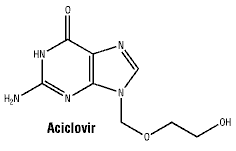
7 Medicine Schedule (Poisons Standard)
S4 - Prescription only medicine.
Date of First Approval
27 April 1999
Date of Revision
09 July 2024
Summary Table of Changes

Reasonable care is taken to provide accurate information at the time of creation. This information is not intended as a substitute for medical advice and should not be exclusively relied on to manage or diagnose a medical condition. The Australian Commission on Safety and Quality in Health Care disclaims all liability (including for negligence) for any loss, damage, injury or any other negative effects resulting from reliance on or use of this information. Read our full disclaimer. This website uses cookies. Read our privacy policy.