
Actobet 50/500
Brand Information
| Brand name | Actobet 50/500 |
| Active ingredient | Calcipotriol + Betamethasone dipropionate |
| Schedule | S4 |
Consumer Medicine Information (CMI) leaflet
Please read this leaflet carefully before you start using the Actobet 50/500.
Summary CMI
Actobet 50/500
Consumer Medicine Information (CMI) summary
The full CMI on the next page has more details. If you are worried about using this medicine, speak to your doctor or pharmacist.
1. Why am I using Actobet 50/500 gel?
Actobet 50/500 gel contains the active ingredients calcipotriol monohydrate and betamethasone dipropionate. Actobet 50/500 gel is used to treat body and scalp psoriasis.
For more information, see Section 1. Why am I using Actobet 50/500 gel? in the full CMI.
2. What should I know before I use Actobet 50/500 gel?
Do not use if you have ever had an allergic reaction to calcipotriol monohydrate and betamethasone dipropionate or any of the ingredients listed at the end of the CMI.
Talk to your doctor if you have any other medical conditions, take any other medicines, or are pregnant or plan to become pregnant or are breastfeeding.
For more information, see Section 2. What should I know before I use Actobet 50/500 gel? in the full CMI.
3. What if I am taking other medicines?
Some medicines may interfere with Actobet 50/500 gel and affect how it works.
A list of these medicines is in Section 3. What if I am taking other medicines? in the full CMI.
4. How do I use Actobet 50/500 gel?
- Actobet 50/500 gel is for topical use (on the skin). Actobet 50/500 gel is designed for direct application to your skin (on the body or scalp), where it is affected by psoriasis.
More instructions can be found in Section 4. How do I use Actobet 50/500 gel? in the full CMI.
5. What should I know while using Actobet 50/500 gel?
| Things you should do |
|
| Things you should not do |
|
| Looking after your medicine |
|
For more information, see Section 5. What should I know while using Actobet 50/500 gel? in the full CMI.
6. Are there any side effects?
Like all medicines, this medicine can cause side effects, although not everybody gets them.
The most common side effects include skin irritation, rash on your face or body. Serious potential side effects are symptoms of an allergic reaction, such as difficulty breathing, swelling of the face, lips or tongue, hives, rash or itching.
For more information, including what to do if you have any side effects, see Section 6. Are there any side effects? in the full CMI.
Full CMI
Actobet 50/500
Active ingredient(s): Calcipotriol and Betamethasone
Consumer Medicine Information (CMI)
This leaflet provides important information about using Actobet 50/500 gel. You should also speak to your doctor or pharmacist if you would like further information or if you have any concerns or questions about using Actobet 50/500 gel.
Where to find information in this leaflet:
1. Why am I using Actobet 50/500 gel?
2. What should I know before I use Actobet 50/500 gel?
3. What if I am taking other medicines?
4. How do I use Actobet 50/500 gel?
5. What should I know while using Actobet 50/500 gel?
6. Are there any side effects?
7. Product details
1. Why am I using Actobet 50/500 gel?
Actobet 50/500 gel contains the active ingredients calcipotriol monohydrate (related to vitamin D) and betamethasone dipropionate (a corticosteroid).
Actobet 50/500 gel is used as a topical treatment of body and scalp psoriasis. Psoriasis is a skin disorder in which skin cells are overactive. This causes redness, scaling and thickness of your skin.
The calcipotriol in Actobet 50/500 gel treats the overactive skin cells. The betamethasone dipropionate relieves redness, swelling, itching and irritation of the skin.
2. What should I know before I use Actobet 50/500 gel?
Warnings
Do not use Actobet 50/500 gel if:
- you are allergic to calcipotriol, betamethasone dipropionate, or any of the ingredients listed at the end of this leaflet.
Always check the ingredients to make sure you can use this medicine. - you have high blood calcium levels (ask your doctor)
- you have other types of psoriasis known as generalised pustular, guttate, erythrodermic or exfoliative psoriasis (your doctor will identify these conditions for you).
- you have liver or kidney disease.
Some of the symptoms of an allergic reaction include shortness of breath, wheezing or difficulty breathing; swelling of the face, lips, tongue or other parts of the body; rash, itching or “hives” on the skin.
Do not use Actobet 50/500 gel on skin affected by:
- viral, fungal, bacterial or parasitic skin infections
- tuberculosis (TB) or syphilis
- perioral dermatitis (red rash around the mouth)
- thin skin, easily damaged skin, stretch marks
- ichthyosis (dry skin with fish like scales)
- acne
- rosacea
- ulcers or broken skin
Do not use Actobet 50/500 gel:
- on large areas of damaged skin
- in skin folds (e.g. groin, underarm)
- on the genitalia
- inside the mouth, nose or in the eyes
- on the face (an itchy red rash may develop)
- under occlusive dressings (such as a bandage)
If any of these apply, return the medicine to your pharmacist for disposal.
If you are not sure whether you should start using Actobet 50/500 gel, talk to your doctor.
Check with your doctor if you:
- are suffering from any illness before using Actobet 50/500 gel
- take any medicines for any other condition
- have a known allergy to Actobet 50/500 gel, calcipotriol, betamethasone dipropionate or any of the ingredients listed at the end of this leaflet.
During treatment, you may be at risk of developing certain side effects. It is important you understand these risks and how to monitor for them. See additional information under Section 6. Are there any side effects?
Pregnancy and breastfeeding
Check with your doctor if you are pregnant or intend to become pregnant.
Talk to your doctor if you are breastfeeding or intend to breastfeed.
Do not use Actobet 50/500 gel in children.
Safety and effectiveness of Actobet 50/500 gel in those below 18 years of age has not been established.
3. What if I am taking other medicines?
Tell your doctor or pharmacist if you are taking any other medicines, including any medicines, vitamins or supplements that you buy without a prescription from your pharmacy, supermarket or health food shop.
Some medicines may interfere with Actobet 50/500 gel and affect how it works.
Check with your doctor or pharmacist if you are not sure about what medicines, vitamins or supplements you are taking and if these affect Actobet 50/500 gel.
4. How do I use Actobet 50/500 gel?
How much to use
- Apply enough gel to completely cover the psoriasis plaques.
- Usually an amount equal to 1 level teaspoon (4 g) is enough to cover an area the size of the scalp or 2 elbows, 2 knees and both hands.
- The area treated should not be more than 30% of the body surface area (BSA). (Note: this is approximately the area on one whole leg and one whole arm.) Discuss this with your doctor.
- Do not use more than 15 g in one day (around 3½ teaspoons). For example, no more than half (½) of a 30 g tube in one day or quarter (¼) of a 60 g tube.
- Do not use more than 100 g in one week. For example, no more than 3 tubes of 30 g in one week or no more than 1½ tubes of 60 g in one week.
- If you also use other calcipotriol containing products on your body for psoriasis, then the total amount of calcipotriol products must not exceed 15 g per day or 100 g per week and the total area treated should not exceed 30% of the total body surface.
- Follow the instructions provided and use Actobet 50/500 gel until your doctor tells you to stop.
When to use Actobet 50/500 gel
- Actobet 50/500 gel should be used once a day at the most convenient time for you. Apply at about the same time each day.
- Each treatment course would normally last for up to four weeks for scalp psoriasis and up to eight weeks for psoriasis on the body.
- Your doctor may decide to stop treatment with Actobet 50/500 gel once your psoriasis has improved, and to recommence it as needed.
How to use Actobet 50/500 gel
Apply Actobet 50/500 gel only to areas affected by psoriasis.
Actobet 50/500 gel should be applied on dry skin on the body and/or to the scalp when your hair is dry.
For Body Psoriasis:
- Shake the tube before use and remove the cap.

- Squeeze gel onto a clean finger.

- Using the finger apply enough gel to completely cover the psoriasis plaque and gently rub in. You will need to repeat steps 2 and 3 until all of the affected areas are covered.

For best results leave on during the day or night. The treated area does not need to be covered. You may wear your usual clothes however avoid contact with fabric that is easily stained by grease (e.g. silk).
For Scalp Psoriasis:
- Comb the hair first to remove any loose scales (part your hair before you apply the gel). Shake the tube before use and remove the cap.

- Squeeze gel onto a clean finger.

- Using the finger apply the gel to the areas of the scalp affected by psoriasis and gently rub in with your fingertips. You will need to repeat steps 2 and 3 until all of the affected areas are covered.

To get the best results, do not wash your hair immediately after applying the gel. Let the gel remain on the scalp for a few hours, such as overnight or during the day.
- While your hair is still dry (prior to wetting your hair), rub a mild shampoo into the areas where the gel was applied.

- Leave the shampoo on the scalp for a couple of minutes before washing.

- Wash your hair as usual.

- Take care not to get the gel in your eyes. If this happens, rinse your eyes with clean water and tell your doctor.
- If you accidentally put some of the gel onto skin not affected by psoriasis, wipe it off as soon as possible.
- Do not bandage, tightly cover or wrap the treated area
- After applying the gel avoid contact with fabric that is easily stained by grease (e.g. silk).
Wash your hands thoroughly after applying Actobet 50/500 gel on any part of your body, unless your hands are the affected area being treated. Avoid spreading the gel to other parts of the body (especially the face, mouth and eyes).
Thoroughly wash your hands prior to handling infants or children.
If any skin irritation develops, wash off the Actobet 50/500 gel.
How long to use it
Each treatment course would normally last for up to four weeks for scalp psoriasis and up to eight weeks for psoriasis on the body.
Your doctor may decide to stop treatment with Actobet 50/500 gel once your psoriasis has improved, and to recommence it as needed.
If you forget to use Actobet 50/500 gel
Actobet 50/500 gel should be used regularly at the same time each day. If you miss your dose at the usual time, use it as soon as you remember, then continue as before.
If it is almost time for your next dose, skip the dose you missed and take your next dose when you are meant to.
Do not take a double dose to make up for the dose you missed.
If you are not sure what to do, ask your doctor or pharmacist.
If you have trouble remembering to use your medicine, ask your doctor or pharmacist for some hints.
If you use too much Actobet 50/500 gel
If you use more than the recommended amount of Actobet 50/500 gel, the levels of calcium in your blood may rise. This is known as “hypercalcaemia”.
Hypercalcaemia:
- is measured by a blood test
- may be harmful
- may mean that Actobet 50/500 gel or any other product containing calcipotriol should not be used until the calcium level has become normal again.
Blood calcium levels will quickly normalise when your doctor discontinues Actobet 50/500 gel treatment.
If you think that you have used too much Actobet 50/500 gel, you may need urgent medical attention.
You should immediately:
- phone the Poisons Information Centre
(by calling 13 11 26), or - contact your doctor, or
- go to the Emergency Department at your nearest hospital.
You should do this even if there are no signs of discomfort or poisoning.
5. What should I know while using Actobet 50/500 gel?
Things you should do
While you are using Actobet 50/500 gel, protect the treated skin areas from sunlight and Ultraviolet (UV) rays, for example, by wearing protective clothing. This is particularly important if your job or lifestyle means you spend time outdoors.
Keep all appointments with your doctor so that your progress can be checked.
Your doctor may do blood tests whilst you are using Actobet 50/500 gel (or any other product containing calcipotriol). These tests check the levels of calcium in your blood and how well your kidneys are working (“renal function”).
Call your doctor straight away if you:
- If you become pregnant while using Actobet 50/500 gel
Remind any doctor, dentist or pharmacist you visit that you are using Actobet 50/500 gel.
Things you should not do
- Do not give your medicine to anyone else, even if they have the same condition as you.
- Do not use more than the recommended daily or weekly dose.
- Do not use other topical corticosteroids on areas treated with Actobet 50/500 gel.
Driving or using machines
Be careful before you drive or use any machines or tools until you know how Actobet 50/500 gel affects you.
This medicine is not expected to affect your ability to drive a car or operate machinery.
This medicine is not addictive.
Looking after your medicine
Follow the instructions in the carton on how to take care of your medicine properly. Do not refrigerate.
Store it in a cool dry place below 25°C away from moisture, heat or sunlight; for example, do not store it:
- in the bathroom or near a sink, or
- in the car or on window sills.
Keep it where young children cannot reach it.
When to discard your medicine
Ask your pharmacist what to do with any Actobet 50/500 gel that is left over if:
- your doctor tells you to stop using Actobet 50/500 gel,
or - the tube has been opened for more than 6 months or
- the expiry date has passed.
Getting rid of any unwanted medicine
If you no longer need to use this medicine or it is out of date, take it to any pharmacy for safe disposal.
Do not use this medicine after the expiry date.
6. Are there any side effects?
All medicines can have side effects. If you do experience any side effects, most of them are minor and temporary. However, some side effects may need medical attention.
See the information below and, if you need to, ask your doctor or pharmacist if you have any further questions about side effects.
Tell your doctor or pharmacist if you have any unpleasant effects while you are using Actobet 50/500 gel.
Less serious side effects
| Less serious side effects | What to do |
Skin-related:
| Speak to your doctor if you have any of these possible side effects and they worry you. |
Serious side effects
| Serious side effects | What to do |
| Symptoms of a severe allergic reaction (anaphylaxis), including difficulty breathing, swelling of the face, lips, tongue or other parts of the body, hives, rash or itching of the skin. | Call your doctor straight away, or go straight to the Emergency Department at your nearest hospital if you notice any of these serious side effects. |
Tell your doctor or pharmacist if you notice anything else that may be making you feel unwell.
Other side effects not listed here may occur in some people.
Reporting side effects
After you have received medical advice for any side effects you experience, you can report side effects to the Therapeutic Goods Administration online at www.tga.gov.au/reporting-problems. By reporting side effects, you can help provide more information on the safety of this medicine.
Always make sure you speak to your doctor or pharmacist before you decide to stop taking any of your medicines.
7. Product details
This medicine is only available with a doctor's prescription.
What Actobet 50/500 gel contains
| Active ingredients (main ingredients) | calcipotriol [as monohydrate] (50 microgram/g) betamethasone [as dipropionate] (500 microgram/g) |
| Other ingredients (inactive ingredients) | liquid paraffin polyoxypropylene-11 stearyl ether hydrogenated castor oil |
| Potential allergens | polyoxypropylene-11 stearyl ether contains butylated hydroxytoluene hydrogenated castor oil contains peanut products and tocopherols |
Do not take this medicine if you are allergic to any of these ingredients.
What Actobet 50/500 gel looks like
Actobet 50/500 gel is an almost clear, colourless to slightly off -white gel.
Actobet 50/500 gel is available as 30 g tubes and 60 g tubes (AUST R 419553).
Who distributes Actobet 50/500 gel
Actor Pharmaceuticals Pty Ltd
Level 6, 50 Berry Street
North Sydney NSW 2060
Australia
Telephone: 1800 322 690
www.actorpharma.com.au
This leaflet was prepared in July 2025.
Brand Information
| Brand name | Actobet 50/500 |
| Active ingredient | Calcipotriol + Betamethasone dipropionate |
| Schedule | S4 |
MIMS Revision Date: 01 May 2026
1 Name of Medicine
Calcipotriol monohydrate.
Betamethasone dipropionate.
2 Qualitative and Quantitative Composition
One gram of Actobet 50/500 gel contains 50 micrograms of calcipotriol (as monohydrate) and 500 micrograms of betamethasone (as dipropionate).
Excipients with known effect. Hydrogenated castor oil*, butylated hydroxytoluene (contained in polyoxypropylene-11 stearyl ether).
*Hydrogenated castor oil contains peanut products.
For the full list of excipients, see Section 6.1 List of Excipients.
3 Pharmaceutical Form
Gel.
An almost clear, colourless to slightly off-white gel.
4 Clinical Particulars
4.1 Therapeutic Indications
Topical treatment of scalp psoriasis.
Topical treatment of mild to moderate plaque psoriasis on the body in adults.
4.2 Dose and Method of Administration
Actobet 50/500 gel is for topical use only. Actobet 50/500 gel is not for ophthalmic use. Do not use if the pack shows signs of damage or tampering.
The phototoxic effects of Actobet 50/500 gel have not been studied in psoriasis patients in Australia. All psoriasis-affected areas treated with Actobet 50/500 gel should be, where possible, protected from direct sunlight and UV-light with items of clothing.
Adults. Body psoriasis. Actobet 50/500 gel should be applied once daily for up to 8 weeks.
If there is no response after 4 weeks, treatment should be ceased. Treatment of body psoriasis should be ceased after 8 weeks.
Scalp psoriasis. Actobet 50/500 gel should be applied once daily for up to 4 weeks. After this period, Actobet 50/500 gel may be used according to need under medical supervision. There is experience with intermittent courses of Actobet 50/500 gel up to 52 weeks for scalp psoriasis.
All the affected scalp areas may be treated with Actobet 50/500 gel. Usually an amount between 1 g and 4 g per day is sufficient for treatment of the scalp (4 g corresponds to one teaspoon).
When using calcipotriol containing products, the maximum daily dose should not exceed 15 g and the maximum weekly dose should not exceed 100 g.
The total body surface area treated with calcipotriol should not exceed 30%. Repeated treatment of large body surface areas may result in adverse effects.
Shake the tube before use.
In order to achieve optimal effect, it is recommended that the hair is not washed immediately after application of Actobet 50/500 gel. Actobet 50/500 gel should remain on the scalp during the night or during the day.
Children. Actobet 50/500 gel is not recommended for use in children and adolescents below the age of 18 years due to the lack of data on safety and efficacy.
4.3 Contraindications
Hypersensitivity to the active substances or to any of the excipients listed in Section 6.1 List of Excipients.
Patients with known disorders of calcium metabolism (see Section 4.4 Special Warnings and Precautions for Use).
Due to the corticosteroid content: viral lesions of the skin (e.g. herpes or varicella), fungal or bacterial skin infections, parasitic infections, skin manifestations in relation to tuberculosis or syphilis, perioral dermatitis, acne vulgaris, atrophic skin, striae atrophicae, fragility of skin veins, ichthyosis, acne rosacea, rosacea, ulceration and wounds, perianal and genital pruritus.
Guttate, erythrodermic, exfoliative and pustular psoriasis.
Patients with severe renal insufficiency or severe hepatic disorders.
4.4 Special Warnings and Precautions for Use
Effects on endocrine system. Adverse reactions found in connection with systemic corticosteroid treatment, such as adrenocortical suppression or impact on the metabolic control of diabetes mellitus, may occur also during topical corticosteroid treatment due to systemic absorption.
Application under occlusive dressings should be avoided since it increases the systemic absorption of corticosteroids. Application on large areas of damaged skin or on mucous membranes or in skin folds should be avoided since it increases the systemic absorption of corticosteroids.
In a study in patients with both extensive scalp and extensive body psoriasis using a combination of high doses of calcipotriol 50 microgram/g and betamethasone 500 microgram/g gel (scalp application) and high doses of calcipotriol 50 microgram/g and betamethasone 500 microgram/g ointment (body application), 5 of 32 patients showed a borderline decrease in cortisol response to adrenocorticotropic hormone (ACTH) challenge after 4 weeks of treatment.
Effects on calcium metabolism. Due to the content of calcipotriol, hypercalcaemia may occur if the maximum daily dose of 15 g or the maximum weekly dose of 100 g is exceeded. Serum calcium is normalised when treatment is discontinued. The risk of hypercalcaemia is minimal when the recommendations relevant to calcipotriol are followed.
Local adverse reactions. Actobet 50/500 gel contains a potent WHO group III steroid and concurrent treatment with other steroids on the scalp must be avoided.
Treatment of more than 30% of the body surface should be avoided. Repeated treatment of large body surface areas may result in adverse effects.
Skin of the face and genitals are very sensitive to corticosteroids. Calcipotriol 50 microgram/g and betamethasone 500 microgram/g gel should not be used in these areas.
Uncommon local adverse reactions (such as eye irritation or irritation of facial skin) were observed, when the drug was accidentally administered in the area of face, or accidentally to the eyes or conjunctives (see Section 4.8 Adverse Effects (Undesirable Effects)). The patient must be instructed in correct use of the product to avoid application and accidental transfer to the face, mouth and eyes. Hands must be washed after each application to avoid accidental transfer to these areas unless affected skin on the hands is being treated.
Concomitant skin infections. When lesions become secondarily infected, they should be treated with antimicrobiological therapy. However, if infection worsens, treatment with corticosteroids should be stopped.
Discontinuation of treatment. When treating psoriasis vulgaris with topical corticosteroids, there may be a risk of generalised pustular psoriasis or of rebound effects when discontinuing treatment. Medical supervision should therefore continue in the post-treatment period.
Long term use. The gel should be applied to the affected areas of the scalp once daily for up to 4 weeks and affected areas of the body once daily for up to 8 weeks. If no response is observed after 4 weeks then treatment of the body psoriasis should be ceased. Treatment of body psoriasis should be ceased after 8 weeks, as there are no long-term efficacy data available beyond 8 weeks in patients treated with calcipotriol 50 microgram/g and betamethasone 500 microgram/g gel on the body.
However, there are safety data on intermittent courses of calcipotriol 50 microgram/g and betamethasone 500 microgram/g gel used for up to 52 weeks for scalp psoriasis.
With long-term use there is an increased risk of local and systemic corticosteroid adverse reactions, including hypothalamic pituitary adrenal (HPA) axis suppression. The treatment should be discontinued in case of adverse reactions related to long-term use of corticosteroid (see Section 4.8 Adverse Effects (Undesirable Effects)).
There may be a risk of rebound when discontinuing long-term treatment with corticosteroids. Medical supervision should therefore continue in the post-treatment period.
Unevaluated use. There is no experience with the use of calcipotriol 50 microgram/g and betamethasone 500 microgram/g gel in guttate psoriasis.
Concurrent treatment and UV exposure. The stability of calcipotriol in sunlight and UV light has not been demonstrated. No clinical trials have been conducted with calcipotriol-containing products in Australia, where there is a particularly high potential to be exposed to high levels of UV radiation. In addition, the phototoxic effects of calcipotriol 50 microgram/g and betamethasone 500 microgram/g gel have not been studied in psoriasis patients.
Treated skin areas should be protected from sunlight and UV light (using physical covering and/or sunscreens), particularly where exposure may be considerable for reasons such as occupation. Topical calcipotriol should be used with UVR only if the physician and patient consider that the potential benefits outweigh the potential risks.
Adverse reactions to excipients. Actobet 50/500 gel contains butylated hydroxyltoluene (as part of the excipient polyoxypropylene-11 stearyl), which may cause local skin reactions (e.g. contact dermatitis), or irritation to the eyes and mucous membranes.
Use in hepatic impairment. Safety has not been established in patients with hepatic impairment. Actobet 50/500 gel is contraindicated in patients with severe hepatic impairment.
Use in renal impairment. Safety has not been established in patients with renal impairment. Actobet 50/500 gel is contraindicated in patients with severe renal impairment.
Use in the elderly. Clinical experience has not identified any differences in response in elderly patients (65 years and older). However, greater sensitivity of some elderly individuals cannot be ruled out.
Paediatric use. Calcipotriol 50 microgram/g and betamethasone 500 microgram/g gel is not recommended for use in children and adolescents below 18 years of age as the safety and effectiveness of calcipotriol 50 microgram/g and betamethasone 500 microgram/g gel in this population has not been established.
Because of a higher ratio of skin surface area to body mass, children under the age of 12 years may be at particular risk of systemic adverse effects when they are treated with topical corticosteroids.
Effects on laboratory tests. See Section 5.1 Pharmacodynamic Properties for information on effect on cortisol serum levels.
4.5 Interactions with Other Medicines and Other Forms of Interactions
No interaction studies have been performed with calcipotriol 50 microgram/g and betamethasone 500 microgram/g gel.
There is no experience with concurrent use of other anti-psoriatic products administered systemically or with phototherapy.
4.6 Fertility, Pregnancy and Lactation
Effects on fertility. Possible effects of betamethasone in combination with calcipotriol on fertility have not been investigated in animals. Studies of the oral administration of calcipotriol in rats have shown no impairment of male and female fertility.
Use in pregnancy. (Category B3)
There are no adequate data from the use of calcipotriol 50 microgram/g and betamethasone 500 microgram/g gel in pregnant women. Actobet 50/500 gel should only be used during pregnancy when the potential benefit clearly outweighs the potential risk.
Studies of corticosteroids in animals have shown reproductive toxicity (cleft palate, skeletal malformations). When pregnant rats were treated orally daily with betamethasone dipropionate from early gestation and throughout lactation period, prolonged gestation (at ≥ 0.3 mg/kg/day), reduced offspring survival (at ≥ 0.1 mg/kg/day) and lower offspring weights (at 1 mg/kg/day) were observed. Studies of calcipotriol in animals have shown an increase in the incidence of skeletal variations in rats (wavy ribs, extra ribs, incomplete development of skull bones) at oral doses of 36 microgram/kg/day. The relevance of these findings for humans is unknown.
Use in lactation. Betamethasone is excreted into breast milk. It is unknown if topical application of calcipotriol 50 microgram/g and betamethasone 500 microgram/g gel could result in sufficient systemic absorption to produce significant quantities of this corticosteroid in human breast milk. There are no data on the excretion of calcipotriol in breast milk.
Caution should be exercised when prescribing Actobet 50/500 gel to breastfeeding women. Application of Actobet 50/500 gel to the breast area should be avoided. Actobet 50/500 gel should only be used during lactation if the potential benefits clearly outweigh the potential risks.
Note. After applying Actobet 50/500 gel, mothers should wash their hands thoroughly prior to handling their child.
4.7 Effects on Ability to Drive and Use Machines
Actobet 50/500 gel has no or negligible influence on ability to drive and use machines.
4.8 Adverse Effects (Undesirable Effects)
Clinical trials. Definition of frequency of adverse events: very common ≥ 1/10; common ≥ 1/100 and < 1/10; uncommon ≥ 1/1,000 and < 1/100; rare ≥ 1/10,000 and < 1/1,000; very rare < 1/10,000.
The clinical trial programme for calcipotriol 50 microgram/g and betamethasone 500 microgram/g gel has so far included more than 6,000 patients of whom more than 3,000 were treated with calcipotriol 50 microgram/g and betamethasone 500 microgram/g gel.
Scalp psoriasis. Approximately 8% of patients treated with calcipotriol 50 microgram/g and betamethasone 500 microgram/g gel on the scalp experienced a non-serious adverse drug reaction (possibly related to study medication).
Based on the above frequency definition, data from clinical trials show that the only common adverse drug reaction is pruritus. The uncommon adverse events are burning sensation of the skin, skin pain or irritation, folliculitis, dermatitis, erythema, acne, dry skin, exacerbation of psoriasis, rash, pustular rash and eye irritation. These adverse events were all non-serious local reactions.
Body psoriasis. Adverse drug reactions that occurred in more than 1% of patients treated with calcipotriol 50 microgram/g and betamethasone 500 microgram/g gel on the body areas are listed in Table 1.

Post marketing experience. The estimation of the frequency of adverse reactions is based on clinical trials and post market use. The most frequently reported adverse reaction during treatment is pruritus.
Adverse reactions are listed by MedDRA SOC and the individual adverse reactions are listed starting with the most frequently reported. Within each frequency grouping, adverse reactions are presented in the order of decreasing seriousness (Table 2).
Very common ≥ 1/10; common ≥ 1/100 and < 1/10; uncommon ≥ 1/1,000 and < 1/100; rare ≥ 1/10,000 and < 1/1,000; very rare < 1/10,000.

Calcipotriol. Adverse reactions include application site reactions, pruritus, skin irritation, burning and stinging sensation, dry skin, erythema, rash, dermatitis, eczema, psoriasis aggravated, photosensitivity, transient changes in skin pigmentation and hypersensitivity reactions including very rare cases of angioedema and facial oedema.
Systemic effects after topical use may appear very rarely, causing hypercalcaemia or hypercalciuria (see Section 4.4 Special Warnings and Precautions for Use).
Betamethasone (as dipropionate). This product contains a potent corticosteroid.
Local reactions can occur after topical corticosteroid use, especially during prolonged application, including skin atrophy, telangiectasia, striae, folliculitis, hypertrichosis, perioral dermatitis, allergic contact dermatitis, depigmentation and colloid milia.
When treating psoriasis with topical corticosteroids, there may be the risk of generalised pustular psoriasis. There may be a risk of rebound when discontinuing long term treatment with corticosteroids.
Systemic reactions due to topical use of corticosteroids are rare in adults, however, they can be severe. HPA suppression, hypercalcaemia, cataract, infections, impact on metabolic control of diabetes mellitus and increase in intra-ocular pressure can occur, especially after long term treatment. Systemic reactions occur more frequently when applied under occlusion (e.g. plastic, skin folds), when applied on large areas or during long treatment (see Section 4.4 Special Warnings and Precautions for Use).
Reporting suspected adverse effects. Reporting suspected adverse reactions after registration of the medicinal product is important. It allows continued monitoring of the benefit-risk balance of the medicinal product. Healthcare professionals are asked to report any suspected adverse reactions at www.tga.gov.au/reporting-problems.
4.9 Overdose
Use at more than the recommended dose may cause elevated serum calcium, which subsides when treatment is discontinued. The symptoms of hypercalcaemia include polyuria, constipation, muscle weakness, confusion and coma.
Excessive prolonged use of topical corticosteroids may suppress the hypothalamic pituitary adrenal axis (HPA) resulting in secondary adrenal insufficiency, which is usually reversible. In such cases symptomatic treatment is indicated.
In case of chronic toxicity the topical corticosteroid treatment must be withdrawn gradually.
In a reported case of misuse, one patient with extensive erythrodermic psoriasis was treated for 5 months with 240 g weekly of calcipotriol 50 microgram/g and betamethasone 500 microgram/g ointment and received a corresponding daily dose of approximately 34 g, which is above the recommended maximum of 15 g daily or 100 g weekly. The patient developed Cushing's syndrome during treatment and then pustular psoriasis after abruptly stopping treatment.
For information on the management of overdose, contact the Poisons Information Centre on 13 11 26 (Australia).
5 Pharmacological Properties
5.1 Pharmacodynamic Properties
Pharmacotherapeutic group: Antipsoriatics. Other antipsoriatics for topical use, calcipotriol, combinations. ATC code: DO5AX52.
Mechanism of action. Actobet 50/500 gel combines the pharmacological effects of calcipotriol monohydrate as a synthetic vitamin D3 analogue and betamethasone dipropionate as a synthetic corticosteroid.
Calcipotriol is a non-steroidal antipsoriatic agent, derived from vitamin D. Calcipotriol exhibits a vitamin D-like effect by competing for the 1,25(OH)2D3 receptor. Calcipotriol is as potent as 1,25(OH)2D3, the naturally occurring active form of vitamin D, in regulating cell proliferation and cell differentiation, but much less active than 1,25(OH)2D3 in its effect on calcium metabolism. Calcipotriol induces differentiation and suppresses proliferation (without any evidence of a cytotoxic effect) of keratinocytes, thus reversing the abnormal keratinocyte changes in psoriasis. The therapeutic goal envisaged with calcipotriol is thus a normalisation of epidermal growth.
Betamethasone dipropionate is a potent topically-active corticosteroid producing prompt, marked and prolonged anti-inflammatory, antipruritic, vasoconstrictive and immunosuppressive properties, without curing the underlying condition. These effects can be enhanced under occlusive conditions due to increased penetration of stratum corneum (by approximately a factor of 10). The mechanism of the anti-inflammatory activity of the topical steroids, in general, is unclear.
Clinical trials. Efficacy. The efficacy of once daily use of calcipotriol 50 microgram/g and betamethasone 500 microgram/g gel was investigated in two randomised, double-blind, 8-week clinical studies including a total of more than 2,900 patients with scalp psoriasis of at least mild severity according to the Investigator's Global Assessment of disease severity (IGA). Comparators were betamethasone dipropionate in the gel vehicle, calcipotriol in the gel vehicle and (in one of the studies) the gel vehicle alone, all used once daily. Results for the primary response criterion (absent or very mild disease according to the IGA at week 8) showed that calcipotriol 50 microgram/g and betamethasone 500 microgram/g gel was statistically significantly more effective than the comparators. Results for speed of onset based on similar data at week 2 also showed calcipotriol 50 microgram/g and betamethasone 500 microgram/g gel to be statistically significantly more effective than the comparators. See Table 3.


Efficacy was assessed as the proportion of subjects at week 4 and week 8 who were "clear" or "almost clear" and improved at least two steps according to an Investigator's Global Assessment of Diseases Severity. Table 5 contains the response rates in this trial.

Adverse events possibly related to long-term use of corticosteroids on the scalp, were identified by an independent, blinded panel of dermatologists. There was no difference in the percentages of patients experiencing such adverse events between the treatment groups (2.6% in the calcipotriol 50 microgram/g and betamethasone 500 microgram/g gel group and 3.0% in the calcipotriol group; P=0.73). No cases of skin atrophy were reported.
Adrenal response to ACTH was determined by measuring serum cortisol levels in patients with both extensive scalp and body psoriasis, using up to 106 g per week combined calcipotriol 50 microgram/g and betamethasone 500 microgram/g gel and ointment. A borderline decrease in cortisol response at 30 minutes post ACTH challenge was seen in 5 of 32 patients (15.6%) after 4 weeks of treatment and in 2 of 11 patients (18.2%) who continued treatment until 8 weeks. In all cases, the serum cortisol levels were normal at 60 minutes post ACTH challenge. There was no evidence of change of calcium metabolism observed in these patients.
In another study, 43 subjects were treated with calcipotriol 50 microgram/g and betamethasone 500 microgram/g gel on body areas and any affected areas on the scalp. Adrenal suppression was identified in 3 of 43 subjects (7%) after 4 weeks of treatment and in 0 of 36 subjects who provided data after 8 weeks treatment. The results from this limited number of subjects demonstrated that calcipotriol 50 microgram/g and betamethasone 500 microgram/g gel may have effects on the HPA axis but the incidence was low and did not increase over time even in a maximum use setting. See Section 4.9 Overdose for additional information.
The effects on calcium metabolism were also studied in these patients. The results demonstrated that there were no changes of clinical concern regarding the effect on calcium metabolism.
5.2 Pharmacokinetic Properties
Absorption. The systemic exposure to calcipotriol and betamethasone dipropionate from topically applied calcipotriol 50 microgram/g and betamethasone 500 microgram/g gel is 13 - 45% less than calcipotriol 50 microgram/g and betamethasone 500 microgram/g ointment in rats and minipigs. Clinical studies with radio-labelled ointment indicate that the systemic absorption of calcipotriol and betamethasone from calcipotriol 50 microgram/g and betamethasone 500 microgram/g ointment formulation is less than 1% of the dose (2.5 g) when applied to normal skin (625 cm2) for 12 hours.
Application to psoriasis plaques and under occlusive dressings may increase the absorption of topical corticosteroids.
Calcipotriol and betamethasone dipropionate were below the lower limit of quantification in all blood samples of 34 patients treated for 4 or 8 weeks with both calcipotriol 50 microgram/g and betamethasone 500 microgram/g gel and ointment for extensive psoriasis involving the body and scalp. One metabolite of calcipotriol and one metabolite of betamethasone dipropionate were quantifiable in some of the patients.
Metabolism. Following systemic exposure, both active ingredients - calcipotriol and betamethasone dipropionate - are rapidly and extensively metabolised.
Excretion. The main route of excretion of calcipotriol and betamethasone dipropionate is via faeces (rats, mice and minipigs).
5.3 Preclinical Safety Data
Genotoxicity. Calcipotriol was not genotoxic in assays for gene mutations (Ames test and mouse lymphoma TK locus assay) or chromosomal damage (human lymphocyte chromosomal aberration or mouse micronucleus test).
Betamethasone dipropionate was not genotoxic in the Ames mutagenicity assay, the mouse lymphoma TK locus assay or in the rat micronucleus test.
Carcinogenicity. A dermal carcinogenicity study with calcipotriol in mice showed no indications of increased carcinogenic risks. Calcipotriol solution was applied topically for up to 24 months at doses of 3, 10 and 30 microgram/kg/day (corresponding to 9, 30 and 90 microgram/m2/day). The high-dose was considered to be the Maximum Tolerated Dose for dermal treatment of mice with calcipotriol. Survival was decreased at 10 and 30 microgram/kg/day, particularly in the males. The reduced survival was associated with an increased incidence of renal lesions. This is an expected effect of treatment with high doses of calcipotriol or other vitamin D analogues. There were no dermal effects and no dermal or systemic carcinogenicity.
In a study where albino hairless mice were repeatedly exposed to both ultraviolet (UV) radiation and topically applied calcipotriol for 40 weeks at the same dose levels as in the dermal calcipotriol carcinogenicity study, a reduction in the time required for UV radiation to induce the formation of skin tumours was observed (statistically significant in males only), suggesting that calcipotriol may enhance the effect of UV radiation to induce skin tumours. In a supplementary study, mice of the same strain were treated repeatedly with either calcipotriol solution or calcipotriol/betamethasone gel, followed by irradiation with UVR and measurement of recognised cellular indicators of skin photocarcinogenicity. This study showed a similar enhancing effect of calcipotriol alone on the photobiological response of the skin calcipotriol/betamethasone gel increased cellular proliferation but did not increase other markers indicative of enhancement of photocarcinogenesis. The clinical relevance of these findings is unknown.
No carcinogenicity or photocarcinogenicity studies have been performed with betamethasone dipropionate.
6 Pharmaceutical Particulars
6.1 List of Excipients
Liquid paraffin, polyoxypropylene-11 stearyl ether, tocopherol, butylated hydroxytoluene, hydrogenated castor oil*.
*Hydrogenated castor oil contains peanut products.
6.2 Incompatibilities
Incompatibilities were either not assessed or not identified as part of the registration of this medicine.
6.3 Shelf Life
In Australia, information on the shelf life can be found on the public summary of the Australian Register of Therapeutic Goods (ARTG). The expiry date can be found on the packaging.
Use within 6 months of opening.
Do not use beyond the expiry date on the package.
6.4 Special Precautions for Storage
Store below 25°C. Do not refrigerate.
6.5 Nature and Contents of Container
The Actobet 50/500 tube container is made from high density polyethylene.
Each carton of Actobet 50/500 contains one tube of 30 g or 60 g.
6.6 Special Precautions for Disposal
In Australia, any unused medicine or waste material should be disposed of by taking to your local pharmacy.
6.7 Physicochemical Properties
Chemical structure. Calcipotriol monohydrate.
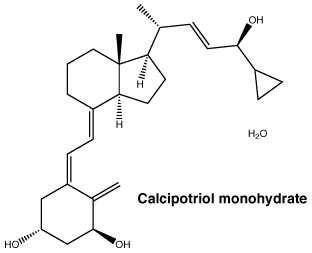
Calcipotriol is a white or almost white crystalline substance. It is freely soluble in ethanol, soluble in chloroform and propylene glycol, particularly insoluble in liquid paraffin. Solubility in water is 0.6 microgram/mL and the melting point is 166 to 168°C. Calcipotriol is a vitamin D derivative and behaves in a similar manner to vitamin D, forming a reversible temperature-dependent equilibrium between calcipotriol and pre-calcipotriol.
Betamethasone dipropionate.
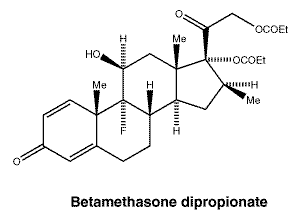
Betamethasone dipropionate is a white or almost white, crystalline powder, practically insoluble in water, freely soluble in acetone and in methylene chloride, sparingly soluble in alcohol.
CAS numbers. Calcipotriol monohydrate: 112828-00-9.
Betamethasone dipropionate: 5593-20-4.
7 Medicine Schedule (Poisons Standard)
Schedule 4 - Prescription only medicine.
Date of First Approval
01 July 2025
Reasonable care is taken to provide accurate information at the time of creation. This information is not intended as a substitute for medical advice and should not be exclusively relied on to manage or diagnose a medical condition. The Australian Commission on Safety and Quality in Health Care disclaims all liability (including for negligence) for any loss, damage, injury or any other negative effects resulting from reliance on or use of this information. Read our full disclaimer. This website uses cookies. Read our privacy policy.