
Advil Children 2-12 Years Pain & Fever Relief Suspension
Brand Information
| Brand name | Advil Children 2-12 Years Pain & Fever Relief Suspension |
| Active ingredient | Ibuprofen |
| Schedule | S2 |
No current CMI was found.
Brand Information
| Brand name | Advil Children 2-12 Years Pain & Fever Relief Suspension |
| Active ingredient | Ibuprofen |
| Schedule | S2 |
MIMS Revision Date: 01 November 2020
Name of the medicine
Ibuprofen.
Excipients. Glycerol, xanthan gum, sodium benzoate, disodium edetate, anhydrous citric acid, polysorbate 80, strawberry cream flavour 11407-33, banana flavour 10995-36, maltitol solution, sodium saccharin, acesulfame potassium and purified water.
Description
Advil Childrens Pain & Fever Relief is a white to off white oral liquid suspension with banana odour.
See Presentation for a complete description of the dosage form.
Pharmacology
Pharmacokinetics. Ibuprofen is well absorbed from the gastrointestinal tract. It is highly bound (90-99%) to plasma proteins and is extensively metabolised to inactive compounds in the liver, mainly by glucuronidation. Both the inactive metabolites and a small amount of unchanged ibuprofen are excreted rapidly and completely by the kidney, with 95% of the administered dose eliminated in the urine within four hours of ingestion. The elimination half-life of ibuprofen is in the range of 1.9 to 2.2 hours.
Pharmacodynamics/ mechanism of action. Ibuprofen possesses analgesic, antipyretic and anti-inflammatory properties, similar to other nonsteroidal anti-inflammatory drugs (NSAIDs). Its mechanism of action is unknown, but is thought to be through peripheral inhibition of cyclooxygenases and subsequent prostaglandin synthetase inhibition.
Indications
Advil Childrens Pain & Fever Relief oral liquid suspension is indicated for the temporary relief of pain and discomfort associated with common colds and flu, sore throat, earache, headache, toothache, body aches and pains in children 3 months to 12 years. Reduces fever.
Contraindications
Ibuprofen is contraindicated for use in patients with known hypersensitivity or idiosyncratic reaction to ibuprofen (or any of the other ingredients in the product); with known hypersensitivity to aspirin and other NSAIDs; with asthma that is aspirin or NSAID sensitive; with concurrent or previous history of gastrointestinal bleeding or ulceration; during the third trimester of pregnancy (see Precautions, Use in pregnancy); with renal impairment; with heart failure; with severe liver impairment; undergoing treatment of perioperative pain in setting of coronary artery bypass surgery (CABG).
Ibuprofen should not be taken with other products containing ibuprofen or with other anti-inflammatory medicines.
See Interactions with Other Medicines for additional information.
Precautions
Ibuprofen should be used with caution in patients with asthma, urticaria or rhinitis, stomach pain, indigestion, hypertension, hepatic, or cardiac impairment; pregnancy (see Use in pregnancy); taking other products containing aspirin and salicylates; who are suffering from dehydration due to vomiting or diarrhoea.
May cause severe allergic reaction including skin reddening, rash, or blisters (patient should stop use and contact a doctor).
May cause to vomit blood or bloody or black stools (patient should stop use and contact a doctor).
Side effects may be minimized by using this medicine for the shortest duration necessary to control symptoms.
Excessive or prolonged use can be harmful and increase the risk of heart attack, stroke or liver damage.
Use with caution in the elderly (see Use in elderly).
See Interactions with Other Medicines for additional information.
Cardiovascular and cerebrovascular effects. Observational studies have indicated that NSAIDs may be associated with an increased risk of serious cardiovascular events, including myocardial infarction and stroke, which may increase with dose or duration of use.
Patients with cardiovascular disease, history of atherosclerotic cardiovascular disease or cardiovascular risk factors may also be at greater risk.
Patients should be advised to remain alert for such cardiovascular events, even in the absence of previous cardiovascular symptoms. Patients should be informed about signs and/or symptoms of serious cardiovascular toxicity and the steps to take if they occur.
Fluid retention, hypertension and oedema have been reported in association with NSAID therapy. Patients taking antihypertensives with NSAIDs may have an impaired antihypertensive response.
Advil Childrens Pain & Fever Relief oral liquid suspension should be used with caution in patients with hypertension (see also Contraindications, Heart failure).
Hepatic. As with other NSAIDs, elevations of one or more liver function tests may occur in up to 15% of patients. These abnormalities may progress, may remain essentially unchanged or may resolve with continued therapy. Meaningful elevations (three times the upper limit of normal) of ALT or AST occurred in controlled clinical trials in less than 1% of patients.
Patients should be advised to remain alert for hepatotoxicity and be informed about the signs and/or symptoms of hepatotoxicity (e.g. nausea, fatigue, lethargy, pruritus, jaundice, abdominal tenderness in the right upper quadrant and flu-like symptoms).
Use in pregnancy. (Category C)
Ibuprofen inhibits prostaglandin synthesis and, when given during the latter part of pregnancy, may cause closure of the foetal ductus arteriosus, foetal renal impairment, inhibition of platelet aggregation and may delay labour and birth. Use of ibuprofen is thus contraindicated during the third trimester of pregnancy, including the last few days before expected birth.
Further, there is insufficient experience about the safety of use of ibuprofen in humans during pregnancy. Advil Childrens Pain & Fever Relief oral liquid suspension should therefore not be used during the first 6 months of pregnancy unless the potential benefits to the patient outweigh the possible risk to the foetus.
Use in lactation. Ibuprofen appears in breast milk in very low concentrations and is unlikely to affect the breastfed infant adversely.
Use in elderly. Ibuprofen should not be taken by adults over the age of 65 without careful consideration of comorbidities and comedications because of an increased risk of adverse effects, in particular heart failure, gastrointestinal ulceration and renal impairment (see also Contraindications, Renal impairment, Heart failure).
Interactions
The following interactions with ibuprofen have been noted.
Other NSAIDs.
Anticoagulants, including warfarin. Ibuprofen interferes with the stability of INR and may increase risk of severe bleeding and sometimes fatal haemorrhage, especially from the gastrointestinal tract. Ibuprofen should only be used in patients taking warfarin if absolutely necessary and with doctor's approval and close monitoring.
Ibuprofen may decrease renal clearance and increase plasma concentration of lithium.
Ibuprofen may reduce the antihypertensive effect of ACE inhibitors, beta-blockers and diuretics.
Ibuprofen reduces methotrexate clearance.
Ibuprofen may increase the plasma levels of cardiac glycosides.
Ibuprofen may increase the risk of gastrointestinal bleeding especially if taken with corticosteroids.
Ibuprofen may prolong bleeding time in patients treated with zidovudine.
Ibuprofen may also interact with probenecid, antidiabetic medicines and phenytoin.
Ibuprofen may decrease the benefit of aspirin taken for heart attack or stroke.
Ibuprofen may increase the risk of gastrointestinal bleeding if combined with selective serotonin reuptake inhibitors (SSRIs).
Adverse effects
The following side effects may be associated with the use of ibuprofen and are listed under their corresponding body system organ class.
Blood and lymphatic system disorders. Agranulocytosis, anemia, aplastic anemia, haemolytic anemia, leukopenia, thrombocytopenia.
Investigations. Hematocrit decreased and haemoglobin decreased.
Eye disorders. Visual disturbance.
Gastrointestinal disorders. Dyspepsia, heartburn, nausea, loss of appetite, abdominal pain, abdominal pain upper, vomiting, hematemesis, abdominal distension, diarrhoea, Crohn's disease, colitis, constipation, flatulence, gastritis, gastrointestinal hemorrhage, perforation, or ulcer, melena, mouth ulceration.
Nervous system disorders. Dizziness, fatigue, headache, cerebrovascular accident.
Psychiatric disorders. Nervousness.
Immune system disorders. Hypersensitivity, anaphylactic reaction.
Cardiac disorders. Cardiac failure, myocardial infarction, angina pectoris. Fluid retention and in some cases oedema, these effects are rare at nonprescription doses.
Vascular disorders. Hypertension.
Ear and labyrinth disorders. Tinnitus and vertigo.
Hepatobiliary disorders. Liver disorder, hepatic function abnormal, hepatitis and jaundice.
Infections and infestations. Meningitis aseptic, meningitis.
Renal and urinary disorders. Hematuria, interstitial nephritis, renal failure, nephrotic syndrome, proteinuria, renal papillary necrosis.
Respiratory, thoracic and mediastinal disorders. Asthma, bronchospasm, dyspnea, wheezing.
Skin and subcutaneous skin disorders. Angioneurotic edema, dermatitis bullous, erythema multiforme, face edema, rash, rash maculopapular, pruritus, purpura, Stevens-Johnson syndrome and urticaria. Rarely exfoliative dermatitis and toxic epidermal necrolysis have been reported with ibuprofen. Allergic reactions such as skin rash, itching, swelling of the face or breathing difficulties are usually transient and reversible on cessation of treatment.
Rare cases of photosensitivity.
General disorders and administration site conditions. Edema, swelling, peripheral edema.
Dosage and Administration
Shake well before use. Use the dosing device provided to measure the dose accurately. To minimize undesirable effects, use for the shortest duration necessary to control symptoms.
The suggested dosage regime is based on 5-10 mg/kg/dose. (See Table 1.)
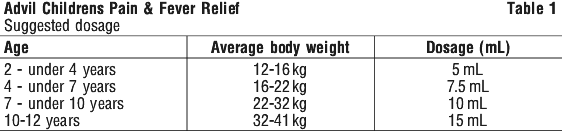
This product should not be given at all to infants under 3 months of age and/or weighing less than 6 kg. For infants aged 3 months to 2 years give only on medical advice.
Advil Childrens Pain & Fever Relief oral liquid suspension should not be used for more than a few days at a time unless on medical advice, in which case the patient should be reviewed regularly with regards to efficacy, risk factors and ongoing need for treatment.
Overdosage
Symptoms which may be associated with ibuprofen overdose.
Ear and labyrinth disorders. Vertigo.
Gastrointestinal disorders. Nausea, abdominal pain and vomiting.
Hepatobiliary disorders. Hepatic function abnormal.
Metabolism and nutrition disorders. Hyperkalemia and metabolic acidosis.
Nervous system disorders. Dizziness, somnolence, headache, loss of consciousness and convulsion.
Renal and urinary disorders. Renal failure.
Respiratory, thoracic and mediastinal disorders. Dyspnea and respiratory depression.
Vascular disorders. Hypotension.
In case of overdose, immediately contact the Poisons Information Centre (in Australia, call 131 126) for advice.
Presentation
Oral suspension (white to off white, banana odour), 100 mg/5 mL, 25 mL (professional sample), 45 mL (professional sample), 100 mL, 200 mL: 1's.
Storage
Store below 25°C. Protect from light.
Poison schedule
S2.
Date of Revision
16 February 2016
Reasonable care is taken to provide accurate information at the time of creation. This information is not intended as a substitute for medical advice and should not be exclusively relied on to manage or diagnose a medical condition. The Australian Commission on Safety and Quality in Health Care disclaims all liability (including for negligence) for any loss, damage, injury or any other negative effects resulting from reliance on or use of this information. Read our full disclaimer. This website uses cookies. Read our privacy policy.