
Alphapress
Brand Information
| Brand name | Alphapress |
| Active ingredient | Hydralazine hydrochloride |
| Schedule | S4 |
Consumer Medicine Information (CMI) leaflet
Please read this leaflet carefully before you start using the Alphapress.
Summary CMI
ALPHAPRESS™
Consumer Medicine Information (CMI) summary
The full CMI on the next page has more details. If you are worried about taking this medicine, speak to your doctor or pharmacist.
1. Why am I taking ALPHAPRESS?
ALPHAPRESS contains the active ingredient hydralazine hydrochloride. ALPHAPRESS is used to lower high blood pressure, also known as hypertension.
For more information, see Section 1. Why am I taking ALPHAPRESS? in the full CMI.
2. What should I know before I take ALPHAPRESS?
Do not take if you have ever had an allergic reaction to ALPHAPRESS or any of the ingredients listed at the end of the CMI.
Talk to your doctor if you have any other medical conditions, take any other medicines, or are pregnant or plan to become pregnant or are breastfeeding.
For more information, see Section 2. What should I know before I take ALPHAPRESS? in the full CMI.
3. What if I am taking other medicines?
Some medicines may interfere with ALPHAPRESS and affect how it works.
A list of these medicines is in Section 3. What if I am taking other medicines? in the full CMI.
4. How do I take ALPHAPRESS?
- The usual starting dose is 25 mg twice a day. Your doctor may increase your dose depending on how you respond to this medicine.
- Swallow the tablets with a glass of water.
More instructions can be found in Section 4. How do I take ALPHAPRESS? in the full CMI.
5. What should I know while taking ALPHAPRESS?
| Things you should do |
|
| Things you should not do |
|
| Driving or using machines |
|
| Drinking alcohol |
|
| Looking after your medicine |
|
For more information, see Section 5. What should I know while taking ALPHAPRESS? in the full CMI.
6. Are there any side effects?
Less serious side effects include: dizziness, headache, flushing, nausea, vomiting, diarrhoea, blocked nose, irregular heartbeat. Serious side effects include: chest pain, allergy symptoms, skin rash, itching or hives, muscle aches, painful swollen joints, joint pain, fever and shortness of breath, swelling of the feet or legs due to fluid build-up or passing little urine or no urine.
For more information, including what to do if you have any side effects, see Section 6. Are there any side effects? in the full CMI.
Full CMI
ALPHAPRESS™
Active ingredient(s): hydralazine hydrochloride
Consumer Medicine Information (CMI)
This leaflet provides important information about taking ALPHAPRESS. You should also speak to your doctor or pharmacist if you would like further information or if you have any concerns or questions about taking ALPHAPRESS.
Where to find information in this leaflet:
1. Why am I taking ALPHAPRESS?
2. What should I know before I take ALPHAPRESS?
3. What if I am taking other medicines?
4. How do I take ALPHAPRESS?
5. What should I know while taking ALPHAPRESS?
6. Are there any side effects?
7. Product details
1. Why am I taking ALPHAPRESS?
ALPHAPRESS contains the active ingredient hydralazine hydrochloride.
ALPHAPRESS is used to lower high blood pressure, also known as hypertension. It is normally used together with other medicines for high blood pressure.
This medicine works by widening the blood vessels so that blood passes through them more easily. This helps to lower blood pressure.
Ask your doctor if you have any questions about why this medicine has been prescribed for you.
Your doctor may have prescribed it for another reason.
There is no evidence that ALPHAPRESS is addictive.
2. What should I know before I take ALPHAPRESS?
Warnings
Do not take ALPHAPRESS if:
- you are allergic to any medicine containing hydralazine hydrochloride or any of the ingredients listed at the end of this leaflet. Some of the symptoms of an allergic reaction may include:
- shortness of breath
- wheezing or difficulty breathing
- swelling of the face, lips, tongue or other parts of the body
- rash, itching or hives on the skin
Always check the ingredients to make sure you can take this medicine. - you have:
- systemic lupus erythematosus (SLE)
- certain heart conditions such as heart failure, narrowing of the valves in the heart or swelling around the heart
- a very fast, irregular or pounding heartbeat
- a condition called dissecting aortic aneurysm where there is swelling and weakening of a large blood vessel
- thyrotoxicosis (an overactive thyroid gland) - the expiry date printed on the pack has passed or if the packaging is torn or shows signs of tampering.
If it has expired or is damaged, return it to your pharmacist for disposal.
If you are not sure whether you should start taking this medicine, talk to your doctor.
Check with your doctor if you:
- take any medicines for any other condition
- have allergies to any other medicines, foods, preservatives or dyes
- have or have had any of the following medical conditions:
- heart failure, coronary heart disease such as angina or a recent heart attack, or any other heart problem
- stroke or any other problems with poor blood flow to the brain
- kidney problems
- liver problems
Your doctor may want to take special care if you have any of these conditions. - plan to have surgery.
If you have not told your doctor about any of the above, tell them before you start taking ALPHAPRESS.
During treatment, you may be at risk of developing certain side effects. It is important you understand these risks and how to monitor for them. See additional information under Section 6. Are there any side effects?
Pregnancy and breastfeeding
Tell your doctor if you are pregnant or plan to become pregnant.
ALPHAPRESS may affect your developing baby if you take it during pregnancy.
Your doctor can discuss with you the risks and benefits involved.
Tell your doctor if you are breastfeeding or wish to breastfeed.
The active ingredient in ALPHAPRESS passes into breast milk and there is a possibility that your baby may be affected.
Use in children
Do not give this medicine to children.
Safety and effectiveness in children have not been established.
3. What if I am taking other medicines?
Tell your doctor or pharmacist if you are taking any other medicines, including any medicines, vitamins or supplements that you buy without a prescription from your pharmacy, supermarket or health food shop.
Some medicines may interfere with ALPHAPRESS and affect how it works. These include:
- medicines used to treat high blood pressure or heart conditions such as beta-blockers (e.g. propranolol, metoprolol); ACE inhibitors and calcium channel blockers
- diuretics, also called fluid or water tablets
- monoamine oxidase inhibitors and tricyclic antidepressants, which are medicines used to treat depression
- medicines used to treat certain mental and emotional conditions such as schizophrenia
- adrenaline, a medicine used in emergency situations or to treat a severe allergic reaction
These medicines may be affected by ALPHAPRESS or may affect how well it works. You may need different amounts of your medicines, or you may need to take different medicines.
Your doctor and pharmacist have more information on medicines to be careful with or avoid while taking this medicine.
Check with your doctor or pharmacist if you are not sure about what medicines, vitamins or supplements you are taking and if these affect ALPHAPRESS.
4. How do I take ALPHAPRESS?
Follow all directions given to you by your doctor or pharmacist carefully.
They may differ from the information contained in this leaflet.
If you do not understand the instructions on the bottle, ask your doctor or pharmacist for help.
How much to take
- The usual starting dose is 25 mg twice a day.
- Your doctor may increase your dose depending on how you respond to this medicine.
When to take ALPHAPRESS
- Take your medicine at about the same time each day.
Taking it at the same time each day will have the best effect. It will also help you remember when to take it.
How to take ALPHAPRESS
- Swallow the tablets with a glass of water.
How long to take ALPHAPRESS for
- Continue taking your medicine for as long as your doctor tells you.
This medicine helps to control your condition, but does not cure it. It is important to keep taking your medicine even if you feel well.
If you forget to take ALPHAPRESS
If it is almost time for your next dose, skip the dose you missed and take your next dose when you are meant to.
Otherwise, take it as soon as you remember, and then go back to taking your medicine as you would normally.
Do not take a double dose to make up for the dose you missed.
This may increase the chance of you getting an unwanted side effect.
If you are not sure what to do, ask your doctor or pharmacist.
If you have trouble remembering to take your medicine, ask your pharmacist for some hints.
If you take too much ALPHAPRESS
If you think that you or anyone else may have taken too much ALPHAPRESS, urgent medical attention may be needed.
You should immediately:
- phone the Poisons Information Centre
(by calling 13 11 26) for advice, or - contact your doctor, or
- go to the Emergency Department at your nearest hospital.
You should do this even if there are no signs of discomfort or poisoning.
Symptoms of an overdose may include having a very fast or irregular heartbeat, chest pain, sweating, feeling sick, dizzy or faint.
5. What should I know while taking ALPHAPRESS?
Things you should do
- If you are about to be started on any new medicine, remind your doctor and pharmacist that you are taking ALPHAPRESS.
- Tell any other doctors, dentists and pharmacists who treat you that you are taking this medicine.
- If you are going to have surgery, including dental surgery, tell your surgeon, anaesthetist or dentist that you are taking this medicine.
- If you become pregnant while taking this medicine, tell your doctor immediately.
- Keep all of your doctor's appointments so that your progress can be checked.
You may need to have tests to check your blood and kidneys.
Things you should not do
- Do not take ALPHAPRESS to treat any other complaints unless your doctor tells you to.
- Do not give your medicine to anyone else, even if they have the same condition as you.
- Do not stop taking your medicine or lower the dosage without checking with your doctor.
If you stop taking it suddenly, your condition may worsen or you may have unwanted side effects.
Things to be careful of
- If you feel light-headed, dizzy or faint when getting out of bed or standing up, get up slowly.
Standing up slowly, especially when you get up from bed or chairs, will help your body get used to the change in position and blood pressure. If this problem continues or gets worse, talk to your doctor.
Driving or using machines
Be careful before you drive or use any machines or tools until you know how ALPHAPRESS affects you.
ALPHAPRESS may cause dizziness or light-headedness in some people. If you have any of these symptoms, do not drive, operate machinery or do anything else that could be dangerous.
Drinking alcohol
Tell your doctor if you drink alcohol.
Be careful drinking alcohol while you are taking this medicine. If you drink alcohol, dizziness or light-headedness may be worse.
Looking after your medicine
- Store below 25°C. Protect from light.
- Keep your tablets in the bottle until it is time to take them.
If you take the tablets out of the bottle they may not keep well.
Follow the instructions in the carton on how to take care of your medicine properly.
Store it in a cool dry place away from moisture, heat or sunlight; for example, do not store it:
- in the bathroom or near a sink, or
- in the car or on window sills.
Heat and dampness can destroy some medicines.
Keep it where young children cannot reach it.
A locked cupboard at least one-and-a-half metres above the ground is a good place to store medicines.
Getting rid of any unwanted medicine
If you no longer need to take this medicine or it is out of date, take it to any pharmacy for safe disposal.
Do not take this medicine after the expiry date.
6. Are there any side effects?
Tell your doctor or pharmacist as soon as possible if you do not feel well while you are taking ALPHAPRESS.
This medicine helps most people with high blood pressure, but it may have unwanted side effects in a few people.
All medicines can have side effects. If you do experience any side effects, most of them are minor and temporary. However, some side effects may need medical attention.
See the information below and, if you need to, ask your doctor or pharmacist if you have any further questions about side effects.
Do not be alarmed by the following lists of side effects. You may not experience any of them.
Less serious side effects
| Less serious side effects | What to do |
| Speak to your doctor or pharmacist if you have any of these less serious side effects. |
Serious side effects
| Serious side effects | What to do |
| Tell your doctor as soon as possible if you notice any of these serious side effects. |
| Call your doctor straight away, or go straight to the Emergency Department at your nearest hospital if you notice any of these very serious side effects. |
Tell your doctor or pharmacist if you notice anything else that may be making you feel unwell.
Other side effects not listed here may occur in some people.
Reporting side effects
After you have received medical advice for any side effects you experience, you can report side effects to the Therapeutic Goods Administration online at www.tga.gov.au/reporting-problems. By reporting side effects, you can help provide more information on the safety of this medicine.
Always make sure you speak to your doctor or pharmacist before you decide to stop taking any of your medicines.
7. Product details
This medicine is only available with a doctor's prescription.
What ALPHAPRESS contains
| Active ingredient (main ingredient) | hydralazine hydrochloride 25 mg or 50 mg |
| Other ingredients (inactive ingredients) |
|
| Potential allergens |
|
Do not take this medicine if you are allergic to any of these ingredients.
What ALPHAPRESS looks like
- ALPHAPRESS 25 mg - 8 mm cream, flat bevelled edged tablet with a score mark on one side (AUST R 17575).
- ALPHAPRESS 50 mg - 7 mm pink film coated normal convex tablet marked HE 50 on one side, G on reverse (AUST R 60380).
Each bottle contains 100 tablets.
Who distributes ALPHAPRESS
Alphapharm Pty Ltd trading as Viatris
Level 1, 30 The Bond
30-34 Hickson Road
Millers Point NSW 2000
www.viatris.com.au
Phone: 1800 274 276
This leaflet was prepared in December 2025.
ALPHAPRESS™ is a Viatris company trade mark
ALPHAPRESS_cmi\Dec25/00
Brand Information
| Brand name | Alphapress |
| Active ingredient | Hydralazine hydrochloride |
| Schedule | S4 |
MIMS Revision Date: 01 September 2024
1 Name of Medicine
Hydralazine hydrochloride.
2 Qualitative and Quantitative Composition
Each Alphapress tablet contains either 25 mg or 50 mg of hydralazine hydrochloride as the active ingredient.
Excipients of known effect. Lactose (50 mg only) and trace quantities of sulfites.
For the full list of excipients, see Section 6.1 List of Excipients.
3 Pharmaceutical Form
Alphapress 25: 8 mm cream, flat bevelled edged tablet with a score mark on one side.
Alphapress 50: 7 mm pink film coated normal convex tablet marked HE 50 on one side, G on reverse.
4 Clinical Particulars
4.1 Therapeutic Indications
Hypertension (drug resistant, moderate to severe). As supplementary medication for use together with other antihypertensives such as beta-blockers and diuretics; the complementary mechanisms of action of such combined therapy enable the drugs to exert their antihypertensive effects at low doses. In addition, unwanted accompanying effects of the individual substances are either partially offset or even cancelled out.
4.2 Dose and Method of Administration
The dosage must always be adjusted to the individual requirements of the patient and the following recommendations adhered to.
Adults. Treatment should begin with low doses of Alphapress which, depending on the patient's response, should be increased stepwise in order to achieve an optimal therapeutic effect and to avoid unwanted effects as far as possible.
Give Alphapress in a twice daily regimen; the usual starting dosage of 25 mg twice daily is generally sufficient. This dosage can be increased as required within the effective maintenance dosage range of 50 to 200 mg daily. However, the dose should not be increased above 100 mg daily without determining the acetylator phenotype (see Section 4.4 Special Warnings and Precautions for Use).
Children. Safety and efficacy of hydralazine have not been established in children.
4.3 Contraindications
Known hypersensitivity to hydralazine or dihydralazine.
Idiopathic systemic lupus erythematosus (SLE) and related diseases.
Severe tachycardia and heart failure with a high cardiac output (e.g. in thyrotoxicosis).
Myocardial insufficiency due to mechanical obstruction (e.g. in the presence of aortic or mitral stenosis or constrictive pericarditis).
Isolated right ventricular heart failure due to pulmonary hypertension (cor pulmonale).
Dissecting aortic aneurysm.
Porphyria.
4.4 Special Warnings and Precautions for Use
Cardiac dysfunction. The overall hyperdynamic state of the circulation induced by hydralazine may accentuate certain clinical conditions. Myocardial stimulation may provoke or aggravate angina pectoris or provoke myocardial infarction. Hydralazine can cause anginal attacks and ECG changes indicative of myocardial ischaemia. Therefore, it must be used with caution in patients with suspected coronary artery disease. Patients with suspected or confirmed coronary artery disease should therefore be given Alphapress only under cover of a beta-blocker or in combination with other suitable sympatholytic agents. It is important that the beta-blocker medication should be commenced a few days before the start of treatment with Alphapress.
Patients who have survived a myocardial infarction should not receive Alphapress until a postinfarction stabilisation phase has been achieved. Hydralazine should not be used in heart failure.
SLE-like syndrome with long-term use of oral hydralazine. Prolonged treatment with hydralazine (i.e. usually treatment for more than 6 months) may provoke a systemic lupus erythematosus (SLE)-like syndrome, especially when dosages exceeding 100 mg daily are prescribed. In its mild form this syndrome is reminiscent of rheumatoid arthritis (arthralgia, sometimes associated with fever, anaemia, leucopoenia, thrombocytopenia and skin rash) and proves reversible after withdrawal of the drug. In its more severe form it resembles acute SLE (similar manifestations as the milder form, plus pleurisy, pleural effusions and pericarditis; nervous system and renal involvement are rarer than in idiopathic lupus). Early detection and a timely diagnosis with appropriate therapy (treatment discontinuation and possibly long-term treatment with corticosteroids may be required to reverse the effects) are of utmost importance in this life-threatening illness to prevent more severe complications, which may sometimes be fatal.
Since such reactions tend to occur more frequently the higher the dosage and the longer the duration of the medication, and since they are also more common in slow acetylators, it is recommended that for maintenance therapy the lowest dosage that still proves effective should be used. If 100 mg daily fails to elicit an adequate clinical effect, the patient's acetylator status should be evaluated.
Slow acetylators and women run a greater risk of developing an SLE-like syndrome. In such patients every effort should therefore be made not to exceed a dosage of 100 mg daily; a careful watch should also be kept for clinical signs and symptoms suggestive of an SLE-like syndrome.
Rapid acetylators, by contrast, often respond inadequately even to dosages of 100 mg daily. In these patients the dosage can be raised with only a slightly increased risk of an SLE-like syndrome.
During long-term treatment with Alphapress it is advisable to determine the antinuclear factors (ANF) and to carry out full blood count and urine analyses at intervals of approximately 6 months. Microhaematuria and/or proteinuria, in particular together with positive titres of ANF, may be initial signs of immune complex glomerulonephritis associated with the SLE-like syndrome. A positive ANF titre requires that the physician carefully weighs the implications of the test results against the benefits of continued therapy with hydralazine. If overt clinical signs and symptoms develop, the drug should be withdrawn at once. A complete blood count and ANF titre determination is indicated before and periodically during prolonged therapy with hydralazine even if the patient is asymptomatic. These are also applicable if the patient develops arthralgia, fever, chest pain, persistent malaise, or other unexplained signs or symptoms.
Treatment with hydralazine may induce systemic vasculitis, including ANCA (anti-neutrophil cytoplasm antibody) positive vasculitis, leading to pulmonary renal syndrome which is a combination of diffuse alveolar haemorrhage and rapidly progressive glomerulonephritis. Patients may present with severe respiratory and/or renal failure and require treatment in an intensive care unit. The syndrome is characterised by a fulminant course if left untreated, and may sometimes be fatal.
Nervous system. Isolated cases of peripheral neuritis in the form of paraesthesia have been reported, which may respond to pyridoxine administration or medicine withdrawal.
Cerebrovascular disease. Like all potent antihypertensives, Alphapress should be used with caution in patients suffering from cerebrovascular disease since it can cause ischaemia.
Haematological effects. Adverse haematological effects, such as a reduction in haemoglobin and red cell count, leucopenia, agranulocytosis and purpura, have been reported. If such abnormalities develop, therapy should be discontinued.
Skin. Skin rash, febrile reactions and change in blood count occur rarely, in which case the medicine should be withdrawn.
Use during surgery. When undergoing surgery, patients treated with Alphapress may show a fall in blood pressure, in which case one should not use adrenaline to correct the hypotension since it enhances the cardiac accelerating effects of hydralazine.
Use in hepatic or renal impairment. In patients with renal impairment (creatinine clearance less than 30 mL/minute or serum creatinine concentration greater than 2.5 mg/100 mL or 221 micromol/L) and in patients with hepatic dysfunction, the dose or the dosing interval must be adapted according to the clinical response, in order to avoid accumulation of the 'apparent' active substance.
Use in the elderly. No studies in the elderly have been performed. Concurrent hepatic and renal insufficiency should be taken into account (see Section 4.4 Special Warnings and Precautions for Use, Use in hepatic or renal impairment).
Paediatric use. Safety and efficacy of hydralazine have not been established in children. Alphapress is not recommended for paediatric use.
Effects on laboratory tests. No data available.
4.5 Interactions with Other Medicines and Other Forms of Interactions
The effects of hydralazine are potentiated by other antihypertensives medicines (including vasodilators, calcium antagonists, ACE inhibitors, diuretics), tricyclic antidepressants, anaesthetics and major tranquillisers, as well as the consumption of alcohol, or any medicine exerting a central depressant action.
Administration of Alphapress shortly before or after diazoxide may give rise to marked hypotension.
Monoamine oxidase inhibitors (MAOIs) should be used with caution in patients receiving Alphapress.
Concurrent administration of Alphapress with beta-blockers, such as propranolol, metoprolol and other beta-blockers subject to a strong first-pass effect, may increase their bioavailability. Downward dosage adjustment of these drugs may be required when they are given concomitantly with Alphapress.
Adrenaline (epinephrine) enhances the cardiac accelerating effects of hydralazine. Patients taking Alphapress who develop hypotension should not be treated with sympathomimetics, e.g. adrenaline (epinephrine), as Alphapress can cause tachycardia, and sympathomimetics could enhance this (see Section 4.4 Special Warnings and Precautions for Use, Use during surgery).
There is a potential for the hypotensive effect of hydralazine to be antagonised when used concomitantly with oestrogens or non-steroidal anti-inflammatory drugs (NSAIDS).
4.6 Fertility, Pregnancy and Lactation
Effects on fertility. The effects of hydralazine on fertility in humans are not known.
Use in pregnancy. (Category C)
Animal experiments have shown hydralazine, causing cleft palate and malformations of facial and cranial bones, is teratogenic in mice at oral doses equal to or greater than 20 mg/kg/day; a 'no effect' dose has not been clearly established. Hydralazine was teratogenic in rabbits where oral doses equal to and greater than 75 mg/kg/day caused phalangeal defects. Hydralazine was not teratogenic in rats at oral doses up to 180 mg/kg/day. Embryolethality was observed in mice at doses equal to or greater than 20 mg/kg/day. Hydralazine was, however, not embryolethal in rats and rabbits at oral doses up to 180 and 60 mg/kg/day, respectively. Delayed ossification was observed in mice and rats at maternotoxic doses greater than 20 and 60 mg/kg/day, respectively, and reduced fetal weight was seen in mice at doses greater than 20 mg/kg/day.
Hydralazine crosses the placenta and following intravenous administration has been associated with foetal distress and foetal cardiac arrhythmia in the last trimester of pregnancy. In view of the possible teratogenic potential in humans, use of Alphapress in pregnancy before the third trimester should be avoided. The drug should only be given in the third trimester after weighing the needs of the mother against the risk to the foetus.
Use in lactation. Hydralazine passes into human breast milk. Alternatives to hydralazine should be considered in breastfeeding women unless the benefits are considered to outweigh the risks.
4.7 Effects on Ability to Drive and Use Machines
Alphapress, especially at the start of treatment, may impair the patient's reactions. Dizziness or hypotension may occur due to the established mechanism of action (see Section 4.8 Adverse Effects (Undesirable Effects)), it is therefore advisable to exercise caution when driving or operating machines.
4.8 Adverse Effects (Undesirable Effects)
The unwanted effects listed below are derived from the use of both oral and parenteral hydralazine.
Some of the unwanted effects listed below, such as tachycardia, palpitation, anginal symptoms, flushing, headache, dizziness, nasal congestion and gastrointestinal disturbances, are commonly seen at the start of treatment, especially if the dosage is raised rapidly. However, such reactions generally subside in the further course of treatment.
Frequency estimates: very common: ≥ 10%; common: ≥ 1 to < 10%; uncommon: ≥ 0.1% to < 1%; rare ≥ 0.01% to < 0.1%; very rare: < 0.01%; not known: cannot be estimated from the available data.
Blood and lymphatic system disorders. Uncommon: anaemia, leucopenia, neutropenia, thrombocytopenia with or without purpura. Very rare: haemolytic anaemia, leucocytosis, lymphadenopathy, pancytopenia, splenomegaly; agranulocytosis.
Cardiac disorders. Very common: tachycardia, palpitation. Common: flushing, hypotension, anginal pectoris, anginal symptoms. Uncommon: oedema, congestive heart failure. Very rare: paradoxical pressor responses.
Eye disorders. Uncommon: increased lacrimation, conjunctivitis. Very rare: exophthalmos.
Gastrointestinal disorders. Common: gastrointestinal disorder, diarrhoea, nausea, vomiting. Very rare: paralytic ileus, retroperitoneal fibrosis.
General disorders and administration site conditions. Uncommon: pyrexia, malaise, oedema.
Hepatobiliary disorders. Uncommon: jaundice, hepatomegaly, abnormal hepatic function sometimes in association with hepatitis. Not known: hepatosplenomegaly (usually associated with SLE-like symptoms).
Immune system disorders. Common: positive test for ANF (see Section 4.4 Special Warnings and Precautions for Use, SLE-like syndrome with long-term use of oral hydralazine), hypersensitivity reactions. Uncommon: SLE-like syndrome (see Section 4.4 Special Warnings and Precautions for Use, SLE-like syndrome with long-term use of oral hydralazine), hypersensitivity reactions such as pruritus, urticaria, vasculitis including pulmonary renal syndrome, eosinophilia, hepatitis.
Investigations. Uncommon: weight decrease.
Musculoskeletal and connective tissue disorders. Common: arthralgia, joint swelling, myalgia.
Central and peripheral nervous system. Very common: headache. Uncommon: dizziness. Very rare: Peripheral neuropathy, polyneuropathy, paraesthesiae (these unwanted effects may be reversed by administration of pyridoxine), tremor.
Psychiatric disorders. Uncommon: agitation, anorexia nervosa, anxiety. Very rare: depression, hallucinations.
Renal and urinary disorders. Uncommon: proteinuria, increased plasma creatinine, haematuria sometimes in association with glomerulonephritis. Very rare: acute renal failure, urinary retention.
Respiratory, thoracic and mediastinal disorders. Uncommon: dyspnoea, pleural pain, nasal congestion.
Skin and subcutaneous tissue disorders. Uncommon: rash.
Miscellaneous. Uncommon: fever.
Reporting suspected adverse effects. Reporting suspected adverse reactions after registration of the medicinal product is important. It allows continued monitoring of the benefit-risk balance of the medicinal product. Healthcare professionals are asked to report any suspected adverse reactions at www.tga.gov.au/reporting-problems.
4.9 Overdose
Symptoms. The chief manifestations are cardiovascular disorders such as pronounced tachycardia and hypotension, which are accompanied by nausea, dizziness and sweating, which can result in circulatory collapse; also possible are myocardial ischaemia with angina pectoris and cardiac arrhythmias. Further signs and symptoms may include impairment of consciousness, headache and vomiting, as well as possibly tremor, convulsions, oliguria and hypothermia and coma.
Treatment. Activated charcoal may be administered. Treatment is supportive and symptomatic care. Severe hypotension may respond to placing the patient in the supine position with the feet raised. The effects of gross overdosage may be treated by the infusion of plasma expanders.
For information on the management of overdose, contact the Poisons Information Centre on 13 11 26 (Australia).
5 Pharmacological Properties
5.1 Pharmacodynamic Properties
Hydralazine exerts its peripheral vasodilating effect through a direct relaxation of smooth muscle tissue in vascular resistance vessels, predominantly in the arterioles. The cellular mechanism of action responsible for this effect is not fully understood.
In hypertension, this effect results in decreased arterial blood pressure (diastolic more than systolic). A reflex action by the sympathetic nervous system compensates for this fall in blood pressure by increasing heart rate, stroke volume and cardiac output. Up to 75% of the therapeutic effect of hydralazine can be lost by this reflex action. To counteract the reflex action, hydralazine is often given in conjunction with a β-blocker.
The preferential dilatation of arterioles, as compared with veins, minimises postural hypotension and promotes the increase in cardiac output. The peripheral vasodilatation is widespread but not uniform.
Splanchnic, coronary, cerebral and renal blood flow increase unless the fall in blood pressure is very marked. Vascular resistance in the cutaneous and muscle beds is not consistently affected.
The use of hydralazine can result in sodium and fluid retention, producing oedema and reduced urinary volume. These unwanted effects are best prevented by concomitant administration of a diuretic.
Clinical trials. No data available.
5.2 Pharmacokinetic Properties
Distribution. Hydralazine is rapidly and completely absorbed after oral administration. In the plasma, only small amounts of the free drug can be traced, the bulk circulating in conjugated form, i.e. mainly as pyruvic acid hydrazone. Only the so called 'apparent' hydralazine, i.e. the sum of the free and conjugated hydralazine, can be measured reliably. Peak plasma concentrations are reached within 1 hour in most cases.
Orally administered hydralazine undergoes a dose dependent first-pass effect (systemic availability 26 to 55%), this first-pass effect being dependent on the individual's acetylator status. In response to the same dose, slow acetylators show higher 'apparent' plasma hydralazine levels than rapid acetylators.
Hydralazine becomes bound to plasma proteins (chiefly albumin) to the extent of 88 to 90%. It is rapidly distributed in the body and displays a specific affinity for muscle tissue in the arterial walls. It crosses the placental barrier and also passes into human milk.
Metabolism. The pattern of the metabolites depends on the subject's acetylator and presumably hydroxylator status. Urinary excretion of NAc-HPZ (N-acetyl-hydrazine-phthalazinone), the main metabolite from the acetylation pathway, may be used to determine acetylator phenotype.
The plasma half-life generally ranges from 2 to 3 hours but in rapid acetylators it is shorter, averaging 45 minutes. Hydralazine persists for longer periods at its site of action, arteriolar smooth muscle, which enables twice daily dosing. In patients with impaired renal function, the plasma half-life is prolonged to up to 16 hours at creatinine clearance of less than 20 mL/minute. Renal elimination may be impaired in patients of advanced age.
Excretion. Hydralazine and its metabolites are rapidly excreted by the kidney. Within 24 hours after an oral dose, approximately 80% of it can be recovered in the urine. The bulk of the hydralazine excreted is in the form of acetylated and hydroxylated metabolites, some of which are conjugated with glucuronic acid; 2 to 14% is excreted as 'apparent' hydralazine.
5.3 Preclinical Safety Data
Genotoxicity. Hydralazine induces gene mutations, chromosomal aberrations and DNA damage in mammalian cells in vitro, as well as gene mutations in bacteria, yeast and Drosophila. The potential for similar effects in vivo has not been adequately reported.
Carcinogenicity. Carcinogenicity studies in Swiss mice showed an increased incidence of pulmonary adenomas and adenocarcinomas when hydralazine was administered in the drinking water at concentrations of 312 to 1250 ppm (approximately 50 to 200 mg/kg/day); a 'no effect' dose has not been established. A carcinogenicity study in rats dosed by gavage at 15, 30 and 60 mg/kg/day showed increases in the incidence of hepatic neoplasms in both sexes and Leydig cell tumours in males.
In the absence of adequate information on the genotoxic activity of hydralazine in in vivo studies, the possibility that the carcinogenic effects of hydralazine may be related to its genotoxic activity cannot be ruled out. The extent to which these findings indicate a risk to humans is uncertain. While long-term clinical observation has not suggested that human cancer is associated with hydralazine use, epidemiological studies have so far been insufficient to arrive at any conclusions.
6 Pharmaceutical Particulars
6.1 List of Excipients
The tablets also contain colloidal anhydrous silica, disodium edetate, magnesium stearate, microcrystalline cellulose, pregelatinised maize starch, purified talc, sodium starch glycollate and Opadry Pink OY-LS-34902 (ARTG PI No: 2948) (50 mg strength only).
6.2 Incompatibilities
Incompatibilities were either not assessed or not identified as part of the registration of this medicine.
6.3 Shelf Life
In Australia, information on the shelf life can be found on the public summary of the Australian Register of Therapeutic Goods (ARTG). The expiry date can be found on the packaging.
6.4 Special Precautions for Storage
Store below 25°C. Protect from light.
6.5 Nature and Contents of Container
Container type: HDPE bottle.
Pack sizes: 60 (25 mg only), 90 and 100 tablets.
Some strengths, pack sizes and/or pack types may not be marketed.
Australian Register of Therapeutic Goods (ARTG). AUST R 17575 - Alphapress 25 hydralazine hydrochloride 25 mg tablet bottle.
AUST R 60380 - Alphapress 50 hydralazine hydrochloride 50 mg tablet bottle.
6.6 Special Precautions for Disposal
In Australia, any unused medicine or waste material should be disposed of by taking it to your local pharmacy.
6.7 Physicochemical Properties
Chemical structure.
A white or almost white, crystalline powder, soluble in water, slightly soluble in alcohol, very slightly soluble in methylene chloride. It melts at about 275°C with decomposition.
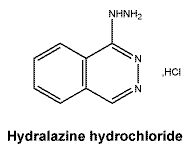
Molecular formula: C8H8N4,HCl.
Molecular weight: 196.6.
CAS number. 304-20-1.
7 Medicine Schedule (Poisons Standard)
S4 (Prescription Only Medicine).
Date of First Approval
23 August 2005
Date of Revision
22 July 2024
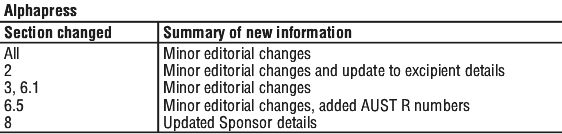
Summary Table of Changes
Reasonable care is taken to provide accurate information at the time of creation. This information is not intended as a substitute for medical advice and should not be exclusively relied on to manage or diagnose a medical condition. The Australian Commission on Safety and Quality in Health Care disclaims all liability (including for negligence) for any loss, damage, injury or any other negative effects resulting from reliance on or use of this information. Read our full disclaimer. This website uses cookies. Read our privacy policy.