
Antabuse
Brand Information
| Brand name | Antabuse |
| Active ingredient | Disulfiram |
| Schedule | S4 |
Consumer Medicine Information (CMI) leaflet
Please read this leaflet carefully before you start using the Antabuse.
Summary CMI
Antabuse®
Consumer Medicine Information (CMI) summary
The full CMI on the next page has more details. If you are worried about using this medicine, speak to your doctor or pharmacist.
1. Why am I using Antabuse?
Antabuse contains the active ingredient disulfiram. Antabuse is used to act as a deterrent to alcohol consumption
For more information, see Section 1. Why am I using Antabuse? in the full CMI.
2. What should I know before I use Antabuse
Do not use if you have ever had an allergic reaction to disulfiram or any of the ingredients listed at the end of the CMI.
Talk to your doctor if you have any other medical conditions, take any other medicines, or are pregnant or plan to become pregnant or are breastfeeding.
For more information, see Section 2. What should I know before I use Antabuse? in the full CMI.
3. What if I am taking other medicines?
Some medicines may interfere with Antabuse and affect how it works.
A list of these medicines is in Section 3. What if I am taking other medicines? in the full CMI.
4. How do I use Antabuse
Starting dose: Take between half a tablet (100 mg) and one and a half tablets (300 mg) dissolved in water as a single dose daily for one to two weeks. One tablet daily is the usual maintenance dose.
Your doctor will tell you the exact dosage
More instructions can be found in Section 4. How do I use Antabuse? in the full CMI.
5. What should I know while using Antabuse
| Things you should do | Remind any doctor, dentist or pharmacist you visit that you are using Antabuse Always follow your doctor's instructions carefully, and seek your doctor's advice before changing or stopping treatment |
| Things you should not do | Do not take if you have consumed any alcohol in the last 24 hours. DO NOT, UNDER ANY CIRCUMSTANCES, TAKE ANY ALCOHOL OR ALCOHOL-CONTAINING PRODUCTS |
| Driving or using machines | You may feel drowsy or fatigue while taking Antabuse. |
| Drinking alcohol | Do not take if you have consumed any alcohol in the last 24 hours. DO NOT, UNDER ANY CIRCUMSTANCES, TAKE ANY ALCOHOL OR ALCOHOL-CONTAINING PRODUCTS |
| Looking after your medicine | Keep your Antabuse in a cool, dry place where the temperature stays below 25°C |
For more information, see Section 5. What should I know while using Antabuse? in the full CMI.
6. Are there any side effects?
In the first 2 weeks the following are common side effects, (headache, weakness, acne or skin rash, upset stomach, impotence in men and bad breath.
For more information, including what to do if you have any side effects, see Section 6. Are there any side effects? in the full CMI.
Full CMI
Antabuse®
Active ingredient(s): disulfiram
Consumer Medicine Information (CMI)
This leaflet provides important information about using Antabuse. You should also speak to your doctor or pharmacist if you would like further information or if you have any concerns or questions about using Antabuse.
Where to find information in this leaflet:
1. Why am I using Antabuse?
2. What should I know before I use Antabuse?
3. What if I am taking other medicines?
4. How do I use Antabuse?
5. What should I know while using Antabuse?
6. Are there any side effects?
7. Product details
1. Why am I using Antabuse
Antabuse contains the active ingredient disulfiram.
Antabuse is alcohol antagonist. Antabuse inhibits an enzyme, which assists in the breakdown of alcohol in the body. A build-up of a substance called acetaldehyde results. If alcohol is consumed when a patient has received Antabuse the so called "aldehyde reaction" may occur.
Antabuse is designed to act as a deterrent to alcohol consumption.
Antabuse tablets have been approved for the uses listed above. However, your doctor may prescribe this medicine for another use. If you want more information, ask your doctor.
Antabuse tablets are not addictive.
2. What should I know before I use Antabuse?
Warnings
Do not use Antabuse if:
- you are allergic to disulfiram, or any of the ingredients listed at the end of this leaflet. or certain other chemicals (thiuram derivatives) used in pesticides and rubber processing. (See the last section of this leaflet for a full list of ingredients). Signs of allergy include rash, itching, shortness of breath and/or swollen face
- you have heart, liver or kidney disease; organic brain damage, high blood pressure
- you have a mental illness with abnormal thoughts
- you are taking paraldehyde or metronidazole
- the packaging is torn or shows signs of being tampered with
- treating any other complaints unless your doctor says it is safe to do so.
- You continue to consume alcohol. Taking alcohol while using Antabuse results in the ‘aldehyde reaction’. The reaction starts with a flushing from the head downwards involving the face, neck, arms and chest. This is accompanied by a feeling of heat, sweating, palpitations, fast or irregular heartbeat, shortness of breath, hyperventilation, anxiety, itchiness and headache. There is a feeling of constriction and irritation in the throat resulting in spasms and coughing. Chest pains may occur. Restlessness or a sense of uneasiness and fear of dying may develop. These symptoms are accompanied by a steep rise in blood pressure, which may be followed by a drop in blood pressure. Flushing is then replaced by the patient becoming pale, weak, feeling dizzy and sick, which turns into violent vomiting and stomach cramps. Other symptoms may include thirst, dizziness, blurred vision, numbness of the hands and feet and the inability to sleep. Severe reactions may affect the heart, and there may be fits, loss of consciousness, respiratory depression and death. The reaction usually lasts 2-4 hours and up to several hours in more severe cases.
Confusion, drowsiness and sleep usually follow. The intensity of the reaction varies with each individual, but generally depends on the amount of Antabuse and alcohol consumed.
If such a reaction is observed, the patient's doctor should be contacted. If the patient is not in hospital or a clinic, an ambulance should be called as the patient requires close monitoring.
You should not take Antabuse until you have not taken any alcohol for 24 hours. If you stop taking Antabuse, you should wait at least 14 days before consuming alcohol.
Reactions may still occur for up to three weeks after taking Antabuse.
Always check the ingredients to make sure you can use this medicine.
IMPORTANT NOTE
| Under all circumstances when taking Antabuse you MUST NOT take alcohol or alcohol-containing preparations e.g. certain cough syrups, sauces, vinegar, tonics, food prepared with wine. You should even avoid the use of after-shave lotions and alcoholic back rubs. |
Check with your doctor if you:
- have any of the following medical conditions;
- Diabetes
- Epilepsy
- Thyroid problems
- Heart, kidney or liver disease
- High blood pressure
- An allergic skin reaction in you come into contact with certain irritants
- Asthma
- Mental illness with abnormal thought - take any medicines for any other condition
During treatment, you may be at risk of developing certain side effects. It is important you understand these risks and how to monitor for them. See additional information under Section 6. Are there any side effects?
Pregnancy and breastfeeding
Do not use if you are pregnant or intend to become pregnant.
Tell your doctor or pharmacist if you are breastfeeding.
They will advise you on whether you should take Antabuse
3. What if I am taking other medicines?
Tell your doctor or pharmacist if you are taking any other medicines, including any medicines, vitamins or supplements that you buy without a prescription from your pharmacy, supermarket or health food shop.
Some medicines may interfere with Antabuse and affect how it works.
- Phenytoin, theophylline and isoniazid.
- sleeping tablets such as Valium.
- medicines which stop blood clotting (warfarin).
- metronidazole and paraldehyde.
- pain killers such as morphine, pethidine, amphetamines and barbiturates.
Check with your doctor or pharmacist if you are not sure about what medicines, vitamins or supplements you are taking and if these affect Antabuse.
4. How do I use Antabuse?
How much to take / use
The following are the usual doses, but your doctor may adjust them to suit your needs:
Starting dose: Take between half a tablet (100 mg) and one and a half tablets (300 mg) dissolved in water as a single dose daily for one to two weeks. Your doctor will tell you the exact dosage. Then go back and see your doctor.
Maintenance dose: Take ONE tablet daily.
Take the tablets in the morning when you wake up. However if you find the tablets make you sleepy you can take them before bedtime. If you are taking Antabuse for a long time, then your doctor will need to do a regular check up. This may include a blood test.
When to take / use Antabuse
Antabuse should be taken in the morning when you wake up. However if you find the tablets make you sleepy you can take them before bedtime.
If you forget to use Antabuse
Antabuse should be used regularly at the same time each day. If you miss your dose at the usual time, do so as soon as you remember, and then go back to taking it as you would normally.
If it is almost time for your next dose, skip the dose you missed and take your next dose when you are meant to.
Do not take a double dose to make up for the dose you missed.
If you have problems remembering when to take your medicine, ask your pharmacist for some hints
If you use too much Antabuse
If you have taken too much Antabuse you may get drowsy, experience some pain or numbness in the hands and feet which may get worse if not treated
Contact the Poisons Information Centre
(by calling 13 11 26), or
contact your doctor, or
go to the Emergency Department at your nearest hospital.
You should do this even if there are no signs of discomfort or poisoning.
5. What should I know while using Antabuse?
Things you should do
Always follow your doctor's instructions carefully and seek your doctor's advice before changing or stopping treatment. Your doctor will be happy to discuss any concerns you may have with your treatment
Always read labels of food and medicines bought to check they contain no alcohol
Things you should not do
Ask your doctor before taking any other medicines. Antabuse can interact with other medicines. Especially check bought medicines from your chemist or supermarket to make sure they contain no alcohol).
Driving or using machines
Be careful before you drive or use any machines or tools until you know how Antabuse affects you.
Antabuse may cause drowsiness or fatigue in some people.
Drinking alcohol
Do not drink alcohol or alcohol containing product. You will suffer from the “aldehyde reaction” which needs immediate medical treatment and may be fatal
Looking after your medicine
Follow the instructions in the carton on how to take care of your medicine properly.
Store it in a cool dry place where the temperature stays below 25°C, away from moisture, heat or sunlight; for example, do not store it:
in the bathroom or near a sink, or
in the car or on window sills.
Keep it where young children cannot reach it.
Getting rid of any unwanted medicine
If you no longer need to use this medicine or it is out of date, take it to any pharmacy for safe disposal.
Do not use this medicine after the expiry date.
6. Are there any side effects?
All medicines can have side effects. If you do experience any side effects, most of them are minor and temporary. However, some side effects may need medical attention.
See the information below and, if you need to, ask your doctor or pharmacist if you have any further questions about side effects.
Less serious side effects
| Less serious side effects | What to do |
| Speak to your doctor if you have any of these less serious side effects and they worry you. You may have these effects in the first two weeks of treatment |
Serious side effects
| Serious side effects | What to do |
| Call your doctor straight away, or go straight to the Emergency Department at your nearest hospital if you notice any of these serious side effects. |
Tell your doctor or pharmacist if you notice anything else that may be making you feel unwell.
Other side effects not listed here may occur in some people.
Reporting side effects
After you have received medical advice for any side effects you experience, you can report side effects to the Therapeutic Goods Administration online at www.tga.gov.au/reporting-problems. By reporting side effects, you can help provide more information on the safety of this medicine.
Always make sure you speak to your doctor or pharmacist before you decide to stop taking any of your medicines.
7. Product details
This medicine is only available with a doctor's prescription.
What Antabuse contains
| Active ingredient (main ingredient) | Disulfiram 200 mg |
| Other ingredients (inactive ingredients) |
|
| Potential allergens | - |
Do not take this medicine if you are allergic to any of these ingredients.
What Antabuse looks like
Antabuse tablets are white, flat tablets scored and marked with CDC. Antabuse comes in packs of 30 tablets.
(Aust R 70468).
Who distributes Antabuse
Arrotex Pharmaceuticals Pty Ltd
15-17 Chapel St
Cremorne VIC 3121
Ph 1800 195 055
This leaflet was prepared in March 2026.
Brand Information
| Brand name | Antabuse |
| Active ingredient | Disulfiram |
| Schedule | S4 |
MIMS Revision Date: 01 May 2026
1 Name of Medicine
Disulfiram.
2 Qualitative and Quantitative Composition
Antabuse: disulfiram 200 mg effervescent tablets.
For the full list of excipients, see Section 6.1 List of Excipients.
3 Pharmaceutical Form
Antabuse 200 mg effervescent tablets are white, flat tablets, scored and engraved CDC.
4 Clinical Particulars
4.1 Therapeutic Indications
Antabuse tablets are indicated to act as a deterrent to alcohol consumption and an aid in the overall management of selected chronic alcoholic patients involved in an integrated programme of counselling and psychiatry. Only alcoholic patients who are motivated to abstain from drinking and who are undergoing supportive psychotherapeutic treatment, ancillary to a total programme of rehabilitation, should be selected for Antabuse administration.
4.2 Dose and Method of Administration
Antabuse tablets are administered as a single daily dose. They should be taken preferably on waking although, in patients who experience a sedative effect, Antabuse tablets may be taken on retiring. Alternatively, to minimise the sedative effect, the initial dosage may be reduced.
Initial dosage. One-half of a tablet (100 mg) is given daily for 7 to 14 days, escalating the dosage after that if required, to a maximum of one and one-half tablets (300 mg).
Maintenance dosage. The recommended maintenance dosage is one tablet daily, taken for 6 weeks to 6 months as required. A review of the effectiveness of therapy should be undertaken before continuation on a longer term basis. A few patients would require higher doses of disulfiram and longer duration of treatment under close supervision.
4.3 Contraindications
Antabuse tablets are contraindicated in individuals who are hypersensitive to this drug (including active ingredient or any excipient identified in Section 6.1 List of Excipients) or to other thiuram derivatives used in pesticides and rubber vulcanisation.
Antabuse tablets are contraindicated in patients with severe myocardial disease, or ischaemic heart disease (coronary artery disease), uncompensated cardiac failure, previous history of CVA, hypertension, in pregnancy, advanced liver and renal disease, and in severe personality disorder, suicidal risk, psychosis/psychotic states, serious organic brain damage.
Under all circumstances, patients receiving Antabuse tablets must not take alcohol or alcohol containing preparations, e.g. certain cough syrups, sauces, vinegar, tonics, foods prepared with wine, and even should avoid the use of aftershave lotions and alcoholic back rubs.
Antabuse tablets should not be administered to patients receiving paraldehyde or metronidazole (see Section 4.5 Interactions with Other Medicines and Other Forms of Interactions).
Antabuse tablets should never be administered to a patient who is taking alcohol or is in a state of alcoholic intoxication.
Antabuse tablets should never be administered to patients without their consent and full explanation, and the physician should caution the relatives accordingly. The patient should be fully informed of the disulfiram-ethanol reaction and cautioned against the possible consequences of taking alcohol either surreptitiously or unwittingly.
4.4 Special Warnings and Precautions for Use
Do not administer Antabuse disulfiram tablets until the patient has abstained from alcohol for at least 24 hours.
Alcohol must not be consumed during treatment and for up to 14 days after discontinuation, as disulfiram prevents the metabolism of ethanol, causing acetaldehyde to accumulate in the body. This can result in a "disulfiram-alcohol reaction" causing adverse effects as listed below in The disulfiram-ethanol reaction and that reactions with alcohol may occur for up to three weeks after ingesting disulfiram.
Before initiating treatment it is advised that appropriate examinations should be carried out to establish the suitability of the patient for treatment. Patients must be warned of the unpredictable and potentially severe nature of a disulfiram-alcohol reaction as, in rare cases deaths have been reported following the drinking of alcohol by patients receiving disulfiram. Certain foods, liquid medicines, remedies, tonics, toiletries, perfumes and aerosol sprays may contain sufficient alcohol to elicit a disulfiram-alcohol reaction and patients should be made aware of this. Caution should also be exercised with low alcohol and "non-alcohol" or "alcohol-free" beers and wines, which may provoke a reaction when consumed in sufficient quantities. All personnel involved in the administration of disulfiram to the patient must know that disulfiram should not be given during a drinking episode.
The disulfiram-ethanol reaction. Disulfiram irreversibly inhibits the enzyme system responsible for the conversion of acetaldehyde to acetate. The ingestion of ethanol subsequent to the administration of disulfiram results in raised blood acetaldehyde levels with accumulation in the tissues producing the so called 'aldehyde reaction'. Note that the aldehyde reaction can occur 10-14 days after discontinuation of disulfiram, and possibly up to three weeks after discontinuation.
A disulfiram-ethanol toxic reaction is heralded by an intense cutaneous flushing from the head downwards, involving the face, neck, sclera, upper limbs and chest. The cutaneous flushing is caused by vasodilation and is accompanied by a sensation of heat and sweating, pruritus, urticaria, anxiety, palpitations, with tachycardia, dyspnoea, hyperventilation and the patient develops a pounding headache. There is a feeling of constriction and irritation of the throat and trachea, resulting in spasms of coughing. Chest pains may occur simulating coronary spasm. Restlessness or a sense of uneasiness and fear of dying may develop. These symptoms are accompanied by a steep rise in blood pressure, followed by hypotension if vasodilation is significant. Flushing is then replaced by pallor, weakness, vertigo, and nausea develops that turns into violent vomiting with abdominal cramps. Other symptoms reported include thirst, dizziness, blurred vision, numbness of hands and feet, and insomnia. Severe reactions may affect the heart, and there may be convulsions, loss of consciousness, arrhythmias, coma, respiratory depression and death from cardiorespiratory failure. Rare complications include hypertension, bronchospasm and methaemoglobinaemia. Symptoms may be severe and life-threatening.
Disulfiram-ethanol reactions often develop within 15 minutes after exposure to ethanol. Symptoms usually peak within 30 minutes to 1 hour, and then gradually subside over the next few hours. The intensity of the reaction varies with each individual, but is generally proportional, albeit in a nonlinear fashion, to the amounts of disulfiram and ethanol ingested. Mild reactions may occur in the sensitive individual when the blood ethanol concentration is increased to as little as 5 to 10 mg per 100 mL. Symptoms are fully developed at 50 mg per 100 mL, and unconsciousness usually results when the blood ethanol level reaches 125 to 150 mg per 100 mL.
The duration of the reaction varies from 2-4 hours to several hours in the more severe cases, or as long as there is ethanol in the blood. Confusion, drowsiness and sleep usually follow. Frequently, there are transient ECG changes, such as flattening of T waves, depression of S-T segment, and Q-T prolongation in a pattern suggestive of right ventricular strain.
Management of disulfiram-ethanol reaction. In the event of an aldehyde reaction as a consequence of a disulfiram treated patient receiving alcohol, supportive measures should be undertaken.
Generous amounts of ascorbic acid (1 g) should be administered intravenously.
It is possible that serotonin, histamine, and various catecholamines which are released play some part in the reaction, and the administration of intravenous or intramuscular antihistamines have been used in treatment. In uncomplicated reactions, chlorpromazine 5-100 mg intramuscularly has been found to be useful.
Maintenance care of a patient with an aldehyde reaction includes routine nursing care, intensive supportive therapy, and standard cardiorespiratory resuscitation measures, involving the treatment of hypotension, circulatory failure, correction of hypoxia, and fluid and electrolyte imbalance to restore haemodynamic equilibrium, all of which are determined by monitoring examinations. The foot of the bed should be elevated raising the patient's feet by about 20-25 cm. Other measures include an adequate patent airway, adequate ventilation with oxygen, if necessary, the correction of arterial pCO2 and pO2, pH, and the intravenous infusion of standard bicarbonate, if there is obvious acidaemia. An infusion of plasma to counteract shock and fluid therapy should be administered according to monitoring of central venous pressure.
Other precautions. Strict caution is advised in patients with diabetes mellitus, hypothyroidism, epilepsy, cerebral damage, renal function impairment, advanced liver disease, reduced hepatic function, cardiovascular disorder, pregnancy, allergic eczematous contact dermatitis, respiratory disease (e.g. asthma). Although disulfiram may be taken without harm in these conditions, strict medical supervision is necessary.
Disulfiram treatment may cause drug-induced liver injury. Fatal cases have been reported. Liver function should be monitored before initiation of treatment and periodically thereafter. In prolonged use, cautious monitoring of hepatic dysfunction as a result of disulfiram therapy should be carried out. It is also recommended that full blood counts and sequential multiple analysis (SMA-12) should be made regularly.
Hepatic toxicity including hepatic failure resulting in transplantation or death have been reported. Severe and sometimes fatal hepatitis associated with disulfiram therapy may develop even after many months of therapy. Hepatic toxicity has occurred in patients with or without prior history of abnormal liver function. Patients should be advised to immediately notify their physician of any early symptoms of hepatitis such as fatigue, weakness, malaise, anorexia, nausea, vomiting, jaundice or dark urine. Discontinuation should be considered if symptoms or signs of liver injury associated with jaundice occur.
Careful clinical monitoring with discontinuation of disulfiram and laboratory (bilirubin and hepatic enzyme) determinations is recommended when hepatitis is suspected.
Use in the elderly. No data available.
Paediatric use. No data available.
Effects on laboratory tests. No data available.
4.5 Interactions with Other Medicines and Other Forms of Interactions
Disulfiram blocks the metabolism of alcohol and leads to an accumulation of acetaldehyde in the blood stream (see Section 4.4 Special Warnings and Precautions for Use).
The intensity of the disulfiram-alcohol reaction may be increased by amitriptyline. Chlorpromazine while decreasing certain components of the disulfiram-alcohol reaction may increase the overall intensity of the reaction.
Concomitant ingestion of antacids containing divalent cations may reduce absorption. Large doses of ferrous salts similarly block absorption.
Disulfiram may retard the metabolism of certain drugs and thus prolong the duration of action or increase the possibility of clinical toxicity of drugs given concomitantly. The drugs include phenytoin and its congeners, and isoniazid.
Isoniazid. The adverse reactions associated with concurrent use of isoniazid include ataxia, changes in mental state, increase in confusion and changes in affective behaviour.
Phenytoin. Concurrent use with phenytoin may increase serum levels of phenytoin and possibly lead to phenytoin intoxication by inhibiting metabolism of drugs which are converted in the liver. Phenytoin serum levels should be carried out and dosage adjustments of phenytoin may have to be made during concurrent therapy with Antabuse tablets. There is evidence that phenobarbitone is not affected by disulfiram.
Theophylline. Disulfiram inhibits the metabolism of many drugs which are converted in the liver (such as theophylline) and thereby enhances efficacy. Dose adjustment may be necessary.
Benzodiazepines. Disulfiram inhibits the metabolism enhancing their sedative effects of certain benzodiazepines such as chlordiazepoxide and diazepam. The interaction is not indicated for oxazepam. Benzodiazepines may reduce the disulfiram-alcohol reaction.
Anticoagulants. Since disulfiram may prolong prothrombin time and inhibit metabolism of drugs which are converted in the liver (e.g. warfarin), it may be necessary to adjust dosage of oral anticoagulants in patients receiving these drugs.
Metronidazole. Acute psychotic reaction and confusion can result.
Paraldehyde. Case reports of increase in confusion and changes in affective behaviour have been noted. Theoretically, concurrent use may cause a modified "disulfiram-ethanol reaction" and is not recommended.
Potentiation of organic brain syndrome and choreoathetosis following pimozide have occurred rarely.
Disulfiram inhibits the oxidation and renal excretion of rifampicin.
Miscellaneous. The toxicity of certain centrally acting drugs has been increased by disulfiram in rats by inhibition of metabolism. These drugs include morphine, pethidine, amphetamine and barbiturates.
4.6 Fertility, Pregnancy and Lactation
Effects on fertility. No data available.
Use in pregnancy. (Category B2)
The safe use of this drug in pregnancy has not been established and Antabuse tablets should not be used. Therefore, the administration of Antabuse tablets in women of childbearing potential requires that the benefits of the drug be weighed against the possible hazards of alcoholism.
There have been rare reports of congenital abnormalities in infants whose mothers have received disulfiram in conjunction with other medicines.
Use in lactation. The safe use of this drug during lactation has not been established and use during lactation requires that benefits be weighed against possible hazards to the infant.
Breastfeeding. Should not be used. No information is available on whether Disulfiram is excreted in breast milk. Its use during breast feeding is not advised especially where there is a possibility of interaction with medicines that the baby may be taking.
4.7 Effects on Ability to Drive and Use Machines
Disulfiram may cause side effects such as drowsiness or fatigue. Patients should make sure they are not affected before driving or operating machinery.
4.8 Adverse Effects (Undesirable Effects)
The principal toxic clinical effects to disulfiram administration alone are drowsiness, lassitude (psychotic reactions); depression, paranoia, schizophrenia, and sensorimotor peripheral neuropathy. Some of these reactions have been known to occur in dosages ranging from 200 mg to 400 mg daily and in associated combined toxicity, e.g. with metronidazole or isoniazid.
The following adverse reactions have been reported. Numbness, tingling, pain or weakness in hands or feet (peripheral neuritis, polyneuritis). Patients who are maintained on disulfiram 500 mg daily tend to develop peripheral neuropathy. This neuropathy improves when disulfiram is discontinued.
Eye pain or tenderness and changes in vision (optic neuritis), encephalopathy, mood and mental changes [psychotic reactions (including mania, depression, paranoia, schizophrenia, reduction in libido)], jaundice, hepatitis, hepatic necrosis, cirrhosis, hepatic cell damage and altered liver function tests, nausea, vomiting have been reported with the administration of Antabuse tablets, although rarely. Drug induced liver injury (fatal cases have been reported).
In addition, impotence, headache, fatigue, halitosis, acneiform eruption, allergic dermatitis, rashes, stomach upset, seizures, have been reported and a metallic or garlic-like aftertaste may be experienced during the first two weeks of therapy. These complaints disappear spontaneously or by reducing dosage.
Reporting suspected adverse effects. Reporting suspected adverse reactions after registration of the medicinal product is important. It allows continued monitoring of the benefit-risk balance of the medicinal product. Healthcare professionals are asked to report any suspected adverse reactions at www.tga.gov.au/reporting-problems.
4.9 Overdose
High doses of disulfiram (up to 6 g daily) are relatively nontoxic in man. Disulfiram is toxic to animals only in large doses. The LD50 of a single dose administration in the dog is 3.5 g/kg and in the rat 8.6 g/kg. Death occurs by respiratory arrest, preceded by ascending paralysis, and pathological lesions are seen in the liver, spleen, kidney and CNS, with congestion in the adrenal gland and oedema in the heart muscle. Similar lesions have arisen in animals following chronic administration.
In overdosage situations the stomach should be emptied promptly by induced emesis or lavage. There is no specific therapy for acute overdosage with Antabuse tablets and general symptomatic and supportive measures should be instituted and maintained for as long as necessary (see Section 4.4 Special Warnings and Precautions for Use, The disulfiram-ethanol reaction).
For information on the management of overdose, contact the Poisons Information Centre on 13 11 26 (Australia).
5 Pharmacological Properties
5.1 Pharmacodynamic Properties
Mechanism of action. Antabuse tablets are designed to act as a deterrent to alcohol consumption in patients as an aid in the overall management of chronic alcoholism. Disulfiram is relatively pharmacologically inert when taken in small doses. Disulfiram produces irreversible inhibition of the enzyme responsible for oxidation of the ethanol metabolite acetaldehyde. The accumulation of acetaldehyde contributes to the reaction occurring after alcohol ingestion in disulfiram treated patients (see Section 4.3 Contraindications; Section 4.4 Special Warnings and Precautions for Use, The disulfiram-ethanol reaction). Blockage of the enzyme leads to accumulation of acetaldehyde, which is an important factor for the clinical disulfiram-alcohol reaction. Re-establishment of the enzymatic activity is dependent on new synthesis which occurs gradually during the course of 1 week or more. Disulfiram and its chief metabolite, diethyldithiocarbamate (DDC) also inhibit the enzyme, dopamine-beta-hydroxylase. This results in reduced synthesis of noradrenaline, which may contribute to the reaction.
The disulfiram-alcohol reaction provokes a number of unpleasant symptoms: intense flushing of the face, a feeling of difficulty in breathing, palpitations, a throbbing headache, nausea, and vomiting. Ingestion of large amounts of alcohol may cause the blood pressure to fall, with fainting and the risk of collapse. In patients receiving maintenance treatment with Antabuse, the ingestion of alcohol may bring about a typical reaction as quickly as within 5-10 minutes.
Disulfiram is a sulphydryl (-SH, thiol) group reagent and inhibits enzymes concerned with oxidation of active (-SH group) sites on enzyme protein molecules. The pharmacological action of disulfiram is based on its inhibition of enzymes involved in ethanol catabolism. Normally, ethanol is metabolised to carbon dioxide and water but, in the presence of disulfiram, the enzyme aldehyde dehydrogenase is inhibited and the metabolic chain of reactions stop after the production of acetaldehyde. Although it is accepted that acetaldehyde accumulation produces the disulfiram-ethanol reaction, it is also believed that the reaction may be caused by a toxic quaternary compound.
Disulfiram also diffuses readily into cells and raises intracellular -SH levels, and therefore can act on intracellular oxidation-reduction reactions. Notably, disulfiram has been shown to inhibit the enzymes xanthine oxidase and succinoxidase. Disulfiram has been shown to possess an antithyroid action attributable to the presence of the NCS grouping, common to many antithyroid compounds, presumably reacting with free iodine to form a stable complex substance.
Clinical trials. No data available.
5.2 Pharmacokinetic Properties
Disulfiram is a prodrug.
Absorption. Absorption of disulfiram from the gastrointestinal tract is rapid but incomplete and approximately 20% is excreted in the faeces.
Distribution. Because of its high lipid solubility, disulfiram is widely distributed and accumulated in various fat depots.
Metabolism. Disulfiram is rapidly metabolised to diethyldithiocarbamate (DDC), which is partly excreted as carbon disulphide in the expired air and is partly metabolised in the liver to Me-DDC. Me-DDC is metabolised further to the active metabolite Me-DTC (diethyldithiocarbamic acid methyl ester). The concentration of Me-DTC reaches its maximum after about 4 hours, but the maximum enzyme inhibiting effect (ALDH) is first reached after 3 daily doses. The plasma half-life for Me-DTC is about 10 hours, but the enzyme inhibiting effect of ALDH lasts considerably longer. The effect can thus persist for 7 to 14 days after discontinuation. In patients receiving disulfiram maintenance treatment, the ingestion of alcohol brings about a typical disulfiram-alcohol reaction within the course of 5-10 minutes. Metabolism is not appreciably affected by a mild to moderate decrease in liver function. Conversely, in the presence of liver cirrhosis an increased concentration of the metabolites is seen in the blood.
Excretion. The metabolites are chiefly excreted with the urine. Part is recovered in the expired air as carbon disulphide.
Up to 20% of a dose may remain in the body for one week or longer.
It is possible that Antabuse tablets may be more bioavailable when given with food. It is also possible that Antabuse 200 mg effervescent tablets are more bioavailable than the previously marketed 250 mg Antabuse tablet.
5.3 Preclinical Safety Data
Genotoxicity. No data available.
Carcinogenicity. No data available.
6 Pharmaceutical Particulars
6.1 List of Excipients
The tablets also contain maize starch, povidone, tartaric acid, sodium bicarbonate (equivalent to 6.6 mg sodium per tablet), microcrystalline cellulose, silica colloidal anhydrous, magnesium stearate, polysorbate 20 and purified talc.
6.2 Incompatibilities
Incompatibilities were either not assessed or not identified as part of the registration of this medicine.
6.3 Shelf Life
In Australia, information on the shelf life can be found on the public summary of the Australian Register of Therapeutic Goods (ARTG). The expiry date can be found on the packaging.
6.4 Special Precautions for Storage
Store below 25°C.
6.5 Nature and Contents of Container
Antabuse 200 mg Effervescent tablets in bottles (HDPE) of 30.
6.6 Special Precautions for Disposal
In Australia, any unused medicine or waste material should be disposed of by taking to your local pharmacy.
6.7 Physicochemical Properties
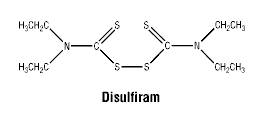
Disulfiram is tetraethylthiuram disulphide, which occurs as a cream white, almost odourless, slightly bitter crystalline powder, practically insoluble in water (0.02 g/100 mL), soluble in ethanol and chloroform.
Chemical structure.
CAS number. 97-77-8.
7 Medicine Schedule (Poisons Standard)
Schedule 4 - Prescription only medicine.
Date of First Approval
27 September 1995
Date of Revision
05 March 2026
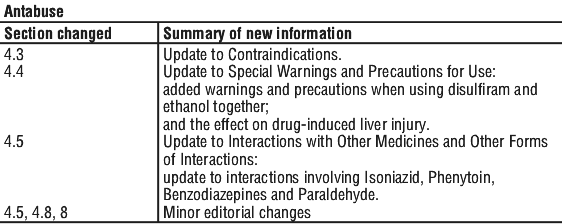
Summary Table of Changes
Reasonable care is taken to provide accurate information at the time of creation. This information is not intended as a substitute for medical advice and should not be exclusively relied on to manage or diagnose a medical condition. The Australian Commission on Safety and Quality in Health Care disclaims all liability (including for negligence) for any loss, damage, injury or any other negative effects resulting from reliance on or use of this information. Read our full disclaimer. This website uses cookies. Read our privacy policy.