
Antizol
Brand Information
| Brand name | Antizol |
| Active ingredient | Fomepizole |
| Schedule | S4 |
Consumer Medicine Information (CMI) leaflet
Please read this leaflet carefully before you start using the Antizol.
Summary CMI
Antizol
Consumer Medicine Information (CMI) summary
The full CMI on the next page has more details. If you are worried about using this medicine, speak to your doctor or pharmacist.
1. Why am I being given Antizol?
Antizol contains the active ingredient fomepizole. Antizol is used to treat ethylene glycol and methanol poisoning.
For more information, see Section 1. Why am I being given Antizol? in the full CMI.
2. What should I know before I am given Antizol?
Do not use if you have ever had an allergic reaction to Antizol or any of the ingredients listed at the end of the CMI.
Talk to your doctor if you have any other medical conditions, take any other medicines, or are pregnant or plan to become pregnant or are breastfeeding.
For more information, see Section 2. What should I know before I am given Antizol? in the full CMI.
3. What if I am taking other medicines?
Some medicines may interfere with Antizol and affect how it works.
A list of these medicines is in Section 3. What if I am taking other medicines? in the full CMI.
4. How will Antizol be given?
- Antizol is given as a slow intravenous infusion into a vein by a doctor or a nurse.
- Your doctor will decide what dose and for how long you will receive Antizol. This depends on your condition and other factors.
More instructions can be found in Section 4. How will Antizol be given? in the full CMI.
5. What should I know while I am being given Antizol?
| Things you should do |
|
| Driving or using machines |
|
| Drinking alcohol |
|
| Looking after your medicine |
|
For more information, see Section 5. What should I know while I am being given Antizol? in the full CMI.
6. Are there any side effects?
Call your doctor straight away, or go straight to the Emergency Department at your nearest hospital if you notice any signs of an allergic reaction like shortness of breath, wheezing or difficulty breathing, swelling of the face, lips, tongue or other parts of the body, rash, itching or hives on the skin.
For more information, including what to do if you have any side effects, see Section 6. Are there any side effects? in the full CMI.
Full CMI
Antizol
Active ingredient: fomepizole
Consumer Medicine Information (CMI)
This leaflet provides important information about using Antizol. You should also speak to your doctor or pharmacist if you would like further information or if you have any concerns or questions about using Antizol.
Where to find information in this leaflet:
1. Why am I being given Antizol?
2. What should I know before I am given Antizol?
3. What if I am taking other medicines?
4. How will Antizol be given?
5. What should I know while I am being given Antizol?
6. Are there any side effects?
7. Product details
1. Why am I being given Antizol?
Antizol contains the active ingredient fomepizole. Antizol belongs to a group of medicines called antidotes.
Antizol is used to treat ethylene glycol and methanol poisoning. Antizol helps to restore your blood levels of ethylene glycol and/or methanol to normal. Your doctor may have administered this medicine for another reason. Your doctor will explain why you are being treated with Antizol and tell you what dose you are being given. Follow all directions given to you by your doctor carefully. They may differ from the information contained in this leaflet. Ask your doctor if you have any questions about why Antizol has been administered to you. Antizol is not addictive.
2. What should I know before I am given Antizol?
Warnings
You must not be given Antizol if:
- you are allergic to fomepizole, or any of the ingredients listed at the end of this leaflet. Always check the ingredients to make sure you can use this medicine.
- you have ever experienced an anaphylactic reaction with Antizol or other pyrazoles.
During treatment, you may be at risk of developing certain side effects. It is important you understand these risks and how to monitor for them. See additional information under Section 6. Are there any side effects?
Pregnancy and breastfeeding
Check with your doctor if you are pregnant or intend to become pregnant. The effect of Antizol in pregnant women is not known. Therefore, the use of Antizol in pregnant women is not recommended.
Talk to your doctor if you are breastfeeding or intend to breastfeed. It is not known whether Antizol passes into breast milk. If you are breast feeding, your doctor may advise you to stop breastfeeding while you are using this medicine.
3. What if I am taking other medicines?
Antizol may interact with medicines that increase or decrease the effect of phenytoin, carbamazepine, cimetidine, ketoconazole and other similar medicines, although this has not been studied.
Tell your doctor or pharmacist if you are taking any other medicines, including any medicines, vitamins or supplements that you buy without a prescription from your pharmacy, supermarket or health food shop.
4. How will Antizol be given?
- Antizol is given as a slow intravenous infusion into a vein.
- Antizol must only be given by a doctor or nurse.
- Your doctor will decide what dose and for how long you will receive Antizol. This depends on your condition and other factors.
- To begin treatment, 15 mg/kg of Antizol is given as a slow intravenous infusion over 30 minutes. Your serum levels of ethylene glycol and/or methanol will be monitored during the treatment.
If you are given too much
The doctor giving you Antizol will be experienced in administration of antidotes, so it is unlikely that you will be given an overdose.
However, if you are accidentally given an overdose of Antizol, you may have nausea, dizziness or vertigo. These are usually short-lived. Your doctor has information on how to recognise and treat an overdose.
If you think that you have been given too much Antizol, you may need urgent medical attention.
You should immediately:
- phone the Poisons Information Centre
(by calling 13 11 26), or - contact your doctor, or
- go to the Emergency Department at your nearest hospital.
You should do this even if there are no signs of discomfort or poisoning.
5. What should I know while I am being given Antizol?
Things you should do
Remind any doctor, dentist or pharmacist you visit that you are being give/ have been given Antizol.
Driving or using machines
Be careful before you drive or use any machines or tools until you know how Antizol affects you.
Drinking alcohol
Tell your doctor if you drink alcohol.
Antizol can significantly reduce the rate of elimination of ethanol and vice versa. For this reason, you should not be given Antizol if you have been drinking alcohol to excess.
Looking after your medicine
- Antizol will be stored in the pharmacy ward.
- Product is for single use in one patient only. Discard any residue.
- The injection is kept in a cool, dry place, protected from light, where the temperature stays below 25°C.
Follow the instructions in the carton on how to take care of your medicine properly.
Store it in a cool dry place away from moisture, heat or sunlight; for example, do not store it:
- in the bathroom or near a sink, or
- in the car or on window sills.
Keep it where young children cannot reach it.
Getting rid of any unwanted medicine
If you no longer need to use this medicine or it is out of date, take it to any pharmacy for safe disposal.
Do not use this medicine after the expiry date.
6. Are there any side effects?
All medicines can have side effects. If you do experience any side effects, most of them are minor and temporary. However, some side effects may need medical attention.
Antizol helps most people with ethylene glycol and/or methanol intoxication, but it may have unwanted side effects in a few people.
Tell your doctor as soon as possible if you do not feel well while you are being given Antizol.
If you are over 65 years of age you may have an increased chance of getting side effects.
See the information below and, if you need to, ask your doctor or pharmacist if you have any further questions about side effects.
Do not be alarmed by the following lists of side effects. You may not experience any of them.
Less serious side effects
| Less serious side effects | What to do |
Alertness - related:
| Speak to your doctor if you have any of these less serious side effects and they worry you. |
Serious side effects
| Serious side effects | What to do |
Signs of kidney problem:
| Call your doctor or nurse as soon as possible if you notice any of these serious side effects. These side effects may require medical attention. |
Very serious side effects
| Very serious side effects | What to do |
Signs of an allergic reaction:
| Call your doctor straight away, or go straight to the Emergency Department at your nearest hospital if you notice any of these serious side effects. |
Tell your doctor or pharmacist if you notice anything else that may be making you feel unwell.
Other side effects not listed here may occur in some people.
Reporting side effects
After you have received medical advice for any side effects you experience, you can report side effects to the Therapeutic Goods Administration online at www.tga.gov.au/reporting-problems. By reporting side effects, you can help provide more information on the safety of this medicine.
Always make sure you speak to your doctor or pharmacist before you decide to stop taking any of your medicines.
7. Product details
This medicine is only available with a doctor's prescription.
What Antizol contains
| Active ingredient (main ingredient) | fomepizole |
| Other ingredients (inactive ingredients) | none |
Do not take this medicine if you are allergic to any of these ingredients.
What Antizol looks like
Antizol is a clear to yellow liquid at room temperature. It may present as a solid at lower temperatures.
(Aust R 263913).
Who distributes Antizol
AFT Pharmaceuticals Pty Ltd.
113 Wicks Road, North Ryde, NSW 2113, Australia
This leaflet was prepared in April 2025.
Brand Information
| Brand name | Antizol |
| Active ingredient | Fomepizole |
| Schedule | S4 |
MIMS Revision Date: 01 December 2020
1 Name of Medicine
Fomepizole.
2 Qualitative and Quantitative Composition
Each vial contains 1.5 mL (1 g/mL) of fomepizole. It is supplied sterile. Fomepizole injection does not contain any excipients.
3 Pharmaceutical Form
A clear to yellow liquid (or solid) sterile, preservative-free solution for intravenous use.
Solidification does not affect the stability of Antizol.
4 Clinical Particulars
4.1 Therapeutic Indications
Antizol (fomepizole) is indicated for the treatment of ethylene glycol or methanol poisoning (see Section 4.2 Dose and Method of Administration).
4.2 Dose and Method of Administration
Caution. Must be diluted prior to use.
Treatment guidelines. If ethylene glycol or methanol poisoning is left untreated, the natural progression of the poisoning leads to accumulation of toxic metabolites, including glycolic and oxalic acids (ethylene glycol intoxication) and formic acid (methanol intoxication). These metabolites can induce metabolic acidosis, nausea/vomiting, seizures, stupor, coma, calcium oxaluria, acute tubular necrosis, blindness and death. The diagnosis of these poisonings may be difficult because ethylene glycol and methanol concentrations diminish in the blood as they are metabolized to their respective metabolites. Hence, if the fomepizole solution has become a solid in the vial, the solution should be liquefied by running the vial under warm water or by holding in the hand. Solidification does not affect the stability of Antizol.
Treatment with fomepizole. Begin fomepizole treatment immediately upon suspicion of ethylene glycol or methanol ingestion based on patient history and/or anion gap metabolic acidosis, increased osmolar gap, visual disturbances, or oxalate crystals in the urine; or a documented serum ethylene glycol or methanol concentration greater than 20 mg/dL (ethylene glycol 3.22 mmol/L, methanol 6.24 mmol/L).
Discontinuation of fomepizole treatment. Treatment with fomepizole may be discontinued when ethylene glycol or methanol concentrations are undetectable or have been reduced below 20 mg/dL (ethylene glycol 3.22 mmol/L, methanol 6.24 mmol/L), and the patient is asymptomatic with normal pH.
Dose. Dosing of fomepizole. A loading dose of 15 mg/kg should be administered, followed by doses of 10 mg/kg every 12 hours for 4 doses, then 15 mg/kg every 12 hours thereafter until ethylene glycol or methanol concentrations are undetectable or have been reduced below 20 mg/dL (ethylene glycol 3.22 mmol/L, methanol 6.24 mmol/L), and the patient is asymptomatic with normal pH. All doses should be administered as a slow intravenous infusion over 30 minutes (see Treatment guidelines).
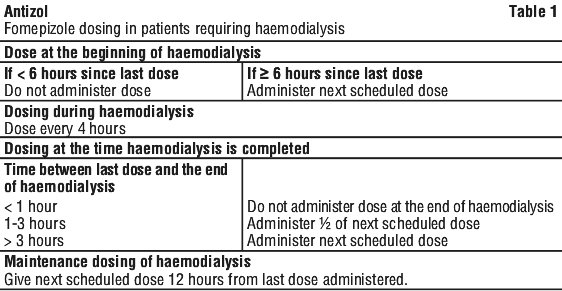
Haemodialysis. Haemodialysis should be considered in addition to fomepizole in the case of renal failure (Stage 5 CKD, GFR < 15 mL/min/1.73 m2), significant or worsening metabolic acidosis, or a measured ethylene glycol or methanol concentration of greater than or equal to 50 mg/dL (ethylene glycol 8.06 mmol/L, methanol 15.61 mmol/L). Patients should be dialyzed to correct metabolic abnormalities and to lower the ethylene glycol concentrations below 50 mg/dL (ethylene glycol 8.06 mmol/L). See Table 1.
Both ethylene glycol and methanol concentrations, acid base balance [as determined by serum electrolyte (anion gap) and/or blood gas analysis], should be frequently monitored and used to guide treatment.
Method of administration. Using sterile technique, the appropriate dose of fomepizole should be drawn from the vial with a syringe and injected into at least 100 mL of sterile 0.9% sodium chloride injection or dextrose 5% injection. Mix well. The entire contents of the resulting solution should be infused over 30 minutes. Fomepizole, like all parenteral products, should be inspected for particulate matter prior to administration.
4.3 Contraindications
Fomepizole should not be administered to patients with a documented serious hypersensitivity reaction to fomepizole or other pyrazoles.
Fomepizole should not be used in patients with ethanol intoxication.
Fomepizole should not be used in patients exposed to poisons other than ethylene glycol or methanol alone or in combination (including diethylene glycol).
4.4 Special Warnings and Precautions for Use
General. Fomepizole should not be given undiluted or by bolus injection. Venous irritation and phlebosclerosis were noted in two of six normal volunteers given bolus injections (over 5 minutes) fomepizole at a concentration of 25 mg/mL (0.3 mol/L).
Major allergic reactions (anaphylaxis) and minor allergic reactions (mild rash, eosinophilia) have been reported in a few patients receiving fomepizole (see Section 4.8 Adverse Effects (Undesirable Effects)). Therefore, patients should be monitored for signs of allergic reactions.
There is a potential risk of muscle damage resulting from creatine kinase elevation with use of fomepizole.
Medical professionals are warned of the potential risk of hypoglycaemia and/or seizures with use of fomepizole.
Fomepizole has not been studied sufficiently to determine whether the pharmacokinetics differ between the genders.
Use in hepatic impairment. Fomepizole is metabolized through the liver, but no definitive pharmacokinetic studies have been done in subjects with hepatic disease.
Use in renal impairment. The metabolites of fomepizole are excreted renally. Definitive pharmacokinetic studies have not been done to assess pharmacokinetics in patients with renal impairment.
Use in the elderly. Fomepizole injection has not been studied sufficiently to determine whether the pharmacokinetics differ for an elderly population.
Paediatric use. Safety and effectiveness in paediatric patients have not been established.
Effects on laboratory tests. No data available.
Patient management. In addition to specific antidote treatment with fomepizole, patients intoxicated with ethylene glycol or methanol must be managed for metabolic acidosis, acute renal failure (ethylene glycol), adult respiratory distress syndrome, visual disturbances (methanol) and hypocalcaemia. Fluid therapy and sodium bicarbonate administration are potential supportive therapies. In addition, potassium and calcium supplementation and oxygen administration are usually necessary.
Haemodialysis is necessary in the anuric patient, or in patients with severe metabolic acidosis or azotaemia. Treatment success should be assessed by frequent measurements of blood gases, pH, electrolytes, BUN, creatinine and urinalysis, in addition to other laboratory tests as indicated by individual patient conditions. At frequent intervals throughout the treatment, patients poisoned with ethylene glycol or methanol should be monitored.
Electrocardiography should be performed because acidosis and electrolyte imbalances can affect the cardiovascular system. In addition, hepatic enzymes and white blood cell counts should be monitored during treatment, as transient increases in serum transaminase concentrations and eosinophilia have been noted with Antizol dosing.
4.5 Interactions with Other Medicines and Other Forms of Interactions
Oral doses of fomepizole (10-20 mg/kg), via alcohol dehydrogenase inhibition, significantly reduced the rate of elimination of ethanol (by approximately 40%) given to healthy volunteers in moderate doses. Similarly, ethanol decreased the rate of elimination of fomepizole (by approximately 50%) by the same mechanism. Fomepizole is ineffective at treating ethanol intoxication, and would conversely prolong ethanol intoxication if administered.
Reciprocal interactions may occur with concomitant use of fomepizole and drugs that increase or inhibit the cytochrome P450 system (e.g. phenytoin, carbamazepine, cimetidine, ketoconazole), though this has not been studied.
Fomepizole has been shown to induce the expression of CYP2E1 and to inhibit its activity. These effects were enhanced in rats that had been exposed to ethanol. Fomepizole may also inhibit other CYP enzymes and therefore may alter the exposure to other drugs that are metabolised by CYP enzymes.
Interactions with disulfiram and medications for psychiatric disorders (anti-depressants, anxiolytics and antipsychotics) have not been established.
4.6 Fertility, Pregnancy and Lactation
Effects on fertility. The effects of fomepizole on male and female fertility have not been adequately studied in animals. In rats, fomepizole (110 mg/kg) administered orally for 40 to 42 days resulted in decreased testicular mass (approximately 8% reduction). This dose is approximately 0.1 times the human maximum daily exposure based on surface area (mg/m2). Reductions in testicular mass were significantly greater when fomepizole was given in combination with ethanol (approximately 30% reduction).
Use in pregnancy. (Category B2)
Animal reproduction studies have not been conducted with fomepizole. It is also not known whether fomepizole can cause foetal harm when administered to pregnant women or can affect reproduction capacity. Fomepizole has been shown to cross the placenta in pregnant rats, with the concentration higher in foetal tissues that that observed in maternal serum. Fomepizole should be given to pregnant women only if clearly needed.
Use in lactation. It is not known whether fomepizole is excreted in human milk. Because many drugs are excreted in human milk, caution should be exercised when fomepizole is administered to a breastfeeding woman.
4.7 Effects on Ability to Drive and Use Machines
The effects of this medicine on a person's ability to drive and use machines were not assessed as part of its registration.
4.8 Adverse Effects (Undesirable Effects)
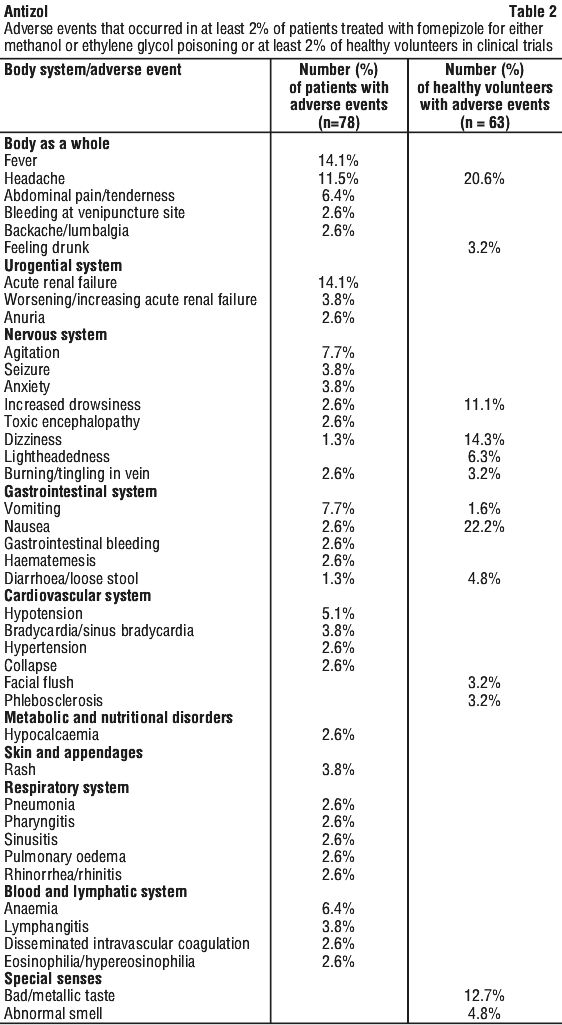
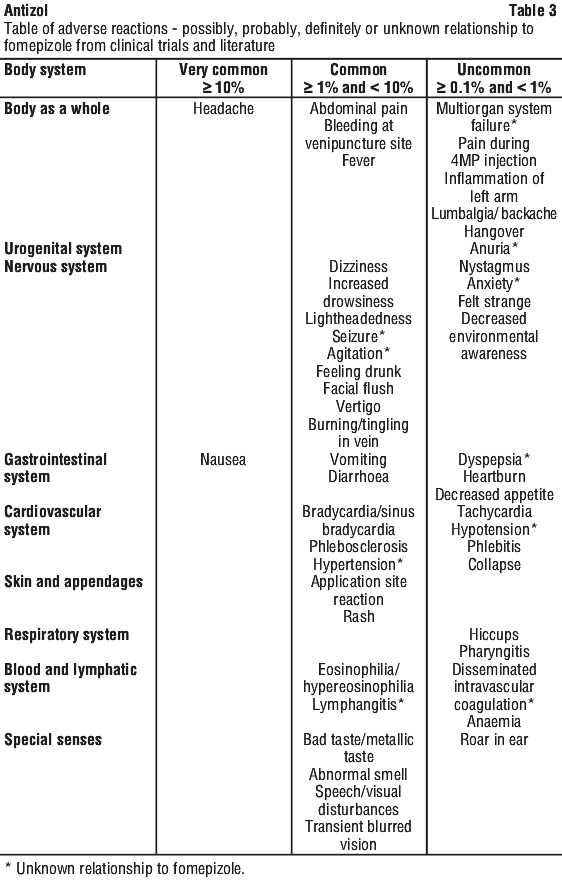
A total of 141 patients were exposed to fomepizole during the clinical trial period, including both patients (n=78) and healthy volunteers (n=63). See Tables 2 and 3.
Reporting suspected adverse effects. Reporting suspected adverse reactions after registration of the medicinal product is important. It allows continued monitoring of the benefit-risk balance of the medicinal product. Healthcare professionals are asked to report any suspected adverse reactions at www.tga.gov.au/reporting-problems (Australia) or nzphvc.otago.ac.nz/reporting/ (New Zealand).
4.9 Overdose
Nausea, dizziness, and vertigo were noted in healthy volunteers receiving 50-100 mg/kg doses of fomepizole (at plasma concentrations of 290-520 micromol/L, 23.8-42.6 mg/L). These doses are 3-6 times the recommended dose. This dose-dependent CNS effect was short-lived in most subjects and lasted up to 30 hours in one subject.
Fomepizole is dialyzable, and haemodialysis may be useful in treating cases of overdosage.
For information on the management of overdose, contact the Poisons Information Centre on 13 11 26 (Australia) or 0800 Poison (0800 764 766) (New Zealand).
5 Pharmacological Properties
5.1 Pharmacodynamic Properties
Mechanism of action. Mechanism of action: fomepizole is a competitive inhibitor of alcohol dehydrogenase. Alcohol dehydrogenase catalyses the oxidation of ethanol to acetaldehyde. Alcohol dehydrogenase also catalyses the initial steps in the metabolism of ethylene glycol and methanol to their toxic metabolites.
Ethylene glycol, the main component of most antifreezes and coolants, is metabolized to glycoaldehyde, and oxalate. Glycolate and oxalate are the metabolic by-products primarily responsible for the metabolic acidosis and renal damage seen ethylene glycol toxicosis. The lethal dose of ethylene glycol in humans is approximately 1.4 mL/kg.
Methanol, the main component of windshield wiper fluid, is slowly metabolized via alcohol dehydrogenase to yield formic acid. Formic acid is primarily responsible for the metabolic acidosis and visual disturbances (e.g. decreased visual activity and potential blindness) associated with methanol poisoning. A lethal dose of methanol in humans is approximately 1-2 mL/kg.
Fomepizole has been shown in vitro to block alcohol dehydrogenase enzyme activity in dog, monkey and human liver. The concentration of fomepizole at which alcohol dehydrogenase is inhibited by 50% in vitro is approximately 0.1 micromol/L. In animal studies, fomepizole has been shown to inhibit the formation of toxic metabolites of ethylene glycol and methanol, to reverse acidosis and to prevent mortality and ethylene-glycol induced renal damage.
Fomepizole in the range of 100 to 300 micromol/L (8.6-24.6 mg/L) has been targeted to assure adequate plasma concentrations in humans for the effective inhibition of alcohol dehydrogenase.
In healthy volunteers, oral doses of fomepizole (10-20 mg/kg) significantly reduced the rate of elimination of moderate doses of ethanol, which is also metabolized through the action of alcohol dehydrogenase (see Section 4.4 Special Warnings and Precautions for Use; Section 4.5 Interactions with Other Medicines and Other Forms of Interactions).
Clinical trials. The efficacy of fomepizole in the treatment of ethylene glycol and methanol intoxication was studied in two prospective, U.S. clinical trials without concomitant control groups. The clinical trials described below were supplemented by open-label studies and case reports from the published literature.
An open-label, multi-dose, multi-centre, phase III pivotal trial for treatment of ethylene glycol poisoning with fomepizole has been conducted. Eligible subjects were male or female over 12 years of age who presented with a documented serum ethylene glycol concentration of > 20 mg/dL (3.2 mmol/L); or a history (or strong clinical suspicion) of ethylene glycol ingestion along with arterial pH < 7.3, serum bicarbonate < 20 mEq/L, osmolar gap by freezing point depression > 10 mOsm/L, and/or oxalate crystals in urine; or recent (< 1 hour) documented history of a potentially toxic amount of ethylene glycol and osmolar gap > 10 mOsm/L. All patients received fomepizole shortly after admission with a loading dose of 15 mg/kg body weight fomepizole followed by supplemental doses of 10 mg/kg over 30 minutes at intervals of 12 hours (or 15 mg/kg after 48 hours to compensate for increased elimination 30-40 hours after multiple doses) until the serum ethylene glycol level was reduced to ≤ 20 mg/dL (3.2 mmol/L).
Fourteen of 16 patients being treated with fomepizole for ethylene glycol poisoning underwent haemodialysis because of severe intoxication (see Section 4.2 Dose and Method of Administration). There were no differences in outcomes between those who did and did not undergo haemodialysis. Fomepizole levels fell faster during haemodialysis than when due to endogenous clearance alone. During haemodialysis, fomepizole levels fell at a median rate of 0.8 micromol/L/minute (range 0.27 to 4.4). In the absence of haemodialysis, levels fell at a median rate of 0.33 micromol/L/minute (range 0.1 to 0.83). Median clearance of fomepizole by dialysis was 183 mL/min (range 129-218 mL/min).
The results of the ethylene glycol study provide evidence that fomepizole blocks ethylene glycol metabolism mediated by alcohol dehydrogenase in the clinical setting. Plasma concentrations of toxic metabolites of ethylene glycol failed to rise in the initial phases of treatment. The relationship to fomepizole therapy, however, was confounded by haemodialysis and significant blood ethanol concentrations in many of the patients. Nevertheless, in the post-dialysis period(s), when ethanol concentrations were insignificant and the concentrations of ethylene glycol > 20 mg/dL (> 3.2 mmol/L), the administration of fomepizole alone blocked any rise in glycolate concentrations.
An open-label, multi-dose, multi-centre, phase III pivotal trial for treatment of methanol poisoning has been conducted. Eligible subjects were male or female patients over 12 years of age who presented with a documented serum methanol level of > 20 mg/dL (> 6.24 mmol/L) OR a history (or strong clinical suspicion) of methanol intoxication and presented with at least two of the four following criteria: arterial pH < 7.3, serum bicarbonate < 20 mEq/L, osmolar gap by freezing point depression > 10 mOsm/L, and/or recent (less than 1 hour) documented history of an ingestion of a potentially toxic amount of methanol).
All patients received fomepizole shortly after admission with a loading dose of 15 mg/kg body weight fomepizole followed by supplemental doses of 10 mg/kg at intervals of 12 hours (or 15 mg/kg after 48 hours) until the serum ethylene glycol level was reduced to ≤ 20 mg/dL (6.24 mmol/L).
Seven of 11 patients in the trial for treatment of methanol poisoning underwent haemodialysis because of severe intoxication (see Section 4.2 Dose and Method of Administration). There was no difference in outcome for these patients compared to the non-dialysis patients.
The results of the methanol study provide evidence that fomepizole blocks methanol metabolism mediated by alcohol dehydrogenase in the clinical setting. Plasma concentrations of toxic metabolites of methanol failed to rise in the initial phases of treatment. The relationship to fomepizole therapy, however, was confounded by haemodialysis and significant blood ethanol concentrations in many of the patients. Nevertheless, in the post-dialysis period(s), when ethanol concentrations were insignificant and the concentrations of methanol were > 20 mg/dL (6.24 mmol/L), the administration of fomepizole alone blocked any rise in formate concentrations.
5.2 Pharmacokinetic Properties
Distribution. After intravenous infusion, fomepizole rapidly distributes to total body water. The volume of distribution is between 0.6 L/kg and 1.02 L/kg.
Metabolism. In healthy volunteers, only 1-3.5% of the administered dose of fomepizole (7-20 mg/kg oral and IV) was excreted unchanged in the urine, indicating that metabolism is the major route of elimination. In humans, the primary metabolite of fomepizole is 4-carboxypyrazole (approximately 80-85% of administered dose), which is excreted in the urine. Other metabolites of fomepizole observed in the urine are 4-hydroxymethylpyrazole and the N-glucuronide conjugates of 4-carboxypyrazole and 4-hydroxymethylpyrazole.
With multiple doses, fomepizole rapidly induces its own metabolism via the cytochrome P450 mixed-function oxidase system, which produces a significant increase in the elimination rate after about 30-40 hours. After enzyme induction, elimination follows first-order kinetics.
Excretion. The plasma half-life of fomepizole varies with dose, even in patients with normal renal function (GFR ≥ 90 mL/min/1.73 m2), and has not been calculated.
The elimination of fomepizole is best characterized by Michaelis-Menten kinetics after acute doses, with saturable elimination occurring at therapeutic blood concentrations [100-300 micromol/L, 8.2-24.6 mg/L]. Fomepizole and its metabolites are renally excreted.
With multiple doses, fomepizole rapidly induces its own metabolism via the cytochrome P450 mixed-function oxidase system, which produces a significant increase in the elimination rate after about 30-40 hours. After enzyme induction, elimination follows first-order kinetics.
5.3 Preclinical Safety Data
Genotoxicity. The genotoxic potential of fomepizole has only been partially investigated. Fomepizole was shown to be mutagenic in bacteria. Fomepizole did not appear to cause chromosomal aberrations in mouse micronucleus assay. The available evidence indicates that fomepizole is genotoxic.
Carcinogenicity. There have been no long-term studies performed in animals to evaluated carcinogenic potential.
6 Pharmaceutical Particulars
6.1 List of Excipients
Fomepizole injection does not contain any excipients.
6.2 Incompatibilities
Incompatibilities were either not assessed or not identified as part of the registration of this medicine.
6.3 Shelf Life
In Australia, information on the shelf life can be found on the public summary of the Australian Register of Therapeutic Goods (ARTG). The expiry date can be found on the packaging.
6.4 Special Precautions for Storage
Store below 25°C. Protect from light.
Contains no antimicrobial preservative. Product is for single use in one patient only. Discard any residue.
To reduce microbiological hazard, use as soon as practicable after reconstitution/preparation. If storage is necessary, hold at 2-8°C for not more than 24 hours.
6.5 Nature and Contents of Container
Antizol (fomepizole 1.5 g/1.5 mL injection) is supplied in type I, 2 mL vials.
Each 1.5 mL vial contains 1.5 g (1 g/mL) of fomepizole.
Supplied in packages of four vials or one vial.
6.6 Special Precautions for Disposal
In Australia, any unused medicine or waste material should be disposed of in accordance with local requirements.
6.7 Physicochemical Properties
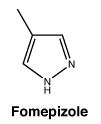
Fomepizole injection is a competitive inhibitor of alcohol dehydrogenase. The chemical name of fomepizole is 4-methylpyrazole. It has the molecular formula C4H6N2 and a molecular weight of 82.1 g/mol. It is a clear to yellow liquid at room temperature. Its melting point is 25°C and it may present as a solid at room temperature. Fomepizole is soluble in water and very soluble in ethanol, diethyl ether, and chloroform.
Chemical structure.
CAS number. 7554-65-6.
7 Medicine Schedule (Poisons Standard)
Prescription Medicine S4.
Date of First Approval
01 December 2016
Date of Revision
26 October 2020
Summary Table of Changes

Reasonable care is taken to provide accurate information at the time of creation. This information is not intended as a substitute for medical advice and should not be exclusively relied on to manage or diagnose a medical condition. The Australian Commission on Safety and Quality in Health Care disclaims all liability (including for negligence) for any loss, damage, injury or any other negative effects resulting from reliance on or use of this information. Read our full disclaimer. This website uses cookies. Read our privacy policy.