
ARX Ganirelix Injection
Brand Information
| Brand name | ARX Ganirelix Injection |
| Active ingredient | Ganirelix |
| Schedule | S4 |
Consumer Medicine Information (CMI) leaflet
Please read this leaflet carefully before you start using the ARX Ganirelix Injection.
Summary CMI
ARX GANIRELIX injection
Consumer Medicine Information (CMI) summary
The full CMI on the next page has more details. If you are worried about using this medicine, speak to your doctor or pharmacist.
1. Why am I using ARX GANIRELIX injection?
ARX GANIRELIX injection contains the active ingredient ganirelix acetate. ARX GANIRELIX injection is used with other medications to regulate hormone response in women undergoing Assisted Reproductive Technology such as in vitro fertilisation. This medicine works by preventing women from releasing an egg from the ovary too soon during stimulation of their ovaries, to produce a mature egg.
For more information, see Section 1. Why am I using ARX GANIRELIX injection? in the full CMI.
2. What should I know before I use ARX GANIRELIX injection?
Do not use if you have ever had an allergic reaction to ganirelix or any of the ingredients listed at the end of the CMI.
Talk to your doctor if you have any other medical conditions, take any other medicines, or are pregnant or plan to become pregnant or are breastfeeding.
For more information, see Section 2. What should I know before I use ARX GANIRELIX injection? in the full CMI.
3. What if I am taking other medicines?
Some medicines may interfere with ARX GANIRELIX and affect how it works.
A list of these medicines is in Section 3. What if I am taking other medicines? in the full CMI.
4. How do I use ARX GANIRELIX injection?
- Treatment with ARX GANIRELIX injection should be started under the supervision of a fertility specialist. It is given as a injection under the skin in the thigh or stomach. The injection site should be changed every day.
- If your doctor or nurse decides you can give the injections yourself, they will teach you the injection technique.
- The usual dose is the contents of one pre-filled syringe once a day on specific days of the menstrual cycle. Your doctor will tell you when to inject ARX GANIRELIX injection.
More instructions can be found in Section 4. How do I use ARX GANIRELIX injection? in the full CMI.
5. What should I know while using ARX GANIRELIX injection?
| Things you should do |
|
| Things you should not do |
|
| Driving or using machines |
|
| Looking after your medicine |
|
For more information, see Section 5. What should I know while using ARX GANIRELIX injection? in the full CMI.
6. Are there any side effects?
Common side effects include redness, pain or swelling at injection site, headache, nausea, and tiredness.
Serious side effects include shortness of breath, wheezing, difficulty breathing, a tight feeling in your chest, swelling of the face, lips, tongue and/or throat that may cause breathing or swallowing difficulty, or other parts of the body, rash, itching, hives or flushed, red skin.
For more information, including what to do if you have any side effects, see Section 6. Are there any side effects? in the full CMI.
Full CMI
ARX GANIRELIX injection
Active ingredient: ganirelix acetate
Consumer Medicine Information (CMI)
This leaflet provides important information about using ARX GANIRELIX injection. You should also speak to your doctor or pharmacist if you would like further information or if you have any concerns or questions about using ARX GANIRELIX injection.
Where to find information in this leaflet:
1. Why am I using ARX GANIRELIX injection?
2. What should I know before I use ARX GANIRELIX injection?
3. What if I am taking other medicines?
4. How do I use ARX GANIRELIX injection?
5. What should I know while using ARX GANIRELIX injection?
6. Are there any side effects?
7. Product details
1. Why am I using ARX GANIRELIX injection?
ARX GANIRELIX injection contains the active ingredient ganirelix acetate.
ARX GANIRELIX injection is used together with other medications to regulate hormone response in women undergoing Assisted Reproductive Technology such as in vitro fertilisation (IVF).
ARX GANIRELIX injection works by preventing women from ovulating (releasing an egg from the ovary) too soon during stimulation of their ovaries to produce a mature egg.
Ask your doctor if you have any questions about why this medicine has been prescribed for you.
2. What should I know before I use ARX GANIRELIX injection?
Warnings
Do not use ARX GANIRELIX injection if:
- you are allergic (hypersensitive) to ganirelix or to any other components of ARX GANIRELIX injection, including the ingredients listed at the end of this leaflet
Always check the ingredients to make sure you can use this medicine. - you are allergic to any other similar medicines
- you are pregnant
- you are breastfeeding
- you have moderate to severe kidney or liver disease
- the solution is not clear and colourless
- the expiry date on the pack has passed
- the package shows any signs of tampering
If you are not sure whether you should start using ARX GANIRELIX injection, talk to your doctor.
Check with your doctor if:
- you have allergies to any other medicines, substances such as foods, preservatives or dyes
- you are currently experiencing allergic symptoms
- you have any other medical conditions
During treatment, you may be at risk of developing certain side effects. It is important you understand these risks and how to monitor for them. See additional information under Section 6. Are there any side effects?
Cases of allergic reactions, both generalised and local, including hives (urticaria), swelling of the face, lips, tongue and/or throat that may cause difficulty in breathing or swallowing (angioedema and/or anaphylaxis) have been reported, as early as with the first dose. (See also Side Effects). If you have an allergic reaction, stop taking ARX GANIRELIX injection and seek immediate medical assistance.
Pregnancy and breastfeeding
Check with your doctor if you are pregnant or intend to become pregnant.
Talk to your doctor if you are breastfeeding or intend to breastfeed.
Congenital malformations
The incidence of congenital malformations (a physical defect present in a baby at birth) after assisted reproductive technology (ART) may be slightly higher than after spontaneous conceptions. This may be due other factors (e.g. age of the female, sperm characteristics, multiple gestations after ART). The incidence of congenital malformations after ART using ARX GANIRELIX injection is not different from using different ART treatments.
3. What if I am taking other medicines?
Tell your doctor or pharmacist if you are taking any other medicines, including any medicines, vitamins or supplements that you buy without a prescription from your pharmacy, supermarket or health food shop.
ARX GANIRELIX injection must not be mixed with other medicinal products.
Check with your doctor or pharmacist if you are not sure about what medicines, vitamins or supplements you are taking and if these affect ARX GANIRELIX injection.
4. How do I use ARX GANIRELIX injection?
How to use
Treatment with ARX GANIRELIX injection should be started under the supervision of a fertility specialist.
ARX GANIRELIX injection is given as a subcutaneous (under the skin) injection in the thigh or stomach.
The injection site should be changed every day to lessen possible injection site reactions.
If your doctor or nurse decides you can give the injections yourself, they will teach you the injection technique.
Do not attempt self-injection until you are sure of how to do it.
Follow all instructions given to you by your doctor or nurse carefully.
How much to inject
The usual dose is the contents of one pre-filled syringe of ARX GANIRELIX injection once a day on specific days of the menstrual cycle. Your doctor will tell you when to inject ARX GANIRELIX injection.
You may notice air bubbles in the pre-filled syringe. This is expected, and removal of the air bubbles is not needed.
How to use ARX GANIRELIX injection
Follow these steps:
- Prepare the injection site
Wash your hands thoroughly with soap and water. Swab the injection site with a disinfectant to remove any surface bacteria. Clean about 5 cm around the point where the needle will go in. Let the disinfectant dry for at least one minute before proceeding.
- Open the outer pack and plastic container inside
While waiting for the disinfectant to dry, open the ARX GANIRELIX pack and remove the plastic container. Carefully open the plastic container and remove the ARX GANIRELIX syringe. You will see the needle is already attached, covered by a grey needle shield.
- Prepare the syringe for injection
Remove needle shield and discard it in a sharps-disposable bin. You are now ready to inject ARX GANIRELIX.
- Inserting the needle and injecting
ARX GANIRELIX is injected in either the thigh or the abdomen, usually near the navel.
Pinch up a large bit of skin between your finger and thumb. Insert the needle at the base of the pinched-up skin at an angle of 45 degrees to 90 degrees to the skin surface. Gently draw back on the plunger to see if the needle is inserted correctly.
If any blood appears in the syringe, the needle is not inserted correctly so do not inject ARX GANIRELIX. Remove the needle, cover the injection site with a sterile swab and dispose of the syringe in a sharps-disposable container. Start again with a new syringe.
If the needle has been inserted correctly, depress the plunger slowly and steadily until all the solution has been injected.
Vary the injection site each time to minimise local irritation.
- Removing the needle
Pull the needle out of the skin quickly and apply pressure to the site with a swab containing disinfectant. Dispose of the syringe (with the attached needle) in a Sharps Container.
Use the syringe only once and then dispose of it in the Sharps Container.
How long to use ARX GANIRELIX injection
Your doctor will tell you when to inject ARX GANIRELIX and when to stop injecting it.
If you forget to use ARX GANIRELIX injection
If you forget an injection, contact your doctor or IVF clinic immediately for advice.
Do not inject a double-dose to make up for the forgotten dose.
If you inject too much
If you think that you have used too much ARX GANIRELIX, you may need urgent medical attention.
You should immediately:
- phone the Poisons Information Centre
(by calling 13 11 26), or - contact your doctor, or
- go to the Emergency Department at your nearest hospital.
You should do this even if there are no signs of discomfort or poisoning.
5. What should I know while using ARX GANIRELIX injection?
Things you must do
Contact your doctor immediately if you have severe pelvic pain, nausea and vomiting and weight gain. These are early warning signs of Ovarian Hyperstimulation Syndrome (OHSS).
Other symptoms of OHSS can include:
- indigestion
- diarrhoea
- shortness of breath
- reduced amounts of urine
- painful breast
OHSS is a possible complication of hormonal stimulation of the ovaries.
Keep all of your doctor's appointments so that your progress can be checked.
Your doctor will want to follow the developing eggs inside the ovaries by doing an ultrasound examination and measuring hormones in your blood.
Make sure that all doctors, dentists and pharmacists who are treating you know you are using ARX GANIRELIX injection.
Tell the hospital doctor that you are using ARX GANIRELIX injection if you need to have an operation, or go to hospital in an emergency.
If you are about to be started on any new medicine, tell your doctor or pharmacist that you are using ARX GANIRELIX injection.
Things you must not do
If you are self injecting:
- do not stop using ARX GANIRELIX injection without telling your doctor
- do not change the dose unless your doctor tells you to
Changing your dose without telling your doctor can increase your risk of unwanted side effects or can prevent the drug from working properly.
Do not give this medicine to anyone else, even if they have the same condition as you.
Do not use this medicine to treat any other complaints.
Things to be careful of
Compared to natural conception, the frequency of multiple pregnancies and births is increased in patients undergoing assisted reproductive techniques. Discuss the risk of multiple pregnancies and births with your doctor.
Driving or using machines
No effects on ability to drive and use machines have been observed.
Looking after your medicine
Keep ARX GANIRELIX injection below 25°C. Do not put it in the freezer as the syringe may break.
Keep the syringe in the outer carton to protect it from light. Follow the instructions in the carton on how to take care of your medicine properly.
Store it in a cool dry place away from moisture, heat or sunlight; for example, do not store it:
- in the bathroom or near a sink, or
- in the car or on window sills.
A locked cupboard at least one-and-a-half-metres above the ground is a good place to store medicines
Keep it where young children cannot reach it.
When to discard your medicine
If your doctor tells you to stop using ARX GANIRELIX injection or the expiry date has passed, ask your pharmacist or IVF clinic what to do with any ARX GANIRELIX injection that is left over.
Getting rid of any unwanted medicine
If you no longer need to use this medicine or it is out of date, take it to any pharmacy for safe disposal.
Dispose of your ARX GANIRELIX syringe and needle safely into a yellow plastic Sharps Container.
6. Are there any side effects?
All medicines can have side effects. If you do experience any side effects, most of them are minor and temporary. However, some side effects may need medical attention.
See the information below and, if you need to, ask your doctor or pharmacist if you have any further questions about side effects.
Less serious side effects
| Less serious side effects | What to do |
| Speak to your doctor if you have any of these less serious side effects and they worry you. |
Serious side effects
| Serious side effects | What to do |
Respiratory
| Call your doctor straight away, or go straight to the Emergency Department at your nearest hospital if you notice any of these serious side effects. |
Tell your doctor or pharmacist if you notice anything else that may be making you feel unwell.
Other side effects not listed here may occur in some people.
Reporting side effects
After you have received medical advice for any side effects you experience, you can report side effects to the Therapeutic Goods Administration online at www.tga.gov.au/reporting-problems. By reporting side effects, you can help provide more information on the safety of this medicine.
Always make sure you speak to your doctor or pharmacist before you decide to stop taking any of your medicines.
7. Product details
This medicine is only available with a doctor's prescription. This medicine is not addictive.
What ARX GANIRELIX injection contains
| Active ingredient (main ingredient) | ganirelix acetate |
| Other ingredients (inactive ingredients) | glacial acetic acid mannitol sodium hydroxide water for injections |
Do not take this medicine if you are allergic to any of these ingredients.
What ARX GANIRELIX injection looks like
ARX GANIRELIX injection is a clear colourless solution.
(AUST R 409682).
Each syringe contains 250 micrograms of ganirelix (as acetate).
ARX GANIRELIX injection is available in packs of 1 or 5 pre-filled syringes.
Who distributes ARX GANIRELIX injection
Arrotex Pharmaceuticals Pty Ltd
15 – 17 Chapel Street
Cremorne VIC 3121
This leaflet was prepared in May 2026.
Brand Information
| Brand name | ARX Ganirelix Injection |
| Active ingredient | Ganirelix |
| Schedule | S4 |
MIMS Revision Date: 01 January 2026
1 Name of Medicine
Ganirelix acetate.
2 Qualitative and Quantitative Composition
ARX Ganirelix 250 microgram ganirelix (as acetate)/0.5 mL solution for injection. ARX Ganirelix contains the synthetic decapeptide ganirelix (INN) as its acetate salt, with high antagonistic activity to the naturally occurring gonadotropin releasing hormone (GnRH).
Each prefilled syringe contains 250 microgram ganirelix (as acetate) in 0.5 mL.
For the full list of excipients, see Section 6.1 List of Excipients.
3 Pharmaceutical Form
Solution for injection.
ARX Ganirelix (ganirelix acetate) is presented as a sterile, ready for use, clear and colourless aqueous solution intended for subcutaneous administration.
4 Clinical Particulars
4.1 Therapeutic Indications
For the prevention of premature luteinisation and ovulation in patients undergoing controlled ovarian stimulation, followed by oocyte pick up and assisted reproductive techniques.
4.2 Dose and Method of Administration
ARX Ganirelix should only be prescribed by a specialist experienced in the treatment of fertility.
Dosage. ARX Ganirelix is used to prevent premature LH surges in patients undergoing COH. Controlled ovarian hyperstimulation with FSH may start at day 2 or 3 of menses. ARX Ganirelix (0.25 mg) should be injected subcutaneously once daily, starting from day 5 or day 6 of FSH administration depending on the level of ovarian response. ARX Ganirelix should not be mixed with FSH but both preparations should be administered approximately at the same time. Daily treatment with ARX Ganirelix should be continued up to the day that sufficient follicles of adequate size are present. Final maturation of follicles can be induced by administering hCG. Because of the half-life of ganirelix, the time between two ARX Ganirelix injections and between the last ARX Ganirelix injection and the hCG injection should not exceed 30 hrs, as otherwise a premature LH surge may occur.
Method of administration. Inspect the solution before use. It must only be used if it is clear and without particulate matter.
ARX Ganirelix should be administered subcutaneously. The injection site should be varied to prevent lipoatrophy. The patient or her partner may perform the injections of ARX Ganirelix themselves, provided that they are adequately instructed and have access to expert advice. Air bubble(s) may be seen in the pre-filled syringe. This is expected, and removal of the air bubble(s) is not needed.
Product is for single use in one patient only. Discard any residue.
4.3 Contraindications
Hypersensitivity to the active substance or to any of the components, see Section 6.1 List of Excipients.
Hypersensitivity to GnRH or any other GnRH analogue.
Pregnancy or lactation.
Moderate to severe renal impairment and hepatic impairment.
4.4 Special Warnings and Precautions for Use
Special care should be taken in women with signs and symptoms of active allergic conditions. Cases of hypersensitivity reactions (both generalised and local), have been reported with ARX Ganirelix, as early as with the first dose, during post-marketing surveillance. These events have included anaphylaxis (including anaphylactic shock), angioedema, and urticaria. (See Section 4.8 Adverse Effects (Undesirable Effects)). If a hypersensitivity reaction is suspected, ARX Ganirelix should be discontinued and appropriate treatment administered. Use of ARX Ganirelix in patients with active allergic symptoms has not been investigated. Administration of ARX Ganirelix is not advised to patients with currently severe allergic symptoms. Patients should be advised to contact the attending physician before administering the next injection in case a general or an extensive local allergic reaction occurs.
Ovarian hyperstimulation syndrome (OHSS) may occur during or following ovarian stimulation. OHSS must be considered an intrinsic risk of gonadotrophin stimulation. OHSS should be treated symptomatically, e.g. with rest, intravenous infusion of electrolyte solutions or colloids and heparin.
Since infertile women undergoing assisted reproduction, and particularly IVF, often have tubal abnormalities, the incidence of ectopic pregnancies might be increased. Early ultrasound confirmation that a pregnancy is intrauterine is therefore important.
The safety and efficacy of ARX Ganirelix have not been established in women weighing less than 50 kg or more than 90 kg.
Congenital abnormalities. The incidence of congenital malformations after Assisted Reproductive Technologies (ART) may be slightly higher than after spontaneous conceptions. This slightly higher incidence is thought to be related amongst other factors, to differences in parental characteristics (e.g. maternal age, sperm characteristics) and by the higher incidence of multiple gestations after ART. In clinical trials investigating more than 1000 newborns it has been demonstrated that the incidence of congenital malformation in children born after Controlled Ovarian Hyperstimulation (COH) treatment using ARX Ganirelix is comparable with that reported after COH treatment using a GnRH agonist.
Use in hepatic impairment. See Section 4.3 Contraindications.
Use in renal impairment. See Section 4.3 Contraindications.
Use in the elderly. No data available.
Paediatric use. There is no relevant use of ARX Ganirelix in the paediatric population.
Effects on laboratory tests. No data available.
4.5 Interactions with Other Medicines and Other Forms of Interactions
In clinical studies, interactions of ARX Ganirelix with other medicines have not been investigated. Therefore, interactions with commonly used medicinal products cannot be excluded.
In the absence of incompatibility studies, this medicinal product must not be mixed with other medicinal products.
4.6 Fertility, Pregnancy and Lactation
Effects on fertility. Ganirelix treatment of female rats resulted in reversible impairment of mating and fertility at a subcutaneous dose of 2.5 microgram/kg/day, and reversible cessation of mating was seen in males treated with a subcutaneous dose of 0.1 mg/kg/day.
Use in pregnancy. (Category D)
ARX Ganirelix is not intended to be used during pregnancy (see Section 4.3 Contraindications). No clinical data on exposed pregnancies are available.
Studies in animals have indicated that ganirelix increased the incidence of total fetal resorptions when administered to pregnant rats and rabbits during the period of organogenesis, at respective doses of 10 microgram/kg/day and 30 microgram/kg/day (approximately 0.4 and 3 times the human dose, based on body surface area). The effects on fetal resorption are logical consequences of the alteration in hormonal levels brought about by the antigonadotrophic properties of ARX Ganirelix and could result in fetal loss in humans. There was no increase in fetal abnormalities. No treatment related changes in fertility, physical or behavioural characteristics were observed in the offspring of female rats treated with ganirelix during pregnancy and lactation.
Use in lactation. ARX Ganirelix should not be used by lactating women (see Section 4.3 Contraindications). It is not known whether ganirelix is excreted into animal or human breast milk. Subcutaneous ganirelix doses of 2.5 microgram/kg/day given to lactating rats did not result in impairment of postnatal development of the offspring.
4.7 Effects on Ability to Drive and Use Machines
The effects of this medicine on a person's ability to drive and use machines were not assessed as part of its registration.
4.8 Adverse Effects (Undesirable Effects)
General disorders and administrative site conditions. Ganirelix acetate may cause a skin reaction (in 10% - 15% of the patients moderate or severe redness with or without swelling was reported) at the site of injection, which normally disappears within 4 hours after administration. Malaise was reported in 0.3% of patients.
Immune system disorders. Very rarely, post-marketing cases of hypersensitivity reactions (including rash, facial swelling, dyspnea, anaphylaxis (including anaphylactic shock), angioedema, and urticaria) have been reported, as early as with the first dose, among patients administered ganirelix acetate.
Nervous system disorders. Headache (0.4%).
Gastrointestinal disorders. Nausea (0.5%).
Other reported adverse events are rather related to the controlled ovarian hyperstimulation treatment for assisted reproduction technique (ART) than to ganirelix acetate (e.g. pelvic pain, abdominal distension, ovarian hyperstimulation syndrome (OHSS), ectopic pregnancy and spontaneous abortion).
Reporting suspected adverse effects. Reporting suspected adverse reactions after registration of the medicinal product is important. It allows continued monitoring of the benefit-risk balance of the medicinal product. Healthcare professionals are asked to report any suspected adverse reactions at www.tga.gov.au/reporting-problems and contact Arrotex Medical Information Enquiries/Adverse Drug Reaction Reporting on 1800 195 055.
4.9 Overdose
Overdosage in humans may result in a prolonged duration of action. In case of overdose, ganirelix acetate treatment should be (temporarily) discontinued.
No data on acute toxicity of ganirelix acetate in humans are available. Clinical studies with subcutaneous administration of ganirelix acetate at single doses up to 12 mg did not show systemic side-effects. Clinical signs of systemic toxicity including collapse, laboured respiration and inactivity in rats or facial flushing in monkeys were observed after intravenous administration of ganirelix at 2.0 and 3.0 mg/kg, respectively. Blood pressure was also reduced by about 50% in rats treated with an intravenous ganirelix dose of 0.9 mg/kg.
For information on the management of overdose, contact the Poisons Information Centre on 131126 (Australia).
5 Pharmacological Properties
5.1 Pharmacodynamic Properties
Pharmacotherapeutic group: anti-gonadotrophin releasing hormone; ATC code: H01CC01.
Mechanism of action. Ganirelix acetate is a GnRH antagonist, which modulates the hypothalamic-pituitary-gonadal axis by competitively binding to the GnRH receptors in the pituitary gland. As a result, a rapid, reversible suppression of endogenous gonadotropins occurs, without initial stimulation as induced by GnRH agonists. The inhibitory effect of ganirelix acetate on the release of LH is more pronounced than on FSH. When LH has started to rise prior to the first administration of ganirelix acetate, a premature LH surge can still be prevented.
Important features of the GnRH-antagonist regimen:
within a few hours suppression of gonadotropin release due to GnRH receptor blockade;
ganirelix acetate treatment is restricted to those days when a premature LH surge may occur. Therefore, the overall duration of treatment is only several days;
less suppression of endogenous FSH and therefore less FSH required;
recovery of pituitary functioning within two days following discontinuation of the treatment;
the competitive mode of action of ganirelix acetate may allow the administration of a GnRH agonist instead of hCG to trigger ovulation, which is especially relevant for patients at risk of developing OHSS;
generally, estradiol levels are lower (though remaining above natural cycle levels) compared to the relatively high levels in the agonist regimen.
Clinical trials. The efficacy of ganirelix acetate injection was established in three clinical studies. In these studies, the administration of exogenous recombinant FSH [Puregon (follitropin beta for injection)] was initiated on the morning of Day 2 or 3 of a natural menstrual cycle. Ganirelix acetate was administered on the morning of Day 7 or 8 (Day 6 of recombinant FSH administration). The dose of recombinant FSH administered was adjusted according to individual responses starting on the day of initiation of ganirelix acetate. Both recombinant FSH and ganirelix acetate were continued daily until at least three follicles were 17 mm or greater in diameter at which time hCG [Pregnyl (chorionic gonadotropin for injection)] was administered. Following hCG administration, ganirelix acetate and recombinant FSH administration were discontinued. Oocyte retrieval, followed by in vitro fertilisation (IVF) or intracytoplasmic sperm injection (ICSI), was subsequently performed.
In a multicenter, double blind, randomised, dose finding study (protocol 38602), ganirelix acetate doses ranging from 62.5 microgram to 2,000 microgram and recombinant FSH were administered to 332 patients undergoing COH for IVF. The results of the selected dose (250 microgram) are summarized in Table 1.
Two multicentre, open-label, randomised studies (protocol 38607 and 103-001) were conducted in which follicular phase treatment with ganirelix acetate 250 microgram was studied using a GnRH agonist as a reference treatment. A total of 661 subjects were treated with ganirelix acetate by subcutaneous injection once daily starting on Day 6 of recombinant FSH treatment. Recombinant FSH was maintained at 150 IU or 225 IU in the 38607 and 103-001 study, respectively for the first 5 days of ovarian stimulation and was then adjusted by the investigator on the sixth day of gonadotropin use according to individual responses. The results for the ganirelix acetate arm are summarized in Table 1.
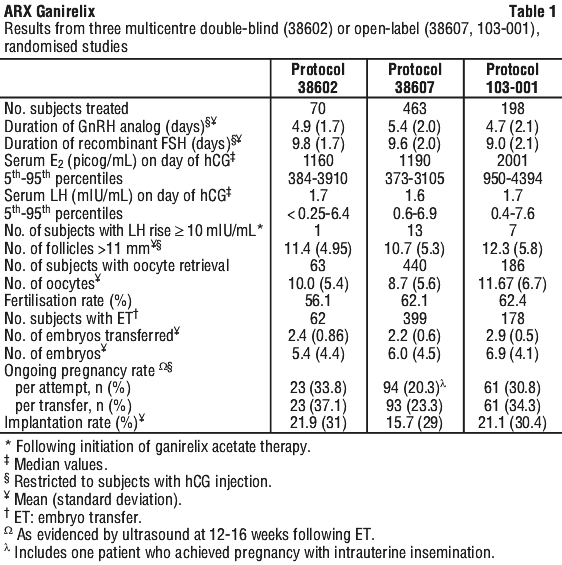
In subjects administered ganirelix acetate 250 microgram, a premature LH surge prior to hCG administration, (LH rise ≥ 10 mIU/mL with a significant rise in serum progesterone > 2 nanogram/mL, or a significant decline in serum estradiol) occurred in less than 1% of subjects.
In case of high ovarian response, as assessed by the number and size of growing follicles and/or the amount of circulating estradiol, either as a result of a high FSH exposure in the early follicular phase or as a result of high ovarian responsiveness, premature LH rises may occur earlier than day 6 of stimulation. Initiation of ganirelix acetate treatment on day 5 can effectively prevent these premature LH rises without compromising the clinical outcome.
5.2 Pharmacokinetic Properties
Absorption. After a single subcutaneous administration of 250 microgram, serum levels of ganirelix rise rapidly and reach peak levels (Cmax) of approximately 15 nanogram/mL within 1 to 2 hrs (tmax). The bioavailability of ganirelix acetate following subcutaneous administration is approximately 91%.
Pharmacokinetic parameters after multiple subcutaneous dosing of ganirelix acetate (once daily injection) were similar to those after a single subcutaneous dose. After repeated dosing at 0.25 mg/day, steady-state levels of approximately 0.6 nanogram/mL were reached within 2 to 3 days.
Distribution. The mean (SD) volume of distribution of ganirelix acetate in healthy females following intravenous administration of a single 250 microgram dose is approximately 44 (± 11) liters. In vitro protein binding to human plasma is approximately 82%.
Metabolism. The major circulating component in plasma is ganirelix. Ganirelix is also the main compound found in urine, and faeces only contained metabolites.
Excretion. After a single subcutaneous administration of 250 microgram, the elimination half-life (t1/2) is approximately 13 hrs and clearance is approximately 2.4 L/h.
In a radiolabelled study (n = 3), ganirelix acetate was excreted via faeces (approximately 75%) and urine (approximately 22%).
5.3 Preclinical Safety Data
Genotoxicity. Ganirelix showed no evidence of genotoxicity in assays for gene mutation in bacterial or mammalian cells. Ganirelix was not clastogenic in tests for chromosomal damage in Chinese hamster ovary cells in vitro and for micronucleus formation in mice in vivo.
Carcinogenicity. Long-term carcinogenicity studies with ganirelix have not been carried out.
6 Pharmaceutical Particulars
6.1 List of Excipients
The ARX Ganirelix solution for injection also contains glacial acetic acid, mannitol and water for injections. The pH may have been adjusted with sodium hydroxide and/or glacial acetic acid.
6.2 Incompatibilities
See Section 4.2 Dose and Method of Administration; Section 4.5 Interactions with Other Medicines and Other Forms of Interactions.
6.3 Shelf Life
In Australia, information on the shelf life can be found on the public summary of the Australian Register of Therapeutic Goods (ARTG). The expiry date can be found on the packaging.
6.4 Special Precautions for Storage
Store at room temperature below 30°C, in the original package. Do not freeze as the syringe may break. Protect from light.
6.5 Nature and Contents of Container
ARX Ganirelix is supplied in disposable prefilled syringes (siliconised Type I glass), containing 250 microgram ganirelix/0.5 mL. Each prefilled syringe is affixed with a needle closed by a needle shield (see Section 4.4 Special Warnings and Precautions for Use).
Boxes of ARX Ganirelix contain 1 or 5 prefilled syringes.
6.6 Special Precautions for Disposal
This product is for single use only. Discard any remaining contents.
Any unused product or waste material should be disposed of in accordance with local requirements.
6.7 Physicochemical Properties
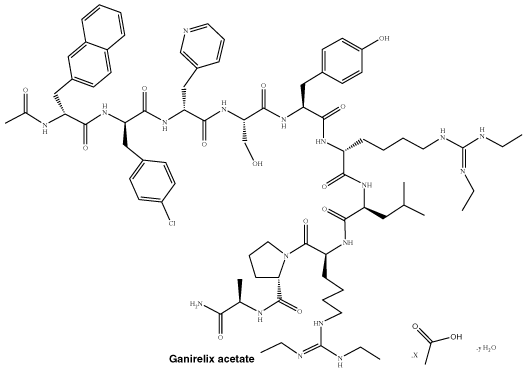
The amino acids at positions 1, 2, 3, 6, 8 and 10 of the natural GnRH decapeptide have been substituted resulting in Ac-D-Nal-D-4-CI-Phe-D-Pal-L-Ser-L-Tyr-diEt-hArg-L-Leu-diEt- hArg-L- Pro-D-Ala-NH2 with a molecular weight of 1570.4 (anhydrous free base).
Molecular formula: C80H113N18O13Cl as the free base.
Chemical structure.
7 Medicine Schedule (Poisons Standard)
Prescription Only Medicine (Schedule 4).
Date of First Approval
23 May 2024
Date of Revision
21 November 2025
Summary Table of Changes

Reasonable care is taken to provide accurate information at the time of creation. This information is not intended as a substitute for medical advice and should not be exclusively relied on to manage or diagnose a medical condition. The Australian Commission on Safety and Quality in Health Care disclaims all liability (including for negligence) for any loss, damage, injury or any other negative effects resulting from reliance on or use of this information. Read our full disclaimer. This website uses cookies. Read our privacy policy.