
Benpen
Brand Information
| Brand name | Benpen |
| Active ingredient | Benzylpenicillin sodium |
| Schedule | S4 |
Consumer Medicine Information (CMI) leaflet
Please read this leaflet carefully before you start using the Benpen.
Summary CMI
BENPEN®
Consumer Medicine Information (CMI) summary
The full CMI on the next page has more details. If you are worried about using this medicine, speak to your doctor, nurse or pharmacist.
1. Why am I using BENPEN?
BENPEN contains the active ingredient benzylpenicillin sodium. BENPEN is used to treat bacterial infections.
For more information, see Section 1. Why am I using BENPEN? in the full CMI.
2. What should I know before I am given BENPEN?
Do not use if you have ever had an allergic reaction to BENPEN, other penicillins or cephalosporins, or any of the ingredients listed at the end of the CMI.
Talk to your doctor, nurse or pharmacist if you have any other medical conditions, take any other medicines, or are pregnant or plan to become pregnant or are breastfeeding.
For more information, see Section 2. What should I know before I am given BENPEN? in the full CMI.
3. What if I am taking other medicines?
Some medicines may interfere with BENPEN and affect how it works.
A list of these medicines is in Section 3. What if I am taking other medicines? in the full CMI.
4. How is BENPEN given?
- BENPEN is an injection and will be given to you by a doctor or nurse. It can be given as an injection into a muscle or a vein.
- Your doctor will decide on the dose and how long you need to receive BENPEN.
More instructions can be found in Section 4. How is BENPEN given? in the full CMI.
5. What should I know while using BENPEN?
| Things you should do |
|
| Things you should not do |
|
| Driving or using machines |
|
| Looking after your medicine |
|
For more information, see Section 5. What should I know while using BENPEN? in the full CMI.
6. Are there any side effects?
Tell your doctor, nurse or pharmacist if you notice any of the following and they worry you: you develop itching with swelling or skin rash or difficulty breathing after you have been given BENPEN, as these are symptoms of an allergic reaction; you get severe diarrhoea.
For more information, including what to do if you have any side effects, see Section 6. Are there any side effects? in the full CMI.
Full CMI
1. Why am I using BENPEN?
BENPEN contains the active ingredient benzylpenicillin sodium. BENPEN is an antibiotic that belongs to a group of medicines called penicillins. These antibiotics work by killing the bacteria that are causing your infection.
BENPEN is used to treat infections in different parts of the body caused by bacteria.
BENPEN may also be used to prevent infections before, during and after surgery.
BENPEN will not work against infections caused by viruses, such as colds or the flu.
Your doctor may have prescribed BENPEN for another reason. Ask your doctor why BENPEN has been prescribed for you.
This medicine is available only with a doctor's prescription.
2. What should I know before I am given BENPEN?
Warnings
Do not use BENPEN if:
- you are allergic to benzylpenicillin or other penicillins.
Some of the symptoms of an allergic reaction may include skin rash, swelling of the face, lips, tongue or other parts of the body, itching and difficult breathing. - you have had an allergic reaction to cephalosporin medicines. You may have an increased chance to being allergic to BENPEN if you are allergic to cephalosporins.
Check with your doctor if you:
- have an allergy to BENPEN or any other penicillin or cephalosporin medicines
- have any other medical conditions, including asthma, kidney, or liver disease
- take any medicines for any other condition
During treatment, you may be at risk of developing certain side effects. It is important you understand these risks and how to monitor for them. See additional information under Section 6. Are there any side effects?
Pregnancy and breastfeeding
Check with your doctor if you are pregnant or intend to become pregnant.
Talk to your doctor if you are breastfeeding or intend to breastfeed. Benzylpenicillin passes into breast milk.
Your doctor can discuss with you the risks and benefits involved.
3. What if I am taking other medicines?
Tell your doctor, nurse or pharmacist if you are taking any other medicines, including any medicines, vitamins or supplements that you buy without a prescription from your pharmacy, supermarket or health food shop.
Some medicines may interfere with BENPEN and affect how it works.
These include:
- probenecid
- tetracyclines
- erythromycin
- chloramphenicol
These medicines may affect BENPEN and how well it works. You may need different amounts of your medicine, or you may need to take different medicines.
Some antibiotics may decrease the effectiveness of some birth control pills. Talk to your doctor or pharmacist about the need for an additional method of contraception while taking BENPEN.
Check with your doctor, nurse or pharmacist if you are not sure about what medicines, vitamins or supplements you are taking and if these affect BENPEN.
4. How is BENPEN given?
BENPEN may be given in two ways:
- as a slow injection into a vein
- as a deep injection into a large muscle
BENPEN will be given to you by a doctor or nurse.
How much to use and when to use it
Your doctor will decide what dose and for how long you will receive BENPEN. This depends on your infection and other factors, such as your weight. For most infections, BENPEN is usually given in divided doses throughout the day. Sometimes only a single dose of BENPEN is required for the treatment and prevention of certain infections.
Each BENPEN vial is used for one dose in one patient only. Any remaining contents must be discarded after each dose to reduce microbiological contamination.
If you use too much BENPEN
This is unlikely to happen as BENPEN is administered under the care of a doctor. However, if you are given too much BENPEN, you may experience some of the effects listed under ‘Side Effects’ below. Your doctor has information on how to recognise and treat an overdose. Ask your doctor if you have any concerns. If you think that you have been given too much BENPEN, you may need urgent medical attention.
You should immediately:
- phone the Poisons Information Centre
(by calling 13 11 26), or - contact your doctor, or
- go to the Emergency Department at your nearest hospital.
You should do this even if there are no signs of discomfort or poisoning.
5. What should I know while using BENPEN?
Things you should do
Call your doctor straight away if:
- you develop itching with swelling or skin rash or difficulty breathing after you have been given BENPEN, as these are symptoms of an allergic reaction
- you get severe diarrhoea. Do this even if it occurs several weeks after BENPEN has been stopped. Diarrhoea may mean that you have a serious condition affecting your bowel. You may need urgent medical care. Do not take any diarrhoea medicine without first checking with your doctor
- you get a sore white mouth or tongue after you have been given BENPEN. Also tell your doctor if you get vaginal itching or discharge. This may mean you have a fungal infection called thrush. Sometimes the use of BENPEN allows fungi to grow and the above symptoms to occur. BENPEN does not work against fungi.
- the symptoms of your infection do not improve within a few days, or if they become worse
- you become pregnant during BENPEN treatment.
Remind any doctor, dentist or pharmacist you visit that you are using BENPEN.
If you have any blood or urine tests, tell your doctor you have been given BENPEN. BENPEN may affect the results of some tests.
Things you should not do
- Do not stop BENPEN treatment because you are feeling better, unless advised by your doctor.
If you do not complete the full course prescribed by your doctor, the bacteria causing your infection may not all be killed. These bacteria may continue to grow and multiply so that your infection may not clear completely or it may return.
Driving or using machines
Be careful before you drive or use any machines or tools until you know how BENPEN affects you.
BENPEN generally does not cause any problems with your ability to drive a car or operate machinery. However, as with many other medicines, BENPEN may cause dizziness, drowsiness, and tiredness in some people.
Looking after your medicine
BENPEN will be stored in the pharmacy, doctors' surgery or on the hospital ward. The powder for injection is kept protected from light in a cool dry place where the temperature stays below 25°C.
Getting rid of any unwanted medicine
Your healthcare professional will be responsible for discarding BENPEN.
6. Are there any side effects?
All medicines can have side effects. If you do experience any side effects, most of them are minor and temporary. However, some side effects may need medical attention.
See the information below and, if you need to, ask your doctor, nurse or pharmacist if you have any further questions about side effects.
Less serious side effects
| Less serious side effects | What to do |
Gastrointestinal:
| Speak to your doctor, nurse or pharmacist if you have any of these less serious side effects and they worry you. |
Serious side effects
| Serious side effects | What to do |
Signs of a serious allergic reaction:
| Call your doctor straight away, or go straight to the Emergency Department at your nearest hospital if you notice any of these serious side effects. |
Bacterial overgrowth in the bowel:
Do not take any diarrhoea medicine without first checking with your doctor | Tell your doctor immediately if you notice any of the following side effects, particularly if they occur several weeks after stopping treatment with BENPEN |
Tell your doctor, nurse or pharmacist if you notice anything else that may be making you feel unwell.
Other side effects not listed here may occur in some people. These include very rare cases of brain, blood and kidney disease.
Reporting side effects
After you have received medical advice for any side effects you experience, you can report side effects to the Therapeutic Goods Administration online at www.tga.gov.au/reporting-problems. By reporting side effects, you can help provide more information on the safety of this medicine.
Always make sure you speak to your doctor, nurse or pharmacist before you decide to stop taking any of your medicines.
7. Product details
This medicine is only available with a doctor's prescription.
What BENPEN contains
| Active ingredient (main ingredient) | Benzylpenicillin sodium |
| Other ingredients (inactive ingredients) | none |
Do not take this medicine if you are allergic to any of these ingredients.
What BENPEN looks like
BENPEN is a white to off-white powder that needs to be dissolved in water before it is injected.
600 mg AUST R 10329
1.2 g AUST R 10326
3 g AUST R 10327
Who distributes BENPEN
Seqirus Pty Ltd
ABN: 26 160 735 035
45 Poplar Road,
Parkville, Victoria 3052,
Australia
Telephone: 1800 642 865
www.cslseqirus.com.au
This leaflet was prepared in November 2025.
BENPEN® is a registered trademark of CSL Limited.
Brand Information
| Brand name | Benpen |
| Active ingredient | Benzylpenicillin sodium |
| Schedule | S4 |
MIMS Revision Date: 01 June 2023
1 Name of Medicine
Benzylpenicillin sodium.
2 Qualitative and Quantitative Composition
BenPen (benzylpenicillin sodium) is the sodium salt of (2S,5R,6R)-3,3-dimethyl- 7-oxo-6-[(phenylacetyl) amino]- 4-thia-1-azabicyclo [3.2.0]heptane- 2-carboxylic acid.
BenPen contains no antiseptic or buffering agent nor are there any excipients. Each 600 mg dose of BenPen contains 38.7 mg of sodium.
3 Pharmaceutical Form
BenPen is a fine white to off-white homogenous powder, which is soluble in water. The injection is prepared by the addition of the appropriate volume of water for injections to give the desired concentration of benzylpenicillin.
4 Clinical Particulars
4.1 Therapeutic Indications
For the treatment of infections caused by benzylpenicillin sensitive organisms. These include Streptococcus pyogenes and most other Gram-positive organisms. It is also indicated for the treatment of syphilis. BenPen may also be used for the prevention of bacterial endocarditis in dental and upper respiratory tract procedures, and prevention of wound infections and sepsis in surgical procedures where Streptococci are the likely pathogens.
4.2 Dose and Method of Administration
Dosage. The initial dose of BenPen should be sufficient to achieve a bactericidal concentration in the blood as rapidly as possible in order to prevent the emergence of resistant strains.
Precise dosage levels cannot be stated. The nature of the infection and the patients' response to therapy should determine the dose of BenPen and its frequency of administration. Benzylpenicillin may be given by intramuscular or intravenous injection.
The minimum dosage should be (see Table 1):

For severe infections or where more resistant organisms are involved, the dose may be increased in amount and frequency of administration. For some severe infections, 4 to 24 g may need to be given daily.
Special dosage recommendations. Meningeal infections. The initial dose of benzylpenicillin for children in the treatment of meningococcal meningitis is 600 mg followed by 300 mg intramuscularly every 4 to 6 hours; for pneumococcal meningitis at least 300 mg should be given every 4 hours for 14 days and then every 6 hours for 7 days.
Renal failure. In patients with severe renal damage, up to 6 g daily should be well tolerated, but massive doses, e.g. 20 g or more given intravenously may lead to convulsions and coma. If it is desired to give large doses to these patients, it is necessary to assess the daily maintenance dose of benzylpenicillin to achieve the desired serum penicillin concentration. A suitable method of assessment is based on the endogenous creatine clearance as follows.
Clearance of benzylpenicillin (mL/min) = 35.5 + 3.35 x creatine clearance (mL/minute).
The maintenance dose of benzylpenicillin (grams/24 hrs) = clearance of benzylpenicillin (mL/min) x desired serum penicillin concentration (microgram/mL) x 0.00138.
This is equally applicable to continuous and intermittent intravenous infusion.
Subacute bacterial endocarditis. Prolonged treatment is required with not less than 1.2 g daily in divided doses. Up to 24 g daily may be needed when the infecting organism is relatively resistant. Treatment must be continued for 4 to 6 weeks, e.g. patients with highly sensitive Strep. viridans or similar organisms should be given intravenous BenPen for 4 to 6 weeks in doses of 6 to 12 g daily.
Antimicrobial prophylaxis for surgery. Where the likely pathogens are Streptococci, 600 mg BenPen should be given intravenously immediately prior to surgery. For prolonged operations the same dose may be given 4 to 8 hourly for the duration of the procedure.
Clostridial infections. In conditions where infection with Clostridium perfringens is present, the dose of BenPen should be 1.2 g given intravenously 6 hourly for 48 hours, in addition to standard surgical procedures.
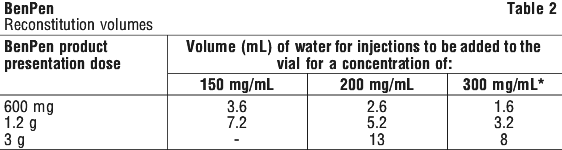
Method of administration. BenPen should be reconstituted with water for injections. To achieve a particular concentration, water for injections should be added to the vial according to Table 2.
When BenPen is reconstituted with water for injections, it must be used immediately to reduce microbiological hazard. BenPen is for one dose in one patient only. Discard any remaining contents.
Benzylpenicillin may be given by intramuscular or intravenous injection. The intravenous route is preferred in cases of shock as blood levels following intramuscular injection are unreliable in shock patients.
Intramuscular administration. For intramuscular administration, doses of 600 mg should be dissolved in 1.6 mL of water for injections and larger doses in the volume of water for injections indicated in Table 2 to give 300 mg per mL.
Intravenous administration. Intravenous administration may be by intermittent injections or by injection into an infusion line. It should not be added to an intravenous infusion bottle as benzylpenicillin is unstable at room temperature and may form highly allergenic derivatives.
Reconstitute and dilute each 600 mg of BenPen in a sufficient volume of water for injection to achieve a final concentration of 600 mg per 10 mL. This quantitative ratio produces an approximately isotonic solution with the recommended osmolarity for I.V. injection/infusion. Ringer's solution or other sodium containing solutions should not be used for reconstitution due to their additional electrolytic content.
Normal saline 0.9% and glucose 5% infusion line solutions have been shown to be compatible with reconstituted BenPen product.
4.3 Contraindications
History of hypersensitivity reactions to beta-lactam antibiotics.
4.4 Special Warnings and Precautions for Use
Serious, and occasionally fatal, hypersensitivity reactions (anaphylaxis) have been reported in patients receiving beta-lactam antibiotics. Although anaphylaxis is more frequent following parenteral therapy, it has occurred in patients on oral therapy. Before commencing therapy with any beta-lactam antibiotic, careful enquiries should be made concerning previous hypersensitivity reactions to penicillins, cephalosporins or other allergens. If a hypersensitivity reaction occurs, appropriate therapy should be instituted and BenPen therapy discontinued.
Serious anaphylactoid reactions require emergency treatment with adrenaline. Oxygen, intravenous steroids and airway management including intubation, should also be administered as indicated.
Antibiotic associated pseudomembranous colitis has been reported with many antibiotics including benzylpenicillin. A toxin produced by Clostridium difficile appears to be the primary cause. The severity of the colitis may range from mild to life threatening. It is important to consider this diagnosis in patients who develop diarrhoea or colitis in association with antibiotic use (this may occur up to several weeks after cessation of antibiotic therapy). Mild cases usually respond to drug discontinuation alone. However, in moderate to severe cases, appropriate therapy with a suitable oral antibacterial agent effective against Clostridium difficile should be considered. Fluids, electrolytes and protein replacement should be provided when indicated. Drugs which delay peristalsis, e.g. opiates and diphenoxylate with atropine (e.g. Lomotil) may prolong and/or worsen the condition and should not be used.
Caution should be exercised in the treatment of patients with an allergic diathesis.
Disturbances of blood electrolytes may follow the administration of large doses of sodium salts of benzylpenicillin. Each 1 g dose of BenPen contains 3.0 mmol of sodium. In prolonged therapy with benzylpenicillin and particularly with high dosage schedules, periodic evaluation of the electrolyte balance, renal and haematopoietic systems is recommended.
Prolonged use of antibiotics may promote overgrowth of susceptible organisms including fungi. Should superinfection occur, appropriate measures should be taken.
When BenPen is reconstituted with water for injections, it must be used immediately.
Severe cutaneous adverse reactions. Severe cutaneous adverse reactions (SCAR), such as Stevens-Johnson syndrome (SJS), toxic epidermal necrolysis (TEN), drug reaction with eosinophilia and systemic symptoms (DRESS) and acute generalized exanthematous pustulosis (AGEP) have been reported in patients taking beta-lactam antibiotics. When SCAR is suspected, benzylpenicillin should be discontinued immediately and an alternative treatment should be considered.
Use in the elderly. The renal elimination of penicillin is often reduced in elderly patients. If very high doses are required, the blood levels of penicillin should be monitored.
Paediatric use. See Section 4.2 Dose and Method of Administration for the recommended paediatric dosage.
Effect on laboratory tests. As administration of BenPen will result in high benzylpenicillin concentrations in the urine, false positive reactions may be elicited when testing the urine for glucose with Clinitest, Benedict's solution or Fehling's solution. Tests based on enzymatic glucose oxidase reactions such as Tes-Tape or Clinistix should be used instead.
4.5 Interactions with Other Medicines and Other Forms of Interactions
Probenecid decreases the renal tubular secretion of benzylpenicillin. Concurrent use with BenPen may result in increased and prolonged blood levels of benzylpenicillin.
Intravenous solutions of benzylpenicillin are physically incompatible with many other substances including certain antihistamines, some other antibiotics, metaraminol tartrate, noradrenaline acid tartrate, thiopentone sodium and phenytoin sodium.
Tetracyclines, erythromycin and chloramphenicol antagonise the action of benzylpenicillin.
Gentamicin should not be mixed with benzylpenicillin when both drugs are given parenterally as inactivation occurs.
In common with other antibiotics, patients should be warned that benzylpenicillin may reduce the effectiveness of oral contraceptives.
4.6 Fertility, Pregnancy and Lactation
Effects on fertility. No data available.
Use in pregnancy. (Category A)
Benzylpenicillin diffuses across the placenta into the foetal circulation. Animal studies with benzylpenicillin have shown no teratogenic effects. Benzylpenicillin has been in clinical use for over 50 years and the limited number of reported cases of use in human pregnancy have shown no evidence of untoward effect. The use of BenPen in pregnancy should be reserved for cases considered essential by the clinician.
Use in lactation. Benzylpenicillin is excreted in breast milk. An alternative feeding method is recommended to avoid any possible sensitisation of the newborn.
4.7 Effects on Ability to Drive and Use Machines
The effect of this medicine on person's ability to drive and use machines were not assessed as part of its registration.
4.8 Adverse Effects (Undesirable Effects)
As with all penicillins, the possibility of hypersensitivity reactions must always be considered. Reactions are more likely to occur in those with an allergic diathesis. Anaphylactic shock is most likely to occur with injected penicillins (see Section 4.4 Special Warnings and Precautions for Use).
The following adverse reactions have been reported in association with the use of benzylpenicillin:
Hypersensitivity reactions. Dermatological reactions are the most common hypersensitivity reactions and include rash, pruritus, bullous eruptions and exfoliative dermatitis. Oedema and bronchospasm have also been reported, along with reports of anaphylactic shock, hypotension, syncope and other anaphylactoid reactions.
When benzylpenicillin is used in the treatment of syphilis, the Jarisch-Herxheimer reaction consisting of malaise, fever, chills, sore throat, myalgia, headache and tachycardia may occur in 50% of those treated for syphilis. A similar reaction may occur following the treatment of leptospirosis with penicillin.
Gastrointestinal. Gastrointestinal reactions to benzylpenicillin include abdominal pain, nausea, vomiting and diarrhoea. Pseudomembranous colitis has been reported (see Section 4.4 Special Warnings and Precautions for Use).
Hepatic. As with other beta-lactam antibiotics, hepatitis and cholestatic jaundice have been reported.
Renal. Isolated cases of abnormal renal function have been reported.
Haematological. Reactions such as agranulocytosis, anaemia, neutropenia, eosinophilia and coagulation disorders have been reported.
Central nervous system. Adverse events have been reported. These include confusion, convulsions and encephalopathy. Encephalopathy can occur following doses of over 60 g I.V. (see Section 4.9 Overdose). As the blood-brain barrier becomes more permeable in meningitis, toxic symptoms may be precipitated by lower doses of penicillin in patients with meningitis.
Other. Fever has been reported following the use of benzylpenicillin; vaginal or oral moniliasis may follow the use of antibiotics.
Injection site. Pain may be experienced at the site of intramuscular injection and phlebitis at the site of intravenous injection.
Amongst the adverse events spontaneously reported to the Therapeutic Goods Administration (TGA), 69% were due to hypersensitivity and 75% of these were cutaneous reactions. Other reactions included gastrointestinal (12%), hepatic (7%), haematological (5%) and CNS (3%).
Skin and other subcutaneous tissue disorders. Severe cutaneous adverse reactions (SCAR), including Stevens-Johnson syndrome (SJS), toxic epidermal necrolysis (TEN), drug reaction with eosinophilia and systemic symptoms (DRESS) and acute generalized exanthematous pustulosis (AGEP) have been reported in beta-lactam antibiotics.
Reporting suspected adverse effects. Reporting suspected adverse reactions after registration of the medicinal product is important. It allows continued monitoring of the benefit-risk balance of the medicinal product. Healthcare professionals are asked to report any suspected adverse reactions at www.tga.gov.au/reporting-problems.
4.9 Overdose
Encephalopathy can occur following doses of over 60 g I.V. and with lower doses in patients with renal impairment. As the blood-brain barrier becomes more permeable in patients with meningitis, toxic symptoms may be precipitated by smaller doses of penicillin. This can result in drowsiness, hyper-reflexia, myoclonic twitches, convulsions and coma. Nephropathy has also been demonstrated in patients receiving 12 to 36 g of benzylpenicillin for several days.
There is no specific treatment for benzylpenicillin overdosage. Penicillin is removed by haemodialysis. Patients usually recover as the penicillin blood level decreases.
For information on the management of overdose, contact the Poisons Information Centre on 131 126 (Australia).
5 Pharmacological Properties
5.1 Pharmacodynamic Properties
Mechanism of action. BenPen is bactericidal and is active against many Gram-positive organisms such as Streptococcus pyogenes. BenPen is active against most Gram-positive bacilli and spirochaetes such as Treponema pallidum. Many strains of Streptococcus pneumoniae and Strep. viridans are also sensitive. BenPen is active against most non-beta-lactamase producing Staphylococci and some Gram-negative cocci such as gonococci and meningococci. It acts by inhibiting cell wall synthesis. It is inactivated by bacterial beta-lactamases.
Clinical trials. No data available.
5.2 Pharmacokinetic Properties
An intramuscular injection of 600 mg of benzylpenicillin produces blood levels of 12 mg/L after 30 minutes. Effective concentrations last for 4-6 hours. When given intravenously, a blood level of 20 mg/L can be attained by the administration of 1.2 g of benzylpenicillin every 2 hours or 1.8 g 3 hourly.
In patients with impaired renal function, the benzylpenicillin serum half-life increases as renal function deteriorates, but the drug still disappears from the blood at a significant but reduced rate in anuric patients. Elderly subjects also have a diminished renal tubular secretory ability and are liable to benzylpenicillin neurotoxicity if large doses are given I.V.
If renal function is normal, over 70% of a dose of benzylpenicillin is excreted within 6 hours, 10% by glomerular filtration and the remainder by tubular secretion. Approximately 4.5% of a dose is excreted in the bile and the remainder (less than 30%) is inactivated in the liver with the formation of penicilloic acid. Up to 60% of a single intramuscular dose may appear in the urine within one hour and 95% within 4 hours. The renal tubular secretion of benzylpenicillin can be partly blocked by probenecid.
There is very poor penetration by benzylpenicillin into the cerebrospinal fluid through intact healthy meninges. Although benzylpenicillin is mainly excreted through the kidneys, effective elimination occurs in all but severe degrees of renal impairment.
5.3 Preclinical Safety Data
Genotoxicity. No data available.
Carcinogenicity. No data available.
6 Pharmaceutical Particulars
6.1 List of Excipients
See Section 2 Qualitative and Quantitative Composition.
6.2 Incompatibilities
See Section 4.5 Interactions with Other Medicines and Other Forms of Interactions.
6.3 Shelf Life
In Australia, information on the shelf life can be found on the public summary of the Australian Register of Therapeutic Goods (ARTG). The expiry date can be found on the packaging.
6.4 Special Precautions for Storage
The dry powder should be stored in a dry place, below 25°C and protected from light. After reconstitution, BenPen injection should be used immediately. Any unused portion must be discarded.
6.5 Nature and Contents of Container
BenPen powder for injection is available in vials containing 600 mg, 1.2 g and 3 g of benzylpenicillin sodium.
6.6 Special Precautions for Disposal
In Australia, any unused medicine or waste material should be disposed of in accordance with local requirements.
6.7 Physicochemical Properties
Benzylpenicillin sodium has a molecular weight of 356.4.
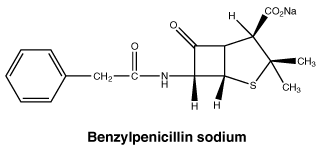
Chemical structure. Benzylpenicillin sodium has the following structure:
CAS number. 69-57-8.
7 Medicine Schedule (Poisons Standard)
Prescription Only Medicine, S4.
Date of First Approval
04 November 1991
Date of Revision
05 April 2023
Summary Table of Changes

Reasonable care is taken to provide accurate information at the time of creation. This information is not intended as a substitute for medical advice and should not be exclusively relied on to manage or diagnose a medical condition. The Australian Commission on Safety and Quality in Health Care disclaims all liability (including for negligence) for any loss, damage, injury or any other negative effects resulting from reliance on or use of this information. Read our full disclaimer. This website uses cookies. Read our privacy policy.