
Betahistine GH
Brand Information
| Brand name | Betahistine GH |
| Active ingredient | Betahistine dihydrochloride |
| Schedule | S4 |
Consumer Medicine Information (CMI) leaflet
Please read this leaflet carefully before you start using the Betahistine GH.
What is in this leaflet
This leaflet answers some of the common questions people ask about Betahistine GH. It does not contain all the information that is known about Betahistine GH. It does not take the place of talking to your doctor or pharmacist.
All medicines have risks and benefits. Your doctor has weighed the risks of you taking Betahistine GH against the benefits they expect it will have for you.
If you have any concerns about taking this medicine, ask your doctor or pharmacist.
Keep this leaflet with the medicine. You may need to read it again.
What Betahistine GH is used for
Betahistine GH is used to treat a disorder of your inner ear. This disorder may include one or more of the following symptoms in one or both ears:
- ringing in your ears (tinnitus);
- loss of clear hearing;
- problems with balance (vertigo).
These symptoms may also be associated with nausea, vomiting and headache. Often these symptoms together are referred to as Meniere’s Syndrome.
Betahistine GH tablets contain the active ingredient betahistine dihydrochloride. Betahistine works by improving the blood flow of the inner ear and restoring it to normal. It also acts on the nerve endings in the inner ear to normalise the way in which the nerves respond to outside influences.
Your doctor will have explained why you are being treated with Betahistine GH and told you what dose to take.
Follow all directions given to you by your doctor carefully. They may differ from the information contained in this leaflet.
This medicine is only available with a doctor’s prescription. Your doctor may prescribe this medicine for another use. Ask your doctor if you want more information.
Betahistine GH is not addictive.
Before you take Betahistine GH
When you must not take it
Do not use Betahistine GH if you have an allergy to:
- any medicine containing betahistine dihydrochloride;
- any of the ingredients listed at the end of this leaflet.
Some symptoms of an allergic reaction include skin rash, itching, shortness of breath or swelling of the face, lips or tongue, which may cause difficulty in swallowing or breathing.
Do not take this medicine if you are pregnant. It may affect your developing baby if you take it during pregnancy.
Do not breastfeed if you are taking this medicine. The active ingredient in Betahistine GH may pass into breast milk and therefore there is a possibility your baby may be affected.
Do not give Betahistine GH to children under 18 years of age.
Do not take this medicine if you have a rare abnormality of the adrenal gland known as pheochromocytoma.
Do not take this medicine if you have or have had a peptic ulcer.
Do not take this medicine after the use by (expiry) date printed on the pack or if the packaging is damaged or shows signs of tampering. If it is expired or is damaged return it to your pharmacist for disposal.
Before you start to take it
Tell your doctor if you have any allergies to any other medicines, foods, preservatives or dyes.
Tell your doctor if you have or have had any of the following medical conditions:
- a peptic ulcer;
- asthma;
- a history of allergic skin conditions.
Tell your doctor if you are pregnant, intend to become pregnant, or are breastfeeding. Your doctor can discuss with you the risks and benefits involved.
If you have not told your doctor about any of the above, tell them before you take this medicine.
Taking other medicines
Tell your doctor or pharmacist if you are taking any other medicines, including any that you buy without a prescription from your pharmacy, supermarket or health food store.
Some medicines and Betahistine GH may interfere with each other. These include:
- any anti-histamine medications which are used to treat allergies and allergic reactions.
These medicines may be affected by Betahistine GH, or may affect how well it works. You may need to use different amounts of your medicine, or take different medicines.
Your doctor or pharmacist has more information on medicines to be careful with or to avoid while taking Betahistine GH.
How to take Betahistine GH
Follow all directions given to you by your doctor or pharmacist carefully. They may differ from the information contained in this leaflet.
How much to take
The usual adult starting dose is half to one tablet taken three times a day. However your doctor may prescribe a different dose depending on the severity of your condition.
How to take it
Swallow the tablet whole with a full glass of water.
When to take it
Take Betahistine GH at about the same time each day.
Taking it at the same time each day will have the best effect. It will also help you remember when to take it.
Take Betahistine GH during or immediately after a meal.
If you take Betahistine GH on an empty stomach it may cause stomach upsets.
How long to take it
Continue taking your medicine as long as your doctor tells you to.
If you follow your doctor’s instructions, Betahistine GH should start working within a few days, although in some cases it may take a few weeks. The length of time that you should take Betahistine GH tablets varies from patient to patient. Some patients respond rapidly to treatment and others may take some time. Please be patient with your treatment and take your tablets regularly.
If you forget to take it
If it is almost time for your next dose, skip the dose you missed and take your next dose when you are meant to.
Otherwise, take it as soon as you remember, and then go back to taking your medicine as you would normally.
Do not take a double dose to make up for the dose that you missed. This may increase the chance of getting an unwanted side effect.
If you are not sure what to do, ask your doctor or pharmacist.
If you have trouble remembering when to take your medicine, ask your pharmacist for advice.
If you take too much (overdose)
Immediately telephone your doctor or the Poisons Information Centre (13 11 26), or go to Accident and Emergency at your nearest hospital, if you think that you or anyone else may have taken too much Betahistine GH. Do this even if there are no signs of discomfort or poisoning.
Symptoms of an overdose may include nausea.
While you are taking Betahistine GH
Things you must do
If you are about to start taking any other medicine, tell your doctor and pharmacist that you are taking Betahistine GH.
Tell any other doctors, dentists and pharmacists who treat you that you are taking this medicine.
If you are going to have surgery, tell the surgeon that you are taking this medicine.
If you become pregnant while you are taking this medicine, tell your doctor or pharmacist immediately.
Things you must not do
Do not give Betahistine GH to anyone else, even if they have the same condition as you.
Do not use Betahistine GH tablets to treat any other complaints unless your doctor or pharmacist tells you to.
Do not stop taking Betahistine GH, or change the dosage, without checking with your doctor.
Side effects
Tell your doctor or pharmacist as soon as possible if you do not feel well while you are taking Betahistine GH.
Betahistine GH helps most people, but it may have unwanted side effects in a few people.
All medicines have some unwanted side effects. Sometimes they are serious, most of the time they are not. You may need medical attention if you get some of the side effects.
Do not be alarmed by this list of possible side effects. You may not experience any of them.
Ask your doctor or pharmacist to answer any questions you may have.
Tell your doctor or pharmacist if you notice any of the following and they worry you:
- skin irritations;
- stomach upsets;
- dizziness;
- fast heart beat;
- headache;
- difficulty sleeping (insomnia).
The above list includes the more common side effects of your medicine. They are usually mild and short-lived.
Stomach upsets can be overcome by taking Betahistine GH during meals.
Tell your doctor as soon as possible if you notice any of the following:
- skin reactions;
- difficulty breathing.
The above list includes serious side effects. You may require medical attention. Serious side effects are rare.
Tell your doctor or pharmacist if you notice anything else that is making you feel unwell.
After taking Betahistine GH
Storage
Keep your tablets in the blister pack until it is time to take them. If you take Betahistine GH out of the blister pack it will not keep well.
Keep it in a cool dry place, protected from light and moisture where the temperature stays below 25°C.
Do not store it or any other medicine in the bathroom or near a sink. Do not leave it in the car on hot days. Light, heat and dampness can destroy some medicines.
Keep it where young children cannot reach it. A locked cupboard at least one-and-a-half meters above the ground is a good place to store medicines.
Disposal
Ask your pharmacist what to do with any tablets you have left over if your doctor tells you to stop taking them, or you find that the expiry date has passed.
Product description
What it looks like
Betahistine GH 16 mg are uncoated, round, biconvex, white to light creamy tablets, with a groove on one surface.
Betahistine GH 16 mg tablets are presented in PA/Al/PVC/Al blister packs containing 25 tablets.
Ingredients
Active ingredient
Each tablet contains 16 mg betahistine dihydrochloride as the active ingredient.
Other ingredients
Betahistine GH tablets contain the following inactive (excipient) ingredients:
- colloidal anhydrous silica;
- microcrystalline cellulose;
- mannitol;
- citric acid;
- purified talc.
Betahistine GH tablets do not contain any lactose or gluten.
Australian Registration Numbers
Betahistine GH 16 mg tablets: AUST R 212076.
Sponsor
Generic Health Pty Ltd
Suite 2, Level 2
19-23 Prospect Street
Box Hill, VIC, 3128
Australia
Email: ghinfo@generichealth.com.au
Telephone: +61 3 9809 7900
Website: www.generichealth.com.au
This leaflet was prepared in June 2021.
Brand Information
| Brand name | Betahistine GH |
| Active ingredient | Betahistine dihydrochloride |
| Schedule | S4 |
MIMS Revision Date: 01 August 2021
1 Name of Medicine
Betahistine dihydrochloride.
2 Qualitative and Quantitative Composition
Betahistine GH tablets are available as uncoated tablets containing 16 mg betahistine dihydrochloride.
For the full list of excipients, see Section 6.1 List of Excipients.
3 Pharmaceutical Form
Betahistine GH 16 mg tablets: uncoated, round, biconvex, white to light creamy tablets, with a groove on one surface.
4 Clinical Particulars
4.1 Therapeutic Indications
Meniere's syndrome as defined by the following core symptoms: vertigo (with nausea/vomiting); hearing loss (hardness of hearing); tinnitus.
4.2 Dose and Method of Administration
The recommended starting dose in adults is 8 to 16 mg three times a day. The maximum recommended daily dose is 48 mg.
The tablets may be taken with or without food. However, if gastrointestinal upset occurs, it is recommended that the tablets be taken with meals.
The dosage should be individually adapted according to the response. Improvement in symptoms may be observed in the first few days to weeks of treatment.
4.3 Contraindications
Betahistine GH tablets are contraindicated as follows:
during pregnancy and lactation;
in children less than 18 years;
in patients suffering from phaeochromocytoma;
in patients with active peptic ulcer or a history of this condition;
in patients with hypersensitivity to any component in the product (see Section 6.1 List of Excipients).
4.4 Special Warnings and Precautions for Use
Patients with bronchial asthma need to be carefully monitored during therapy.
Caution should be taken in the treatment of patients receiving antihistamines (see Section 4.5 Interactions with Other Medicines and Other Forms of Interactions).
Use in the elderly. No data available.
Paediatric use. Due to lack of clinical experience, betahistine dihydrochloride should not be used in children less than 18 years (see Section 4.3 Contraindications).
Effects on laboratory tests. No data available.
4.5 Interactions with Other Medicines and Other Forms of Interactions
In vitro data indicate an inhibition of betahistine metabolism by drugs that inhibit monoamine oxidase (MAO) including MAO subtype B (e.g. selegiline). Caution is recommended when using betahistine and MAO inhibitors (including MAO-B selective) concomitantly.
An antagonism between betahistine dihydrochloride and antihistamines could be expected on a theoretical basis. However, no such interactions have been reported.
4.6 Fertility, Pregnancy and Lactation
Effects on fertility. There are no animal data on the effects of betahistine on fertility.
Use in pregnancy. (Category B21)
Betahistine dihydrochloride should not be used during pregnancy (see Section 4.3 Contraindications) since there are insufficient data on the use of this medicine during pregnancy to evaluate possible harmful effects. Studies in animals are inadequate or may be lacking, but available data show no evidence of an increased occurrence of foetal damage.
1 Drugs which have been taken by only a limited number of pregnant women and women of childbearing age, without an increase in the frequency of malformation or other direct or indirect harmful effects on the human foetus having been observed.
Use in lactation. Betahistine dihydrochloride should not be used during lactation (see Section 4.3 Contraindications).
4.7 Effects on Ability to Drive and Use Machines
The effects of this medicine on a person's ability to drive and use machines were not assessed as part of its registration.
4.8 Adverse Effects (Undesirable Effects)
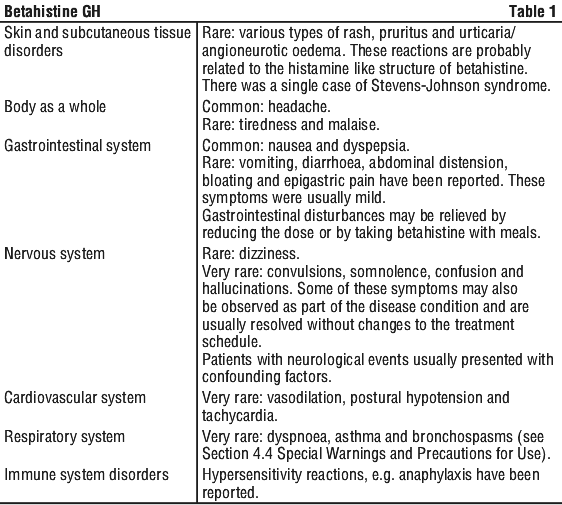
Most of the reported adverse reactions pertain to the skin, gastrointestinal tract, body as a whole, nervous system, respiratory system and cardiovascular system.
Events are listed within body systems and categorised by frequency according to the following definitions: common (frequency ≥ 1 and < 10%), uncommon (frequency ≥ 0.1% and < 1%), rare (frequency ≥ 0.01% and < 0.1%), very rare (frequency < 0.01%). See Table 1.
4.9 Overdose
There have been a few cases of overdosage reported. Although in most cases no overdose symptoms were reported, some patients have experienced mild to moderate symptoms of overdosage including nausea, dry mouth, epigastric pain and sleepiness at doses above 200 mg. A case of convulsion was reported at a dose of 728 mg. In all cases recovery was complete. Treatment should include standard supportive measures.
For information on the management of overdose, contact the Poison Information Centre on 13 11 26 (Australia).
5 Pharmacological Properties
5.1 Pharmacodynamic Properties
Mechanism of action. The mechanism of action of betahistine is not known. Pharmacological testing in animals has shown that the blood circulation in the striae vascularis of the inner ear improves, probably by means of a relaxation of the precapillary sphincters of the microcirculation of the inner ear.
In further animal pharmacological studies, betahistine was found to have weak H1 receptor agonistic and considerable H3 antagonistic properties in the CNS and autonomic nervous system. Betahistine was also found to have a dose dependent inhibiting effect on spike generation of neurons in lateral and medial vestibular nuclei in cats. The importance of this observation in the action against Meniere's syndrome or vestibular vertigo, however, remains unclear.
Clinical trials. No data available.
5.2 Pharmacokinetic Properties
Absorption. In man, orally administered doses of betahistine dihydrochloride are rapidly and completely absorbed from the gastrointestinal tract.
Metabolism. The drug is rapidly metabolised to one major metabolite - 2-pyridylacetic acid - and excreted in the urine.
Excretion. Studies with radio-labelled betahistine have demonstrated a plasma half-life of 3.4 hours and a urinary half-life of 3.5 hours for the radio-label. Urinary excretion of the label was about 90% complete within 24 hours of administration.
5.3 Preclinical Safety Data
Genotoxicity. No nonclinical data are available on the genotoxic potential of betahistine.
Carcinogenicity. No animal data are available on the carcinogenic potential of betahistine.
6 Pharmaceutical Particulars
6.1 List of Excipients
The inactive ingredients in Betahistine GH 16 mg tablets are: colloidal anhydrous silica, microcrystalline cellulose, mannitol, citric acid and purified talc.
6.2 Incompatibilities
See Section 4.5 Interactions with Other Medicines and Other Forms of Interactions.
6.3 Shelf Life
In Australia, information on the shelf life can be found on the public summary of the Australian Register of Therapeutic Goods (ARTG). The expiry date can be found on the packaging.
6.4 Special Precautions for Storage
Store below 25°C in original container. Protect from light and moisture.
6.5 Nature and Contents of Container
Betahistine GH 16 mg tablets: available in PA/Al/PVC/Al blister packs of 100*, 60*, 30*, 25 and 10*.
* Not currently marketed.
Australian registration numbers. Betahistine GH 16 mg tablets: AUST R 212076.
6.6 Special Precautions for Disposal
In Australia, any unused medicine or waste material should be disposed of by taking to your local pharmacy.
6.7 Physicochemical Properties
Betahistine dihydrochloride is a white or slightly yellow powder, which is very hygroscopic. The drug substance is very soluble in water, soluble in methanol and 96% ethanol, and practically insoluble in 2-propanol. The pKa values are 3.5 and 9.7. Chemically, betahistine has a close resemblance to histamine.
Chemical structure.
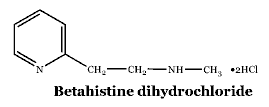
Molecular Formula: C8H14Cl2N2.
Molecular Weight: 209.1.
CAS number. 5579-84-0.
7 Medicine Schedule (Poisons Standard)
Schedule 4 - Prescription Only Medicine.
Date of First Approval
14 August 2014
Date of Revision
16 June 2021
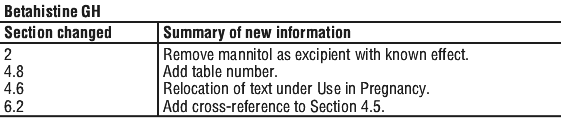
Summary Table of Changes
Reasonable care is taken to provide accurate information at the time of creation. This information is not intended as a substitute for medical advice and should not be exclusively relied on to manage or diagnose a medical condition. The Australian Commission on Safety and Quality in Health Care disclaims all liability (including for negligence) for any loss, damage, injury or any other negative effects resulting from reliance on or use of this information. Read our full disclaimer. This website uses cookies. Read our privacy policy.