
Biomictra Faecal Microbiota Transplant (FMT)
Brand Information
| Brand name | Biomictra Faecal Microbiota Transplant (FMT) |
| Active ingredient | Faecal microbiota |
| Schedule | Unscheduled |
Consumer Medicine Information (CMI) leaflet
Please read this leaflet carefully before you start using the Biomictra Faecal Microbiota Transplant (FMT).
Summary CMI
BIOMICTRA™ FAECAL MICROBIOTA TRANSPLANT (FMT)
Consumer Medicine Information (CMI) summary
The full CMI on the next page has more details. If you are worried about using this medicine, speak to your doctor.
1. Why am I being given BIOMICTRA?
BIOMICTRA is used to deliver bacteria derived from screened donor faeces into the bowel of a patient with the aim of treating disease by replenishing gut bacterial diversity. BIOMICTRA contains the active ingredient faecal microbiota.
For more information, see Section 1. Why am I being given BIOMICTRA? in the full CMI.
2. What should I know before I am given BIOMICTRA?
Do not use if you have an anaphylactic food allergy or ever had an allergic reaction to any of the ingredients listed at the end of the CMI.
Talk to your doctor if you have any other medical conditions, take any other medicines, or are pregnant or plan to become pregnant or are breastfeeding.
For more information, see Section 2. What should I know before I am given BIOMICTRA? in the full CMI.
3. What if I am taking other medicines?
Tell your doctor if you are taking any other medicines, including any that you get without a prescription from your pharmacy, supermarket or health food shop. For more information, see Section 3. What if I am taking other medicines? in the full CMI.
4. How will I be given BIOMICTRA?
BIOMICTRA FAECAL MICROBIOTA can be introduced into the bowel by your doctor, either via colonoscopy, enema, endoscopy or a thin tube that is passed through the nose and into the stomach or small bowel (nasogastric or nasoenteric tube).
More instructions can be found in Section 4. How will I be given BIOMICTRA? in the full CMI.
5. What should I know while being given BIOMICTRA?
| Things you should do |
|
| Driving or using machines |
|
For more information, see Section 5. What should I know while being given BIOMICTRA? in the full CMI.
6. Are there any side effects?
Some common side effects of BIOMICTRA FAECAL MICROBIOTA include transient symptoms of abdominal bloating, discomfort or diarrhoea.
For more information, including what to do if you have any side effects, see Section 6. Are there any side effects? in the full CMI.
Full CMI
BIOMICTRA™ FAECAL MICROBIOTA TRANSPLANT (FMT)
Active ingredient(s): 12.5 g Faecal microbiota
Consumer Medicine Information (CMI)
This leaflet provides important information about using BIOMICTRA. You should also speak to your doctor if you would like further information or if you have any concerns or questions about using BIOMICTRA.
Where to find information in this leaflet:
1. Why am I being given BIOMICTRA?
2. What should I know before I am given BIOMICTRA?
3. What if I am taking other medicines?
4. How will I be given BIOMICTRA?
5. What should I know while being given BIOMICTRA?
6. Are there any side effects?
7. Product details
1. Why am I being given BIOMICTRA?
BIOMICTRA FAECAL MICROBIOTA is used for the restoration of the gut microbiota which are the healthy associated microorganisms that live in your gut.
BIOMICTRA contains the active ingredient Faecal microbiota from a screened donor. BIOMICTRA FAECAL MICROBIOTA is only available when prescribed by a doctor. BIOMICTRA FAECAL MICROBIOTA involves the delivery of bacteria derived from screened donor faeces into the bowel of a patient with the aim of treating disease. The FMT can be introduced into the bowel by either enema, a colonoscopy, or a thin tube that is passed through the nose and into the stomach or small bowel. Faecal donors are anonymous healthy volunteers. Donors are thoroughly screened for infection or any potentially transmissible disease, similar to how blood donation is conducted in the community. Following screening, donor stool is frozen for use at a later date.
2. What should I know before I am given BIOMICTRA?
Warnings
Do not use BIOMICTRA if you have:
- Anaphylactic food allergy. BIOMICTRA contains food antigens from the donor's diet and so could induce anaphylaxis in a recipient who was susceptible
- Allergy to any of the ingredients listed at the end of this leaflet. Always check the ingredients to make sure you can use this medicine.
- Suspected bowel perforation
Check with your doctor if you:
- If you have any allergies to medicines, chemicals or foods
- If you are not sure whether you should have an FMT, talk to your doctor. Your doctor can discuss the risks and benefits involved.
During treatment, you may be at risk of developing certain side effects. It is important that you understand these risks and how to monitor for them. See additional information under Section 6. Are there any side effects?
Pregnancy and breastfeeding
Check with your doctor if you are pregnant or intend to become pregnant whilst receiving FMT.
Talk to your doctor if you are breastfeeding or intend to breastfeed.
Children and adolescents
There is very limited data on the use of FMT in children and adolescents. You should discuss the use of FMT with your paediatrician.
Severe illness and immunodeficiency
The risks of FMT may be greater in some patients who have severe underlying health conditions or have a very depleted immune system. The risks and benefits of FMT in this setting should be discussed with you doctor.
Preparation Prior to BIOMICTRA FAECAL MICROBIOTA
- Your doctor will advise as to the appropriate preparation prior to BIOMICTRA FAECAL MICROBIOTA and this will vary depending on disease indication.
- You may also be provided with a standard information sheet on colonoscopy (or other delivery procedure) from your hospital.
3. What if I am taking other medicines?
Tell your doctor if you are taking any other medicines, including any medicines, vitamins or supplements that you buy without a prescription from your pharmacy, supermarket or health food shop.
Check with your doctor if you are not sure about what medicines, vitamins or supplements you are taking and if these affect BIOMICTRA.
4. How will I be given BIOMICTRA?
- BIOMICTRA FAECAL MICROBIOTA can be introduced into the bowel by your doctor, either via colonoscopy, enema, endoscopy or a thin tube that is passed through the nose and into the stomach or small bowel (nasogastric or nasoenteric tube).
- Speak to your doctor as to the most appropriate method of FMT delivery for you
- The amount of FMT given is at the discretion of your treating doctor. The usual dose of FMT is 200 mL when administered by colonoscopy, or 50 mL when given via enema or nasogastric/nasoenteric tube.
- Your doctor will check your response to FMT therapy. Depending on how you respond to therapy, your doctor will decide whether further doses of FMT are required.
- Follow the instructions given by your doctor carefully.
- If you do not understand the instructions, ask your doctor for help.
- It is important to see your doctor regularly when receiving FMT therapy.
- Your doctor will decide when you will be given FMT.
- Your doctor will decide how many doses of FMT you will require and over what time period.
5. What should I know while being given BIOMICTRA?
Things you should do
- If you experience any problems during your treatment, tell your doctor.
- Tell your doctor immediately if you develop abdominal pain, changes in your bowel habit, fever, or any other symptom that concerns you.
- If you become pregnant whilst receiving FMT, tell your doctor immediately
Things you should not do
- Do not drive or operate machinery after your procedure if you have been administered sedation or an anesthetic
Looking after your medicine
- BIOMICTRA FAECAL MICROBIOTA is stored at -80°C by your treating doctor according to product instructions
When to discard your medicine
- Each FMT syringe is single use and is to be discarded following use
6. Are there any side effects?
All medicines can have side effects. The most common side effects with FMT are minor and temporary. However, some side effects may be serious and require medical attention.
See the information below and, if you need to, ask your doctor if you have any further questions.
Less serious side effects
| Less serious side effects | What to do |
| Speak to your doctor if you have any of these side effects and they worry you. |
Serious/rare side effects of FMT
| Serious side effects | What to do |
| Call your doctor straight away, or go straight to the Emergency Department at your nearest hospital if you notice any of these serious side effect. |
Serious/rare side effects of Colonoscopy
| Serious side effects | What to do |
| Call your doctor immediately, or go straight to the Emergency Department at your nearest hospital if you notice any of these serious side effects. |
Tell your doctor if you notice anything else that may be making you feel unwell.
There is an association between some medical conditions such as obesity and certain gut bacterial profiles. It is for this reason we rigorously screen donors for any medical conditions that could potentially impact on the FMT recipient. Tell your doctor immediately if you have any concerns that you have acquired another condition following FMT. This may include changes in your weight, mood, joint and/or muscle aches/inflammation, frequency of urination or any other new symptom of concern.
There have been a small number of deaths associated with FMT in many thousands of cases and the risk of this is very low. There has been at least one recorded case of a patient dying from a drug resistant infection transferred via FMT, however BiomeBank screens for this and other drug resistant infections so the risk of this occurring is low.
Other side effects not listed here may occur in some people.
Reporting side effects
After you have received medical advice for any side effects you experience, you can report side effects to the Therapeutic Goods Administration online at www.tga.gov.au/reporting-problems. By reporting side effects, you can help provide more information on the safety of this medicine.
7. Product details
What BIOMICTRA contains
| Active ingredient | 12.5 g faecal microbiota |
| Other ingredients | Sodium chloride 0.9% (32.5 mL) Glycerol (5 mL) |
Do not receive this medicine if you are allergic to any of these ingredients.
What BIOMICTRA looks like
The BIOMICTRA FAECAL MICROBIOTA syringe contains 50 mL of brown-coloured suspension
ARTG: 399066
Who distributes BIOMICTRA?
BiomeBank
Level 2-3, 21 North Terrace
Adelaide, SA 5000
Australia
biomebank.com
This leaflet was prepared in July 2024
Brand Information
| Brand name | Biomictra Faecal Microbiota Transplant (FMT) |
| Active ingredient | Faecal microbiota |
| Schedule | Unscheduled |
MIMS Revision Date: 01 January 2026
1 Name of Medicine
Biomictra faecal microbiota.
2 Qualitative and Quantitative Composition
Each Biomictra FMT syringe contain 12.5 g of faecal microbiota as the active ingredient.
Biomictra FMT is comprised of human donor stool (faecal microbiota) 12.5 g (25%), sodium chloride (0.9%) 32.5 ml (65%) and glycerol 5 mL (10%). Human donor stool contains a large number of micro-organisms including bacteria, fungi, archea, protozoa and viruses including phage. Human donor stool also contains food from the donor's diet and a small quantity of cells from the donor's colon. The composition of each FMT preparation will vary in composition. For the full list of excipients, see Section 6.1 List of Excipients.
3 Pharmaceutical Form
Biomictra FMT syringes are clear, polypropylene 60 mL syringes, sealed using a plastic bumper.
The Biomictra syringe contains 50 mL of a brown-coloured suspension.
4 Clinical Particulars
4.1 Therapeutic Indications
Biomictra is for the restoration of the gut microbiota in the management of gastrointestinal disorders.
Conditions of registration. Product must only be provided for use by a medical practitioner registered in an Australian State or Territory, under the supervision or on the advice of a specialist gastroenterologist or infectious diseases physician; and
Product must not be released for use in conditions other than C. difficile infection, unless as part of a registered clinical trial or via the Special Access Scheme or via Authorised Prescriber Scheme.
Data of real-world clinical efficacy for product released after up to 12 months storage compared to product released after 12-24 months storage must be collected over the next 18 months. The sponsor must advise TGA as soon as possible of any adverse data. Reports must be provided to the TGA via self-assessable variation submission for review after 9 months data collection and after 18 months data collection (with the first report with 9 months data due in October 2024 and the second in June 2025).
Use should be guided by clinical trial evidence, national and international guidelines and society position statements on the use of FMT.
4.2 Dose and Method of Administration
Administration of Biomictra syringes is at the discretion of the medical provider and will be influenced by particular patient factors and clinical practice guidelines.
The evidence for colonoscopic delivery of FMT is greater than for other delivery methods. Colonoscopic delivery of FMT should be the first preference, however for patients with contraindications to colonoscopy or who are frail, other methods such as enema or upper gastrointestinal delivery can be used. All supplied treatments of Biomictra are single patient use and are not to be mixed with another batch.
Colonoscopic delivery. 1. Remove Biomictra packet from -80°C freezer and thaw for 4 hours at room temperature (or 10 hours at 4°C) prior to procedure.
2. Record FMT batch number and date of production in patient's medical record.
3. Record patient's name, UR number, date of birth, date of first CDI, number of relapses in prospective database (if established).
4. Prior to positioning patient for procedure, ideally place a sliding sheet under the normal sheet to assist rolling the patient during the procedure.
5. All proceduralists and assistants should be wearing a mask and splash shield or protective eyewear prior to FMT administration.
6. During the colonoscopy, suction as much residual stool and fluid as possible from the colon on entry.
7. Once the scope reaches the caecum, using the sliding sheet roll the patient onto their right side.
8. Cover patient, bed rails and any nearby surfaces with towels or absorbent sheets to contain any spillage.
9. Delivering Biomictra:
Remove the colonoscopy biopsy valve and insert the syringe into the biopsy port.
Flush the FMT into the channel.
Once syringe is empty, place finger over biopsy port while swapping syringes to prevent spillage.
Repeat until all syringes have been used.
Using one of the empty syringes, draw up 30 mL of sterile water for injection and flush the biopsy channel.
10. Withdraw the scope without suctioning.
11. Patient to remain in right lateral position for at least 1-hour post FMT administration before getting up.
12. Encourage high fibre diet and inform patient that antibiotics pose a risk of relapse of CDI in future.
Enema delivery. 1. Remove Biomictra enema syringe from -80°C freezer and thaw for 4 hours at room temperature (or 10 hours at 4°C).
2. Record patient's name, UR number, date of birth, date of first CDI, number of relapses in prospective database (if established).
3. Record stool aliquot code and date of production in patient's medical record.
4. Ask patient to empty bowels prior to FMT administration.
5. Position patient in left lateral position with knees drawn up on bed in close proximity to a toilet or commode with a towel and absorbent sheet placed under their bottom.
6. All proceduralists and assistants should be wearing a mask and splash shield or protective eyewear prior to FMT administration.
7. Delivering Biomictra enema:
Add some lubricant to the perianal area and lubricate the tip of the syringe.
A rectal applicator may need to be used to aid administration.
Gently introduce the tip of the syringe as far as possible into the rectum.
Warn the patient that the FMT may be cold and can cause some discomfort.
Slowly deploy the plunger to deliver FMT into rectum.
8. Roll patient into the prone position with a pillow under their hips to help retain the enema for 30 mins.
9. Instruct patient to delay defaecation for as long as able.
Upper GI delivery. 1. Remove 2 x Biomictra syringes from -80°C freezer and thaw for 4 hours at room temperature (or 10 hours at 4°C) prior to procedure.
2. Record patient's name, UR number, date of birth, date of first CDI, number of relapses in prospective database (if established).
3. Record stool aliquot code and date of production in patient's medical record.
4. All proceduralists and assistants should be wearing a mask and splash shield or protective eyewear prior to FMT administration.
5. Perform a push enteroscopy, aiming for the jejunum.
6. Cover the patient, bed sides and any nearby surfaces with towels or absorbent sheets to contain any spillage.
7. Position patient with head elevated to approximately 30 degrees.
8. Delivering Biomictra:
Remove the biopsy valve and insert the syringe into the biopsy port.
Flush the FMT into the channel.
Once syringe empty, place finger over biopsy port while swapping syringes to prevent spillage.
Repeat until both syringes have been used.
Using one of the empty syringes, draw up 30 mL of sterile water for injection and flush the biopsy channel.
9. Withdraw the scope without suctioning in the small bowel.
10. On withdrawing the scope, make sure the tip and the channel are not contaminated with FMT to prevent introducing FMT into the stomach or oesophagus to prevent aspiration. If concerned, flush channel or suction away from where the FMT was introduced.
11. If patient experiences any nausea, treat immediately with anti-emetics to prevent aspiration.
4.3 Contraindications
1. Suspected bowel perforation.
2. Anaphylactic food allergy. Biomictra contains food antigen from the donor's diet and so could induce anaphylaxis in a recipient who was susceptible.
4.4 Special Warnings and Precautions for Use
Identified precautions. Donors are thoroughly screened using a medical history, physical examination as well as blood and stool testing. This minimises the risk of disease transmission from stool donor to recipient, however some risk remains.
Cytomegalovirus (CMV) and Epstein-Barr virus (EBV). Donors may have been exposed to CMV and EBV in the past and so it is important for the treating clinician to weigh the risk of primary CMV or EBV infection for the recipient of FMT against the risk of the disease being treated. This may be particularly important in recipients who are immunocompromised and patients should be counselled and consented regarding these risks. There have been at least 6 cases of CMV infection in FMT recipients documented in the literature and it is possible, that in some of these cases CMV may have been transmitted by FMT. There have not been any confirmed reports of EBV transmission in the literature to date.
Immunocompromised patients. Immunocompromised patients are at a theoretical increased risk of some infections from FMT, however cohort and case control studies have not demonstrated a significantly increased risk from FMT in this population relative to non-immune suppressed populations.
In patients where there is a loss of the gastrointestinal mucosal integrity there may be a higher risk of bacterial translocation into the patient's bloodstream. There have been case reports of this occurring.
Latent infection with herpes viruses including cytomegalovirus (CMV), Epstein-Barr virus (EBV), herpes simplex virus 1 and 2, varicella zoster virus and human herpes viruses 6 and 8 can be present in the donor and asymptomatic mucosal shedding could occur.
BiomeBank can provide FMT from a CMV seronegative donor for a CMV seronegative immunocompromised recipient on request.
Use in hepatic impairment. Limited data supports the safe use of FMT in patients with hepatic impairment.
Use in renal impairment. FMT can be used in patients with renal impairment.
Use in the elderly. FMT can be used safely in elderly patients. The mode of delivery may be influenced by co-morbidities and the age of the patient and this should be assessed by the treating physician.
Paediatric use. There is very limited data on use of FMT in the paediatric population. An individual assessment of risk and benefit is advised. Long term effects are unknown.
Effects on laboratory tests. No data available.
4.5 Interactions with Other Medicines and Other Forms of Interactions
Antibiotics following FMT therapy are the most frequent association with FMT treatment failure in the treatment of C. difficile infection.
Very limited data are available on the effect of FMT on other medicines. There are case reports of FMT augmenting the efficacy of check point inhibitor therapies for the treatment of some malignancies. A number of medicines are metabolised in part by gut bacteria and hence changes in gut bacteria with FMT may theoretically alter the pharmacokinetics of the medicine.
4.6 Fertility, Pregnancy and Lactation
Effects on fertility. No data available.
Use in pregnancy. There is limited data on the use of FMT in pregnancy.
Use in lactation. No data available.
4.7 Effects on Ability to Drive and Use Machines
Patients should not drive or operate machinery after sedation or anaesthetic for colonoscopy associated with administration however, Biomictra FMT does not cause sedation or impair the ability to drive or operate machinery.
4.8 Adverse Effects (Undesirable Effects)
FMT may have unwanted side effects in some people.
Approximately 19% of people experience an adverse event following FMT. Minor adverse events such as transient diarrhoea, abdominal discomfort or nausea are common.
Approximately 1.3% of patients may experience a serious adverse event following FMT. Most research on FMT has occurred in the last 10 years. There is limited data on the long-term risks of FMT.
Colonoscopic delivery of FMT has a lower rate of adverse events relative to enema, upper gut delivery or capsule delivery of FMT.
Risks of FMT. Abdominal symptoms. Transient symptoms of abdominal bloating or discomfort are possible following FMT and can occur in up to 20% of patients.
Up to 12% of patients experience a post infectious irritable bowel syndrome following successful eradication of Clostridioides difficile infection with symptoms of abdominal bloating or discomfort and diarrhoea that may take weeks or potentially months to resolve.
Transmission of infection. There have been cases of confirmed bacterial infection from stool donor to FMT recipient.
Infections caused by Enteropathogenic E. coli (EPEC), Shiga toxin-producing E. coli (STEC) and the multidrug resistant organism extended-spectrum beta-lactamase (ESBL)-producing Escherichia coli have occurred following use of FMT. Cases of CMV and norovirus infections in FMT recipients have been reported.
There have been deaths related to treatment with FMT including from infection and procedural complications.
Transmission of other conditions. There is an association between some medical conditions such as obesity and certain gut bacterial profiles. It is possible that the gut microbiome may contribute to other diseases that may be transmitted via FMT. Therefore, there are unknown risks associated with the use of FMT. Donors are screened for any medical condition and family history of medical conditions that could potentially impact on the FMT recipient.
Allergy. There is a small risk of an allergic reaction after receiving FMT. Biomictra FMT may contain nuts and other food residue and so patients with anaphylactic food allergy should not take Biomictra FMT.
Procedure related risks. FMT is often administered by colonoscopy.
The major risk of colonoscopy is bowel perforation, which occurs in less than 1 in 1000 colonoscopies.
Other risks of colonoscopy include dehydration from bowel preparation, over-sedation, aspiration, bleeding and splenic laceration. Some biopsies may be taken during this procedure. Taking biopsies has a very small (less than 1:1000) risk of relevant bleeding. If you are on strong blood thinning medication (e.g. warfarin), or have a bleeding disorder, the risk of bleeding may be greater.
Reporting suspected adverse effects. Reporting suspected adverse reactions after registration of the biological product is important. It allows continued monitoring of the benefit-risk balance of the biological product.
Healthcare professionals are asked to report any suspected adverse reactions at www.tga.gov.au/reporting-problems.
Any concern regarding an adverse event associated with donor stool for FMT must be reported to BiomeBank as soon as it is detected. Any potential adverse events can be discussed with a member of the BiomeBank team by phone (08 81528370) or email: safety@biomebank.com.
Prospective database. We recommend each hospital maintain a prospective database of patients who receive FMT. BiomeBank can provide such a database should institutions want this.
To ensure adequate traceability and monitoring of the safety and efficacy of the BiomeBank's FMT products, the administering physician must complete a follow up form 8 weeks after administration. This is provided with all shipments.
Product complaint/ return policy. Product complaint (issues with packaging, labelling, syringe) should be reported as soon as possible to the BiomeBank Quality team by phone (08 81528370) or email: quality@biomebank.com.
BiomeBank cannot accept return of Biomictra as it is a biological product. If there are any problems with the product a staff member will provide you with instructions on how to discard the product.
4.9 Overdose
For information on the management of overdose, contact the Poisons Information Centre on 13 11 26 (Australia).
5 Pharmacological Properties
5.1 Pharmacodynamic Properties
Mechanism of action. For restoration of the gut microbiome. Current evidence suggests that FMT works via restoration of gut microbial diversity.
Clinical trials. A systematic literature review and meta-analysis assessed the overall efficacy of FMT in treating recurrent Clostridioides difficile infection (rCDI, defined as one or more C. difficile infections), the effect of delivery method and treatment regimen on efficacy, and compared FMT with standard antibiotics. Clinical effect week 8 following repeat FMT (24 studies, 1855 patients) was 91% (95% CI: 89-94%, I2= 53%) and 84% (80-88%, I2 = 86%) following single FMT (43 studies, 2937 patients). Delivery by colonoscopy was superior to all other delivery methods. Compared with vancomycin, the number needed to treat (4 randomised controlled trials, 151 patients) for repeat FMT to effect one cure was 1.5 (1.3-1.9, P < 0.001)1 and for single FMT was 2.9 (1.5 - 37.1, P = 0.03).
5.2 Pharmacokinetic Properties
The donated microbiota stays compartmentalized in the gastrointestinal tract; it is not distributed to other organs in the body. The donor microbiota partially engrafts. This process is shaped by interactions with pre-existing and subsequent microbiota constituents, as well as by the host immune system and diet.
5.3 Preclinical Safety Data
Genotoxicity. No data available.
Carcinogenicity. No data available.
6 Pharmaceutical Particulars
6.1 List of Excipients
Sodium chloride, glycerol.
6.2 Incompatibilities
See Section 4.5 Interactions with Other Medicines and Other Forms of Interactions.
6.3 Shelf Life
In Australia, information on the shelf life can be found on the public summary of the Australian Register of Therapeutic Goods (ARTG). The expiry date can be found on the packaging.
6.4 Special Precautions for Storage
a. Biomictra syringes should be stored between -90°C and -70°C in a dedicated compartment of the freezer. No other material should be stored in this compartment of the freezer.
b. Biomictra syringes can be stored for 24 months from the date of manufacture at -80°C. The listed expiry date is for storage at -80°C only.
c. Appropriate gloves should be used during transfer of Biomictra product as it is cold and submerged in dry ice during transport.
d. The freezer should be labelled as containing FMT treatment product.
6.5 Nature and Contents of Container
Biomictra FMT syringes are clear, polypropylene 60 mL syringes, sealed using a plastic bumper. The Biomictra syringe contains 50 mL of a brown-coloured suspension.
Biomictra syringes are supplied as a pack containing either one or four 60 mL Biomictra pre-filled syringes.
6.6 Special Precautions for Disposal
Any unused Biomictra FMT syringes or waste material should be disposed of in a biological waste bin or facility.
7 Medicine Schedule (Poisons Standard)
Not applicable.
Date of First Approval
09 November 2022
Date of Revision
24 October 2024
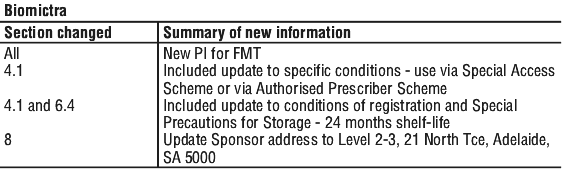
Summary Table of Changes
Reasonable care is taken to provide accurate information at the time of creation. This information is not intended as a substitute for medical advice and should not be exclusively relied on to manage or diagnose a medical condition. The Australian Commission on Safety and Quality in Health Care disclaims all liability (including for negligence) for any loss, damage, injury or any other negative effects resulting from reliance on or use of this information. Read our full disclaimer. This website uses cookies. Read our privacy policy.