
Chemists' Own Sinus and Nasal Decongestant Tablets
Brand Information
| Brand name | Chemists' Own Sinus and Nasal Decongestant Tablets |
| Active ingredient | Pseudoephedrine hydrochloride |
| Schedule | S3 |
Consumer Medicine Information (CMI) leaflet
Please read this leaflet carefully before you start using the Chemists' Own Sinus and Nasal Decongestant Tablets.
Summary CMI
Chemists' Own Sinus and Nasal Decongestant tablets
Consumer Medicine Information (CMI) summary
The full CMI on the next page has more details. If you are worried about using this medicine, speak to your doctor or pharmacist.
1. Why am I using Chemists' Own Sinus and Nasal Decongestant tablets?
Chemists' Own Sinus and Nasal Decongestant contains the active ingredient pseudoephedrine hydrochloride. Chemists' Own Sinus and Nasal Decongestant is used for the symptomatic relief of sinus and nasal congestion due to allergic (seasonal) rhinitis, vasomotor (perennial) rhinitis, sinusitis, the common cold and flu.
For more information, see Section 1. Why am I using Chemists' Own Sinus and Nasal Decongestant tablets? in the full CMI.
2. What should I know before I use Chemists' Own Sinus and Nasal Decongestant tablets?
Do not use if you have ever had an allergic reaction to Chemists' Own Sinus and Nasal Decongestant or any of the ingredients listed at the end of the CMI.
Talk to your doctor if you have any other medical conditions, take any other medicines, or are pregnant or plan to become pregnant or are breastfeeding.
For more information, see Section 2. What should I know before I use Chemists' Own Sinus and Nasal Decongestant tablets? in the full CMI.
3. What if I am taking other medicines?
Some medicines may interfere with Chemists' Own Sinus and Nasal Decongestant and affect how it works.
A list of these medicines is in section 3. What if I am taking other medicines? in the full CMI.
4. How do I use Chemists' Own Sinus and Nasal Decongestant?
The recommended dose for adults and children over 12 years is 1 tablet 3-4 times a day, as necessary
More instructions can be found in Section 4. How do I use Chemists' Own Sinus and Nasal Decongestant? in the full CMI.
5. What should I know while using Chemists' Own Sinus and Nasal Decongestant?
| Things you should do |
|
| Things you should not do |
|
| Driving or using machines |
|
| Drinking alcohol |
|
| Looking after your medicine |
|
For more information, see Section 5. What should I know while using Chemists' Own Sinus and Nasal Decongestant? in the full CMI.
6. Are there any side effects?
The common side effects include headache, drowsiness, dizziness, difficulty sleeping, nervousness, excitability, feeling of extreme happiness, restlessness, fear of Anxiety, change in heart rate Rapid or irregular heartbeat, raised blood pressure, tremor, hallucinations, dry Mouth, nausea, vomiting.
For more information, including what to do if you have any side effects, see Section 6. Are there any side effects? in the full CMI.
Full CMI
Chemists' Own Sinus and Nasal Decongestant tablets
Active ingredient(s): Pseudoephedrine Hydrochloride
Consumer Medicine Information (CMI)
This leaflet provides important information about using Chemists' Own Sinus and Nasal Decongestant tablets. You should also speak to your doctor or pharmacist if you would like further information or if you have any concerns or questions about using Chemists' Own Sinus and Nasal Decongestant tablets.
Where to find information in this leaflet:
1. Why am I using Chemists' Own Sinus and Nasal Decongestant tablets?
2. What should I know before I use Chemists' Own Sinus and Nasal Decongestant tablets?
3. What if I am taking other medicines?
4. How do I use Chemists' Own Sinus and Nasal Decongestant?
5. What should I know while using Chemists' Own Sinus and Nasal Decongestant?
6. Are there any side effects?
7. Product details
1. Why am I using Chemists' Own Sinus and Nasal Decongestant tablets?
Chemists' Own Sinus and Nasal Decongestant tablets contain the active ingredient pseudoephedrine hydrochloride. Pseudoephedrine hydrochloride belongs to a group of medicines called sympathomimetic decongestants. It works by reducing congestion in the upper respiratory tract, including the nose, nasal passages and sinuses, making it easier to breathe.
Chemists' Own Sinus Nasal Decongestant tablets is used for the symptomatic relief of sinus and nasal congestion due to allergic (seasonal) rhinitis, vasomotor (perennial) rhinitis, sinusitis, the common cold and flu.
2. What should I know before I use Chemists' Own Sinus and Nasal Decongestant tablets?
Warnings
Do not use Chemists' Own Sinus and Nasal Decongestant if:
- You are allergic to pseudoephedrine, or any of the ingredients listed at the end of this leaflet.
- Always check the ingredients to make sure you can use this medicine.
- You are younger than 12 years.
- You have very high blood pressure (severe hypertension) or hypertension not controlled by your medication.
- You have severe acute (sudden) or chronic (long-term) kidney disease or kidney failure.
- You have severe coronary artery disease (heart disease caused by poor blood flow or narrowing of the blood vessels of the heart).
- You have taken monoamine oxidase inhibitors, medicines used to treat depression, in the last 14 days.
Check with your doctor if you:
- have any other medical conditions:
- high blood pressure
- overactive thyroid gland
- diabetes
- heart disease and poor blood flow in the blood vessels of the heart
- glaucoma - take any medicines for any other condition
During treatment, you may be at risk of developing certain side effects. It is important you understand these risks and how to monitor for them. See additional information under Section 6. Are there any side effects?
Pregnancy and breastfeeding
Check with your doctor if you are pregnant or intend to become pregnant.
Talk to your doctor if you are breastfeeding or intend to breastfeed.
Small amounts of pseudoephedrine pass into the breast milk. Your doctor will discuss the potential benefits and risks of taking the medicine if you are breast feeding.
3. What if I am taking other medicines?
Tell your doctor or pharmacist if you are taking any other medicines, including any medicines, vitamins or supplements that you buy without a prescription from your pharmacy, supermarket or health food shop.
Some medicines may interfere with Chemists' Own Sinus and Nasal Decongestant and affect how it works.
These include
- Medicines used to treat depression especially monoamine oxidase inhibitors and tricyclic antidepressants.
- Medicines used to treat heart condition
- Medicines used to treat high blood pressure
- Medicine used to treat urinary tract infections and bladder problems
- Medicines used to treat behavioral disorders
- Phenylephrine, a medicine used to treat congestion
- Appetite suppressants
You may need different amounts of your medicines, or you may need to take different medicines.
Check with your doctor or pharmacist if you are not sure about what medicines, vitamins or supplements you are taking and if these affect Chemists' Own Sinus and Nasal Decongestant tablets.
4. How do I use Chemists' Own Sinus and Nasal Decongestant?
How much to take
- The recommended dose of Chemists' Own Sinus and Nasal Decongestant for adults and children over 12 years is 1 tablet 3-4 times a day, as necessary.
- Follow the instructions provided with the medicine.
- Do not exceed 4 tablets in 24 hours
- Do not exceed the recommended dosage.
When to take Chemists' Own Sinus and Nasal Decongestant
- Chemists' Own Sinus and Nasal Decongestant should be taken 3-4 times a day, as necessary.
How to take Chemists' Own Sinus and Nasal Decongestant
- Swallow the tablets whole.
- Do not use for more than 7 days at a time except on medical advice.
- Follow all directions given to you by your pharmacist or doctor carefully. This may differ from the information contained in this leaflet.
If you forget to use Chemists' Own Sinus and Nasal Decongestant
Chemists' Own Sinus and Nasal Decongestant should be used regularly at the same time each day. If you miss your dose at the usual time, otherwise you may take a dose as soon as you remember if you think you need it.
If it is almost time for your next dose, skip the dose you missed and take your next dose when you are meant to.
Do not take a double dose to make up for the dose you missed.
If you use too much Chemists' Own Sinus and Nasal Decongestant
If you think that you have used too much Chemists' Own Sinus and Nasal Decongestant, you may need urgent medical attention.
You should immediately:
- phone the Poisons Information Centre
(by calling 13 11 26), or - contact your doctor, or
- go to the Emergency Department at your nearest hospital.
You should do this even if there are no signs of discomfort or poisoning.
5. What should I know while using Chemists' Own Sinus and Nasal Decongestant?
Things you should do
Stop use and talk to your doctor or pharmacist if your symptoms persist, worsen or if new symptoms occur.
Your doctor or pharmacist will assess your condition and decide if you should continue to take the medicine.
Remind any doctor, dentist or pharmacist you visit that you are using Chemists' Own Sinus and Nasal Decongestant
Things you should not do
- Do not take Chemists' Own Sinus and Nasal Decongestant to treat any other complaints unless your pharmacist or doctor tells you to.
- Do not give your medicine to anyone else, even if they have the same condition as you.
- Do not take more than the recommended dose unless your pharmacist or doctor tells you to.
Driving or using machines
Be careful before you drive or use any machines or tools until you know how Chemists' Own Sinus and Nasal Decongestant affects you.
Chemists' Own Sinus and Nasal Decongestant may cause dizziness in some people
If this happens, do not drive or operate machinery.
Drinking alcohol
Tell your doctor if you drink alcohol.
Looking after your medicine
- Keep your medicine in the original pack until it is time to take.
- Keep your medicine in a cool dry place where the temperature stays below 30°C.
Follow the instructions in the carton on how to take care of your medicine properly.
Store it in a cool dry place away from moisture, heat or sunlight; for example, do not store it:
- in the bathroom or near a sink, or
- in the car or on window sills.
Keep it where young children cannot reach it.
Getting rid of any unwanted medicine
If you no longer need to use this medicine or it is out of date, take it to any pharmacy for safe disposal.
Do not use this medicine after the expiry date.
6. Are there any side effects?
All medicines can have side effects. If you do experience any side effects, most of them are minor and temporary. However, some side effects may need medical attention.
See the information below and, if you need to, ask your doctor or pharmacist if you have any further questions about side effects.
Less serious side effects
| Less serious side effects | What to do |
| Speak to your doctor if you have any of these less serious side effects and they worry you. |
Serious side effects
| Serious side effects | What to do |
| Call your doctor straight away, or go straight to the Emergency Department at your nearest hospital if you notice any of these serious side effects. |
Tell your doctor or pharmacist if you notice anything else that may be making you feel unwell.
Other side effects not listed here may occur in some people.
Reporting side effects
After you have received medical advice for any side effects you experience, you can report side effects to the Therapeutic Goods Administration online at www.tga.gov.au/reporting-problems. By reporting side effects, you can help provide more information on the safety of this medicine.
Always make sure you speak to your doctor or pharmacist before you decide to stop taking any of your medicines.
7. Product details
This medicine is only available with a doctor's prescription.
What Chemists' Own Sinus and Nasal Decongestant contains
| Active ingredient (main ingredient) | Pseudoephedrine hydrochloride |
| Other ingredients (inactive ingredients) | Carnauba Wax Microcrystalline cellulose Crospovidone Dextrates Hypromellose Macrogol Magnesium stearate Colloidal anhydrous silica |
| Potential allergens | Contains sugars |
Do not take this medicine if you are allergic to any of these ingredients.
What Chemists' Own Sinus and Nasal Decongestant looks like
Chemists' Own Sinus and Nasal Decongestant is a small white tablet with break bar & S/SH on one side.
The Australian Registration Number for Chemists' Own Sinus and Nasal Decongestant is AUST R 93484.
Who distributes Chemists' Own Sinus and Nasal Decongestant
Arrotex Pharmaceuticals Pty Ltd
15-17 Chapel Street
Cremorne, Victoria, 3121.
www.arrotex.com.au
This leaflet was prepared in December 2025
Brand Information
| Brand name | Chemists' Own Sinus and Nasal Decongestant Tablets |
| Active ingredient | Pseudoephedrine hydrochloride |
| Schedule | S3 |
MIMS Revision Date: 01 February 2026
1 Name of Medicine
Pseudoephedrine hydrochloride.
2 Qualitative and Quantitative Composition
Chemists' Own Sinus and Nasal Decongestant tablets contain 60 mg of pseudoephedrine hydrochloride.
For the full list of excipients, see Section 6.1 List of Excipients.
3 Pharmaceutical Form
Chemists' Own Sinus and Nasal Decongestant tablets are a small white tablet with break bar and S/SH on one side.
4 Clinical Particulars
4.1 Therapeutic Indications
Fast effective relief from nasal congestion without drowsiness. Dries up secretions in the nose and sinuses making breathing easier. Relieves sinus pressure.
4.2 Dose and Method of Administration
Adults and children over 12 years. 1 tablet 3 to 4 times a day when necessary.
Maximum of 4 tablets in 24 hours. Not recommended for children under 12 years.
4.3 Contraindications
This medication should not be given to patients with:
Known hypersensitivity or idiosyncratic reaction to pseudoephedrine.
Known hypersensitivity or idiosyncratic reaction to any of the excipients in this preparation.
Severe or uncontrolled hypertension.
Severe coronary heart disease.
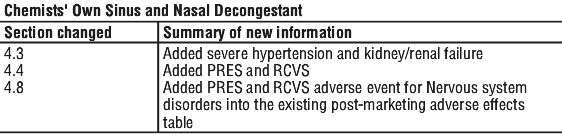
Severe acute or chronic kidney disease/renal failure.
Those taking MAOI's (and for 14 days after cessation of MAOI therapy - as it may precipitate a hypertensive crisis).
See Section 4.5 Interactions with Other Medicines and Other Forms of Interactions for additional information.
4.4 Special Warnings and Precautions for Use
Pseudoephedrine should be used with caution in patients with hypertension, coronary heart disease, ischemic heart disease, diabetes mellitus, hyperthyroidism, glaucoma, elevated intraocular pressure, and prostatic enlargement or bladder dysfunction.
Pseudoephedrine should be discontinued and medical advice sought if sudden abdominal pain, rectal bleeding or other symptoms of ischaemic colitis develop.
If signs and symptoms such as formation of small pustules occur, with or without pyrexia or erythema, then treatment with pseudoephedrine should be discontinued and a physician should be consulted.
Pseudoephedrine may cause sleeplessness if taken up to several hours before going to bed in sensitive people.
Posterior reversible encephalopathy syndrome (PRES) and reversible cerebral vasoconstriction syndrome (RCVS). Cases of PRES and RCVS have been reported with the use of pseudoephedrine-containing products (see Section 4.8 Adverse Effects (Undesirable Effects)). The risk is increased in patients with severe or uncontrolled hypertension, or with severe acute or chronic kidney disease/renal failure (see Section 4.3 Contraindications).
Pseudoephedrine should be discontinued and immediate medical assistance sought if the following symptoms occur: sudden severe headache or thunderclap headache, nausea, vomiting, confusion, seizures and/or visual disturbances. Most reported cases of PRES and RCVS resolved following discontinuation and appropriate treatment.
Use in hepatic impairment. Pseudoephedrine should be used with caution in patients with severe hepatic dysfunction.
Use in renal impairment. Pseudoephedrine is contraindicated for use in patients with severe acute or chronic kidney disease/renal failure (see Section 4.3 Contraindications).
Use in the elderly. No data available.
Paediatric use. Not recommended for use in children under 12 years of age.
Effects on laboratory tests. No data available.
See Section 4.5 Interactions with Other Medicines and Other Forms of Interactions for additional information.
4.5 Interactions with Other Medicines and Other Forms of Interactions
Pseudoephedrine may partially reverse the hypotensive action of drugs that interfere with sympathetic activity including bretylium, bethanidine, guanethidine, debrisoquine, methyldopa and beta-adrenergic blocking agents.
Concomitant use of Chemists' Own Sinus and Nasal Decongestant with other sympathomimetic amines or tricyclic antidepressants may cause a rise in blood pressure or hypertensive crisis. It should not be given to patients taking monoamine oxidase inhibitors (MAOIs) or within 14 days after ceasing treatment with MAOIs (see Section 4.3 Contraindications).
Other sympathomimetic agents, such as decongestants, appetite suppressants and amphetamine-like psychostimulants - may cause an increase in blood pressure and additive effects.
When administered with pseudoephedrine the antibacterial agent, furazolidone, is known to cause a dose related inhibition of monoamine oxidase. Although there are no reports of hypotensive action caused by the concurrent administration of Chemists' Own Sinus and Nasal Decongestant and furazolidone, they should not be taken together.
Methyldopa and β-blockers - may cause an increase in blood pressure.
Urinary acidifiers enhance elimination of pseudoephedrine.
Urinary alkalinisers decrease elimination of pseudoephedrine.
4.6 Fertility, Pregnancy and Lactation
Effects on fertility. No data available.
Use in pregnancy. (Category B2)
Safety for use of Chemists' Own Sinus and Nasal Decongestant during pregnancy has not yet been established.
Category B2 Australian categorisation definition. Drugs which have been taken by only a limited number of pregnant women and women of childbearing age, without an increase in the frequency of malformation or other direct or indirect harmful effects on the human foetus having been observed. Studies in animals are inadequate or may be lacking, but available data show no evidence of an increased occurrence of foetal damage.
Use in lactation. Small amounts of pseudoephedrine are excreted into breast milk, and use is not recommended while breastfeeding.
4.7 Effects on Ability to Drive and Use Machines
The effects of this medicine on a person's ability to drive and use machines were not assessed as part of its registration.
4.8 Adverse Effects (Undesirable Effects)
May cause sleeplessness if taken up to several hours before going to bed in sensitive people.
Adverse effects include:
Cardiovascular stimulation. Elevated blood pressure, palpitations, tachycardia or arrhythmias.
CNS stimulation. Headache, restlessness, feeling jittery, insomnia, anxiety, euphoric mood, tremor and (rarely) hallucinations, nervousness, vertigo.
Sweating or flushing; psychomotor hyperactivity (in the paediatric population); skin rashes, dysuria and urinary retention; hypersensitivity.
Children and the elderly are more likely to experience adverse effects than other age groups.
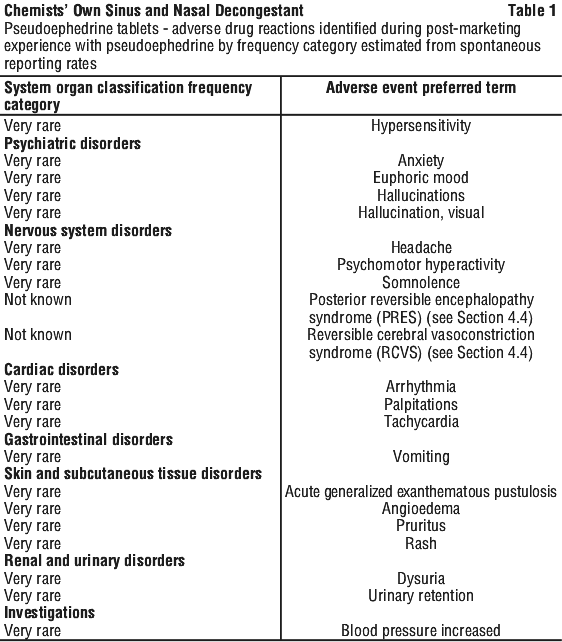
Post-marketing data. Additional adverse drug reactions (ADRs) identified during post-marketing experience with pseudoephedrine are included in Table 1. The frequencies are provided according to the following convention:
Very common: ≥ 1/10; common: ≥ 1/100, < 1/10; uncommon ≥ 1/1,000, < 1/100; rare: ≥ 1/10,000, < 1/1,000; very rare < 1/10,000.
In Table 1, the ADRs are presented with ADR frequency categories estimated from spontaneous reporting rates where numerator represents total number of reported company AEs under given PT or medical concept and the denominator represents exposure data calculated from sales data.
4.9 Overdose
Symptoms. May include mild anxiety, hypertension, palpitations, irritability, restlessness, convulsions and difficulty with micturition, urinary retention, hallucinations or shortness of breath.
For information on the management of overdose, contact the Poisons Information Centre on 13 11 26 (Australia).
5 Pharmacological Properties
5.1 Pharmacodynamic Properties
Mechanism of action. Pseudoephedrine, a sympathomimetic agent is an orally effective nasal decongestant, which produces vasoconstriction of the mucosa of the upper respiratory tract and paranasal sinuses. It is about equipotent with ephedrine but has less unwanted cardiovascular or CNS effects.
Clinical trials. No data available.
5.2 Pharmacokinetic Properties
Absorption. Pseudoephedrine is readily absorbed from the gastrointestinal tract.
Distribution. Small amounts are distributed into breast milk.
Metabolism. Less than 1% is metabolised in the liver by N-demethylation to an inactive metabolite. Pseudoephedrine has a half-life of 4-8 hours; elimination is enhanced and half-life accordingly shorter in acid urine.
Excretion. 55-95% of the drug is excreted unchanged in the urine.
5.3 Preclinical Safety Data
Genotoxicity. No data available.
Carcinogenicity. No data available.
6 Pharmaceutical Particulars
6.1 List of Excipients
Dextrates, microcrystalline cellulose, crospovidone, colloidal anhydrous silica, hypromellose, macrogol 400, magnesium stearate and carnauba wax.
See Section 2 Qualitative and Quantitative Composition.
6.2 Incompatibilities
Incompatibilities were either not assessed or not identified as part of the registration of this medicine.
6.3 Shelf Life
In Australia, information on the shelf life can be found on the public summary of the Australian Register of Therapeutic Goods (ARTG). The expiry date can be found on the packaging.
6.4 Special Precautions for Storage
Store below 30°C. Protect from light.
6.5 Nature and Contents of Container
Blister pack 12 tablets.
6.6 Special Precautions for Disposal
In Australia, any unused medicine or waste material should be disposed of by taking to your local pharmacy.
6.7 Physicochemical Properties
A white or off-white crystalline powder; odourless or almost odourless.
Chemical structure.
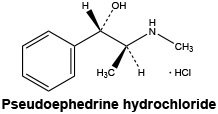
Molecular formula: C10H15NO,HCl (MW: 201.70).
CAS number. 345-78-8.
7 Medicine Schedule (Poisons Standard)
S3 - Pharmacist only medicine.
Date of First Approval
13 March 2003
Date of Revision
03 December 2025
Summary Table of Changes
Reasonable care is taken to provide accurate information at the time of creation. This information is not intended as a substitute for medical advice and should not be exclusively relied on to manage or diagnose a medical condition. The Australian Commission on Safety and Quality in Health Care disclaims all liability (including for negligence) for any loss, damage, injury or any other negative effects resulting from reliance on or use of this information. Read our full disclaimer. This website uses cookies. Read our privacy policy.