
ClinOleic
Brand Information
| Brand name | ClinOleic |
| Active ingredient | Olive oil + Soya oil |
| Schedule | Unscheduled |
Consumer Medicine Information (CMI) leaflet
Please read this leaflet carefully before you start using the ClinOleic.
Summary CMI
ClinOleic
Consumer Medicine Information (CMI) summary
The full CMI on the next page has more details. If you are worried about using this medicine, speak to your doctor or pharmacist.
1. Why am I receiving ClinOleic?
ClinOleic is a nutrition source that a doctor or nurse gives you directly into your veins. It contains olive oil and soya oil in a sterile mixture (emulsion). ClinOleic is used as a source of energy and nutrition for people who cannot sufficiently consume food by mouth.
For more information, see Section 1. Why am I receiving ClinOleic? in the full CMI.
2. What should I know before I receive ClinOleic?
Do not use if you have ever had an allergic reaction to any of the ingredients listed at the end of the CMI.
Talk to your doctor if you have any other medical conditions, take any other medicines, or are pregnant or plan to become pregnant or are breastfeeding.
For more information, see Section 2. What should I know before I receive ClinOleic? in the full CMI.
3. What if I am taking other medicines?
Some medicines may interfere with ClinOleic and affect how it works.
A list of these medicines is in Section 3. What if I am taking other medicines? in the full CMI.
4. How is ClinOleic given?
- Your doctor or nurse will give ClinOleic as a slow, continuous infusion into a vein. The drip usually runs around 12 to 24 hours. Your doctor can advise how long it will take.
- Your doctor will determine the amount of ClinOleic that is right for you. They will closely monitor your condition and your blood during treatment to ensure that you safely receive the right amount.
- More instructions can be found in Section 4. How is ClinOleic given? in the full CMI.
5. What should I know while receiving ClinOleic?
| Things you should do |
|
| Things you should not do |
|
| Driving or using machines |
|
| Looking after your medicine |
|
For more information, see Section 5. What should I know while receiving ClinOleic? in the full CMI.
6. Are there any side effects?
Immediate reactions: At the beginning of the infusion, you may experience allergic reactions with symptoms of sweating, shivering, pain in the face, head, or neck, or shortness of breath. If you experience any adverse effects, talk to your doctor, nurse, or pharmacist.
For more information, including what to do if you have any side effects, see Section 6. Are there any side effects? in the full CMI.
Full CMI
ClinOleic
Active ingredient(s): olive oil and soya oil
Consumer Medicine Information (CMI)
This leaflet provides important information about using ClinOleic. You should also speak to your doctor, nurse or pharmacist if you would like further information or if you have any concerns or questions about receiving ClinOleic.
Where to find information in this leaflet:
1. Why am I receiving ClinOleic?
2. What should I know before I receive ClinOleic?
3. What if I am taking other medicines?
4. How is ClinOleic given?
5. What should I know while receiving ClinOleic?
6. Are there any side effects?
7. Product details
1. Why am I receiving ClinOleic?
ClinOleic is a nutrition source that a doctor or nurse gives you directly into your veins.
ClinOleic contains olive oil and soya oil in a sterile mixture (emulsion).
ClinOleic is used as a source of energy and nutrition for people who cannot sufficiently consume food by mouth. It may be given with other nutrition solutions containing glucose and amino acids.
2. What should I know before I receive ClinOleic?
Warnings
Do not use ClinOleic if you:
- are allergic to any of the active or inactive ingredients listed at the end of this leaflet. Always check the ingredients to make sure you can use this medicine.
- have had an allergic reaction to egg-yolk containing foods, soybean products or peanut proteins
- have extremely high levels of fats (lipids and triglycerides) in the blood
- have problems with your body's metabolism that have not been fixed, such as:
- lactic acidosis (too much lactic acid in the blood).
- uncontrolled diabetes. - have severe sepsis (an extreme and harmful response of your body to an infection)
- have severe liver disease
- have blood clotting problems
- have kidney disease
- have had or are having a heart attack
Check with your doctor if you:
- are fluid overloaded or overhydrated
- have diabetes
- have liver disease
- have any other medical conditions
- take any medicines for any other condition
During treatment, you may be at risk of developing certain side effects. It is important you understand these risks and how to monitor for them. See additional information under Section 6. Are there any side effects?
Pregnancy and breastfeeding
Check with your doctor if you are pregnant or intend to become pregnant.
Talk to your doctor if you are breastfeeding or intend to breastfeed.
Use in children
ClinOleic must be used with caution in very small and premature infants.
The doctor will regularly monitor your child's progress whilst on ClinOleic. Please ask your doctor about the benefits and risks in these cases.
3. What if I am taking other medicines?
Tell your doctor or pharmacist if you are taking any other medicines, including any medicines, vitamins or supplements that you buy without a prescription from your pharmacy, supermarket or health food shop.
- ClinOleic may affect how medicines such as warfarin work.
Check with your doctor or pharmacist if you are not sure about what medicines, vitamins or supplements you are taking and if these affect ClinOleic.
4. How is ClinOleic given?
How ClinOleic is given
- Your doctor or nurse will give ClinOleic as a slow, continuous infusion (drip) into a vein.
- The drip usually runs for about 12 to 24 hours. Your doctor can advise how long it will take.
- ClinOleic is usually given in a hospital, clinic or nursing home. The infusion requires special equipment and medical training. You may receive it at home if your doctor has arranged for it.
- Your doctor may mix ClinOleic with other nutrition solutions, such as glucose and amino acids, and give them in the same infusion session.
How much is given
- Your doctor will determine the amount of ClinOleic that's right for you.
- Your doctor will closely monitor your condition, as well as your blood and urine, during treatment to make sure you are receiving the correct amount.
- Your doctor may need to adjust your dose depending on your response.
- Your doctor will decide when to stop giving you ClinOleic.
If you receive too much ClinOleic
The doctor or nurse giving you ClinOleic is experienced in using this sort of medicine, so it is unlikely that you will be given an overdose.
If you think that you have received too much ClinOleic, you may need urgent medical attention.
You should immediately:
- phone the Poisons Information Centre
(by calling 13 11 26), or - contact your doctor, or
- go to the Emergency Department at your nearest hospital.
You should do this even if there are no signs of discomfort or poisoning.
5. What should I know while receiving ClinOleic?
Things you should do
Talk to your doctor about your progress on ClinOleic, especially if any complications occur during the first few days of therapy.
Your doctor may need to monitor your condition, as well as your laboratory tests, closely.
As ClinOleic is normally given in a hospital, your nurse may take records of your progress and any unexpected reactions.
Remind any doctor, nurse, dentist or pharmacist you see that you are using ClinOleic.
Things you should not do
- Do not stop using this medicine suddenly
Driving or using machines
Be careful before you drive or use any machines or tools until you know how ClinOleic affects you.
It is not known if ClinOleic affects the ability to drive or use machines or tools.
Looking after your medicine
- This medicine is stored in the pharmacy or the hospital ward, kept below 25°C.
- Store in protective overwrap. Do not freeze. Protect from light.
Medical professionals handle and prepare it according to the manufacturer's instructions.
Getting rid of any unwanted medicine
ClinOleic is for single use, and for one person only. Your doctor or nurse will discard any unused ClinOleic. They will not save unused portions for later, either for you or anyone else.
6. Are there any side effects?
All medicines can have side effects. If you do experience any side effects, most of them are minor and temporary. However, some side effects may need medical attention.
See the information below and, if you need to, ask your doctor or pharmacist if you have any further questions about side effects.
Less serious side effects
| Less serious side effects | What to do |
Digestive system:
| Speak to your doctor if you have any of these less serious side effects and they worry you. |
Serious side effects
| Serious side effects | What to do |
Allergic reaction-related
| Call your doctor straight away, or go straight to the Emergency Department at your nearest hospital if you notice any of these serious side effects. |
Tell your doctor or pharmacist if you notice anything else that may be making you feel unwell.
Other side effects not listed here may occur in some people.
Reporting side effects
After you have received medical advice for any side effects you experience, you can report side effects to the Therapeutic Goods Administration online at www.tga.gov.au/reporting-problems. By reporting side effects, you can help provide more information on the safety of this medicine.
Always make sure you speak to your doctor or pharmacist before you decide to stop taking any of your medicines.
7. Product details
This medicine is only available with a doctor's prescription.
What ClinOleic contains
| Active ingredients (main ingredients) |
|
| Other ingredients (inactive ingredients) | Egg lecithin, glycerol, sodium oleate, water for injections and ascorbyl palmitate. |
| Potential allergens | Egg lecithin, soya oil |
Do not take this medicine if you are allergic to any of these ingredients. Cross allergic reaction has been observed between soybean and peanut.
What ClinOleic looks like
ClinOleic is a milky white emulsion packaged in a plastic bag (with a protective overwrap).
- ClinOleic 20% is available in sizes of 100mL, 250 mL, 350ml, 500mL and 1000mL. (Aust R 97537)
Not all pack sizes may be marketed.
ClinOleic 20% packaged in a glass bottle (Aust R 97538) is no longer available.
Who distributes ClinOleic
Baxter Healthcare Pty Ltd
1 Baxter Drive
Old Toongabbie
NSW 2146
Australia
This leaflet was prepared in September 2025
Baxter and ClinOleic are trademarks of Baxter International Inc.
Brand Information
| Brand name | ClinOleic |
| Active ingredient | Olive oil + Soya oil |
| Schedule | Unscheduled |
MIMS Revision Date: 01 November 2023
1 Name of Medicine
Olive oil and soya oil.
2 Qualitative and Quantitative Composition
ClinOleic is a sterile fat emulsion [containing a mixture of refined olive oil (approximately 80%) and refined soya oil (approximately 20%)] 200 g, egg lecithin (purified egg phospholipids) 12 g, glycerol 22.5 g, sodium oleate 0.3 g and water for injections to 1,000 mL (final pH between 6.0-8.0).
One of the active ingredients, soya oil, contains ascorbyl palmitate as an antioxidant (free radical scavenger), in the concentration of 0.15 mg/g of oil.
3 Pharmaceutical Form
ClinOleic is an emulsion for intravenous injection.
ClinOleic 20% is a milk-like homogeneous liquid.
4 Clinical Particulars
4.1 Therapeutic Indications
Parenteral nutrition when oral or enteral nutrition is impossible, insufficient or contraindicated.
4.2 Dose and Method of Administration
The dosage depends on energy expenditure, the patient's clinical status, bodyweight, and ability to metabolise ClinOleic 20%, as well as additional energy given orally/enterally. Therefore, the dosage should be individualised and the bag size chosen accordingly. The maximum daily dose of ClinOleic 20% should be based on individual total nutritional requirements and patient tolerance.
Dosage. Note. The percentage (%) of lipid in the ClinOleic 20% formulation is expressed in weight by volume (w/v). That is, 5 mL of ClinOleic 20% contains 1 g of lipid.
Adult. The dosage is 1 to a maximum of 2 g lipids/kg/day.
Never exceed 0.15 g lipids/kg/hour (0.75 mL/kg/hour). (See Table 1.)

Daily dose should be increased gradually during the first week of administration.
Premature newborns and low birthweight infants. The use of ClinOleic 20% is restricted to premature infants of 28 weeks gestational age or more.
The initial daily dose should be 0.5-1.0 g lipids/kg of bodyweight. The dose may be increased by 0.5-1.0 g lipids/kg of bodyweight every 24 hours up to a daily dose of 2.0 g lipids/kg of bodyweight.
Flow rate and duration. The administration flow rate must be adjusted taking into account the dose being administered, the daily volume intake, and the duration of the infusion. The recommended duration of infusion for a parenteral nutrition bag is between 12 and 24 hours, depending on the clinical situation. Treatment with parenteral nutrition may be continued for as long as is required by the patient's condition.
Adult. The initial infusion rate must be slow and not exceed 0.1 g lipids or 0.5 mL (10 drops) per minute for 10 minutes, then gradually increased until reaching the required rate after half an hour.
Children. ClinOleic 20% should be administered as a continuous 24 h/day infusion.
It is recommended not to exceed an infusion rate of 0.15 g lipids/kg of bodyweight/hour.
Daily dose should be increased gradually during the first week of administration.
Premature newborns and low birthweight infants. ClinOleic 20% should be administered as a continuous 24 h/day infusion.
Route of administration. Intravenous infusion only. When used in premature newborns, low birth weight infants and children, the solution (in bags and administration sets) should be protected from light exposure after admixture through administration (see Section 4.4 Special Warnings and Precautions for Use).
When administered as part of a complete nutrition admixture (with glucose and amino acids), the central or peripheral venous route should be chosen depending on the osmolarity of the final admixture.
In rare cases, when infused alone as a complementary support to oral or enteral nutrition, ClinOleic 20% can be administered via central or peripheral vein.
When preparing an admixture that includes ClinOleic 20% (see Preparation for administration), the final osmolarity of the mixture should be measured before administration via a peripheral vein. If the mixture is hypertonic, it may cause irritation of the vein when administered into a peripheral vein.
ClinOleic 20% infusion does not contain an antimicrobial agent. To avoid the risk of microbial contamination, infusion should be commenced as soon as practicable after the preparation of an admixture. As with all parenteral administration, particularly infusions, strict aseptic technique should be used at all times. ClinOleic 20% intravenous infusion is for single use only in a single patient.
Method of preparation. The order of mixing is critical to ensure compatibility and stability of admixtures containing ClinOleic 20%. Use aseptic technique all way through the compounding processes. Thorough mixing after the addition of each component is essential. ClinOleic 20% and other components of parenteral nutrition do not contain antimicrobial agents. Therefore, once mixed, the admixtures should be administered over a period not exceeding 24 hours.
ClinOleic 20% may be combined with other nutrients by adding the emulsion to a mixture of amino acids and glucose in fixed proportions.
Thus, for example, an extemporaneous formulation made of amino acid, Synthamin 9, with electrolytes (500 mL), glucose solution 10% (375 mL) and ClinOleic 20% (250 mL) could be prepared without the risk of instability. Some combinations of 3-in-1 total parenteral nutrition (TPN) admixtures are shown in Table 2.
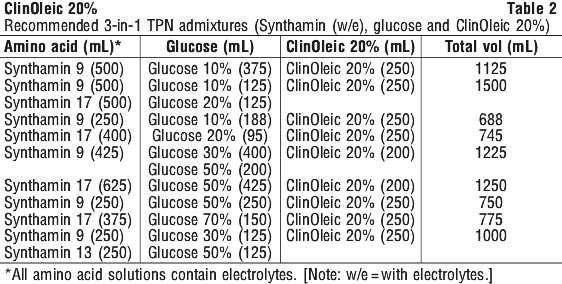
The order of admixing of the above components should be approached by minimising a sudden change in the negative charge of the emulsion. Firstly, mix the glucose infusion with the amino acid infusion. ClinOleic 20% emulsion can then be added into this admixture. Finally the electrolyte complements then trace elements can be added.
As the lipid emulsion is negatively charged, do not add electrolytes or trace elements directly into ClinOleic 20% emulsion as they destabilise the emulsion. The recommended sequence for adding electrolytes is monovalent, divalent and trivalent ions. Phosphate salts must always be added prior to calcium salts as discussed below.
The inclusion of calcium and phosphate ions in a TPN admixture requires special attention to a possible formation of calcium phosphate precipitate, which is affected by pH, temperature, calcium salt, sequence of calcium and phosphate addition to the admixtures and concentration of calcium and phosphate ions. The limits of these electrolytes should be less than or equal to 5.0 mmol/L for calcium and phosphates should not exceed a concentration of 30 mmol/L from all sources. At pH 7.0 and above, the addition of NaH2PO4 to calcium gluconate solution results in a precipitation of CaHPO4, that is, the equilibrium between [H2PO4]-1 and [HPO4]-2 is shifted to the [HPO4]-2 side.
At pH of 4.1, phosphate ions are predominantly in the form of monobasic phosphate, whilst at a higher pH it occurs in a form of dibasic phosphate ions. Taking into consideration that the glucose infusion has a pH in the range 3.2-6.5, and in order to minimise a formation of dibasic phosphate ions, the sodium monobasic phosphate should be added to the glucose infusion in the early stage of the compounding of a TPN admixture. Then, this admixture is added to the amino acid infusion, which has a buffer capacity and no charge effects at pH 5-6. This is followed by the addition of the lipid emulsion to the obtained admixture. Finally, calcium gluconate is added at the end of the TPN compounding process.
Separation of the product (gravity dispersion or 'creaming') may occur after the emulsion has been stored a period of time without agitation. It should only be necessary to invert the bottle or shake the bag 2 or 3 times before use. The product must not be used if the emulsion has a yellow appearance, or is seen to contain yellow droplets of oil. Do not use if shaking does not result in a uniform emulsion.
Preparation for administration. Bottle. Before use check that the emulsion is homogeneous, and that the bottle is free of cracks or splinters.
The use of a final filter is recommended during administration of all parenteral nutrition solutions, where possible.
All opened bottles must be used immediately and not be stored for further use.
For single use only. Discard partly used bottle.
When used in premature newborns, low birth weight infants and children, protect from light exposure when admixtures include trace elements and/or vitamins, after admixture through administration. Exposure of ClinOleic 20% to ambient light after admixture generates peroxides and other degradation products that can be reduced by photoprotection (see Section 4.4 Special Warnings and Precautions for Use).
Bag. Store in protective overwrap.
Please note. As lipid emulsions are oxygen sensitive, an oxygen indicator affixed to an oxygen absorber is added between the inner bag and the overwrap. The oxygen indicator shows whether oxygen has entered the packaging due to damage of the overwrap. The oxygen indicator should be inspected before removing the overwrap; compare it to the reference colour printed next to the OK symbol and depicted in the printed area of the indicator label. If oxygen enters the overwrap and is not absorbed by the oxygen absorber, the oxygen indicator changes colour. Do not use the product if the colour of the oxygen indicator does not correspond to the reference colour printed next to the OK symbol.
The oxygen indicator mixture may appear biphasic, as it is a suspension of a solid in a liquid. Once it is determined that the product is safe to use, the oxygen absorber/indicator should be discarded.
Do not use plastic containers in series connection. Such use could result in embolism due to residual air drawn from the primary container before administration of the fluid from the secondary container is completed.
a. To open. Tear the protective overwrap; confirm the integrity of the bag; use only if the bag is not damaged and the emulsion is a homogenous liquid with a milky appearance.
b. Positioning the infusion. Suspend the bag; remove the plastic protector from the administration outlet; firmly insert the infusion spike into the administration outlet.
c. Additions. If it is necessary to introduce additives, verify the compatibility and mix thoroughly before administration to the patient. Additions must be performed under aseptic conditions. Never make any additions directly to the bag; additions are made into the injection site using a needle: prepare the injection site; puncture the injection site and inject; mix the contents of the bag and the additives (see Method of preparation).
All opened bags must be used immediately and not be stored for further use.
The use of a final filter is recommended during administration of all parenteral nutrition solutions, where possible.
For single use only.
Do not store partially used bags, discard partially used bags and destroy all accessory parts after use.
Do not reconnect partially used bags.
When used in premature newborns, low birth weight infants and children, protect from light exposure when admixtures include trace elements and/or vitamins, after admixture through administration. Exposure of ClinOleic 20% to ambient light after admixture generates peroxides and other degradation products that can be reduced by photoprotection (see Section 4.4 Special Warnings and Precautions for Use).
4.3 Contraindications
Known hypersensitivity to egg, soybean or peanut proteins or to any of the ingredients, including the lipid emulsion and/or excipients.
Severe hyperlipidaemia or severe disorders of lipid metabolism characterised by hypertriglyceridaemia and noncorrected metabolism disorders including lactic acidosis and uncompensated diabetes.
Severe sepsis.
Severe liver disease.
Blood coagulation disorders, thrombophlebitis.
Acute and chronic renal failure, in absence of specific studies, there is insufficient data to justify its use in acute/chronic renal failure.
Myocardial infarction.
4.4 Special Warnings and Precautions for Use
Special clinical monitoring is required at the beginning of any intravenous infusion. Should any abnormalities occur, the infusion must be stopped.
Allergic reactions. The infusion must be stopped immediately if any signs or symptoms of an allergic reaction develop.
Infections. Patients who require parenteral nutrition are often predisposed to infectious complications due to malnutrition and/or their underlying disease state.
Infection and sepsis may occur as a result of the use of intravenous catheters to administer parenteral formulations, or poor maintenance of catheters and contaminated solutions.
Immunosuppression and other factors such as hyperglycaemia, malnutrition and/or their underlying disease state may predispose patients to infectious complications.
The occurrence of septic complications can be decreased with heightened emphasis on aseptic technique in catheter placement and maintenance, as well as aseptic technique in the preparation of the nutritional formula.
Careful monitoring of signs, symptoms, and laboratory test results (including fever, chills, leukocytosis, and hyperglycaemia), and frequent checks of the access device for technical complications can help recognise early infections.
Fat overload syndrome. Fat overload syndrome has been reported with similar products. This may be caused by inappropriate administration (e.g. overdose and/or infusion rate higher than recommended, see Section 4.9 Overdose); however, the signs and symptoms of this syndrome may also occur when the product is administered according to instructions. The reduced or limited ability to metabolise the lipids contained in ClinOleic 20% accompanied by prolonged plasma clearance may result in a fat overload syndrome. This syndrome is associated with a sudden deterioration in the patient's clinical condition and is characterised by findings such as fever, anaemia, leukopaenia, thrombocytopaenia, coagulation disorders, hyperlipidaemia, liver fatty infiltration (hepatomegaly), deteriorating liver function and central nervous system manifestations (e.g. coma). The syndrome is usually reversible when the infusion of the lipid emulsion is stopped.
Refeeding syndrome. ClinOleic 20% is administered as part of a parenteral nutrition regimen. Refeeding severely undernourished patients with parenteral nutrition may result in the refeeding syndrome. The syndrome is characterised by the intracellular shift of potassium, phosphorus and magnesium as the patient becomes anabolic. Thiamine deficiency and fluid retention may also develop. Careful monitoring and slowly increasing nutrient intakes, while avoiding overfeeding, can prevent these complications.
Fat emulsions should be administered simultaneously with carbohydrates and amino acids to avoid metabolic acidosis.
Never make additions directly to the ClinOleic 20% bag. If ClinOleic 20% is mixed with glucose and/or amino acid solutions, the compatibility should be checked before administration (see Section 4.2 Dose and Method of Administration). Formation of precipitates could result in vascular occlusion.
To avoid air embolism due to possible residual gas contained in the primary bag, do not connect flexible bags in series (see Section 4.2 Dose and Method of Administration). Air embolism can result if residual gas in the bag is not fully evacuated prior to administration if the flexible bag is pressurised to increase flow rates. Use of a vented intravenous administration set with the vent in the open position could result in air embolism.
Use with caution in the following circumstances. Fat metabolism may be disturbed in uncompensated diabetes. The use of ClinOleic in patients with diabetes mellitus has not been investigated. If ClinOleic is administered the elimination of fat should be monitored daily.
Check the following before/during treatment. Water/fluid balance and overload states, electrolytic or metabolic disorders should be corrected before administration of ClinOleic 20%.
Plasma triglyceride levels and clearance should be monitored daily. The triglyceride concentration in serum during infusion should not exceed 3 mmol/L. Infusion should only be started when serum triglyceride levels have returned to baseline level.
During short-term or long-term intravenous nutrition, alkaline phosphatase and total bilirubin should be checked at regular intervals, depending on the health status of the patient.
Monitor serum triglycerides, fluid and electrolyte status, acid/base balance, serum osmolarity, blood glucose, liver and kidney function, and blood count, including platelet and coagulation parameters, throughout treatment.
Fluid status should be closely monitored in patients with pulmonary oedema or heart failure.
Use in hepatic impairment. The use of ClinOleic in patients with chronic liver disease without systemic failure has not been evaluated. If parenteral nutrition is to be used in patients with pre-existing liver disease or insufficiency, liver function parameters as well as liver condition should be closely followed when using ClinOleic. Hetapobiliary disorders including cholestasis, hepatic steatosis, fibrosis and cirrhosis, possibly leading to hepatic failure, as well as cholecystitis and cholelithiasis are known to develop in some patients on parenteral nutrition. The aetiology of these disorders is thought to be multifactorial and may differ between patients. Patients developing abnormal laboratory parameters (see Section 4.4 Special Warnings and Precautions for Use, Effects on laboratory tests) or other signs of hepatobiliary disorders should be assessed early by a clinician knowledgeable in liver diseases in order to identify possible causative and contributory factors, and possible therapeutic and prophylactic interventions.
See Section 4.3 Contraindications.
Use in renal impairment. See Section 4.3 Contraindications.
Use in the elderly. No data available.
Paediatric use. Extremely premature and/or very low birthweight infants receiving ClinOleic 20% should be under the close supervision of a neonatologist. Clinical experience exists for administration of ClinOleic 20% for up to 7 days in neonates and up to 2 months in children.
ClinOleic 20% should be administered with caution in the case of neonatal hyperbilirubinaemia (total serum bilirubin > 200 micromol/L). Total bilirubin levels should be monitored closely.
Light exposure of solutions for intravenous parenteral nutrition, after admixture with trace elements and/or vitamins, may have adverse effects on clinical outcome in neonates, due to generation of peroxides and other degradation products. When used in premature newborns, low birth weight infants and children, ClinOleic 20% should be protected from ambient light after admixture until administration is complete (see Section 4.2 Dose and Method of Administration).
Serious adverse reactions including acute respiratory distress and metabolic acidosis have been reported in neonates and infants after rapid infusion of intravenous lipid emulsions.
Effects on laboratory tests. The lipids contained in ClinOleic 20% may interfere with the results of certain laboratory tests (e.g. bilirubin, lactate dehydrogenase, oxygen saturation, haemoglobin) if the blood sample is taken before the lipids are eliminated. Administered lipids are generally eliminated from the bloodstream after a period of 5 to 6 hours following discontinuation of administration.
4.5 Interactions with Other Medicines and Other Forms of Interactions
No interaction studies have been performed with ClinOleic 20%.
Olive and soybean oils have a natural content of vitamin K1 that may counteract the anticoagulant activity of coumarin derivatives, including warfarin.
Compatibility with other drugs and nutrients. Complete information about incompatibilities is not available.
Electrolytes or medication should not be added directly to the lipid emulsion.
If it is necessary to introduce additives to a solution containing ClinOleic 20%, first verify the compatibility and then mix thoroughly before administration to the patient.
The compatibility of drugs intended for administration by the Y-site of an infusion containing ClinOleic 20% must first be established.
ClinOleic 20% may be included as a component of parenteral nutrition admixtures incorporating carbohydrates and amino acids where compatibility and stability have been established before administration to the patient. Admixing should be accompanied by gentle agitation during preparation under strict aseptic conditions. The addition of polyvalent electrolytes to an admixture requires thorough review of the interaction of calcium and phosphate. This review should be made before compounding is initiated, due to the possible interaction between the calcium and the phosphate.
In the case of Synthamin amino acid solutions with electrolytes, the limits of these electrolytes should be less than or equal to 5.0 mmol/L for calcium, and phosphates should not exceed a concentration of 30 mmol/L from all sources.
Absolute solubility of calcium/phosphate in parenteral admixtures is dependent upon many factors, including the concentration of amino acids in the admixture. Reference should be made to calcium/phosphate solubility curves (appropriate to the amino acid in use), published by the amino acid solution manufacturers, to determine the solubility limits before admixing commences.
'Breaking' or 'oiling out' of the emulsion can be visibly identified by accumulation of yellowish droplets or particles in the admixture.
Compatibility with containers and administration sets. Phthalate plasticisers are extracted from PVC bags and administration sets by intravenous fat emulsions. PVC bags and administration sets should not be used for delivery of ClinOleic 20% or of solutions containing ClinOleic 20%. Bags made from ethyl vinyl acetate (EVA) and administration sets made from nonplasticised materials are recommended.
4.6 Fertility, Pregnancy and Lactation
Effects on fertility. Tests for effects on fertility have not been conducted with ClinOleic 20%.
Use in pregnancy. The safety of administration of ClinOleic 20% during pregnancy has not been established. No reproductive toxicity studies with ClinOleic 20% have been carried out in animals, and its use in pregnancy is not recommended.
Use in lactation. The safety of administration of ClinOleic 20% during lactation has not been established. Therefore, ClinOleic 20% should be used during lactation only if clearly needed.
4.7 Effects on Ability to Drive and Use Machines
The effects of this medicine on a person's ability to drive and use machines were not assessed as part of its registration.
4.8 Adverse Effects (Undesirable Effects)
During administration of parenteral nutrition fat emulsions, two types of adverse reactions can occur:
Immediate reactions. At the beginning of the infusion, any of the following abnormal signs evoking a hypersensitivity reaction should be cause for immediate discontinuation of the infusion: sweating, shivering, cephalgia, dyspnoea.
Delayed reactions. During long-term parenteral nutrition of fat emulsions, the following adverse reactions have been observed.
Hepatobiliary disorders. Increase of alkaline phosphatase, bilirubin and transaminases (ALT, AST); hepatomegaly; icterus.
Blood and lymphatic system disorders. Thrombocytopenia.
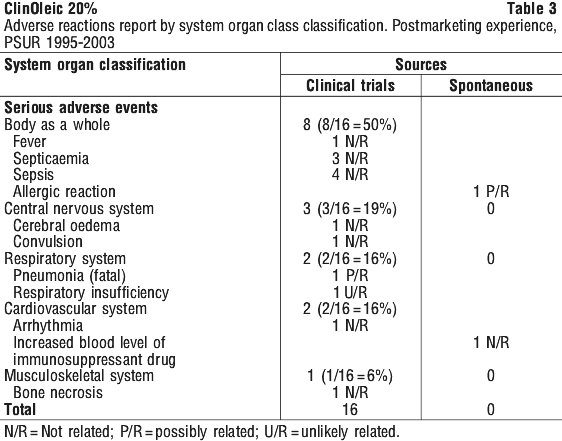
Of the clinical trials performed with ClinOleic 20%, a summary of the serious adverse events (SAE) are summarised in Table 3. Over a period from November 1995 to November 2003, sixteen (16) SAE's were reported in clinical studies. Of the 16 AE's, seven (7) were not related, one (1) possibly related and one (1) unlikely related to the product administration. The total number of units used during this period was 1,325,117.
To date, two (2) spontaneous adverse events were reported.
Blood and lymphatic system disorders. Leukopaenia.
Metabolism and nutrition disorders. Hyperglycaemia, diabetes mellitus inadequate control, hypoproteinaemia, hyperlipidaemia (including hypertriglyceridaemia).
Vascular disorders. Mean arterial pressure decreased, circulatory collapse, hypotension, hot flush.
Respiratory, thoracic, and mediastinal disorders. Dyspnoea.
Gastrointestinal disorders. Vomiting, nausea, abdominal pain, abdominal distension, epigastric discomfort.
Hepatobiliary disorders. Cholestasis, hepatic function abnormal, cytolytic hepatitis.
Musculoskeletal and connective tissue and bone disorders. Muscle spasms, back pain.
General disorders and administration site conditions. Pyrexia, asthenia, malaise.
Investigations. Blood bilirubin increased, bilirubin conjugated increased, hepatic enzyme increased, liver function test abnormal, pancreatic enzyme increased, blood triglycerides increased.
Post-marketing adverse effects. The following additional adverse reactions have been reported in the postmarketing experience.
Gastrointestinal disorders. Diarrhoea.
Skin and subcutaneous tissue disorders. Pruritus.
Investigations. International normalised ratio decreased.
Immune system disorders. Hypersensitivity with the manifestations of rash and dyspnoea.
Reporting suspected adverse effects. Reporting suspected adverse reactions after registration of the medicinal product is important. It allows continued monitoring of the benefit-risk balance of the medicinal product. Healthcare professionals are asked to report any suspected adverse reactions at www.tga.gov.au/reporting-problems.
4.9 Overdose
In case of overdose (an abnormal rise in triglyceride levels during infusion of fat) where any of the following reactions occur, fat infusion should be stopped to allow lipids to clear from serum, or if necessary, continue the infusion at a reduced dosage: general symptoms such as fever or evocating an haemodynamic instability, emesis, algia, liver function abnormalities, hepato or splenomegalia, haemostasis disorders, hyperlipidaemia, hypersensitivity, and fat overload syndrome. In neonates and infants, an overdose and/or increased infusion rate may cause serious adverse events such as metabolic acidosis and respiratory distress. The effects are usually reversible after the lipid infusion is stopped. If medically appropriate, further intervention may be indicated (see Section 4.4 Special Warnings and Precautions for Use).
For information on the management of overdose, contact the Poisons Information Centre on 13 11 26 (Australia).
5 Pharmacological Properties
5.1 Pharmacodynamic Properties
Mechanism of action. ClinOleic 20% provides a moderate proportion of essential fatty acids (EFA), which probably facilitates their utilisation. The combination of olive and soya oils allows a content of fatty acids in an approximate ratio of:
saturated fatty acids: 15% (SFA);
monounsaturated fatty acids: 65% (MUFA);
essential polyunsaturated fatty acids: 20% (EPUFA).
For patients requiring complete parenteral nutrition, complementary carbohydrates, amino acids, electrolytes, vitamins, and trace elements supplements are required.
ClinOleic 20% is a source of energy; the high energy content of the emulsion enables the administration of a large quantity of calories in a small volume. ClinOleic 20% also contains glycerol for isotonicity. Egg lecithin supplies phosphorus and choline.
Clinical trials. ClinOleic has been used in a number of small clinical trials generally using Intralipid as a comparative agent. The numbers enrolled in these trials were small and they are not suitable for data pooling or meta-analysis or for demonstrating noninferiority to the comparator. The studies were of variable duration. The studies usually measured fatty acid composition of plasma lipid fractions. Of the population studied, 32% of the adults were aged over 65 years old.
The 2 pivotal studies enrolled 59 infants and children aged under 11 years old.
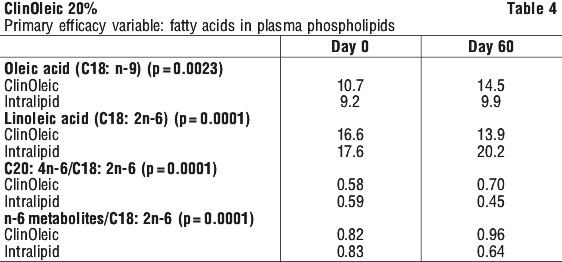
Study CT 2402/P14/93/F (Ricour study), double blind, randomised, parallel group, measured the level of fatty acids in plasma phospholipids (primary efficacy variable) and compared the long-term efficacy and safety of ClinOleic 20% (n = 9) to Intralipid 20% (n = 9) in children and infants who needed prolonged parenteral nutrition (PN) at home or hospital. Seventeen patients aged from 1 to 9 years old were exposed for 2 months and 1 patient was exposed for 1 month.
The results of the study are shown in Table 4.
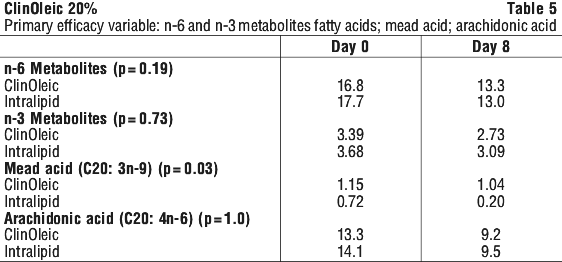
The results are shown in Table 5.
5.2 Pharmacokinetic Properties
In ClinOleic 20%, most of the lipid particle sizes are in the range of chylomicrons (0.08 - 0.6 micrometre) with the mean diameter of less than 0.45 micrometre. However, it may contain a small fraction (up to 2.5%) of particles having a diameter of more than 1 micrometre.
5.3 Preclinical Safety Data
Genotoxicity. Tests for mutagenicity have not been conducted with ClinOleic 20%.
Carcinogenicity. Tests for carcinogenicity have not been conducted with ClinOleic 20%.
6 Pharmaceutical Particulars
6.1 List of Excipients
See Section 2 Qualitative and Quantitative Composition.
6.2 Incompatibilities
See Section 4.5 Interactions with Other Medicines and Other Forms of Interactions.
6.3 Shelf Life
In Australia, information on the shelf life can be found on the public summary of the Australian Register of Therapeutic Goods (ARTG). The expiry date can be found on the packaging.
6.4 Special Precautions for Storage
Store below 25°C.
Do not freeze.
Protect from light.
6.5 Nature and Contents of Container
ClinOleic 20% bottle: AUST R 97538.
ClinOleic 20% bag: AUST R 97537.
ClinOleic 20% can be packaged in glass bottle (type II), or in bag container. This bag is a multi-layer plastic bag (EP-SEBS/EVA/EVA2/PCCE) packaged in an oxygen barrier over wrap.
The product is available in the following sizes:
In bottle. 100 mL in bottle - Package sizes: 24 or 10 units. 125 mL in bottle - Package sizes: 10 or 24 units. 250 mL in bottle - Package sizes: 10 or 12 units. 500 mL in bottle - Package sizes: 10 or 12 units. 1000 mL in bottle - Package size: 6 units.
In bag. 100 mL in bag: Box of 10 or 24 units. 250 mL in bag: Box of 10 or 20 units. 350 mL in bag: Box of 10 or 12 units. 500 mL in bag: Box of 10 or 12 units. 1000 mL in bag: Box of 6 units.
Not all pack sizes may be marketed.
6.6 Special Precautions for Disposal
In Australia, any unused medicine or waste material should be disposed of in accordance with local requirements.
6.7 Physicochemical Properties
ClinOleic 20% is an isotonic emulsion. It has an osmolality of approximately 345 mOsmL/kg water and energy content of 8.360 MJ (2,000 kcal)/L. The relative density of ClinOleic 20% is in the range of 0.983 - 0.989.
Refined olive oil. Chemical structure. No data available.
CAS number. 8001-25-0.
Refined soya oil. Chemical structure. No data available.
CAS number. 8001-22-7.
7 Medicine Schedule (Poisons Standard)
Not scheduled.
Date of First Approval
19 February 2004
Date of Revision
07 September 2023
Summary Table of Changes

Reasonable care is taken to provide accurate information at the time of creation. This information is not intended as a substitute for medical advice and should not be exclusively relied on to manage or diagnose a medical condition. The Australian Commission on Safety and Quality in Health Care disclaims all liability (including for negligence) for any loss, damage, injury or any other negative effects resulting from reliance on or use of this information. Read our full disclaimer. This website uses cookies. Read our privacy policy.