
Cosamide 50
Brand Information
| Brand name | Cosamide 50 |
| Active ingredient | Bicalutamide |
| Schedule | S4 |
Consumer Medicine Information (CMI) leaflet
Please read this leaflet carefully before you start using the Cosamide 50.
Summary CMI
COSAMIDE® 50
Consumer Medicine Information (CMI) summary
The full CMI on the next page has more details. If you are worried about taking this medicine, speak to your doctor or pharmacist.
1. Why am I taking COSAMIDE 50?
COSAMIDE 50 contains the active ingredient bicalutamide. COSAMIDE 50 is used in combination with other medicines to treat advanced prostate cancer.
For more information, see Section 1. Why am I taking COSAMIDE 50? in the full CMI.
2. What should I know before I take COSAMIDE 50?
Do not use if you have ever had an allergic reaction to COSAMIDE 50 or any of the ingredients listed at the end of the CMI.
Talk to your doctor if you have any other medical conditions, take any other medicines, or are pregnant or plan to become pregnant or are breastfeeding.
For more information, see Section 2. What should I know before I take COSAMIDE 50? in the full CMI.
3. What if I am taking other medicines?
Some medicines may interfere with COSAMIDE 50 and affect how it works.
A list of these medicines is in Section 3. What if I am taking other medicines? in the full CMI.
4. How do I take COSAMIDE 50?
- The usual adult dose is one 50 mg tablet taken each day.
- Swallow your COSAMIDE 50 tablet whole with a glass of water.
More instructions can be found in Section 4. How do I take COSAMIDE 50? in the full CMI.
5. What should I know while taking COSAMIDE 50?
| Things you should do |
|
| Things you should not do |
|
| Driving or using machines |
|
| Looking after your medicine |
|
For more information, see Section 5. What should I know while taking COSAMIDE 50? in the full CMI.
6. Are there any side effects?
All medicines can have side effects. If you do experience any side effects, some can be minor and temporary. However, some side effects may be serious. Tell your doctor as soon as possible if you notice frequent urination, shortness of breath and dizziness when exercising and looking pale (anaemia), excessive thirst with weight loss, and passing large amounts of urine. Tell your doctor immediately or go to nearest hospital if you have chest pain, yellowing of the skin or eyes and dark coloured urine, rash, hives or severe itching of the skin, swelling of the face, lips, tongue and/or throat, swelling of other parts of the body including hands, feet or ankles, serious breathlessness, or sudden worsening of breathlessness, possibly with a cough or fever, shortness of breath, wheezing or trouble breathing.
For more information, including what to do if you have any side effects, see Section 6. Are there any side effects? in the full CMI.
Full CMI
COSAMIDE® 50
Active ingredient(s): bicalutamide
Consumer Medicine Information (CMI)
This leaflet provides important information about taking COSAMIDE 50. You should also speak to your doctor or pharmacist if you would like further information or if you have any concerns or questions about taking COSAMIDE 50.
Where to find information in this leaflet:
1. Why am I taking COSAMIDE 50?
2. What should I know before I take COSAMIDE 50?
3. What if I am taking other medicines?
4. How do I take COSAMIDE 50?
5. What should I know while taking COSAMIDE 50?
6. Are there any side effects?
7. Product details
1. Why am I taking COSAMIDE 50?
COSAMIDE 50 contains the active ingredient bicalutamide. COSAMIDE 50 is an anti-androgen medicine. Androgens such as testosterone are natural male sex hormones. In some types of prostate cancer, androgens may help the cancer cells grow. COSAMIDE 50 interferes with some of the actions of these hormones.
COSAMIDE 50 is used to in combination with other medicines to treat advanced prostate cancer.
COSAMIDE 50 should only be taken by men.
Ask your doctor if you have any questions about why this medicine has been prescribed for you.
You doctor may have prescribed it for another reason.
COSAMIDE 50 is not addictive.
2. What should I know before I take COSAMIDE 50?
Warnings
Do not take COSAMIDE 50 if:
- you have an allergy to:
- any medicine containing bicalutamide
- any of the ingredients listed at the end of this leaflet
- any other anti-androgen medicine.
Some of the symptoms of an allergic reaction may include:
-- shortness of breath
-- wheezing or difficulty breathing
-- swelling of the face, lips, tongue or other parts of the body
-- rash, itching or hives on the skin.
Always check the ingredients to make sure you can use this medicine. - you are taking cisapride or the antihistamines, terfenadine and astemizole.
- you are a woman.
Women are not normally treated with COSAMIDE 50. - the expiry date printed on the pack has passed or if the packaging is torn or shows signs of tampering.
If it has expired or is damaged, return it to your pharmacist for disposal.
Check with your doctor if you:
- have liver problems
It may not be safe for you to take COSAMIDE 50 if you have problems with your liver. - have allergies to medicines or substances such as foods, preservatives or dyes.
If you are not sure whether you should start taking this medicine, talk to your doctor.
If you have not told your doctor about any of the above, tell him/her before you start taking COSAMIDE 50.
During treatment, you may be at risk of developing certain side effects. It is important you understand these risks and how to monitor for them. See additional information under Section 6. Are there any side effects?
Pregnancy and breastfeeding
Do not take COSAMIDE 50 if you are a woman.
COSAMIDE 50 may also cause a period of low fertility or infertility whilst you are taking it and for a period afterwards. NOTE however that you may not be infertile.
As COSAMIDE 50 may affect your sperm, effective contraception must be used by you and/or your partner while you are taking COSAMIDE 50 and for at least 130 days after you have stopped taking COSAMIDE 50.
Children
Do not give COSAMIDE 50 to children.
There is no experience of its use in children.
3. What if I am taking other medicines?
Tell your doctor or pharmacist if you are taking any other medicines, including any medicines, vitamins or supplements that you buy without a prescription from your pharmacy, supermarket or health food shop.
Some medicines may interfere with COSAMIDE 50 and affect how it works. These include:
Tell your doctor if you are taking:
- cisapride
- the antihistamines terfenadine and astemizole
- medicines used to prevent blood clots, especially warfarin
- midazolam
- ciclosporin
- calcium channel blockers, medicines used to treat high blood pressure
- carbamazepine
- quinidine
- antiviral medicines for HIV infection
- cimetidine
- ketoconazole
These medicines may be affected by COSAMIDE 50 or may affect how well it works. You may need different amounts of your medicines or you may need to take different medicines.
Your doctor and pharmacist have more information on medicines to be careful with or avoid while taking this medicine.
Check with your doctor or pharmacist if you are not sure about what medicines, vitamins or supplements you are taking and if these affect COSAMIDE 50.
4. How do I take COSAMIDE 50?
Follow all directions given to you by your doctor and pharmacist carefully.
They may differ from the information contained in this leaflet.
If you do not understand the instructions on the pack, ask your doctor or pharmacist for help.
How much to take
- The usual adult dose is one 50 mg tablet taken each day.
How to take COSAMIDE 50
- Swallow your COSAMIDE 50 tablet whole with a glass of water.
When to take COSAMIDE 50
- Take COSAMIDE 50 at about the same time each day.
Taking it at the same time each day will have the best effect. It will also help you remember when to take it. - COSAMIDE 50 should be started at the same time as the other medicines you have been given for the treatment of prostate cancer.
- It does not matter if you take COSAMIDE 50 before, with or after food.
How long to take COSAMIDE 50 for
- Continue taking COSAMIDE 50 for as long as your doctor or pharmacist tells you.
If you forget to take COSAMIDE 50
If it is less than 12 hours for your next dose, skip the dose you missed and take your next dose when you are meant to.
Otherwise, take it as soon as you remember, and then go back to taking your medicine as you would normally.
Do not take a double dose to make up for the dose you missed.
If you are not sure what to do, ask your doctor or pharmacist.
If you have trouble remembering to take your medicine, ask your pharmacist for some hints.
If you have taken too much COSAMIDE 50
If you think that you or anyone else has taken too much COSAMIDE 50, urgent medical attention maybe needed.
You should immediately:
- phone the Poisons Information Centre
(by calling 13 11 26) for advice, or - contact your doctor, or
- go to the Emergency Department at your nearest hospital.
You should do this even if there are no signs of discomfort or poisoning.
5. What should I know while taking COSAMIDE 50?
Things you should do
- Keep all of your doctor's appointments so your progress can be checked.
- Remind any doctor, dentist or pharmacist you visit that you are using COSAMIDE 50.
- If you are about to be started on any new medicine, tell your doctor, dentist or pharmacist that you are taking COSAMIDE 50.
- If you go into hospital, please let the medical staff know you are taking COSAMIDE 50.
Things you must not do
- Do not give COSAMIDE 50 to anyone else, even if they have the same condition as you.
- Do not take COSAMIDE 50 to treat any other complaints unless your doctor tells you to.
- Do not stop taking COSAMIDE 50 or lower the dosage without checking with your doctor.
Driving or using machines
Be careful before you drive or use any machines or tools until you know how COSAMIDE 50 affects you.
Some patients may feel dizzy or weak.
Looking after your medicine
- Keep your COSAMIDE 50 tablets in the blister pack until it is time to take them.
- If you take COSAMIDE 50 out of the blister, it will not keep well.
- Keep it where the temperature stays below 25°C.
Follow the instructions in the carton on how to take care of your medicine properly.
Store it in a cool dry place away from moisture, heat or sunlight; for example, do not store it:
- in the bathroom or near a sink, or
- in the car or on window sills.
Heat and dampness can destroy some medicines.
Keep it where young children cannot reach it.
A locked cupboard at least one-and-a-half metres above the ground is a good place to store medicines.
Getting rid of any unwanted medicine
If you no longer need to take this medicine or it is out of date, take it to any pharmacy for safe disposal.
Do not take this medicine after the expiry date.
6. Are there any side effects?
Tell your doctor or pharmacist as soon as possible if you do not feel well while you are taking COSAMIDE 50.
This medicine helps most people with prostate cancer, but it may have unwanted side effects in some people.
All medicines can have side effects. If you do experience any side effects, most of them are minor and temporary. However, some side effects may need medical attention.
See the information below and, if you need to, ask your doctor or pharmacist if you have any further questions about side effects.
Do not be alarmed by the following list of side effects.
You may not experience any of them.
Less serious side effects
| Less serious side effects | What to do |
| Speak to your doctor or pharmacist if you have any of these very common side effects and they worry you. |
Serious side effects
| Serious side effects | What to do |
| Tell your doctor as soon as possible if you notice these serious side effects |
| Call your doctor straight away, or go straight to the Emergency Department at your nearest hospital if you notice any of these very serious side effects. |
Tell your doctor or pharmacist if you notice anything else that may be making you feel unwell.
Other side effects not listed here may occur in some people.
Reporting side effects
After you have received medical advice for any side effects you experience, you can report side effects to the Therapeutic Goods Administration online at www.tga.gov.au/reporting-problems. By reporting side effects, you can help provide more information on the safety of this medicine.
Always make sure you speak to your doctor or pharmacist before you decide to stop taking any of your medicines.
7. Product details
This medicine is only available with a doctor's prescription.
What COSAMIDE 50 contains
| Active ingredient (main ingredient) | Bicalutamide 50 mg per tablet |
| Other ingredients (inactive ingredients) |
|
| Potential allergens | lactose |
The tablet do not contain sucrose, gluten, tartrazine or any other azo dyes.
Do not take this medicine if you are allergic to any of these ingredients.
What COSAMIDE 50 looks like
COSAMIDE 50 tablets are white to off white round, biconvex, film-coated tablets debossed "B 50" on one side and plain on the other side (AUST R 162829).
Each pack contains 28 tablets.
Who distributes COSAMIDE 50
Alphapharm Pty Ltd trading as Viatris
Level 1, 30 The Bond
30-34 Hickson Road
Millers Point NSW 2000
www.viatris.com.au
Phone: 1800 274 276
This leaflet was prepared in August 2025.
COSAMIDE® is a Viatris company trade mark
COSAMIDE 50_cmi\Aug25/00
Brand Information
| Brand name | Cosamide 50 |
| Active ingredient | Bicalutamide |
| Schedule | S4 |
MIMS Revision Date: 01 July 2023
1 Name of Medicine
Bicalutamide.
2 Qualitative and Quantitative Composition
Each Cosamide 50 tablet contains 50 mg of bicalutamide as the active ingredient.
Excipients with known effect. Lactose.
For the full list of excipients, see Section 6.1 List of Excipients.
3 Pharmaceutical Form
The tablets are white to off white, round, biconvex, film-coated tablets debossed "B50" on one side and plain on other side.
4 Clinical Particulars
4.1 Therapeutic Indications
Treatment of advanced prostate cancer in combination with Luteinising Hormone Releasing Hormone (LHRH) agonist therapy.
Prevention of disease flare associated with the use of LHRH agonists.
4.2 Dose and Method of Administration
Adult males including the elderly. One tablet (50 mg) once a day.
Treatment with bicalutamide 50 mg should be started at the same time as treatment with a LHRH agonist.
Renal impairment. No dosage adjustment is necessary for patients with renal impairment.
Hepatic impairment. No dosage adjustment is necessary for patients with mild hepatic impairment.
Increased accumulation may occur in patients with moderate to severe hepatic impairment (see Section 4.4 Special Warnings and Precautions for Use). In such cases, a lower or less frequent dose may be considered.
4.3 Contraindications
Bicalutamide is contraindicated in females and children.
Known hypersensitivity to bicalutamide or any other constituents of the formulation.
Co-administration of terfenadine, astemizole or cisapride with bicalutamide is contraindicated (see Section 4.5 Interactions with Other Medicines and Other Forms of Interactions).
4.4 Special Warnings and Precautions for Use
Hyperglycaemia. A reduction in glucose tolerance has been observed in males receiving LHRH agonists. This may manifest as diabetes or loss of glycaemic control in those with pre-existing diabetes. Consideration should therefore be given to monitoring blood glucose in patients receiving bicalutamide in combination with LHRH agonists.
Potentiation of coumarin anticoagulant effects. Potentiation of coumarin anticoagulant effects have been reported in patients receiving concomitant bicalutamide therapy, which may result in increased Prothrombin Time (PT) and International Normalised Ratio (INR). Some cases have been associated with risk of bleeding. Close monitoring of PT/INR is advised and anticoagulant dose adjustment should be considered (see Section 4.5 Interactions with Other Medicines and Other Forms of Interactions; Section 4.8 Adverse Effects (Undesirable Effects)).
Use in patients with metastatic prostate cancer. In patients with metastatic prostate cancer, treatment with bicalutamide monotherapy has been associated with reduced survival compared to castration. Bicalutamide should therefore not be used without concomitant LHRH agonist therapy in these patients.
QT/QTc interval prolongation. Androgen deprivation therapy may prolong QT/QTc interval. Prescribers should consider whether the benefits of androgen deprivation therapy outweigh the potential risks in patients with congenital long QT syndrome, congestive heart failure, frequent electrolyte abnormalities and in patients taking drugs known to prolong the QT interval. Electrolyte imbalances should be corrected. Consider periodic monitoring of electrocardiograms and electrolytes.
Use in hepatic impairment. Bicalutamide is extensively metabolised in the liver. Data suggests that its elimination may be slower in subjects with severe hepatic impairment and this could lead to increased accumulation of bicalutamide. Therefore, bicalutamide should be used with caution in patients with moderate to severe hepatic impairment.
Periodic liver function testing should be considered due to the possibility of hepatic changes. The majority of these changes occur within the first 6 months of bicalutamide therapy.
Rare cases of death or hospitalisation due to severe liver injury have been observed with bicalutamide (see Section 4.8 Adverse Effects (Undesirable Effects)). Bicalutamide therapy should be discontinued if at any time a patient develops jaundice or if serum ALT rises above two times the upper limit of normal.
Use in renal impairment. See Section 4.2 Dose and Method of Administration.
Use in the elderly. See Section 4.2 Dose and Method of Administration.
Paediatric use. No data available.
Effects on laboratory tests. No data available.
4.5 Interactions with Other Medicines and Other Forms of Interactions
Bicalutamide is extensively metabolised (via oxidation and glucuronidation) in the liver. Bicalutamide has shown no evidence of causing enzyme induction in humans during dosing at 50 mg daily in man. In vitro studies have shown that R-bicalutamide is an inhibitor of CYP 3A4, with lesser inhibitory effects on CYP 2C9, 2C19 and 2D6 activity.
The clinically or potentially significant medicine interactions between bicalutamide and the following agents/ medicine classes, which are theoretical or have been observed, are described below. The medicine/ medicine interactions described include both interactions mediated through effects on P450 metabolism and interactions mediated through other mechanisms.
Effects of bicalutamide on other medicines. LHRH agonists. Although there is no evidence of any pharmacodynamic or pharmacokinetic interactions between bicalutamide 50 mg and LHRH agonists at steady state, bicalutamide 50 mg may prevent the harmful clinical consequences of flare associated with the start of LHRH agonist therapy.
Cytochrome P450. Bicalutamide is an inhibitor of CYP 3A4 and has been shown to increase plasma levels of midazolam by up to 80%. Therefore, concomitant use of terfenadine, astemizole and cisapride is contraindicated. Caution should be exercised with other medicines metabolised by CYP 3A4, such as ciclosporin, calcium channel blockers, HIV antivirals, HMG-CoA reductase inhibitors, carbamazepine, quinidine, etc.
Demonstrated interactions. Warfarin. In vitro studies have shown that bicalutamide can displace the coumarin anticoagulant, warfarin, from its protein binding sites. There have been reports of increased effect of warfarin and other coumarin anticoagulants when co-administered with bicalutamide. It is therefore recommended that if bicalutamide is administered in patients who are already receiving coumarin anticoagulants, PT/INR should be closely monitored and adjustments of anticoagulant dose considered (see Section 4.4 Special Warnings and Precautions for Use; Section 4.8 Adverse Effects (Undesirable Effects)).
Theoretical interactions. Caution should be exercised when prescribing bicalutamide with other medicines which may inhibit medicine oxidation e.g. cimetidine and ketoconazole. In theory, this could result in increased plasma concentrations of bicalutamide and an increase in adverse effects.
4.6 Fertility, Pregnancy and Lactation
Effects on fertility. Administration of bicalutamide may lead to inhibition of spermatogenesis. The long-term effects of bicalutamide on male fertility have not been studied. Atrophy of seminiferous tubules of the testes, atrophy of the epididymis, and atrophy of the male reproductive glands are predicted class effects of antiandrogens and have been observed in rats at exposures less than the therapeutic concentrations at the recommended clinical dose of 50 or 150 mg. Reversal of seminiferous tubule and seminal vesicle atrophy occurred in most animals by 4 months after the completion of dosing in a 6-month rat study. In this study, prostate atrophy was not fully reversible by 4 months after the completion of dosing. No recovery of seminiferous tubule atrophy was observed at 24 weeks after the completion of dosing in a 12-month rat study. Following 12 months of repeated dosing in dogs, the incidence of testicular atrophy was the same in dosed and control dogs after a 6-month recovery period. In male rats dosed at 250 mg/kg/day (less than human therapeutic concentrations after the recommended clinical dose of 50 mg or 150 mg), the precoital interval and time to successful mating were increased in the first pairing but no effects on fertility following successful mating were seen. These effects were reversed by 7 weeks after the end of an 11 week period of dosing. A period of subfertility or infertility should be assumed in man.
Antiandrogen therapy may cause morphological changes in spermatozoa. Although the effect of bicalutamide on sperm morphology has not been evaluated and no such changes have been reported for patients who received bicalutamide, patients and/or their partners should follow adequate contraception during bicalutamide therapy and for 130 days after bicalutamide therapy.
Use in pregnancy. (Category D)
Bicalutamide is contraindicated in females and must not be given to pregnant women.
Use in lactation. Bicalutamide is contraindicated in females and must not be given to breast-feeding mothers.
4.7 Effects on Ability to Drive and Use Machines
During treatment with bicalutamide, somnolence has been reported. Those patients who experience this symptom should observe caution when driving or using machines.
4.8 Adverse Effects (Undesirable Effects)
Bicalutamide 50 mg in general, has been well tolerated with few withdrawals due to adverse events.
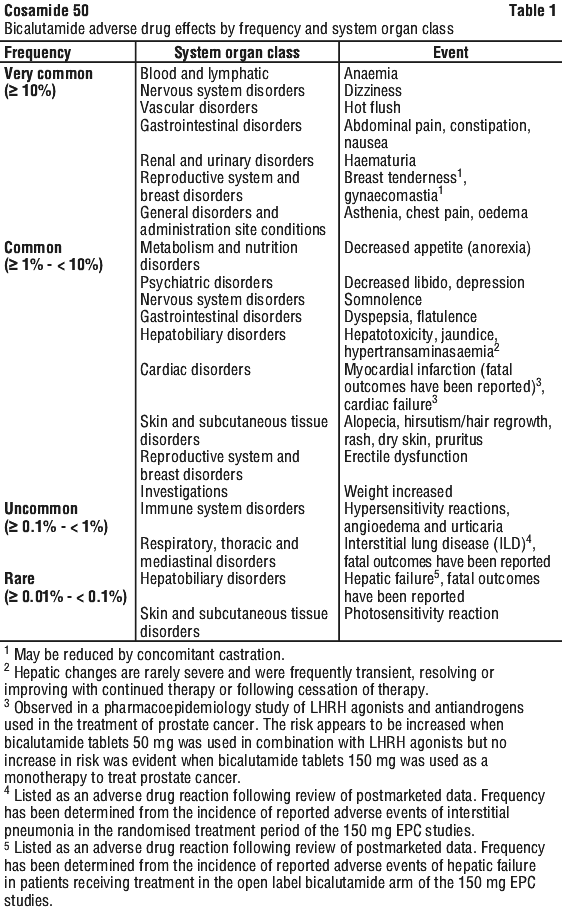
Clinical trial data - combination therapy (with medical castration) in advanced prostate cancer. The following adverse experiences were reported in clinical trials (as possible adverse medicine effects in the opinion of investigating clinicians, with a frequency of ≥ 1%) during treatment with bicalutamide 50 mg plus an LHRH agonist. No causal relationship of these experiences to medicine treatment has been made and some of the experiences reported are those that commonly occur in elderly patients. (See Table 1.)
Reporting suspected adverse effects. Reporting suspected adverse reactions after registration of the medicinal product is important. It allows continued monitoring of the benefit-risk balance of the medicinal product. Healthcare professionals are asked to report any suspected adverse reactions at www.tga.gov.au/reporting-problems.
4.9 Overdose
For information on the management of overdose, contact the Poisons Information Centre on 13 11 26 (Australia).
There is no human experience of overdosage. There is no specific antidote; treatment should be symptomatic. Dialysis may not be helpful, since bicalutamide is highly protein bound and is not recovered unchanged in the urine. General supportive care, including frequent monitoring of vital signs, is indicated.
5 Pharmacological Properties
5.1 Pharmacodynamic Properties
Mechanism of action. Bicalutamide is a non-steroidal anti-androgen, devoid of other endocrine activity. It binds to androgen receptors without activating gene expression, and thus inhibits the androgen stimulus. This inhibition impairs the growth and encourages apoptosis in androgen-dependent tumour cells and regression of prostatic tumours. In a subset of patients who experience disease progression while receiving bicalutamide, discontinuation of the medicine may result in an 'anti-androgen withdrawal syndrome', which manifests as a fall in prostate specific antigen (PSA) level. It is unknown whether this phenomenon translates to a prolongation of tumour response or survival.
Bicalutamide is a racemate with its anti-androgenic activity being almost exclusively in the (R)-enantiomer.
Clinical trials. Combination therapy (with medical castration) in advanced prostate cancer. In a large multicentre, controlled clinical trial, 813 patients with previously untreated advanced prostate cancer were randomised to receive bicalutamide 50 mg once daily (404 patients) or flutamide 250 mg (409 patients) three times a day, each in combination with a luteinising hormone releasing hormone agonist (LHRH agonist) (either goserelin acetate implant or leuprorelin acetate depot). At the time of analysis, the median time of follow-up was 49 weeks. Bicalutamide/ LHRH agonist therapy was associated with a statistically significant (p = 0.005) improvement in time to treatment failure.
Subjective responses, (including scores for pain, analgesic use and Eastern Oncology Cooperative Group (ECOG) performance status) assessed in patients with symptoms at entry were seen in 95 (52%) patients treated with bicalutamide and in 88 (54%) patients treated with flutamide, each in combination therapy with LHRH agonists. This small difference was not statistically significant between bicalutamide 50 mg combination therapy and flutamide combination therapy.
Meta-analysis. There is considerable debate regarding the relative merits of combination versus monotherapy in advanced prostate cancer, summarised by Dalesio et al 19951 in their meta-analysis of trials of maximal androgen blockade (MAB). This analysis showed no statistically significant reduction in the annual odds of death in favour of MAB. The meta-analysis included the effect of MAB only on mortality, and did not measure other end-points such as time to disease progression.
1Prostate Cancer Trialists' Collaborative Group. Maximum androgen blockade in advanced prostate cancer: an overview of 22 randomised trials with 3283 deaths in 5710 patients. Lancet 1995; 346: 265-269.
5.2 Pharmacokinetic Properties
Absorption. Bicalutamide is well absorbed following oral administration. There is no evidence of any clinically relevant effect of food on bioavailability.
Distribution. Bicalutamide is highly protein bound (racemate 96%, R-enantiomer 99.6%).
Steady-state plasma concentrations of the (R)-enantiomer of approximately 9 microgram per mL are observed during daily administration of bicalutamide 50 mg. At steady state the predominantly active (R)-enantiomer accounts for 99% of the total circulating enantiomers.
Metabolism. Bicalutamide undergoes stereospecific metabolism. Bicalutamide is extensively metabolised (via oxidation and glucuronidation).
Excretion. Its metabolites are eliminated via the kidneys and bile in approximately equal proportions.
The (S)-enantiomer is rapidly cleared relative to the (R)-enantiomer, the latter having a plasma elimination half-life of about 1 week. On daily administration of bicalutamide, the (R)-enantiomer accumulates about 10-fold in plasma as a consequence of its long half-life.
Special populations. The pharmacokinetics of the (R)-enantiomer are unaffected by age, renal impairment or mild to moderate hepatic impairment. There is evidence that for subjects with severe hepatic impairment, the (R)-enantiomer is more slowly eliminated from plasma.
5.3 Preclinical Safety Data
Genotoxicity. Bicalutamide was inactive in in vitro tests for gene mutation and in in vitro and in vivo tests for clastogenicity.
Carcinogenicity. Two-year oral carcinogenicity studies were conducted in male and female rats and mice at doses of 5, 15 or 75 mg/kg/day of bicalutamide. A variety of tumour target organ effects were identified and were attributed to the anti-androgenicity of bicalutamide, namely, testicular benign interstitial (Leydig) cell tumours in male rats at all dose levels and uterine adenocarcinoma in female rats at 75 mg/kg/day (at these dose levels plasma (R)-bicalutamide concentrations were less than human therapeutic concentrations after the maximum recommended clinical dose of 150 mg). There is no evidence of Leydig cell hyperplasia in patients; uterine tumours are not relevant to the indicated patient population.
A small increase in the incidence of hepatocellular carcinoma in male mice given 75 mg/kg/day of bicalutamide (approximately 2 times human therapeutic concentrations after the maximum recommended clinical dose of 150 mg) and an increased incidence of benign thyroid follicular cell adenomas in rats given 5 mg/kg/day (less than the human therapeutic concentrations after the maximum recommended clinical dose of 150 mg) and above were recorded. These neoplastic changes were progressions of non-neoplastic changes related to hepatic enzyme induction observed in animal toxicity studies. Enzyme induction has not been observed following bicalutamide administration in man.
6 Pharmaceutical Particulars
6.1 List of Excipients
Cosamide 50 tablets contain: lactose monohydrate, sodium starch glycollate type A, povidone, magnesium stearate, hypromellose, macrogol 400 and titanium dioxide.
6.2 Incompatibilities
Incompatibilities were either not assessed or not identified as part of the registration of this medicine.
6.3 Shelf Life
In Australia, information on the shelf life can be found on the public summary of the Australian Register of Therapeutic Goods (ARTG). The expiry date can be found on the packaging.
6.4 Special Precautions for Storage
Store below 25°C. Protect from moisture.
6.5 Nature and Contents of Container
Available in blister packs (PVC/PVDC/Al) of 28 tablets.
Australian Register of Therapeutic Goods (ARTG). AUST R 162829 - Cosamide 50 bicalutamide 50 mg film-coated tablet blister pack.
6.6 Special Precautions for Disposal
In Australia, any unused medicine or waste material should be disposed of by taking it to your local pharmacy.
6.7 Physicochemical Properties
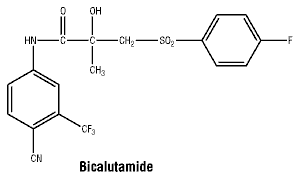
Chemical structure. Chemical name: (RS)-4'-Cyano-α',α',α',-trifluoro-3- (4-fluorophenylsulfonyl)-2-hydroxy-2- methylpropiono-m-toluidide; propanamide,N-[4-cyano-3- (trifluoromethyl)phenyl]-3-[(4-fluorophenyl)sulfonyl]-2- hydroxy-2-methyl-,(+-).
Structural formula:
CAS number. 90357-06-5.
Bicalutamide is a fine white to off-white powder. At 37°C it is practically insoluble in water (4.6 mg/litre), acid (4.6 mg/litre at pH 1) and alkali (3.7 mg/litre at pH 8). In organic solvents it is slightly soluble in ethanol, sparingly soluble in methanol and freely soluble in acetone and tetrahydrofuran.
7 Medicine Schedule (Poisons Standard)
S4 (Prescription Only Medicine).
Date of First Approval
23 July 2010
Date of Revision
26 May 2023
Summary Table of Changes
Reasonable care is taken to provide accurate information at the time of creation. This information is not intended as a substitute for medical advice and should not be exclusively relied on to manage or diagnose a medical condition. The Australian Commission on Safety and Quality in Health Care disclaims all liability (including for negligence) for any loss, damage, injury or any other negative effects resulting from reliance on or use of this information. Read our full disclaimer. This website uses cookies. Read our privacy policy.