
Cystadane
Brand Information
| Brand name | Cystadane |
| Active ingredient | Betaine |
| Schedule | Unscheduled |
Consumer Medicine Information (CMI) leaflet
Please read this leaflet carefully before you start using the Cystadane.
Summary CMI
Cystadane®
Consumer Medicine Information (CMI) summary
The full CMI on the next page has more details. If you are worried about using this medicine, speak to your doctor or pharmacist.
1. Why am I using Cystadane?
Cystadane contains the active ingredient betaine anhydrous. Cystadane is used to decrease high levels of homocysteine in the blood, referred to as homocystinuria. For more information, see Section 1. Why am I using Cystadane? in the full CMI.
2. What should I know before I use Cystadane?
Do not use if you have ever had an allergic reaction to Cystadane or any of the ingredients listed at the end of the CMI.
Talk to your doctor if you have any other medical conditions, take any other medicines, or are pregnant or plan to become pregnant or are breastfeeding.
For more information, see Section 2. What should I know before I use Cystadane? in the full CMI.
3. What if I am taking other medicines?
Some medicines may interfere with Cystadane and affect how it works.
A list of these medicines is in Section 3. What if I am taking other medicines? in the full CMI.
4. How do I use Cystadane?
- The normal initial dose given to children under 3 years of age is 100mg per kilogram of body weight per day. The dose in all patients can be gradually increased until plasma homocysteine is undetectable of present only in small amounts.
- In paediatric and adult patients, the usual dose of Cystadane is 6 grams per day administered orally, in divided doses of 3 grams two times per day.
- Cystadane powder should be measured using the measuring scoops provided and then dissolved in 120 – 180 mL of water and then consumed immediately after.
More instructions can be found in Section 4. How do I use Cystadane? in the full CMI.
5. What should I know while using Cystadane?
| Things you should do |
|
| Things you should not do |
|
| Driving or using machines |
|
| Drinking alcohol |
|
| Looking after your medicine |
|
For more information, see Section 5. What should I know while using Cystadane? in the full CMI.
6. Are there any side effects?
Like all medicines, this medicine can cause side effects, although not everybody gets them. Sometimes they are serious, most of the time they are not. Possible effects include nausea, gastrointestinal distress and diarrhoea. You may need medical treatment if you get some of the side effects. Ask your doctor or pharmacist to answer any questions you may have.
For more information, including what to do if you have any side effects, see Section 6. Are there any side effects? in the full CMI.
Full CMI
Cystadane®
Active ingredient: betaine anhydrous for oral administration
Consumer Medicine Information (CMI)
This leaflet provides important information about using Cystadane. You should also speak to your doctor or pharmacist if you would like further information or if you have any concerns or questions about using Cystadane.
Where to find information in this leaflet:
1. Why am I using Cystadane?
2. What should I know before I use Cystadane?
3. What if I am taking other medicines?
4. How do I use Cystadane?
5. What should I know while using Cystadane?
6. Are there any side effects?
7. Product details
1. Why am I using Cystadane?
Cystadane contains the active ingredient betaine anhydrous.
Cystadane is used to decrease high levels of homocysteine in the blood, referred to as homocystinuria. The high levels of homocysteine in the blood may be caused by various deficiencies in enzymes that break down proteins, specifically called cystathionine beta synthase (CBS) or from 5, 10-methylenetetrahydrofolate reductase deficiency (MTHFR deficiency) or cobalamin cofactor metabolism defect (CBL defect).
High levels of homocysteine in the blood can be toxic and may cause problems in the skeleton and the eyes, as well as mental retardation and cardiovascular disease.
Some people are born with inherited diseases that cause some of the body's natural enzymes of metabolism to be missing or defective. CBS deficiency, MTHFR deficiency and CBL defects are all rare disorders that result in patients not being able to perform the conversion of methionine to cysteine. This disorder presents at early childhood and persists for life, so therefore this treatment is lifelong.
Cystadane together with other treatments such as vitamin B6, vitamin B12 and folate helps the body effectively process homocysteine by triggering the enzymes required to convert it to methionine. This results in a decrease of plasma homocysteine levels.
Ask your doctor if you have any questions about using Cystadane.
2. What should I know before I use Cystadane?
Warnings
Check with your doctor if you:
- You are allergic to betaine anhydrous, or any of the ingredients listed at the end of this leaflet.
- Have allergies to any medicines
- Are taking or using any other medicines. These include medicines bought from pharmacies, supermarkets and health food stores
- have any other medical conditions
Do no take this medicine after the expiry date printed on the bottle.
Always check the ingredients to make sure you can use this medicine.
During treatment, you may be at risk of developing certain side effects. It is important you understand these risks and how to monitor for them. See additional information under Section 6. Are there any side effects?
Pregnancy and breastfeeding
Check with your doctor if you are pregnant or intend to become pregnant.
Talk to your doctor if you are breastfeeding or intend to breastfeed.
3. What if I am taking other medicines?
Tell your doctor or pharmacist if you are taking any other medicines, including any medicines, vitamins or supplements that you buy without a prescription from your pharmacy, supermarket or health food shop.
Some medicines may interfere with Cystadane and affect how it works.
Check with your doctor or pharmacist if you are not sure about what medicines, vitamins or supplements you are taking and if these affect Cystadane.
4. How do I use Cystadane?
Follow all directions given to you by your doctor and pharmacist carefully. These directions may differ from the information contained in this leaflet.
If you do not understand the instructions, ask your doctor or pharmacist for help.
Your doctor can evaluate your individual responsiveness to Cystadane before initiating any long-term treatment. The dose will be individually adjusted in order to maintain normal blood levels of homocysteine.
Cystadane helps to lower your levels of homocysteine in the blood, but it does not cure your condition.
How much to take
- The initial dose given to children under 3 years of age is 100mg per kilogram of body weight per day. Dosage in all patients can be gradually increased until plasma homocysteine is undetectable or present only in small amounts.
- In pediatric and adult patients, the usual dose of Cystadane is 6 grams per day administered orally in divided doses of 3 grams two times per day.
How to take Cystadane
Cystadane powder should be measured using the measuring scoops provided and then dissolved in 120 – 180 mL of water and then consumed immediately after.
Cystadane may be taken along with one of more of the following treatments.
- Vitamin B6 (pyridoxine)
- Vitamin B12 (cobalamin)
- Folic acid
- Methionine restriction
- Cysteine supplements
If you forget to use Cystadane
If it is almost time for your next dose, skip the dose you missed and take your next dose when you are meant to.
Do not take a double dose to make up for the dose you missed. This may increase the chance of you getting an unwanted side effect.
If you are not sure what to do, talk to your doctor or pharmacist.
If you use too much Cystadane
If you think that you have used too much Cystadane, you may need urgent medical attention.
You should immediately:
- phone the Poisons Information Centre
(Australia calling 13 11 26), or (New Zealand 0800 764 766) - contact your doctor, or
- go to the Emergency Department at your nearest hospital.
You should do this even if there are no signs of discomfort or poisoning.
5. What should I know while using Cystadane?
Things you should do
Your blood homocysteine levels should be checked regularly while you are taking this medicine.
Call your doctor straight away if you:
- If you become pregnant while you are taking Cystadane, contact your doctor immediately.
- If you are about to be started on any new medication, remind your doctor and pharmacist that you are taking Cystadane.
Your blood homocysteine levels should be checked regularly while you are taking this medicine.
Remind any doctor, dentist or pharmacist you visit that you are using Cystadane.
Things you should not do
- Do not give Cystadane to anyone else even if they have the same condition as you.
- Do not take Cystadane to treat any other complaints unless your doctor tells you.
Driving or using machines
Be careful before you drive or use any machines or tools until you know how Cystadane affects you.
Drinking alcohol
Tell your doctor or pharmacist if you drink alcohol.
Looking after your medicine
- Keep the powder in the bottle until it is time for administration. If you pour the powder out of the bottle it may not keep well.
- Do not freeze the powder.
- Once the container has been opened, the bottle can be stored in a cool dry place out of direct sunlight, at below 25°C.
Keep the bottle somewhere that children cannot reach it.
When to discard your medicine (as relevant)
When stored at below 25°C, an unopened bottle has a lifespan of 4 years, and an open bottle has a lifespan of 3 months.
Getting rid of any unwanted medicine
If you no longer need to use this medicine or it is out of date, take it to any pharmacy for safe disposal.
Do not use this medicine after the expiry date.
6. Are there any side effects?
All medicines can have side effects. If you do experience any side effects, most of them are minor and temporary. However, some side effects may need medical attention.
See the information below and, if you need to, ask your doctor or pharmacist if you have any further questions about side effects.
Less serious side effects
| Less serious side effects | What to do |
Gastrointestinal disorders:
| Speak to your doctor if you have any of these less serious side effects and they worry you. |
Tell your doctor or pharmacist if you notice anything else that may be making you feel unwell.
Other side effects not listed here may occur in some people.
Reporting side effects
After you have received medical advice for any side effects you experience, you can report side effects to the Therapeutic Goods Administration online at www.tga.gov.au/reporting-problems. By reporting side effects, you can help provide more information on the safety of this medicine.
Always make sure you speak to your doctor or pharmacist before you decide to stop taking any of your medicines.
7. Product details
This medicine is available over-the-counter without a doctor's prescription.
What Cystadane contains
| Active ingredient (main ingredient) | Betaine anhydrous |
| Other ingredients (inactive ingredients) | None. |
This medicine does not contain lactose or gluten.
Do not take this medicine if you are allergic to any of these ingredients.
What Cystadane looks like
Cystadane is a white, granular powder.
It is supplied in a bottle containing 180 grams of betaine anhydrous. The powder is stored in a re-sealable container. Three measuring scoops are provided to dispense either 100 mg (green scoop), 150 mg (blue scoop) or 1 g (pink scoop) of betaine anhydrous.
AUST R: 57379
® Cystadane is a registered trademark of Recordati Orphan Drugs.
Who distributes Cystadane
AUSTRALIA:
Recordati Rare Diseases Australia Pty Ltd
Level 10, 100 Arthur Street
North Sydney
NSW 2060
Australia
Phone: +61 (0) 408 061 403
rrdaustraliainfo@recordati.com
This leaflet was prepared in November 2025.
Brand Information
| Brand name | Cystadane |
| Active ingredient | Betaine |
| Schedule | Unscheduled |
MIMS Revision Date: 01 April 2026
1 Name of Medicine
Betaine anhydrous.
2 Qualitative and Quantitative Composition
1 g of powder contains 1 g of betaine anhydrous.
It contains no ingredient other than anhydrous betaine. Betaine anhydrous powder is soluble in water, methanol and ethanol. It is sparingly soluble in ether.
3 Pharmaceutical Form
Cystadane (betaine anhydrous powder) for oral administration is a white, granular powder.
4 Clinical Particulars
4.1 Therapeutic Indications
Cystadane is indicated as an adjunct in the treatment of homocystinuria.
Cystadane is also indicated to decrease elevated homocysteine blood levels in patients of all age groups with:
1. cystathionine beta-synthase (CBS deficiency) type of homocystinuria, or
2. 5, 10-methylenetetrahydrofolate reductase deficiency (MTHFR deficiency), or
3. cobalamin cofactor metabolism defect (cbl defect) type of homocystinuria.
Cystadane is also indicated to increase methionine and S-adenosylmethionine blood levels in patients with 5, 10-methylenetetrahydrofolate reductase deficiency (MTHFR deficiency) and cobalamin cofactor metabolism defect (cbl defect) types of homocystinuria.
Patient response to Cystadane can be monitored by homocysteine plasma levels (see Section 4.2 Dose and Method of Administration). Response usually occurs within a week and steady state within a month.
Methionine blood levels may become greatly elevated in CBS deficiency type patients. However, monitoring of patients with high methionine blood levels for many years has not revealed any toxicities or other clinical problems.
Cystadane can be administered along with folate, vitamin B6 and vitamin B12 (cobalamin).
4.2 Dose and Method of Administration
The usual dose used in adults and paediatric patients is 6 grams per day administered orally in divided doses of 3 grams two times per day. Dosages of up to 20 grams per day have been necessary to control homocysteine levels in some patients. In paediatric patients less than 3 years of age, dosage may be started at 100 mg/kg/day and then increased weekly by 100 mg/kg increments. Dosage in all patients can be gradually increased until plasma homocysteine is undetectable or present only in small amounts.
The prescribed amount of Cystadane powder should be measured using one of the measuring scoops provided and then dissolved in 120-180 mL of water for immediate ingestion. Three measuring scoops are provided which dispense either 100 mg (green scoop), 150 mg (blue scoop) or 1 g (pink scoop) of betaine anhydrous. It is recommended that a heaped measuring scoop is removed from the container and a flat surface e.g. base of a knife, is drawn across the top of the measure. This will give the following doses: small measure 100 mg, middle size measure 150 mg and large measure 1 g of betaine anhydrous.
4.3 Contraindications
None known.
4.4 Special Warnings and Precautions for Use
Hypermethioninemia. Patients with homocystinuria due to cystathionine beta-synthase (CBS) deficiency may also have elevated plasma methionine concentrations. Treatment with Cystadane may further increase methionine concentrations due to the remethylation of homocysteine to methionine. Cerebral oedema has been reported in patients with hypermethioninemia including a few patients treated with Cystadane. Plasma methionine concentrations should be monitored in patients with CBS deficiency. Plasma methionine concentrations should be kept below 1,000 micromol/L through dietary modification and, if necessary, a reduction of Cystadane dose.
Information for patients. 1. Measure with the scoops provided.
2. Mix with 120-180 mL of water and drink immediately.
Always replace the cap tightly after using.
Use in the elderly. No data available.
Paediatric use. The majority of cases of homocystinuria patients treated with betaine have been paediatric patients. The disorder, in its most severe form, can be manifested within the first months or years of life by lethargy, failure to thrive, development delays, seizures or eye lens displacement. Patients have been treated successfully without adverse effects within the first months or years of life with dosages of 6 grams per day or more of betaine, with resultant biochemical and clinical improvement. However, dosage titration may be preferable in paediatric patients (see Section 4.2 Dose and Method of Administration).
Effects on laboratory tests. Homocysteine plasma levels can be determined by utilisation of various commercially available amino acid analysers. See Section 5 Pharmacological Properties.
4.5 Interactions with Other Medicines and Other Forms of Interactions
None known.
4.6 Fertility, Pregnancy and Lactation
Effects on fertility. Long term fertility studies have not yet been conducted on betaine.
Use in pregnancy. (Category C)
Animal reproduction studies have not been conducted with betaine. It is also not known whether betaine can cause foetal harm when administered to a pregnant woman or can affect reproductive capacity. Cystadane should be given to a pregnant woman only if clearly needed.
Use in lactation. It is not known if betaine is excreted in human milk (although its metabolic precursor, choline, occurs in high levels in human milk). Because many drugs are excreted in human milk, caution should be exercised when Cystadane is administered to a nursing mother.
4.7 Effects on Ability to Drive and Use Machines
The effects of this medicine on a person's ability to drive and use machines were not assessed as part of its registration.
4.8 Adverse Effects (Undesirable Effects)
Adverse reactions to betaine have been minimal. Possible adverse effects include nausea, gastrointestinal distress and diarrhoea.
A few cases of cerebral oedema have been reported secondary to severe hypermethioninemia in patients with cystathionine beta-synthase (CBS) deficiency treated with Cystadane. See Section 4.4 Special Warnings and Precautions for Use, Hypermethioninemia.
Reporting suspected adverse effects. Reporting suspected adverse reactions after registration of the medicinal product is important. It allows continued monitoring of the benefit-risk balance of the medicinal product. Healthcare professionals are asked to report any suspected adverse reactions at www.tga.gov.au/reporting-problems.
4.9 Overdose
No incidence of overdosage has been reported.
For information on the management of overdose, contact the Poison Information Centre on 131 126 (Australia) or the National Poisons Centre on 0800 POISON (0800 764 766) in New Zealand.
5 Pharmacological Properties
5.1 Pharmacodynamic Properties
Mechanism of action. Betaine occurs naturally in the body. It is a metabolite of choline and present in small amounts in foods such as beets, spinach, cereals, and seafood.
When administered in recommended oral dosage to children or adults, Cystadane acts as a methyl group donor in the remethylation of homocysteine to methionine in patients with homocystinuria. As a result, toxic blood levels of homocysteine are reduced in these patients, usually to 20-30 percent or less of pre-treatment levels.
Elevated homocysteine blood levels are considered to cause serious clinical problems in patients such as cardiovascular thrombosis leading to premature death, osteoporosis, skeletal abnormalities, and optic lens dislocation. Studies have demonstrated that homocysteine plasma levels decreased in 98% of patients taking betaine. Clinical improvement was observed in 77% of patients, and in an additional 21% of patients, disease progression was prevented. Many of these patients had not responded to previous therapies including vitamin B6, vitamin B12 (cobalamin) and folate.
Clinical trials. Studies have demonstrated betaine to be effective in the three types of homocystinuria, i.e. cystathionine beta-synthase deficiency (CBS deficiency); 5,10-methylenetetrahydrofolate reductase deficiency (MTHFR deficiency); and cobalamin cofactor metabolism defect (cbl defect).
Betaine has also been demonstrated to increase plasma methionine and S-adenosylmethionine (SAM) in MTHFR deficiency and cbl defect patients who have low levels of methionine and SAM, which are thought to be the cause of demyelination and other neurologic problems.
In CBS deficient patients, increases in methionine levels have been marked. However, these have not been of clinical consequence as evidenced by treatment of CBS deficient patients with betaine for up to 11 years with no adverse effect.
5.2 Pharmacokinetic Properties
Pharmacokinetic studies of betaine are not available. However, pharmacodynamic measurements, i.e. monitoring of plasma homocysteine levels, have demonstrated the onset of action of betaine is within several days and that steady state in response to dosage is achieved within several weeks. Patients have taken betaine for many years without evidence of tolerance.
5.3 Preclinical Safety Data
Long term toxicology studies of betaine in animals have not been conducted. In an acute toxicology study in rats, the LD50 was 11,179 mg/kg.
Genotoxicity. No evidence of mutagenic potential was demonstrated in the following tests: metaphase analysis of human lymphocytes; bacterial reverse mutation assay and mouse micronucleus test.
Carcinogenicity. Long term carcinogenicity studies have not yet been conducted on betaine.
6 Pharmaceutical Particulars
6.1 List of Excipients
None.
6.2 Incompatibilities
Incompatibilities were either not assessed or not identified as part of the registration of this medicine.
6.3 Shelf Life
In Australia information on the shelf life can be found on the public summary of the Australian Register of Therapeutic Goods (ARTG).
The expiry date can be found on the packaging.
6.4 Special Precautions for Storage
Storage conditions. Store below 25°C.
6.5 Nature and Contents of Container
Cystadane is available in bottles of 180 grams. Three measuring scoops are included in each pack. Three measuring scoops (pink, blue, green) dispense, respectively, 1 g, 150 mg and 100 mg of betaine anhydrous powder.
6.6 Special Precautions for Disposal
Any unused medicine or waste material should be disposed of by taking to your local pharmacy.
6.7 Physicochemical Properties
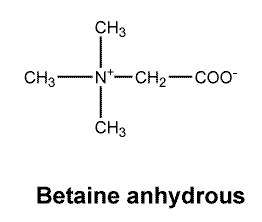
The chemical name of betaine anhydrous powder is trimethylglycine.
Chemical structure.
7 Medicine Schedule (Poisons Standard)
Unscheduled.
Date of First Approval
01 October 1996
Date of Revision
18 November 2025
Summary Table of Changes

Reasonable care is taken to provide accurate information at the time of creation. This information is not intended as a substitute for medical advice and should not be exclusively relied on to manage or diagnose a medical condition. The Australian Commission on Safety and Quality in Health Care disclaims all liability (including for negligence) for any loss, damage, injury or any other negative effects resulting from reliance on or use of this information. Read our full disclaimer. This website uses cookies. Read our privacy policy.