
Dapsomed
Brand Information
| Brand name | Dapsomed |
| Active ingredient | Dapsone |
| Schedule | S4 |
Consumer Medicine Information (CMI) leaflet
Please read this leaflet carefully before you start using the Dapsomed.
Summary CMI
DAPSOMED
Consumer Medicine Information (CMI) summary
The full CMI on the next page has more details. If you are worried about using this medicine, speak to your doctor or pharmacist.
1. Why am I using DAPSOMED?
DAPSOMED tablet contains Dapsone as the active ingredient. Dapsone (DAP-sone), a sulfone, belongs to the family of medicines called anti-infectives and is used to treat leprosy (Hansen's disease) and to help control a skin problem called dermatitis and a fungal disease called Actinomycotic mycetoma.
For more information, see Section 1. Why am I using DAPSOMED? in the full CMI.
2. What should I know before I use DAPSOMED?
Do not use if you have ever had an allergic reaction to DAPSOMED or any other sulpha drugs or any of the ingredients listed at the end of the CMI.
Talk to your doctor if you have any other medical conditions, take any other medicines, or are pregnant or plan to become pregnant or are breastfeeding.
For more information, see Section 2. What should I know before I use DAPSOMED? in the full CMI.
3. What if I am taking other medicines?
Some medicines may interfere with DAPSOMED and affect how it works.
A list of these medicines is in Section 3. What if I am taking other medicines? in the full CMI.
4. How do I use DAPSOMED?
- Tablets should be taken whole and small doses should be made up from 50 mg tablets. Do not split the tablet.
- For best effect DAPSOMED must be taken regularly.
More instructions can be found in Section 4. How do I use DAPSOMED? in the full CMI.
5. What should I know while using DAPSOMED?
| Things you should do |
|
| Things you should not do |
|
| Driving or using machines |
|
| Looking after your medicine |
|
For more information, see Section 5. What should I know while using DAPSOMED? in the full CMI.
6. Are there any side effects?
Like other medicines, Dapsone can cause some side effects. Common side effects could be: Severe skin rash, Muscle weakness, unusual tiredness or weakness, Yellowing of skin or eyes, Nausea, vomiting; Loss of appetite etc.
For more information, including what to do if you have any side effects, see Section 6. Are there any side effects? in the full CMI.
Full CMI
DAPSOMED
Active ingredient(s): Dapsone
Consumer Medicine Information (CMI)
This leaflet provides important information about using DAPSOMED. You should also speak to your doctor or pharmacist if you would like further information or if you have any concerns or questions about using DAPSOMED.
Where to find information in this leaflet:
1. Why am I using DAPSOMED?
2. What should I know before I use DAPSOMED?
3. What if I am taking other medicines?
4. How do I use DAPSOMED?
5. What should I know while using DAPSOMED?
6. Are there any side effects?
7. Product details
1. Why am I using DAPSOMED?
DAPSOMED contains Dapsone as the active ingredient. Dapsone (DAP-sone), a sulfone, belongs to the family of medicines called anti-infectives. Dapsone works by killing the bacteria or fungi causing your infection or by stopping its growth.
Dapsone will not work against infections caused by viruses such as colds or the flu.
Dapsone is used to treat leprosy (Hansen's disease) and to help control a skin problem called dermatitis and a fungal disease called Actinomycotic mycetoma. When it is used to treat leprosy, Dapsone may be given with one or more other medicines.
Ask your doctor if you want any more information about this medicine.
There is no evidence that DAPSOMED is addictive.
2. What should I know before I use DAPSOMED?
Warnings
Do not use DAPSOMED if:
- you have ever had an allergic reaction to Dapsone or any other sulpha drugs or any of the ingredients listed at the end of this leaflet.
- Some of the symptoms of an allergic reaction may include skin rash, which is always present, fever, jaundice, and eosinophilia.
Check with your doctor if:
- You have any type of allergic reaction to sulpha drugs (sulfonamide medicines): You may have an increased chance of being allergic to Dapsone if you are allergic to sulpha drugs.
- You have allergies to: any other medicines any other substances, such as foods, preservatives or dyes.
- you have or have had any medical conditions, including: anemia, or liver or kidney disease
- the packaging is torn or shows signs of tampering.
- you are not sure whether you should start taking Dapsone.
During treatment, you may be at risk of developing certain side effects. It is important you understand these risks and how to monitor for them. See additional information under Section 6. Are there any side effects?
Pregnancy and breastfeeding
Check with your doctor if you are pregnant or intend to become pregnant. The use of Dapsone during pregnancy should be avoided.
Dapsone may affect your developing baby if you take it during pregnancy.
Talk to your doctor if you are breastfeeding or intend to breastfeed.
Dapsone passes into breast milk and may affect your baby. Dapsone may cause blood problems in nursing babies. Therefore, breast feeding may need to be stopped because of the risks to the baby.
If you have not told your doctor about any of the above, tell them before you are given DAPSOMED.
3. What if I am taking other medicines?
Tell your doctor or pharmacist if you are taking any other medicines, including any medicines, vitamins or supplements that you buy without a prescription from your pharmacy, supermarket or health food shop.
Some medicines may interfere with DAPSOMED and affect how it works. These include:
- Amprenavir
- Didanosin
- Rifampicin
- Clofazimine
- Probenecid
- Trimethoprim
- Cimetidine
- Pyrimethamine
You may need to take different amounts of your medicine, or you may need to take different medicines. Your doctor will advise you.
When you are taking DAPSOMED, it is especially important that your healthcare professional knows if you are taking any of the above.
Talk to your doctor about the need for an additional method of contraception while taking Dapsone.
Some medicines may decrease the effectiveness of some birth control pills, although this has not been shown with Dapsone.
Your doctor and pharmacist may have more information on medicines to be careful with or avoid while taking Dapsone.
4. How do I use DAPSOMED?
How much to take
- Keep taking your DAPSOMED for as long as your doctor tells you to. Remember it may take a number of months for Dapsone to work.
- Do not stop taking DAPSOMED even if you begin to feel better. For best effect DAPSOMED must be taken regularly.
- Do not take a double dose to make up for the dose that you missed.
- If you have trouble remembering to take your tablets, ask your pharmacist for some hints.
How to take DAPSOMED
- Take DAPSOMED with a full glass of water or another liquid, with or after food.
- For ease of swallowing, 50 mg tablets can be broken in half.
Do not use half a 50 mg tablet when a 25 mg dose is required, and do not use half a 100 mg tablet when a 50 mg dose is required.
If you use too much
If you think that you have used too much DAPSOMED, you may need urgent medical attention.
You should immediately:
- phone the Poisons Information Centre (by calling 13 11 26), or
- contact your doctor, or
- go to the Emergency Department at your nearest hospital.
You should do this even if there are no signs of discomfort or poisoning.
5. What should I know while using DAPSOMED?
Things you should do
Tell your doctor:
- If the symptoms of your infection do not improve within 2 to 3 months, or if they become worse.
- If you become pregnant while you are taking Dapsone
- If you are about to start taking any new medicine, tell your doctor and pharmacist that you are taking Dapsone.
Your doctor may give you a schedule for regular blood tests. This schedule should be carefully followed–
- If you have to test your urine for sugar while you are using/being given Dapsone, make sure your doctor knows which type of test you use.
- Dapsone may affect the results of some of these tests.
- If you have to have any blood tests tell your doctor you are taking/using/ Dapsone.
- Dapsone may affect the results of some blood tests.
- Tell all the doctors, dentists and pharmacists who are treating you that you are taking Dapsone.
Things you should not do
- Do not stop taking your tablets because you are feeling better, unless advised by your doctor.
- If you do not complete the full course prescribed by your doctor, all of the bacteria/fungi causing your infection may not be killed. These bacteria may continue to grow and multiply so that your infection may not clear completely or it may return.
- Do not give Dapsone to anyone else, even if they have the same condition as you.
- Do not use Dapsone to treat any other complaints unless your doctor tells you to.
Driving or using machines
Dapsone may make you dizzy.
Be careful before you drive or use any machines or tools until you know how DAPSOMED affects you.
Looking after your medicine
- Store below 25°C.
- Follow the instructions in the carton on how to take care of your medicine properly.
- Store it in a cool dry place away from moisture, heat or sunlight; for example, do not store it:
- in the bathroom or near a sink, or
- in the car or on window sills.
Keep it where young children cannot reach it.
Getting rid of any unwanted medicine
If you no longer need to use this medicine or it is out of date, take it to any pharmacy for safe disposal.
Do not use this medicine after the expiry date.
6. Are there any side effects?
All medicines can have side effects. If you do experience any side effects, most of them are minor and temporary. However, some side effects may need medical attention.
Check with your doctor as soon as possible if you have any problems while taking Dapsone, even if you do not think the problems are connected with the medicine or are not listed in this leaflet.
See the information below and, if you need to, ask your doctor or pharmacist if you have any further questions about side effects.
Less serious side effects
| Side effects | What to do |
| Speak to your doctor if you have any of these side effects and they worry you. |
Very Serious side effects
| Very Serious side effects | What to do |
| Stop taking Dapsone and Call your doctor straight away, go straight to the Emergency Department at your nearest hospital if you notice any of these very serious side effects. |
Tell your doctor or pharmacist if you notice anything else that may be making you feel unwell.
Other side effects not listed here may occur in some people.
Do not be alarmed by this list of possible side effects. You may not experience any of them after using Dapsone.
Reporting side effects
After you have received medical advice for any side effects you experience, you can report side effects to the Therapeutic Goods Administration online at www.tga.gov.au/reporting-problems. By reporting side effects, you can help provide more information on the safety of this medicine.
Always make sure you speak to your doctor or pharmacist before you decide to stop taking any of your medicines.
7. Product details
This medicine is only available with a doctor's prescription.
What DAPSOMED contains
| Active ingredient (main ingredient) | Dapsone |
| Other ingredients (inactive ingredients) |
|
| Potential allergens | None |
Do not take this medicine if you are allergic to any of these ingredients.
What DAPSOMED looks like
DAPSOMED 50mg tablets are white or slight yellowish, round, biconvex tablets, debossed with “50” on one side, with a score line on the other side - AUST R 403657
DAPSOMED 100mg tablets are white or slight yellowish, round, biconvex tablets, debossed with “D” on one side, with a score line on the other side - AUST R 403659
Available as Alu-PVC blister packs of 100 tablets.
Who distributes DAPSOMED
Medsurge Pharma Pty Ltd
Unit 1& 2, 6-7 Gilda Court
Mulgrave, Victoria 3170
Marketed and Distributed by Medsurge Healthcare.
Telephone: 1300 788 261
Website: www.medsurgehc.com
This leaflet was prepared in December 2024.
Brand Information
| Brand name | Dapsomed |
| Active ingredient | Dapsone |
| Schedule | S4 |
MIMS Revision Date: 01 April 2025
Notes
Distributed by Medsurge Healthcare Pty Ltd
1 Name of Medicine
Dapsone.
2 Qualitative and Quantitative Composition
Dapsomed tablets contain either 50 mg or 100 mg of dapsone as the active ingredient.
Excipient with known effect. Lactose.
For the full list of excipients, see Section 6.1 List of Excipients.
3 Pharmaceutical Form
Dapsomed 50 mg tablets are white or slight yellowish, round, biconvex tablets, debossed with "50" on one side, with a score line on the other side.
Dapsomed 100 mg tablets are white or slight yellowish, round, biconvex tablets, debossed with "D" on one side, with a score line on the other side.
4 Clinical Particulars
4.1 Therapeutic Indications
Dermatitis herpetiformis. Leprosy. Actinomycotic mycetoma.
4.2 Dose and Method of Administration
To be taken with or after food. For ease of swallowing, 50 mg tablets can be broken in half.
Do not use half a 50 mg tablet when a 25 mg dose is required, and do not use half a 100 mg tablet when a 50 mg dose is required.
Dermatitis herpetiformis. Adults. The usual maintenance dosage is 50 to 100 mg daily, but as little as 50 mg weekly may be adequate. Dosages of up to 300 mg daily may be considered, but efforts should be made to reduce this to the minimal maintenance dosage as soon as possible.
Leprosy. Adults. The standard dose is 100 mg daily (1 to 2 mg/kg bodyweight).
Children. Dosage should be adjusted according to bodyweight.
The modern treatment of leprosy involves the use of multiple drug regimens to avoid the development of resistant strains. The World Health Organization has made the following recommendations for standard adult treatment regimens (with dosage adjustments according to bodyweight).
Multibacillary leprosy. Rifampicin 600 mg once monthly supervised; dapsone 100 mg daily, self-administered; clofazimine 300 mg once monthly, supervised; and 50 mg daily self-administered.
Paucibacillary leprosy. Rifampicin 600 mg once monthly for 6 months, supervised; dapsone 100 mg daily for 6 months, self-administered.
Actinomycotic mycetoma. Adults. Published reports suggest that a dose of 100 mg should be given twice daily and continued for some months after the clinical symptoms have disappeared. Streptomycin at 14 mg/kg daily for the first month and alternate days thereafter (or the equivalent) should always be used in combination with dapsone. Streptomycin, sulfamethoxazole and trimethoprim is an alternative therapy.
4.3 Contraindications
Hypersensitivity to dapsone and/or its derivatives.
4.4 Special Warnings and Precautions for Use
The patient should be warned to respond to the presence of clinical signs such as sore throat, fever, pallor, purpura or jaundice. Deaths associated with the administration of dapsone have been reported from agranulocytosis, aplastic anaemia and other blood dyscrasias. Complete blood counts should be done frequently in patients receiving dapsone. The FDA Dermatology Advisory Committee recommended that, when feasible, counts should be done weekly for the first month, monthly for six months and semi-annually thereafter. If a significant reduction in leucocytes, platelets or haemopoiesis is noted, dapsone should be discontinued and the patient followed intensively. Folic acid antagonists have similar effects and may increase the incidence of haematologic reactions; if co-administered with dapsone the patients should be monitored more frequently. Patients on weekly pyrimethamine and dapsone have developed agranulocytosis during the second and third month of therapy.
Severe anaemia should be treated prior to initiation of therapy and haemoglobin monitored. Haemolysis and methaemoglobin may be poorly tolerated by patients with severe cardiopulmonary disease.
Cutaneous reactions, especially bullous, include exfoliative dermatitis and are probably one of the most serious, though rare, complications of sulfone therapy. They are directly due to drug sensitisation. Such reactions include toxic erythema, erythema multiforme, toxic epidermal necrolysis, morbilliform and scarlatiniform reactions, urticaria and erythema nodosum. If new or toxic dermatologic reactions occur, sulfone therapy must be promptly discontinued and appropriate therapy instituted.
Leprosy reactional states, (abrupt changes in clinical activity occur in leprosy with any effective treatment and are known as reactional states, see Section 4.8 Adverse Effects (Undesirable Effects), Leprosy reactional states) including cutaneous, are not hypersensitivity reactions to dapsone and do not require discontinuation.
Haemolysis and Heinz body formation may be exaggerated in individuals with a glucose-6-phosphate dehydrogenase (G6PD) deficiency, or methaemoglobin reductase deficiency, or haemoglobin M. This reaction is frequently dose-related. Dapsone should be given with caution to these patients or if the patient is exposed to other agents or conditions such as infection or diabetic ketosis capable of producing haemolysis. Drugs or chemicals which have produced significant haemolysis in G6PD or methaemoglobin reductase deficient patients include dapsone, sulfanilamide, nitrite, aniline, phenylhydrazine, naphthalene, niridazole, nitrofurantoin and 8-aminoquinolone-antimalarials such as primaquine.
Toxic hepatitis and cholestatic jaundice have been reported early in therapy. Hyperbilirubinaemia may occur more often in G6PD deficient patients. When feasible, baseline and subsequent monitoring of liver function is recommended. If abnormal, dapsone should be discontinued until the source of the abnormality is established.
Use in patients with cardiac, pulmonary, renal and hepatic conditions. Dapsone should be used with caution in patients with cardiac, pulmonary, hepatic or renal diseases.
Use in the elderly. No data available.
Paediatric use. Children are treated on the same schedule as adults but with correspondingly smaller doses. Dapsone is generally not considered to have an effect on the later growth, development and functional development of the child.
Effects on laboratory tests. No data available.
Use in porphyria patients. Dapsone has been associated with acute attacks of porphyria and is considered unsafe in porphyric patients.
4.5 Interactions with Other Medicines and Other Forms of Interactions
Amprenavir. Possible increase in plasma levels of dapsone.
Didanosine (buffered formulations). Dapsone bioavailability reduced.
Rifampicin. Rifampicin reduces serum concentrations of dapsone to a level that may compromise efficacy in infections other than leprosy. Increased risk of methaemoglobinaemia from metabolite. Rifampicin concentrations are generally unaffected.
Clofazimine. Dapsone may antagonise the anti-inflammatory activity of clofazimine.
Probenecid. Serum concentrations of dapsone are increased with a consequent increased risk of adverse effects when given with probenecid, probably as a result of reduced renal excretion of dapsone.
Trimethoprim. Increased dapsone and trimethoprim concentrations have also been reported in patients receiving both drugs and such patients may be at increased risk of dapsone toxicity.
Cimetidine. Cimetidine has been reported to increase the area under the curve for dapsone, but to decrease the area under the curve for the metabolite dapsone hydroxylamine. Haemotoxicity is thought to be related to production of this metabolite. (See Section 4.8 Adverse Effects (Undesirable Effects), Blood disorders.)
Pyrimethamine. Folic acid antagonists such as pyrimethamine may increase the likelihood of haematologic reactions.
4.6 Fertility, Pregnancy and Lactation
Effects on fertility. No data available.
Use in pregnancy. (Category B2)
The sulfone drugs are generally contraindicated in pregnancy and therefore the use of dapsone during pregnancy should be avoided unless, in the judgment of the doctor, potential benefit outweighs the risk. Animal reproduction studies have not been conducted with dapsone. Dapsone in high doses has been reported to be carcinogenic in rats and mice, but negative in Salmonella mutagenicity assays. The relevance of this finding to human exposure is unclear. Dapsone is excreted in breast milk in therapeutic amounts. Sulfones may cause haemolytic anaemia in glucose-6-phosphate deficient neonates.
Use in lactation. Dapsone is excreted in breast milk in substantial amounts. Haemolytic reactions can occur in neonates. (See Section 4.8 Adverse Effects (Undesirable Effects), Blood disorders.) Because of the potential for tumourgenicity shown for dapsone in animal studies a decision should be made whether to discontinue nursing or discontinue the drug, taking into account the importance of the drug to the mother.
4.7 Effects on Ability to Drive and Use Machines
The effects of this medicine on a person's ability to drive and use machines were not assessed as part of its registration.
4.8 Adverse Effects (Undesirable Effects)
The following convention has been used for the classification of adverse reactions in terms of frequency: very common ≥ 10%; common (frequent) ≥ 1% and < 10%; uncommon ≥ 0.1% and < 1%; rare ≥ 0.01% and < 0.1%; very rare < 0.01%.
Blood disorders. Rare: agranulocytosis has occurred rarely following dapsone use in leprosy and skin disease. More cases have been observed when used for malaria prophylaxis.
Very rare: aplastic anaemia. Thrombocytosis was reported in a patient with HIV/AIDS receiving dapsone prophylactically.
Dose-related haemolysis is the most common adverse effect and is seen in patients with or without G6PD deficiency. Almost all patients demonstrate the interrelated changes of a loss of 1-2 g of haemoglobin, an increase in the reticulocytes (2-12%), a shortened red cell life span and a rise in methaemoglobin. G6PD deficient patients have greater responses.
Liver disorders. Toxic hepatitis and cholestatic jaundice have been reported. Jaundice may also form part of the dapsone reaction (see Section 4.8 Adverse Effects (Undesirable Effects), Hypersensitivity reactions). Deterioration in liver function tests during dapsone treatment has been noted in a patient with dermatitis herpetiformis and primary sclerosing cholangitis.
Nervous system disorders. Peripheral neuropathy, motor loss, muscle weakness and some patients experienced sensory impairment, most recovered within several months of discontinuing dapsone.
Hypersensitivity reactions. Dapsone syndrome is a rare hypersensitivity reaction, although it has been suggested that the incidence has increased since the introduction of multidrug therapy for leprosy. It occurs in the first 6 weeks of therapy and symptoms include rash, which is always present, fever, jaundice and eosinophilia.
If dapsone is not stopped immediately, the syndrome may progress to exfoliative dermatitis, hepatitis, albuminuria and psychosis. Deaths have been recorded. Most patients require steroid therapy for several weeks, possibly due to the prolonged elimination time of the drug.
Body as a whole. In addition to the warnings and adverse effects reported above, additional adverse reactions include: nausea, vomiting, abdominal pains, pancreatitis, vertigo, blurred vision, tinnitus, insomnia, fever, headache, psychosis, phototoxicity, pulmonary eosinophilia, tachycardia, albuminuria, nephrotic syndrome, hypoalbuminaemia without proteinuria, renal papillary necrosis, male infertility, drug-induced lupus erythematosus and an infectious mononucleosis-like syndrome. In general, with the exception of the complications of severe anoxia from overdosage (retinal and optic nerve damage, etc.), these adverse reactions have regressed off drug.
Leprosy reactional states. Leprosy patients receiving effective chemotherapy may suffer episodes of acute or chronic inflammation, which are called reactions. Generally, anti-leprosy chemotherapy should be continued unchanged but these reactions must be adequately treated since they may result in crippling deformity.
Abrupt changes in clinical activity occur in leprosy with any effective treatment and are known as reactional states. The majority can be classified into two groups.
The "Reversal" reaction (Type 1) may occur in borderline or tuberculoid leprosy patients often soon after chemotherapy is started. The mechanism is presumed to result from a reduction in the antigenic load: the patient is able to mount an enhanced delayed hypersensitivity response to residual infection leading to swelling ("Reversal") of existing skin and nerve lesions. If severe, or if neuritis is present, large doses of steroids should always be used. If severe, the patient should be hospitalised. In general, anti-leprosy treatment is continued and therapy to suppress the reaction is indicated such as analgesics, steroids, or surgical decompression of swollen nerve trunks.
Erythema nodosum leprosum (ENL) (lepromatous reaction) (Type 2 reaction) occurs mainly in lepromatous patients and small numbers of borderline patients. Approximately 50% of treated patients show this reaction in the first year. The principal clinical features are fever and tender erythematous skin nodules sometimes associated with malaise, neuritis, orchitis, albuminuria, joint swelling, iritis, epistaxis or depression. Skin lesions can become pustular and/or ulcerate. Histologically there is a vasculitis with an intense polymorphonuclear infiltrate. Elevated circulating immune complexes are considered to be the mechanism of reaction. If severe, patients should be hospitalised. In general, anti-leprosy treatment is continued. Analgesics, steroids, and other agents are used to suppress the reaction.
Non-lepromatous lepra or "reversal" reactions. Complications may include severe peripheral neuritis with accompanying cutaneous sensory loss and paralysis and may require surgical decompression. In the management of acute neuritis, corticosteroids should always be used.
Lepromatous lepra or erythema nodosum lepromatous (ENL) reactions. Complications may include neuritis, an increase in muscle weakness, lymphadenitis, iridocyclitis, orchitis and, more rarely, nephritis and large joint arthritis. In the management of these reactions, corticosteroids and agents to modify the autoimmune reaction are used.
Reporting suspected adverse effects. Reporting suspected adverse reactions after registration of the medicinal product is important. It allows continued monitoring of the benefit-risk balance of the medicinal product. Healthcare professionals are asked to report any suspected adverse reactions at www.tga.gov.au/reporting-problems.
4.9 Overdose
There is no specific antidote and therefore treatment should be symptomatic, e.g. intravenous methylene blue 1 to 2 mg/kg bodyweight, intravenous ascorbic acid 0.5 to 1 g and oxygen for the methaemoglobinaemia plus general supportive measures. The repeated administration of activated charcoal has been reported to increase the elimination rate of dapsone and its metabolite following overdosage.
For information on the management of overdose, contact the Poisons Information Centre on 131126 (Australia).
5 Pharmacological Properties
5.1 Pharmacodynamic Properties
Mechanism of action. Dapsone is a sulfone active against a wide range of bacteria, but it is mainly used for its action against Mycobacterium leprae. Its mechanism of action is probably similar to that of the sulfonamides, which involves inhibition of folic acid synthesis in susceptible organisms. It is usually considered to be bacteriostatic against M. leprae although it may also possess weak bactericidal activity. It is also active against Plasmodium and Pneumocystis carinii. As with the sulfonamides, antibacterial activity is inhibited by p-aminobenzoic acid.
Secondary (acquired) dapsone resistance of Mycobacterium leprae is mainly associated with dapsone being used on its own. Primary dapsone resistance has also been reported with increasing frequency in areas with secondary resistance. Resistance of M. leprae to dapsone should be suspected whenever a patient relapses clinically and bacteriologically.
Clinical trials. No data available.
5.2 Pharmacokinetic Properties
Absorption. Dapsone is almost completely absorbed from the gastrointestinal tract with peak plasma concentrations occurring 2 to 8 hours after a dose. Steady-state concentrations are not attained until after at least 8 days of daily administration, doses of 100 mg daily provide trough concentrations of 0.5 microgram/mL, which are well in excess of the MIC for M. leprae. About 50 to 80% of dapsone in the circulation is bound to plasma proteins and nearly 100% of its monoacetylated metabolite is bound.
Distribution. Dapsone undergoes enterohepatic recycling. It is widely distributed; it is present in saliva and breast milk and crosses the placenta. The half-life ranges from 10 to 80 hours.
Metabolism. Dapsone is acetylated to monacetyldapsone, the major metabolite, and to other mono and diacetyl derivatives. Acetylation exhibits genetic polymorphism. Hydroxylation is the other major metabolic pathway resulting in hydroxylamine dapsone, which may be responsible for dapsone-associated methaemoglobinaemia haemolysis.
Excretion. Dapsone is mainly excreted in the urine, only 20% of a dose as unchanged drug.
5.3 Preclinical Safety Data
Genotoxicity. Dapsone is not mutagenic with or without microsomal activation in S. typhimurium tester strains 1535, 1537, 1538, 98, or 100.
Carcinogenicity. Dapsone has been found carcinogenic (sarcomagenic) for male rats and female mice causing mesenchymal tumours in the spleen and peritoneum, and thyroid carcinoma in female rats.
6 Pharmaceutical Particulars
6.1 List of Excipients
Lactose monohydrate, sodium lauryl sulfate, maize starch, magnesium stearate and colloidal anhydrous silica.
6.2 Incompatibilities
Incompatibilities were either not assessed or not identified as part of the registration of this medicine.
6.3 Shelf Life
In Australia, information on the shelf life can be found on the public summary of the Australian Register of Therapeutic Goods (ARTG). The expiry date can be found on the packaging.
6.4 Special Precautions for Storage
Store below 25°C.
6.5 Nature and Contents of Container
Dapsomed tablets are packaged in PVC/Al blister packs containing 100 tablets.
6.6 Special Precautions for Disposal
In Australia, any unused medicine or waste material should be disposed of in accordance with local requirements.
6.7 Physicochemical Properties
The chemical name for dapsone is 4,4'-sulfonylbisbenzenamine.
Chemical structure.
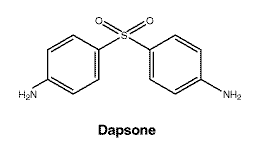
Molecular weight: 248.31.
CAS number. 80-08-0.
7 Medicine Schedule (Poisons Standard)
Schedule 4 (S4) - Prescription Only Medicine.
Date of First Approval
02 December 2024
Summary Table of Changes

Reasonable care is taken to provide accurate information at the time of creation. This information is not intended as a substitute for medical advice and should not be exclusively relied on to manage or diagnose a medical condition. The Australian Commission on Safety and Quality in Health Care disclaims all liability (including for negligence) for any loss, damage, injury or any other negative effects resulting from reliance on or use of this information. Read our full disclaimer. This website uses cookies. Read our privacy policy.