
DBL Diazoxide Injection BP
Brand Information
| Brand name | DBL Diazoxide Injection BP |
| Active ingredient | Diazoxide |
| Schedule | S4 |
Consumer Medicine Information (CMI) leaflet
Please read this leaflet carefully before you start using the DBL Diazoxide Injection BP.
Summary CMI
DBL™ Diazoxide Injection BP
Consumer Medicine Information (CMI) summary
The full CMI on the next page has more details. If you are worried about using this medicine, speak to your doctor or pharmacist.
1. Why am I being given DBL Diazoxide Injection?
DBL Diazoxide Injection contains the active ingredient diazoxide. DBL Diazoxide Injection is used to quickly lower very high blood pressure in emergency situations or prevent bleeding during diagnostic procedures if you have high blood pressure.
For more information, see Section 1. Why am I being given DBL Diazoxide Injection? in the full CMI.
2. What should I know before receiving DBL Diazoxide Injection?
Do not receive DBL Diazoxide Injection if you have ever had an allergic reaction to DBL Diazoxide Injection, any of the ingredients listed at the end of the CMI or other thiazides, such as hydrochlorothiazide. You must not receive DBL Diazoxide Injection if you have high blood pressure due to mechanical abnormalities of the heart (such as an AV shunt).
Talk to your doctor if you have any other medical conditions, take any other medicines, or are pregnant or plan to become pregnant or are breastfeeding.
For more information, see Section 2. What should I know before receiving DBL Diazoxide Injection? in the full CMI.
3. What if I am taking other medicines?
Some medicines may interfere with DBL Diazoxide Injection and affect how it works.
A list of these medicines is in Section 3. What if I am taking other medicines? in the full CMI.
4. How is DBL Diazoxide Injection given?
- Your doctor will decide what dose you will receive. This depends on your condition and other factors, such as your weight.
- DBL Diazoxide Injection is given as an injection into a vein (intravenously). It must only be given by a nurse or doctor.
More instructions can be found in Section 4. How is DBL Diazoxide Injection given? in the full CMI.
5. What should I know while receiving DBL Diazoxide Injection?
| Things you must do |
|
| Driving or using machines |
|
| Drinking alcohol |
|
| Looking after your medicine |
|
For more information, see Section 5. What should I know while receiving DBL Diazoxide Injection? in the full CMI.
6. Are there any side effects?
Side effects of this medicine include oedema (swelling of the hands feet or ankles), weight gain, flushing, feeling of warmth, burning or itching, headache, sweating, weakness, pain along the vein where the injection was given, nausea, vomiting, abdominal discomfort, lethargy or tiredness, thirst, passing large amounts of urine, blurred vision, shortness of breath, difficulty in breathing while lying down, chest pain or fullness, dizziness, light-headedness or fainting which may be due to very low blood pressure, wheezing or difficulty breathing, swelling of the face, lips, tongue or other parts of the body, rash, itching or hives on the skin, intolerance to food, abdominal bloating, pain, swelling or discomfort, bloody stool, diarrhoea, constipation.
For more information, including what to do if you have any side effects, see Section 6. Are there any side effects? in the full CMI.
Full CMI
DBL™ Diazoxide Injection BP
Active ingredient(s): diazoxide (dye-a-ZOX-ide)
Consumer Medicine Information (CMI)
This leaflet provides important information about DBL Diazoxide Injection. You should also speak to your doctor, nurse or pharmacist if you would like further information or if you have any concerns or questions about DBL Diazoxide Injection.
Where to find information in this leaflet:
1. Why am I being given DBL Diazoxide Injection?
2. What should I know before receiving DBL Diazoxide Injection?
3. What if I am taking other medicines?
4. How is DBL Diazoxide Injection given?
5. What should I know while receiving DBL Diazoxide Injection?
6. Are there any side effects?
7. Product details
1. Why am I being given DBL Diazoxide Injection?
DBL Diazoxide Injection contains the active ingredient diazoxide.
DBL Diazoxide Injection is used to:
- quickly lower very high blood pressure in emergency situations
- prevent bleeding during diagnostic procedures if you have high blood pressure.
This medicine belongs to a group of medicines called vasodilators.
It works by widening blood vessels, which causes a decrease in blood pressure.
Ask your doctor if you have any questions about why this medicine has been prescribed for you. Your doctor may have prescribed it for another reason.
This medicine is not addictive.
2. What should I know before receiving DBL Diazoxide Injection?
Warnings
Do not receive DBL Diazoxide Injection if:
- you are allergic to diazoxide, or any of the ingredients listed at the end of this leaflet.
- you are allergic to other thiazides, such as hydrochlorothiazide.
- you have hypertension due to mechanical abnormalities of the heart (such as an AV shunt).
Some of the symptoms of an allergic reaction may include:
- shortness of breath
- wheezing or difficulty breathing
- swelling of the face, lips, tongue or other parts of the body
- rash, itching or hives on the skin.
Always check the ingredients to make sure you can use this medicine.
If you are not sure whether you should be given this medicine, talk to your doctor.
Check with your doctor if you have or have had any of the following medical conditions:
- kidney problems
- diabetes
- circulation problems
- gout
- leucopenia (low numbers of white blood cells) or thrombocytopenia (low numbers of platelets).
During treatment, you may be at risk of developing certain side effects. It is important you understand these risks and how to monitor for them. See additional information under Section 6. Are there any side effects?
Pregnancy and breastfeeding
Check with your doctor if you are pregnant or intend to become pregnant.
Talk to your doctor if you are breastfeeding or intend to breastfeed.
Your doctor can discuss the risks and benefits involved.
3. What if I am taking other medicines?
Tell your doctor or pharmacist if you are taking any other medicines, including any medicines, vitamins or supplements that you buy without a prescription from your pharmacy, supermarket or health food shop.
Some medicines and diazoxide may interfere with each other. These include:
- diuretics (fluid tablets)
- other medications used to treat high blood pressure.
These medicines may be affected by diazoxide, or may affect how well it works. You may need different amounts of your medicine, or you may need to take different medicines.
Your doctor and pharmacist have more information on medicines to be careful with or avoid while using this medicine.
Check with your doctor or pharmacist if you are not sure about what medicines, vitamins or supplements you are taking and if these affect DBL Diazoxide Injection.
4. How is DBL Diazoxide Injection given?
How much is given
- Your doctor will decide what dose you will receive. This depends on your condition and other factors, such as your weight.
How it is given
- DBL Diazoxide Injection is given as an injection into a vein (intravenously). It must only be given by a nurse or doctor.
If you are given too much DBL Diazoxide Injection
As DBL Diazoxide Injection is given to you under the supervision of your doctor, it is very unlikely that you will receive an overdose.
Symptoms of an overdose may include the side effects listed below in Section 6. Are there any side effects?, but are usually of a more severe nature.
Speak to your doctor, nurse or pharmacist if you have any concerns.
5. What should I know while receiving DBL Diazoxide Injection?
Things you must do
Stay lying down for at least 30 minutes after receiving this medicine
You may feel light-headed or dizzy.
Keep all your doctor's appointments
- Keep all of your doctor's appointments so that your progress can be checked.
- Your doctor may do some tests, such as glucose monitoring tests, from time to time to make sure the medicine is working and to prevent unwanted side effects.
Tell your doctor straight away if you:
- become pregnant while taking this medicine
Remind any doctor, nurse, dentist or pharmacist you visit that you are being given DBL Diazoxide Injection.
Driving or using machines
Be careful before you drive or use any machines or tools until you know how DBL Diazoxide Injection affects you.
DBL Diazoxide Injection may cause dizziness, light-headedness or tiredness in some people. If you have any of these symptoms, do not drive, operate machinery or do anything else that could be dangerous.
Children should be careful when riding bicycles or climbing trees.
Drinking alcohol
Tell your doctor if you drink alcohol.
Be careful when drinking alcohol while you are taking this medicine. If you drink alcohol, symptoms as dizziness or light-headedness may be worse.
Looking after your medicine
DBL Diazoxide Injection will be stored in the pharmacy or on the ward. The injection is kept in a cool dry place, protected from light, where the temperature stays below 25°C.
Getting rid of any unwanted medicine
Your doctor, nurse or pharmacist will dispose of any left-over medicine.
6. Are there any side effects?
All medicines can have side effects. If you do experience any side effects, most of them are minor and temporary. However, some side effects may need medical attention.
See the information below and, if you need to, ask your doctor or pharmacist if you have any further questions about side effects.
Side effects
| Side effects | What to do |
General disorders and administration site conditions:
| Speak to your doctor or nurse if you have any of these side effects and they worry you. |
Metabolism and nutrition disorders:
| Call your doctor or nurse straight away if you notice any of these side effects. |
Tell your doctor or pharmacist if you notice anything else that may be making you feel unwell.
Other side effects not listed here may occur in some people.
Reporting side effects
After you have received medical advice for any side effects you experience, you can report side effects to the Therapeutic Goods Administration online at www.tga.gov.au/reporting-problems. By reporting side effects, you can help provide more information on the safety of this medicine.
Always make sure you speak to your doctor or pharmacist before you decide to stop taking any of your medicines.
7. Product details
This medicine is only available with a doctor's prescription.
What DBL Diazoxide Injection contains
| Active ingredient (main ingredient) | Diazoxide |
| Other ingredients (inactive ingredients) | Sodium hydroxide Water for injections |
Do not take this medicine if you are allergic to any of these ingredients.
DBL Diazoxide Injection does not contain lactose, sucrose, gluten, tartrazine or any other azo dyes.
What DBL Diazoxide Injection looks like
DBL Diazoxide Injection is a clear, colourless solution in a glass ampoule. It is available in packs of one ampoule.
DBL Diazoxide Injection is available in the following strength:
- 300mg/20mL ampoule (AUST R 16377)
Who distributes DBL Diazoxide Injection
Pfizer Australia Pty Ltd
Sydney NSW
Toll Free Number: 1800 675 229
www.pfizermedicalinformation.com.au
This leaflet was prepared in November 2025.
Brand Information
| Brand name | DBL Diazoxide Injection BP |
| Active ingredient | Diazoxide |
| Schedule | S4 |
MIMS Revision Date: 01 June 2024
1 Name of Medicine
Diazoxide.
2 Qualitative and Quantitative Composition
DBL Diazoxide Injection BP is a sterile solution of Diazoxide BP in Water for Injections BP. Each 20 mL ampoule contains 300 mg of diazoxide.
For the full list of excipients, see Section 6.1 List of Excipients.
3 Pharmaceutical Form
DBL Diazoxide Injection BP is a clear colourless solution for intravenous injection.
4 Clinical Particulars
4.1 Therapeutic Indications
Diazoxide is a non-diuretic antihypertensive agent. It is administered by rapid IV injection for emergency reduction of blood pressure in patients with malignant hypertension when prompt and urgent decrease in diastolic pressure is required. DBL Diazoxide Injection BP is recommended in the treatment of hypertensive crises associated with acute glomerular nephritis, acute hypertensive encephalopathy, cerebral haemorrhage or congestive heart failure.
Diazoxide is usually effective in patients with refractory hypertension not responsive to other agents. It has also been used in the treatment of chronic hypertension to control elevated blood pressure before commencement of therapy with oral antihypertensive agents.
In order to reduce the danger of haemorrhage due to elevated blood pressure, DBL Diazoxide Injection BP may be used in hypertensive patients undergoing diagnostic procedures such as renal biopsy or arteriography.
4.2 Dose and Method of Administration
Dosage. The usual adult dose of diazoxide for the treatment of hypertension is 300 mg administered undiluted by rapid intravenous (IV) injection over a period of 30 seconds or less. Children and unusually large or small adults may be given 5 mg/kg bodyweight. Recent studies have shown that minibolus IV administration of diazoxide in doses of 1 to 3 mg/kg every 5 to 15 minutes may be as effective as the administration of a single 300 mg intravenous dose and may be associated with fewer adverse effects.
Method of administration. Following intravenous administration of diazoxide, blood pressure should be closely monitored until it has stabilised, and hourly thereafter. Further reduction in blood pressure 30 minutes or more after injection should be investigated for causes other than the effects of the drug. The patient should remain recumbent for at least 30 minutes after injection. In ambulatory patients, final blood pressure measurements should be made while the patient is standing.
Repeated administration of DBL Diazoxide Injection BP at 4 to 24 hourly intervals is generally sufficient to maintain blood pressure below pretreatment levels. Administration of DBL Diazoxide Injection BP for more than 5 days is seldom necessary and oral antihypertensive agents should replace diazoxide therapy as soon as adequate blood pressure control has been achieved.
4.3 Contraindications
Diazoxide is contraindicated in patients who are hypersensitive to it or other thiazide derivatives. Diazoxide is not recommended for use in hypertension due to mechanical abnormality, e.g. aortic coarctation or arteriovenous shunt.
4.4 Special Warnings and Precautions for Use
DBL Diazoxide Injection BP is for intravenous administration only. Due to the high alkalinity of the injection, it should not be administered intramuscularly, subcutaneously, or into body cavities. Care should be taken to avoid extravascular injection or leakage.
Patients receiving diazoxide should be carefully observed for possible development of severe hyperglycaemia. This is especially important in patients with renal insufficiency or impaired carbohydrate metabolism. During intravenous therapy with diazoxide, blood glucose levels should be monitored daily.
Diazoxide should be administered with caution in patients in whom retention of sodium and water or abrupt reductions in blood pressure may be hazardous, e.g. those with impaired cardiac or cerebral circulation.
Caution should be exercised when administering diazoxide to uremic patients as they may experience a greater hypotensive effect. Haematological monitoring for signs of leucopenia and thrombocytopenia may be advisable in patients on prolonged diazoxide therapy.
Serum uric acid should be monitored in patients with hyperuricaemia or a history of gout.
Use in the elderly. No data available.
Paediatric use. In children, it is recommended that bone and psychological maturation and growth should be regularly assessed.
Reports of pulmonary hypertension in neonates and infants treated for hyperinsulinaemic hypoglycaemia. There have been post-marketing reports of pulmonary hypertension occurring in infants and neonates treated with diazoxide for hyperinsulinaemic hypoglycaemia. The cases were reversible upon discontinuation of the drug. Patients under treatment, especially those with risk factors for pulmonary hypertension, should be monitored for respiratory distress. Diazoxide should be discontinued if pulmonary hypertension is suspected.
Note. DBL Diazoxide Injection BP is not indicated for the treatment of hyperinsulinaemic hypoglycaemia.
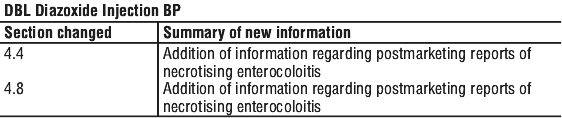
Reports of necrotising enterocolitis (NEC) in neonates and infants. There have been post-marketing reports of necrotising enterocolitis, including fatal cases, occurring in infants and neonates treated for off-label indications with diazoxide. Closely monitor patients for signs and symptoms of necrotising enterocolitis, especially those with increased risk factors (such as pre-term infants and use of higher doses of diazoxide). Discontinue diazoxide if NEC is suspected.
Effects on laboratory tests. No data available.
4.5 Interactions with Other Medicines and Other Forms of Interactions
Concomitant administration of diuretics may result in potentiation of the hyperglycaemic, hyperuricaemic or hypotensive effect of diazoxide. Diazoxide may potentiate the hypotensive effect of other antihypertensive agents; this effect is usually used to therapeutic advantage, but careful adjustment of dosage is necessary when these drugs are used concomitantly.
4.6 Fertility, Pregnancy and Lactation
Effects on fertility. No data available.
Use in pregnancy. (Category C)
Category C: Drugs which, owing to their pharmacological effects, have caused or may be suspected of causing, harmful effect on the human fetus or neonate without causing malformations. These effects may be reversible.
Safe use of diazoxide in pregnancy has not been established. It is a powerful relaxant of uterine smooth muscle and may arrest labour. Uterine contractions can, however, be re-established with oxytocic agents. Diazoxide crosses the placenta and although hypertensive crises of eclampsia have been treated fairly successfully with diazoxide, the possibility of adverse effects on the foetus cannot be excluded. Hyperglycaemia has been observed in the newborn.
Use in lactation. No data available.
4.7 Effects on Ability to Drive and Use Machines
The effects of this medicine on a person's ability to drive and use machines were not assessed as part of its registration.
4.8 Adverse Effects (Undesirable Effects)
Although numerous adverse effects may occur in patients receiving prolonged diazoxide therapy, serious adverse effects rarely occur when the drug is administered intravenously for short periods of time.
Hyperglycaemia frequently occurs in patients on intravenous diazoxide therapy. Although this is usually mild and subsides without treatment, administration of oral hypoglycaemic agents or insulin may be required, especially in diabetic patients or those receiving repeated doses of diazoxide. Hyperglycaemic effects of diazoxide are potentiated in the presence of hypokalaemia.
Sodium and water retention occur frequently and may result in oedema, weight gain, congestive heart failure and refractoriness to the hypotensive effects of the drug. However, these may be prevented by appropriate diuretic therapy.
Severe hypotension occurs infrequently and can be treated if necessary with sympathomimetic agents such as noradrenaline.
Other adverse effects resulting from the vasodilatory action of intravenous diazoxide include flushing, generalised or localised sensations of warmth, burning or itching, headache, sweating, lightheadedness and transient weakness.
Transient myocardial or cerebral ischaemia may occur. When diazoxide is administered intravenously, pain or a feeling of warmth frequently occurs along the injected vein.
Gastrointestinal upsets including nausea, vomiting and abdominal discomfort are frequent, but usually transient.
Hypersensitivity reactions such as rash, leucopenia, fever and thrombocytopenia occur infrequently.
Pulmonary hypertension has been reported in neonates and young infants treated with diazoxide for hyperinsulinaemic hypoglycaemia. (See Section 4.4 Special Warnings and Precautions for Use).
There have been post-marketing reports of pericardial effusion with diazoxide use for hyperinsulinaemic hypoglycaemia, mostly in paediatric patients and infants.
Note. DBL Diazoxide Injection BP is not indicated for the treatment of hyperinsulinaemic hypoglycaemia.
Necrotising enterocolitis, including fatal cases, has been reported in neonates and young infants treated with diazoxide (see Section 4.4 Special Warnings and Precautions for Use).
Reporting suspected adverse effects. Reporting suspected adverse reactions after registration of the medicinal product is important. It allows continued monitoring of the benefit-risk balance of the medicinal product. Healthcare professionals are asked to report any suspected adverse reactions at www.tga.gov.au/reporting-problems.
4.9 Overdose
Overdosage of diazoxide produces hyperglycaemia and possibly ketoacidosis which should be treated promptly with insulin and restoration of fluid and electrolyte balance. Severe hypotension can be controlled with sympathomimetic agents if necessary. Diazoxide has a long half-life and, therefore, prolonged surveillance of overdose patients is recommended.
For information on the management of overdose, contact the Poisons Information Centre on 13 11 26.
5 Pharmacological Properties
5.1 Pharmacodynamic Properties
Mechanism of action. Diazoxide reduces peripheral vascular resistance and blood pressure through a direct vasodilatory effect on smooth muscle in peripheral arterioles. Although the precise mechanism of its hypotensive effect is not yet understood, it has been postulated that antagonism of calcium may be involved. Diazoxide-induced decreases in blood pressure are accompanied by reflex increases in heart rate and cardiac output.
Clinical trials. No data available.
5.2 Pharmacokinetic Properties
Absorption. Following rapid intravenous administration diazoxide produces a prompt reduction in blood pressure; maximum hypotensive effects generally occur within less than 5 minutes. Blood pressure usually rises rapidly over the next 10 to 20 minutes, followed by a more gradual increase as pretreatment levels are approached. The duration of the antihypertensive effect of diazoxide varies greatly - generally 3 to 12 hours, but may be much longer in some cases. The hypotensive response may be greater and more prolonged with subsequent intravenous doses.
Distribution. Diazoxide crosses the placenta and blood-brain barrier. In plasma, approximately 90% of diazoxide is protein-bound. However, the extent of protein-binding may be reduced in uremic patients. The high degree of protein-binding is responsible for the prolonged half-life of diazoxide which averages approximately 28 hours in adults, but may be shorter in children or prolonged in patients with renal impairment.
Metabolism. Diazoxide is partly metabolised in the liver.
Excretion. Diazoxide is excreted in the urine both unchanged and in the form of metabolites. Only small amounts are recovered from the faeces.
5.3 Preclinical Safety Data
Genotoxicity. No data available.
Carcinogenicity. No data available.
6 Pharmaceutical Particulars
6.1 List of Excipients
Sodium hydroxide, water for injections.
6.2 Incompatibilities
Diazoxide has been found to be incompatible with hydralazine hydrochloride, lignocaine hydrochloride and propranolol hydrochloride. Do not dilute. Diazoxide is to be administered undiluted rapidly for maximum effect. Slower administration may reduce the antihypertensive response.
6.3 Shelf Life
In Australia, information on the shelf life can be found on the public summary of the Australian Register of Therapeutic Goods (ARTG). The expiry date can be found on the packaging.
6.4 Special Precautions for Storage
Store below 25°C. Protect from light. Avoid excessive heat and freezing.
6.5 Nature and Contents of Container
See Table 1.

6.6 Special Precautions for Disposal
In Australia, any unused medicine or waste material should be disposed of in accordance with local requirements.
6.7 Physicochemical Properties
The pH of the solution is adjusted to approximately 11.5 with Sodium Hydroxide BP.
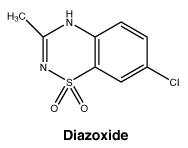
Chemical structure.
7 Medicine Schedule (Poisons Standard)
Schedule 4 - Prescription Only Medicine.
Date of First Approval
08 October 1991
Date of Revision
01 May 2024
Summary Table of Changes
Reasonable care is taken to provide accurate information at the time of creation. This information is not intended as a substitute for medical advice and should not be exclusively relied on to manage or diagnose a medical condition. The Australian Commission on Safety and Quality in Health Care disclaims all liability (including for negligence) for any loss, damage, injury or any other negative effects resulting from reliance on or use of this information. Read our full disclaimer. This website uses cookies. Read our privacy policy.