
Demazin Original 6 hour Relief
Brand Information
| Brand name | Demazin Original 6 hour Relief |
| Active ingredient | Chlorphenamine maleate (chlorpheniramine maleate) + Pseudoephedrine sulfate |
| Schedule | S3 |
Consumer Medicine Information (CMI) leaflet
Please read this leaflet carefully before you start using the Demazin Original 6 hour Relief.
Full CMI
Demazin® Original 6 hour Relief
Active ingredients: Pseudoephedrine sulfate and chlorphenamine maleate
Consumer Medicine Information (CMI)
This leaflet provides important information about using Demazin Original 6 hour Relief tablets. You should also speak to your doctor or pharmacist if you would like further information or if you have any concerns or questions about using Demazin.
Where to find information in this leaflet:
1. Why am I taking Demazin?
2. What should I know before I take Demazin?
3. What if I am taking other medicines?
4. How do I take Demazin?
5. What should I know while taking Demazin?
6. Are there any side effects?
7. Product details
1. Why am I taking Demazin?
Demazin contains a combination of two active ingredients pseudoephedrine sulfate and chlorphenamine maleate.
Pseudoephedrine sulfate is a decongestant. It works by reducing congestion in the upper respiratory tract, including the nose, nasal passages, and sinuses, and making it easier to breathe.
Chlorpheniramine maleate is an antihistamine. Antihistamines help reduce allergic symptoms such as sneezing or watery, itchy eyes by preventing the effects of a substance called histamine. Histamine is produced by the body in response to foreign substances that the body is allergic to.
Demazin provides relief from:
- runny nose
- blocked nose and sinus
- sneezing
- watery, itchy eyes
associated with the common cold, nasal allergy, hayfever and sinusitis.
2. What should I know before I take Demazin?
Warnings
Do not take Demazin if you:
- are allergic to pseudoephedrine or chlorphenamine or any of the ingredients listed at the end of this leaflet.
Always check the ingredients to make sure you can use this medicine. - have very high blood pressure
- have severe coronary artery disease (heart disease caused by poor blood flow or narrowing of the blood vessels of the heart)
- are taking a medicine for depression known as a monoamine oxidase inhibitor (MAOI) or if you have taken one in the past 14 days.
Check with your doctor or pharmacist if you:
- have any other medical conditions including:
- narrow angle glaucoma (high pressure in the eyes)
- high blood pressure
- heart disease
- stomach obstruction, including due to a peptic ulcer
- enlarged prostate
- bladder obstruction
- diabetes
- overactive thyroid. - take any medicines for any other condition.
During treatment, you may be at risk of developing certain side effects. It is important you understand these risks and how to monitor for them. See additional information under Section 6. Are there any side effects?
Pregnancy and breastfeeding
Check with your doctor or pharmacist if you are pregnant or intend to become pregnant.
Demazin should only be taken during pregnancy if the benefits of taking it outweigh the potential risks to your developing baby.
Talk to your doctor or pharmacist if you are breastfeeding or intend to breastfeed.
Demazin may pass into breast milk.
Use in children
This medicine should not be given to children under 12 years of age, including newborn and premature babies.
Chlorphenamine can cause restlessness and excitability in children.
3. What if I am taking other medicines?
Tell your doctor or pharmacist if you are taking any other medicines, including any medicines, vitamins or supplements that you buy without a prescription from your pharmacy, supermarket or health food shop.
Some medicines may interfere with Demazin and affect how it works.
Medicines that may increase the effect of Demazin include:
- medicines used to treat depression, especially monoamine oxidase inhibitors (MAOIs) and tricyclic antidepressants
- medicines used to help you sleep or relax (sedatives and hypnotics)
- opioid analgesics used to relieve pain.
Check with your doctor or pharmacist if you are not sure about what medicines, vitamins or supplements you are taking and if these affect Demazin
4. How do I take Demazin?
How much to take
- Take 1 tablet every 6 hours, when required.
- Follow the instructions provided with the medicine.
- Do not exceed the recommended dosage.
If you are over 65 years of age, talk to your pharmacist or doctor about how much to take.
Elderly patients are more likely to have side effects from taking this medicine.
When to take Demazin
- Demazin should not be used more than once every 6 hours.
- Avoid taking Demazin close to bedtime. Demazin can cause sleeplessness if taken up to several hours before going to bed.
If you take too much Demazin
If you think that you have used too much Demazin, you may need urgent medical attention.
You should immediately:
- phone the Poisons Information Centre
(by calling 13 11 26), or - contact your doctor, or
- go to the Emergency Department at your nearest hospital.
You should do this even if there are no signs of discomfort or poisoning.
5. What should I know while taking Demazin?
Things you should do
Remind any doctor, dentist or pharmacist you visit that you are using Demazin.
See your doctor or pharmacist if symptoms persist for more than a few days.
Things you should not do
Do not take Demazin with any other cold and flu medicines unless your doctor or pharmacist has advised you to.
Driving or using machines
Be careful before you drive or use any machines or tools until you know how Demazin affects you.
Demazin may cause dizziness and/or sleepiness in some people. If this happens, do not drive or operate machinery.
Drinking alcohol
Tell your doctor or pharmacist if you drink alcohol.
Alcohol may increase the sedative effects of this medicine making you more drowsy.
Looking after your medicine
- Store below 25°C.
Follow the instructions in the carton on how to take care of your medicine properly.
Store it in a cool dry place away from moisture, heat or sunlight; for example, do not store it:
- in the bathroom or near a sink, or
- in the car or on window sills.
Keep it where young children cannot reach it.
Getting rid of any unwanted medicine
If you no longer need to use this medicine or it is out of date, take it to any pharmacy for safe disposal.
Do not use this medicine after the expiry date.
6. Are there any side effects?
All medicines can have side effects. If you do experience any side effects, most of them are minor and temporary. However, some side effects may need medical attention.
See the information below and, if you need to, ask your doctor or pharmacist if you have any further questions.
Less serious side effects
| Less serious side effects | What to do |
| Speak to your doctor or pharmacist if you have any of these less serious side effects and they worry you. |
Serious side effects
| Serious side effects | What to do |
| Call your doctor straight away, or go straight to the Emergency Department at your nearest hospital if you notice any of these serious side effects. |
Tell your doctor or pharmacist if you notice anything else that may be making you feel unwell.
Other side effects not listed here may occur in some people.
Reporting side effects
After you have received medical advice for any side effects you experience, you can report side effects to the Therapeutic Goods Administration online at www.tga.gov.au/reporting-problems. By reporting side effects, you can help provide more information on the safety of this medicine.
7. Product details
This medicine is available over-the-counter without a doctor's prescription.
What Demazin contains
| Active ingredients (main ingredients) | Pseudoephedrine sulfate Chlorphenamine maleate |
| Other ingredients (inactive ingredients) | Brilliant Blue CFC Starch maize Magnesium stearate Povidone Lactose |
| Potential allergens | Lactose |
Do not take this medicine if you are allergic to any of these ingredients.
What Demazin looks like
Demazin is a round, convex, blue tablet, plain on one side and with a score line on the other side.
Registration number: AUST R 18815
Who distributes Demazin
iNova Pharmaceuticals (Australia) Pty Limited
Level 10, 12 Help Street
Chatswood NSW 2067
Tel: 1800 630 056
This leaflet was prepared in December 2022
Brand Information
| Brand name | Demazin Original 6 hour Relief |
| Active ingredient | Chlorphenamine maleate (chlorpheniramine maleate) + Pseudoephedrine sulfate |
| Schedule | S3 |
MIMS Revision Date: 01 March 2026
1 Name of Medicine
Chlorphenamine maleate and pseudoephedrine sulfate.
2 Qualitative and Quantitative Composition
Each Demazin Original 6 Hour Relief Tablet contains chlorphenamine maleate 4 mg and pseudoephedrine sulfate 60 mg.
Excipients with known effect. Lactose monohydrate.
For the full list of excipients, see Section 6.1 List of Excipients.
3 Pharmaceutical Form
Tablet.
A round, convex, blue tablet plain on one side and score-line on the other.
4 Clinical Particulars
4.1 Therapeutic Indications
Relief of upper respiratory mucosal congestion and hypersecretion accompanying conditions such as the common cold, nasal allergy, hayfever, and sinusitis.
4.2 Dose and Method of Administration
Adults and children 12 years and over. One tablet every 6 hours, when necessary.
4.3 Contraindications
Hypersensitivity to chlorphenamine, pseudoephedrine or to other drugs of similar chemical structure or any of the other ingredients in this medicine.
Severe or uncontrolled hypertension.
Severe coronary artery disease.
Severe acute or chronic kidney disease/renal failure.
Taking monoamine oxidase inhibitors (MAOIs) or have taken MAOIs within the previous 14 days.
Traditional antihistamines, such as chlorphenamine are contraindicated in patients taking an antihypertensive agent.
Narrow angle glaucoma;
Stenosing peptic ulcer;
Symptomatic prostatic hypertrophy;
Bladder neck obstruction;
Pyloroduodenal obstruction.
Demazin Original 6 Hour Relief should not be used in children under 12 years of age (see Section 4.4, Paediatric use).
For additional information see Section 4.5 Interactions with Other Medicines and Other Forms of Interactions.
4.4 Special Warnings and Precautions for Use
Identified precautions. Use with caution in patients with the following conditions:
Hypertension, hyperthyroidism, diabetes mellitus, coronary artery disease, ischaemic heart disease, glaucoma, prostatic hypertrophy, epilepsy.
Effects on sleep. Chlorphenamine may cause drowsiness and may increase the effects of alcohol. Drowsiness may continue the following day. Those affected should not drive or operate machinery. Alcohol should be avoided.
This medicine contains pseudoephedrine which may cause sleeplessness if taken up to several hours before going to bed.
Ischaemic colitis. Some cases of ischaemic colitis have been reported with pseudoephedrine. Pseudoephedrine should be discontinued, and medical advice sought if sudden abdominal pain, rectal bleeding or other symptoms of ischaemic colitis develop.
Posterior reversible encephalopathy syndrome (PRES) and reversible cerebral vasoconstriction syndrome (RCVS). Cases of PRES and RCVS have been reported with the use of pseudoephedrine-containing product (see Section 4.8 Adverse Effects (Undesirable Effects)). The risk is increased in patients with severe or uncontrolled hypertension, or with severe acute or chronic kidney disease/renal failure (see Section 4.3 Contraindications).
Pseudoephedrine should be discontinued and immediate medical assistance sought if the following symptoms occur: sudden severe headache or thunderclap headache, nausea, vomiting, confusion, seizures and/or visual disturbances. Most reported cases of PRES and RCVS resolved following discontinuation and appropriate treatment.
Ischaemic optic neuropathy. Cases of ischaemic optic neuropathy have been reported with pseudoephedrine. The product should be discontinued if sudden loss of vision or decreased visual acuity such as scotoma occurs.
Use in hepatic impairment. Use with caution in patients with impaired hepatic function.
Use in renal impairment. Use with caution in patients with impaired renal function.
Use in the elderly. Elderly patients (approximately 60 years and older) are more likely to experience dizziness, sedation and hypotension with medicines containing chlorphenamine.
Paediatric use. Demazin Original 6 Hour Relief should not be used in children under 12 years of age.
Chlorphenamine may cause excitation in children.
Antihistamines should not be given to newborn or premature infants.
Effects on laboratory tests. No data available.
4.5 Interactions with Other Medicines and Other Forms of Interactions
The following interactions with pseudoephedrine have been noted. Antidepressant medication e.g. tricyclic antidepressants and monoamine oxidase inhibitors (MAOIs) - may cause a serious increase in blood pressure or hypertensive crisis.
Other sympathomimetic agents, such as decongestants, appetite suppressants and amphetamine-like psychostimulants - may cause an increase in blood pressure and additive effects.
Antihypertensives e.g. methyldopa and beta-blockers - pseudoephedrine may antagonise the effect of certain classes of antihypertensives and cause an increase in blood pressure.
Urinary acidifiers enhance elimination of pseudoephedrine.
Urinary alkalinisers decrease elimination of pseudoephedrine.
The following interactions with chlorphenamine have been noted. Central nervous system (CNS) depressants (alcohol, sedatives, opioid analgesics, hypnotics, barbiturates) may cause an increase in sedation effects.
Monoamine oxidase inhibitors (MAOIs) and tricyclic antidepressants (TCAs) - may prolong and intensify the anticholinergic and CNS depressive effects.
When taken concomitantly with phenytoin may cause a decrease in phenytoin elimination.
4.6 Fertility, Pregnancy and Lactation
Effects on fertility. No data available.
Use in pregnancy. (Category B2)
Safe use of Demazin preparations during pregnancy has not been established. Therefore, the product should be used only if the potential benefit justifies the potential risk to the foetus. Chlorphenamine maleate should not be used in the third trimester of pregnancy because newborn and premature infants may have severe reactions to antihistamines.
Use in lactation. It has been estimated that 0.5% to 0.7% of a single dose of pseudoephedrine ingested by the mother will be excreted in the breast milk over 24 hours.
Chlorphenamine is excreted in breast milk.
Therefore, Demazin is not recommended for breastfeeding mothers.
4.7 Effects on Ability to Drive and Use Machines
May cause drowsiness. Patients should be warned against engaging in mechanical operations which require alertness, such as driving a motor vehicle, until response to the medicine has been determined. Alcohol should be avoided.
4.8 Adverse Effects (Undesirable Effects)
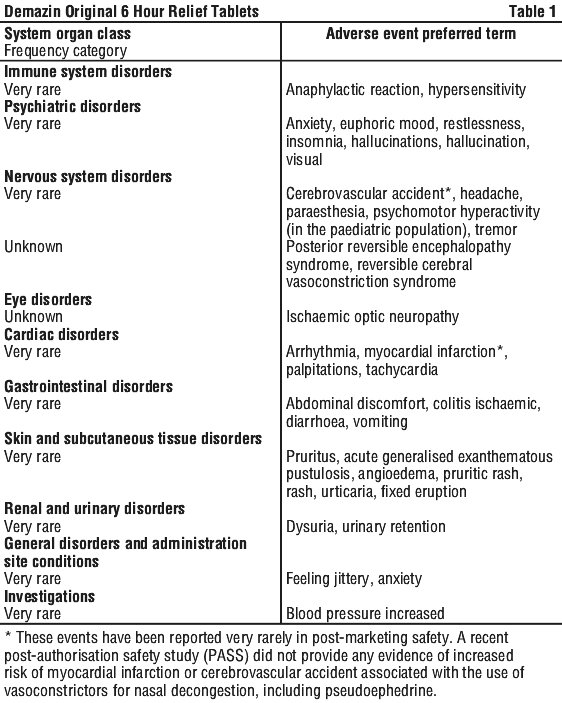
Drowsiness, dizziness, ataxia, and nausea may occur. Adverse drug reactions identified during post-marketing experience are detailed in Table 1.
Adverse effects of pseudoephedrine include. Cardiovascular stimulation - elevated blood pressure, tachycardia or arrhythmias;
central nervous system (CNS) stimulation - restlessness, insomnia, anxiety, tremors and (rarely) hallucinations;
skin rashes and urinary retention;
ischaemic colitis (frequency unknown);
weakness;
myadriasis.
Children and the elderly are more likely to experience adverse effects than other age groups.
Adverse reactions with chlorphenamine. CNS stimulatory effects of chlorphenamine may include anxiety, hallucinations, appetite stimulation, muscle dyskinesias and activation of epileptogenic foci.
CNS depressive effects of chlorphenamine include sedation and impaired performance (impaired driving performance, poor work performance, incoordination, reduced motor skills, and impaired information processing). Performance may be impaired in the absence of sedation and may persist the morning after a night-time dose.
High doses of chlorphenamine may cause nervousness, tremor, insomnia, agitation, and irritability.
Side effects of chlorphenamine associated with cholinergic blockage include dryness of the eyes, mouth and nose, blurred vision, urinary hesitancy and retention, constipation, and tachycardia.
Adverse drug reactions identified during post-marketing experience with pseudoephedrine and chlorphenamine appear in Table 1. The frequency category was estimated from spontaneous reporting rates.
Adverse events that have been observed during clinical trials and/or post-marketing use are ranked under the following frequency: very common (≥ 1/10), common (≥ 1/100 and < 1/10), uncommon (≥ 1/1000 and < 1/100), rare (≥ 1/10,000 and < 1/1,000), very rare (< 1/10,000).
4.9 Overdose
For information on the management of overdose, contact the Poisons Information Centre on 13 11 26 (Australia).
5 Pharmacological Properties
5.1 Pharmacodynamic Properties
Mechanism of action. Antihistamine plus decongestant.
Demazin contains an antihistamine (chlorphenamine) for prophylaxis and treatment of allergy symptoms and a decongestant (pseudoephedrine) for relief of nasal and sinus congestion.
Clinical trials. No data available.
5.2 Pharmacokinetic Properties
No data available.
5.3 Preclinical Safety Data
Genotoxicity. No data available.
Carcinogenicity. No data available.
6 Pharmaceutical Particulars
6.1 List of Excipients
Brilliant blue FCF, lactose monohydrate, magnesium stearate, maize starch, povidone.
6.2 Incompatibilities
Incompatibilities were either not assessed or not identified as part of the registration of this medicine.
6.3 Shelf Life
In Australia, information on the shelf life can be found on the public summary of the Australian Register of Therapeutic Goods (ARTG). The expiry date can be found on the packaging.
6.4 Special Precautions for Storage
Store below 25°C. Protect from moisture.
6.5 Nature and Contents of Container
Blister pack: 12's and 4's (sample pack).
6.6 Special Precautions for Disposal
In Australia, any unused medicine or waste material should be disposed of by taking to your local pharmacy.
6.7 Physicochemical Properties
Chemical structure.
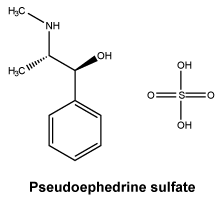
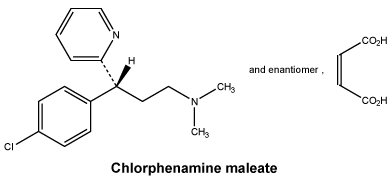
Chlorphenamine maleate: 113-92-8.
7 Medicine Schedule (Poisons Standard)
Schedule 3.
Date of First Approval
04 February 2008
Date of Revision
15 December 2025
Summary Table of Changes

Reasonable care is taken to provide accurate information at the time of creation. This information is not intended as a substitute for medical advice and should not be exclusively relied on to manage or diagnose a medical condition. The Australian Commission on Safety and Quality in Health Care disclaims all liability (including for negligence) for any loss, damage, injury or any other negative effects resulting from reliance on or use of this information. Read our full disclaimer. This website uses cookies. Read our privacy policy.