
Desmopressin ADVZ
Brand Information
| Brand name | Desmopressin ADVZ |
| Active ingredient | Desmopressin |
| Schedule | S4 |
Consumer Medicine Information (CMI) leaflet
Please read this leaflet carefully before you start using the Desmopressin ADVZ.
Summary CMI
Desmopressin ADVZ
Consumer Medicine Information (CMI) summary
The full CMI on the next page has more details. If you are worried about taking this medicine, speak to your doctor or pharmacist.
1. Why am I taking Desmopressin ADVZ?
Desmopressin ADVZ contains the active ingredient desmopressin, which is a synthetic version of a naturally occurring substance produced in the brain called vasopressin. It is used for several conditions including primary nocturnal enuresis (bedwetting) in patients over 6 years of age and cranial diabetes insipidus.
For more information, see Section 1. Why am I taking Desmopressin ADVZ? in the full CMI.
2. What should I know before I take Desmopressin ADVZ?
Do not take if you have ever had an allergic reaction to desmopressin or any of the ingredients listed at the end of the CMI.
Talk to your doctor if you have any other medical conditions, take any other medicines, or are pregnant or plan to become pregnant or are breastfeeding.
For more information, see Section 2. What should I know before I take Desmopressin ADVZ? in the full CMI.
3. What if I am taking other medicines?
Some medicines may interfere with Desmopressin ADVZ and affect how it works.
A list of these medicines is in Section 3. What if I am taking other medicines? in the full CMI.
4. How do I take Desmopressin ADVZ?
- Desmopressin ADVZ is placed under the tongue (sublingual). It will dissolve in seconds without the need for water.
- Bedwetting (nocturnal enuresis) - one (120 mcg) to two (240 mcg) tablets under the tongue at bedtime
- Cranial diabetes insipidus - doses up to 120 micrograms three times daily are often used. More instructions can be found in Section 4. How do I take Desmopressin ADVZ? in the full CMI.
5. What should I know while taking Desmopressin ADVZ?
| Things you should do |
|
| Things you should not do |
|
| Driving or using machines |
|
| Looking after your medicine |
|
For more information, see Section 5. What should I know while taking Desmopressin ADVZ? in the full CMI.
6. Are there any side effects?
All medicines can have side effects. Most of them are minor and temporary but some may need medical attention.
Tell your doctor if you experience any side effects, including headache, stomach pain, nausea or vomiting, rapid weight gain, confusion or drowsiness. These are signs and symptoms of hyponatraemia (low sodium levels in the blood), a rare, but serious possible side effect of Desmopressin ADVZ. For more information, including what to do if you have any side effects, see Section 6. Are there any side effects? in the full CMI.
Full CMI
Desmopressin ADVZ
Active ingredient: desmopressin
Consumer Medicine Information (CMI)
This leaflet provides important information about taking Desmopressin ADVZ. You should also speak to your doctor or pharmacist if you would like further information or if you have any concerns or questions about taking Desmopressin ADVZ.
Where to find information in this leaflet:
1. Why am I taking Desmopressin ADVZ?
2. What should I know before I take Desmopressin ADVZ?
3. What if I am taking other medicines?
4. How do I take Desmopressin ADVZ?
5. What should I know while taking Desmopressin ADVZ?
6. Are there any side effects?
7. Product details
1. Why am I taking Desmopressin ADVZ?
Desmopressin ADVZ contains the active ingredient desmopressin, which is a synthetic version of a naturally occurring substance produced in the brain called vasopressin.
Desmopressin ADVZ has a few different actions on the body including on the kidney to reduce the amount of urine produced.
Desmopressin ADVZ is used for several conditions including:
- Primary nocturnal enuresis (bedwetting) in patients over 6 years of age who have a normal ability to concentrate urine and who have not responded to treatment with an enuresis alarm or in whom an enuresis alarm is contraindicated or inappropriate.
- Cranial diabetes insipidus (large amounts of urine being produced day and night and constant thirst).
2. What should I know before I take Desmopressin ADVZ?
Warnings
Do not take Desmopressin ADVZ if:
- you are allergic to desmopressin, or any of the ingredients listed at the end of this leaflet
- you are in the habit of drinking large amounts of fluid
- you have cardiac insufficiency (shortness of breath, swelling of the feet or legs due to fluid build-up)
- you have kidney disease where you pass little or no urine
- you have low levels of sodium in your bloodstream
- you have a disease which causes excessive release of anti-diuretic hormone
- you are breast-feeding
- you are a child under the age of 6 years. Safety and effectiveness in children younger than 6 years have not been established
- the expiry date printed on the pack has passed
- the packaging is torn or shows signs of tampering.
Always check the ingredients to make sure you can take this medicine.
Check with your doctor if you:
- have any other medical conditions especially the following:
- a known allergy to anti-diuretic hormone
- too little or too much fluid in the body
- heart or blood vessel disease or any other disease for which you take diuretics
- low blood pressure
- cystic fibrosis or any other disease which causes fluid or salt imbalance
- any disease of the blood clotting cells (platelets)
- serious problems with bladder function or with passing urine
- raised pressure within your head (increased intracranial pressure) - take any medicines for any other condition.
During treatment, you may be at risk of developing certain side effects. It is important you understand these risks and how to monitor for them. See additional information under Section 6. Are there any side effects?
Pregnancy and breastfeeding
Check with your doctor if you are pregnant or intend to become pregnant.
Desmopressin ADVZ should only be taken by a pregnant woman if necessary. Your doctor can discuss with you the risks and benefits involved.
Talk to your doctor if you are breastfeeding or intend to breastfeed.
It is recommended that you do not breastfeed while taking Desmopressin ADVZ.
3. What if I am taking other medicines?
Tell your doctor or pharmacist if you are taking any other medicines, including any medicines, vitamins or supplements that you buy without a prescription from your pharmacy, supermarket or health food shop.
Some medicines may interfere with Desmopressin ADVZ and affect how it works.
Medicines that may increase the effect of Desmopressin ADVZ include:
- loperamide, a medicine used to stop diarrhoea
- medications which are known to release antidiuretic hormone (e.g. tricyclic antidepressants, selective serotonin reuptake inhibitors, chlorpromazine or carbamazepine) or some medications which are known to treat high blood sugar (diabetes), as they can increase the risk of fluid buildup in the body
- non-steroidal anti-inflammatory drugs (NSAIDs), medicines used to relieve pain and inflammation. NSAIDs may induce water retention/low sodium levels in the blood (hyponatraemia).
These medicines may affect how well Desmopressin ADVZ works. You may need different amounts of your medicines, or you may need to take different medicines.
Check with your doctor or pharmacist if you are not sure about what medicines, vitamins or supplements you are taking and if these affect Desmopressin ADVZ.
4. How do I take Desmopressin ADVZ?
How much to take
Some of the details for Desmopressin ADVZ will vary depending on the purpose for which it is taken.
Bedwetting (nocturnal enuresis)
- the usual starting dose for treatment of bedwetting is one wafer (120 micrograms) under the tongue at bedtime. If this dose does not adequately help resolve the bedwetting, your doctor may recommend that you increase the dose to 240 micrograms under the tongue (two 120 micrograms wafers, OR one 240 micrograms wafer) at bedtime.
- if after four weeks of Desmopressin ADVZ treatment there has been no resolution of the bedwetting, treatment should be stopped.
- fluid intake should be limited in preparation for your dose of Desmopressin ADVZ (see 'Things to be careful of')
Cranial diabetes insipidus
- the dose you need will be adjusted to suit your personal requirements.
- doses up to 120 micrograms three times daily are often used.
- your doctor will advise you about the dose most suitable for you.
Follow the instructions provided and take Desmopressin ADVZ until your doctor tells you to stop.
When to take Desmopressin ADVZ
- Bedwetting (nocturnal enuresis)
- take Desmopressin ADVZ at bedtime.
Cranial diabetes insipidus
- take Desmopressin ADVZ at times specified by your doctor.
How long to take Desmopressin ADVZ
Continue taking your medicine for as long as your doctor tells you.
This medicine helps to control your condition but does not cure it. It is important to keep taking your medicine even if you feel well.
Bedwetting (nocturnal enuresis)
- Desmopressin ADVZ for bedwetting is usually taken for periods up to 3 months.
- After this period, you should have at least one week without Desmopressin ADVZ to check if your bedwetting has stopped. Your doctor will decide whether continued treatment with MINIRIN is needed.
Cranial diabetes insipidus
- Your doctor will advise you.
How to take Desmopressin ADVZ
- When it is time for your dose, peel off the back of the foil on one of the blisters starting in the corner with the arrow.
- Carefully push on the foil to remove the wafer. Do not try to push Desmopressin ADVZ through the blister foil.
- Place Desmopressin ADVZ under the tongue (sublingual). It will dissolve in seconds without the need for water.
Please read the detailed instruction leaflet in the box of Desmopressin ADVZ carefully.
If you forget to take Desmopressin ADVZ
Desmopressin ADVZ should be taken regularly at the same time each day.
Bedwetting (nocturnal enuresis)
If you miss your dose at the usual time, skip the missed dose and take the next dose when you are meant to.
Cranial diabetes insipidus
Take the next dose as soon as you remember. You will then have to adjust the time of the following dose.
When this is done, go back to taking your medicine as you would normally. You should talk to your doctor about this situation.
Do not take a double dose to make up for the dose you missed.
If you are not sure what to do, ask your doctor or pharmacist.
If you have trouble remembering to take your medicine, ask your pharmacist for some hints.
If you take too much Desmopressin ADVZ
If you think that you have taken too much Desmopressin ADVZ, you may need urgent medical attention.
You should immediately:
- phone the Poisons Information
Centre (by calling 13 11 26), or - contact your doctor, or
- go to the Emergency Department at your nearest hospital.
You should do this even if there are no signs of discomfort or poisoning.
Symptoms of an overdose may include confusion, drowsiness, continuing headache, nausea or vomiting, rapid weight gain due to a buildup of water in the body, or, in severe cases, convulsions.
5. What should I know while taking Desmopressin ADVZ?
Things you should do
If you are about to be started on any new medicine, remind any doctor, dentist or pharmacist you visit that you are taking Desmopressin ADVZ.
If you are going to have surgery, tell the surgeon or anaesthetist that you are taking this medicine.
It may affect other medicines used during surgery.
If you become pregnant while taking this medicine, tell your doctor immediately.
If you are about to have any blood tests, tell your doctor that you are taking this medicine.
It may interfere with the results of some tests.
Keep all your doctor's appointments so that your progress can be checked.
Your doctor may do some tests from time to time to make sure the medicine is working and to prevent unwanted side effects.
Things you should not do
- Do not take Desmopressin ADVZ to treat any other complaints unless your doctor tells you to do so.
- Do not give your medicine to anyone else, even if they have the same condition as you.
- Do not stop taking your medicine or change the dosage without checking with your doctor.
- If you stop taking it suddenly, your condition may worsen.
Things to be careful of
Bedwetting (nocturnal enuresis)
- You must avoid drinking fluids from one hour before taking Desmopressin ADVZ until the next morning (at least eight hours).
- Over this period, drink no more than a few sips of water or other fluids. This is because a high fluid intake during this period can increase the chance that you will feel unwell (e.g headache, nausea, dizziness).
- Remember to drink normally throughout the day.
- This is very important to prevent dehydration during daytime.
Cranial diabetes insipidus
- Carefully follow your doctor's instruction about fluid intake.
- It is very important to keep your body water in balance.
Driving or using machines
This medicine is not expected to affect your ability to drive a car or operate machinery.
Looking after your medicine
- Keep Desmopressin ADVZ in the original container to
- protect from moisture and light until it is time to take it.
If you store them out of the blister pack, they will not keep well.
Store it in a cool dry place, where the temperature stays below 25°C, away from moisture, heat or sunlight.
For example, do not store it:
- in the bathroom or near a sink, or
- in the car or on window sills.
- Heat and dampness can destroy some medicines.
Follow the instructions in the carton on how to take care of your medicine properly.
Keep it where young children cannot reach it.
A locked cupboard at least one-and-a-half metres above the ground is a good place to store medicines.
Getting rid of any unwanted medicine
If you no longer need to take this medicine or it is out of date, take it to any pharmacy for safe disposal.
Do not take this medicine after the expiry date. The expiry date refers to the last day of that month.
6. Are there any side effects?
All medicines can have side effects. If you do experience any side effects, most of them are minor and temporary. However, some side effects may need medical attention.
If you are over 65 years of age, commencing Desmopressin ADVZ treatment is not recommended.
The elderly may be at an increased risk of some side effects.
See the information below and, if you need to, ask your doctor or pharmacist if you have any further questions about side effects.
Do not be alarmed by the following lists of side effects. You may not experience any of them.
Less serious side effects
| Less serious side effects | What to do |
Hyponatraemia or low sodium levels in the blood may have the following signs or symptoms:
Uncommon side effects (affect less than 1 in 100 users):
| These side effects are not usually serious but can become serious. Speak to your doctor if you have any of these side effects and they bother or worry you. |
Serious side effects
| Serious side effects | What to do |
| high blood pressure bladder problems emotional or behavioural disturbances hallucinations. *Hypersensitivity or allergic reactions (uncommon side effects - affect less than 1 in 100 users): shortness of breath, wheezing or difficulty breathing swelling of the face, lips, tongue or other parts of the body rash, itching or hives on the skin. *Hyponatraemia or low sodium levels in the blood may have the following serious signs or symptoms:
| Call your doctor straight away, or go straight to the Emergency Department at your nearest hospital if you notice any of these serious side effects. |
Tell your doctor or pharmacist as soon as possible if you do not feel well while you are taking Desmopressin ADVZ.
Other side effects not listed here may occur in some people.
Reporting side effects
After you have received medical advice for any side effects you experience, you can report side effects to the Therapeutic Goods Administration online at www.tga.gov.au/reporting-problems. By reporting side effects, you can help provide more information on the safety of this medicine.
Always make sure you speak to your doctor or pharmacist before you decide to stop taking any of your medicines.
7. Product details
This medicine is only available with a doctor's prescription.
What Desmopressin ADVZ contains
| Active ingredient (main ingredient) | desmopressin acetate |
| Other ingredients (inactive ingredients) |
|
Desmopressin ADVZ 120 mcg: Contains desmopressin (free base) 120 mcg (equivalent to 133 mcg desmopressin (acetate)).
Desmopressin ADVZ 240 mcg: Contains desmopressin (free base) 240 mcg (equivalent to 267 mcg desmopressin (acetate)).
Do not take this medicine if you are allergic to any of these ingredients.
What Desmopressin ADVZ looks like
Desmopressin ADVZ are supplied in packs of 30s.
Desmopressin ADVZ 120 micrograms is a White or almost white, octagonal, biconvex tablet debossed with ‘II’ on one side and plain on other side. (AUST R 446890)
Desmopressin ADVZ 240 micrograms is a White or almost white, square, biconvex tablet debossed with ‘III’ on one side and plain on other side.
120mcg AUST R 446890
240mcg AUST R 446891
Who distributes Desmopressin ADVZ
Boucher & Muir Pty Ltd
t/a ADVANZ PHARMA (Australia)
Level 9, 76 Berry Street
North Sydney NSW 2060
Tel: + 0800565633
This leaflet was prepared in April 2024.
Brand Information
| Brand name | Desmopressin ADVZ |
| Active ingredient | Desmopressin |
| Schedule | S4 |
MIMS Revision Date: 01 May 2026
1 Name of Medicine
Desmopressin acetate.
2 Qualitative and Quantitative Composition
Desmopressin ADVZ 120 mcg. Each 120 mcg sublingual tablet, contains the active substance, desmopressin, (present as acetate), a synthetic structural analogue of the natural pituitary hormone arginine vasopressin. The difference lies in the desamination of cysteine and substitution of L-arginine by D-arginine.
Desmopressin ADVZ 240 mcg. Each 240 mcg sublingual tablet, contains the active substance, desmopressin, (present as acetate), a synthetic structural analogue of the natural pituitary hormone arginine vasopressin. The difference lies in the desamination of cysteine and substitution of L-arginine by D-arginine.
Excipients with known effect. Contains lactose.
For full list of excipients, see Section 6.1 List of Excipients.
3 Pharmaceutical Form
120 mcg sublingual tablets. White or almost white, octagonal, biconvex tablet debossed with 'II' on one side and plain on other side.
240 mcg sublingual tablets. White or almost white, square, biconvex tablet debossed with 'III' on one side and plain on other side.
4 Clinical Particulars
4.1 Therapeutic Indications
Desmopressin ADVZ is indicated for the treatment of:
cranial diabetes insipidus;
primary nocturnal enuresis in patients from 6 years of age with normal ability to concentrate urine, who are refractory to an enuresis alarm or in whom an enuresis alarm is contraindicated or inappropriate.
4.2 Dose and Method of Administration
Desmopressin ADVZ is placed under the tongue where it dissolves without the need for water.
If adequate clinical effect is not achieved within 4 weeks following appropriate dose titration the medication should be discontinued.
Food intake may reduce the intensity and duration of the antidiuretic effect at low oral doses of Desmopressin ADVZ sublingual tablets (see Section 4.5 Interactions with Other Medicines and Other Forms of Interactions).
Cranial diabetes insipidus. Dosage is individual in diabetes insipidus but the total daily sublingual dose normally lies in the range of 120 microgram to 720 microgram. A suitable starting dose in adults and children is 60 microgram three times daily, administered sublingually. This dosage regimen should then be adjusted in accordance with the patient's response. For the majority of patients, the maintenance dose is 60 microgram to 120 microgram sublingually three times daily.
60 microgram strength sublingual tablets are unavailable in this brand, however this strength is available in other brands. Where correct dosing requires this strength, refer to the specific product information for these formulations for complete dosage and administration instructions.
In the event of signs of water retention/hyponatraemia, treatment should be interrupted and the dose should be adjusted (see Section 4.4 Special Warnings and Precautions for Use).
Primary nocturnal enuresis. The recommended initial dose is 120 microgram at bedtime, administered sublingually. If this dose is not sufficiently effective, the dose may be increased up to 240 microgram sublingually. Fluid intake must be limited to a minimum from 1 hour before until 8 hours after administration.
In the event of signs or symptoms of water retention and/or hyponatraemia (headache, nausea/vomiting, weight gain, and, in severe cases, convulsions) treatment should be interrupted until the patient has fully recovered. When restarting treatment strict fluid restriction should be enforced (see Section 4.4 Special Warnings and Precautions for Use).
Desmopressin ADVZ is intended for treatment periods of up to 3 months. The need for continued treatment should be reassessed by means of a period of at least one week without Desmopressin ADVZ.
4.3 Contraindications
Desmopressin ADVZ is contraindicated in:
Habitual or psychogenic polydipsia (resulting in a urine production exceeding 40 mL/kg/24 hours);
A history of known or suspected cardiac insufficiency and other conditions requiring treatment with diuretics;
Moderate and severe renal insufficiency (creatinine clearance below 50 mL/min);
Known hyponatraemia;
Syndrome of inappropriate anti-diuretic hormone secretion (SIADH);
Hypersensitivity to desmopressin or to any of the excipients of Desmopressin ADVZ.
4.4 Special Warnings and Precautions for Use
When used for primary nocturnal enuresis, the fluid intake must be limited to a minimum from 1 hour before administration, until the next morning (at least 8 hours) after administration. Treatment without concomitant reduction of fluid intake may lead to water retention and/or hyponatraemia with or without accompanying warning signs and symptoms (headache, nausea/vomiting, weight gain, and, in severe cases, convulsions). In the event of signs or symptoms of water retention and/or hyponatraemia, treatment should be interrupted until the patient has fully recovered. When restarting treatment, strict fluid restriction should be enforced. All patients and, when applicable, their guardians, should be carefully instructed to adhere to the fluid restrictions.
In the event of signs or symptoms of water retention/hyponatraemia in cranial diabetes insipidus patients, treatment should be interrupted and the dose should be adjusted.
Severe bladder dysfunction and outlet obstruction should be considered before starting treatment.
Caution should be exercised in patients with other causes of urinary frequency (e.g. multiple sclerosis or urge incontinence), and in diabetes mellitus and renal impairment, since the use of desmopressin has not been well studied in these populations.
Elderly patients and patients with low serum sodium levels may have an increased risk of hyponatraemia (see Section 4.4 Special Warnings and Precautions for Use, Use in the elderly).
Precautions to avoid hyponatraemia must be taken in:
conditions characterised by fluid and/or electrolyte imbalances (such as systemic infections, fever, gastroenteritis and syndrome of inappropriate ADH secretion (SIADH)) (see Section 4.3 Contraindications);
conditions requiring concomitant treatment with diuretic agents;
concomitant treatment with drugs known to induce SIADH (see Section 4.5 Interactions with Other Medicines and Other Forms of Interactions) including careful attention to fluid restrictions and more frequent monitoring of serum sodium;
concomitant treatment with NSAIDs (see Section 4.5 Interactions with Other Medicines and Other Forms of Interactions).
Treatment with desmopressin should be interrupted during acute intercurrent illnesses characterised by fluid and/or electrolyte imbalance (such as systemic infections, fever, gastroenteritis).
Precautions must be taken in patients at risk of increased intracranial pressure.
For each approved indication the lowest effective dose should be used. Patient dosage should be reassessed periodically.
Desmopressin ADVZ should not be administered to dehydrated or overhydrated patients until water balance has been adequately restored.
Desmopressin ADVZ should be used with caution in patients with cystic fibrosis because of impaired water handling and increased risk of hyponatraemia.
Use in the elderly. The initiation of treatment in patients over 65 years of age is not recommended. Should physicians decide to initiate desmopressin treatment in these patients then serum sodium should be measured before beginning the treatment and 3 days after initiation or dosage increase, and at other times during treatment as deemed necessary by the treating physician.
Paediatric use. Dose recommendations are the same as in adults. Children should be closely observed to avoid over ingestion of fluid and to ensure that only the recommended dose of Desmopressin ADVZ is taken.
Effects on laboratory tests. No data available.
4.5 Interactions with Other Medicines and Other Forms of Interactions
NSAIDs may induce water retention/hyponatraemia (see Section 4.4 Special Warnings and Precautions for Use).
Substances which are known to induce SIADH, e.g. tricyclic antidepressants, selective serotonin reuptake inhibitors, chlorpromazine and carbamazepine as well as some antidiabetics of the sulfonylurea group particularly chlorpropamide, may cause an additive antidiuretic effect leading to an increased risk of water retention/hyponatraemia.
Concomitant treatment with loperamide may result in a 3-fold increase of desmopressin plasma concentrations, which may lead to an increased risk of water retention/hyponatraemia. Although not investigated, other drugs slowing intestinal transport might have the same effect.
It is unlikely that desmopressin will interact with drugs affecting hepatic metabolism, since desmopressin has been shown not to undergo significant liver metabolism in in vitro studies with human microsomes. However, formal in vivo interaction studies have not been performed.
A standardised 27% fat meal significantly decreased absorption (rate and extent) of desmopressin sublingual tablets. No significant effect was observed with respect to pharmacodynamics (urine production or osmolality). Food intake may reduce the intensity and duration of the antidiuretic effect at low oral doses of desmopressin sublingual tablets.
4.6 Fertility, Pregnancy and Lactation
Effects on fertility. Fertility studies have not been done. In vitro analysis of human cotyledon models have shown that there is no transplacental transport of desmopressin when administered at therapeutic concentration corresponding to recommended dose.
Use in pregnancy. (Category B2)
Data on a limited number (n=53) of exposed pregnancies in women with diabetes insipidus as well as data on a limited number (n=54) of exposed pregnancies in women with von Willebrand disease indicate no adverse effects of desmopressin on pregnancy or on the health of the foetus/newborn child. To date, no other relevant epidemiological data are available.
However, these findings are based on case report data and should be interpreted with caution. No reproduction study has been conducted in animals using oral administration. Studies performed in rats and rabbits with cutaneous doses up to 50 nanogram/kg/day and 10 microgram/kg/day, respectively, revealed no evidence for a harmful effect on the foetus.
Caution should be exercised when prescribing to pregnant women.
Use in lactation. No study has been conducted in animals to examine the effects of desmopressin on postnatal development.
There have been no controlled studies in nursing mothers. In a single dose study in 6 lactating women administered 300 microgram desmopressin intranasally, the concentration of desmopressin was less in breast milk than in plasma. However, until further evidence is available for its safe use during lactation, desmopressin should not be used in breast feeding mothers.
4.7 Effects on Ability to Drive and Use Machines
Desmopressin ADVZ has no or negligible influence on the ability to drive and use machines.
4.8 Adverse Effects (Undesirable Effects)
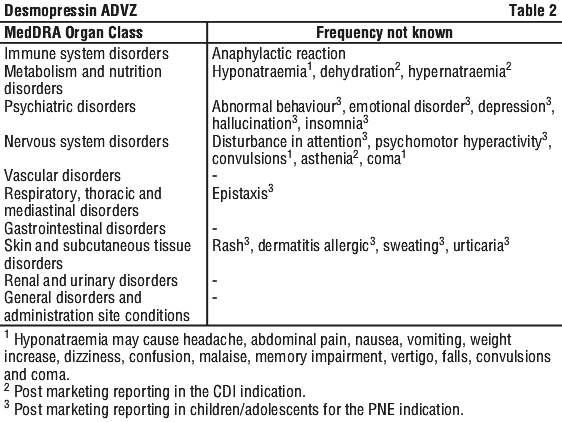
Treatment with and without concomitant reduction of fluid intake may lead to water retention/hyponatraemia with or without accompanying warning signs and symptoms (headache, nausea/vomiting, decreased serum sodium, weight gain, and in severe cases, convulsions). The risk appears to be dose-related and the elderly (> 60 years) are at increased risk.
The most serious adverse reaction with desmopressin is hyponatraemia, which may cause headache, abdominal pain, nausea, vomiting, weight increase, dizziness, confusion, malaise, memory impairment, vertigo, falls and in severe cases convulsions and coma. The cause of the potential hyponatraemia is the anticipated antidiuretic effect. The hyponatraemia is reversible and in children it is often seen to occur in relation to changes in daily routines affecting fluid intake and/or perspiration. In both adults and children special attention should be paid to the precautions addressed in Section 4.4 Special Warnings and Precautions for Use.
Clinical trials. Cranial diabetes insipidus. During clinical trials with desmopressin in diabetes insipidus the following adverse events have been reported more than once: headache, cold, weight gain, dizziness, sore throat, and depressed mood.
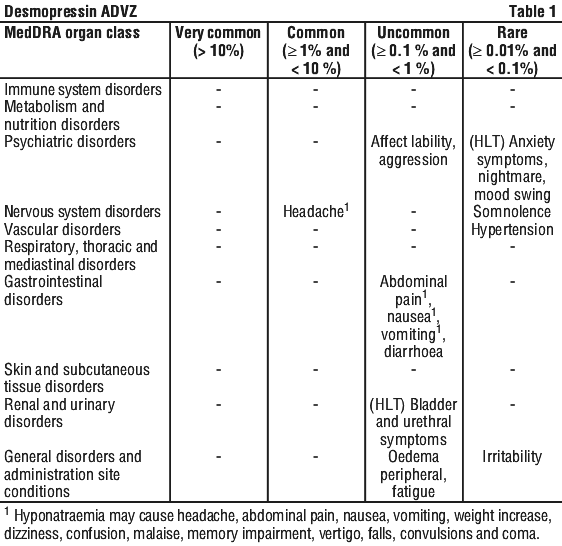
Primary nocturnal enuresis. Based on the frequency of adverse drug reactions reported in clinical trials with oral desmopressin conducted in children and adolescents for treatment of primary nocturnal enuresis (N = 1923), the following adverse events have been listed in Table 1.
4.9 Overdose
Overdose of desmopressin leads to a prolonged duration of action with an increased risk of water retention and hyponatraemia.
Treatment. Although the treatment of hyponatraemia should be individualised, the following general recommendations can be given: discontinue the desmopressin treatment, fluid restriction, and symptomatic treatment if needed.
For information on the management of overdose, contact the Poisons Information Centre on 13 11 26 (Australia).
5 Pharmacological Properties
5.1 Pharmacodynamic Properties
Mechanism of action. Pharmacotherapeutic group: vasopressin and analogues.
Compared to vasopressin, desmopressin has a considerably longer duration of action and a complete lack of pressor effect in the dosages clinically used.
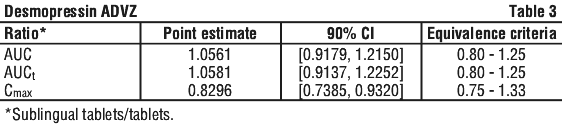
Clinical trials. Results of a bioequivalence study comparing desmopressin 240 microgram administered sublingually versus a 400 microgram dose desmopressin tablet administered orally are summarized in Table 3.
5.2 Pharmacokinetic Properties
Absorption. The overall mean systemic bioavailability of desmopressin administered sublingually as desmopressin at doses of 200, 400 and 800 microgram is 0.25%. The Cmax was 14, 30 and 65 picogram/mL after administration of 200, 400 and 800 microgram, respectively. Tmax was observed at 0.5 - 2.0 hours after dosing. The geometric mean terminal half-life is 2.8 (CV = 24%) hours.
Concomitant intake of food decreases the rate and extent of absorption by 40%.
Distribution. The distribution volume of desmopressin after intravenous administration is 33 L (0.41 L/kg). Desmopressin does not cross the blood-brain barrier. Desmopressin exhibits a moderate to high variability in bioavailability, both within and between subjects.
Metabolism. In in vitro studies in human liver microsome preparations, it has been shown that no significant amount of desmopressin is metabolised in the liver, and thus human liver metabolism in vivo is not likely to occur.
Elimination. After iv injection 45% of the amount of desmopressin could be recovered in the urine within 24 hours.
5.3 Preclinical Safety Data
Genotoxicity. The genotoxic potential of desmopressin has not been adequately investigated, although in vitro studies in bacterial and mammalian cells revealed no mutagenicity of the drug.
Carcinogenicity. The carcinogenic potential of desmopressin has not been investigated in pre-clinical studies.
6 Pharmaceutical Particulars
6.1 List of Excipients
The sublingual tablet also contain the following inactive ingredients: lactose monohydrate, maize starch, citric acid, croscarmellose sodium, magnesium stearate.
6.2 Incompatibilities
Incompatibilities were either not assessed or not identified as part of the registration of this medicine.
6.3 Shelf Life
In Australia, information on the shelf life can be found on the public summary of the Australian Register of Therapeutic Goods (ARTG). The expiry date can be found on the packaging.
6.4 Special Precautions for Storage
Store below 25°C. Keep in original container to protect from moisture and light.
6.5 Nature and Contents of Container
Desmopressin ADVZ is available in cartons of 30 each containing 3 Aluminium/Aluminium blister trays of 10 sublingual tablets. Not all strengths/pack sizes are being distributed in Australia.
6.6 Special Precautions for Disposal
In Australia, any unused medicine or waste material should be disposed of in accordance with local requirements.
6.7 Physicochemical Properties
Chemical structure.
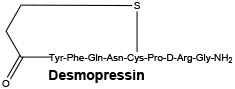
1-desamino-8-D-Arginine vasopressin. Desamino-cys-1-D-Arginine-8 vasopressin.
CAS number. Desmopressin base. 16679-58-6.
Desmopressin acetate. 62288-83-9.
Molecular weights: Desmopressin base - 1069.22.
Desmopressin acetate - 1183.34.
7 Medicine Schedule (Poisons Standard)
Prescription Only Medicine (S4).
Date of First Approval
25 July 2025
Reasonable care is taken to provide accurate information at the time of creation. This information is not intended as a substitute for medical advice and should not be exclusively relied on to manage or diagnose a medical condition. The Australian Commission on Safety and Quality in Health Care disclaims all liability (including for negligence) for any loss, damage, injury or any other negative effects resulting from reliance on or use of this information. Read our full disclaimer. This website uses cookies. Read our privacy policy.