
Diben Drink
Brand Information
| Brand name | Diben Drink |
| Active ingredient | Fat + Carbohydrate + Fibre + Protein + Sodium + Potassium + Chloride + Calcium + Magnesium + Phosphorus + Iron + Zinc + Copper + Manganese + Iodine + Fluoride + Chromium + Molybdenum + Selenium + Retinol + Betacarotene + Colecalciferol + Dl-alpha-tocopherol + Phytomenadione + Thiamine + Riboflavine + Nicotinic acid + Pyridoxine + Cyanocobalamin + Pantothenic acid + Biotin + Folic acid + Ascorbic acid + Choline |
| Schedule | Unscheduled |
No current CMI was found.
Brand Information
| Brand name | Diben Drink |
| Active ingredient | Fat + Carbohydrate + Fibre + Protein + Sodium + Potassium + Chloride + Calcium + Magnesium + Phosphorus + Iron + Zinc + Copper + Manganese + Iodine + Fluoride + Chromium + Molybdenum + Selenium + Retinol + Betacarotene + Colecalciferol + Dl-alpha-tocopherol + Phytomenadione + Thiamine + Riboflavine + Nicotinic acid + Pyridoxine + Cyanocobalamin + Pantothenic acid + Biotin + Folic acid + Ascorbic acid + Choline |
| Schedule | Unscheduled |
MIMS Revision Date: 01 November 2018
Name of the medicine
High MUFAa, carbohydrate modified sip feed.
Ingredients. Water, milk protein, modified starch, maltodextrinb, vegetable oils (rapeseed oil, sunflower oil)b, fructose, medium chain triglycerides (MCT), flavourings, potassium citrate, fish oil, emulsifiers (soya lecithin, E 471), sodium chloride, choline hydrogen tartrate, vit. Cb, acidity regulator (E 524)b, sweeteners (E 954, E 952), magnesium oxide, iron pyrophosphate, zinc sulphate, niacin, vit. E, pantothenic acid, manganese chloride, copper sulphate, vit. B2, vit. B6, sodium fluoride, vit. B1b, β-carotene, vit. A, folic acid, chromium chloride, potassium iodideb, sodium molybdateb, sodium selenite, vit. K1, biotin, vit. D3, vit. B12.
aMonounsaturated fatty acids.
bAmount/position depending on flavour.
See Table 1.
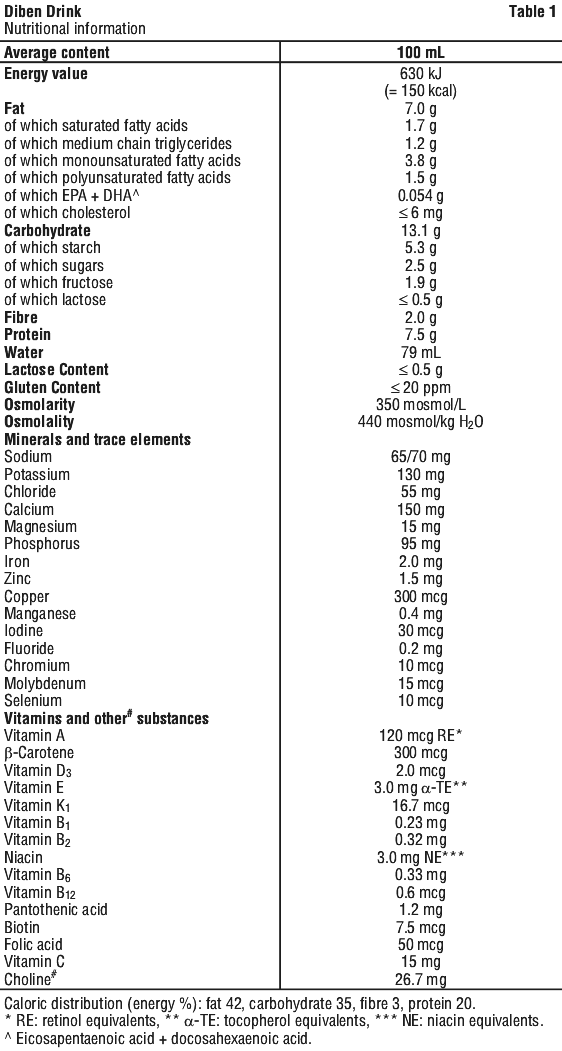
Description
Nutritionally complete, high-caloric (1.5 kcal/mL), high protein oral nutritional supplement, with fibre. High in monounsaturated fatty acids, modified carbohydrate profile with low glycaemic index for improved glycaemic control. Clinically free from lactose, low in sodium and cholesterol; with sugar and sweeteners.
High in energy (150 kcal/100 mL). High in protein (7.5 g/100 mL).
High in MUFAa to improve glycaemic control1,2 and insulin sensitivity3,4.
With medium chain triglycerides (MCT) to contribute to blood lipid control5.
Modified carbohydrate profile with low glycaemic index for improved glycaemic control.
aMonounsaturated fatty acids.
Indications
Food for special medical purposes. For the dietary management of patients with or at risk of malnutrition in particular for patients with dysphagia or impaired glucose metabolism such as in impaired glucose tolerance, stress-induced hyperglycaemia and diabetes mellitus.
Contraindications
Not suitable where enteral nutrition is not permitted such as in acute gastrointestinal bleeding, gut atonia, ileus and others. Not suitable for patients with severe forms of malassimilation. Not suitable for patients with congenital inability to metabolise nutrients contained in Diben Drink.
Precautions
To be used under medical supervision. Suitable as sole source of nutrition. Not suitable for children < 3 years. Use with caution in children < 6 years. Not suitable for patients with galactosaemia. Ensure adequate fluid intake.
Dosage and Administration
Must be determined by the health care professional according to patients' needs. Recommendation for supplementary nutrition 2-3 bottles (600-900 kcal)/day, for complete nutrition 5 bottles (1500 kcal)/day.
Shake well before use. Drink slowly. Best served chilled.
Presentation
200 mL EasyBottle (vanilla flavour): 1's, 4's.
Storage
Store at room temperature. Opened bottles may be stored in a refrigerator for up to 24 hours. Packaged in a protective atmosphere.
Reference
1. Pohl M, Mayr P, Mertl-Roetzer M, et al.: Glycemic Control in Patients With Type 2 Diabetes Mellitus With a Disease-Specific Enteral Formula: Stage II of a Randomized, Controlled Multicenter Trial. JPEN 2009, 33:37-49.
2. Lochs H, Allison SP, Meier R, PirlichM, Kondrup J, Schneider S, et al.: Introductory to the ESPEN Guidelines on Enteral nutrition: terminology, definitions and general topics. Clin Nutr 2006, 25:180-186. 3. Diabetes Care. 2007 Jul;30(7):1717-23. Epub 2007 Mar 2.
3. Monounsaturated fat-rich diet prevents central body fat distribution and decreases postprandial adiponectin expression induced by a carbohydrate-rich diet in insulin-resistant subjects. Paniagua JA1, Gallego de la Sacristana A, Romero I, Vidal-Puig A, Latre JM, Sanchez E, Perez-Martinez P, Lopez-Miranda J, Perez-Jimenez F.
4. Brehm BJ, Lattin BL, Summer SS, Boback JA, Gilchrist GM, Jandacek RJ,D’Alessio DA: One-Year Comparison of a High-Monounsaturated Fat Diet With a High-Carbohydrate Diet in Type 2 Diabetes. Diabetes Care 2009, 32: 215-220.
5. Han et al. + Ann Nutr Metab. 2010;56:170-5. Successful treatment of severe hypertriglyceridemia with a formula diet rich in omega-3 fatty acids and medium-chain triglycerides Hauenschild A1, Bretzel RG, Schnell-Kretschmer H, Kloer HU, Hardt PD, Ewald N.
Poison schedule
Unscheduled.
Reasonable care is taken to provide accurate information at the time of creation. This information is not intended as a substitute for medical advice and should not be exclusively relied on to manage or diagnose a medical condition. The Australian Commission on Safety and Quality in Health Care disclaims all liability (including for negligence) for any loss, damage, injury or any other negative effects resulting from reliance on or use of this information. Read our full disclaimer. This website uses cookies. Read our privacy policy.