
Entocort
Brand Information
| Brand name | Entocort |
| Active ingredient | Budesonide |
| Schedule | S4 |
Consumer Medicine Information (CMI) leaflet
Please read this leaflet carefully before you start using the Entocort.
Summary CMI
ENTOCORT®
Consumer Medicine Information (CMI) summary
The full CMI on the next page has more details. If you are worried about using this medicine, speak to your doctor or pharmacist.
1. Why am I using ENTOCORT?
ENTOCORT contains the active ingredient budesonide. ENTOCORT is used to treat Crohn's disease. It can be used to treat acute attacks.
For more information, see Section 1. Why am I using ENTOCORT? in the full CMI.
2. What should I know before I use ENTOCORT?
Do not use if you have ever had an allergic reaction to budesonide or any of the ingredients listed at the end of the CMI.
Do not take ENTOCORT if you have an infection.
Talk to your doctor if you have any other medical conditions, take any other medicines, or are pregnant or plan to become pregnant or are breastfeeding.
For more information, see Section 2. What should I know before I use ENTOCORT? in the full CMI.
3. What if I am taking other medicines?
Some medicines may interfere with ENTOCORT and affect how it works.
A list of these medicines is in Section 3. What if I am taking other medicines? in the full CMI.
4. How do I use ENTOCORT?
- The usual dose is 3 capsules taken once daily.
- ENTOCORT should be taken in the morning, before breakfast.
More instructions can be found in Section 4. How do I use ENTOCORT? in the full CMI.
5. What should I know while using ENTOCORT?
| Things you should do |
|
| Things you should not do |
|
| Looking after your medicine |
|
For more information, see Section 5. What should I know while using ENTOCORT? in the full CMI.
6. Are there any side effects?
Less serious side effects may include flatulence, being or feeling sick, pain or burning sensation in your stomach (indigestion), rapid heart rate or palpitations, headache, dizziness, swelling or rounding of the face, acne, weight gain and bruising more easily, back pain, muscle cramps or muscle weakness, increased sweating, tiredness, trouble sleeping, tremor, feeling nervous, mood swings, depression, anxiety or aggression, shaking, muscle spasms or twitching, menstrual problems, skin rash, itchiness or discolouration.
Serious side effects may include hypersensitivity (allergic) reactions such as rash, itching, hives on the skin, swollen face, tongue, throat or other parts of the body, shortness of breath, wheezing, blurred vision or other visual disturbances; and/or signs or symptoms of an infection such as having a fever.
For more information, including what to do if you have any side effects, see Section 6. Are there any side effects? in the full CMI.
Full CMI
ENTOCORT®
Active ingredient: budenoside
Consumer Medicine Information (CMI)
This leaflet provides important information about using ENTOCORT. You should also speak to your doctor or pharmacist if you would like further information or if you have any concerns or questions about using ENTOCORT.
Where to find information in this leaflet:
1. Why am I using ENTOCORT?
2. What should I know before I use ENTOCORT?
3. What if I am taking other medicines?
4. How do I use ENTOCORT?
5. What should I know while using ENTOCORT?
6. Are there any side effects?
7. Product details
1. Why am I using ENTOCORT?
ENTOCORT contains the active ingredient budesonide. ENTOCORT belongs to the group of medicines called corticosteroids, which are used to help reduce inflammation in many parts of the body.
ENTOCORT is used to treat Crohn's disease in adults. It can be used to treat acute attacks. Crohn's disease is an inflammatory disease of the bowel. It mainly affects the small bowel and the first part of the large bowel and causes symptoms such as stomach pain, diarrhoea and fever.
2. What should I know before I use ENTOCORT?
Warnings
Do not use ENTOCORT if:
- you are allergic to budesonide, or any of the ingredients listed at the end of this leaflet. Always check the ingredients to make sure you can use this medicine
- you have an infection or have had a recent infection (including chicken pox and measles)
Check with your doctor if you:
- have any other medical conditions including:
- tuberculosis (infection of the lungs)
- diabetes (high blood sugar)
- liver problems
- stomach ulcers
- brittle bones (osteoporosis)
- high blood pressure (hypertension)
- eye problems (such as glaucoma or cataracts) - take any medicines for any other condition
During treatment, you may be at risk of developing certain side effects. It is important you understand these risks and how to monitor for them. See additional information under Section 6. Are there any side effects?
Pregnancy and breastfeeding
Do not take ENTOCORT if you are pregnant, think you might be pregnant or are breastfeeding unless your doctor says to do so. Ask your doctor about the risks and benefits involved.
It is not known if it is safe for you to take ENTOCORT while you are pregnant. It may affect your baby.
Like most corticosteroid medicines, it is recommended that you do not breastfeed while taking ENTOCORT as it is found in breast milk.
Children
Do not give ENTOCORT to children. There is no information available on its use in children.
3. What if I am taking other medicines?
Tell your doctor or pharmacist if you are taking any other medicines, including any medicines, vitamins or supplements that you buy without a prescription from your pharmacy, supermarket or health food shop.
Some medicines and ENTOCORT may interfere with each other, and these include:
- other corticosteroid medicines such as prednisolone or dexamethasone
- medicines used to treat fungal infections (e.g. ketoconazole)
- cimetidine, a medicine used to treat reflux and stomach ulcers
- medicines to treat human immunodeficiency virus (HIV) such as cobicistat
Check with your doctor or pharmacist if you are not sure about what medicines, vitamins or supplements you are taking and if these affect ENTOCORT.
4. How do I use ENTOCORT?
How much to take
- The usual dose is 3 capsules taken once daily.
- Continue taking ENTOCORT for as long as your doctor tells you. A treatment course should normally not exceed 12 weeks.
- ENTOCORT should not be stopped suddenly. The dose should be reduced gradually over the last 2 to 4 weeks.
When to take ENTOCORT
- ENTOCORT should be taken in the morning, before breakfast.
How to take ENTOCORT
- Swallow ENTOCORT capsules whole with a glass of water.
Do not crush or chew the capsules. If the granules are chewed or crushed they will not work properly.
If you forget to use ENTOCORT
ENTOCORT should be used regularly at the same time each day.
If it is almost time for your next dose, skip the dose you missed and take your next dose when you are meant to.
Do not take a double dose to make up for the dose you missed.
If you use too much ENTOCORT
If you think that you have used too much ENTOCORT, you may need urgent medical attention.
You should immediately:
- phone the Poisons Information Centre
(by calling 13 11 26), or - contact your doctor, or
- go to the Emergency Department at your nearest hospital.
You should do this even if there are no signs of discomfort or poisoning.
5. What should I know while using ENTOCORT?
Things you should do
If you have not had chicken pox or measles, avoid close contact with anyone who has these diseases while you are taking ENTOCORT.
Call your doctor straight away if you:
- think that you have been exposed to chicken pox or measles
- have an infection while taking ENTOCORT. It may not be safe for you to continue taking ENTOCORT if you have an infection.
- become pregnant
Remind any doctor, dentist, pharmacist or dentist you visit that you are using ENTOCORT.
Things you should not do
- Do not eat grapefruit or drink grapefruit juice while you are taking ENTOCORT. Grapefruit juice, but not other fruit juices, can affect ENTOCORT levels in the body. This may increase the chance of getting unwanted side effects.
- Do not stop using this medicine suddenly. If you need to stop taking ENTOCORT, your doctor will tell you how to do it gradually.
Other things you should know
- Your doctor may do tests to check how the adrenal glands are working while you are taking ENTOCORT. If you have changed from or used high doses of oral corticosteroids over a long period of time, your adrenal glands may be affected.
- Your doctor may tell you to take additional oral corticosteroids during periods of stress such as trauma and surgery.
Driving or using machines
This medicine is not expected to affect your ability to drive a car or operate machinery.
Looking after your medicine
Follow the instructions in the carton on how to take care of your medicine properly.
Store it in a cool dry place where the temperature stays below 30°C away from moisture, heat or sunlight; for example, do not store it:
- in the bathroom or near a sink, or
- in the car or on window sills
Keep it where young children cannot reach it.
Getting rid of any unwanted medicine
If you no longer need to use this medicine or it is out of date, take it to any pharmacy for safe disposal.
Do not use this medicine after the expiry date.
6. Are there any side effects?
All medicines can have side effects. If you do experience any side effects, most of them are minor and temporary. However, some side effects may need medical attention.
See the information below and, if you need to, ask your doctor or pharmacist if you have any further questions about side effects.
Less serious side effects
| Less serious side effects | What to do |
Digestive system:
| Speak to your doctor if you have any of these less serious side effects and they worry you. |
Serious side effects
| Serious side effects | What to do |
Allergic reaction:
| Call your doctor straight away, or go straight to the Emergency Department at your nearest hospital if you notice any of these serious side effects. |
Tell your doctor or pharmacist if you notice anything else that may be making you feel unwell.
Other side effects not listed here may occur in some people.
Reporting side effects
After you have received medical advice for any side effects you experience, you can report side effects to the Therapeutic Goods Administration online at www.tga.gov.au/reporting-problems. By reporting side effects, you can help provide more information on the safety of this medicine.
Always make sure you speak to your doctor or pharmacist before you decide to stop taking any of your medicines.
7. Product details
This medicine is only available with a doctor's prescription.
What ENTOCORT contains
| Active ingredient (main ingredient) | budesonide |
| Other ingredients (inactive ingredients) |
The capsule shell is made from:
The capsules are printed with:
|
Do not take this medicine if you are allergic to any of these ingredients.
What ENTOCORT looks like
ENTOCORT modified release capsules are two-piece hard gelatin capsules, size 1 with an opaque light grey body and an opaque pink cap. The cap has black print “CIR 3 mg”.
ENTOCORT is supplied in bottles containing 90 capsules (AUST R 62812)
Who supplies ENTOCORT
Chiesi Australia Pty Ltd
Level 7, Suite 1, 500 Bourke Street,
Melbourne, VIC 3000
Email: medinfo.au@chiesi.com
Website: www.chiesi.com.au
This leaflet was prepared in December 2025.
Brand Information
| Brand name | Entocort |
| Active ingredient | Budesonide |
| Schedule | S4 |
MIMS Revision Date: 01 February 2026
1 Name of Medicine
Budesonide.
2 Qualitative and Quantitative Composition
Entocort contains 3 mg of budesonide and is a hard gelatin capsule filled with gastric acid resistant, prolonged release granules for oral use. The granules are practically insoluble in gastric juice and have prolonged release properties adjusted to release budesonide in the ileum and the ascending colon.
Excipients with known effect. Sugars.
For the full list of excipients, see Section 6.1 List of Excipients.
3 Pharmaceutical Form
Entocort 3 mg modified release capsules are two-piece hard gelatin capsule, size 1 with an opaque light grey body and an opaque pink cap. The cap has black print CIR 3 mg.
4 Clinical Particulars
4.1 Therapeutic Indications
Entocort modified release capsules are indicated for the induction of remission in adult patients with mild to moderate Crohn's disease affecting the ileum and/or the ascending colon.
4.2 Dose and Method of Administration
Dosage. Adults. The recommended daily dose for induction of remission is 9 mg, administered once daily in the morning. The dose should be taken before meals.
When treatment with Entocort modified release capsules is to be discontinued, the dose should be tapered over the last 2 to 4 weeks of therapy and not stopped abruptly. The total duration of therapy should be no more than 12 weeks in any single course.
Children. There is presently no experience with Entocort modified release capsules in children.
Elderly. No special dose adjustment is recommended. However, experience with Entocort modified release capsules in the elderly is limited.
Method of administration. The modified release capsules should be swallowed whole with water. The modified release capsules must not be chewed.
4.3 Contraindications
Systemic or local bacterial, fungal or viral infections.
Hypersensitivity to any of the ingredients listed in Section 6.1 List of Excipients.
4.4 Special Warnings and Precautions for Use
Identified precautions. Caution should be taken in patients with tuberculosis, hypertension, diabetes mellitus, osteoporosis, peptic ulcer, glaucoma or cataracts, or with a family history of diabetes or glaucoma, or with any other condition where glucocorticosteroids may have unwanted effects.
Transferring from systemic glucocorticosteroids. During transfer from conventional systemic steroid therapy to Entocort, symptoms related to the change in systemic steroid dose may occur e.g. allergic symptoms such as rhinitis and eczema may recur.
Particular care is needed in patients who are transferred from systemic glucocorticoid treatment with higher systemic effect to Entocort. These patients may have adrenocortical suppression. Therefore, monitoring of adrenocortical function may be considered in these patients and their dose of systemic steroid should be reduced cautiously.
Viral infections. Chickenpox and measles can have a more serious course in patients on oral glucocorticosteroids. In patients who have not had these diseases, particular care should be taken to avoid exposure. If exposed, therapy with varicella zoster immune globulin (VZIG) or pooled intravenous immunoglobulin (IVIG), as appropriate, may be indicated. If chickenpox develops, treatment with antiviral agents may be considered.
HPA axis suppression and adrenal insufficiency. As with all glucocorticosteroids, some degree of adrenal suppression may occur in particularly sensitive patients, therefore, monitoring of haematological and adrenal function is strongly advised and patients should be instructed to carry an appropriate warning card.
In situations where patients are subject to surgery or other stress situations, supplementation with a systemic glucocorticosteroid is recommended.
Discontinuation. Some patients may feel unwell in a non-specific way during the withdrawal phase, e.g. pain in muscles and joints. A general insufficient glucocorticosteroid effect should be suspected if, in rare cases, symptoms such as tiredness, headache, nausea and vomiting may occur. In these cases, a temporary increase in the dose of systemic glucocorticosteroids is sometimes necessary.
CYP3A interactions. Co-treatment with CYP3A inhibitors, including cobicistat-containing products, is expected to increase the risk of systemic side effects. The combination should be avoided unless the benefit outweighs the increased risk of systemic corticosteroid side effects, in which case patients should be monitored for systemic corticosteroid side effects (also see Section 4.5 Interactions with Other Medicines and Other Forms of Interactions).
Chronic use. When Entocort capsules are used chronically in excessive doses, systemic glucocorticosteroid effects such as hypercorticism and adrenal suppression may appear.
Visual disturbance. Visual disturbance may be reported with systemic and topical corticosteroid use. If a patient presents with symptoms such as blurred vision or other visual disturbances, the patient should be considered for referral to an ophthalmologist for evaluation of possible causes which may include cataract, glaucoma or rare diseases such as central serous chorioretinopathy (CSCR) which have been reported after use of systemic and topical corticosteroids. See Section 4.8 Adverse Effects (Undesirable Effects).
Gastrointestinal tolerance. The toxicity of Entocort, with focus on the gastrointestinal tract, has been studied in cynomolgus monkeys in doses up to 5 mg/kg (≥ 25 times the recommended daily dose in man) after repeated oral administration for up to 6 months. No effects were observed in the gastrointestinal tract, either at gross pathology or in the histopathological examination.
Excipients. Patients with rare hereditary problems of fructose intolerance, glucose-galactose malabsorption or sucrase-isomaltase insufficiency should not take this medicine.
This medicine contains less than 1 mmol sodium (23 mg) per dosage unit. It is essentially sodium-free.
Use in hepatic impairment. Compromised hepatic function has an influence on the pharmacokinetics of budesonide with a reduced elimination rate and an increased oral systemic availability.
Use in the elderly. See Section 4.2 Dose and Method of Administration; Section 4.4 Special Warnings and Precautions for Use.
Paediatric use. See Section 4.2 Dose and Method of Administration; Section 4.4 Special Warnings and Precautions for Use.
Effects on laboratory tests. See Section 4.5 Interactions with Other Medicines and Other Forms of Interactions.
4.5 Interactions with Other Medicines and Other Forms of Interactions
The metabolism of budesonide is primarily mediated by CYP3A4, a subfamily of cytochrome P450. Inhibition of this enzyme can therefore increase systemic exposure of budesonide. During concomitant administration of drugs which are potent CYP3A4 inhibitors (such as ketoconazole), plasma concentrations of budesonide can be significantly higher than observed in patients in clinical trials. As a consequence of this, lower doses of Entocort should be considered.
Ketoconazole. The kinetic properties of budesonide were investigated in healthy subjects with or without ketoconazole 200 mg daily. The mean AUC for budesonide was 31.6 nanomol.h/L, after administration of ketoconazole for three consecutive days this increased to 238.2 nanomol.h/L. The relative systemic availability increased 7-fold. If concomitant treatment of ketoconazole and oral budesonide is indicated, the dose of budesonide should be reduced if systemic glucocorticoid side effects occur.
Grapefruit juice. The systemic exposure for oral budesonide increases about two times after the intake of grapefruit juice. As with other drugs primarily metabolised through CYP3A4, regular ingestion of grapefruit or grapefruit juice should be avoided with budesonide administration.
Cimetidine. The kinetics of budesonide were investigated in healthy subjects with or without cimetidine, 1000 mg daily. After a 4 mg oral dose of budesonide the values of Cmax with and without cimetidine were 5.1 and 3.3 nanomol/L. The corresponding values for systemic availability of budesonide were 12 and 10%, respectively. This indicated a slight inhibitory effect on hepatic metabolism of budesonide, caused by cimetidine. This should be of little clinical importance.
Other interactions. No other data have been reported regarding interactions between budesonide and other drugs in patients with Crohn's disease.
Because adrenal function may be suppressed, an ACTH stimulation test for diagnosing pituitary insufficiency might show false results (low values).
4.6 Fertility, Pregnancy and Lactation
Effects on fertility. No data available.
Use in pregnancy. (Category B3)
In animal studies, budesonide was found to cross the placental barrier.
In pregnant animals, administration of budesonide, like other glucocorticosteroids, is associated with abnormalities of fetal development and fetal adrenal suppression. The relevance of this finding to humans has not been established.
However, as with other drugs the administration of Entocort during pregnancy requires that the benefits for the mother are weighed against the risks for the fetus.
Use in lactation. Budesonide is excreted in breast milk. Due to the low systemic bioavailability of oral budesonide (see Section 5.2 Pharmacokinetic Properties), the amount of drug present in the breast milk is likely to be low, depending on the dose given. However, there are no study data on the use of oral budesonide by nursing mothers or their infants. Therefore, a decision should be made whether to discontinue breastfeeding or to discontinue Entocort, taking into account the clinical importance of Entocort to the mothers and the given dose.
4.7 Effects on Ability to Drive and Use Machines
Entocort has no or negligible influence on the ability to drive and use machines.
4.8 Adverse Effects (Undesirable Effects)
Clinical studies. Entocort is generally well tolerated. In clinical studies most adverse events were of mild to moderate intensity and of a non-serious character.
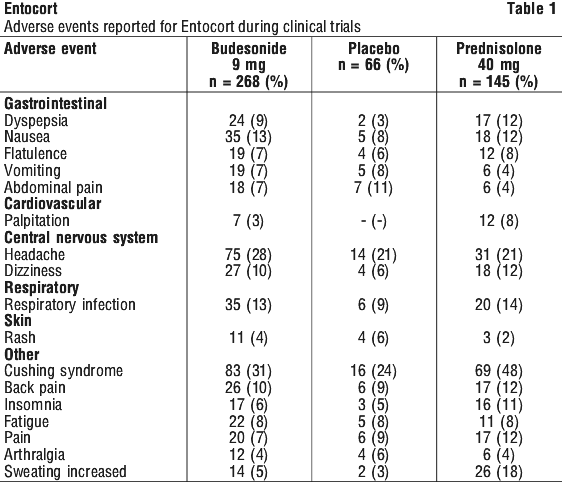
Data from three controlled clinical trials including Entocort 9 mg (n=268), prednisolone 40 mg (n=145) and placebo (n=66) showed no statistically significant differences in frequency for any adverse events when comparing the Entocort 9 mg group and placebo (see Table 1).
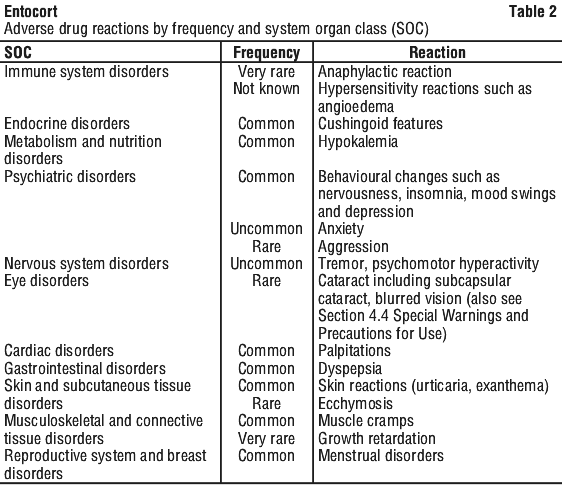
Tabulated list of adverse reactions. The following suspected adverse reactions is based on clinical trials and/or spontaneous post-marketing reports.
The following definitions apply to the incidence of undesirable effects: very common (≥ 1/10); common (≥ 1/100 to < 1/10); uncommon (≥ 1/1,000 to < 1/100); rare (≥ 1/10,000 to < 1/1,000); very rare (< 1/10,000); not known (cannot estimate from the available data). See Table 2.
Long term experience with Entocort is limited. Although not reported during short term trials Entocort, the possible occurrence of adverse effects typical of glucocorticosteroids, such as osteoporosis, diabetes, cataracts must be considered.
Reporting suspected adverse effects. Reporting suspected adverse reactions after registration of the medicinal product is important. It allows continued monitoring of the benefit-risk balance of the medicinal product. Healthcare professionals are asked to report any suspected adverse reactions at www.tga.gov.au/reporting-problems.
4.9 Overdose
Acute overdosage with Entocort, even in excessive doses, is not expected to be a clinical problem. When used chronically in excessive doses systemic corticosteroid effects such as hypercorticism and adrenal suppression as well as osteoporosis may appear. If such changes occur the dosage of Entocort should be discontinued consistent with accepted procedures for discontinuing prolonged oral therapy with systemic steroids.
For information on the management of overdose, contact the Poisons Information Centre on 131126 (Australia).
5 Pharmacological Properties
5.1 Pharmacodynamic Properties
Mechanism of action. Studies in animals and humans have shown an advantageous ratio between topical anti-inflammatory activity and systemic glucocorticoid effect over a wide dose range. This is explained by the extensive first-pass hepatic degradation of budesonide after systemic absorption, approximately 85-90%, in combination with the low potency of formed metabolites. The exact mechanism of action of budesonide in the treatment of Crohn's disease is not fully understood. Anti-inflammatory actions, such as blocking the inflammatory cell influx and inhibition of inflammatory mediator release by inhibition of the arachidonic acid pathway, are probably important. The intrinsic potency of budesonide, measured as affinity to the glucocorticoid receptor, is about 15 times higher than that of prednisolone.
Entocort modified release capsules 9 mg have been shown in clinical pharmacology studies and controlled clinical trials to have equal efficacy, but less effect on the hypothalamus-pituitary-adrenal (HPA) axis and inflammatory markers than prednisolone 40 mg in the treatment of Crohn's disease.
Entocort in studies of up to 8 weeks produced a dose dependent suppression of morning plasma cortisol, on 24-hour plasma cortisol (AUC 0-24 h) and on 24-hour urine cortisol, however, at the recommended dose of 9 mg once daily this effect was significantly less than that seen with prednisolone 20-40 mg daily. ACTH tests have shown that Entocort, compared with prednisolone, have less impact on adrenal function. In one study, adrenal dysfunction, as measured by short ACTH test, was seen in 58% of patients on 9 mg Entocort versus 84% on 40 mg prednisolone. The long-term effect of Entocort on bone density and growth has not been studied in patients with Crohn's disease. In a 5 day study in healthy volunteers, 9 mg and 15 mg doses of Entocort were shown to have a similar suppressant effect on osteocalcin levels as 20 mg prednisolone.
Clinical trials. A dose-finding study (n = 258) conducted over 12 weeks demonstrated that the lowest effective dose for inducing remission in active ileal or ileocaecal Crohn's disease with budesonide was 9 mg. The recommended dosage of 9 mg once daily has been compared with prednisolone 40 mg for the efficacy of inducing remission in two other studies of equal size (n = 176 and 177, respectively). In one study, Entocort was significantly slower at inducing remission with a median time of 29 days to remission compared to 16 days for prednisolone 40 mg. Another study showed Entocort was faster at reaching remission compared to prednisolone, with a median time of 17 days for Entocort 9 mg and 28 days for prednisolone 40 mg. The percentage of patients in remission after 8 weeks' treatment showed no statistically significant differences in either of the two studies. In one study the remission rate in the Entocort group was 52% compared with 65% for prednisolone, while in the other study the remission rate in both groups was 60%. The overall incidence of glucocorticosteroid associated side effects was statistically significantly lower with Entocort. In one study (n = 178) the incidence of glucocorticosteroid side effects was 50% for 9 mg Entocort and 59% for 40 mg prednisolone. In another study (n = 176) the corresponding figures were 33% for 9 mg Entocort and 55% for 40 mg prednisolone.
No clinical studies have been conducted in children or the elderly.
5.2 Pharmacokinetic Properties
Absorption. After oral dosing of plain micronised budesonide, absorption is rapid and seems to be complete. Following oral dosing of Entocort modified release capsules 9 mg, taken immediately before breakfast, mean maximum plasma concentration is approximately 5-10 nanomol/L (Cmax) at 3-5 hours (Tmax). Systemic availability in healthy subjects is approximately 10%, the same as after oral dosing of plain micronised budesonide, which indicates absorption is complete.
While Entocort modified release capsules have equivalent systemic absorption to plain budesonide capsules, it has a longer Tmax, due to its gastric-acid resistant, prolonged release properties. In a pharmacokinetic study in healthy volunteers, the absorption of budesonide in the targeted area, the ileum and ascending colon, was 58% and 34%, respectively, for Entocort modified release capsules and capsules containing plain budesonide. Terminal ileal and ascending colon absorption in patients with Crohn's disease was more variable (range 3-84%; mean 42.5%).
Following a single dose of Entocort modified release capsules in patients with active Crohn's disease, systemic availability is about 20%. After repeated dosing for 8 weeks, the systemic availability decreases but remains above that seen in healthy subjects.
Distribution. The volume of distribution of budesonide in adult man is approximately 3 L/kg indicating a high tissue affinity. Plasma protein binding averages 85-90% in humans.
Metabolism. Budesonide is extensively biotransformed by first-pass hepatic degradation (~90% in man) to more polar metabolites of low glucocorticosteroid potency. The glucocorticosteroid activity of the major metabolites, 6β-hydroxybudesonide and 16α-hydroxy-prednisolone, is less than 1% of that of budesonide.
Excretion. Excretion of budesonide given as Entocort modified release capsules is rate limited by its absorption, and the terminal half-life averages 4 hours.
5.3 Preclinical Safety Data
Genotoxicity. The mutagenic potential of budesonide was evaluated in 6 different test systems. No mutagenic or clastogenic effects of budesonide were found.
Carcinogenicity. The carcinogenic potential of budesonide has been evaluated in mouse and rat at oral doses up to 200 and 50 microgram/kg/day, respectively. No oncogenic effect was noted in the mouse. One study indicated an increased incidence of brain gliomas in male Sprague-Dawley rats given budesonide, however the results were considered equivocal. Further studies performed in male Sprague-Dawley and Fischer rats showed that the incidence of gliomas in the budesonide treated rats was low and did not differ from that in the reference glucocorticoid groups or the controls. It has been concluded that treatment with budesonide does not increase the incidence of brain tumours in the rat.
In male rats dosed with 10, 25 and 50 microgram/kg/day, those receiving 25 and 50 microgram/kg/day showed an increased incidence of primary hepatocellular tumours. This was observed in all three steroid groups (budesonide, prednisolone, triamcinolone acetonide) in a repeat study in male Sprague-Dawley rats thus indicating a class effect of corticosteroids.
6 Pharmaceutical Particulars
6.1 List of Excipients
The excipients are ethylcellulose, tributyl acetylcitrate, methacrylic acid copolymer, triethyl citrate, dimeticone 1000, polysorbate 80, purified talc and Sugar Spheres (ARTG PI No: 2535).
The capsule shell is made from gelatin, titanium dioxide, iron oxide black, iron oxide red, iron oxide yellow, colloidal anhydrous silica, liquid paraffin and sodium lauryl sulfate.
The capsules are printed with TekPrint SW-9008 Black Ink (ARTG PI No. 2328).
6.2 Incompatibilities
Incompatibilities were either not assessed or not identified as part of the registration of this medicine.
6.3 Shelf Life
In Australia, information on the shelf life can be found on the public summary of the Australian Register of Therapeutics Goods (ARTG). The expiry date can be found on the packaging.
6.4 Special Precautions for Storage
Store below 30°C. Replace the cap firmly after use.
6.5 Nature and Contents of Container
A pack of 90 modified release capsules are provided in a high-density polyethylene bottle, with a polypropylene screw cap including a desiccant. The modified release capsules should be dispensed and stored in the original container.
6.6 Special Precautions for Disposal
In Australia, any unused medicine or waste material should be disposed of in accordance with the local requirements.
6.7 Physicochemical Properties
Budesonide is a white to off white powder, freely soluble in chloroform, sparingly soluble in ethanol and practically insoluble in water and heptane. Budesonide is a mixture of two epimeric forms, epimer A and epimer B, in a 50:50 ratio. The epimer mixture melts with decomposition between 224°C and 231.5°C.
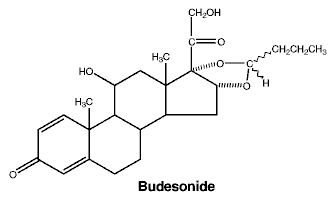
The active ingredient, budesonide, is a non-halogenated glucocorticoid structurally related to 16α hydroxyprednisolone. The chemical name is 16α, 17α-22R, S- propylmethylenedioxy-pregna-1,4-diene-11β, 21-diol-3, 20-dione.
Chemical structure. Budesonide.
7 Medicine Schedule (Poisons Standard)
Prescription only medicine (Schedule 4).
Date of First Approval
16 January 1998
Date of Revision
07 January 2026
Summary Table of Changes

Reasonable care is taken to provide accurate information at the time of creation. This information is not intended as a substitute for medical advice and should not be exclusively relied on to manage or diagnose a medical condition. The Australian Commission on Safety and Quality in Health Care disclaims all liability (including for negligence) for any loss, damage, injury or any other negative effects resulting from reliance on or use of this information. Read our full disclaimer. This website uses cookies. Read our privacy policy.