
Fluzone High-Dose
Brand Information
| Brand name | Fluzone High-Dose |
| Active ingredient | Influenza virus geriatric vaccine, split virion, trivalent (inactivated) |
| Schedule | S4 |
Consumer Medicine Information (CMI) leaflet
Please read this leaflet carefully before you start using the Fluzone High-Dose.
Summary CMI
Fluzone® High-Dose
Consumer Medicine Information (CMI) summary
The full CMI on the next page has more details. If you are worried about using this vaccine, speak to your doctor, nurse or pharmacist.
1. Why am I using Fluzone High-Dose?
Fluzone High-Dose is a vaccine. This vaccine is recommended to help protect against influenza (flu) and associated pneumonia in persons aged 60 years and older.
For more information, see Section 1. Why am I using Fluzone High-Dose? in the full CMI.
2. What should I know before I am given Fluzone High-Dose?
Do not use if you have ever had an allergic reaction to Fluzone High-Dose or any of the ingredients listed at the end of the CMI.
Talk to your doctor if you have any other medical conditions or take any other medicines.
For more information, see Section 2. What should I know before I am given Fluzone High-Dose? in the full CMI.
3. What if I am taking other medicines?
Some medicines may interfere with Fluzone High-Dose and affect how it works.
A list of these medicines is in Section 3. What if I am taking other medicines? in the full CMI.
4. How is Fluzone High-Dose given?
Fluzone High-Dose is administered to you by a health care professional.
More instructions can be found in Section 4. How is Fluzone High-Dose given? in the full CMI.
5. What should I know about being given Fluzone High-Dose?
| Things you should do | Tell your doctor, nurse or pharmacist if you notice
|
| Looking after your vaccine | Fluzone High-Dose is usually stored in the doctor's surgery or clinic, or at the pharmacy. However, if you need to store Fluzone High-Dose:
|
For more information, see Section 5. What should I know about being given Fluzone High-Dose? in the full CMI.
6. Are there any side effects?
Serious side effects can include severe allergic reactions (anaphylaxis) including swelling of the face, lips, tongue, throat or any other part of the body and which may cause difficulty in swallowing or breathing (angioedema). See your doctor immediately if you notice this.
Common local side effects include pain, redness, swelling, hardness and bruising at the injection site. Common systemic side effects include muscle aches, feeling unwell, headache, shivering, nausea and tiredness.
For more information, including what to do if you have any side effects, see Section 6. Are there any side effects? in the full CMI.
Full CMI
Fluzone® High-Dose
Active ingredient(s): Inactivated Trivalent Influenza Vaccine (Split Virion) Influenza Virus Haemagglutinin
Consumer Medicine Information (CMI)
This leaflet provides important information about using Fluzone High-Dose. You should also speak to your doctor, nurse or pharmacist if you would like further information or if you have any concerns or questions about using Fluzone High-Dose.
Where to find information in this leaflet:
1. Why am I using Fluzone High-Dose?
2. What should I know before I am given Fluzone High-Dose?
3. What if I am taking other medicines?
4. How is Fluzone High-Dose given?
5. What should I know about being given Fluzone High-Dose?
6. Are there any side effects?
7. Product details
1. Why am I using Fluzone High-Dose?
Fluzone High-Dose contains the active ingredient influenza virus haemagglutinin. Fluzone High-Dose is a vaccine. Vaccines are used to help protect you against infectious diseases.
Fluzone High-Dose is recommended to help protect you against influenza (flu) and associated pneumonia in persons aged 60 years and older. Influenza (flu) is a disease caused by different strains of the influenza virus. The influenza virus can spread rapidly, especially in homes or institutions, where it can be very easy for someone to catch flu and spread the disease.
Fluzone High-Dose works by helping the body to make antibodies. These antibodies help the body to recognise the flu virus and help prevent the infection. It takes a few weeks for the body to produce these antibodies.
Fluzone High-Dose will only help to prevent flu if it is caused by one of the three strains of virus contained in the vaccine or other strains closely related to them. Fluzone High-Dose will not prevent flu if you are incubating the disease before vaccination or if it is caused by another virus.
Previous injections of flu vaccine are unlikely to give you protection against the current strains of flu virus most common this year, so you will need to receive a vaccine against flu every year especially if you are at risk.
Your doctor will be able to recommend the best time for you to be vaccinated. Flu is present every year, even when epidemics or outbreaks are not reported.
2. What should I know before I am given Fluzone High-Dose?
Warnings
Do not use Fluzone High-Dose if:
- you are allergic to the active ingredients, or any of the ingredients listed at the end of this leaflet
- you have ever had a severe allergic reaction after getting any flu vaccine.
Always check the ingredients to make sure you can receive this vaccine.
Check with your doctor if you:
- have or have had Guillain-Barré syndrome (severe muscle weakness) after getting a flu vaccine
- have or have had an immune response problem because the immune response to the vaccine may be diminished
- have bleeding problems or bruise easily
- have an illness with a high or moderate temperature or an acute illness, the vaccination should be postponed until after you have recovered.
After vaccination, you may be at risk of developing certain side effects. It is important you understand these risks and how to monitor for them. See additional information under Section 6. Are there any side effects?
3. What if I am taking other medicines?
Tell your doctor, nurse or pharmacist if you are taking any other medicines, including any medicines, vitamins or supplements that you buy without a prescription from your pharmacy, supermarket or health food shop.
Some medicines may interfere with Fluzone High-Dose and affect how it works.
Tell your doctor, nurse or pharmacist if you are taking medicines that may reduce your immune response such as corticosteroids (for example prednisone), medicines used to treat cancer (chemotherapy), radiotherapy or other medicines affecting the immune system.
Having other vaccines
Your doctor will advise you if Fluzone High-Dose may be given with another vaccine.
Check with your doctor, nurse or pharmacist if you are not sure about what medicines, vitamins or supplements you are taking and if these affect Fluzone High-Dose.
4. How is Fluzone High-Dose given?
Fluzone High-Dose is administered by your doctor, nurse or pharmacist as a single 0.5 mL injection injected into the muscles of the upper arm.
5. What should I know about being given Fluzone High-Dose?
Things you should do
Call your doctor straight away if you notice:
- signs of allergic reactions that may include difficulty breathing, shortness of breath, swelling of the face, lips, throat or tongue, cold, clammy skin, palpitations, dizziness, weakness, fainting, rash or itching.
Driving or using machines
Do not drive or use machines if you are feeling unwell after vaccination. Wait until any effects of the vaccine have worn off before you drive or use machines.
Looking after your vaccine
Fluzone High-Dose is usually stored in the doctor's surgery or clinic, or at the pharmacy. However, if you need to store Fluzone High-Dose:
- Keep Fluzone High-Dose in the original packaging until it is time for it to be given.
- Keep it in the refrigerator, store at 2°C to 8°C. Do not freeze Fluzone High-Dose.
Do not use Fluzone High-Dose after the expiry date which is stated on the carton after EXP.
Do not use Fluzone High-Dose if the packaging is torn or shows signs of tampering.
Keep it where young children cannot reach it.
Getting rid of any unwanted vaccine
If you no longer need to use this vaccine or it is out of date, take it to any pharmacy for safe disposal.
Do not use this vaccine after the expiry date.
6. Are there any side effects?
All medicines can have side effects. If you do experience any side effects, most of them are minor and temporary. However, some side effects may need medical attention.
See the information below and, if you need to, ask your doctor, nurse or pharmacist if you have any further questions about side effects.
Less serious side effects
| Less serious side effects | What to do |
At the injection site:
| Speak to your doctor if you have any of these less serious side effects and they worry you. |
Serious side effects
| Serious side effects | What to do |
| Call your doctor straight away, or go straight to the Emergency Department at your nearest hospital if you notice any of these serious side effects. |
Tell your doctor, nurse or pharmacist if you notice anything else that may be making you feel unwell.
Other side effects not listed here may occur in some people.
Reporting side effects
After you have received medical advice for any side effects you experience, you can report side effects to the Therapeutic Goods Administration online at www.tga.gov.au/reporting-problems. By reporting side effects, you can help provide more information on the safety of this vaccine.
Always make sure you speak to your doctor, nurse or pharmacist before you decide to stop taking any of your medicines.
7. Product details
What Fluzone High-Dose contains
| Active ingredient (main ingredient) | Influenza virus haemagglutinin of the following strains
|
| Other ingredients (inactive ingredients) | sodium chloride, dibasic sodium phosphate, monobasic sodium phosphate, octoxinol-9, water for injection, and traces of formaldehyde. |
| Potential allergens | Fluzone High-Dose contains less than 1 microgram ovalbumin (egg protein) per dose. |
Do not receive this vaccine if you are allergic to any of these ingredients.
Fluzone High-Dose does not contain any antibiotics or preservative.
Fluzone High-Dose syringes are not made with natural rubber latex.
What Fluzone High-Dose looks like
Fluzone High-Dose is supplied as single-dose, 0.5mL pre-filled syringe without needles (AUST R 473685)
Who distributes Fluzone High-Dose
Distributed in Australia by:
sanofi-aventis australia pty ltd
12 - 24 Talavera Road
Macquarie Park NSW 2113
Australia
Freecall:1800 818 806
Email: medinfo.australia@sanofi.com
This leaflet was prepared in January 2026.
fluz-hd-ccdsv4-cmiv2-02jan26
Brand Information
| Brand name | Fluzone High-Dose |
| Active ingredient | Influenza virus geriatric vaccine, split virion, trivalent (inactivated) |
| Schedule | S4 |
MIMS Revision Date: 01 March 2026
1 Name of Medicine
Inactivated trivalent influenza vaccine, split virion (Influenza virus haemagglutinin).
2 Qualitative and Quantitative Composition
Fluzone High-Dose for intramuscular injection is an inactivated influenza virus vaccine. It contains 180 micrograms (microgram) influenza virus haemagglutinin (HA) per 0.5 mL dose in the recommended ratio of 60 microgram HA of each of the three strains recommended for the 2026 influenza season:
A/Missouri/11/2025 (H1N1) pdm09-like strain (A/Switzerland/6849/2025, IVR-278);
A/Singapore/GP20238/2024 (H3N2)-like strain (A/Singapore/GP20238/2024, IVR-277);
B/Austria/1359417/2021-like strain (B/Michigan/01/2021, wild type).
The type and amount of viral antigens contained in Fluzone High-Dose conform to the annual requirements of the Australian Influenza Vaccine Committee (AIVC) recommendations for the season.
Fluzone High-Dose is prepared from influenza viruses propagated in embryonated chicken eggs and inactivated with formaldehyde. The influenza virus is concentrated and purified, and is then chemically disrupted to produce a "split virus". The split virus is further purified by diafiltration and diluted to appropriate concentration. Antigens from the three strains included in the vaccine are produced separately and then combined to make the trivalent formulation.
For the full list of excipients, see Section 6.1 List of Excipients.
Fluzone High-Dose is presented in prefilled syringes that are not made with natural rubber latex.
3 Pharmaceutical Form
Fluzone High-Dose suspension for injection is a colourless opalescent liquid.
4 Clinical Particulars
4.1 Therapeutic Indications
Fluzone High-Dose is indicated for active immunisation for the prevention of influenza disease. Fluzone High-Dose is indicated for use in persons 60 years of age and older.
The use of Fluzone High-Dose should be based on official recommendations.
See Section 5.1 Pharmacodynamic Properties, Clinical trials for information on the effects on influenza associated complications.
4.2 Dose and Method of Administration
Fluzone High-Dose should be given in accordance with the national recommendation as per the current Immunisation Handbook.
The recommended dosage of Fluzone High-Dose is 1 dose of 0.5 mL, annually, in persons 60 years of age and older.
Administration should be carried out by intramuscular route.
Injections of Fluzone High-Dose should be administered intramuscularly, preferably in the deltoid muscle. The vaccine should not be injected into the gluteal region, or into areas where there may be a major nerve trunk.
For needle size and length, refer to the national recommendations as per the current Immunisation Handbook.
Do not administer this product intravenously.
Shake before use to distribute suspension uniformly before administration.
Parenteral drug products should be inspected visually for particulate matter and/or discoloration prior to administration whenever solution and container permit. If either of these conditions exists, the vaccine should not be administered.
The syringe is for single use only and must not be reused. Discard any remaining unused contents.
4.3 Contraindications
Fluzone High-Dose is contraindicated in anyone with a history of severe allergic reaction:
after previous administration of any influenza vaccine;
to any component of the vaccine (i.e. as defined under Section 2 Qualitative and Quantitative Composition; Section 6.1 List of Excipients). See Section 4.4 Special Warnings and Precautions for Use for individuals with egg allergy;
to a vaccine containing the same components.
4.4 Special Warnings and Precautions for Use
Do not administer by intravascular injection: ensure that the needle does not penetrate a blood vessel.
Hypersensitivity. Prior to any vaccine injection, all known precautions should be taken to prevent hypersensitivity reactions. This includes a review of the individual's prior vaccination history with respect to possible hypersensitivity to the vaccine or similar vaccines.
Adrenaline injection (1:1000) and other appropriate agents used for the control of immediate allergic reactions must be available to treat unexpected reactions (e.g. anaphylaxis). As with all injectable vaccines, appropriate medical treatment and supervision should always be readily available in the event of severe allergic reaction/anaphylactic reaction following administration of Fluzone High-Dose.
Each dose may contain traces of formaldehyde, ovalbumin, and octoxinol-9, which are used during vaccine production. Caution should be exercised when the vaccine is administered to individuals with hypersensitivity to any components of the vaccine including manufacturing residuals.
Individuals with egg allergy of any severity may be vaccinated:
Individuals who report having had an allergic reaction to eggs involving only symptoms of urticaria (hives) may receive the vaccine;
Individuals who report having had a severe allergic reaction/anaphylaxis (e.g. angioedema, respiratory distress, light headedness, or recurrent emesis, or who required epinephrine or another emergency medical intervention) to egg should have the influenza vaccine administered in an inpatient or outpatient medical setting (including, but not necessarily limited to, hospitals, clinics, health departments, and physician offices). Vaccine administration should be supervised by a healthcare provider who is able to manage severe allergic reactions.
Refer to the current Immunisation Handbook for more information.
Neurological disorders. Recurrence of Guillain-Barre syndrome (GBS) has been temporally associated with the administration of influenza vaccine. If GBS has occurred within 6 weeks of any previous influenza vaccination, the decision to give Fluzone High-Dose should be based on careful consideration of the potential benefits and risks. Refer to the current Immunisation Handbook for more information.
Immunosuppressive treatments or conditions. The immunogenicity of Fluzone High-Dose may be reduced by immunosuppressive treatment or in individuals with immune deficiency syndromes. In such cases it is recommended to postpone the vaccination until after the immunosuppressive treatment or resolution of the immunosuppressive condition, if feasible. Vaccination of individuals with chronic immunodeficiencies is recommended even though the antibody response may be limited.
Protection. As with any vaccine, vaccination with Fluzone High-Dose may not protect 100% of recipients.
Influenza virus is remarkably unpredictable in that significant antigenic changes may occur from time to time. At this time, current influenza virus vaccines are not effective against all possible influenza strains. Protection is limited to those strains of virus from which the vaccine is prepared or to closely related strains.
Bleeding disorder. Because any intramuscular injection can cause an injection-site haematoma in individuals with any bleeding disorder, such as haemophilia or thrombocytopaenia, or in individuals on anticoagulant therapy, intramuscular injections with Fluzone High-Dose should not be administered to such individuals unless the potential benefits outweigh the risk of administration. If the decision is made to administer any product by intramuscular injection to such individuals, it should be given with caution, with steps taken to avoid the risk of haematoma formation following injection.
Febrile or acute disease. Vaccination should be postponed in case of a moderate or severe acute disease with or without fever; however, a mild disease should not usually be a reason to postpone vaccination.
Syncope. Syncope can occur following, or even before, any vaccination as a psychogenic response to the needle injection. Procedures should be in place to prevent falling and injury and to manage syncope.
Use in the elderly. Fluzone High-Dose is intended for adults 60 years of age and over (see Section 5.1 Pharmacodynamic Properties, Clinical trials).
Paediatric use. Safety and effectiveness of Fluzone High-Dose in children less than 18 years of age have not been established.
Effects on laboratory tests. Interference of Fluzone High-Dose with laboratory and/or diagnostic tests has not been studied.
Following influenza vaccination, false positive results in serology tests using the ELISA method to detect antibodies against HIV1, hepatitis C, and especially HTLV1 have been observed. An appropriate Western Blot test should be used to confirm or disprove the results of the ELISA test. The transient false-positive reactions could be due to a non-specific IgM response induced by the vaccine.
4.5 Interactions with Other Medicines and Other Forms of Interactions
Fluzone High-Dose should not be mixed with any other vaccine in the same syringe or vial.
Co-administration of Fluzone High-Dose with an investigational booster 100 microgram dose of COVID-19 mRNA vaccine (nucleoside modified/elasomeran) has been evaluated in a limited number of participants in a descriptive clinical study (see Section 4.8 Adverse Effects (Undesirable Effects); Section 5.1 Pharmacodynamic Properties).
If Fluzone High-Dose is to be given at the same time as another injectable vaccine, the vaccines should always be administered at different injection sites.
If the vaccine is used in individuals deficient in producing antibodies due to immunosuppressive therapy, the expected immune response may not be obtained.
4.6 Fertility, Pregnancy and Lactation
Effects on fertility. Fluzone High-Dose has not been evaluated for possible effects on human fertility.
Use in pregnancy. (Category B2)
Animal reproduction studies have not been conducted with Fluzone High-Dose. It is also not known whether Fluzone High-Dose can cause fetal harm when administered to a pregnant woman or can affect reproduction capacity.
Data on the use of this vaccine in pregnant women are limited. Fluzone High-Dose should be given to pregnant women only if clearly needed and following an assessment of the risks and benefits.
Use in lactation. There are no available data on the presence of Fluzone High-Dose in human milk, effects on milk production, or the effects on the breastfed infant. No conclusions can be drawn regarding whether or not Fluzone High-Dose is safe for use during breastfeeding. Fluzone High-Dose should be used during breastfeeding only if the potential benefits to the mother outweigh the potential risks, including those to the breastfed child.
4.7 Effects on Ability to Drive and Use Machines
No studies on the effects on the ability to drive or use machines have been performed.
4.8 Adverse Effects (Undesirable Effects)
Summary of the safety profile. Fluzone High-Dose is identical to Fluzone High-Dose Quadrivalent (inactivated quadrivalent influenza vaccine, QIV HD) with the only difference of containing antigen from one less influenza B strain. The safety profile of QIV-HD is therefore relevant to the use of Fluzone High-Dose.
The safety of QIV-HD was assessed in a pooled analysis of two clinical trials (QHD00013 and QHD00011) in which 2549 adults from 60 years of age and older (378 adults from 60 to 64 years of age and 2171 adults 65 years of age and older) received QIV-HD.
The most frequently reported adverse reaction after vaccination was injection site pain reported by 42.6% of study participants followed by myalgia (23.8%), headache (17.3%), and malaise (15.6%). Most of these reactions occurred and resolved within three days of vaccination. The intensity of most of these reactions was mild to moderate.
Overall, adverse reactions were generally less frequent in participants aged 65 years and older than in participants aged 60 to 64 years.
Reactogenicity of QIV-HD was slightly increased as compared to the standard dose vaccine, but no major difference in intensity was observed.
The safety of QIV-HD was evaluated in a descriptive study (QHD00028) in which subjects received QIV-HD together with an investigational booster 100 microgram dose of COVID-19 mRNA vaccine (nucleoside modified) (n = 100), QIV-HD only (n = 92) or an investigational booster 100 microgram dose of COVID-19 mRNA vaccine (nucleoside modified) only (n = 104). The frequency and severity of local and systemic adverse reactions was similar in subjects who were co-administered with QIV-HD and licensed COVID-19 mRNA vaccine and subjects administered with a booster dose of licensed COVID-19 mRNA vaccine.
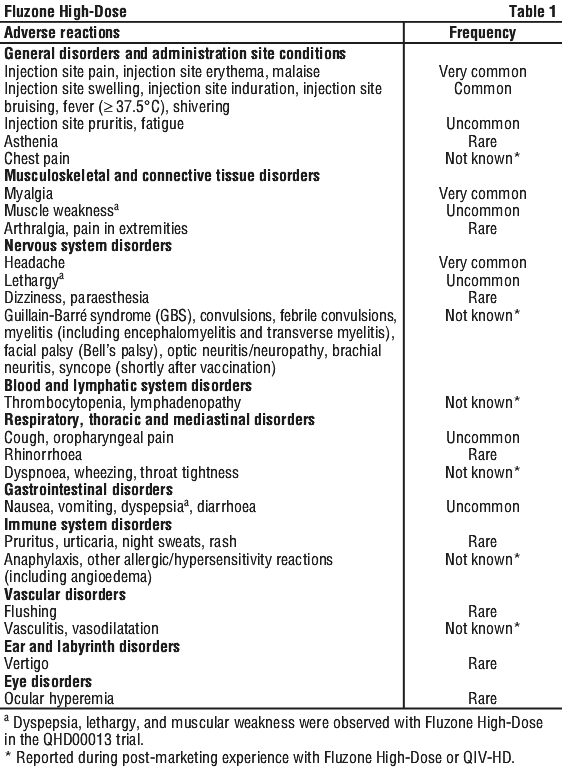
Tabulated list of adverse reactions. Table 1 summarizes the frequencies of adverse reactions that were recorded following vaccination with QIV-HD and adverse reactions reported during clinical development and post-marketing experience with the trivalent and the quadrivalent influenza high-dose vaccines.
Adverse events are ranked under headings of frequency using the following convention: very common (≥ 1/10); common (≥ 1/100 to < 1/10); uncommon (≥ 1/1,000 to < 1/100); rare (≥ 1/10,000 to < 1/1,000); very rare (< 1/10,000); not known (cannot be estimated from available data).
4.9 Overdose
Cases of administration of more than the recommended dose have been reported Fluzone High-Dose associated with inadvertent use in the population below 60 years of age due to medication error. When adverse reactions were reported, the information was consistent with the known safety profile of Fluzone High-Dose.
For information on the management of overdose, contact the Poison Information Centre on 131126 (Australia).
5 Pharmacological Properties
5.1 Pharmacodynamic Properties
Pharmacotherapeutic group: Influenza vaccine, ATC code: J07BB.
Mechanism of action. Influenza illness and its complications like primary viral or secondary bacterial pneumonia, serious cardiac events, and neurologic complications as well as exacerbation of underlying conditions like congestive heart failure, chronic obstructive pulmonary disease (COPD), asthma, and diabetes follow infection with influenza viruses. Global surveillance of influenza identifies yearly antigenic variants. For example, since 1977, antigenic variants of influenza A (H1N1 and H3N2) viruses and influenza B viruses have been in global circulation. Specific levels of hemagglutination inhibition (HAI) antibody titre post-vaccination with inactivated influenza virus vaccines have not been correlated with protection from influenza virus infection.
Antibodies against one influenza virus type or subtype confer limited or no protection against another. Furthermore, antibodies to one antigenic variant of influenza virus might not protect against a new antigenic variant of the same type or subtype. Frequent development of antigenic variants through antigenic drift is the virological basis for seasonal epidemics and the reason for the usual change of one or more strains in each year's influenza vaccine. Therefore, influenza vaccines are standardized to contain the haemagglutinins of influenza virus strains representing the influenza viruses likely to be circulating in the upcoming season.
Annual influenza vaccination is recommended because immunity during the year after vaccination declines and because circulating strains of influenza virus change from year to year.
Clinical trials. Clinical efficacy. FIM12. FIM12 was a multi-centre, double-blind efficacy trial conducted in the US and Canada in which adults 65 years of age and older were randomised (1:1) to receive either Fluzone High-Dose or a standard dose influenza vaccine. The study was conducted over two influenza seasons (2011-2012 and 2012-2013) to assess the occurrence of laboratory-confirmed influenza caused by any influenza viral type/subtype in association with influenza-like illness (ILI) as the primary endpoint.
Participants were monitored for the occurrence of a respiratory illness by both active and passive surveillance, starting 2 weeks post-vaccination for approximately 7 months. After an episode of respiratory illness, nasopharyngeal swab samples were collected for analysis; attack rates and vaccine efficacy were calculated. See Table 2.
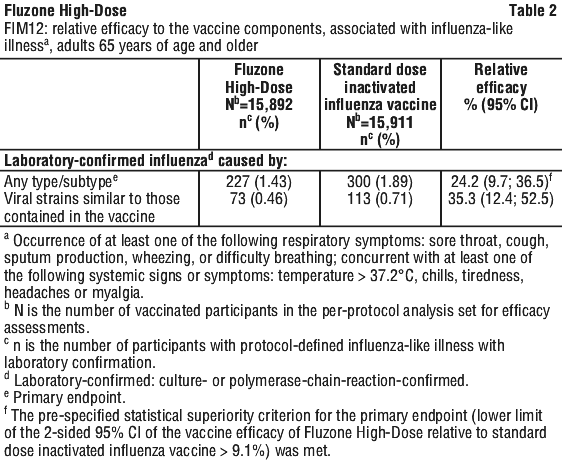
For both years combined, there was a significant reduction in the total number of serious cardiorespiratory events (relative vaccine efficacy (rVE), 17.7% [95% CI: 6.6%-27.4%]) among Fluzone High-Dose recipients compared to standard dose influenza vaccine recipients, including a significant reduction in serious pneumonia events (rVE, 39.8% [95% CI: 19.3%-55.1%]). In addition, a borderline significant reduction in all-cause hospitalisation (rVE, 6.9%; 95% CI: 0.5%-12.8%) was observed. It is noted that most of the reductions in the Fluzone High-Dose group were observed in Year 2 with no significant differences observed in Year 1.
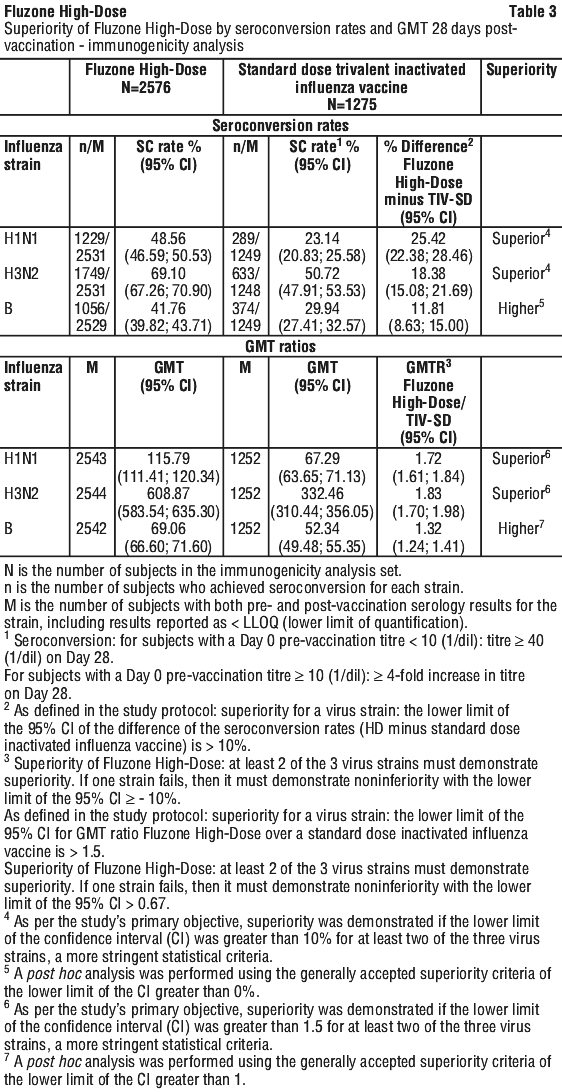
Immunogenicity. FIM05. FIM05 was a multi-centre, randomised, double-blind controlled trial conducted in the US in adults 65 years and older. The objective was to demonstrate the superiority of Fluzone High-Dose over a standard dose inactivated influenza vaccine containing 15 microgram of each strain (2 A strains and 1 B strain), as assessed by seroconversion rates and GMTs.
The immunogenicity results of the FIM05 Phase 3 study on Fluzone High-Dose are summarised in Table 3.
QHD00013. QHD00013 was a randomised, active-controlled, modified double-blind Phase III clinical trial conducted in the US (NCT 03282240) in adults 65 years and older.
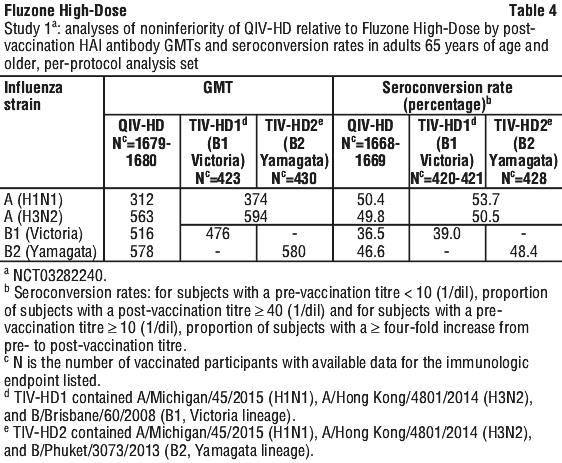
The objective was to demonstrate the noninferiority of QIV-HD over Fluzone High-Dose, as assessed by HAI (hemagglutinin inhibition) geometric mean antibody titres (GMTs) at Day 28 and seroconversion rates.
A total of 2670 adults from 65 years of age were randomised to receive either one dose of QIV HD or one dose of Fluzone High-Dose (one of two formulations of comparator vaccine [TIV HD1 or TIV HD2]); each Fluzone High-Dose formulation contained a B strain that corresponds to one of the two B strains in QIV-HD (either a B strain of the Yamagata lineage or a B strain of the Victoria lineage). The mean age was 72.9 years in the QIV-HD group (ranged from 65 through 100 years) and the mean age was 73.0 in the Fluzone High-Dose group (ranged from 65 through 95 years). 35.4% of participants in the QIV-HD group and 35.8% of participants in the Fluzone High-Dose group were 75 years of age or older.
The immunogenicity results of QIV-HD in the QHD00013 study are summarised in Table 4.
QHD00011. The immunogenicity of QIV-HD is relevant to Fluzone High-Dose because both vaccines are manufactured using the same process and have overlapping compositions.
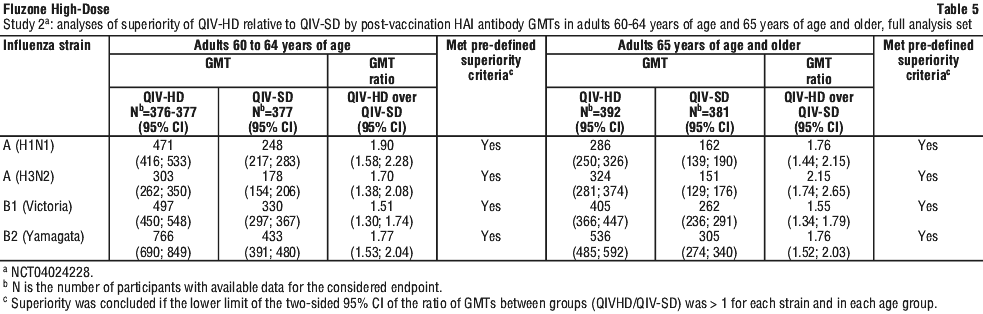
QHD00011 was a randomised, active-controlled, modified double-blind, Phase III, clinical trial conducted in Europe in adults 60 years and older to demonstrate the superiority of QIV HD over QIV-SD for all strains, as assessed by HAI (hemagglutinin inhibition) geometric mean antibody titers (GMTs) at Day 28 in adults 60 to 64 years of age and in adults 65 years of age and older.
A total of 1539 adults (760 adults 60 to 64 years of age and 779 adults 65 years of age and older) were randomised to receive either one dose of QIV-HD or one dose of QIV-SD. See Table 5.
Effectiveness of Fluzone High-Dose in adults 65 years of age and older. Randomised clinical trials. A cluster-randomised, controlled clinical trial in United States nursing homes assessed the relative effect of Fluzone High-Dose versus a standard dose of influenza vaccine in hospitalisations among 53,008 individuals during the 2013-2014 influenza season.
During the 2013-2014 season, when adjusting for the pre-specified patient and facility characteristics, the incidence of respiratory-related hospital admissions (primary objective) was significantly reduced in facilities where residents received Fluzone High-Dose compared with those that received standard dose influenza vaccines by 12.7% (adjusted risk ratio [ARR] 0.873, 95% CI 0.776 to 0.982, p = 0.023). Moreover, with respect to secondary endpoints, Fluzone High-Dose reduced hospital admissions for pneumonia by 20.9% (ARR 0.791, 95% CI: 0.267 to 0.953, p = 0.013) and all-cause hospital admissions by 8% (ARR 0.915, 95% CI: 0.863 to 0.970, p = 0.0028).
Observational studies. Several retrospective studies, over 11 influenza seasons and in more than 45 million individuals 65 years of age and older, confirmed the superior protection offered by Fluzone High-Dose compared to standard dose influenza vaccines against complications of influenza such as pneumonia hospitalisation (13.4% (95% CI: 7.3% to 19.2%, p < 0.001)), cardio-respiratory hospitalisations 17.9% (95% CI :14.7% to 21%, p < 0.001) and all cause hospitalisation 7.8% (95% CI: 5.9% to 10.3%, p < 0.001); although the impact may vary per season.
Concomitant administration with COVID-19 mRNA vaccine (nucleoside modified). In a descriptive open-label clinical study (NCT04969276), healthy adults aged 65 years and older were divided in three groups: group 1 received QIV-HD alone (N = 92), group 2 (N = 100) received QIV-HD concomitantly with an investigational booster 100 microgram dose of COVID-19 mRNA vaccine (nucleoside modified) at least 5 months after the second dose of the primary series, group 3 (N = 104) received only the investigational booster 100 microgram dose of COVID-19 mRNA vaccine (nucleoside modified).
Co-administration resulted in no change to influenza vaccine immune responses as measured by hemagglutination inhibition (HAI) assay. Co-administration resulted in similar responses to COVID-19 mRNA vaccine, as assessed by an anti-spike IgG assay (see Section 4.5 Interactions with Other Medicines and Other Forms of Interactions; Section 4.8 Adverse Effects (Undesirable Effects)).
5.2 Pharmacokinetic Properties
No pharmacokinetic studies have been performed.
5.3 Preclinical Safety Data
Genotoxicity. Fluzone High-Dose has not been tested for genotoxic potential.
Carcinogenicity. Fluzone High-Dose has not been tested for carcinogenic potential.
6 Pharmaceutical Particulars
6.1 List of Excipients
Fluzone High-Dose contains sodium chloride, dibasic sodium phosphate, monobasic sodium phosphate, octoxinol-9 and water for injections as excipients.
Fluzone High-Dose may also contain traces of formaldehyde (≤ 140 microgram) and ovalbumin (≤ 1 microgram). Neither antibiotics nor preservative are used during manufacture.
6.2 Incompatibilities
In the absence of compatibility studies, this vaccine must not be mixed with other vaccine or medicinal products.
6.3 Shelf Life
12 months.
6.4 Special Precautions for Storage
Store at 2°C to 8°C (Refrigerate, Do not freeze). Discard if vaccine has been frozen.
6.5 Nature and Contents of Container
Fluzone High-Dose is available as a 0.5 mL single-dose, pre-filled syringe without needle. Pack of 5 syringes.
6.6 Special Precautions for Disposal
After use, any remaining vaccine and container must be disposed of safely, according to locally acceptable procedures.
7 Medicine Schedule (Poisons Standard)
S4 Prescription Only Medicine.
Date of First Approval
02 January 2026
Summary Table of Changes

Reasonable care is taken to provide accurate information at the time of creation. This information is not intended as a substitute for medical advice and should not be exclusively relied on to manage or diagnose a medical condition. The Australian Commission on Safety and Quality in Health Care disclaims all liability (including for negligence) for any loss, damage, injury or any other negative effects resulting from reliance on or use of this information. Read our full disclaimer. This website uses cookies. Read our privacy policy.