
FML
Brand Information
| Brand name | FML |
| Active ingredient | Fluorometholone |
| Schedule | S4 |
Consumer Medicine Information (CMI) leaflet
Please read this leaflet carefully before you start using the FML.
Summary CMI
FML®
Consumer Medicine Information (CMI) summary
The full CMI on the next page has more details. If you are worried about using this medicine, speak to your doctor or pharmacist.
1. Why am I using FML®?
FML® eye drops contain the active ingredient fluorometholone. FML® is used to treat inflammation (pain, swelling and redness) of the eye.
For more information, see Section 1. Why am I using FML®? in the full CMI.
2. What should I know before I use FML®?
Check the list of ingredients at the end of the CMI. Do not use FML® if you have ever had an allergic reaction to any of them.
Talk to your doctor before you use this medicine if he/she is not aware that you have any other medical conditions, use any other medicines, or are pregnant or plan to become pregnant or are breastfeeding.
For more information, see Section 2. What should I know before I use FML®? in the full CMI.
3. What if I am taking other medicines?
Some medicines may interfere with FML® and affect how it works, or FML® may interfere with other medicines and affect how they work.
A list of these medicines is in Section 3. What if I am taking other medicines? in the full CMI.
4. How do I use FML®?
Your doctor will tell you the number of drops to use, when to use FML® and how long to use it.
More instructions can be found in Section 4. How do I use FML®? in the full CMI.
5. What should I know while using FML®?
| Things you should do |
|
| Things you should not do |
|
| Driving or using machines |
|
| Drinking alcohol |
|
| Looking after your medicine |
|
For more information, see Section 5. What should I know while using FML®? in the full CMI.
6. Are there any side effects?
Eye infection, increased pressure in the eye(s), blurred vision or other changes to your vision, eye redness, swelling of the eye, eye lid or surrounding areas, itchy eye(s), eye pain, irritation, dilation of the pupil, eye discharge, watery eye(s), calcium deposit in the cornea the feeling of having something in the eye, droopy eyelids, changes to taste, itchy, red skin rash, delayed wound healing, severe allergic reaction.
For more information, including what to do if you have any side effects, see Section 6. Are there any side effects? in the full CMI.
Full CMI
FML®
Active ingredient: fluorometholone (floo-ro-meth-ol-lohn)
Consumer Medicine Information (CMI)
This leaflet provides important information about using FML® eye drops. You should also speak to your doctor or pharmacist if you would like further information or if you have any concerns or questions about using FML®.
Where to find information in this leaflet:
1. Why am I using FML®?
2. What should I know before I use FML®?
3. What if I am taking other medicines?
4. How do I use FML®?
5. What should I know while using FML®?
6. Are there any side effects?
7. Product details
1. Why am I using FML®?
FML® contains the active ingredient fluorometholone.
Fluorometholone acts by inhibiting the inflammation caused by certain irritations in the eye.
FML® is used to treat inflammation (pain, swelling and redness) of the eye.
2. What should I know before I use FML®?
Warnings
Do not use FML® if:
- you have an eye infection caused by the Herpes simplex keratitis virus
- you have any infection in or around the eye
- you are allergic to fluorometholone, or any of the ingredients listed at the end of this leaflet
- you have tuberculosis of the eye
- the seal around the cap is broken.
- the bottle/packaging shows signs of tampering.
- the product does not look quite right.
- the expiry date on the bottle has passed
Check with your doctor if you:
- have ever had an eye infection caused by the Herpes simplex virus
- have increased pressure in your eye (glaucoma)
- have had a recent eye infection
- have or have had any other eye conditions
- use any medicines for any other condition
- have had an allergy to any other medicines or any other substances, such as foods, preservatives or dyes.
During treatment, you may be at risk of developing certain side effects. It is important you understand these risks and how to monitor for them. See additional information under Section 6. Are there any side effects?
Eye drops containing a corticosteroid should not be used for more than 10 days except under ophthalmic supervision with regular checks for increased pressure in the eye.
Pregnancy and breastfeeding
Make sure your doctor is aware that you are pregnant or plan to become pregnant. Safety of the use of topical steroids during pregnancy has not been established.
Make sure your doctor is aware that you are breastfeeding or intend to breastfeed. It is not known whether your baby may absorb this medicine from breast milk and therefore there is a possibility of harm to the baby.
Use in children
FML is not recommended for children younger than 2 years of age.
3. What if I am taking other medicines?
Always tell your doctor or pharmacist about other medicines you are using. This includes prescription and non-prescription medicines, vitamins or supplements. There are no known interactions with FML® and other medicines. However, there's a small chance that taking certain CYP3A inhibitor medicines, like some antibiotics, antifungal, and antiretroviral drugs, could increase your risk of having side effects.
Check with your optical practitioner, doctor or pharmacist if you are not sure about what medicines, vitamins or supplements you are taking and if these affect FML®.
4. How do I use FML®?
How much to use
The usual dosage of FML® eye drops is one to two drops in the affected eye(s) two to four times daily. During the first 24 to 48 hours, your doctor may advise to increase the dosage to 2 drops every hour.
When to use FML®
- Use FML® only as instructed by your doctor.
- Make sure you understand how frequently you should use it and when to start using it and when to finish using it.
In some instances, FML® needs to be used with other eye drops. Your doctor will let you know which drops, how to use them and how long to use them.
How to use FML®
- These eye drops are for topical use only.
- Wash your hands well with soap and water.
- If you wear soft contact lenses, remove them before using FML®.
- Shake the bottle well.
- Tear off the protective seal on any new bottle and throw the seal away. Remove the lid/cap.
- Hold the bottle upside down in one hand between your thumb and index finger.
- Using your other hand, gently pull down your lower eyelid to form a pouch or pocket.
- Tilt your head back and look up. This might be easier if you are sitting or lying down.
- Put the tip of the bottle close to your lower eyelid. Do not let the tip touch your eye, eyelid or any other surface.
- Release one drop into the pouch or pocket formed between your eye and eyelid by gently squeezing the bottle.
- If a drop misses your eye, try again, and wipe off any excess that runs down your cheek.
- Close your eye. Do not blink or rub your eye.
- While your eye is closed, place your index finger against the inside corner of your eye and press against your nose for about two minutes. This will help to stop the medicine from draining through the tear duct to the nose and throat, from where it can be absorbed into other parts of your body.
- Replace the lid/cap, sealing it tightly.
- Wash your hands again with soap and water.
- If you wear soft contact lenses, wait 15 minutes before replacing your soft contact lenses.
If you forget to use FML®
It is important that you use FML® according to your doctor's instructions.
Use FML® every day, at about the same time each day, unless your doctor tells you otherwise. Using your eye drops at the same time each day will have the best effect on your condition. It will also help you remember when to use the eye drops.
If you forget to use FML® and it is almost time for your next dose, skip the dose you missed and use your next dose when you are meant to.
Otherwise, use the drops as soon as you remember, and then go back to using/taking them as you would normally.
If you are not sure whether to skip the dose, talk to your doctor or pharmacist.
Do not use double the number of drops to make up for the dose you missed.
If you use too much FML®
Immediately rinse your eyes with water.
If FML® is accidentally swallowed, you should immediately:
- phone the Poisons Information Centre
by calling 13 11 26 or - contact your doctor, or
- go to the Emergency Department at your nearest hospital.
You should do this even if there appear to be no signs of discomfort or poisoning.
5. What should I know while using FML®?
Things you should do
- If you wear soft contact lenses, remove them before using FML®, and wait at least 15 minutes before inserting them again. The preservative in FML® eye drops (benzalkonium chloride) may be absorbed and cause discolouration of soft contact lenses.
- Keep all your follow-up appointments with your doctor so your eye(s) can be checked.
- Use all the medication prescribed to treat your eye condition
- If you are about to start on any new medicine tell your doctor and pharmacist that you are using FML® eye drops.
Call your doctor straight away if:
- you develop an eye infection, receive an eye injury, or have eye surgery
- you develop blurred vision or you notice any changes in your vision
- you become pregnant while using FML®
- your eye(s) seem(s) to be getting worse or is/are not improving.
Things you should not do
- Do not to touch the dropper tip against your eye, eyelid, or anything else, to avoid contaminating the eye drops.
- Do not stop using this medicine without checking with your doctor
- Do not give FML® to anyone else, even if they have the same condition as you.
Driving or using machines
Wait for your vision to clear after using FML® before you drive or use machines.
Looking after your medicine
Follow the instructions on the carton on how to take care of your medicine properly.
Store FML® UPRIGHT.
Store it in a cool place below 30°C away from heat or sunlight; for example:
- do not store it in the bathroom or near a sink, or
- do not store it in the car or on window sills
Do not freeze the eye drops.
Keep it where young children cannot reach it.
Do not leave the top/lid off the bottle for any length of time to avoid contaminating the eye drops.
When to discard your medicine
Write the date on the bottle when you open the eye drops and discard unused contents 4 weeks after first opening it.
Getting rid of any unwanted medicine
If your doctor advises that you no longer need to use this medicine or it is out of date, take it to any pharmacy for safe disposal.
Do not open a new bottle to use it if the expiry date has passed.
6. Are there any side effects?
All medicines can have side effects. If you do experience any side effects, most of them are minor and temporary. However, some side effects may need medical attention.
FML® eye drops help most people with inflammation of the eye, but they may have unwanted side effects in a few people. The most common side effects are increased pressure in the eye, which is seen with long term use of FML® eye drops.
Although side effects that affect the whole body are rare, they can happen. At rare times, the body makes too much of a hormone called cortisol, which can cause weight gain, swelling in the face, and muscle weakness.
See the information below and, if you need to, ask your optical practitioner, doctor or pharmacist if you have any further questions about side effects.
Less serious side effects
| Less serious side effects | What to do |
Effects on the eye:
| Speak to your doctor if you have any of these less serious side effects and they worry you. |
Serious side effects
| Serious side effects | What to do |
Effects on the eye:
| Call your doctor straight away, if you notice any of these serious side effects. |
Effects on the body as a whole:
| Go straight to the Emergency Department at your nearest hospital if you notice any of these serious side effects. |
Tell your doctor or pharmacist if you notice anything else that may be making you feel unwell.
Other side effects not listed here may occur in some people.
Reporting side effects
After you have received medical advice for any side effects you experience, you can report side effects to the Therapeutic Goods Administration online at www.tga.gov.au/reporting-problems in Australia. By reporting side effects, you can help provide more information on the safety of this medicine.
Always make sure you speak to your doctor or pharmacist before you decide to stop using any of your medicines.
7. Product details
This medicine is only available with a doctor's prescription.
What FML® contains
| Active ingredient (main ingredient) | fluorometholone |
| Preservative |
|
| Other ingredients (inactive ingredients) |
|
Do not use this medicine if you are allergic to any of these ingredients.
What FML® looks like
FML® is a milky suspension. It is supplied in a plastic dropper bottle containing 5 mL of liquid. (AUST R 23212).
Who distributes FML®?
FML® is distributed in Australia by:
AbbVie Pty Ltd
Mascot NSW 2020
AUSTRALIA
Ph: 1800 252 224
This leaflet was prepared in July 2025.
FML and its design are trademarks of Allergan, Inc., an AbbVie company.
© 2025 AbbVie. All rights reserved.
Brand Information
| Brand name | FML |
| Active ingredient | Fluorometholone |
| Schedule | S4 |
MIMS Revision Date: 01 August 2024
1 Name of Medicine
FML - fluorometholone 1 mg/mL eye drops.
2 Qualitative and Quantitative Composition
FML eye drops contain fluorometholone 1 mg/mL (0.1%).
For the full list of excipients, see Section 6.1 List of Excipients.
3 Pharmaceutical Form
A topical anti-inflammatory glucosteroid eye drop.
4 Clinical Particulars
4.1 Therapeutic Indications
For steroid responsive inflammation of the palpebral and bulbar conjunctiva, cornea and anterior segment of the globe.
4.2 Dose and Method of Administration
Bottle should be shaken before use.
1 to 2 drops instilled into the conjunctival sac two to four times daily. During the initial 24 to 48 hours, the dosage may be safely increased to 2 drops every hour. Care should be taken not to discontinue therapy prematurely.
In order to minimise systemic absorption of FML eye drops, apply pressure to the tear duct immediately following administration of the drug.
4.3 Contraindications
FML is contraindicated in patients with:
acute superficial (or epithelial) herpes simplex keratitis (dendritic keratitis);
fungal diseases of ocular structures;
vaccinia, varicella, mycobacterial infection of the eye and most other viral diseases of the cornea and conjunctiva;
tuberculosis of the eye;
hypersensitivity to the constituents of this medication.
4.4 Special Warnings and Precautions for Use
Steroid medication in the treatment of patients with a history of herpes simplex keratitis requires great caution. Frequent slit lamp microscopy is mandatory (see Section 4.3 Contraindications).
Eye drops containing a corticosteroid should not be used for more than 10 days except under strict ophthalmic supervision with regular checks for intraocular pressure.
Prolonged use may cause increased intraocular pressure in susceptible individuals, resulting in glaucoma, with damage to the optic nerve, defects in visual acuity and fields of vision; posterior subcapsular cataract formation and delayed wound healing; or may aid in the establishment of secondary ocular infections from fungi or viruses liberated from ocular tissues. Steroids should be used with caution in the presence of glaucoma; intraocular pressure should be checked frequently.
Various ocular diseases and long-term use of topical corticosteroids have been known to cause corneal and scleral thinning. Use of topical corticosteroids in the presence of thin corneal or scleral tissue may lead to perforation.
Acute purulent untreated infection of the eye may be masked or activity enhanced by the presence of steroid medication.
As fungal infections of the cornea are particularly prone to develop coincidentally with long-term local steroid application, fungal invasion must be suspected in any persistent corneal ulceration where a steroid has been used or is in use. Fungal cultures should be taken when appropriate.
Intraocular pressure should be checked frequently.
Visual disturbance may be reported with systemic and topical corticosteroid use. If a patient presents with symptoms such as blurred vision or other visual disturbances, consider evaluating for possible causes which may include cataract, glaucoma or rare diseases such as central serous chorioretinopathy (CSCR) which have been reported after use of systemic and topical corticosteroids.
Information for patients. To prevent eye injury or contamination, care should be taken to avoid touching the bottle tip to the eye or to any other surface. The use of the bottle by more than one person may spread infection. Keep the bottle tightly closed when not in use. Keep out of the reach of children.
The preservative in FML, benzalkonium chloride, may be absorbed by and cause discolouration of soft contact lenses. Patients wearing soft contact lenses should be instructed to remove contact lenses prior to administration of the solution and wait at least 15 minutes after instilling FML before reinserting soft contact lenses.
Use in the elderly. No data available.
Paediatric use. Safety and effectiveness have not been demonstrated in children under 2 years of age.
Effects on laboratory tests. No data available.
4.5 Interactions with Other Medicines and Other Forms of Interactions
Although the systemic exposure is expected to be low with topical ophthalmic corticosteroid administration, co-treatment with CYP3A inhibitors may increase the risk of systemic corticosteroid-related side-effects.
4.6 Fertility, Pregnancy and Lactation
Effects on fertility. No data available.
Use in pregnancy. (Category B3)
There are no adequate well-controlled studies in pregnant women. Fluorometholone has been shown to be teratogenic, fetotoxic and embryocidal in rabbits when given in doses approximating the human dose and above. Safety of the use of topical steroids during pregnancy has not been established. Fluorometholone was ocularly applied to both eyes of pregnant rabbits on days 6 to 18 of gestation. A significant dose-related increase in foetal abnormalities and in foetal loss was observed.
FML should be used with caution during pregnancy only if the potential benefit outweighs the potential risk to the foetus.
Use in lactation. It is not known whether topical ophthalmic administration of corticosteroids could result in sufficient systemic absorption to produce detectable quantities in breast milk. Systemically administered corticosteroids appear in human milk and could suppress growth, interfere with endogenous corticosteroid production, or cause other untoward effects. Because of the potential for serious adverse reactions in nursing infants from fluorometholone, a decision should be made whether to discontinue nursing or to discontinue the drug, taking into account the importance of the drug to the mother.
4.7 Effects on Ability to Drive and Use Machines
As with any ocular medication, if transient blurred vision occurs at instillation, the patient should wait until the vision clears before driving or using machinery.
4.8 Adverse Effects (Undesirable Effects)
Immune system disorders. Hypersensitivity.
Gastro-intestinal disorders. Dysgeusia.
Eye disorders. Elevation of intraocular pressure (IOP) with possible development of glaucoma, and optic nerve damage, loss of visual acuity or defects in fields of vision, eye irritation, conjunctival/ocular hyperaemia, eye pain, visual disturbances, foreign body sensation, eyelid oedema, eyelid ptosis, blurred vision, eye discharge, eye pruritus, lacrimation increased, eye oedema/eye swelling, mydriasis, cataract (including posterior subcapsular cataract formation), ulcerative keratitis, ocular infection (including bacterial, fungal and viral infections) and punctate keratitis. The following have also been reported after the use of topical corticosteroids: secondary ocular infection from pathogens liberated from ocular tissues, perforation of the globe where there is thinning of the cornea or sclera.
Cases of corneal calcification have been reported very rarely in association with the phosphate component of FML in some patients with significantly damaged corneas.
Skin and subcutaneous tissue disorders. Rash and delayed wound healing.
General disorders and administrative site disorders. Rare occurrences of systemic hypercorticoidism.
Reporting suspected adverse reactions after registration of the medicinal product is important. It allows continued monitoring of the benefit-risk balance of the medicinal product. Healthcare professionals are asked to report any suspected adverse reactions at www.tga.gov.au/reporting-problems.
4.9 Overdose
Should an excess amount of drops be inadvertently administered, flush the eyes with water.
For information on the management of overdose, contact the Poisons Information Centre on 131126 (Australia).
5 Pharmacological Properties
5.1 Pharmacodynamic Properties
Mechanism of action. Inhibition of the inflammatory response to inciting agents of mechanical, chemical or immunological nature. No generally accepted explanation of this steroid property has been advanced. However, corticosteroids are thought to act by the induction of phospholipase A2 inhibitory proteins, collectively called lipocortins. It is postulated that these proteins control the biosynthesis of potent mediators of inflammation such as prostaglandins and leukotrienes by inhibiting the release of their common precursor, arachidonic acid. Arachidonic acid is released from membrane phospholipids by phospholipase A2. Corticosteroids are capable of producing a rise in intraocular pressure. In clinical studies on patient's eyes treated with both dexamethasone and fluorometholone suspensions, fluorometholone demonstrated a lower propensity to increase intraocular pressure than dexamethasone.
Clinical trials. No data available.
5.2 Pharmacokinetic Properties
No data available.
5.3 Preclinical Safety Data
Genotoxicity. No data available.
Carcinogenicity. No data available.
6 Pharmaceutical Particulars
6.1 List of Excipients
Liquifilm (polyvinyl alcohol) 1.4%, benzalkonium chloride 0.004%, disodium edetate, sodium chloride, monobasic sodium phosphate, dibasic sodium phosphate heptahydrate, polysorbate 80, purified water and sodium hydroxide if needed to adjust pH.
6.2 Incompatibilities
Incompatibilities were either not assessed or not identified as part of the registration of this medicine.
6.3 Shelf Life
18 months.
Discard unused contents 4 weeks after opening.
Contents are sterile if seal is intact.
6.4 Special Precautions for Storage
Store below 30°C. Protect from freezing. Store upright.
6.5 Nature and Contents of Container
A sterile suspension in 5 mL plastic dropper bottles.
AUST R 23212.
6.6 Special Precautions for Disposal
In Australia, any unused medicine or waste material should be disposed of by taking to your local pharmacy.
6.7 Physicochemical Properties
Chemical structure.
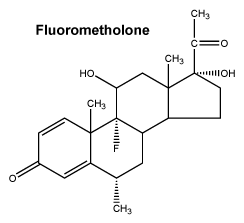
Empirical formula: C22H29FO4.
CAS number. 426-13-1.
7 Medicine Schedule (Poisons Standard)
S4: Prescription Only Medicine.
Date of First Approval
10 October 1991
Date of Revision
01 July 2024
Summary Table of Changes

Reasonable care is taken to provide accurate information at the time of creation. This information is not intended as a substitute for medical advice and should not be exclusively relied on to manage or diagnose a medical condition. The Australian Commission on Safety and Quality in Health Care disclaims all liability (including for negligence) for any loss, damage, injury or any other negative effects resulting from reliance on or use of this information. Read our full disclaimer. This website uses cookies. Read our privacy policy.