
Glycopyrronium-AFT
Brand Information
| Brand name | Glycopyrronium-AFT |
| Active ingredient | Glycopyrronium bromide (glycopyrrolate) |
| Schedule | S4 |
Consumer Medicine Information (CMI) leaflet
Please read this leaflet carefully before you start using the Glycopyrronium-AFT.
Summary CMI
Glycopyrronium-AFT
Consumer Medicine Information (CMI) summary
The full CMI on the next page has more details. If you are worried about using this medicine, speak to your doctor or pharmacist.
1. Why am I using Glycopyrronium-AFT?
Glycopyrronium-AFT contains the active ingredient glycopyrronium bromide. Glycopyrronium-AFT is used before surgery to decrease the volume of secretions from your mouth, lungs and stomach. It can also be used either before or during surgery to maintain your heart's normal beating rhythm. Glycopyrronium-AFT is also used to counter the effects of some other medicines, which can slow your heartbeat or produce excessive secretions when used during surgery.
For more information, see Section 1. Why am I using Glycopyrronium-AFT? in the full CMI.
2. What should I know before I use Glycopyrronium-AFT?
Do not use if you have ever had an allergic reaction to glycopyrronium bromide or any of the ingredients listed at the end of the CMI.
Talk to your doctor if you have any other medical conditions, take any other medicines, or are pregnant or plan to become pregnant or are breastfeeding.
For more information, see Section 2. What should I know before I use Glycopyrronium-AFT? in the full CMI.
3. What if I am taking other medicines?
Some medicines may interfere with Glycopyrronium-AFT and affect how it works.
A list of these medicines is in Section 3. What if I am taking other medicines? in the full CMI.
4. How do I use Glycopyrronium-AFT?
Glycopyrronium-AFT injection will be given to you by a doctor or specially trained nurse.
More instructions can be found in Section 4. How do I use Glycopyrronium-AFT? in the full CMI.
5. What should I know while using Glycopyrronium-AFT?
| Things you should do |
|
| Things you should not do |
|
| Driving or using machines |
|
| Looking after your medicine |
|
For more information, see Section 5. What should I know while using Glycopyrronium-AFT? in the full CMI.
6. Are there any side effects?
Some common side effects include dry mouth, drowsiness, visual disturbance and fast, slow or irregular heartbeat. Serious side effects which require immediate medical attention include: cold sweat, nausea, light headedness, discomfort in chest or other areas of the upper body like pain or discomfort in one or both arms, the back, neck, jaw or stomach. Swelling mainly of the face, lips or tongue or other parts of the body, itching and rashes, could be signs of a severe allergic reaction.
For more information, including what to do if you have any side effects, see Section 6. Are there any side effects? in the full CMI.
Full CMI
Glycopyrronium-AFT
Active ingredient(s): Glycopyrronium bromide (Glycopyrrolate)
Consumer Medicine Information (CMI)
This leaflet provides important information about using Glycopyrronium-AFT. You should also speak to your doctor or pharmacist if you would like further information or if you have any concerns or questions about using Glycopyrronium-AFT.
Where to find information in this leaflet:
1. Why am I using Glycopyrronium-AFT?
2. What should I know before I use Glycopyrronium-AFT?
3. What if I am taking other medicines?
4. How do I use Glycopyrronium-AFT?
5. What should I know while using Glycopyrronium-AFT?
6. Are there any side effects?
7. Product details
1. Why am I using Glycopyrronium-AFT?
Glycopyrronium-AFT contains the active ingredient glycopyrronium bromide. Glycopyrronium-AFT belongs to a group of medicines called anticholinergic drugs. It works in the nervous system by blocking an enzyme, which is responsible for producing saliva in your mouth and secretions in your stomach and lungs. This enzyme also slows down the heart rate. When this enzyme is blocked secretions dry up and the heart rate increases.
Glycopyrronium-AFT is used before surgery to decrease the volume of secretions from your mouth, lungs and stomach.
It can also be used either before or during surgery to maintain your heart's normal beating rhythm.
Glycopyrronium-AFT is also used to counter the effects of some other medicines, which can slow your heartbeat or produce excessive secretions when used during surgery.
2. What should I know before I use Glycopyrronium-AFT?
Warnings
Do not use Glycopyrronium-AFT if:
- you are allergic to glycopyrronium bromide, or any of the ingredients listed at the end of this leaflet. Some of the symptoms of an allergic reaction may include rash, itching, hives on the skin, swelling of the face, lips, tongue or other parts of the body, shortness of breath, wheezing or troubled breathing.
- Always check the ingredients to make sure you can use this medicine.
- You are breastfeeding or plan to breastfeed.
Medicines like Glycopyrronium-AFT may reduce your milk supply. It is not known if Glycopyrronium-AFT is found in breast milk.
Check with your doctor if you:
- have any other medical conditions such as:
- asthma
- glaucoma, which is an increased pressure in your eyes
- diarrhoea
- problems with your heart, kidney or thyroid
- difficulty urinating, or enlarged prostate
- stomach or bowel problems
- hiatus hernia that causes heartburn and belching
- high blood pressure
- myasthenia gravis, a muscle weakness disorder
- nerve or brain disorder, brain damage, or Down's Syndrome - take any medicines for any other condition.
- are allergic to any other medicines, latex rubber or any other substances, such as foods, preservatives or dyes
During treatment, you may be at risk of developing certain side effects. It is important you understand these risks and how to monitor for them. See additional information under Section 6. Are there any side effects?
Pregnancy and breastfeeding
Check with your doctor if you are pregnant or intend to become pregnant.
Talk to your doctor if you are breastfeeding or intend to breastfeed.
Your doctor will discuss the risks and benefits of receiving Glycopyrronium-AFT during pregnancy
3. What if I am taking other medicines?
Tell your doctor or pharmacist if you are taking any other medicines, including any medicines, vitamins or supplements that you buy without a prescription from your pharmacy, supermarket or health food shop.
Some medicines may interfere with Glycopyrronium-AFT. These include:
- ritodrine hydrochloride
- medicines for Parkinson's disease
- phenothiazines, which are used to treat mental illness or severe nausea and vomiting
- antidepressants
- antihistamines
- narcotic pain killers such as pethidine
- medicines used to control heart rhythm
- digoxin used to treat heart failure
- thioxanthenes
- butyrophenones
- amantadine.
These medicines may be affected by Glycopyrronium-AFT or may effect how well it works. You may need to take different amounts of your medicine or you may need to take different medicines.
Check with your doctor or pharmacist if you are not sure about what medicines, vitamins or supplements you are taking and if these affect Glycopyrronium-AFT.
4. How do I use Glycopyrronium-AFT?
How much is given
A doctor or specially trained nurse gives Glycopyrronium-AFT Injection to you.
Your doctor will know how much Glycopyrronium-AFT you should be given. The dose of Glycopyrronium-AFT may be different for each person, and depends on your condition, age and body weight.
The need for more doses will depend on how well your body responds to the treatment. Your doctor will decide how many injections you need, and how often you should receive them.
How it is given
Glycopyrronium-AFT injection will be given to you by a doctor or specially trained nurse. The injection is usually given into a muscle or a vein.
If you use too much Glycopyrronium-AFT
This medicine will be given to you in hospital so it is unlikely you will receive too much.
If you think that you have been given too much Glycopyrronium-AFT, you may need urgent medical attention.
You should immediately:
- phone the Poisons Information Centre
(by calling 13 11 26), or - contact your doctor, or
- go to the Emergency Department at your nearest hospital.
You should do this even if there are no signs of discomfort or poisoning.
5. What should I know while using Glycopyrronium-AFT?
Things you should do
Tell any other doctors, dentists and pharmacists who are treating you that you have had Glycopyrronium-AFT Injection.
Tell your doctor if you feel Glycopyrronium-AFT Injection is not helping your condition.
Always discuss with your doctor any problems or difficulties during or after having Glycopyrronium-AFT Injection.
Be careful if you are elderly, unwell or taking other medicines. Some people may experience side effects such as drowsiness, or blurred vision, which may increase the risk of a fall.
Things you should not do
Do not participate in physical exercise and take care in warm environments, as Glycopyrronium-AFT may reduce your ability to sweat which may result in overheating.
Driving or using machines
Be careful before you drive or use any machines or tools until you know how Glycopyrronium-AFT affects you.
Glycopyrronium-AFT may cause drowsiness or dizziness or blurred vision in some people and therefore may affect alertness.
Make sure you know how you react to Glycopyrronium-AFT injection before you drive a car, operate machinery, or do anything else that could be dangerous if you are drowsy, dizzy or not alert.
Drinking Alcohol
Tell your doctor if you drink alcohol.
Looking after your medicine
Glycopyrronium-AFT will be stored in the hospital pharmacy or in the ward. It will be kept in original packaging below 25°C, protected from light.
Keep it where young children cannot reach it.
When to discard your medicine
Any Glycopyrronium-AFT injection which has passed its expiry date, if the packaging is torn or shows signs of tampering. If the solution is not clear before use or is left in the container after use, will be disposed of in a safe manner by your doctor, nurse, or pharmacist.
Getting rid of any unwanted medicine
If you no longer need to use this medicine or it is out of date, take it to any pharmacy for safe disposal.
Do not use this medicine after the expiry date.
6. Are there any side effects?
All medicines can have side effects. If you do experience any side effects, most of them are minor and temporary. However, some side effects may need medical attention.
See the information below and, if you need to, ask your doctor or pharmacist if you have any further questions about side effects.
Less serious side effects
| Less serious side effects | What to do |
Heart-related
| Speak to your doctor if you have any of these less serious side effects and they worry you. |
Serious side effects
| Serious side effects | What to do |
Allergy-related
| Call your doctor straight away, or go straight to the Emergency Department at your nearest hospital if you notice any of these serious side effects. |
Tell your doctor or pharmacist if you notice anything else that may be making you feel unwell.
Other side effects not listed here may occur in some people.
Reporting side effects
After you have received medical advice for any side effects you experience, you can report side effects to the Therapeutic Goods Administration online at www.tga.gov.au/reporting-problems. By reporting side effects, you can help provide more information on the safety of this medicine.
Always make sure you speak to your doctor or pharmacist before you decide to stop taking any of your medicines.
7. Product details
This medicine is only available with a doctor's prescription.
What Glycopyrronium-AFT contains
| Active ingredient (main ingredient) | Glycopyrronium bromide |
| Other ingredients (inactive ingredients) | Sodium chloride Hydrochloric acid Water for injection |
Do not take this medicine if you are allergic to any of these ingredients.
What Glycopyrronium-AFT looks like
Glycopyrronium-AFT Injection comes in a glass 1 mL ampoule containing a clear, colourless solution. Available in packs of 5 and 10 single dose ampoules (Aust R 390250).
Who distributes Glycopyrronium-AFT
AFT Pharmaceuticals Pty Ltd. 113 Wicks Road, North Ryde,
NSW 2113, Australia
Email: customer.service@aftpharm.com
This leaflet was prepared in February 2023
Brand Information
| Brand name | Glycopyrronium-AFT |
| Active ingredient | Glycopyrronium bromide (glycopyrrolate) |
| Schedule | S4 |
MIMS Revision Date: 01 February 2026
1 Name of Medicine
Glycopyrronium bromide (glycopyrrolate).
2 Qualitative and Quantitative Composition
Glycopyrronium-AFT 1 mL ampoule contains glycopyrronium bromide (glycopyrrolate) 0.2 mg as the active ingredient.
For the full list of excipients, see Section 6.1 List of Excipients.
3 Pharmaceutical Form
Clear, colourless solution for injection, free from visible particles and fibres.
4 Clinical Particulars
4.1 Therapeutic Indications
As a preoperative antimuscarinic to reduce salivary, tracheobronchial and pharyngeal secretions, and to reduce the acidity and volume of the gastric contents.
As a preoperative or intra-operative antimuscarinic to attenuate or prevent intra-operative bradycardia associated with the use of suxamethonium or due to cardiac vagal reflexes.
To protect against the peripheral muscarinic actions (e.g. bradycardia and excessive secretions) of anticholinesterases such as neostigmine or pyridostigmine given to reverse neuromuscular blockade produced by non-depolarising muscle relaxants.
4.2 Dose and Method of Administration
For intramuscular or intravenous administration.
Pre-anaesthetic use. Adults. 0.2 mg to 0.4 mg intravenously or intramuscularly before the induction of anaesthesia.
Alternatively, a dose of 0.004 to 0.005 mg/kg up to a maximum of 0.4 mg may be used. Larger doses may result in profound and prolonged antisialogogue effect, which may be unpleasant for the patient.
Children (see Section 4.3 Contraindications). 1 month to 12 years of age 0.004 to 0.008 mg/kg up to a maximum of 0.2 mg intravenously or intramuscularly before the induction of anaesthesia. Larger doses may result in profound and prolonged antisialogogue effect which may be unpleasant for the patient.
Intraoperative use. When used to treat arrhythmias associated with traction reflexes, the usual attempts should be made to determine the aetiology of the arrhythmia, and the surgical or anaesthetic manipulations necessary to correct parasympathetic imbalance should be performed.
Adults. In those situations where intraoperative use is indicated, a single dose of 0.2 to 0.4 mg (or 0.004 to 0.005 mg/kg up to a maximum of 0.4 mg) by intravenous injection should be used. This dose may be repeated if necessary.
Children (1 month to 12 years of age). In those situations where intraoperative use is indicated, a single dose of 0.004 to 0.008 mg/kg or up to a maximum of 0.2 mg by intravenous injection should be used. This dose may be repeated if necessary.
Reversal of neuromuscular blockade. Adults. 0.2 mg intravenously per 1 mg neostigmine or the equivalent dose of pyridostigmine. Alternatively, a dose of 0.01-0.015 mg intravenously with 0.05 mg/kg neostigmine or equivalent dose of pyridostigmine. Glycopyrronium-AFT may be administered simultaneously from the same syringe with the anticholinesterase; greater cardiovascular stability results from this method of administration.
Children (1 month to 12 years of age). 0.01 mg/kg intravenously with 0.05 mg/kg neostigmine or the equivalent dose of pyridostigmine. Glycopyrronium-AFT may be administered simultaneously from the same syringe with the anticholinesterase; greater cardiovascular stability results from this method of administration.
4.3 Contraindications
Known hypersensitivity to glycopyrronium bromide (glycopyrrolate) or any of the inactive ingredients (see Section 4.8 Adverse Effects (Undesirable Effects)).
4.4 Special Warnings and Precautions for Use
Glycopyrronium-AFT should be used with caution, if at all, in patients with glaucoma or asthma.
Glycopyrronium-AFT should be used with caution in patients with any of the following conditions: obstructive uropathy, obstructive disease of the gastrointestinal tract, paralytic ileus, intestinal atony, unstable cardiovascular status in acute haemorrhage, severe ulcerative colitis and toxic megacolon complicating ulcerative colitis, autonomic neuropathy and prostatic hypertrophy.
Diarrhoea may be an early symptom of incomplete intestinal obstruction, especially in patients with ileostomy or colostomy. In this instance treatment with this drug would be inappropriate and possibly harmful.
In the case of ulcerative colitis, large doses of Glycopyrronium-AFT may suppress intestinal motility resulting in production of paralytic ileus perhaps precipitating or aggravating toxic megacolon.
Hiatus hernia associated with reflux oesophagitis may be aggravated following administration of this medicine.
Use with caution in patients with coronary artery disease; congestive heart failure; cardiac arrhythmias; hypertension or hyperthyroidism since an increase in heart rate may occur. Investigate any tachycardia before giving glycopyrronium bromide (glycopyrrolate) as an increase in heart rate may occur.
In the presence of fever, as in high environmental temperature, and physical exercise, reduced sweating can occur with Glycopyrronium-AFT causing, heat prostration (fever and heat stroke). Use very cautiously when the ambient temperature is high and in pyrexic patients, especially children and the elderly, who have a tendency to sweat less.
Large doses of quaternary ammonium anticholinergic compounds have been shown to block end-plate nicotinic receptors. This should be considered before using glycopyrronium bromide (glycopyrrolate) in patients with myaesthenia gravis.
Use in hepatic impairment. No data available.
Use in renal impairment. The duration of effect of Glycopyrronium-AFT may be prolonged in patients with renal impairment since glycopyrronium bromide (glycopyrrolate) is excreted mostly in urine as unchanged drug. Dosage adjustment may be needed for patients in renal failure.
Use in the elderly. Clinical studies of glycopyrronium bromide (glycopyrrolate) did not include sufficient numbers of subjects aged 65 years and over to determine whether they respond differently from younger subjects. Other reported clinical experience has not identified differences in responses between elderly and younger patients. In general, dose selection for an elderly patient should be cautious, usually starting at the low end of the dosing range, reflecting greater frequency of decreased hepatic, renal, or cardiac function, and of concomitant disease or drug therapy.
Paediatric use. Arrythmias associated with the use of glycopyrronium bromide (glycopyrrolate) intravenously as a premedication or during anaesthesia appear to be more likely in paediatric patients than in adults.
Infants, patients with Down's syndrome, and paediatric patients with spastic paralysis or brain damage may experience an increased response to anticholinergics, thus increasing the potential for side effects.
A paradoxical reaction characterised by hyperexcitability may occur in paediatric patients taking large doses of anticholinergics including glycopyrronium bromide (glycopyrrolate). Infants and young children are especially susceptible to the toxic effects of anticholinergics.
Safety and effectiveness of long-term IV use has not been established in paediatric patients. Long-term use of Glycopyrronium-AFT is therefore not recommended in paediatric patients.
Effects on laboratory tests. No data available.
4.5 Interactions with Other Medicines and Other Forms of Interactions
The use of glycopyrronium bromide (glycopyrrolate), like atropine, with or within several hours of ritodrine hydrochloride administration may result in a drug interaction causing tachycardia.
The intravenous administration of any anticholinergic in the presence of cyclopropane anaesthesia can result in ventricular arrhythmias; therefore, caution should be observed if Glycopyrronium-AFT is used during cyclopropane anaesthesia. If the drug is given in small incremental doses of 0.1 mg or less, the likelihood of producing ventricular arrhythmias is reduced.
Anticholinergic agents may delay absorption of other medications given concomitantly.
Excessive cholinergic blockade can occur if Glycopyrronium-AFT is given concomitantly with belladonna alkaloids or other synthetic anticholinergic agents (such as antiparkinsonism agents), phenothiazines, tricyclic antidepressants, disopyramide, procainamide, quinidine, some antihistamines, narcotic analgesics such as pethidine, thioxanthenes, butyrophenones or amantadine.
Concurrent administration of anticholinergics and corticosteroids may result in increased intraocular pressure.
Concurrent use of anticholinergic agents with slow-dissolving tablets of digoxin may cause increased serum digoxin levels.
Glycopyrronium-AFT is compatible for mixing and injection with pethidine hydrochloride; morphine sulfate; droperidol plus fentanyl citrate; hydroxyzine; neostigmine; promethazine and pyridostigmine. Glycopyrronium-AFT may be mixed with 4%-10% glucose in water or saline, or it may be administered via the tubing of a running infusion of physiological saline, glucose, or lactated Ringer's solution.
Since the stability of glycopyrronium bromide (glycopyrrolate) is questionable above a pH of 6.0, do not inject Glycopyrronium-AFT at the same intramuscular site or combine it in the same syringe with: thiopentone sodium; chloramphenicol; diazepam; dimenhydrinate; methohexitone sodium; pentazocine lactate; pentobarbitone sodium; quinalbarbitone; or sodium bicarbonate. A gas will evolve or a precipitate may form.
Mixing with dexamethasone, sodium phosphate or a buffered solution of lactated Ringer's solution will result in a pH higher than 6.0.
4.6 Fertility, Pregnancy and Lactation
Effects on fertility. Long-term studies in animals have not been performed to evaluate the mutagenic potential of glycopyrronium bromide (glycopyrrolate).
Use in pregnancy. (Category B2)
Clinically the safe use of glycopyrronium bromide (glycopyrrolate) has not been established. Single-dose studies in humans found that only very small amounts of glycopyrronium bromide (glycopyrrolate) passed the placental barrier. Therefore, the drug should not be used in pregnant women or those likely to become pregnant, unless the expected benefits outweigh any potential risk.
Reproduction studies in rats and rabbits did not reveal any teratogenic effects from glycopyrronium bromide (glycopyrrolate). Diminished rates of conception and of survival of weaning were observed in rats, in a dose-related manner. Studies in dogs suggest that this may be due to diminished seminal secretion, which is evident at high doses of glycopyrronium bromide (glycopyrrolate). The significance of this for humans is not clear.
Use in lactation. Anticholinergic agents may suppress lactation. It is not known whether glycopyrronium bromide (glycopyrrolate) is excreted in human milk.
Therefore, it is not recommended for nursing mothers unless the expected benefits outweigh any potential risk.
4.7 Effects on Ability to Drive and Use Machines
In the ambulatory patient Glycopyrronium-AFT may produce drowsiness or blurred vision. In this event, the patient should be warned not to engage in activities requiring mental alertness such as operating a motor vehicle or other machinery, or performing hazardous work while taking this drug.
4.8 Adverse Effects (Undesirable Effects)
Reporting suspected adverse effects. Reporting suspected adverse reactions after registration of the medicinal product is important. It allows continued monitoring of the benefit-risk balance of the medicinal product. Healthcare professionals are asked to report any suspected adverse reactions at www.tga.gov.au/reporting-problems (Australia) or nzphvc.otago.ac.nz/reporting (New Zealand).
The following reported adverse reactions are extensions of Glycopyrronium-AFT fundamental pharmacological actions:
Cardiovascular. Tachycardia, ventricular fibrillation, bradycardia, palpitation and arrhythmia, hypertension, hypotension, cardiac arrest, heart block, prolonged QTc interval.
Dermatological. Flushing and inhibition of sweating. Severe allergic reactions or drug idiosyncrasies including urticaria and other dermal manifestations, pruritus, dry skin.
Gastrointestinal. Nausea, vomiting, dry mouth, constipation, taste alterations, including loss of taste.
Genitourinary. Urinary hesitancy and retention, impotence.
Ocular. Blurred vision due to mydriasis, cycloplegia, photophobia, increased ocular tension.
Nervous system. Inhibition of transmission at neuromuscular junction, headache, nervousness, drowsiness, dizziness, seizure, insomnia, some degree of mental confusion, especially in the elderly, hyperexcitability in children.
Pregnancy and perinatal. Suppression of lactation.
Respiratory system. Respiratory arrest.
General. Hyperpyrexia, bloated feeling, anaphylaxis/anaphylactoid reaction, hypersensitivity. Injection site reactions including pruritus, oedema, erythema, pain have been reported rarely.
4.9 Overdose
For information on the management of overdose, contact the Poisons Information Centre on 13 11 26 (Australia) or the National Poisons Centre on 0800 POISON (0800 764766) (New Zealand).
The signs and symptoms of overdosage reflect the pharmacological effects of glycopyrronium bromide (glycopyrrolate). These may include hypotension, respiratory failure and a curare-like action, i.e. neuromuscular blockade leading to muscular weakness and possibly paralysis.
Treatment should be symptomatic.
Dialysis is of no value because of low plasma concentrations of the drug.
To combat peripheral anticholinergic effects a quaternary ammonium anticholinesterase such as neostigmine methylsulfate may be given intravenously in increments of 0.25 mg in adults.
This dosage may be repeated every five to ten minutes until anticholinergic over-activity is reversed or up to a maximum of 2.5 mg. Proportionately smaller doses should be used in children. Indication for repetitive doses of neostigmine should be based on close monitoring of the decrease in heart rate and the return of bowel sounds.
In the unlikely event that CNS symptoms (excitement, restlessness, convulsions, psychotic behaviour) occur, physostigmine (which does cross the blood-brain barrier) should be used. Physostigmine 0.5 to 2.0 mg should be slowly administered intravenously and repeated as necessary up to a total of 5 mg in adults. Proportionately smaller doses should be used in children.
Fever should be treated symptomatically. In the event of a curare-like effect on respiratory muscles, artificial respiration should be instituted and maintained until effective respiratory action returns.
5 Pharmacological Properties
5.1 Pharmacodynamic Properties
Mechanism of action. Glycopyrronium bromide (glycopyrrolate) is a synthetic anticholinergic agent. Like other anticholinergic (antimuscarinic) agents, it inhibits the action of acetylcholine on structures innervated by postganglionic cholinergic nerves and on smooth muscles that respond to acetylcholine but lack cholinergic innervation. These peripheral cholinergic receptors are present in the autonomic effector cells of smooth muscle, cardiac muscle, the sinoatrial node, the atrioventricular node, exocrine glands, and, to a limited degree, in the autonomic ganglia. Thus, it diminishes the volume and free acidity of gastric secretions and controls excessive pharyngeal, tracheal, and bronchial secretions. Doses which produce marked antisialogogue actions have little effect on heart rate, visual accommodation, or pupil size.
Glycopyrronium bromide (glycopyrrolate) antagonises muscarinic symptoms (e.g. bronchorrhoea, bronchospasm, bradycardia, and intestinal hypermotility) induced by cholinergic drugs such as anticholinesterases.
The highly polar quaternary ammonium group of glycopyrronium bromide (glycopyrrolate) limits its passage across lipid membranes, such as the blood-brain barrier, in contrast to atropine sulfate and hyoscine hydrobromide, which are non-polar tertiary amines that penetrate lipid barriers easily.
Clinical trials. No data available.
5.2 Pharmacokinetic Properties
Absorption. Peak effects occur approximately 30 to 45 minutes after intramuscular administration. The vagal blocking effects persist for 2 to 3 hours and the antisialogogue effects persist up to 7 hours, periods longer than for atropine. With intravenous injection, the onset of action is generally evident within one minute.
Distribution. Pharmacokinetic studies in normal volunteers given a single intravenous infusion of 0.4 mg glycopyrronium bromide (glycopyrrolate) showed that the drug undergoes a rapid distribution/elimination phase (t1/2 = 5 min) followed by a more prolonged termination elimination phase (t1/2 = 1.7 hr). The peak plasma concentration immediately following the end of the infusion was 26.4 mg/mL (+7.6), and the volume of distribution was 0.158+0.28 L/kg, which suggests that glycopyrronium bromide (glycopyrrolate), is not widely distributed to the tissues.
Metabolism. No data available.
Excretion. Excretion is via the urine and bile. Radioactivity studies have shown that 85% is excreted in the urine within 48 hours, over 80% of this being unchanged drug.
5.3 Preclinical Safety Data
Genotoxicity. No data available.
Carcinogenicity. Long-term studies in animals have not been performed to evaluate the carcinogenic potential of glycopyrronium bromide (glycopyrrolate).
6 Pharmaceutical Particulars
6.1 List of Excipients
Excipients include water for injections, sodium chloride and hydrochloric acid (for pH adjustment).
6.2 Incompatibilities
Incompatibilities were either not assessed or not identified as part of the registration of this medicine.
6.3 Shelf Life
In Australia, information on the shelf life can be found on the public summary of the Australian Register of Therapeutic Goods (ARTG). In New Zealand, information on the shelf life can be found on Therapeutic Products Database. The expiry date can be found on the packaging.
6.4 Special Precautions for Storage
Store below 25°C. Protect from light.
Product is for single use in one patient only. Discard any residue.
6.5 Nature and Contents of Container
Glycopyrronium-AFT is supplied in 1 mL flint OPC glass ampoule with green colour dot. Available in packs of 5 and 10 ampoules.
6.6 Special Precautions for Disposal
Any unused medicine or waste material should be disposed of in accordance with local requirements.
6.7 Physicochemical Properties
Chemical structure.
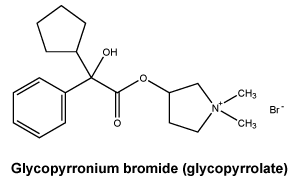
Molecular formula: C19H28BrNO3.
Molecular mass: 398.33.
The chemical name(s) for glycopyrronium bromide (glycopyrrolate) is: Pyrrolidinium, 3- [(cyclopentylhydroxyphenylacetyl) oxy]-1,1-dimethyl- bromide. 3-Hydroxy-1,1- dimethylpyrrolidinium bromide α -cyclopentylmandelate.
Glycopyrronium bromide (glycopyrrolate) is White or almost white, crystalline powder. It is freely soluble in water, soluble in ethanol (96%), very slightly soluble in methylene chloride.
7 Medicine Schedule (Poisons Standard)
Prescription only Medicine (Schedule 4).
Date of First Approval
19 June 2023
Date of Revision
06 September 2024
Summary Table of Changes

Reasonable care is taken to provide accurate information at the time of creation. This information is not intended as a substitute for medical advice and should not be exclusively relied on to manage or diagnose a medical condition. The Australian Commission on Safety and Quality in Health Care disclaims all liability (including for negligence) for any loss, damage, injury or any other negative effects resulting from reliance on or use of this information. Read our full disclaimer. This website uses cookies. Read our privacy policy.