
Haemorol
Brand Information
| Brand name | Haemorol |
| Active ingredient | Phenol |
| Schedule | S4 |
Consumer Medicine Information (CMI) leaflet
Please read this leaflet carefully before you start using the Haemorol.
Summary CMI
Haemorol™
Consumer Medicine Information (CMI) summary
The full CMI on the next page has more details. If you are worried about using this medicine, speak to your doctor or pharmacist.
1. Why am I using Haemorol?
Haemorol contains the active ingredient phenol. Haeomorol is used to treat haemorrhoids when other methods of treatment, such as changes in diet, have not worked. For more information, see Section 1. Why am I using Haemorol? in the full CMI.
2. What should I know before I am given Haemorol?
Do not use if you have ever had an allergic reaction to Haemorol or any of the ingredients listed at the end of the CMI.
Talk to your doctor if you have any other medical conditions, take any other medicines, or are pregnant or plan to become pregnant or are breastfeeding. For more information, see Section 2. What should I know before I am given Haemorol? in the full CMI.
3. What if I am taking other medicines?
Some medicines may interfere with Haemorol and affect how it works. Refer to Section 3. What if I am taking other medicines? in the full CMI.
4. How is Haemorol given?
Haemorol must only be given by a doctor or nurse. More instructions can be found in Section 4. How is Haemorol given? in the full CMI.
5. What should I know while being given Haemorol?
| Things you should do |
|
| Driving or using machines |
|
| Avoid contact of Haemorol with the skin |
|
| If you feel light-headed, dizzy or faint when getting out of bed or standing up, get up slowly |
|
| Looking after your medicine |
|
For more information, see Section 5. What should I know while being given Haemorol? in the full CMI.
6. Are there any side effects?
Side effects can include: pain at the injection site, discomfort and giddiness, ulcer or abscess formation at the injection site (common side effects); blood in urine or semen, pain and swelling in the testis, pain or difficulty passing urine, loss of bladder and/ or bowel control, fever, impotence (serious side effects). For more information, including what to do if you have any side effects, see Section 6. Are there any side effects? in the full CMI.
Full CMI
Haemorol™
Active ingredient(s): phenol 250 mg in 5 mL almond oil
Consumer Medicine Information (CMI)
This leaflet provides important information about using Haemorol. You should also speak to your doctor or pharmacist if you would like further information or if you have any concerns or questions about using Haemorol.
Where to find information in this leaflet:
1. Why am I using Haemorol?
2. What should I know before I am given Haemorol?
3. What if I am taking other medicines?
4. How is Haemorol given?
5. What should I know while being given Haemorol?
6. Are there any side effects?
7. Product details
1. Why am I using Haemorol?
Haemorol contains the active ingredient phenol.
Haemorol is used to treat haemorrhoids when other methods of treatment, such as changes in diet, have not worked.
Haemorrhoids occur when small veins near the anus become swollen. Haemorol works by attaching the veins to the tissue around them, preventing them from swelling.
Ask your doctor if you have any questions about this medicine which has been prescribed for you.
Your doctor may have prescribed it for another reason.
2. What should I know before I am given Haemorol?
Warnings
You should not be given Haemorol if:
- you are allergic to any medicine containing phenol or almond oil. Some of the symptoms of an allergic reaction may include:
- shortness of breath
- wheezing or difficulty breathing
- swelling of the face, lips, tongue or other parts of the body
- rash, itching or hives on the skin. - Always check the ingredients to make sure you can use this medicine.
- you are an infant or child. Safety in infants and children has not been established.
- the solution is discoloured, cloudy, turbid, or a precipitate or particles are present. The solution is normally clear, yellowish and viscous.
- the expiry date printed on the pack has passed or if the packaging is torn or shows signs of tampering. If you are given this medicine after the expiry date has passed, it may not work as well.
If you are not sure whether you should be given this medicine talk to your doctor.
Check with your doctor if you:
- have allergies to any other medicines, foods, preservatives or dyes.
During treatment, you may be at risk of developing certain side effects. It is important you understand these risks and how to monitor for them. See additional information under Section 6. Are there any side effects?
Pregnancy and breastfeeding
Check with your doctor if you are pregnant or intend to become pregnant.
Talk to your doctor if you are breastfeeding or intend to breastfeed.
Your doctor can discuss the risks and benefits involved.
If you have not told your doctor about any of the above, tell him/her before you are given Haemorol.
3. What if I am taking other medicines?
Tell your doctor or pharmacist if you are taking any other medicines, including any medicines, vitamins or supplements that you buy without a prescription from your pharmacy, supermarket or health food shop, naturopath or herbalist.
4. How is Haemorol given?
How much to use
- Haemorol must only be given by a doctor or nurse.
- It must NOT be injected into the fluid around the spinal cord or brain, into a vein or into deep tissue.
- Haemorol must NOT be used over large areas.
- It will be given as an injection directly into the area around the haemorrhoid. You may need to be given several injections per treatment.
- Your doctor will decide what dose of Haemorol you will receive. This depends on the size and number of haemorrhoids being treated.
If you are given too much (overdose)
Haemorol must only be given by a doctor or nurse so an overdose is not likely to occur.
Symptoms of excessive exposure to Phenol include:
- stomach pains
- dizziness
- blood in the urine
- bluish discolouration of the skin
- irregular heart beat
- difficulty breathing or breathlessness which may be very severe and worsen on lying down
- sharp pains
- nausea, vomiting
- shock
For information on the management of overdose, contact the Poisons Information Centre on 13 11 26 (Australia).
5. What should I know while being given Haemorol?
Things you should do
- If you are about to be started on any new medicine, remind your doctor and pharmacist that you have been given Haemorol.
- Tell any other doctors, dentists, and pharmacists who treat you that you have been given this medicine.
- If you have any tests, tell your doctor that you have been given this medicine. It may interfere with the results of some tests.
Driving or using machines
Be careful before you drive or use any machines or tools until you know how Haemorol affects you.
This medicine may cause dizziness and drowsiness in some people. If you have any of these symptoms, do not drive, operate machinery or do anything dangerous.
Avoid contact of Haemorol with the skin
This medicine can be absorbed through the skin. Wash with glycerol if it comes into contact with the skin.
If you feel light-headed, dizzy or faint when getting out of bed or standing up, get up slowly
Standing up slowly, especially when you get up from bed or chairs, will help your body get used to change in position and blood pressure. If this problem continues or gets worse, talk to your doctor.
Looking after your medicine
- Haemorol will be stored in the surgery, pharmacy or ward of a hospital. The injection is kept in a cool dry place, protected from light, where the temperature stays below 25°C.
- Haemorol will be opened for use on you. It will be used only once and then it will be discarded. It will never be stored after it is opened or used for more than one person.
6. Are there any side effects?
All medicines can have side effects. If you do experience any side effects, most of them are minor and temporary. However, some side effects may need medical attention.
Do not be alarmed by the following list of side effects. You may not experience any of them.
See the information below and, if you need to, ask your doctor or pharmacist if you have any further questions about side effects.
Common side effects
| Common side effects | What to do |
| Speak to your doctor or nurse if you have any of these common side effects and they worry you |
Serious side effects
| Serious side effects | What to do |
| Call your doctor or nurse straight away, or go straight to the Emergency Department at your nearest hospital if you notice any of these serious side effects |
Tell your doctor, nurse or pharmacist if you notice anything else that may be making you feel unwell.
Other side effects not listed here may occur in some people.
Reporting side effects
After you have received medical advice for any side effects you experience, you can report side effects to the Therapeutic Goods Administration online at www.tga.gov.au/reporting-problems. By reporting side effects, you can help provide more information on the safety of this medicine.
Always make sure you speak to your doctor, nurse or pharmacist before you decide to stop taking any of your medicines.
7. Product details
This medicine is only available with a doctor's prescription.
What Haemorol contains
| Active ingredient (main ingredient) | 250 mg phenol |
| Other ingredients (inactive ingredients) | almond oil |
| Potential allergens | tree nuts |
Do not take this medicine if you are allergic to any of these ingredients.
This medicine does not contain lactose, sucrose, gluten, tartrazine, dyes or any preservatives.
What Haemorol looks like
Haemorol is a clear, yellowish solution, free from visible particles. It is available in a clear glass vial with a grey rubber stopper and aluminium seal with a yellow plastic flip off cap in packs of 5.
Haemorol 5 mL Vials
AUST R 161711
Who distributes Haemorol
Haemorol is made in Australia by:
Phebra Pty Ltd
19 Orion Road
Lane Cove West, NSW 2066
Australia

Haemorol is distributed in New Zealand by:
AFT Pharmaceuticals Ltd
PO Box 33-203 Takapuna
Auckland
New Zealand
Distributed in Singapore by:
Novem Healthcare Pte Ltd.,
23 New Industrial Road, #03-08 Solstice Business Center, Singapore 536209
Telephone: +65 64433673
This leaflet was prepared in November 2025.
Phebra and the Phi symbol are trademarks of Phebra Pty Ltd, 19 Orion Road, Lane Cove West, NSW 2066, Australia.
Brand Information
| Brand name | Haemorol |
| Active ingredient | Phenol |
| Schedule | S4 |
MIMS Revision Date: 01 August 2020
1 Name of Medicine
Phenol.
2 Qualitative and Quantitative Composition
Haemorol is a solution containing 250 mg phenol in almond oil to 5 mL (phenol 5% w/v).
Excipients of known effect: tree nuts.
For the full list of excipients, see Section 6.1 List of Excipients.
3 Pharmaceutical Form
Haemorol is a clear, yellowish solution, free from visible particles.
4 Clinical Particulars
4.1 Therapeutic Indications
Haemorol is indicated for the treatment of symptomatic haemorrhoids in patients with an inadequate response to conservative therapy such as dietary manipulation. It must only be injected submucosally and its use is usually confined to first degree or second degree haemorrhoids.
4.2 Dose and Method of Administration
Haemorol is for submucosal injection only (i.e. local administration); personnel administering this treatment should be trained in the correct placement of submucosal injections. Haemorol is not to be administered intrathecally, or injected into a blood vessel or into deep tissues (see Section 4.4 Special Warnings and Precautions for Use).
Haemorol is administered by submucosal injection of 2 to 5 mL. It may be injected into the submucosal space above each of the three principle haemorrhoids. The total maximum volume that may be injected in any one treatment is 10 mL. It is preferable that only sterile glass syringes be used for injecting this product, to minimise the possibility of absorption or extraction from plastic syringe components. However, plastic syringes with needles with plastic hubs may be used if the injection is to be administered immediately.
4.3 Contraindications
Haemorol is contraindicated in patients hypersensitive to phenol or almond oil, in neonates and children (see Section 4.4 Special Warnings and Precautions for Use), and for use over large areas, since sufficient amounts may be absorbed to give rise to toxic symptoms.
4.4 Special Warnings and Precautions for Use
Haemorol is for submucosal injection only. It is not for intrathecal use or for injection into a blood vessel or into deep tissues. Complications of therapy can include local ulceration and sterile abscess formation. These complications may be serious following a misplaced injection (e.g. prostatic abscess). Obviously, care in choosing the correct site of injection is mandatory. Solutions containing phenol should not be applied to large areas of skin or large wounds since sufficient phenol may be absorbed to give rise to toxic symptoms. Toxic symptoms may also arise through absorption of phenol vapour by the skin and lungs.
Use in the elderly. No data available.
Paediatric use. Safety in neonates and children has not been established. Significant absorption can occur in neonates. Toxic effects have been observed from other phenol formulations, and therefore Haemorol is contraindicated for use in neonates or children.
Effect on laboratory tests. Absorbed phenol can interfere with the following laboratory tests:
plasma adrenaline and noradrenaline estimation (trihydroxyindole method);
ferric chloride test for ketones or salicylates in urine (but not the Phenistix test);
test for ionised calcium in serum;
measurement of sulphonamides in serum;
Benedict test for glycosuria.
4.5 Interactions with Other Medicines and Other Forms of Interactions
No significant drug interactions involving phenol are known.
4.6 Fertility, Pregnancy and Lactation
Effects on fertility. The effects of Haemorol on the reproductive cycle and fertility are unknown.
Use in pregnancy. (Category B3)
Category B3 - Drugs which have been taken by only a limited number of pregnant women and women of childbearing age, without an increase in the frequency of malformation or other direct or indirect harmful effects on the human fetus having been observed. Studies in animals have shown evidence of an increased occurrence of fetal damage, the significance of which is considered uncertain in humans.
Oral administration of phenol during mid gestation to rats and mice or during late gestation in rats caused embryonic and fetal resorptions, fetal and neonatal deaths reduced offspring weight and malformations (cleft palate, skeletal abnormalities). Adverse effects on the fetus were observed at phenol doses that were not toxic to the mother as well as at maternotoxic doses. The clinical relevance of the findings from rodent studies using oral phenol to human submucosal administration of Haemorol is unclear. However, phenol should not be administered to pregnant women.
Use in lactation. It is not known whether Haemorol is excreted into breast milk. Since safety in neonates and children has not been established, Haemorol should not be used during lactation.
4.7 Effects on Ability to Drive and Use Machines
The effects of this medicine on a person's ability to drive and use machines were not assessed as part of its registration.
4.8 Adverse Effects (Undesirable Effects)
More common reactions. A high incidence of pain has been reported after submucosal administration of Haemorol. Discomfort and giddiness have also been reported. Local ulceration and sterile abscess formation may also occur.
Less common reactions. The following reactions have been reported rarely after injection of Haemorol, generally as a result of misplaced injection: haematuria, haematospermia, epididymitis, urethral stricture, chronic cystitis, urolithiasis, seminal vesicle abscess, urinary perineal fistula, dysuria, transient incontinence, pyrexia, impotence (which may be permanent), prostatic abscess.
Life threatening reactions. A case of necrotising fasciitis has been reported after injection sclerotherapy of haemorrhoids with 5% phenol in almond oil. A case of retroperitoneal sepsis has also been reported. This reaction has also been reported rarely with other forms of haemorrhoid treatment, such as rubber band ligation.
Phenol containing preparations. Less common reactions. These reactions are attributable to topical exposure to various phenol preparations, although not necessarily Haemorol itself.
Body as a whole. Pyrexia, allergic reactions.
Cardiovascular system. Cardiac arrhythmia.
Central nervous system. Dizziness, collapse.
Dermatological. Contact urticaria, darkening of skin on hands and face (after prolonged exposure).
Ocular. Darkening of cornea (after prolonged exposure).
Life threatening reactions. Significant absorption of phenol can occur through skin and mucous membranes, resulting in serious, sometimes fatal, toxicity (see Section 4.9 Overdose).
Reporting suspected adverse reactions after registration of the medicinal product is important. It allows continued monitoring of the benefit-risk balance of the medicinal product. Healthcare professionals are asked to report any suspected adverse reactions at www.tga.gov.au/reporting-problems.
4.9 Overdose
The symptoms of overdosage after submucosal injection of Haemorol, are not known since there have been no reports of overdose for the treatment of sclerotherapy of haemorrhoids.
The following information relates to phenol containing products:
Symptoms of overdosage. Symptoms of overdose with Haemorol may be similar to those observed after excessive exposure to phenol in other preparations. Absorption of phenol after application of dilute phenol solutions to extensive wounds has resulted in abdominal pains, dizziness, methaemoglobinaemia, haemoglobinuria, cyanosis, cardiac arrhythmia's, ECG abnormalities, and may result in respiratory failure, circulatory failure, coma and death.
The symptoms of oral ingestion may include local pain, nausea and/or vomiting, followed by pulmonary oedema and shock. Respiratory and circulatory damage may follow, and in severe cases fatal respiratory and circulatory failure may occur rapidly.
Treatment of overdosage. There is no specific antidote for acute phenol poisoning. Treatment is symptomatic and supportive.
Treatment may involve the following measures:
For oral administration, immediate advice should be sought from a Poisons Information Centre; activated charcoal may be useful.
If spillage onto skin occurs, remove all contaminated clothing, and rub contaminated skin for at least 10 minutes with swabs soaked in glycerol, a liquid macrogol or a mixture of 70% macrogol and 30% methylated spirits. Water can be used initially if these are not available.
Support of respiratory function.
Correction of fluid and electrolyte balance.
For information on the management of overdose, contact the Poisons Information Centre on 131126 (Australia).
5 Pharmacological Properties
5.1 Pharmacodynamic Properties
Mechanism of action. Phenol is an antiseptic and disinfectant. It is also corrosive. When applied to mucous membranes, it causes the surface to become white and opaque due to precipitation of proteins, and a slough is formed. When Haemorol is injected into parahaemorrhoidal submucosa, fibrosis is produced, fixing the mucosa to the underlying muscle.
Clinical trials. The long term efficacy of Haemorol was examined in 3 randomised controlled trials. Ambrose et al [1] compared Haemorol (n=62) with infra red photocoagulation (n=73) in patients treated with symptomatic first or second degree haemorrhoids. At 12 months, 26% of patients treated with Haemorol were asymptomatic, compared to 30% of those treated with photocoagulation. Repeat photocoagulation was required in 7 patients compared with repeat injection in 1 (p < 0.02).
Cheng et al [2] compared Haemorol with rubber band ligation (RBL), maximal anal dilatation and haemorrhoidectomy (n=30 per group) in patients with symptomatic second degree haemorrhoids. At 12 months, 60% of patients treated with Haemorol were asymptomatic, compared to 83%, 80% and 97% of those treated with RBL, maximal anal dilatation and haemorrhoidectomy, respectively. Pain due to treatment was also assessed with 27/30 patients treated with Haemorol experiencing no pain compared to 26/30 patients in the RBL group, 25/30 in the maximal anal dilatation group and 0/30 in the haemorrhoidectomy group.
Gartell et al [3] compared Haemorol with RBL in 269 patients with symptomatic first to fourth degree haemorrhoids. Questionnaires were completed by 215 patients (109 Haemorol, 106 RBL) over a 6 year period with a mean follow up of 2.75 years. A successful outcome was achieved in 89% of patients receiving RBL therapy compared to 70% of patients treated with Haemorol (p < 0.01). At the time of follow up, 17% of respondents in the Haemorol group were asymptomatic, compared to 36% of those who had undergone RBL (p < 0.01).
5.2 Pharmacokinetic Properties
Absorption. Phenol is readily absorbed through intact skin, mucous membranes and the gastrointestinal tract.
The extent of systemic absorption of Haemorol following submucosal administration (when used in the treatment of haemorrhoids) is not known. Since Haemorol produces submucosal fibrosis, fixing the mucosa to the underlying muscle, the amount of phenol entering the systemic circulation would be minimal.
Distribution. No data available.
Metabolism. It is metabolised in the liver, mainly via conjugation to phenyl glucuronide and phenyl sulfate, although small amounts are oxidised to catechol and quinol prior to further conjugation.
Excretion. The metabolites are excreted in the urine. Ninety-nine percent of an absorbed dose is excreted in the urine in 24 hours.
5.3 Preclinical Safety Data
Genotoxicity. Phenol causes chromosomal damage in mammalian cells in vitro and in vivo; gene mutations in mammalian cells in vitro; and sister chromatid exchanges in mammalian cells in vitro. Phenol is also metabolised to substances (e.g. hydroquinone, 1,4-benzoquinone and catechol) that cause chromosomal damage and gene mutations.
Carcinogenicity. Administration of phenol via the drinking water for 103 weeks to male rats caused increases in monocytic leukaemias, thyroid C cell tumours and adrenal gland phaeochromocytomas. These changes were not dose related and there was no evidence of increased tumour development in female rats or in mice of either sex. Phenol also caused skin papillomas and carcinomas when applied topically to mice. Other studies have not shown a carcinogenic effect of phenol, but a clear no-effect dose has not been established. The clinical relevance of these findings to the submucosal administration of Haemorol is unclear.
6 Pharmaceutical Particulars
6.1 List of Excipients
Haemorol, Oily Phenol Injection contains phenol 250 mg in almond oil to 5 mL (phenol 5% w/v).
6.2 Incompatibilities
Haemorol is reported to be incompatible with alkaline salts and non-ionic surfactants.
6.3 Shelf Life
In Australia, information on the shelf life can be found on the public summary of the Australian Register of Therapeutic Goods (ARTG)1. The expiry date can be found on the packaging.
1 AUST R 161711.
6.4 Special Precautions for Storage
Store below 25°C. Protect from light.
6.5 Nature and Contents of Container
It is presented in a 5 mL vial in a pack of 5 vials.
Phebra product code - INJ155.
6.6 Special Precautions for Disposal
In Australia, any unused medicine or waste material should be disposed of by taking to your local pharmacy.
6.7 Physicochemical Properties
Phenol is a colourless or faintly pink or faintly yellow deliquescent crystalline solid. It is soluble in water, and very soluble in alcohol, chloroform, ether, glycerol and fixed and volatile oils.
The molecular formula of phenol is C6H5OH. Its molecular weight is 94.1.
Chemical structure.

7 Medicine Schedule (Poisons Standard)
Schedule 4 - Prescription Only Medicine.
Date of First Approval
04 September 2009
Date of Revision
30 June 2020
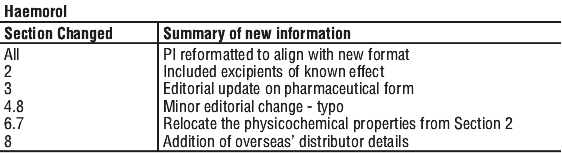
Summary Table of Changes
References
[1] Ambrose NS, Morris D, Alexander-Williams J. A randomised trial of photocoagulation or injection sclerotherapy for the treatment of first- and second degree haemorrhoids. Dis. Colon Rectum 28: 238-240, 1985.
[2] Cheng FCY, Shum DWP, Ong GB. The treatment of second degree haemorrhoids by injection, rubber band ligation, maximal anal dilatation and haemorrhoidectomy: A prospective clinical trial. Aust.N.Z.J.Surg :566-568, 1981.
[3] Gartell PC, Sheridan RJ, McGinn H. Out-patient treatment of haemorrhoids: a randomised clinical trial to compare rubber band ligation with phenol injection. Br.J.Surg. 72: 478-479, 1985.
Reasonable care is taken to provide accurate information at the time of creation. This information is not intended as a substitute for medical advice and should not be exclusively relied on to manage or diagnose a medical condition. The Australian Commission on Safety and Quality in Health Care disclaims all liability (including for negligence) for any loss, damage, injury or any other negative effects resulting from reliance on or use of this information. Read our full disclaimer. This website uses cookies. Read our privacy policy.