
Heparinised Saline Injection
Brand Information
| Brand name | Heparinised Saline Injection |
| Active ingredient | Heparin sodium |
| Schedule | S4 |
Consumer Medicine Information (CMI) leaflet
Please read this leaflet carefully before you start using the Heparinised Saline Injection.
Summary CMI
HEPARINISED SALINE INJECTION
Consumer Medicine Information (CMI) summary
The full CMI on the next page has more details. If you are worried about using this medicine, speak to your doctor or pharmacist.
1. Why am I being given HEPARINISED SALINE INJECTION?
HEPARINISED SALINE INJECTION contains the active ingredient heparin sodium, derived from pig intestines. HEPARINISED SALINE INJECTION is used to prevent the blocking of injection equipment often caused by blood clots.
For more information, see Section 1. Why am I being given HEPARINISED SALINE INJECTION? in the full CMI.
2. What should I know before I am given HEPARINISED SALINE INJECTION?
You should not be given HEPARINISED SALINE INJECTION if you have ever had an allergic reaction to HEPARINISED SALINE INJECTION or any of the ingredients listed at the end of the CMI.
Talk to your doctor if you have any other medical conditions, take any other medicines, or are pregnant or plan to become pregnant or are breastfeeding.
For more information, see Section 2. What should I know before I am given HEPARINISED SALINE INJECTION? in the full CMI.
3. What if I am taking other medicines?
Some medicines may interfere with HEPARINISED SALINE INJECTION and affect how it works.
A list of these medicines is in Section 3. What if I am taking other medicines? in the full CMI.
4. How is HEPARINISED SALINE INJECTION given?
HEPARINISED SALINE INJECTION is put into an injection device that is positioned in the arm and which is injected into the vein. This will help to prevent blood clots from forming and blocking the device. HEPARINISED SALINE INJECTION must only be given by a doctor or nurse.
More instructions can be found in Section 4. How is HEPARINISED SALINE INJECTION given? in the full CMI.
5. What should I know while I am being given HEPARINISED SALINE?
| Things you should do |
|
| Driving or using machines |
|
| Drinking alcohol |
|
For more information, see Section 5. What should I know while I am being given HEPARINISED SALINE INJECTION? in the full CMI.
6. Are there any side effects?
Change in skin colour or pain at injection site, fever/chills, runny nose, watery eyes, nausea or vomiting, headache, itchy soles of the feet, bleeding or bruising more easily than normal, hair loss, signs of allergy such as a rash, itching, hives on the skin, swelling of the face, lips, tongue or other parts of the body, shortness of breath, wheezing or trouble breathing.
For more information, including what to do if you have any side effects, see Section 6. Are there any side effects? in the full CMI.
Full CMI
HEPARINISED SALINE INJECTION
Active ingredient(s): heparin sodium
Consumer Medicine Information (CMI)
This leaflet provides important information about being given HEPARINISED SALINE INJECTION.
You should also speak to your doctor or pharmacist if you would like further information or if you have any concerns or questions about being given HEPARINISED SALINE INJECTION.
Where to find information in this leaflet:
1. Why am I being given HEPARINISED SALINE INJECTION?
2. What should I know before I am given HEPARINISED SALINE INJECTION?
3. What if I am taking other medicines?
4. How is HEPARINISED SALINE INJECTION given?
5. What should I know while I am being given HEPARINISED SALINE INJECTION?
6. Are there any side effects?
7. Product details
1. Why am I being given HEPARINISED SALINE INJECTION?
HEPARINISED SALINE INJECTION contains the active ingredient heparin sodium.
HEPARINISED SALINE INJECTION belongs to a group of medicines known as anticoagulants. Anticoagulants work by decreasing the clotting ability of your blood and help stop clots forming in the blood vessels.
Anticoagulants are sometimes called "blood thinners", although they do not actually thin the blood. Heparin will not dissolve blood clots that have already formed, but it may prevent any clots that have already formed from becoming larger and causing serious problems.
HEPARINISED SALINE INJECTION is used to prevent the blocking of injection equipment often caused by blood clots.
2. What should I know before I am given HEPARINISED SALINE INJECTION?
Warnings
You should not be given HEPARINISED SALINE INJECTION if:
- you are allergic to heparin sodium, pork products or any of the ingredients listed at the end of this leaflet.
- Always check the ingredients to make sure you can use this medicine.
- you have, or may have, a bleeding disease or a problem with your blood vessels
- have low blood platelet count
Check with your doctor if you:
have, or have had any other medical conditions or procedures, especially the following:
- heart problems or high blood pressure
- blood disease or bleeding problems
- heavy or unusual menstrual periods
- medical or dental surgery
- stomach ulcers
- liver or kidney disease
- diabetes
- take any medicines for any other condition
During treatment, you may be at risk of developing certain side effects. It is important you understand these risks and how to monitor for them. See additional information under Section 6. Are there any side effects?
Pregnancy and breastfeeding
Check with your doctor if you are pregnant or intend to become pregnant.
Your doctor will discuss the possible risks and benefits of being given heparin during pregnancy.
Talk to your doctor if you are breastfeeding or intend to breastfeed.
Your doctor will discuss the possible risks and benefits of being given heparin whilst breastfeeding.
Use in children
- HEPARINISED SALINE INJECTION is not recommended for use in babies up to 4 weeks of age.
Use in the elderly
HEPARINISED SALINE INJECTION should be used with caution in patients aged 60 years and above, as they may be at an increased risk of bleeding complications.
3. What if I am taking other medicines?
Tell your doctor, nurse or pharmacist if you are taking any other medicines, including any medicines, vitamins or supplements that you buy without a prescription from your pharmacy, supermarket or health food shop.
Some medicines may interfere with HEPARINISED SALINE INJECTION and affect how it works.
These include:
- pain relieving medicines such as aspirin and ibuprofen
- medicines for heart conditions such as digoxin, nitroglycerine, dipyridamole and epoprostenol
- antibiotics such as tetracycline, cephamandole and penicillins
- medicines for rheumatoid arthritis such as hydroxychloroquine
- anti-inflammatory medicines such as indomethacin and phenobutazone
- medicines for hay fever such as antihistamines
- nicotine
- anticlotting medicines such as aprotinin and warfarin
- medicines that reverse the effects of certain blood thinners (apixaban, rivaroxaban) such as andexanet alfa
- medicines which cause increased volume of urine such as spironolactone, triamterene and amiloride
- potassium supplements such as potassium containing salt substitutes
- medicines for treating gout such as probenecid
- medicines for reducing swelling of the body such as ethacrynic acid
- medicines for cancer treatment such as cytostatic drugs and asparaginase
- medicines used for epilepsy (seizures) such as valproic acid
- medicines used for thyroid problems such as propylthiouracil
- substances used to enhance the contrast of structures or fluids within the body in medical imaging
- corticosteroids
- insulin
- alprostadil, a medicine given before surgery to infants with congenital heart defects and to treat erectile dysfunction
- protamine sulphate, a heparin antidote.
Check with your doctor or pharmacist if you are not sure about what medicines, vitamins or supplements you are taking and if these affect HEPARINISED SALINE INJECTION.
4. How is HEPARINISED SALINE INJECTION given?
How much you will be given
Your doctor will decide how much HEPARINISED SALINE INJECTION is needed.
How it is given
- HEPARINISED SALINE INJECTION is put into an injection device for injection into a vein. This will help to prevent blood clots from forming and blocking the device.
HEPARINISED SALINE INJECTION must only be given by a doctor or nurse.
If you are given too much HEPARINISED SALINE INJECTION
As HEPARINISED SALINE INJECTION is being given to you in hospital, under the close supervision of your doctor, it is very unlikely that you will receive too much. Your condition will also be carefully monitored following administration.
Tell your doctor or nurse immediately if you are concerned that you may have been given too much HEPARINISED SALINE INJECTION.
The usual sign of overdosage is bleeding or haemorrhage. Nosebleeds, blood in urine/wee or tarry looking poo/stools may be noted as the first sign of bleeding. Easy bruising or pinpoint spots on the skin may precede heavier bleeding.
Your doctor has information on how to recognise and treat an overdose. Ask your doctor if you have any concerns.
5. What should I know while I am being given HEPARINISED SALINE INJECTION?
Things you should do
Follow your doctor's instructions carefully and be sure to keep all medical appointments.
If you need medical, dental or surgical procedures in the next few weeks after you leave hospital, tell your doctor, dentist, anaesthetist or pharmacist that you have recently been given HEPARINISED SALINE INJECTION, as it may affect other medicines being used.
Tell your doctor if you notice any unusual bleeding, such as nose bleeds, bleeding gums after brushing your teeth, heavier than normal menstrual bleeding, excessive bleeding at the injection site, blood in your wee/poo, or from any open wounds or have unusual stomach pain.
If you are about to have any blood tests, tell your doctor that you have recently been given HEPARINISED SALINE INJECTION.
Remind any doctor, dentist or pharmacist that you visit that you have recently been given HEPARINISED SALINE INJECTION.
Driving or using machines
HEPARINISED SALINE INJECTION does not affect the ability to drive or use machines.
Drinking alcohol
Tell your doctor if you drink alcohol.
If you drink heavily, you have a greater risk of bleeding associated with HEPARINISED SALINE INJECTION compared to moderate drinkers or non-drinkers.
Looking after your medicine
HEPARINISED SALINE INJECTION will be stored in the pharmacy or on the ward under the correct conditions.
6. Are there any side effects?
All medicines can have side effects. If you do experience any side effects, most of them are minor and temporary. However, some side effects may need medical attention.
See the information below and, if you need to, ask your doctor or pharmacist if you have any further questions about side effects.
Side effects
| Side effects | What to do |
| Speak to your doctor or nurse if you have any of these side effects and they worry you. |
| Alert your doctor or nurse straight away if you notice any of these serious side effects. |
Tell your doctor or pharmacist if you notice anything else that may be making you feel unwell.
Other side effects not listed here may occur in some people.
Reporting side effects
After you have received medical advice for any side effects you experience, you can report side effects to the Therapeutic Goods Administration online at www.tga.gov.au/safety/reporting-problems. By reporting side effects, you can help provide more information on the safety of this medicine.
Always make sure you speak to your doctor or pharmacist before you decide to stop taking any of your medicines.
7. Product details
This medicine is only available with a doctor's prescription.
What HEPARINISED SALINE INJECTION contains
| Active ingredient (main ingredient) | heparin sodium (from pig intestines) |
| Other ingredients (inactive ingredients) | hydrochloric acid sodium hydroxide sodium chloride water for injections |
Do not take this medicine if you are allergic to any of these ingredients.
HEPARINISED SALINE INJECTION does not contain lactose, sucrose, gluten, tartrazine, other azo dyes, or preservatives.
What HEPARINISED SALINE INJECTION looks like
HEPARINISED SALINE INJECTION is a clear, colourless solution in a plastic ampoule.
50 IU / 5 mL: AUST R 66684
Who distributes HEPARINISED SALINE INJECTION
Pfizer Australia Pty Ltd
Sydney NSW
Toll Free Number: 1800 675 229
www.pfizermedicalinformation.com.au
This leaflet was prepared in November 2025.
Brand Information
| Brand name | Heparinised Saline Injection |
| Active ingredient | Heparin sodium |
| Schedule | S4 |
MIMS Revision Date: 01 November 2025
1 Name of Medicine
Heparin sodium.
2 Qualitative and Quantitative Composition
Heparinised Saline Injection is a clear, colourless, sterile, preservative-free solution containing 50 IU/5 mL heparin sodium (porcine mucous).
3 Pharmaceutical Form
Heparinised Saline Injection is a clear, colourless solution, free from visible impurities.
4 Clinical Particulars
4.1 Therapeutic Indications
Maintenance of the patency of intravenous injection devices.
4.2 Dose and Method of Administration
Heparinised Saline Injection contains no antimicrobial agent and is therefore intended for single use only.
To maintain the patency of intravenous injection devices and prevent clot formation, flush the catheter/ cannula with 10-50 IU every four hours. The solution may be used following initial placement of the device in the vein, after each injection of a medication, or after withdrawal of blood for laboratory tests. If the drug to be administered is incompatible with heparin (see Section 4.5 Interactions with Other Medicines and Other Forms of Interactions), the device must be flushed through with normal 0.9% sodium chloride solution before and after the drug is administered. When heparin would interfere with or alter the results of blood tests, the heparin solution should be cleared from the device by aspirating and discarding it before withdrawing the blood sample. Consult the device manufacturer's instructions for specific details.
Note. Since repeated injections of small doses of heparin can alter tests for activated partial thromboplastin time (APTT), a baseline value for APTT should be obtained prior to insertion of an intravenous device.
4.3 Contraindications
Known hypersensitivity to heparin or pork products.
Heparinised saline should not be used for anticoagulant therapy.
Severe thrombocytopenia.
History of heparin-induced thrombocytopenia and heparin-induced thrombocytopenia and thrombosis.
Heparin sodium should not be administered to patients in an uncontrollable active bleeding state (see Section 4.4 Special Warnings and Precautions for Use) except when this condition is the result of disseminated intravascular coagulation.
4.4 Special Warnings and Precautions for Use
Heparin is not intended for intramuscular use.
Heparinised Saline Injection is not recommended for use in neonates.
In infants, the cumulative amounts of heparin received from frequent administration of Heparinised Saline Injection during a 24 hour period should be considered.
Precautions must be exercised when drugs which are incompatible with heparin are administered through an indwelling intravenous catheter containing Heparinised Saline Injection (see Section 4.5 Interactions with Other Medicines and Other Forms of Interactions).
Haemorrhage. Haemorrhage can occur at virtually any site in patients receiving heparin. An unexplained fall in haematocrit, a fall in blood pressure, or any other unexplained symptom warrants consideration of a haemorrhagic event. Heparin should be used with caution in conditions in which there is an increased risk of haemorrhage, such as:
Gastrointestinal. Gastric or duodenal ulcers, continuous tube drainage of the stomach or small intestine, oesophageal varices.
Cardiovascular. Subacute bacterial endocarditis, severe hypertension.
Surgical. During and immediately after (a) spinal tap or spinal anaesthesia or (b) major surgery, especially those involving the brain, eye or spinal cord.
Haematological. Actual or potential haemorrhagic states, such as haemophilia, thrombocytopenia, some vascular purpuras, and cerebrovascular pathologies.
Other. Menstruation, liver disease with impaired haemostasis and renal disease.
Thrombocytopenia. Thrombocytopenia has been reported to occur in patients receiving heparin with a reported incidence of 0% to 30%. The immuno-allergic effects of heparin manifest themselves between the 5th and 21st day of treatment. Platelet counts should be obtained at baseline and periodically during heparin administration. Mild thrombocytopenia (count greater than 100,000/mm3) may remain stable or reverse even if heparin is continued. However, thrombocytopenia of any degree should be monitored closely. If the count falls below 100,000/mm3 or if recurrent thrombosis develops (see Heparin-induced thrombocytopenia (HIT) and heparin-induced thrombocytopenia and thrombosis (HITT)), heparin should be discontinued and, if necessary, an alternative anticoagulant administered.
Heparin-induced thrombocytopenia (HIT) and heparin-induced thrombocytopenia and thrombosis (HITT). Heparin-induced thrombocytopenia (HIT) is a serious antibody mediated reaction resulting from irreversible aggregation of platelets. HIT may progress to the development of venous and arterial thromboses, a condition referred to as heparin-induced thrombocytopenia and thrombosis (HITT), the so called "white clot syndrome". Thrombotic events may also be the initial presentation for HITT. These serious thromboembolic events include deep vein thrombosis, pulmonary embolism, cerebral vein thrombosis, limb ischemia, stroke, myocardial infarction, mesenteric thrombosis, renal arterial thrombosis, skin necrosis, gangrene of the extremities that may lead to amputation and, possibly, death. Thrombocytopenia of any degree should be monitored closely. If the platelet count falls below 100,000/mm3 or if recurrent thrombosis develops, the heparin product should be promptly discontinued and alternative anticoagulants considered if patients require continued anticoagulation.
Delayed onset of HIT and HITT. Heparin-induced thrombocytopenia and heparin-induced thrombocytopenia and thrombosis can occur up to several weeks after the discontinuation of heparin therapy. Patients presenting with thrombocytopenia or thrombosis after discontinuation of heparin should be evaluated for HIT and HITT.
Hyperkalemia. Heparin sodium suppresses the secretion of aldosterone by the adrenal gland with possible consequent hyperkalaemia, particularly in patients with diabetes mellitus, chronic kidney failure, positive anamnesis for metabolic acidosis, increased potassium plasma levels, or in patients being treated with potassium-sparing drugs. The risk of hyperkalaemia seems to increase with the duration of treatment but is normally reversible. Serum electrolytes must be measured in at-risk patients before starting heparin therapy and must then be monitored regularly, particularly when treatment is prolonged for more than 7 days.
Skin necrosis. Cases of skin necrosis have been reported, sometimes preceded by purpura or painful erythematous lesions, when heparin was administered subcutaneously. In these cases, it is advisable to stop the treatment immediately.
Anaesthesia. Caution is required in the prophylaxis and heparin treatment of patients undergoing spinal anaesthesia or epidural and/or lumbar puncture. In patients who have received anaesthesia by epidural or spinal administration, or by lumbar puncture, the prophylactic use of heparin was, in very rare cases, associated with epidural or spinal haematomas with resulting prolonged or permanent paralysis. The risk is higher when using epidural or spinal catheters for anaesthesia while simultaneously using drugs that affect clotting, such as non-steroidal anti-inflammatory drugs (NSAIDs), which are anticoagulant or inhibit platelet aggregation, and in the case of traumatic or repeated punctures.
When deciding the interval between the administration of heparin at prophylactic dosages and the placement or removal of the spinal or epidural catheter, both the characteristics of the medicinal product and the patient's clinical profile shall be evaluated. In the case of non-fractioned heparin, it is recommended to administer the pre-operative dose of heparin at least 1 hour after placing the catheter for anaesthesia, to remove the catheter at least 4 hours after the last dose of heparin and administer the first dose of post-operative heparin at least 1 hour after removal of the catheter. If a decision is made to administer an anticoagulant treatment during the spinal or epidural anaesthesia, the patient must be closely monitored to identify early signs or symptoms of neurological impairment such as lumbar pain, motor-sensory deficits (torpor and weakness of the lower limbs), dysfunction of the intestine or bladder. The staff must be prepared to identify such signs and symptoms. Furthermore, the patients must be told to immediately inform the doctor or nurse if they experience the above-mentioned symptoms. In the event of signs or symptoms indicative of suspected spinal or epidural haematoma, diagnostic tests must be performed urgently and, if indicated, spinal decompression (laminectomy) must be performed promptly (within 6-12 hours).
Hypersensitivity. As heparin is derived from animal tissues it should be used with caution in patients with a history of allergy as hypersensitivity reactions may occur.
Laboratory tests. Periodic platelet counts, haematocrits and tests for occult blood in stools are recommended during the entire course of heparin use.
Use in the elderly. Heparin can cause haemorrhage. Elderly patients (patients over 60 years of age), particularly women, appear to have a higher risk of haemorrhage and should be carefully monitored.
Paediatric use. Heparinised Saline Injection is not recommended for use in neonates.
Effects on laboratory tests. Hyperaminotransferasemia. Significant elevations of aminotransferase [serum glutamic oxaloacetic transaminase (SGOT) and serum glutamic pyruvic transaminase (SGPT)] levels have occurred in a high percentage of patients (and healthy subjects) who have received heparin therapy, although the low dose of heparinised saline would not normally evoke this.
4.5 Interactions with Other Medicines and Other Forms of Interactions
Protamine sulfate, a heparin antidote, inhibits the anticoagulant action.
Platelet inhibitors. Drugs such as acetylsalicylic acid, NSAIDs, dextran, phenylbutazone, ibuprofen, indomethacin, dipyridamole, hydroxychloroquine, glucocorticoids, ticlopidine and others that interfere with platelet-aggregation reactions (the main haemostatic defence of heparinised patients) may induce bleeding and should be used with caution in patients receiving heparin sodium.
Other interactions. Digitalis, digoxins, tetracyclines, nicotine, or antihistamines may partially counteract the anticoagulant action of heparin sodium.
Other medicines which may potentiate the effect of heparin include probenecid, etacrynic acid, vitamin K antagonists, alprostadil, cytostatic agents, cefamandole, valproic acid and propylthiouracil. High doses of penicillins, some contrast media, asparaginase and epoprostenol may also affect the coagulation process of heparin sodium.
Heavy alcohol drinkers are at greater risk of major heparin associated bleeding than moderate or non-drinkers.
Experimental evidence suggests that heparin may antagonise the actions of ACTH, corticosteroids and insulin.
Drugs antagonising effects of heparin. The concomitant administration of intravenous nitroglycerin may reduce the anticoagulant effect of heparin with a rebound effect on discontinuation of the nitroglycerin. Therefore, in the case of concomitant administration, it is recommended to closely monitor clotting and any adjustment of the heparin dosage.
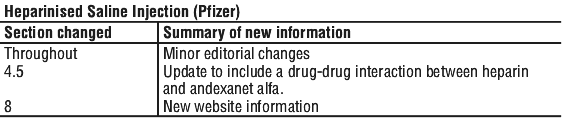
The concomitant use of heparin with andexanet alfa may reduce the effectiveness of heparin. Andexanet alfa, a recombinant modified human coagulation factor Xa used for reversal of anticoagulation with apixaban or rivaroxaban, has been shown to bind to heparin bound antithrombin III (ATIII) and may reduce the anticoagulant effect of heparin.
4.6 Fertility, Pregnancy and Lactation
Effects on fertility. No reproduction studies in animals have been performed concerning impairment of fertility.
Use in pregnancy. (Category C)
Animal reproduction studies have not been conducted with heparin sodium. It is also not known whether heparin sodium can cause foetal harm when administered to a pregnant woman or can affect reproduction capacity. Heparin sodium should be given to a pregnant woman only if clearly needed.
Use in lactation. Heparin is not excreted in the breast milk.
4.7 Effects on Ability to Drive and Use Machines
Heparin does not affect the ability to drive or use machines.
4.8 Adverse Effects (Undesirable Effects)
Haematological. Haemorrhage is the major risk associated with heparin therapy although the low dose of Heparinised Saline would not normally evoke this. An overly prolonged clotting time or minor bleeding during therapy can usually be controlled by withdrawing the drug.
Spinal and epidural haematoma. In patients treated with heparin for prophylaxis and who have undergone epidural or spinal anaesthesia or spinal puncture. These haematomas have caused various degrees of neurological impairment, which have included prolonged or permanent paralysis.
Hypersensitivity. Heparin in therapeutic and prophylactic doses is essentially non-toxic but may cause allergic reactions and possibly anaphylactic reactions in susceptible patients. Generalised hypersensitivity reactions have been reported, with chills, fever and urticaria as the most common manifestations; asthma, rhinitis, lacrimation, headache, nausea and vomiting, and anaphylactoid reactions (including shock) have occurred more rarely. Dyspnoea, bronchospasm, oedema of the glottis have also been observed with anaphylactic or hypersensitivity reactions.
Itching and burning, especially on the plantar site of the feet, may occur.
Thrombocytopenia, heparin-induced thrombocytopenia (HIT) and heparin-induced thrombocytopenia and thrombosis (HITT), and delayed onset of HIT and HITT. Thrombocytopenia induced by heparin may be of two types. The first is an acute, but usually mild, fall in platelet count occurring within 1 to 4 days of initiation of therapy and which may resolve without cessation of treatment. A direct effect of heparin on platelet aggregation appears to be responsible. The second type is a delayed onset thrombocytopenia, which has an immunological basis, and is more serious. It usually occurs after 7 to 11 days of heparin and drug withdrawal is indicated. Thrombocytopenia of any degree should be monitored closely (see Section 4.4 Special Warnings and Precautions for Use).
Local irritation. Skin necrosis at the injection site has been reported and is thought to be a local manifestation of heparin-induced platelet aggregation and thrombosis. This should be taken as a warning sign in patients who develop it and heparin therapy should be immediately discontinued. Local irritation and erythema have also been reported.
Hyperaldosteronism and hyperkalaemia. Hyperkalaemia most frequently occurs in patients with chronic renal decompensation or diabetes mellitus, or patients already being treated with drugs that induce hyperkalaemia.
Other. Osteoporosis, alopecia, increase in transaminase levels (AST, ALT, GGT).
Reporting suspected adverse effects. Reporting suspected adverse reactions after registration of the medicinal product is important. It allows continued monitoring of the benefit-risk balance of the medicinal product. Healthcare professionals are asked to report any suspected adverse reactions at www.tga.gov.au/safety/reporting-problems.
4.9 Overdose
Symptoms. The usual sign of overdosage is bleeding or haemorrhage. Nosebleeds, blood in urine or tarry stools may be noted as the first sign of bleeding. Easy bruising or petechial formations may precede frank bleeding.
Treatment. The drug should be withdrawn and clotting time and platelet count should be determined. Prolonged clotting time will indicate that there is an anticoagulant effect requiring neutralisation and, in this case, protamine sulfate should be administered. The dose should be calculated by titration of the individual patient's requirements but, as a general guide, approximately 1 mg of protamine sulfate neutralises 100 IU of heparin (mucous) that has been injected in the previous 15 minutes. No more than 50 mg should be administered, very slowly, in any 10 minute period. Since heparin is being continuously eliminated the dose should be reduced as time elapses. Although the metabolism of heparin is complex, it may, for the purpose of choosing a protamine dose, be assumed to have a half-life of about half an hour after intravenous injection.
Protamine may cause anaphylactoid reactions that may be life threatening. (See the protamine label for additional information.) Hence the drug should be given only when resuscitation techniques and treatment of anaphylactoid shock are readily available.
For information on the management of overdose, contact the Poisons Information Centre on 13 11 26 (Australia).
5 Pharmacological Properties
5.1 Pharmacodynamic Properties
Class of drug. Anticoagulant.
Mechanism of action. Heparin is a naturally occurring mucopolysaccharide with in vitro and in vivo anticoagulant activity. Heparin acts at multiple sites in the normal coagulation systems. Small amounts of heparin in combination with antithrombin III (heparin cofactor) can inhibit thrombosis by inactivating activated factor X and inhibiting the conversion of prothrombin to thrombin. Once active thrombosis has developed, larger amounts of heparin can inhibit further coagulation by inactivating thrombin, which in turn prevents the conversion of fibrinogen to fibrin. Under normal conditions an equilibrium between fibrinogen deposition and lysis keeps the vascular system free of thrombi. Under abnormal conditions of trauma, surgery or circulatory collapse, the equilibrium shifts towards clot formation. The action of heparin is to shift the equilibrium back towards normal, thereby reducing clot formation.
Clinical trials. No data available.
5.2 Pharmacokinetic Properties
Heparin is extensively bound to plasma proteins. It does not cross the placenta and is not excreted in breast milk. The exact route of metabolism of heparin is unknown and well defined renal elimination of the drug has not been identified. In the absence of evidence for a conventional route of elimination, transfer to an extravascular space such as the reticuloendothelial system has been postulated.
Bleeding time is usually unaffected by heparin. Clotting time is prolonged by full therapeutic doses of heparin; in most cases, it is not measurably affected by low doses.
Log linear plots of heparin plasma concentrations with time for a wide range of dose levels are linear, which suggests the absence of zero order processes. Liver and the reticuloendothelial system are the sites of biotransformation. The biphasic elimination curve, a rapidly declining alpha phase (t1/2 = 10 minutes) and, after the age of 40, a slower beta phase indicate uptake in organs. The absence of a relationship between anticoagulant half-life and concentration half-life may reflect factors such as protein binding of heparin.
Heparin does not have fibrinolytic activity; therefore, it will not lyse existing clots.
5.3 Preclinical Safety Data
Genotoxicity. No reproduction studies in animals have been performed concerning mutagenesis.
Carcinogenicity. No long-term studies in animals have been performed to evaluate the carcinogenic potential of heparin.
6 Pharmaceutical Particulars
6.1 List of Excipients
Hydrochloric acid, sodium chloride, sodium hydroxide, water for injection.
6.2 Incompatibilities
Heparinised Saline Injection is incompatible with certain substances in solution. Specialised literature should be consulted to verify with which substances incompatibilities have been noted. The following incompatibilities have been reported: amikacin sulfate, erythromycin lactobionate, gentamicin sulfate, kanamycin sulfate, streptomycin sulfate, tetracycline sulfate, tobramycin sulfate, vancomycin hydrochloride, hydrocortisone sodium succinate, doxorubicin, droperidol, ciprofloxacin, mitoxantrone, morphine sulfate, haloperidol lactate, promethazine hydrochloride, codeine phosphate, hyaluronidase, benzylpenicillin sodium, methadone hydrochloride, pethidine hydrochloride, reteplase, methicillin sodium, levorphanol bitartrate, alteplase, amiodarone hydrochloride, ampicillin sodium, aprotinin, cephalothin sodium, cytarabine, dacarbazine, daunorubicin hydrochloride, diazepam, dobutamine hydrochloride, netilmicin sulfate, oxytetracycline hydrochloride, polymyxin B sulfate, streptomycin sulfate, some phenothiazines, vinblastine sulfate, narcotic analgesics, antihistamines and colistin.
Heparin sodium has also been reported to be incompatible with cisatracurium besilate, labetalol hydrochloride and nicardipine hydrochloride. Admixture with glucose can have variable effects. Incompatibility has been reported between heparin and fat emulsion.
6.3 Shelf Life
In Australia, information on the shelf life can be found on the public summary of the Australian Register of Therapeutic Goods (ARTG). The expiry date can be found on the packaging.
6.4 Special Precautions for Storage
Store below 25°C. Single use only. Discard unused portion.
6.5 Nature and Contents of Container
AUST R 66684: Heparinised Saline Injection 50 IU/5 mL (sterile) Steriluer (50s) is supplied in an LDPE ampoule.
6.6 Special Precautions for Disposal
In Australia, any unused medicine or waste material should be disposed of in accordance with local requirements.
6.7 Physicochemical Properties
Chemical structure. Heparin is a heterogeneous group of straight-chain anionic mucopolysaccharides, called glycosaminoglycans, possessing anticoagulant properties. It is composed of polymers of alternating derivations of α-D-glucosamido (N-sulfated O-sulfated or N-acetylated) and O-sulfated uronic acid (α-L-iduronic acid or β-D-glucuronic acid).
Heparin sodium is a preparation containing the sodium salt of a sulfated glucosaminoglycan present in mammalian tissues. It is prepared from the intestinal mucosae of pigs. Heparin sodium is a white or almost white powder, moderately hygroscopic, freely soluble in water.
CAS number. 9005-49-6.
7 Medicine Schedule (Poisons Standard)
S4 (Prescription Medicine).
Date of First Approval
27 October 1998
Date of Revision
24 September 2025
Summary Table of Changes
Reasonable care is taken to provide accurate information at the time of creation. This information is not intended as a substitute for medical advice and should not be exclusively relied on to manage or diagnose a medical condition. The Australian Commission on Safety and Quality in Health Care disclaims all liability (including for negligence) for any loss, damage, injury or any other negative effects resulting from reliance on or use of this information. Read our full disclaimer. This website uses cookies. Read our privacy policy.