
Imukin
Brand Information
| Brand name | Imukin |
| Active ingredient | Interferon gamma-1b |
| Schedule | S4 |
Consumer Medicine Information (CMI) leaflet
Please read this leaflet carefully before you start using the Imukin.
Summary CMI
IMUKIN®
Consumer Medicine Information (CMI) summary
The full CMI on the next page has more details. If you are worried about using this medicine, speak to your doctor or pharmacist.
1. Why am I using IMUKIN?
IMUKIN contains the active ingredient interferon gamma-1b recombinant human. IMUKIN is used with other treatments to reduce the frequency of serious infections in people with Chronic Granulomatous Disease (CGD). For more information, see Section 1. Why am I using IMUKIN? in the full CMI.
2. What should I know before I use IMUKIN?
Do not use if you have ever had an allergic reaction to interferon gamma-1b recombinant human or any of the ingredients listed at the end of the CMI.
Talk to your doctor if you have any other medical conditions, take any other medicines, or are pregnant or plan to become pregnant or are breastfeeding.
For more information, see Section 2. What should I know before I use IMUKIN? in the full CMI.
3. What if I am taking other medicines?
Some medicines may interfere with IMUKIN and affect how it works.
A list of these medicines is in Section 3. What if I am taking other medicines? in the full CMI.
4. How do I use IMUKIN?
- Your doctor will advise you what volume of solution is required to achieve a dose.
- IMUKIN should be injected under the skin (subcutaneously) immediately after it is withdrawn from the vial and any unused portion should be thrown away.
More instructions can be found in Section 4. How do I use IMUKIN? in the full CMI.
5. What should I know while using IMUKIN?
| Things you should do |
|
| Things you should not do |
|
| Driving or using machines |
|
| Drinking alcohol |
|
| Looking after your medicine |
|
For more information, see Section 5. What should I know while using IMUKIN? in the full CMI.
6. Are there any side effects?
- Common side effects may include depression, diarrhoea, vomiting, nausea, stomach pain, rash, fever, headache, chills, muscle aches and pain (myalgia), joint pain, back pain, fatigue, injection site pain. Severe side effects may include chest pain, difficulty breathing, seizures, or confusion; shortness of breath during activity or when lying flat, swelling in the legs, ankles, or feet due to fluid build up.
For more information, including what to do if you have any side effects, see Section 6. Are there any side effects? in the full CMI.
Full CMI
IMUKIN®
Active ingredient: interferon gamma-1b recombinant human
Consumer Medicine Information (CMI)
This leaflet provides important information about using IMUKIN. You should also speak to your doctor or pharmacist if you would like further information or if you have any concerns or questions about using IMUKIN.
Where to find information in this leaflet:
1. Why am I using IMUKIN?
2. What should I know before I use IMUKIN?
3. What if I am taking other medicines?
4. How do I use IMUKIN?
5. What should I know while using IMUKIN?
6. Are there any side effects?
7. Product details
1. Why am I using IMUKIN?
IMUKIN contains the active ingredient interferon gamma-1b recombinant human.
IMUKIN is used with other treatments to reduce the frequency of serious infections in people with Chronic Granulomatous Disease (CGD).
2. What should I know before I use IMUKIN?
Warnings
Do not use IMUKIN if:
- You are allergic to interferon gamma 1b, or any of the ingredients listed at the end of this leaflet.
- you are allergic to other similar interferons
Check with your doctor if you:
- have pre-existing heart disease, including symptoms of angina, heart failure or irregular heartbeat (arrhythmia).
- have seizure disorders and/or disorders of the central nervous system (brain or spinal cord).
- are allergic to latex. The stopper of the glass vial with IMUKIN contains natural rubber (a derivative of latex).
- have reduced liver function.
During treatment, you may be at risk of developing certain side effects. It is important you understand these risks and how to monitor for them. See additional information under Section 6. Are there any side effects?
Pregnancy and breastfeeding
Discuss with your doctor if you are pregnant or intend to become pregnant. IMUKIN may affect your baby if you take it during pregnancy.
Discuss with your doctor if you are breastfeeding or intend to breastfeed. It is not known if IMUKIN passes into breast milk. Because of its potential to effect the baby, it is not recommended to breastfeed while taking IMUKIN.
3. What if I am taking other medicines?
Tell your doctor or pharmacist if you are taking any other medicines, including any medicines, vitamins or supplements that you buy without a prescription from your pharmacy, supermarket or health food shop.
Some medicines and IMUKIN may interfere with each other. These include:
- Other medical proteins made using recombinant technology
- Vaccines
- Anti-inflammatory medicines such as steroids (prednisone and prednisolone)
- Non-steroidal anti-inflammatory medicines (NSAIDs) used for the treatment of pain and fever, such as aspirin, ibuprofen, naproxen, diclofenac.
- A medicine used to treat lung conditions such as asthma and emphysema called theophylline.
Check with your doctor or pharmacist if you are not sure about what medicines, vitamins or supplements you are taking and if these affect IMUKIN.
4. How do I use IMUKIN?
How much to inject
- Your doctor will advise you what volume of solution is required to achieve the required dose.
- Follow the instructions provided and use IMUKIN until your doctor tells you to stop.
When to inject IMUKIN
- IMUKIN should be injected immediately after it is withdrawn from the vial and any unused portion of the vial should be thrown away.
- IMUKIN is usually injected three times each week (for example, Monday, Wednesday, Friday). Your doctor will advise on which days of the week IMUKIN should be injected.
How to inject IMUKIN
- Injections are administered under the skin (subcutaneously). The best sites for injection are the upper arms or fronts of the thighs.
- IMUKIN can be given by a doctor or nurse, or by the patient or a family member once they are trained in giving the injections correctly.
Directions for Use
- Wash hands with soap and water and dry thoroughly to help prevent infection.
- Check that the IMUKIN solution is clear. NEVER SHAKE THE VIAL. Shaking can cause the solution to become cloudy or hazy. If the solution is cloudy, hazy or discoloured or if it contains any solid particles, do not inject it, but return it to your doctor or pharmacist.
- Check the expiry date on the IMUKIN vial to ensure it has not passed.
- Remove the protective cap from the vial and wipe the rubber stopper on the top of the vial with a cotton ball saturated with rubbing alcohol, or with an alcohol swab.
- Leaving the needle cap in place, pull back on the plunger of the syringe until you have drawn an amount of air into the syringe equal to the volume of IMUKIN your doctor has ordered for each dose.
- Remove and save the needle cap from the syringe. Holding the syringe by the side of the plastic tube, slowly insert the needle straight through the center of the rubber stopper of the IMUKIN vial to be used.
- Gently push the plunger to discharge the air into the vial.
- Turn the vial upside down with the syringe needle still in it and hold it in one hand. Be sure the tip of the needle is in the solution. Using your other hand, slowly pull on the plunger in a continuous motion until the correct amount of IMUKIN solution is in the syringe. Avoid injecting the solution back into the vial as this may cause the formation of small colourless particles.
- With the syringe and vial still held upside down in one hand, gently tap the syringe with your hand to dislodge any large air bubbles. The bubbles will rise to the top of the syringe and can be pushed back into the vial by gently pushing in the plunger. Make sure the correct amount of IMUKIN solution remains in the syringe. You may need to withdraw more IMUKIN solution if there were a lot of bubbles in the syringe.
- Remove the needle from the IMUKIN vial and carefully replace the needle cap until time of administering the injection. Place the needle and syringe on a clean surface.
Selecting the injection site
- The best sites for injection are the upper arms or fronts of the thighs. It is very important that you alternate the site of injection every time you give the medication. The exact same spot within each area should not be used time after time.
Injecting the dose
Needles and syringes should be used only once to ensure they remain sterile.
- Applying firm pressure, clean the injection site with an alcohol-saturated cotton ball or cotton swab using a circular motion and working outward from the inside of the circle. Once you have cleaned the center of the circle, do not go back to it with the same swab. Allow the alcohol to dry before inserting the needle. This will reduce the stinging sensation.
- Remove the needle cap from the syringe filled with the proper dose of IMUKIN and hold the syringe the way you would hold a pencil. Double check the correct amount of IMUKIN solution is in the syringe.
- Gently pinch up the skin surrounding the site of injection and hold firmly with your other hand. Insert the needle into the skin at a 45-degree angle with a quick, firm motion. This hurts less than slowly pushing the needle in.
- Once the needle has been inserted into the skin, you can release your hold of the skin. Inject the solution by gently pushing the plunger until the syringe is empty.
- Withdraw the needle quickly, pulling it straight out, and apply pressure over the injection site with a dry gauze or cotton ball. A drop of blood may appear. Put a dressing on the injection site if desired.
- Any unused portion of IMUKIN remaining in the vial should be thrown away.
- Dispose of the needle and syringe in a sharps container. These are available from your pharmacist.
If you forget to use IMUKIN
Do not take a double dose to make up for the dose you missed.
Inject IMUKIN at the times recommended by your doctor. You can still administer it on the same or following day. Contact your doctor if you think you have gone too long without taking a dose.
If you use too much IMUKIN
If you think that you or anyone else may have taken too much IMUKIN, you may need urgent medical attention.
You should immediately:
- phone the Poisons Information Centre
(by calling 13 11 26), or - contact your doctor, or
- go to the Emergency Department at your nearest hospital.
You should do this even if there are no signs of discomfort or poisoning.
5. What should I know while using IMUKIN?
Things you should do
Be sure to keep all of your doctor's appointments so that your progress can be checked. Your doctor will check your progress and may want to take some tests (e.g. blood tests, urine tests) from time to time. These tests may help to prevent side effects.
Remind any doctor, dentist or pharmacist you visit that you are using IMUKIN.
Things you should not do
Do not stop using this medicine suddenly unless you have discussed it with your doctor.
Driving or using machines
Be careful before you drive or use any machines or tools until you know how IMUKIN affects you.
IMUKIN may cause fatigue, convulsion, confusional state, disorientation or hallucination during treatment. It can also affect reactions which can alter your ability to drive or operate machinery and this may be made worse by alcohol.
Drinking alcohol
Tell your doctor if you drink alcohol.
Alcohol used in combination with IMUKIN may affect your reflexes.
Looking after your medicine
Store IMUKIN in the refrigerator where the temperature stays between 2-8°C. Do not freeze IMUKIN.
IMUKIN should not be left for more than 12 hours at room temperature (25°C). Avoid exposing IMUKIN to high temperatures during transport, for example, use an insulated container.
Do not shake the vials. IMUKIN should not be used if the solution contains any solid particles or if it's cloudy, hazy or discoloured.
Follow the instructions in the carton on how to take care of your medicine properly.
When to discard your medicine
Once opened, the contents of a vial should be used immediately, and any unused portion of any vial should be discarded.
Getting rid of any unwanted medicine
If you no longer need to use this medicine or it is out of date, take it to any pharmacy for safe disposal.
Do not use this medicine after the expiry date.
6. Are there any side effects?
All medicines can have side effects. If you do experience any side effects, most of them are minor and temporary. However, some side effects may need medical attention.
See the information below and, if you need to, ask your doctor or pharmacist if you have any further questions about side effects.
Less serious side effects
| Less serious side effects | What to do |
Psychiatric disorders
| Speak to your doctor if you have any of these less serious side effects and they worry you. |
Serious side effects
| Serious side effects | What to do |
Lung related
| Call your doctor straight away or go straight to the Emergency Department at your nearest hospital if you notice any of these serious side effects. |
Tell your doctor or pharmacist if you notice anything else that may be making you feel unwell.
Other side effects not listed here may occur in some people.
Reporting side effects
After you have received medical advice for any side effects you experience, you can report side effects to the Therapeutic Goods Administration online at www.tga.gov.au/reporting-problems. By reporting side effects, you can help provide more information on the safety of this medicine.
Always make sure you speak to your doctor or pharmacist before you decide to stop taking any of your medicines.
7. Product details
This medicine is only available with a doctor's prescription.
What IMUKIN contains
| Active ingredient (main ingredient) | Interferon gamma-1b recombinant human |
| Other ingredients (inactive ingredients) | Mannitol Sodium succinate hexahydrate Succinic acid Polysorbate 20 Water for injections |
Do not take this medicine if you are allergic to any of these ingredients.
What IMUKIN looks like
IMUKIN comes as a sterile, clear, colourless solution in clear glass vials which are packed into cartons containing 6 vials.
Australian Registration Number:
IMUKIN 2 million IU (100 mcg)/0.5 mL – AUST R 48404
Who distributes IMUKIN
Link Medical Products Pty Ltd
5 Apollo Street
Warriewood, NSW, 2102
Australia
1800 181 060
linkhealthcare.com.au
This leaflet was prepared in October 2025.
Brand Information
| Brand name | Imukin |
| Active ingredient | Interferon gamma-1b |
| Schedule | S4 |
MIMS Revision Date: 01 June 2021
1 Name of Medicine
Interferon gamma-1b recombinant human.
2 Qualitative and Quantitative Composition
Vials containing 2 x 10⁶ IU (100 microgram) interferon gamma-1b (rbe) per 0.5 mL.
Imukin (interferon gamma - 1b [rbe]), a biologic response modifier, is a single-chain polypeptide containing 140 amino acids. Production of Imukin is achieved by fermentation of a genetically engineered Escherichia coli bacterium containing the DNA which encodes the human protein. Purification of the product is achieved by conventional column chromatography.
Imukin is a highly purified sterile solution consisting of noncovalent dimers of two identical 16,465 dalton monomers, with a specific activity of 20 million IU/mg.
List of excipients. For the full list of excipients see Section 6.1 List of Excipients.
3 Pharmaceutical Form
Solution for injection.
4 Clinical Particulars
4.1 Therapeutic Indications
Imukin is indicated as an adjunct for reduction of the frequency of serious infections in patients with chronic granulomatous disease (CGD).
The benefits of Imukin have been most marked in children with CGD although Imukin may be used in adult patients.
4.2 Dose and Method of Administration
The recommended dosage of Imukin for injection for the treatment of patients with CGD is 1 x 10⁶ IU (50 microgram)/m2 for patients whose body surface area is greater than 0.5 m2, and 3 x 10⁴ IU (1.5 microgram)/kg/dose for patients whose body surface area is equal to or less than 0.5 m2.
Care should be taken to ensure accurate adjustment of the volume of solution drawn into the syringe prior to injection. Injections should be administered subcutaneously three times weekly (for example, Monday, Wednesday, Friday). The optimum sites of injection are the right and the left deltoid region and anterior thigh. Imukin can be administered by a physician, nurse, family member or patient once they are trained in the administration of subcutaneous injections.
Treatment with Imukin should continue in the event of infectious complications related to CGD. In the event of other intercurrent illness, the treating physician should decide if and for how long Imukin should be discontinued. If severe reactions occur, therapy should be discontinued until the reaction abates.
There are limited data available to adequately characterise the patient population most likely to benefit from Imukin. However, there is some evidence to suggest that Imukin may be most effective in the young, in those with X-linked disease and in those with a history of more serious prior infection. In adult patients, a significant difference between Imukin and placebo has not been demonstrated.
Higher doses are not recommended. The optimum dose of Imukin has not been established. Safety and efficacy have not been established for Imukin given in doses greater or less than the recommended dose of 1 x 10⁶ IU (50 microgram)/m2 three times weekly.
Available data indicate that Imukin is well tolerated and patients continue to benefit through 12 months of therapy. It is not known how long treatment with Imukin should continue since the safety and efficacy of a longer duration of treatment are unknown.
4.3 Contraindications
Imukin is contraindicated in patients who develop or have known acute hypersensitivity to interferon gamma, known hypersensitivity to closely related interferons or to any component of the product.
4.4 Special Warnings and Precautions for Use
Imukin should be used with caution in patients with pre-existing cardiac disease, including symptoms of ischaemia, congestive heart failure or arrhythmia. No direct cardiotoxic effect has been demonstrated, but it is possible that acute and transient "flu-like" or constitutional symptoms such as fever and chills, frequently associated with Imukin administration at doses of 5 x 10⁶ IU (250 microgram)/m2/day or higher, may exacerbate pre-existing cardiac conditions.
Caution should be exercised when treating patients with known seizure disorders and/or compromised central nervous system function. Central nervous system reactions including decreased mental status, gait disturbance and dizziness have been observed, particularly in patients receiving doses greater than 5 x 10⁶ IU (250 microgram)/m2/day. Most of these abnormalities were mild and reversible within a few days upon dose reduction or discontinuation of therapy.
Reversible neutropenia and thrombocytopenia which have been observed during Imukin therapy can be severe and may be dose related. Caution should be exercised when administering Imukin to patients with myelosuppression.
Use of Imukin should be restricted to physicians experienced in the management of patients with CGD.
Patients being treated with Imukin, and their parents, should be informed regarding the potential benefits and risks associated with treatment. If home use is considered to be desirable by the physician, instructions on appropriate use should be given.
In addition to tests normally required for monitoring patients with CGD, patients should have the following tests performed before beginning Imukin therapy and at appropriate periods during treatment: haematological tests, including complete blood counts, differential and platelet counts; blood chemistries, including renal and liver function tests; urinalysis.
Interferon gamma 1b, the active ingredient of Imukin, is an exogenous protein, which may lead to the occurrence of antibodies during the course of treatment. More than 900 patients treated with Imukin in single agent clinical trials have been tested for the presence of antibody to interferon gamma by a sensitive radioimmunoprecipitation assay which detects neutralising as well as non-neutralising antibody. All assays performed to date have been negative, with the exception of one patient, whose subsequent samples were negative. However, since the interferon gamma present in Imukin is not identical to the corresponding endogenous interferon, it would be prudent to monitor patients periodically for the presence of antibodies against Imukin.
The stopper of the glass vial with Imukin contains natural rubber (a derivative of latex) which may cause allergic reactions.
Use in hepatic and renal impairment. Caution should be observed in patients with hepatic insufficiency (see Effects on laboratory tests).
Patients with serious liver disease and patients with severe renal insufficiency should be treated with caution since the possibility of interferon gamma accumulation exists in these patients.
Use in the elderly. No data available.
Paediatric use. Imukin is indicated in children.
Effects on laboratory tests. Elevations of AST and/or ALT have been observed during Imukin therapy, as early as 7 days after starting therapy. The incidence appeared to be higher in patients less than 1 year of age compared to older children. The transaminase elevations were reversible with reduction in dosage or interruption of Imukin treatment.
4.5 Interactions with Other Medicines and Other Forms of Interactions
Simultaneous administration of interferon gamma with other heterologous serum protein preparations or immunological preparations (e.g. vaccines) should be avoided because of the risk of unexpected amplified immune response.
Caution should be exercised in concomitant administration of Imukin with other myelosuppressive drugs.
Imukin does not reduce the efficacy of antibiotics or glucocorticoids in CGD patients.
Drug interactions seen with Imukin are similar to those seen with other interferons in animal experiments.
It is theoretically possible that hepatotoxic and/or nephrotoxic drugs might have effects on the clearance of Imukin. Also, the effects of anti-inflammatory drugs, NSAIDs, theophylline, immunosuppressive and cytostatic drugs on the acute cellular effects of Imukin and its therapeutic effects in CGD patients when such drugs are used concomitantly in chronic conditions, are not known.
Imukin potentially can alter the half-lives of simultaneously administered drugs which are metabolised by the cytochrome P450 system.
Concurrent use of drugs having neurotoxic (including effects on the central nervous system), haemotoxic, myelosuppressive or cardiotoxic effects may increase the toxicity of interferons in these systems.
Imukin should not be mixed with other drugs in the same syringe.
4.6 Fertility, Pregnancy and Lactation
Effects on fertility. Studies investigating the effect of interferon gamma on human fertility have shown conflicting results. Based on the information available it cannot be excluded that the presence of higher levels of interferon gamma may impair male fertility or that increased levels of interferon gamma may have played a role in certain cases of female infertility. In younger patients the long-term effect on fertility is also unknown.
Female cynomolgus monkeys exhibited irregular menstrual cycles or absence of cyclicity when treated with daily subcutaneous doses above approximately 7.2 x 10⁶ IU (360 microgram)/m2. No studies have been performed assessing any potential effects of Imukin on male fertility in primates.
Use in pregnancy. (Category B3)
The developmental toxicity of Imukin has not been fully and adequately investigated in species known to be responsive to this product. Imukin has shown an increased incidence of abortions in primates dosed subcutaneously with approximately 3.6 x 10⁶ IU (180 microgram)/m2 but failed to demonstrate teratogenic activity for Imukin. There are no adequate and well controlled studies in pregnant women. Imukin should be used during pregnancy only if the potential benefit justifies the potential risk to the foetus. In addition, studies evaluating recombinant murine interferon gamma in pregnant mice revealed increased incidences of uterine bleeding and abortifacient activity and decreased neonatal viability at maternally toxic doses. The clinical significance of this latter observation with recombinant murine interferon gamma tested in a homologous system is uncertain.
Use in lactation. It is not known whether Imukin is excreted in human milk. Breastfeeding is not recommended because of unknown risk to the newborn.
4.7 Effects on Ability to Drive and Use Machines
No studies on the effect on the ability to drive and use machines have been performed. However, patients should be advised that they may experience undesirable effects such as fatigue, convulsion, confusional state, disorientation or hallucination during treatment. Therefore, caution should be recommended when driving a car or operating machinery. If patients experience any of these events, they should avoid potentially hazardous tasks such as driving or operating machinery.
Even when given at the recommended dosage of 1 x 10⁶ IU (50 microgram)/m2 by subcutaneous injection, Imukin may affect reactions such that the ability to drive a vehicle or to operate machinery is impaired. This effect may be enhanced by alcohol.
4.8 Adverse Effects (Undesirable Effects)
The clinical and laboratory toxicities associated with multiple dose Imukin therapy are dose, route and schedule dependent.
Serious adverse reactions have not been observed in patients receiving the recommended dose of Imukin 1 x 10⁶ IU (50 microgram)/m2 by subcutaneous injection.
The most common adverse experiences occurring with Imukin therapy are constitutional symptoms such as fever, headache, chills, myalgia or fatigue, which may decrease in severity as treatment continues. Some of these symptoms can be minimised by bedtime administration. Paracetamol may also be used to ameliorate these effects. Anorexia and weight loss have been observed in clinical trials at a similar incidence to placebo.
The following definitions apply to the frequency terminology used hereafter: very common (≥ 1/10); common (≥ 1/100 - < 1/10); uncommon (≥ 1/1,000 - < 1/100); rare (≥ 1/10,000 - < 1/1,000); very rare (< 1/10,000); frequency not known (cannot be estimated from the available data).
Blood and lymphatic system disorders. Frequency not known: neutropenia, thrombocytopenia.
Metabolism and nutrition disorders. Frequency not known: hyponatraemia*, hyperglycaemia*, hypertriglyceridaemia*.
Psychiatric disorders. Common: depression. Frequency not known: confusional state*, disorientation*, hallucination*.
Nervous system disorders. Frequency not known: convulsion*, Parkinsonian gait*, Parkinsonian rest tremor*, gait disturbance*.
Cardiac disorders. Frequency not known: cardiac failure*, myocardial infarction*, tachyarrhythmia*, atrioventricular block*.
Vascular disorders. Frequency not known: transient ischaemic attack*, deep vein thrombosis*, pulmonary embolism*, hypotension*, syncope*.
Respiratory, thoracic and mediastinal disorders. Frequency not known: interstitial lung disease*, bronchospasm*, tachypnoea*.
Gastrointestinal disorders. Very common: diarrhoea, vomiting, nausea. Common: abdominal pain. Frequency not known: pancreatitis (including fatal outcome)*, gastrointestinal haemorrhage*.
Hepatobiliary disorders. Very common: hepatic enzymes increased. Frequency not known: hepatic failure*.
Skin and subcutaneous tissue disorders. Very common: rash. Frequency not known: (exacerbation of) dermatomyositis*.
Musculoskeletal and connective tissue disorders. Common: myalgia, arthralgia, back pain. Frequency not known: systemic lupus erythematosus*.
Renal and urinary disorders. Frequency not known: (reversible) renal failure*, proteinuria.
General disorders and administration site conditions. Very common: fever, headache, chills, fatigue, injection site pain. Frequency not known: chest discomfort*.
Investigations. Frequency not known: autoantibody positive*.
*These adverse reactions were seen in clinical trials of conditions other than the registered indications and usually at doses higher than recommended.
Reporting suspected adverse events. Reporting suspected adverse reactions after registration of the medicinal product is important. It allows continued monitoring of the benefit-risk balance of the medicinal product. Healthcare professionals are asked to report any suspected adverse reactions at www.tga.gov.au/reporting-problems.
4.9 Overdose
For information on the management of overdose, contact the Poisons Information Centre on 131126 (Australia).
Imukin has been administered at higher doses (> 2 x 10⁶ IU (100 microgram)/m2) to patients with advanced malignancies by the intravenous or intramuscular route.
Central nervous system adverse reactions, including decreased mental status, gait disturbance and dizziness, have been observed, particularly in cancer patients receiving doses greater than 2 x 10⁶ IU (100 microgram)/m2/day. These abnormalities were reversible within a few days upon dose reduction or discontinuation of therapy. Reversible neutropenia, elevation of hepatic enzymes, raised triglycerides and thrombocytopenia have also been observed.
In patients with pre-existing cardiac disease, including symptoms of ischaemia, congestive heart failure or arrhythmia, no direct cardiotoxic effect has been demonstrated, but at very high doses (5 x 10⁶ IU (250 microgram)/m2/day or higher), it is possible that acute, self-limited constitutional toxicities may exacerbate pre-existing cardiac conditions.
5 Pharmacological Properties
5.1 Pharmacodynamic Properties
Mechanism of action. Interferons are a family of functionally related proteins synthesised by eukaryotic cells in response to viruses and a variety of natural and synthetic stimuli. Early studies suggest that interferon gamma increases macrophage cytotoxicity by enhancing the respiratory burst via generation of toxic oxygen metabolites capable of mediating the killing of intracellular microorganisms. It increases HLA-DR expression on macrophages and augments Fc receptor expression which results in increased antibody dependent cell mediated cytotoxicity. However, the mechanism of action of Imukin in chronic granulomatous disease (CGD) remains unknown.
Clinical trials. In a placebo controlled clinical trial in patients with CGD, Imukin was shown to reduce the frequency of serious infections during the trial period of 12 months. The majority of these patients were also receiving prophylactic antimicrobial therapy. The data generated in this trial on superoxide production and staphylococcal killing by phagocytes did not confirm the proposed immunomodulatory effects. However, the clinical endpoints clearly established the benefit of Imukin therapy and suggest that broader anti-infective mechanisms beyond just oxidative pathways may exist.
Data on the safety and efficacy of Imukin in 37 CGD patients under the age of 3 years were pooled from 4 uncontrolled postmarketing studies and 2 sequential postmarketing surveillance studies. The rate of serious infections per patient year in this uncontrolled group was similar to the rate observed in the Imukin treatment groups in controlled trials.
In 6 of the 10 patients receiving Imukin therapy before age one year, 2-fold to 25-fold elevations from baseline of aspartate aminotransferase (AST) and/or alanine aminotransferase (ALT) were observed. These elevations occurred as early as 7 days after starting treatment. Treatment with Imukin was interrupted in all 6 of these patients and was restarted at a reduced dosage in 4. Liver transaminase values returned to baseline in all patients and transaminase elevations recurred in one patient upon Imukin rechallenge.
5.2 Pharmacokinetic Properties
Absorption. Imukin is rapidly cleared after intravenous administration. It is slowly cleared after intramuscular or subcutaneous administration although it is well absorbed. The mean elimination half-lives were 38 minutes, 2.9 hours and 5.9 hours after administration of a single 2 x 10⁶ IU (100 microgram)/m2 injection by intravenous, intramuscular and subcutaneous routes, respectively. Following subcutaneous single dose administration of 0.05 mg/m2 of Imukin in healthy male subjects, a mean peak plasma concentration (Cmax) of 631 picogram/mL (CV = 33.82%) was observed after a mean time (tmax) of 8 hours (CV = 28.20%), being the mean area under the curve (AUC0-∞) 8.3 nanogram.h/mL. Similar times of maximum plasma levels have been reported in male and female patients with lymphoma, plasmacytoma or solid tumours (6.3 ± 2.0 hours, mean ± S.D.) after the subcutaneous administration of doses in the range of 0.1-0.5 mg/m2. Intramuscular administration showed peak plasma concentrations after about 4 hours. The apparent fraction of drug absorbed after intramuscular or subcutaneous injection was greater than 89%. A dose proportionality has been demonstrated after intravenous and intramuscular administration for doses ranging from 0.1 mg/m2 to 2.5 mg/m2 and after subcutaneous administration from 0.1 mg/m2 to 0.5 mg/m2.
Distribution. The initial volume of distribution following intravenous administration of Imukin was 12.4 L. In another study, the volume of distribution after administration of a subcutaneous dose was 47.93 L (S.D. ± 25.55 L). In healthy male subjects, there was no accumulation of Imukin after 12 consecutive daily injections of 0.1 mg/m2. The mean value of the MRT after subcutaneous administration in the range of 0.1-0.5 mg/m2 is 10.95 h (S.D. ± 2.40 h).
Metabolism. The metabolism of the cloned interferons falls within the natural handling of proteins. Interferon gamma was not detected in the urine of healthy male subjects following administration of 0.1 mg/m2 via intravenous, intramuscular or subcutaneous routes. The mean value of the apparent clearance following subcutaneous single dose administration in the range of 0.1-0.5 mg/m2 was 287 mL/min (S.D. ± 148 mL/min).
Excretion. In vitro hepatic and renal perfusion studies demonstrate that the liver and kidneys are capable of clearing Imukin from perfusate. Preclinical studies in nephrectomised animals demonstrated a reduction in the clearance of interferon gamma from blood; however prior nephrectomy did not prevent elimination.
5.3 Preclinical Safety Data
Genotoxicity. The Ames test revealed no evidence of mutagenic potential and a micronucleus assay showed no evidence of chromosomal damage.
Carcinogenicity. Imukin has not been tested for its carcinogenic potential.
6 Pharmaceutical Particulars
6.1 List of Excipients
Mannitol, sodium succinate hexahydrate, succinic acid, polysorbate 20, water for injections.
6.2 Incompatibilities
Imukin should not be mixed with other drugs in the same syringe (see Section 4.5 Interactions with Other Medicines and Other Forms of Interactions).
6.3 Shelf Life
3 years.
The formulation does not contain a preservative. Once opened, the contents of a vial should be used immediately. Each vial is for use in one patient on one occasion only. The unused portion of any vial should be discarded.
Parenteral drug products should be inspected visually for particulate matter and discolouration prior to administration.
6.4 Special Precautions for Storage
Vials of Imukin must be placed in a refrigerator (2 - 8°C), but must not be frozen or shaken vigorously.
An unused vial of Imukin should not be left at room temperature for a total time exceeding 12 hours prior to use.
6.5 Nature and Contents of Container
Packs of 6 vials.
6.6 Special Precautions for Disposal
In Australia, any unused medicine or waste material should be disposed of in accordance with local requirements.
6.7 Physicochemical Properties
Chemical structure. See Section 2 Qualitative and Quantitative Composition.
CAS number. 95059-61-1.
7 Medicine Schedule (Poisons Standard)
S4 - Prescription Only Medicine.
Date of First Approval
08 April 1994
Date of Revision
29 April 2021
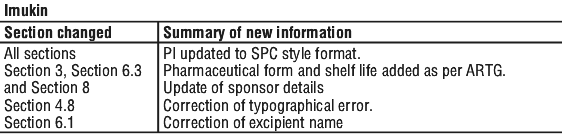
Summary Table of Changes
Reasonable care is taken to provide accurate information at the time of creation. This information is not intended as a substitute for medical advice and should not be exclusively relied on to manage or diagnose a medical condition. The Australian Commission on Safety and Quality in Health Care disclaims all liability (including for negligence) for any loss, damage, injury or any other negative effects resulting from reliance on or use of this information. Read our full disclaimer. This website uses cookies. Read our privacy policy.