
Influvac
Brand Information
| Brand name | Influvac |
| Active ingredient | Influenza virus vaccine, surface antigen, trivalent (inactivated) |
| Schedule | S4 |
Consumer Medicine Information (CMI) leaflet
Please read this leaflet carefully before you start using the Influvac.
Summary CMI
INFLUVAC®
Consumer Medicine Information (CMI) summary
The full CMI on the next page has more details. If you are worried about receiving this medicine, speak to your doctor, nurse or pharmacist.
1. Why am I receiving INFLUVAC?
INFLUVAC is an influenza vaccine containing inactivated fragments from three types of influenza virus. This type of vaccine is also known as a trivalent influenza vaccine. INFLUVAC is used to prevent certain types of influenza (commonly called the flu) and can be used in adults and children 6 months of age and older.
For more information, see Section 1. Why am I receiving INFLUVAC? in the full CMI.
2. What should I know before I receive INFLUVAC?
Do not receive INFLUVAC if you have had an allergic reaction to INFLUVAC, to any other influenza vaccine or to any of the ingredients listed at the end of the CMI.
Talk to your doctor, nurse or pharmacist if you have any other medical conditions, take any other medicines, or are pregnant or plan to become pregnant or are breastfeeding.
INFLUVAC is given by injection. Tell the doctor, nurse or pharmacist if you have ever fainted when receiving an injection.
INFLUVAC is usually stored at the pharmacy or at the doctor's clinic or surgery. If you need to store the vaccine, keep it in the fridge between 2°C to 8°C. Do not freeze.
For more information, see Section 2. What should I know before I receive INFLUVAC? in the full CMI.
3. What if I am taking other medicines?
Some medicines may interfere with INFLUVAC and affect how it works.
For more information, see Section 3. What if I am taking other medicines? in the full CMI.
4. How is INFLUVAC given?
- The doctor, nurse or pharmacist will give INFLUVAC as an injection.
- Adults and children over 36 months of age: 0.5 mL. Children from 6 to 35 months of age: 0.25 mL.
- For children less than 9 years of age who have not previously been vaccinated, a second dose of should be given after an interval of at least 4 weeks.
More information can be found in Section 4. How is INFLUVAC given? in the full CMI.
5. What should I know after receiving INFLUVAC?
| Driving or using machines |
|
For more information, see Section 5. What should I know after receiving INFLUVAC? in the full CMI.
6. Are there any side effects?
Most unwanted effects with INFLUVAC are mild and usually clear up within a few days.
In adults and children, common side effects include pain and discomfort at the injection site, headache, tiredness, muscle and joint aches/pains, generally feeling unwell, shivering.
Serious side effects such as a serious allergic reaction may occur rarely.
For more information, including what to do if you have any side effects, see Section 6. Are there any side effects? in the full CMI.
Full CMI
INFLUVAC®
Active ingredient(s): Trivalent Influenza Vaccine, surface antigen, inactivated (influenza virus haemagglutinin)
Consumer Medicine Information (CMI)
This leaflet provides important information about using INFLUVAC. You should also speak to your doctor, nurse or pharmacist if you would like further information or if you have any concerns or questions about receiving INFLUVAC.
Where to find information in this leaflet:
1. Why am I receiving INFLUVAC?
2. What should I know before I receive INFLUVAC?
3. What if I am taking other medicines?
4. How is INFLUVAC given?
5. What should I know after receiving INFLUVAC?
6. Are there any side effects?
7. Product details
1. Why am I receiving INFLUVAC?
INFLUVAC is a trivalent influenza vaccine containing inactivated fragments from three types of influenza virus.
INFLUVAC is used to prevent certain types of influenza (commonly called the flu). The vaccine works by causing the body to produce its own protection (antibodies) against four different types of influenza virus.
Each year new types of influenza virus can appear, so every year INFLUVAC is changed to contain fragments of the new types of virus. Therefore, influenza vaccination is recommended every year.
Please note that INFLUVAC will only protect you against the three types of influenza virus used to make the vaccine. It will not protect you from influenza caused by other types of influenza virus or from infections with other agents causing flu-like symptoms (such as the common cold).
INFLUVAC can be used in adults and children over the age of 6 months.
2. What should I know before I receive INFLUVAC?
Warnings
Do not receive INFLUVAC if:
- You are allergic to any influenza vaccine or any of the ingredients listed at the end of this leaflet. Signs of an allergic reaction may include itchy skin rash, shortness of breath and swelling of the face or tongue.
- You currently have a severe infection or fever. A minor infection such as a cold should not be a problem, but talk to your doctor, nurse or pharmacist about this before being vaccinated.
Check with your doctor, nurse or pharmacist if:
- You have received INFLUVAC before and became unwell.
- You have ever had an illness affecting the nervous system, especially Guillain-Barre Syndrome (GBS). If you have had GBS, you may be more likely to develop GBS following influenza vaccination than someone who has never had GBS.
- You have any medical conditions, such as an immune deficiency condition, thrombocytopenia, coagulation disorder or bleeding disorder.
- You have ever fainted or fallen or felt faint just before or after receiving an injection.
Pregnancy and breastfeeding
Check with your doctor, nurse or pharmacist if you are pregnant or intend to become pregnant. They will discuss with you the benefits and risks of receiving INFLUVAC when pregnant.
Tell your doctor, nurse or pharmacist if you are breast feeding. They will discuss the risks and benefits of vaccination however the vaccine is not expected to cause problems for breast-fed babies.
Storage
INFLUVAC is usually stored at the pharmacy, at the doctor's surgery or at the flu vaccination clinic.
If you need to store INFLUVAC, always:
- Keep it in the refrigerator stored between 2°C to 8°C.
Do not freeze as freezing destroys the vaccine.
- Keep it where young children cannot reach it.
- Keep it in the original pack until it is time for it to be given.
Ask your pharmacist what to do with any leftover INFLUVAC that has expired or has not been used.
3. What if I am taking other medicines?
Tell your doctor, nurse or pharmacist if you have received another vaccine this year or if you are taking any other medicines, including any that you buy without a prescription from your pharmacy, supermarket or health food shop.
4. How is INFLUVAC given?
How it is given
The doctor, nurse or pharmacist will give INFLUVAC as an injection.
For some people with bleeding problems, the injection may need to be given under the skin (subcutaneously).
INFLUVAC should never be given into a vein (intravenously).
How much is given
The doctor, nurse or pharmacist will give based on the following age groups:
- For adults and children over 36 months of age: a single 0.5 mL dose of INFLUVAC.
- For children from 6 to 35 months of age: a single 0.25 mL dose of INFLUVAC.
For children less than 9 years of age who have not previously been vaccinated, a second dose should be given after an interval of at least 4 weeks.
When it is given
INFLUVAC is generally given as a single dose in autumn each year before the start of the flu season.
You should receive a repeated vaccination every year as new types of influenza virus can appear each year.
If the dose is missed
Talk to your doctor, nurse or pharmacist and arrange another visit as soon as possible.
5. What should I know after receiving INFLUVAC?
As with any vaccine, a protective immune response may not be elicited in all vaccines.
Driving or using machines
Be careful before you drive or use any machines or tools until you know how INFLUVAC affects you.
INFLUVAC should not normally interfere with your ability to drive a car or operate machinery. But in some people vaccination can cause dizziness or light-headedness. Make sure you know how you react to INFLUVAC before you drive a car, operate machinery, or do anything that could be dangerous if you are dizzy or light-headed.
6. Are there any side effects?
Tell your doctor, nurse or pharmacist as soon as possible if you do not feel well during or after receiving a dose of INFLUVAC.
All medicines can have side effects. Most unwanted effects with INFLUVAC are mild and usually clear up within a few days. These effects, as with other vaccines, generally occur around the injection site.
However, some side effects may need medical attention. As with all vaccines given by injection there is a very small risk of serious reactions. Allergy to INFLUVAC is rare. Any such severe reactions will usually occur within the first few hours of vaccination.
Ask your doctor, nurse or pharmacist if you have any questions about side effects.
Less serious side effects
| Less serious side effects | What to do |
Injection-site related:
| Speak to your doctor, nurse or pharmacist if you have any of these less serious side effects and they worry you. |
Serious side effects
| Serious side effects | What to do |
Allergic reaction:
| Call your doctor straight away, or go straight to the Emergency Department at your nearest hospital if you notice any of these serious side effects. |
As with all vaccines given by injection there is a very small risk of such reactions. Allergy to INFLUVAC is rare. Any such severe reactions will usually occur within the first few hours of vaccination.
Tell your doctor or pharmacist if you notice anything else that may be making you feel unwell.
Other side effects not listed here may occur in some people.
Reporting side effects
After you have received medical advice for any side effects you experience, you can report side effects to the Therapeutic Goods Administration online at www.tga.gov.au/reporting-problems. By reporting side effects, you can help provide more information on the safety of this medicine.
7. Product details
This medicine is available with a doctor's prescription or from a flu vaccination clinic.
What INFLUVAC contains
| Active ingredients (main ingredient) | Each 0.5 mL dose of INFLUVAC contains 15 micrograms of each of the three types of influenza virus fragments:
|
| Other ingredients (inactive ingredients) |
|
| Potential allergens | The vaccine also contains limited quantities of egg protein (ovalbumin or chicken proteins), formaldehyde, cetrimonium bromide, sodium citrate, sucrose, gentamicin sulfate, traces of tylosine tartrate, hydrocortisone and polysorbate 80. |
Do not take this medicine if you are allergic to any of these ingredients.
INFLUVAC is not made with any human blood or blood products, or any other substances of human origin.
What INFLUVAC looks like
INFLUVAC is a clear, colourless liquid.
It is available as packs of 10 in two presentations:
- pre-filled (0.5 mL) glass syringe with 16 mm needle (AUST R 432790).
- pre-filled (0.5 mL) glass syringe without needle (AUST R 432811).
Who distributes INFLUVAC
Viatris Pty Ltd
Level 1, 30 The Bond
30-34 Hickson Road
Millers Point NSW 2000
www.viatris.com.au
Phone: 1800 274 276
INFLUVAC® is a Viatris company trade mark.
This leaflet was prepared in November 2025.
INFLUVAC_cmi\Nov25/00
Brand Information
| Brand name | Influvac |
| Active ingredient | Influenza virus vaccine, surface antigen, trivalent (inactivated) |
| Schedule | S4 |
MIMS Revision Date: 01 October 2026
1 Name of Medicine
Trivalent influenza vaccine, surface antigen, inactivated (influenza virus haemagglutinin).
2 Qualitative and Quantitative Composition
Influvac is a purified, inactivated influenza vaccine (surface antigen), containing the following three influenza strains recommended for the 2026 influenza season:
A/Missouri/11/2025 (H1N1)pdm09-like virus (A/Switzerland/6849/2025, IVR-278);
A/Singapore/GP20238/2024 (H3N2)-like virus (A/Singapore/GP20238/2024, IVR-277);
B/Austria/1359417/2021 (B/Victoria lineage)-like virus (B/Austria/1359417/2021, BVR-26).
Each 0.5 mL dose contains 15 microgram haemagglutinin per each of the above mentioned viral strains, for a combined total amount of 45 micrograms. Each strain has been propagated in fertilised hens' eggs from healthy chickens.
The type and amount of viral antigens in Influvac conform to the requirements of the Australian Influenza Vaccine Committee (AIVC) and the New Zealand Ministry of Health for the 2026 southern hemisphere influenza season.
For the full list of excipients, see Section 6.1 List of Excipients.
3 Pharmaceutical Form
Influvac is a clear colourless liquid for injection in pre-filled syringes (glass, type I).
4 Clinical Particulars
4.1 Therapeutic Indications
For the prevention of influenza caused by influenza virus, types A and B.
For full details regarding recommendations for influenza vaccination, please refer to the relevant National Immunisation Guidelines.
Influvac is indicated in adults and children from 6 months of age and older.
4.2 Dose and Method of Administration
One dose is sufficient for persons previously exposed to viruses of similar antigenic composition to the strain(s) present in the vaccine. In those with some impairment of immune mechanisms, two doses separated by an interval of at least four weeks are recommended.
Adults and children 6 months of age and older. 0.5 mL.
For children less than 9 years of age who have not previously been vaccinated, a second dose of 0.5 mL should be given after an interval of at least four weeks.
The Australian Immunisation Handbook recommends that preterm infants should receive influenza vaccine every year, starting from 6 months of age and have a second dose at least 4 weeks later if receiving influenza vaccine for the first time.
Children less than 6 months of age. The safety and efficacy of Influvac has not been established.
Influvac should be administered in autumn before the beginning of the influenza season or as required by the epidemiological situation. Vaccination should be repeated every year.
Administration. Influvac should be administered by intramuscular or deep subcutaneous injection, whereas the intramuscular route is preferred.
Influvac should not be administered intravenously.
Influvac should not be mixed with other injection fluids.
The syringe is for use in a single patient on one occasion only, any remaining residue should be discarded.
Instructions for use/handling. Influvac should be allowed to reach room temperature, shaken well and inspected visually before use.
Please refer to the relevant National Immunisation Guidelines for full details on preparations and vaccine administration.
4.3 Contraindications
Hypersensitivity to the active substances, or to any component of the vaccine, except egg proteins (see Section 2 Qualitative and Quantitative Composition; Section 6.1 List of Excipients). See Section 4.4 Special Warnings and Precautions for Use for vaccination in individuals with a known egg allergy.
Anaphylaxis following a previous dose of any influenza vaccine.
Refer to the relevant National Immunisation Guidelines for full details on contraindications and precautions.
4.4 Special Warnings and Precautions for Use
As with all injectable vaccines, appropriate medical treatment and supervision should always be readily available in case of a rare anaphylactic event following the administration of the vaccine.
Immunisation should be postponed in patients with an acute febrile illness.
The presence of a minor illness with or without fever should not contraindicate the use of Influvac.
Influvac is required to contain no more than 1 microgram ovalbumin per dose. People with egg allergy, including a history of anaphylaxis, can be safely vaccinated unless they have reported a serious adverse reaction to influenza vaccines. Egg allergy does not increase the risk of anaphylaxis but anaphylaxis to other components may occur. Refer to the current Australian Immunisation Handbook for guidance on the use of influenza vaccines in individuals with egg allergy.
Influvac should under no circumstances be administered intravascularly.
As with other vaccines administered intramuscularly, Influvac should be given with caution to individuals with thrombocytopenia or any coagulation disorder since bleeding may occur following an intramuscular administration to these subjects.
Patients with impaired immune responsiveness, whether due to the use of immunosuppressive therapy, a genetic defect, human immunodeficiency virus (HIV) infection, or other causes, may have a reduced antibody response in active immunisation procedures.
Patients with a history of Guillain-Barre syndrome (GBS) with an onset related in time to influenza vaccination may be at increased risk of again developing GBS if given influenza vaccine. While this risk should be weighed against the benefits to the individual patient of influenza vaccination, it would seem prudent to avoid subsequent influenza vaccination in this group. Because patients with a history of GBS have an increased likelihood of again developing the syndrome, the chance of them coincidentally developing the syndrome following influenza vaccination may be higher than in individuals with no history of GBS.
Anxiety-related reactions, including vasovagal reactions (syncope), hyperventilation or stress related reactions can occur following, or even before, any vaccination as a psychogenic response to the needle injection. This can be accompanied by several neurological signs such as transient visual disturbance, paraesthesia and tonic-clonic limb movements during recovery. It is important that procedures are in place to avoid injury from faints.
Influvac is not effective against all possible strains of influenza virus. Influvac is intended to provide protection against those strains of virus from which the vaccine is prepared and to closely related strains.
As with any vaccine, a protective immune response may not be elicited in all vaccinees.
Antibody response in patients with endogenous or iatrogenic immunosuppression may be insufficient.
This medicine contains sodium, less than 1 mmol (23 mg) per dose, i.e. essentially 'sodium free'.
This medicine contains potassium, less than 1 mmol (39 mg) per dose, i.e. essentially 'potassium free'.
Paediatric use. Use in children younger than 6 months. The safety and efficacy of Influvac in children younger than 6 months have not been established. No data are available.
Effects on laboratory tests. Following influenza vaccination, false positive results in serology tests using the ELISA method to detect antibodies against HIV1, hepatitis C and especially HTLV1 have been observed. The Western Blot technique disproves the results. The transient false positive reactions could be due to the IgM response by the vaccine.
4.5 Interactions with Other Medicines and Other Forms of Interactions
Influenza vaccine can impair the metabolism of warfarin, theophylline, phenytoin, phenobarbitone and carbamazepine by the hepatic P450 system. Results from studies have been variable in degree of interaction and time after vaccination for the interaction to take effect. The interaction may be idiosyncratic. Patients taking warfarin, theophylline, phenytoin, phenobarbitone, or carbamazepine should be advised of the possibility of an interaction and told to look out for signs of elevated levels of medication.
Influvac should not be mixed with other vaccines in the same syringe.
No interaction studies have been performed. If Influvac is given at the same time as other vaccines, immunisation should be carried out on separate limbs. It should be noted that the adverse reactions may be intensified.
The immunological response may be diminished if the patient is undergoing immunosuppressant treatment.
4.6 Fertility, Pregnancy and Lactation
Effects on fertility. No animal or human fertility data are available.
Use in pregnancy. (Category B2)
Inactivated influenza vaccines can be used in all stages of pregnancy. Larger datasets on safety are available for the second and third trimester, compared with the first trimester; however, data from worldwide use of influenza vaccine do not indicate any adverse fetal or maternal outcomes attributable to the vaccine.
Health authorities recommend vaccination for all pregnant women at any stage of pregnancy, particularly those who will be in the second or third trimester during the influenza season.
Use in lactation. Influvac may be used during lactation.
4.7 Effects on Ability to Drive and Use Machines
Influvac has no or negligible influence on the ability to drive and use machines.
4.8 Adverse Effects (Undesirable Effects)
Clinical trial experience. a) Summary of the safety profile. In two clinical studies, healthy adults 18 years of age and older and healthy children 3 to 17 years of age were administered Influvac Tetra (1535 adults and 402 children) or trivalent influenza vaccine, Influvac (442 adults and 798 children). Similar rates of solicited adverse reactions were observed in recipients of Influvac Tetra and trivalent influenza vaccine Influvac. In a third clinical study, 1005 children aged 6 to 35 months were administered Influvac Tetra and compared to 995 children receiving a non-influenza vaccine. The rates of solicited systemic adverse reactions were similar in both vaccine groups, whereas the rates of solicited local adverse reactions were lower in recipients of Influvac Tetra.
The most frequently reported local adverse reaction after vaccination with Influvac Tetra in all age groups was pain at injection site (16.3% in adults 18 years of age and older, 59.0% in children aged 3 to 17 years, and 22.6% in children aged 6 to 35 months).
In adults 18 years of age and above, the most frequently reported general adverse reactions after vaccination were fatigue (11.2%) and headache (10.3%).
In children aged 6 to 17 years, the most frequently reported general adverse reactions after vaccination were headache (24.0%) and fatigue (23.6%).
In children aged 6 to 35 months and 3 to 5 years, the most frequently reported general adverse reaction after vaccination was irritability (30.2% and 21.0% respectively).
b) Tabulated list of adverse reactions. See Tables 1, 2 and 3.
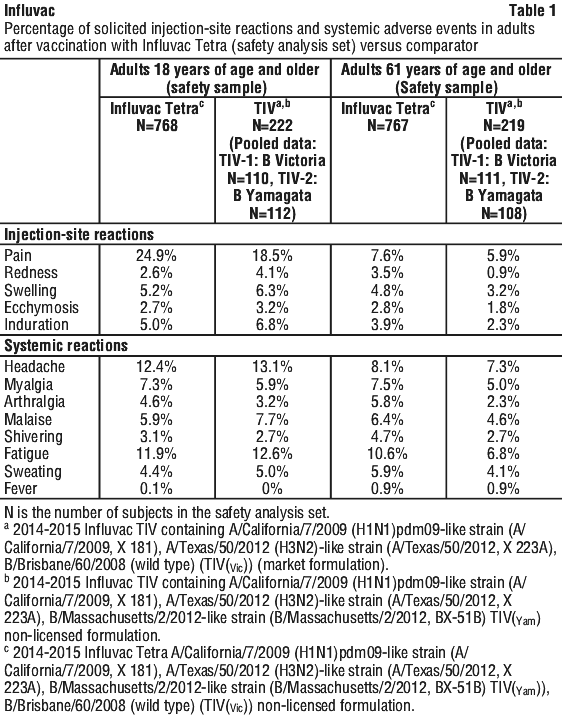
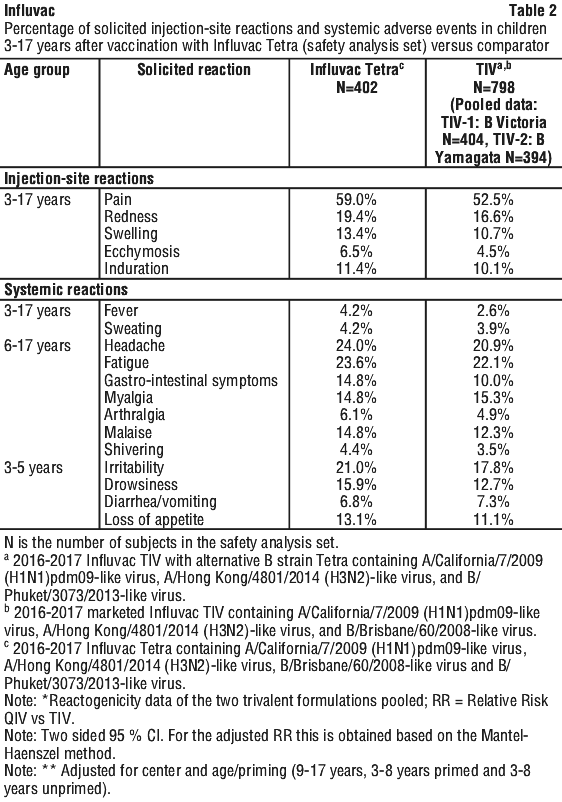
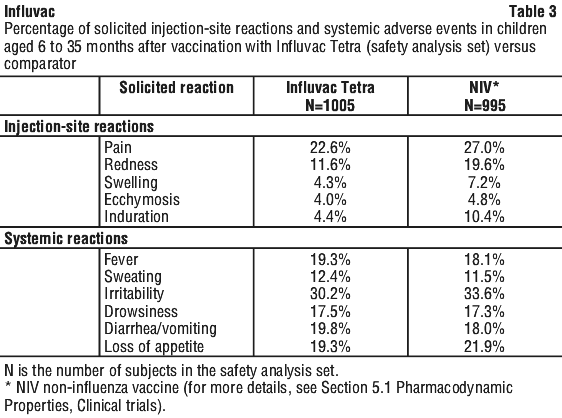
Adverse reactions reported from post-marketing surveillance. The following adverse reactions have been observed for Influvac and/or Influvac Tetra during post-marketing surveillance1.
1 Three of the influenza strains contained in Influvac are included in Influvac Tetra.
Blood and lymphatic system disorders. Transient thrombocytopenia, transient lymphadenopathy.
Immune system disorders. Allergic reactions, in rare cases leading to shock, angioedema.
Nervous system disorders. Neuralgia, paraesthesia, febrile convulsions, neurological disorders, such as encephalomyelitis, neuritis and Guillain Barre syndrome.
Vascular disorders. Vasculitis associated in very rare cases with transient renal involvement.
Skin and subcutaneous tissue disorders. Generalised skin reactions including pruritus, urticaria or non-specific rash.
Reporting suspected adverse effects. Reporting suspected adverse reactions after registration of the medicinal product is important. It allows continued monitoring of the benefit-risk balance of the medicinal product. Healthcare professionals are asked to report any suspected adverse reactions at www.tga.gov.au/reporting-problems.
4.9 Overdose
Given the nature of the product and mode of administration the probability of over dosage is negligible.
For information on the management of overdose, contact the Poisons Information Centre on 13 11 26 (Australia).
5 Pharmacological Properties
5.1 Pharmacodynamic Properties
Mechanism of action. The vaccine stimulates production of antibodies with a specific capacity against influenza. Protection is only against those strains of the virus from which the vaccine is prepared or closely related strains.
Seroprotection is obtained within 2-3 weeks. The duration of post-vaccination immunity varies between 6-12 months.
5.2 Pharmacokinetic Properties
Not applicable.
5.3 Preclinical Safety Data
Genotoxicity. No genotoxicity studies have been conducted with Influvac.
Carcinogenicity. No carcinogenicity studies have been conducted with Influvac.
6 Pharmaceutical Particulars
6.1 List of Excipients
Each 0.5 mL dose contains 0.10 mg potassium chloride, 0.10 mg monobasic potassium phosphate, 0.67 mg dibasic sodium phosphate dihydrate, 4.0 mg sodium chloride, 0.067 mg calcium chloride dihydrate, 0.05 mg magnesium chloride hexahydrate and q.s. to 0.5 mL water for injections.
Influvac antigens have been produced from eggs and are inactivated by formaldehyde treatment. Each 0.5 mL may also contain not more than 100 nanogram ovalbumin, 0.01 mg formaldehyde, 0.015 mg cetrimonium bromide, 1 mg sodium citrate, 0.2 mg sucrose, 1 nanogram gentamicin sulfate, trace amounts of chicken proteins, traces of tylosin tartrate, hydrocortisone and polysorbate 80, which are used during the manufacturing process.
6.2 Incompatibilities
In the absence of compatibility studies, this medicinal product must not be mixed with other medicinal products.
See Section 4.5 Interactions with Other Medicines and Other Forms of Interactions.
6.3 Shelf Life
In Australia, information on the shelf life can be found on the public summary of the Australian Register of Therapeutic Goods (ARTG). The expiry date can be found on the packaging.
6.4 Special Precautions for Storage
Keep out of the sight and reach of children.
Store between 2 and 8 degrees Celsius. Refrigerate, do not freeze. Store in the original package in order to protect from light.
6.5 Nature and Contents of Container
Single-dose 0.5 mL pre-filled glass syringe, 1's and 10's.
Some strengths, pack sizes and/or pack types may not be marketed.
Australian register of therapeutic goods (ARTG). AUST R 432790 - Influvac influenza virus haemagglutinin 0.5 mL vaccine prefilled syringe with 16 mm needle.
AUST R 432810 - Influvac influenza virus haemagglutinin 0.5 mL vaccine prefilled syringe with 25 mm needle.
AUST R 432811 - Influvac influenza virus haemagglutinin 0.5 mL vaccine prefilled syringe without needle.
6.6 Special Precautions for Disposal
In Australia, any unused medicine or waste material should be disposed of in accordance with local requirements.
6.7 Physicochemical Properties
Not applicable.
7 Medicine Schedule (Poisons Standard)
S4 (Prescription Only Medicine).
Date of First Approval
21 January 2025
Date of Revision
01 September 2026
Summary Table of Changes

Reasonable care is taken to provide accurate information at the time of creation. This information is not intended as a substitute for medical advice and should not be exclusively relied on to manage or diagnose a medical condition. The Australian Commission on Safety and Quality in Health Care disclaims all liability (including for negligence) for any loss, damage, injury or any other negative effects resulting from reliance on or use of this information. Read our full disclaimer. This website uses cookies. Read our privacy policy.