
Iptam
Brand Information
| Brand name | Iptam |
| Active ingredient | Sumatriptan |
| Schedule | S4 |
Consumer Medicine Information (CMI) leaflet
Please read this leaflet carefully before you start using the Iptam.
Summary CMI
IPTAM®
Consumer Medicine Information (CMI) summary
The full CMI on the next page has more details. If you are worried about taking this medicine, speak to your doctor or pharmacist.
1. Why am I taking IPTAM?
IPTAM contains the active ingredient sumatriptan succinate. IPTAM is used to relieve a migraine attack in patients who have a stable, well-established pattern of symptoms. IPTAM may be used for migraine headaches with or without what is known as ‘aura’. For more information, see Section 1. Why am I taking IPTAM? in the full CMI.
2. What should I know before I take IPTAM?
Do not take if you have ever had an allergic reaction to IPTAM or any of the ingredients listed at the end of the CMI.
Talk to your doctor if you have any other medical conditions, take any other medicines, are pregnant or breastfeeding or plan to become pregnant or breastfeed.
For more information, see Section 2. What should I know before I take IPTAM? in the full CMI.
3. What if I am taking other medicines?
Some medicines may interfere with IPTAM and affect how it works.
A list of these medicines is in Section 3. What if I am taking other medicines? in the full CMI.
4. How do I take IPTAM?
- Your doctor will tell you which dose of IPTAM is right for you.
- Swallow IPTAM tablets whole with a drink of water. Do not crush or chew tablet as it has a bitter taste.
More instructions can be found in Section 4. How do I take IPTAM? in the full CMI.
5. What should I know while taking IPTAM?
| Things you must do |
|
| Things you must not do |
|
| Driving or using machines |
|
| Looking after your medicine |
|
For more information, see Section 5. What should I know while taking IPTAM? in the full CMI.
6. Are there any side effects?
Check with your doctor as soon as possible if you think you are experiencing any side effects or allergic reactions due to taking IPTAM tablets.
Some mild side effects include pain, tingling, heat or flushing in any part of the body, feeling of sleepiness, dizziness or tiredness, nausea (feeling sick) or vomiting, a change in blood pressure, feeling of faintness, problem with your eyesight and pain in the lower tummy and bloody diarrhea (ischemic colitis), shaking or tremors, uncontrolled movements, shortness of breath. Some serious side effects which may require medical attention include feel irregular heartbeats, suffer from a fit or convulsion, have wheezing or swelling of the lips/mouth, difficulty in breathing, hay fever, lumpy rash (“hives”) or fainting, feel heaviness, pressure or tightness in any part of the body including the chest or throat and have persistent purple discolouration and/or pain in the fingers, toes, ears, nose or jaw in response to cold.
For more information, including what to do if you have any side effects, see Section 6. Are there any side effects? in the full CMI.
Full CMI
IPTAM®
Active ingredient(s): sumatriptan (as succinate)
Consumer Medicine Information (CMI)
This leaflet provides important information about taking IPTAM. Speak to your doctor or pharmacist if you would like further information or if you have any concerns or questions about taking IPTAM.
Where to find information in this leaflet:
1. Why am I taking IPTAM?
2. What should I know before I take IPTAM?
3. What if I am taking other medicines?
4. How do I take IPTAM?
5. What should I know while taking IPTAM?
6. Are there any side effects?
7. Product details
1. Why am I taking IPTAM?
IPTAM contains the active sumatriptan succinate, which belongs to a group of medicines called serotonin agonists.
IPTAM is used to relieve a migraine attack in patients who have a stable, well-established pattern of headache symptoms, with or without what is known as 'aura'. It should not be used to prevent migraine attacks from occurring.
It is thought that migraine headache is due to widening of certain blood vessels in the head. This medicine works by making those vessels normal again and eases the symptoms of migraine.
IPTAM does not work in other types of headaches which are not a migraine.
Ask your doctor if you have any questions about why this medicine has been prescribed for you.
There is no evidence that IPTAM is addictive.
2. What should I know before I take IPTAM?
Warnings
Do not take IPTAM if:
- you are allergic to sumatriptan succinate, lactose or any of the other ingredients listed at the end of this leaflet.
- you have or have had:
- heart disease or heart attack
- shortness of breath, pain or tightness in chest, jaw or upper arm
- peripheral vascular disease (pain in the back of the legs) or are prone to cold, tingling or numb hands and feet
- Prinzmetal's angina (an uncommon form of angina where pain is experienced at rest rather than during activity)
- Angina (chest pain, often during exercise or stress)
- high blood pressure
- stroke
- severe liver disease - you have taken any of the following migraine medicines in the last 24 hours:
- Ergotamine
- Dihydroergotamine
- Methysergide
- Naratriptan
- Zolmitriptan - you have taken any of the following medicines used to treat depression in the last two weeks:
- Monoamine oxidase inhibitors (MAOIs), a type of medicine used for depression
- SSRIs (selective serotonin reuptake inhibitors)
- SNRIs (serotonin-noradrenaline reuptake inhibitors) - the expiry date printed on the pack has passed. If you take this medicine after the expiry date, it may not work as well.
- the packaging is torn or shows signs of tampering or the tablets do not look quite right.
If you are not sure whether you should start taking IPTAM, talk to your doctor.
Check with your doctor if you:
- are allergic to foods, dyes, preservatives or any other medicines, including any that contain sulfur (e.g. sulfonamide antibiotics).
- have or have had medical conditions such as:
- liver or kidney problems
- heart problems or a stroke
- risk factors including high blood pressure even if it is under control
- high blood cholesterol levels
- a family history of problems with heart or blood vessels
- obesity
- diabetes
- epilepsy, seizures, or fits or been told that you are prone to this problem - are a male and over 40 years of age
- are you are a female and have undergone menopause
- smoke
- are under 18 or over 65 years of age
- think that this headache is different and worse than your usual migraine.
- have difficulty moving one side of your body when you have the migraine headache.
- plan to have surgery
Your doctor may want to take special care if you have any of these conditions.
If you have not told your doctor about any of the above, tell him/her before you start taking IPTAM.
During treatment, you may be at risk of developing certain side effects. It is important you understand these risks and how to monitor for them. See additional information under Section 6. Are there any side effects?
Pregnancy and breastfeeding
Tell your doctor if you are pregnant or plan to become pregnant.
Your doctor will discuss the risks and benefits of taking IPTAM during pregnancy.
Tell your doctor if you are breastfeeding or plan to breastfeed.
IPTAM can pass into breast milk. To reduce the chance of your baby being exposed to IPTAM, avoid breastfeeding for 24 hours after taking the medicine. Any breast milk expressed during that time should be thrown away.
Your doctor will discuss the risks and benefits of taking IPTAM when breastfeeding.
Children
IPTAM is not recommended for use in children and adolescents under the age of 18 as its safety and effectiveness have not been established in this age group.
3. What if I am taking other medicines?
Tell your doctor or pharmacist if you are taking any other medicines, including any medicines, vitamins or supplements that you buy without a prescription from your pharmacy, supermarket or health food shop particularly herbal preparations containing St John's Wort.
Tell your doctor also if you are taking other medicines prescribed for depression, anxiety or Obsessive Compulsive Disorder (OCD).
Some medicines may interfere with IPTAM and affect how it works.
Check with your doctor or pharmacist if you are not sure about what medicines, vitamins or supplements you are taking and if these affect IPTAM.
4. How do I take IPTAM?
How much to take
The recommended starting dose for adults is 50 mg strength, however you may need to have your dose of this medicine increased to 100 mg. Your doctor will tell you which dose is right for you.
Do NOT take more than 300 mg IPTAM tablets in any 24 hours.
Six pink (50 mg strength) or three white (100 mg strength) tablets contain 300 mg of IPTAM.
If the first IPTAM tablet helps your migraine, but the migraine comes back later, you may take another IPTAM tablet.
Do NOT take more IPTAM tablets, or any other form of IPTAM if the first dose has not provided any relief from your symptoms.
You may take your usual headache relief medication provided it does not contain ergotamine or methysergide.
If you are not sure what to do, ask your doctor or pharmacist.
If your migraine is not relieved by IPTAM, you may take IPTAM tablets on another occasion to treat another migraine attack. Provided there are no side effects, you can take IPTAM tablets to treat at least three separate migraine attacks before you and your doctor decide if this medicine is ineffective for you.
When to take IPTAM
It is best to take IPTAM tablets:
- when the migraine headache begins; or
- when other symptoms of the migraine begin, such as nausea (feeling sick), vomiting or your eyes become sensitive to light.
If you take your tablet later during the migraine attack it will still work for you.
DO NOT take IPTAM tablets before the above symptoms occur.
How to take it
Swallow the tablets whole with a drink of water. Do not crush or chew the tablet as it has a bitter taste.
If you take too much IPTAM
If you think that you or anyone else has taken too much IPTAM, urgent medical attention may be needed.
You should immediately:
- phone the Poisons Information Centre
(by calling 13 11 26) for advice, or - contact your doctor, or
- go to the Emergency Department at your nearest hospital.
Do this even if there are no signs of discomfort or poisoning.
5. What should I know while taking IPTAM?
Things you should do
- Tell your doctor or pharmacist if, for any reason, you have not taken your medicine exactly as directed.
Otherwise, your doctor may think that it is not working and change your treatment unnecessarily. - If you are about to be start any new medicine, tell your doctor that you are taking IPTAM.
Things you should not do
- Do not give this medicine to anyone else, even if their symptoms seem similar to yours.
- If you take IPTAM too often, it may make your headache worse. If this happens, your doctor may tell you to stop taking IPTAM.
Driving or using machines
Be careful before you drive or use any machines or tools until you know how IPTAM affects you.
IPTAM may cause drowsiness dizziness or light-headedness in some people (especially after the first dose). If any of these occur, do not drive, operate machinery or do anything else that could be dangerous.
Looking after your medicine
- Store IPTAM tablets below 25°C.
- Keep IPTAM tablets in their pack until it is time to take them.
If you take the tablets out of the pack they will not keep well.
Follow the instructions on the carton on how to take care of your medicine properly.
Store it in a cool and dry place away from moisture, heat or sunlight; for example, do not store it:
- in the bathroom or near a sink, or
- in the car or on window sills.
Heat and dampness can destroy some medicines.
Keep it where young children cannot reach it.
A locked cupboard at least one-and-a-half metre above the ground is a good place to store medicines.
Getting rid of any unwanted medicine
If you no longer need to take this IPTAM or it is out of date, take it to any pharmacy for safe disposal.
Do not take this medicine after the expiry date.
6. Are there any side effects?
All medicines can have side effects. If you do experience any side effects, most of them are minor and temporary. However, some side effects may need medical attention.
See the information below and, if you need to, ask your doctor or pharmacist if you have any further questions about side effects.
Do not be alarmed by this list of possible side effects. You may not experience any of them.
Less serious side effects
| Less serious side effects | What to do |
| Speak to your doctor if you have any of these less serious side effects and they worry you. |
Serious side effects
| Serious side effects | What to do |
| Call your doctor straight away, or go straight to the Emergency Department at your nearest hospital if you notice any of these serious side effects. |
Tell your doctor or pharmacist if you notice anything else that may be making you feel unwell.
Other side effects not listed here may occur in some people.
Reporting side effects
After you have received medical advice for any side effects you experience, you can report side effects to the Therapeutic Goods Administration online at www.tga.gov.au/reporting-problems. By reporting side effects, you can help provide more information on the safety of this medicine.
Always make sure you speak to your doctor or pharmacist before you decide to stop taking any of your medicines.
7. Product details
This medicine is only available with a doctor's prescription.
What IPTAM contains
| Active ingredient (main ingredient) | Sumatriptan succinate (50 mg and 100 mg) |
| Other ingredients (inactive ingredients) | Lactose monohydrate Cellulose – microcrystalline Croscarmellose sodium Magnesium stearate Opadry II complete film coating system 40L14838 Pink [ID 4805 (50 mg)] Opadry II complete film coating system Y-22-7719 White [ID 4348 (100 mg)] |
| Potential allergens | Sugars as lactose |
Do not take this medicine if you are allergic to any of these ingredients.
What IPTAM looks like
IPTAM tablets are available in 2 strengths:
- IPTAM 50 mg - Pink, round, film-coated tablet debossed 'G' on one side and 'SU50' on the other side, supplied in blister packs of 4 tablets (AUST R 124086).
- IPTAM 100 mg - White to off white, round, film-coated tablets debossed 'G' on one side and 'SU100' on the other side, supplied in blister packs of 2 tablets (AUST R 124087).
Who distributes IPTAM
Alphapharm Pty Ltd trading as Viatris
Level 1, 30 The Bond
30-34 Hickson Road
Millers Point NSW 2000
www.viatris.com.au
Phone: 1800 274 276
This leaflet was revised in October 2025.
IPTAM® is a Viatris company trade mark
IPTAM_cmi\Oct25/00
Brand Information
| Brand name | Iptam |
| Active ingredient | Sumatriptan |
| Schedule | S4 |
MIMS Revision Date: 01 January 2026
1 Name of Medicine
Sumatriptan succinate.
2 Qualitative and Quantitative Composition
Each 50 mg and 100 mg tablet contains the active ingredient sumatriptan (as succinate), equivalent to 50 mg and 100 mg of sumatriptan, respectively.
Excipients with known effect. Sugars (as lactose).
For the full list of excipients, see Section 6.1 List of Excipients.
3 Pharmaceutical Form
Iptam 50 mg tablet. Pink, round, film-coated tablet with debossed 'G' on one side and 'SU50' on the other side.
Iptam 100 mg tablet. White to off-white, round, film-coated tablet with debossed 'G' on one side and 'SU100' on the other side.
4 Clinical Particulars
4.1 Therapeutic Indications
Iptam tablets are indicated for the acute relief of migraine attacks with or without aura.
There is no information available on the use of Iptam in the treatment of basilar or hemiplegic migraine.
4.2 Dose and Method of Administration
Iptam is indicated for the acute intermittent relief of migraine. It should not be used prophylactically.
Ergotamine or ergotamine derivatives and Iptam should not be administered concurrently (see Section 4.3 Contraindications).
Migraine. It is recommended to start the treatment at the first sign of a migraine headache or associated symptoms such as nausea, vomiting or photophobia. The efficacy of sumatriptan is independent of the duration of the attack when starting treatment. Administration during a migraine aura prior to other symptoms occurring may not prevent the development of a headache.
If a patient does not respond to the first dose of Iptam, a second dose should not be taken for the same attack. Iptam may be used for subsequent attacks.
The initial recommended adult dose of oral Iptam is 50 mg. Some patients may require 100 mg. The dose should be adjusted according to the individual's response. If symptoms recur further doses may be given in the next 24 hours provided not more than 300 mg are taken in any 24 hour period. The tablet should be swallowed whole with water.
4.3 Contraindications
Sumatriptan should not be used in patients who have:
Hypersensitivity to any component of the preparation (see Section 6.1 List of Excipients);
A history of myocardial infarction;
Peripheral vascular disease or symptoms or signs consistent with ischaemic heart disease;
Prinzmetal's angina/ coronary vasospasm;
Uncontrolled hypertension;
Cerebrovascular accident or transient ischaemic attack;
Severe hepatic impairment.
Sumatriptan should not be used within 24 hours of treatment with an ergotamine containing or ergot type medication such as dihydroergotamine or methysergide.
Sumatriptan should not be given to patients receiving monoamine oxidase inhibitors (MAOIs) or within two weeks of discontinuation of MAOI therapy.
Sumatriptan should not be administered to patients with hemiplegic, basilar or ophthalmoplegic migraine.
4.4 Special Warnings and Precautions for Use
General. Sumatriptan should only be used where there is a clear diagnosis of migraine. However, if a patient does not respond to the first dose, the opportunity should be taken to review the diagnosis before a second dose is given. The recommended doses of sumatriptan should not be exceeded.
Drowsiness. Drowsiness may occur as a result of migraine or its treatment with sumatriptan. Caution is recommended in patients performing skilled tasks, e.g. driving or operating machinery.
Use in hepatic or renal impairment. Sumatriptan should also be administered with caution to patients with diseases, which may affect significantly the metabolism, absorption and excretion of the drug, such as impaired hepatic or renal function. Studies have shown reduced sumatriptan clearance in patients with hepatic impairment. Lower doses should be considered in these patients. If appropriate, the first dose should be given under supervision to these patients.
Hypersensitivity to sulphonamides. Patients with known hypersensitivity to sulphonamides may exhibit an allergic reaction following administration of sumatriptan. Reactions may range from cutaneous hypersensitivity to anaphylaxis. Evidence of cross sensitivity is limited; however, caution should be exercised before using sumatriptan in these patients.
Overuse. Overuse of acute migraine treatments has been associated with the exacerbation of headache (medication overuse headache, MOH) in susceptible patients. Withdrawal of the treatment may be necessary.
Co-administration with 5-HT1 agonists. Co-administration of sumatriptan within 24 hours of other 5-HT1 agonists is not recommended due to the potential for vasoconstrictive effects.
Cardiovascular precautions. It is strongly recommended that sumatriptan not be given to patients in whom risk factors indicate a possibility of unrecognised coronary artery disease (CAD) unless a cardiovascular evaluation provides satisfactory clinical evidence that the patient is reasonably free of coronary artery and ischaemic myocardial disease or other significant underlying cardiovascular disease. The risk factors include hypertension, hypercholesterolaemia, smoker, obesity, diabetes, strong family history of CAD, female with surgical or physiological menopause, or male over 40 years of age.
The sensitivity of cardiac diagnostic procedures to detect cardiovascular disease or predisposition to coronary artery vasospasm is modest, at best and, in extremely rare cases (less than 1 in 10,000), serious cardiac events have occurred in patients without underlying cardiovascular disease. If during the cardiovascular evaluation, the patient's medical history of electrocardiographic investigations reveal findings indicative of, or consistent with coronary artery vasospasm or myocardial ischaemia, sumatriptan should not be administered (see Section 4.3 Contraindications).
Sumatriptan may cause short-lived elevation of blood pressure and peripheral vascular resistance. Sumatriptan should therefore be administered with caution to patients with controlled hypertension. Transient increases in blood pressure and peripheral vascular resistance have been observed in a small proportion of patients.
Serious cardiac events, including some that have been fatal, have occurred within a few hours following the use of sumatriptan tablets. These events are extremely rare (less than 1 in 10,000) and the majority of these case reports were confounded by patients having pre-existing heart disease or risk factors for ischaemic heart disease and may reflect underlying disease and spontaneous events. Under these circumstances the specific contribution of sumatriptan cannot be determined. Events reported have included coronary artery vasospasm, transient myocardial ischaemia, myocardial infarction, and cardiac arrhythmias including ventricular tachycardia and ventricular fibrillation. Therefore, sumatriptan should not be given to patients in whom unrecognised cardiac disease is likely without a prior evaluation for underlying cardiovascular disease. Such patients include postmenopausal women, males over 40 and patients with risk factors for coronary artery disease. Significant cardiovascular sequelae have been reported in patients in whom risk factors were not readily identifiable. There is no experience in patients with recent cardiac arrhythmias (especially tachycardias). Until further information is available, the use of sumatriptan is not recommended in these patients.
A myocardial infarct has been reported in a 14 year old male following the use of oral sumatriptan; clinical signs occurred within 1 day of drug administration.
Following administration, sumatriptan can be associated with transient symptoms, including chest pain and tightness, which may be intense and involve the throat. If symptoms consistent with ischaemic heart disease occur, appropriate investigations should be carried out and further doses should not be given until the results of these investigations are known. Patients should be advised to contact their doctor immediately if they experience symptoms consistent with ischaemic heart disease (see Section 4.3 Contraindications).
Cerebrovascular precautions. Cerebral haemorrhage, subarachnoid haemorrhage, stroke, and other cerebrovascular events have been reported in patients treated with oral sumatriptan, and some have resulted in fatalities. The relationship of sumatriptan to these events is uncertain. In a number of cases, it appears possible that the cerebrovascular events were primary, sumatriptan having been administered in the incorrect belief that the symptoms experienced were a consequence of migraine when they were not.
Sumatriptan should not be administered if the headache being experienced is atypical of the patient. It should be noted that patients with migraine may be at increased risk of certain cerebrovascular events (e.g. cerebrovascular accident, transient ischaemia attack).
Before treating headaches in patients not previously diagnosed as migraineurs, and in migraineurs who present with atypical symptoms, care should be taken to exclude other potentially serious neurological conditions.
Sumatriptan should be used with caution in patients with a history of seizures or other risk factors which lower the seizure threshold.
There is no experience in patients with recent cerebrovascular accidents. Until further information is available, the use of sumatriptan is not recommended in these patients (see Section 4.3 Contraindications).
There is no information available on the use of sumatriptan in the treatment of ophthalmoplegic migraine.
Other vasospastic events. Sumatriptan may cause vasospastic reactions other than coronary artery vasospasm. Both peripheral vascular ischaemia and colonic ischaemia with abdominal pain and bloody diarrhoea have been reported.
Use in the elderly. Experience of the use of sumatriptan in patients aged over 65 is limited. However, the pharmacokinetics do not differ significantly from a younger population. Until further clinical data are available, the use of sumatriptan in patients aged over 65 is not recommended.
Use in adolescents (12-17 years). The efficacy of oral sumatriptan has not been established in placebo-controlled trials carried out in 794 adolescent migraineurs. High placebo responses were found in these studies and there was a lack of statistically significant difference between placebo and oral doses ranging from 25 to 100 mg. The safety profile of oral sumatriptan is similar to that of adults.
Paediatric use. The safety and effectiveness of sumatriptan in children under the age of 12 years has not been established.
Effects on laboratory tests. No data available.
4.5 Interactions with Other Medicines and Other Forms of Interactions
Pharmacodynamic. Prolonged vasospastic reactions have been reported with ergotamine. As these effects may be additive, concomitant use of ergotamine or ergotamine derivatives and sumatriptan should be avoided. Twenty-four hours should elapse before sumatriptan is taken following any ergotamine containing preparation. Conversely, ergotamine containing preparations should not be taken until 6 hours have elapsed following sumatriptan administration (see Section 4.3 Contraindications).
Pharmacokinetic. An interaction may occur between sumatriptan and MAOIs and concomitant administration is contraindicated (see Section 4.3 Contraindications). Rarely an interaction may occur between sumatriptan and selective serotonin reuptake inhibitors. There have been rare post-marketing reports describing patients with serotonin syndrome (including altered mental status, autonomic instability, neuromuscular abnormalities, weakness, hyper-reflexia and incoordination) following the use of a SSRI. Serotonin syndrome has been reported following concomitant treatment with triptans and serotonin noradrenaline reuptake inhibitors (SNRIs).
If concomitant treatment with sumatriptan and an SSRI/ SNRI is clinically warranted, appropriate observation of the patient is advised.
The concomitant administration of any triptan/ 5-HT1 agonist with sumatriptan is not recommended.
There is no evidence of interactions with propranolol, flunarizine, pizotifen or alcohol.
Although there is no clear evidence, it is possible that an interaction may occur between serotonin 5-HT1 agonists and the herbal remedy St John's wort (Hypericum perforatum), which may result in an increase in side effects.
Ophthalmic. Intermittent transient changes on the surface of the cornea have been observed in toxicology studies in dogs. No causative mechanism has been established for these changes but there is no evidence to suggest that this is relevant to clinical exposure.
4.6 Fertility, Pregnancy and Lactation
Effects on fertility. No data available.
Use in pregnancy. (Category B3)
No obvious teratogenic effects have been seen in rats given oral doses of 500 mg/kg or in rabbits given oral doses up to 100 mg/kg during organogenesis (although it is noted that the number of pregnant rabbits investigated was limited).
Reproduction studies in rats have not revealed any clear evidence of impaired fertility (oral doses up to 500 mg/kg, given before and during mating) or of impaired post-natal pup development (oral doses up to 1000 mg/kg, given during the peri and post-natal period). In the rabbit embryotoxicity cannot be ruled out. After oral administration, at doses of 5, 25 and 100 mg/kg on days 8-20 of gestation (severe maternal toxicity at 100 mg/kg) there was evidence of a small, increasing dose-related trend in post-implantation intrauterine death.
Term foetuses from Dutch Stride rabbits treated during the period of organogenesis with oral sumatriptan exhibited an increased incidence of cervicothoracic vascular defects and skeletal abnormalities.
When administered to pregnant rabbits throughout the period of organogenesis sumatriptan has occasionally caused embryolethality at doses which were sufficiently high to product maternal toxicity.
Administration of this medicine should only be considered if the expected benefit to the mother is greater than any possible risk to the foetus.
Use in lactation. Sumatriptan is excreted into breast milk, with average relative infant doses of < 4% following administration of a single dose of sumatriptan.
Infant exposure can be minimised by avoiding breastfeeding for 24 hours after treatment, during which time any breast milk expressed should be discarded. There have been reports of breast pain and/or nipple pain following sumatriptan use in breastfeeding women (see Section 4.8 Adverse Effects (Undesirable Effects)). The pain was usually transient and disappeared in 3 to 12 hours. Caution should be exercised when considering the administration of sumatriptan to a breastfeeding woman.
4.7 Effects on Ability to Drive and Use Machines
No studies on the effects on the ability to drive and use machines have been performed. Drowsiness may occur as a result of migraine or its treatment with sumatriptan. This may influence the ability to drive and to operate machinery.
4.8 Adverse Effects (Undesirable Effects)
The most common side effects associated with treatment with sumatriptan are:
Pain, sensations of tingling, heat or cold, heaviness, pressure or tightness. These are usually transient and may be intense and can affect any part of the body including the chest and throat.
Flushing, dizziness and feelings of weakness. These are mostly mild to moderate in intensity and transient.
Fatigue and drowsiness, sensory disturbance including paraesthesia and hypoaesthesia have been reported.
Nausea and vomiting occurred in some patients but the relationship to sumatriptan is not clear.
Transient increases in blood pressure arising soon after treatment has been recorded.
Dyspnoea.
Serious coronary events have been reported (see Section 4.4 Special Warnings and Precautions for Use). Other cardiovascular adverse reactions include hypotension, bradycardia, tachycardia and palpitations. Very rarely (less than 1 in 10,000) Raynaud's phenomenon, angina and ischaemic colitis have been reported.
There have been rare (less than 1 in 1,000) reports of seizures following migraine attacks treated with sumatriptan. Although some have occurred in patients with either a history of seizures or concurrent conditions predisposing to seizures, there are also reports in patients where no such predisposing factors are apparent.
Patients treated with sumatriptan very rarely (less than 1 in 10,000) exhibit visual disorders like flickering and diplopia. Additionally, cases of nystagmus, scotoma and reduced vision have been observed. Very rarely loss of vision has occurred, which is usually transient. However, visual disorders may also occur during a migraine attack itself.
Hypersensitivity reactions ranging from cutaneous hypersensitivity (e.g. rash, urticaria, pruritus or erythema) to, in rare cases (less than 1 in 10,000), anaphylaxis have been recorded (see Section 4.4 Special Warnings and Precautions for Use).
Minor disturbances of liver function tests have occasionally been observed. There is no evidence that clinically significant abnormalities occurred more frequently than with placebo.
In the clinical trial programme, decreased lymphocyte count post-treatment was observed in a number of patients receiving oral sumatriptan. This effect was not dose related and was also observed in patients receiving placebo. The significance of these findings is uncertain.
In the clinical trial programme, a similar profile of clinical adverse events was reported in the adolescent and adult populations taking sumatriptan tablets.
Post-marketing data. In addition to the drug related adverse reactions reported from clinical trials, the following serious spontaneous events, reported to be possibly, probably or almost certainly caused following use of oral sumatriptan in patients less than 18 years of age have been identified.
Cardiovascular. Myocardial infarction.
Cerebrovascular. Cerebellar infarction.
Neurology. Seizures, tremor and dystonia.
Non-site specific. Anaphylaxis.
Skin. Urticaria, rash.
General disorders. "Pain trauma activated" and "pain inflammation activated" - frequency not known. See Table 1.
Breast pain. Frequency rare.

4.9 Overdose
Single doses up to 400 mg orally were not associated with side effects other than those mentioned. There is no experience of doses greater than these.
If overdosage with Iptam occurs, the patient should be monitored for at least ten hours and standard supportive treatment applied as required.
It is unknown what effect haemodialysis or peritoneal dialysis has on the plasma concentrations of sumatriptan.
For information on the management of overdose, contact the Poisons Information Centre on 13 11 26 (Australia).
5 Pharmacological Properties
5.1 Pharmacodynamic Properties
Mechanism of action. Sumatriptan has been demonstrated to be a specific vascular 5-hydroxytryptamine-1 (5HT1) receptor agonist with no effect at other 5HT receptor (5HT2-5HT7) subtypes. The vascular 5HT1 receptor is found predominantly in cranial blood vessels and mediates vasoconstriction.
In animals, sumatriptan selectively constricts the carotid arterial circulation, but does not alter cerebral blood flow. The carotid arterial circulation supplies blood to the extracranial and intracranial tissues such as the meninges, and dilatation and/or oedema formation in these vessels is thought to be the underlying mechanism of migraine in man. In addition, experimental evidence suggests that sumatriptan inhibits trigeminal nerve activity. Both these actions may contribute to the anti-migraine action of sumatriptan in humans.
Clinical trials. Clinical studies conducted in the adult population. Table 2 demonstrates 2 and 4 hours efficacy results in two placebo-controlled studies of sumatriptan tablets in 332 adult migraineurs experiencing moderate or severe pain.

5.2 Pharmacokinetic Properties
In a pilot study no significant differences were found in the pharmacokinetic parameters between elderly and young healthy volunteers.
Absorption. After oral administration, sumatriptan is rapidly absorbed, 70% of maximum concentration occurring at 45 minutes. After a 100 mg dose the mean maximum plasma concentration is 54 nanogram/mL. Mean absolute oral bioavailability is 14% partly due to pre-systemic metabolism and partly due to incomplete absorption. Oral absorption of sumatriptan is not significantly affected by food.
Distribution. Plasma protein binding is low (14-21%); mean volume of distribution is 170 litres.
Excretion. Mean total plasma clearance is approximately 1160 mL/min and the mean renal plasma clearance is approximately 260 mL/min. Non-renal clearance accounts for about 80% of the total clearance. Sumatriptan is eliminated primarily by oxidative metabolism mediated by monoamine oxidase A. The major metabolite, the indole acetic acid analogue of sumatriptan, is mainly excreted in the urine, where it is present as a free acid and the glucuronide conjugate. It has no known 5HT1 or 5HT2 activity. Minor metabolites have not been identified. The pharmacokinetics of oral sumatriptan does not appear to be significantly affected by migraine attacks.
5.3 Preclinical Safety Data
Genotoxicity. No data available.
Carcinogenicity. No data available.
6 Pharmaceutical Particulars
6.1 List of Excipients
The film-coated tablet contains lactose monohydrate, microcrystalline cellulose, croscarmellose sodium, magnesium stearate, Opadry II complete film coating system 40L14838 Pink [ID 4805 (50 mg)] and Opadry II complete film coating system Y-22-7719 White [ID 4348 (100 mg)].
6.2 Incompatibilities
Incompatibilities were either not assessed or not identified as part of the registration of this medicine.
6.3 Shelf Life
In Australia, information on the shelf life can be found on the public summary of the Australian Register of Therapeutic Goods (ARTG). The expiry date can be found on the packaging.
6.4 Special Precautions for Storage
Store below 25°C.
6.5 Nature and Contents of Container
Container type. Al/Al blister pack.
Pack sizes. Iptam 50 mg: Available in blister packs of 2, 3, 4, 5, 6, 10, 12, 18, 20 and 24 tablets.
Iptam 100 mg: Available in blister packs of 2, 3, 4, 5, 6, 10, 12, 18, 20 and 24 tablets.
Some strengths, pack sizes and/or pack types may not be marketed.
Australian Register of Therapeutic Goods (ARTG). AUST R 124086 - Iptam sumatriptan (as succinate) 50 mg tablet blister pack.
AUST R 124087 - Iptam sumatriptan (as succinate) 100 mg tablet blister pack.
6.6 Special Precautions for Disposal
In Australia, any unused medicine or waste material should be disposed of by taking it to your local pharmacy.
6.7 Physicochemical Properties
Chemical structure.
Structural formula:
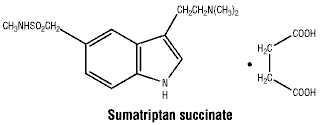
Chemically, sumatriptan succinate is: 3-[2-(dimethylamino) ethyl]-N-methyl-1H-indole-5-methane sulphonamide, butane-1,4-dioate (1:1). Sumatriptan succinate is a white to off-white powder, with a melting point between 164.6°C-165.5°C, freely soluble in water, sparingly soluble in methanol and practically insoluble in methylene chloride.
CAS number. 103628-48-4.
7 Medicine Schedule (Poisons Standard)
S4 (Prescription Only Medicine).
Date of First Approval
15 August 2006
Date of Revision
14 November 2025
Summary Table of Changes

Reasonable care is taken to provide accurate information at the time of creation. This information is not intended as a substitute for medical advice and should not be exclusively relied on to manage or diagnose a medical condition. The Australian Commission on Safety and Quality in Health Care disclaims all liability (including for negligence) for any loss, damage, injury or any other negative effects resulting from reliance on or use of this information. Read our full disclaimer. This website uses cookies. Read our privacy policy.