
KamRAB
Brand Information
| Brand name | KamRAB |
| Active ingredient | Immunoglobulin, rabies |
| Schedule | S4 |
Consumer Medicine Information (CMI) leaflet
Please read this leaflet carefully before you start using the KamRAB.
Summary CMI
KamRAB®
Consumer Medicine Information (CMI) summary
The full CMI on the next page has more details. If you are worried about using this medicine, speak to your doctor or pharmacist.
▼ This medicine is new or being used differently. Please report side effects. See the full CMI for further details.
1. Why am I using KamRAB?
KamRAB contains the active ingredient rabies immunoglobulin. KamRAB is used to treat rabies infection.
For more information, see Section 1. Why am I using KamRAB? in the full CMI.
2. What should I know before I use KamRAB?
Talk to your doctor if you have any other medical conditions, take any other medicines, or are pregnant or plan to become pregnant or are breastfeeding.
For more information, see Section 2. What should I know before I use KamRAB? in the full CMI.
3. What if I am taking other medicines?
Some medicines may interfere with KamRAB and affect how it works.
A list of these medicines is in Section 3. What if I am taking other medicines? in the full CMI.
4. How do I use KamRAB?
- Your doctor will calculate the dose of KamRAB based on your body weight
- KamRAB should be administered by a healthcare professional
More instructions can be found in Section 4. How do I use KamRAB? in the full CMI.
5. What should I know while using KamRAB?
| Things you should do |
|
| Driving or using machines |
|
| Looking after your medicine |
|
For more information, see Section 5. What should I know while using KamRAB? in the full CMI.
6. Are there any side effects?
All medicines can have side effects. Most of them are minor and temporary, however some side effects may need medical attention. If you experience sudden signs of allergy such as rash, itching or hives on the skin, swelling of the face, lips, tongue or other parts of the body, shortness of breath, wheezing or trouble breathing call your doctor straight away, or go straight to the Emergency Department at your nearest hospital
For more information, including what to do if you have any side effects, see Section 6. Are there any side effects? in the full CMI.
Full CMI
▼ This medicine is subject to additional monitoring. This will allow quick identification of new safety information. You can help by reporting any side effects you may get. You can report side effects to your doctor, or directly at www.tga.gov.au/reporting-problems.
KamRAB®
Active ingredient(s): rabies immunoglobulin
Consumer Medicine Information (CMI)
This leaflet provides important information about using KamRAB. You should also speak to your doctor or pharmacist if you would like further information or if you have any concerns or questions about KamRAB.
Where to find information in this leaflet:
1. Why am I using KamRAB?
2. What should I know before I use KamRAB?
3. What if I am taking other medicines?
4. How do I use KamRAB?
5. What should I know while using KamRAB?
6. Are there any side effects?
7. Product details
1. Why am I using KamRAB?
KamRAB contains the active ingredient rabies immunoglobulin. KamRAB contains antibodies that inactivate the rabies virus.
KamRAB is used to treat rabies infection.
KamRAB is given to people who might have been exposed to rabies and have never been vaccinated against rabies. KamRAB is used with a series of rabies vaccinations and provides immediate protection against the rabies virus until the person develops antibodies of their own to the rabies virus.
2. What should I know before I use KamRAB?
Warnings
Do not use KamRAB if:
- you have already received KamRAB and rabies vaccine for treatment of this rabies exposure
Check with your doctor if you:
- have any other medical conditions
- take any medicines for any other condition
- have an inflammatory condition
- are receiving other immunoglobulins
- have previously received vaccinations for rabies
- have previously had allergic reactions after being injected with other immunoglobulins
- have any immune deficiencies which cause you to be deficient in certain antibodies
When medicines are made from human blood or plasma, certain measures are put in place to prevent infections being passed on to patients. These include:
- careful selection of blood and plasma donors to make sure those at risk of carrying infections are excluded,
- the testing of each donation and pools of plasma for signs of virus/infections,
- the inclusion of steps in the processing of the blood or plasma that can inactivate or remove viruses.
Despite these measures, when medicines prepared from human blood or plasma are administered, the possibility of passing on infection cannot be totally excluded. This also applies to any unknown or emerging viruses or other types of infections.
Measures effective for HAV and parvovirus B19
The measures taken are considered effective for enveloped viruses such as human immunodeficiency virus (HIV), hepatitis B virus and hepatitis C virus and for the non-enveloped hepatitis A and parvovirus B19 viruses.
It is strongly recommended that every time you receive a dose of KamRAB the name and batch number of the medicine are recorded in order to maintain a record of the batches used.
During treatment, you may be at risk of developing certain side effects. It is important you understand these risks and how to monitor for them. See additional information under Section 6. Are there any side effects?
Pregnancy and breastfeeding
Check with your doctor if you are pregnant or intend to become pregnant.
Talk to your doctor if you are breastfeeding or intend to breastfeed.
3. What if I am taking other medicines?
Tell your doctor or pharmacist if you are taking any other medicines, including any medicines, vitamins or supplements that you buy without a prescription from your pharmacy, supermarket or health food shop.
Some medicines may interfere with KamRAB and affect how it works.
KamRAB may reduce the effect of other vaccines including:
- Live attenuated virus vaccines such as rubella, mumps and varicella vaccines.
It is important to avoid immunisation with measles vaccines within 4 months after KamRAB administration and avoid immunisation with other live vaccines for 3 months after KamRAB administration.
Check with your doctor or pharmacist if you are not sure about what medicines, vitamins or supplements you are taking and if these affect KamRAB.
4. How do I use KamRAB?
How much KamRAB is given
- Your doctor will calculate the dose of KamRAB based on your body weight
When KamRAB is given
- KamRAB is given following suspected exposure to a rabid animal, at the time of the first rabies vaccine dose.
- KamRAB is a single dose treatment, used along with a full course of rabies vaccine.
How KamRAB is given
- KamRAB should be administered by a healthcare professional.
- If the bite wound is visible, KamRAB should be injected into and around the bite site, and / or into the muscle of the arm or thigh.
- If the bite wound is not visible, or injection at the bite wound is difficult, KamRAB should be injected into a muscle that is far away from the site of any rabies vaccinations
- KamRAB should not be mixed in the same syringe as the rabies vaccine or administered into the same injection site.
If you are given too much KamRAB
As KamRAB is given by a healthcare professional it is unlikely you will be given too much. However, if you experience any side effects after being given KamRAB, tell your doctor immediately.
5. What should I know while using KamRAB?
Things you should do
Call your doctor straight away if you:
- experience symptoms of rabies (flu-like symptoms, fever, chills, weakness, headache, prickling or itching at the site of the bite, confusion, anxiety or agitation)
Remind any doctor, dentist or pharmacist you visit that you have been given KamRAB.
Driving or using machines
Be careful before you drive or use any machines or tools until you know how KamRAB affects you.
KamRAB is not expected to affect your ability to drive a car or operate machinery.
Looking after your medicine
- It is unlikely that you will be asked to store KamRAB yourself. It will usually be stored by your doctor or pharmacist.
- Keep KamRAB in the fridge where the temperature is between 2-8°C. Do not freeze.
Follow the instructions in the carton on how to take care of your medicine properly.
Keep it where young children cannot reach it.
Getting rid of any unwanted medicine
If you no longer need to use this medicine or it is out of date, take it to any pharmacy for safe disposal.
Do not use this medicine after the expiry date.
6. Are there any side effects?
All medicines can have side effects. If you do experience any side effects, most of them are minor and temporary. However, some side effects may need medical attention.
See the information below and, if you need to, ask your doctor or pharmacist if you have any further questions about side effects.
Less serious side effects
| Less serious side effects | What to do |
General effects:
| Speak to your doctor if you have any of these less serious side effects and they worry you. |
Serious side effects
| Serious side effects | What to do |
Allergic reaction related:
| Call your doctor straight away, or go straight to the Emergency Department at your nearest hospital if you notice any of these serious side effects. |
Tell your doctor or pharmacist if you notice anything else that may be making you feel unwell.
Other side effects not listed here may occur in some people.
Reporting side effects
After you have received medical advice for any side effects you experience, you can report side effects to the Therapeutic Goods Administration online at www.tga.gov.au/reporting-problems. By reporting side effects, you can help provide more information on the safety of this medicine.
Always make sure you speak to your doctor or pharmacist before you decide to stop taking any of your medicines.
7. Product details
This medicine is only available with a doctor's prescription.
What KamRAB contains
| Active ingredient (main ingredient) | Rabies immunoglobulin |
| Other ingredients (inactive ingredients) | Glycine Water for injection Sodium hydroxide |
Always check the ingredients to make sure you can use this medicine.
What KamRAB looks like
KamRAB is a clear to slightly opalescent, colourless to pale yellow solution. The carton contains one glass vial with 2mL or 10 mL of solution (AUST R 336970).
Who distributes KamRAB
Link Medical Products
5 Apollo Street
Warriewood NSW 2012
AUSTRALIA
This leaflet was prepared in August 2021.
Brand Information
| Brand name | KamRAB |
| Active ingredient | Immunoglobulin, rabies |
| Schedule | S4 |
▼ This medicinal product is subject to additional monitoring in Australia. This will allow quick identification of new safety information. Healthcare professionals are asked to report any suspected adverse events at www.tga.gov.au/reporting-problems.
MIMS Revision Date: 01 July 2022
1 Name of Medicine
Rabies immunoglobulin.
2 Qualitative and Quantitative Composition
KamRAB is supplied in single-use vials containing 2 mL or 10 mL. One mL of solution contains 150 IU rabies immunoglobulin (from human plasma), corresponding with 300 IU in 2 mL or 1,500 IU in 10 mL.
For the full list of excipients, see Section 6.1 List of Excipients.
3 Pharmaceutical Form
Solution for injection (sterile).
KamRAB solution is a clear to slightly opalescent, colourless to pale yellow. The solution may contain some protein particles.
4 Clinical Particulars
4.1 Therapeutic Indications
KamRAB is rabies immunoglobulin indicated for passive, transient post-exposure prophylaxis (PEP) of rabies infection, when given immediately after contact with a rabid or possibly rabid animal. KamRAB should be administered concurrently with a full course of rabies vaccine.
Do not administer additional (repeat) doses of KamRAB once vaccine treatment has been initiated, since this may interfere with the immune response to the rabies vaccine.
Do not administer KamRAB to patients with a history of a complete pre-exposure or post-exposure vaccination regimen and confirmed adequate rabies antibody titre.
4.2 Dose and Method of Administration
For wound infiltration and intramuscular use.
Product is for single use in one patient only. Discard any residue.
Local treatment of wounds prior to KamRAB administration. The World Health Organisation (WHO) and the Australian Communicable Diseases Network Australia (CDNA) have outlined recommendations for passive and active immunisation after exposure to an animal suspected of having rabies. Immediate and thorough cleansing of all bite wounds and scratches with soap and water is an important component of post-exposure prophylaxis (PEP). A viricidal antiseptic solution (e.g. povidone-iodine solution or alcohol) should be used to irrigate the wounds. Tetanus prophylaxis and measures to control bacterial infection should be given if medically indicated.
Dosage. Post-exposure prophylaxis consists of a single dose of KamRAB and a full course of rabies vaccine. The recommended dose of KamRAB is 20 IU/kg body weight, given at the time of the first vaccine dose. KamRAB and the first dose of rabies vaccine should be given as soon as possible after exposure, and regardless of the time interval between exposure and initiation of post-exposure prophylaxis, as delays are potentially lethal. However, should a delay occur, KamRAB should be administered at any time up to and including seven days after the first dose of vaccine. The rabies vaccine should be given according to the manufacturer's instructions.
No more than the recommended dose of KamRAB should be given because KamRAB partially suppresses active antibody production following vaccination. For the same reason, additional doses of KamRAB should not be given, even if the antibody response to vaccination is delayed.
Method of administration. When the bite site is known and infiltration at the bite site is feasible, infiltrate as much of the dose as possible into and around any detectable bite wounds. Administer the remaining KamRAB intramuscularly into anatomical site(s) distant from the site of the rabies vaccine.
When the bite site is unknown or indeterminate (undetectable) or if infiltration is difficult at the bite site (e.g. lips, fingers, knee), administer the full KamRAB dose by the intramuscular route at a site distant from the site of rabies vaccination.
If a large intramuscular volume is required (> 2 mL for children or > 5 mL for adults), administer the total volume in divided doses at different sites.
If intramuscular administration is contraindicated (e.g. in patients with uncorrectable bleeding disorders), administer KamRAB subcutaneously. However, note that there are no clinical efficacy data to support administration of KamRAB by the subcutaneous route.
Do not mix with the rabies vaccine or administer in the same syringe with the rabies vaccine. Do not administer into the same anatomical site(s) as rabies vaccine.
Parenteral drug products should be inspected visually for particulate matter and discoloration prior to administration. If either of these conditions exists, do not use KamRAB; discard the vial.
4.3 Contraindications
Because of the life-threatening risk due to rabies, there are no contraindications to the administration of rabies immunoglobulin.
4.4 Special Warnings and Precautions for Use
Transmissible infectious agents. Standard measures to prevent infections resulting from the use of medicinal products prepared from human blood or plasma include selection of donors, screening of individual donations and plasma pools for specific markers of infection and the inclusion of effective manufacturing steps for the inactivation/ removal of viruses. Despite this, when medicinal products prepared from human blood or plasma are administered, the possibility of transmitting infective agents cannot be totally excluded. This also applies to unknown or emerging viruses and other pathogens.
The measures taken are considered effective for enveloped viruses such as human immunodeficiency virus (HIV), hepatitis B virus (HBV) and hepatitis C virus (HCV), and for the nonenveloped hepatitis A and parvovirus B19 viruses.
There is reassuring clinical experience regarding the lack of hepatitis A or parvovirus B19 transmission with immunoglobulins and it is also assumed that the antibody content makes an important contribution to the viral safety.
It is strongly recommended that every time that KamRAB is administered to a patient, the name and batch number of the product are recorded in order to maintain a link between the patient and the batch of the product.
Previous rabies vaccination. Patients who can document previous complete rabies pre-exposure prophylaxis or complete postexposure prophylaxis should only receive a booster rabies vaccine without KamRAB, because KamRAB may interfere with the anamnestic response to the vaccine.
Live attenuated virus vaccines. KamRAB administration may interfere with the development of an immune response to live attenuated virus vaccines.
Avoid immunization with measles vaccine within 4 months after KamRAB administration.
Avoid immunization with other live attenuated virus vaccines within 3 months after KamRAB administration.
Anaphylactic shock. KamRAB should not be injected into a blood vessel because of the risk of severe allergic or hypersensitivity reactions, including anaphylactic shock. KamRAB can induce a fall in blood pressure associated with an anaphylactic reaction, even in patients who tolerated previous treatment with human immunoglobulin.
Discontinue KamRAB injection immediately if there is an allergic or anaphylactic type reaction. In case of shock, implement standard medical treatment. Epinephrine should be available for treatment of acute anaphylactic symptoms.
Hypersensitivity. Patients with a history of prior systemic allergic reactions following administration of human immunoglobulin preparations should be monitored for hypersensitivity.
KamRAB contains a small quantity of IgA. Individuals who are deficient in IgA have potential for developing IgA antibodies and may have anaphylactic reactions after administration of blood components containing IgA. The healthcare provider should assess the risks of this reaction against the benefits of administering KamRAB.
Use in the elderly. The safety and effectiveness of KamRAB in the elderly population have not been established.
Clinical studies of KamRAB did not include sufficient numbers of subjects aged 65 years and over to determine whether they respond differently from younger subjects. Clinical experience with human rabies immune globulin products has not identified differences in effectiveness between elderly and younger patients.
Paediatric use. Safety and effectiveness have been established in children. In a paediatric study of 30 patients ranging in age from 0.5 to 14.9 years, KamRAB presented no serious adverse reactions through day 84. Of the 30 patients, 28 (93.3%) achieved a Day 14 rabies virus neutralising activity (RVNA) titre ≥ 0.5 IU/mL, the WHO recommended level. None of the patients who were followed until the end of the study (28/30 patients) developed rabies infection through day 84. See Section 5.1 Pharmacodynamic Properties, Clinical trials.
Adverse events that occurred in ≥ 3.3% of patients within the first 14 days of KamRAB and the first rabies vaccination administration are listed in Adverse Effects (Undesirable Effects).
The clinical trial conducted in the paediatric population is described in Pharmacodynamic Properties, Clinical trials. Additional evidence to support the use of KamRAB in children comes from Real World Evidence. Based on claims data, 172 children from the United States of America (≤ 17 years) were treated with KamRAB between 2018-2020. Based on Center for Disease Control (CDC) data, no children in the United States of America treated with postexposure prophylaxis have been reported to have had rabies between 2018 and April 2021.
Effects on laboratory tests. After injection of immunoglobulin, a transitory rise of the various passively transferred antibodies in the patient's blood may result in misleading positive results of serologic tests after KamRAB administration.
Passive transmission of antibodies to erythrocyte antigens, e.g. A, B, and D, may interfere with serologic tests for red cell antibodies such as the antiglobulin test (Coombs' test).
4.5 Interactions with Other Medicines and Other Forms of Interactions
Rabies virus vaccines. Do not administer additional (repeat) doses of KamRAB once vaccination has been initiated, since additional doses of KamRAB may interfere with the immune response to the vaccine.
Do not administer in the same anatomical site(s) or in the same syringe as rabies vaccine.
Live attenuated virus vaccines. KamRAB contains other antibodies that may interfere with the response to live vaccines such as measles, mumps, polio or rubella. Avoid immunization with live virus vaccines within 3 months after KamRAB administration, or in the case of measles vaccine, within 4 months after KamRAB administration.
4.6 Fertility, Pregnancy and Lactation
Effects on fertility. No data available. It is not known whether KamRAB can affect reproductive capacity.
Use in pregnancy. (Category B2)
KamRAB has not been studied in pregnant women. Therefore, the risk of major birth defects and miscarriage in pregnant women who are exposed to KamRAB is unknown. Animal developmental or reproduction toxicity studies have not been conducted with KamRAB.
Use in lactation. There is no information regarding the presence of KamRAB in human milk, the effects on the breastfed infant, or the effects on milk production. The developmental and health benefits of breastfeeding should be considered along with the mother's clinical need for KamRAB and any potential adverse effects on the breastfed infant from KamRAB or from the underlying maternal condition.
4.7 Effects on Ability to Drive and Use Machines
KamRAB has no known potential for impairment of driving ability, mental ability, or ability to operate machinery.
4.8 Adverse Effects (Undesirable Effects)
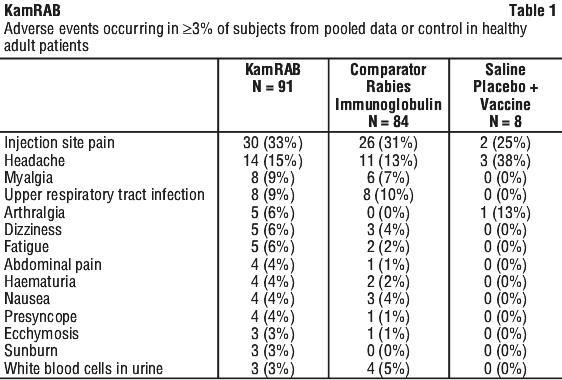
KamRAB was evaluated in three single-centre, controlled clinical trials. Subjects in the clinical studies of KamRAB were healthy adults, primarily white and ranged in age from 18 to 72 years. A total of 160 subjects were treated in these three studies, including 91 subjects who received single intramuscular doses of KamRAB (20 IU/kg) with or without rabies vaccine.
Table 1 summarises adverse events (assessed by the investigator as related or unrelated to study treatment) occurring in ≥ 3% of subjects in the clinical trials of KamRAB.
Gastrointestinal disorders. Common: Diarrhoea, Vomiting.
General system disorders. Common: Asthenia, Malaise.
Hepatobiliary disorders. Common: Liver function test abnormal.
Infections and infestations. Common: Injection site hematoma.
Metabolism and nutrition disorders. Common: Decrease appetite.
Musculoskeletal and connective tissue disorders. Common: Musculoskeletal stiffness.
Nervous system disorders. Common: Paraesthesia.
Skin and subcutaneous tissue disorders. Common: Eczema, Pruritus.
Vascular disorders. Common: Syncope.
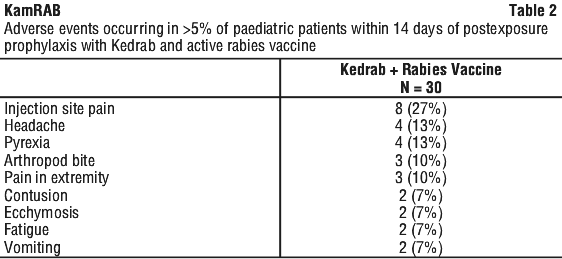
KamRAB was also evaluated in a two-centre, open-label clinical trial in 30 paediatric patients exposed or possibly exposed to rabies virus. They ranged in age from 0.5 to 14.9 years. Study treatment included a single dose of KamRAB (20 IU/kg) and active rabies vaccine on Days 0, 3, 7 and 14 administered as per CDC Advisory Committee on Immunization Practices (ACIP) recommendations for rabies post-exposure prophylaxis.
Table 2 summarises the adverse events that occurred in > 5% of patients in the paediatric clinical trial within 14 days of receipt of KamRAB and the first dose of the rabies vaccine.
Gastrointestinal disorders. Common: Oral pain.
General disorders and administration site conditions. Common: Injection site erythema, Injection site oedema.
Injury, poisoning and procedural complications. Common: Wound complication.
Musculoskeletal and connective tissue disorders. Common: Myalgia.
Psychiatric disorders. Common: Insomnia (was reported as occurring after 14 days of administration).
For safety information with respect to transmissible agents, see Section 4.4 Special Warnings and Precautions for Use.
Reporting suspected adverse effects. Reporting suspected adverse reactions after registration of the medicinal product is important. It allows continued monitoring of the benefit-risk balance of the medicinal product. Healthcare professionals are asked to report any suspected adverse reactions at www.tga.gov.au/reporting-problems.
4.9 Overdose
There is no specific antidote for overdose and treatment should be symptomatic.
For information on the management of overdose, contact the Poisons Information Centre on 131126 (Australia).
5 Pharmacological Properties
5.1 Pharmacodynamic Properties
Pharmacotherapeutic group: immune sera and immunoglobulins; ATC code: J06BB05.
Mechanism of action. Rabies is a zoonotic disease caused by RNA viruses in the family Rhabdoviridae, genus Lyssavirus. Virus is typically present in the saliva of rabid mammals and is transmitted primarily through a bite. KamRAB is infiltrated into the inoculation site (i.e. at the beginning of anti-rabies PEP) to previously unvaccinated persons, to provide immediate passive rabies virus neutralising antibody protection until the patient’s immune system responds to vaccination by actively producing antibodies.
A protective threshold for RVNA has never been established. However, the WHO has generally accepted a RVNA of at least 0.5 IU/mL measured 14 days after initiation of PEP as protective. By comparison, the ACIP at the CDC recommends complete neutralisation of rabies virus at a 1:5 serum dilution by a rapid fluorescent focus inhibition test (RFFIT) from 1 to 2 weeks after prophylaxis; this corresponds to RVNA ~0.1-0.2 IU/mL. In support of these recommendations, there has been almost no documented clinical disease when the current rabies PEP regimen is administered appropriately.
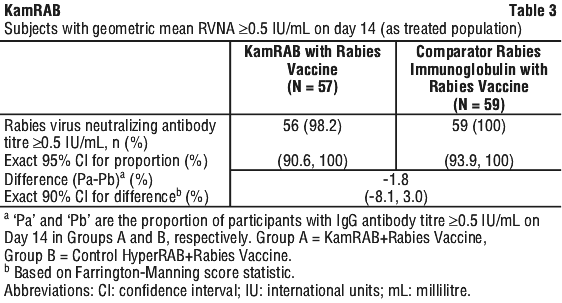
Clinical trials. The efficacy of KamRAB administered concurrently with rabies vaccine was studied in a single-centre, randomised, comparator rabies immunoglobulin-controlled clinical study (Study 003). Study subjects were healthy adults 18 to 72 years of age who were without significant acute or chronic illness. A total of 118 subjects (59 per treatment group) received intramuscular KamRAB or comparator rabies immunoglobulin at a dose of 20 IU/kg on Day 0, and rabies vaccine on Days 0, 3, 7, 14 and 28. The mean age of study subjects was 45 years; subjects were, predominantly white (93%), and 64% were women. The efficacy variable was RVNA, as assessed by RFFIT, on Day 14. Efficacy analyses were performed on the As-Treated Population, which comprised the 116 study subjects who received KamRAB or comparator rabies immunoglobulin and at least 3 of the 5 doses of rabies vaccine before Day 14.
Efficacy, considered when RVNA titre is 0.5 IU/mL or higher on Day 14 (as established by the WHO), was met by 56/57 subjects (98.2%) in the KamRAB group and 59/59 subjects in the comparator rabies immunoglobulin group. The lower limit of the 90% CI was greater than the pre-specified noninferiority margin of -10%; thus, KamRAB was non-inferior to comparator rabies immunoglobulin. See Table 3.
In the As-Treated Population, the geometric mean (SD) Day 14 RVNA titre was 18.89 (31.61) IU/mL and the median Day-14 RVNA titre was 8.81 (range 0.21 - 153.62) IU/mL. Of the 30 treated paediatric patients, 28 patients (93.3%) had a Day 14 RVNA titre ≥ 0.5 IU/mL, the WHO recommended level. None of the 28/30 patients who were followed for the duration of the study developed rabies infection through day 84.
5.2 Pharmacokinetic Properties
A randomised, single-dose, two-period, two-treatment, two-sequence, double-blind, crossover study assessed the pharmacokinetics of KamRAB. Twenty-six healthy volunteer subjects were randomised to receive a single IM injection of 20 IU/kg rabies immunoglobulin on two separate occasions (KamRAB or Comparator rabies immunoglobulin). Subjects received the second treatment (A or B) following the 42-day test period and a 21-day washout period. Single dose IM injection of KamRAB resulted in maximum plasma RVNA levels of 0.25 IU/mL. The median Tmax was 7 days (range: 3 - 14 days). The elimination half-life was approximately 17.9 days.
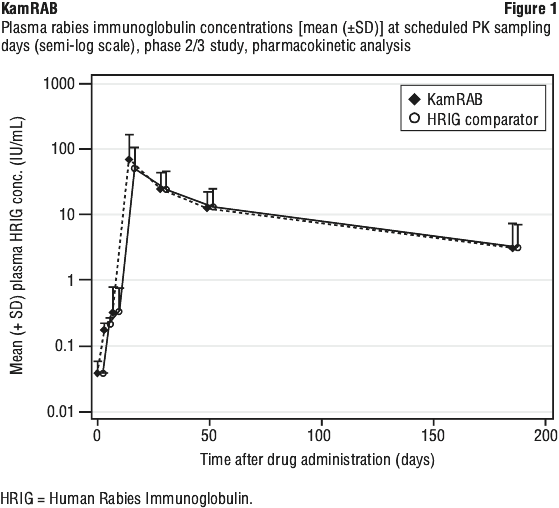
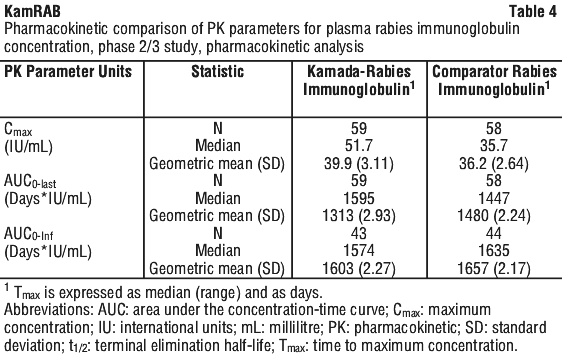
Additionally, a prospective, randomised, double-blind, non-inferiority, study evaluated the pharmacokinetics, safety and effectiveness of simulated post-exposure prophylaxis with KamRAB with co-administration of active rabies vaccine in 118 healthy subjects. Subjects were randomised into two treatment groups (59 per treatment group) to receive intramuscular KamRAB or comparator rabies immunoglobulin at a dose of 20 IU/kg on Day 0, and rabies vaccine on Days 0, 3, 7, 14 and 28. The geometric mean of the peak plasma RVNA was 39.9 IU/mL and 36.2 IU/mL for KamRAB and comparator rabies immunoglobulin respectively. For both treatment groups, the median Tmax was 14 days (range: 14 - 49 days). The half-lives were 48.6 hours and 52.7 hours for KamRAB and comparator rabies immunoglobulin respectively (Table 4).
A plot of plasma rabies virus neutralizing antibody titre concentration versus time (Figure 1) demonstrated that, in both treatment groups, plasma rabies virus neutralizing antibody concentrations declined in a biphasic manner after the absorption phase was complete.
5.3 Preclinical Safety Data
Genotoxicity. No data available.
Carcinogenicity. No data available.
6 Pharmaceutical Particulars
6.1 List of Excipients
Glycine, water for injection, sodium hydroxide (for pH adjustment).
6.2 Incompatibilities
KamRAB should not be mixed with the rabies vaccine or injected in the same syringe with the rabies vaccine.
6.3 Shelf Life
In Australia, information on the shelf life can be found on the public summary of the Australian Register of Therapeutic Goods (ARTG). The expiry date can be found on the packaging.
In-use stability. KamRAB may be stored at room temperatures not exceeding 25°C for up to one month. Use within one month after removal from refrigeration, do not return to refrigeration.
6.4 Special Precautions for Storage
Store at 2°C to 8°C (Refrigerate. Do not freeze).
6.5 Nature and Contents of Container
2 mL and 10 mL vials (Type I borosilicate clear glass), closed with a stopper (chlorobutyl or bromobutyl) and seal (aluminium) fitted with a flip-off cap (polypropylene).
Pack size of 1 vial.
6.6 Special Precautions for Disposal
In Australia, any unused medicine or waste material should be disposed of in accordance with local requirements.
6.7 Physicochemical Properties
Chemical structure. No data available.
CAS number. No data available.
7 Medicine Schedule (Poisons Standard)
S4 - Prescription Only Medicine.
Date of First Approval
16 August 2021
Reasonable care is taken to provide accurate information at the time of creation. This information is not intended as a substitute for medical advice and should not be exclusively relied on to manage or diagnose a medical condition. The Australian Commission on Safety and Quality in Health Care disclaims all liability (including for negligence) for any loss, damage, injury or any other negative effects resulting from reliance on or use of this information. Read our full disclaimer. This website uses cookies. Read our privacy policy.