
Klisyri
Brand Information
| Brand name | Klisyri |
| Active ingredient | Tirbanibulin, Tirbanibulin |
| Schedule | S4 |
Consumer Medicine Information (CMI) leaflet
Please read this leaflet carefully before you start using the Klisyri.
Summary CMI
KLISYRI®
Consumer Medicine Information (CMI) summary
The full CMI on the next page has more details. If you are worried about using this medicine, speak to your doctor or pharmacist.
▼ This medicine is new or being used differently. Please report side effects. See the full CMI for further details.
1. Why am I using KLISYRI®?
KLISYRI® contains the active ingredient tirbanibulin. KLISYRI® is used to treat actinic keratosis on the face and scalp in adults.
For more information, see Section 1. Why am I using KLISYRI®? in the full CMI.
2. What should I know before I use KLISYRI®?
Do not use if you have ever had an allergic reaction to KLISYRI® or any of the ingredients listed at the end of the CMI.
Talk to your doctor if you have any other medical conditions, take any other medicines, or are pregnant or plan to become pregnant or are breastfeeding.
For more information, see Section 2. What should I know before I use KLISYRI®? in the full CMI.
3. What if I am taking other medicines?
Some medicines may interfere with KLISYRI® and affect how it works.
A list of these medicines is in Section 3. What if I am taking other medicines? in the full CMI.
4. How do I use KLISYRI®?
- Apply a thin layer of KLISYRI® to the affected area on the face or scalp once daily for 5 days in a row.
- One sachet contains enough ointment to cover the treatment area. Do not save the opened sachet for use on another day, even if there is still ointment left.
More instructions can be found in Section 4. How do I use KLISYRI®? in the full CMI.
5. What should I know while using KLISYRI®?
| Things you should do |
|
| Things you should not do |
|
| Driving or using machines |
|
| Looking after your medicine |
|
For more information, see Section 5. What should I know while using KLISYRI®? in the full CMI.
6. Are there any side effects?
Very common side effects include redness, skin scaling, scabs, swelling and loss of the top layer of skin. Common side effects include pain, itching and blisters.
For more information, including what to do if you have any side effects, see Section 6. Are there any side effects? in the full CMI.
Full CMI
▼ This medicine is subject to additional monitoring. This will allow quick identification of new safety information. You can help by reporting any side effects you may get. You can report side effects to your doctor, or directly at www.tga.gov.au/reporting-problems.
KLISYRI®
Active ingredient(s): tirbanibulin
Consumer Medicine Information (CMI)
This leaflet provides important information about using KLISYRI®. You should also speak to your doctor or pharmacist if you would like further information or if you have any concerns or questions about using KLISYRI®.
Where to find information in this leaflet:
1. Why am I using KLISYRI®?
2. What should I know before I use KLISYRI®?
3. What if I am taking other medicines?
4. How do I use KLISYRI®?
5. What should I know while using KLISYRI®?
6. Are there any side effects?
7. Product details
1. Why am I using KLISYRI®?
KLISYRI® contains the active ingredient tirbanibulin.
It is used for the treatment of actinic keratosis on the face and scalp in adults. Actinic keratosis is a rough area of skin that has developed in people who have been exposed to too much sunshine over a long time. KLISYRI® should only be used for actinic keratosis on the face and scalp.
2. What should I know before I use KLISYRI®?
Warnings
Do not use KLISYRI® if:
- you are allergic to tirbanibulin, or any of the other ingredients of this medicine (listed in section 7).
Check with your doctor if you:
- have any other medical conditions
- take any medicines for any other condition
During treatment, you may be at risk of developing certain side effects. It is important you understand these risks and how to monitor for them. See additional information under Section 6. Are there any side effects?
Pregnancy and breastfeeding
Check with your doctor if you are pregnant or intend to become pregnant. KLISYRI® should not be used during pregnancy. It is not known if KLISYRI® can harm your unborn baby. You should use an adequate method of contraception during treatment.
Talk to your doctor if you are breastfeeding or intend to breastfeed. It is not known if KLISYRI® passes into your breast milk. Talk to your healthcare provider about the best way to feed your baby during treatment with KLISYRI®.
Children and adolescents
KLISYRI® is approved for use in adults and is not intended for children and adolescents under 18 years of age.
3. What if I am taking other medicines?
Tell your doctor or pharmacist if you are taking or using any other medicines, including any medicines, vitamins or supplements that you buy without a prescription from your pharmacy, supermarket or health food shop.
If you have previously used KLISYRI® or similar medicines, tell your doctor before starting the treatment.
Check with your doctor or pharmacist if you are not sure about what medicines, vitamins or supplements you are taking and if these affect KLISYRI®.
4. How do I use KLISYRI®?
Always use this medicine exactly as your doctor has told you. Check with your doctor or pharmacist if you are not sure.
How much to use
This medicine is intended to treat an area of up to 25 cm2 for one treatment course of five days.
Apply a thin layer of KLISYRI® to the affected area on the face or scalp once daily for 5 days in a row. One sachet contains enough ointment to cover the treatment area as indicated by your doctor. Each sachet is for single use only. Discard sachet after use. Do not save the opened sachet for use on another day, even if there is still ointment left.
When to use KLISYRI®
KLISYRI® should be applied once daily, at approximately the same time each day for 5 days in a row.
How to use KLISYRI®
- Wash your hands with soap and water before applying the ointment.
- Wash the affected area with mild soap and water and dry it gently.
- Open a new sachet each time you apply this medicine.
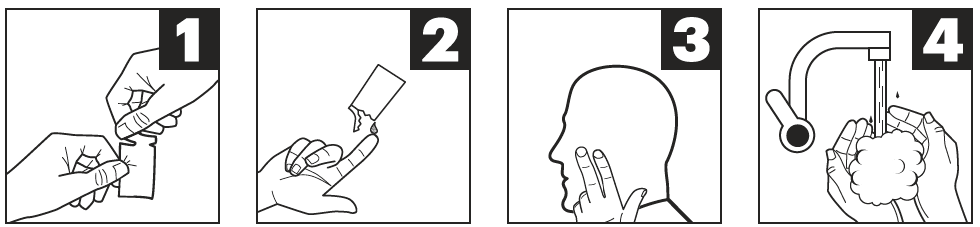
- Open the sachet along the perforations (Figure 1).
- Squeeze some ointment onto your fingertip (Figure 2).
- Apply a thin layer of ointment evenly over the area indicated by your doctor for treatment (Figure 3).
- Wash your hands with soap and water immediately after applying the ointment (Figure 4).
- Do not wash or touch the treated area for about 8 hours. After this time, you may wash the treated area with mild soap and water.
- Do not cover the treated area with dressings or bandages after you have applied KLISYRI®.
- Repeat the above steps for each day of treatment at around the same time of the day.
If you forget to use KLISYRI®
If you miss a dose, apply the ointment as soon as you remember and then continue with your regular schedule. Do not apply the ointment more than once a day.
If you have any further questions on the use of this medicine, ask your doctor or pharmacist.
If it is almost time for your next dose, skip the dose you missed and take your next dose when you are meant to.
Do not take a double dose to make up for the dose you missed.
If you use too much KLISYRI®
Wash the treated area with mild soap and water. Please contact your doctor or pharmacist if you get severe skin reactions.
If you think that you have used too much KLISYRI®, you may need urgent medical attention.
You should immediately:
- phone the Poisons Information Centre
(by calling 13 11 26), or - contact your doctor, or
- go to the Emergency Department at your nearest hospital.
You should do this even if there are no signs of discomfort or poisoning
5. What should I know while using KLISYRI®?
Things you should do
- Wash your hands if you happen to touch the area where you applied the ointment.
- Tell your doctor if you have problems with your immune system.
- After applying KLISYRI®, avoid activities that might cause excessive sweating, and avoid exposure to sunlight as much as possible (including sunlamps and tanning beds). When outdoors, wear a hat.
- Contact your doctor if you get skin reactions to this medicine in the treated area that become severe (see section 6).
- If lesions return or new lesions develop within the treatment area, you should consult your doctor as other treatment options may be considered.
- If you become pregnant while you are taking KLISYRI®, tell your doctor immediately.
Remind any doctor or pharmacist you visit that you are using KLISYRI®.
Things you should not do
- Do not use KLISYRI® until the area to be treated has healed from any previous medicine, procedure or surgical treatment. Do not apply KLISYRI® on open wounds or broken skin.
- Do not get KLISYRI® in your eyes. If it accidentally gets in your eye, rinse the eye thoroughly with plenty of water, seek medical assistance as soon as possible and take this leaflet with you.
- Do not apply the ointment internally, to the inside of your nostrils, the inside of your ear or on the lips. If the ointment accidentally touches any of these areas, wash it off by rinsing with water.
- Do not swallow this medicine. Drink plenty of water if you accidentally swallow this medicine, seek medical assistance and take this leaflet with you.
- Do not cover the treated area with dressings or bandages after using KLISYRI®.
- Do not apply more ointment than your doctor has advised.
- Do not apply the ointment more than once a day.
- Do not allow other people or pets to touch the treated area for around 8 hours after applying the ointment. If the treated area is touched, the area of contact on the other person or pet should be washed.
Driving or using machines
This medicine is not expected to have any effect on your ability to drive or to use machines.
Looking after your medicine
Store KLISYRI® below 25°C. Do not refrigerate or freeze.
For single use only. Discard sachet after use. Do not re-use the sachets once opened.
Keep it where young children cannot reach it.
When to discard your medicine
Do not use this medicine after the expiry date which is stated on the outer carton and the label after EXP. The expiry date refers to the last day of that month.
Getting rid of any unwanted medicine
If you no longer need to use this medicine or it is out of date, take it to any pharmacy for safe disposal.
Do not throw away any medicines via wastewater or household waste. Ask your pharmacist how to throw away medicines you no longer use. These measures will help protect the environment.
6. Are there any side effects?
All medicines can have side effects. If you do experience any side effects, most of them are minor and temporary. However, some side effects may need medical attention.
See the information below and, if you need to, ask your doctor or pharmacist if you have any further questions about side effects.
After using this medicine, you may get side effects on the skin where you apply the ointment. These side effects may get worse for up to 8 days after you start the treatment, and they typically go away within 2 to 3 weeks after completing the treatment. Contact your doctor if these side effects get severe.
Less serious side effects
| Less serious side effects | What to do |
Very common side effects (may affect more than 1 in 10 people):
Common side effects (may affect up to 1 in 10 people):
| Speak to your doctor if you have any of these less serious side effects and they worry you. |
Serious side effects
| Serious side effects | What to do |
Very rare side effects
| Call your doctor straight away or go straight to the Emergency Department at your nearest hospital if you notice any of these serious side effects. |
Tell your doctor or pharmacist if you notice anything else that may be making you feel unwell.
Other side effects not listed here may occur in some people.
Reporting side effects
After you have received medical advice for any side effects that you experience, you can report side effects to the Therapeutic Goods Administration online at www.tga.gov.au/reporting-problems. By reporting side effects, you can help provide more information on the safety of this medicine.
Always make sure you speak to your doctor or pharmacist before you decide to stop taking any of your medicines.
7. Product details
This medicine is only available with a doctor's prescription.
What KLISYRI® contains
| Active ingredient (main ingredient) | Tirbanibulin Each sachet contains 2.5 mg of tirbanibulin in 250 mg ointment. Each gram of ointment contains 10 mg of tirbanibulin. |
| Other ingredients (inactive ingredients) |
|
Do not take this medicine if you are allergic to any of these ingredients.
What KLISYRI® looks like
Each KLISYRI® sachet contains 250 mg of white to off-white ointment.
Each box contains 5 polyethylene/aluminium foil sachets. AUST R 391198
Who distributes KLISYRI®
Actor Pharmaceuticals Pty Ltd
North Sydney, NSW 2060, Australia
Telephone: 1800 322 690
This leaflet was prepared in February 2026.
Brand Information
| Brand name | Klisyri |
| Active ingredient | Tirbanibulin, Tirbanibulin |
| Schedule | S4 |
▼ This medicinal product is subject to additional monitoring in Australia. This will allow quick identification of new safety information. Healthcare professionals are asked to report any suspected adverse events at www.tga.gov.au/reporting-problems.
MIMS Revision Date: 01 May 2026
1 Name of Medicine
Tirbanibulin.
2 Qualitative and Quantitative Composition
Each gram of ointment contains 10 mg of tirbanibulin.
Each sachet contains 2.5 mg of tirbanibulin in 250 mg ointment. For the full list of excipients, see Section 6.1 List of Excipients.
3 Pharmaceutical Form
White to off-white ointment.
4 Clinical Particulars
4.1 Therapeutic Indications
Klisyri is indicated for the topical field treatment of non-hyperkeratotic, non-hypertrophic actinic keratosis of the face or scalp in adults.
4.2 Dose and Method of Administration
Dosage. Apply a thin layer of Klisyri to evenly cover the treatment field of up to 25 cm2 on the face or scalp once daily for 5 consecutive days using 1 single-dose sachet per application.
If a dose is missed, the patient should apply the ointment as soon as they remember and then continue with the regular schedule. However, the ointment should not be applied more than once a day.
Special populations. Hepatic or renal impairment. Tirbanibulin has not been studied in patients with renal or hepatic impairment. Based on clinical pharmacology and in vitro studies, no dose adjustments are needed (see Section 5.2 Pharmacokinetic Properties).
Elderly population. No dose adjustment is required (see Section 5.1 Pharmacodynamic Properties).
Method of administration. Klisyri is for external use only on the face or scalp. Contact with eyes, lips, and the inside of nostrils or inside the ears should be avoided.
Each sachet is for single use only and should be discarded after use (see Section 6.6 Special Precautions for Disposal).
Before applying Klisyri, patients should wash the treatment field with mild soap and water and dry it. Ointment from 1 single-use sachet should be squeezed onto a fingertip and a thin layer applied evenly over the entire treatment field, up to a maximum treatment area of 25 cm2.
Hands should be washed with soap and water before and immediately after application of the ointment.
Klisyri should be applied at approximately the same time each day. The treated area should not be bandaged or otherwise occluded. Washing and touching of the treated area should be avoided for approximately 8 hours after application of Klisyri. After this period, the treated area may be washed with mild soap and water.
4.3 Contraindications
Hypersensitivity to the active substance or to any of the excipients listed in Section 6.1 List of Excipients.
Klisyri is contraindicated during pregnancy or in women of childbearing potential not using contraception. Pregnancy should be excluded before treating women of childbearing potential with Klisyri.
4.4 Special Warnings and Precautions for Use
Klisyri should not be applied until the skin is healed from treatment with any previous medicinal product, procedure or surgical treatment and should not be applied to open wounds or broken skin where the skin barrier is compromised.
Non-treatment area exposure. Contact with the eyes should be avoided. Klisyri may cause eye irritation. In the event of accidental contact with the eyes, the eyes should be rinsed immediately with large amounts of water, and the patient should seek medical care as soon as possible.
Klisyri must not be ingested. If accidental ingestion occurs, the patient should drink plenty of water and seek medical care.
Klisyri should not be used on the inside of the ears, on the inside of the nostrils, or on the lips.
Repeat use. The safety and efficacy of more than 1 treatment course of 5 consecutive days has not been studied in clinical trials. If recurrence occurs, or new lesions develop within the treatment area, other treatment options should be considered.
Local skin reactions. Local skin reactions in the treated area, including erythema, flaking/scaling, crusting, swelling, erosion/ulceration, and vesiculation/pustulation, may occur after topical application of Klisyri. Local skin reactions are common and the majority are mild to moderate. However, local skin reactions of severe intensity have been experienced by patients (see Section 4.8 Adverse Effects (Undesirable Effects)). Treatment effect may not be adequately assessed until resolution of local skin reactions.
Hypersensitivity reactions. Serious hypersensitivity reactions, including systemic reactions (possible anaphylaxis) have been reported through post-marketing experience (see Section 4.8 Adverse Effects (Undesirable Effects)).
Sun exposure. Due to the nature of the disease, excessive exposure to sunlight (including sunlamps and tanning beds) should be avoided or minimised.
Risk of progression to skin cancer. Whilst there is no signal for an increased risk of skin cancer development within the treatment field, longer term safety relating to the incidence of skin cancer in patients treated with Klisyri is currently under evaluation in a clinical trial.
Changes in the appearance of actinic keratosis could suggest progression to invasive squamous cell carcinoma. Ongoing monitoring of the treatment field is recommended and lesions clinically atypical for actinic keratosis or suspicious for malignancy should be appropriately managed.
Use in the elderly. The safety and efficacy profile observed in elderly patients was consistent with that in the overall patient population. No dose adjustment is required (see Section 5.1 Pharmacodynamic Properties).
Paediatric use. There are no data to support safety and efficacy of Klisyri in the paediatric population.
Effects on laboratory tests. No data available.
4.5 Interactions with Other Medicines and Other Forms of Interactions
In vitro studies show that tirbanibulin does not inhibit or induce cytochrome P450 enzymes and it is not an inhibitor of efflux and uptake transporters at maximum clinical exposures.
There was no clinically relevant inhibition of CYP1A2, CYP2B6, CYP2C8, CYP2C9, CYP2C19, CYP2D6 or CYP3A4/5, or induction of CYP1A2, 2B6 or 3A4 in vitro by tirbanibulin or metabolite KX2-5036. There was no clinically relevant inhibition of BCRP, OATP1B1, OATP1B3, BSEP, MRP2, OCT1, OCT2, P-glycoprotein, MATE1, MATE2-K, OAT1 or OAT3 transporters.
Pharmacokinetic drug interactions are unlikely with tirbanibulin.
4.6 Fertility, Pregnancy and Lactation
Effects on fertility. In a fertility and early embryonic development study in rats, reproductive performance was not affected at doses (oral administration) up to 4 mg/kg/day (240 times the AUC at maximum recommended human dose [MRHD]) in males and 1 mg/kg/day (147 times the AUC at the MRHD) in females. However, in male rats, tirbanibulin at 4 mg/kg/day (oral administration), adversely affected spermatogenesis, including reduced sperm count and motility, and increased observations of morphologically abnormal sperm. The observed decrease in testes weight correlated with an increased incidence of degeneration of the seminiferous epithelium. No effects on sperm were observed in males treated at 2 mg/kg/day (166 times the AUC at the MRHD).
Use in pregnancy. (Category D)
There are no or limited amount of data from the use of tirbanibulin in pregnant women.
In embryofetal development studies in rats, tirbanibulin induced increased post implantation loss, reduced embryofetal survival, reduction in mean fetal bodyweight, reduced mean fetal crown-rump length in live fetuses, and external, visceral, and skeletal malformations following oral administration to pregnant rats at > 1.25 mg/kg/day during the period of organogenesis (91 times the AUC at the MRHD). No effect on fetal development was seen at 0.5 mg/kg/day (22 times the AUC at the MRHD) in rats. Reduced mean fetal weight and crown-rump length were observed following oral administration of tirbanibulin to pregnant rabbits at 3 mg/kg/day during the period of organogenesis (194 times the AUC at the MRHD). Tirbanibulin had no effect on fetal development at a dose of 1 mg/kg/day (65 times the AUC at the MRHD) in rabbits.
In a pre- and post-natal development study in rats, tirbanibulin was orally administered to pregnant rats (from implantation through gestation and lactation) at doses up to 1.25 mg/kg/day (91 times the AUC at the MRHD). No adverse effects on maternal function or developmental, neurobehavioral, or reproductive performance of offspring were observed.
Klisyri is contraindicated during pregnancy or in women of childbearing potential not using contraception. Pregnancy should be excluded before treating women of childbearing potential with Klisyri.
Use in lactation. It is unknown whether tirbanibulin/metabolites are excreted in human or animal milk, or its effects on milk production.
A risk to the newborns/infants cannot be excluded.
A decision must be made whether to discontinue breast-feeding or to discontinue/abstain from Klisyri therapy, considering the benefit of breast feeding for the child and the benefit of therapy for the woman.
4.7 Effects on Ability to Drive and Use Machines
Klisyri has no or negligible influence on the ability to drive and use machines.
4.8 Adverse Effects (Undesirable Effects)
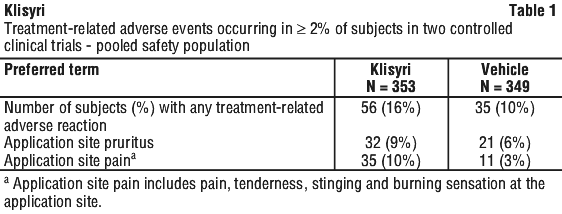
In two double-blind, Phase III vehicle-controlled clinical trials, the safety of Klisyri was investigated in 702 adults with actinic keratosis on the face or scalp. 353 patients were treated with tirbanibulin for 5 consecutive days and 349 patients received vehicle. Patients were followed until Day 57, and those with complete clearance at Day 57, followed for up to a further 12 months. The incidence of adverse events (see Table 1) was reported separately to information on local skin reactions (LSRs) (see Table 2).
Adverse events and local skin reactions were predominantly mild to moderate in severity and transient. No subjects withdrew from the trials due to adverse events related to tirbanibulin ointment.
Treatment-related adverse events. Table 1 presents the incidence of treatment-related adverse events occurring in ≥ 2% of subjects in the phase III controlled clinical trials (pooled analysis).
No additional local adverse reactions were reported in patients who maintained complete clearance through a 12-month follow-up period.
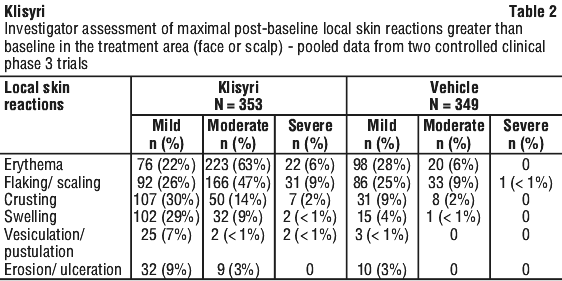
Local skin reactions. Local skin reactions were assessed by the investigators using a grading scale of 0 = absent, 1 = mild (slightly, barely perceptible), 2 = moderate (distinct presence), and 3 = severe (marked, intense).
Most local skin reactions were transient and mild to moderate in severity. Following the application of tirbanibulin ointment, the incidences of local skin reactions with a severity grade greater than baseline were erythema (91%), flaking/scaling (82%), crusting (46%), swelling (39%), erosion/ulceration (12%), and vesiculation/pustulation (8%). Severe local skin reactions occurred at an overall incidence of 13%. Severe local skin reactions that occurred at an incidence > 1% were flaking/scaling (9%), erythema (6%), and crusting (2%). None of the local skin reactions required treatment.
The percentages of subjects with the maximal post-baseline grades for each local skin reaction greater than baseline by treatment group are provided in Table 2.
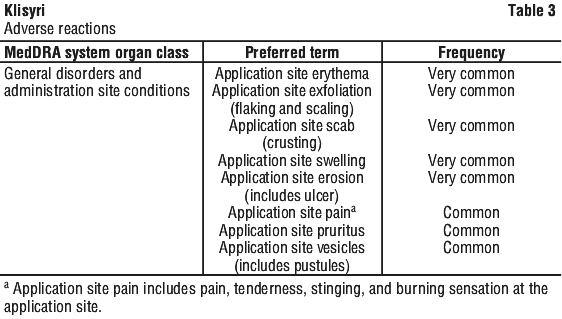
Tabulated list of adverse reactions. Table 3 lists the adverse reactions, including local skin reactions, reported in the clinical trials with Klisyri. Frequencies are defined as: very common (≥ 1/10); common (≥ 1/100 to < 1/10); uncommon (≥ 1/1,000 to < 1/100); rare (≥ 1/10,000 to < 1/1,000); very rare (< 1/10,000); not known (frequency cannot be estimated from the available data).
Post-marketing experience. During post-marketing use of Klisyri serious hypersensitivity reactions, including systemic reactions (possible anaphylaxis) have been reported.
Reporting suspected adverse effects. Reporting suspected adverse reactions after registration of the medicinal product is important. It allows continued monitoring of the benefit-risk balance of the medicinal product. Healthcare professionals are asked to report any suspected adverse reactions at www.tga.gov.au/reporting-problems.
4.9 Overdose
Overdose following topical application with Klisyri may cause an increase in incidence and severity of local skin reactions. There is no data available on oral overdose or the extent of oral absorption of Klisyri. Management of overdose should involve monitoring and supportive care.
For information on the management of overdose, contact the Poisons Information Centre on 13 11 26 (Australia).
5 Pharmacological Properties
5.1 Pharmacodynamic Properties
Pharmacotherapeutic group: antibiotics and chemotherapeutics for dermatological use, other chemotherapeutics, ATC code: D06BX03.
Mechanism of action. Tirbanibulin disrupts microtubules by direct binding to tubulin, which induces cell cycle arrest and apoptotic death of proliferating cells and is associated with disruption of Src tyrosine kinase signalling.
Clinical trials. The efficacy and safety of tirbanibulin applied on the face or scalp for 5 consecutive days was studied in 2 pivotal randomised, double-blind, vehicle-controlled Phase III studies (KX01-AK- 03 and KX01-AK-004) including 702 adult patients (353 patients treated with tirbanibulin and 349 patients treated with vehicle). Of these, 247 patients (70%) were 65 years of age or older and 308 (88%) were male.
Patients had 4 to 8 clinically typical, visible, discrete, non-hyperkeratotic and non-hypertrophic actinic keratosis lesions within a contiguous 25 cm2 treatment field on the face or scalp. On each scheduled dosing day, the ointment was applied to the entire treatment field. In the tirbanibulin group, the mean age was 69 years (range 46 to 90 years) and 96% of patients had Fitzpatrick skin type I, II, or III. The primary efficacy endpoint was complete (100%) clearance of AK lesions in the treatment area, defined as the proportion of subjects at Day 57 with no clinically visible AK lesions in the treatment area and the secondary endpoint was partial (≥ 75%) clearance of AK lesions in the treatment area. Results from both studies are presented in Table 4.


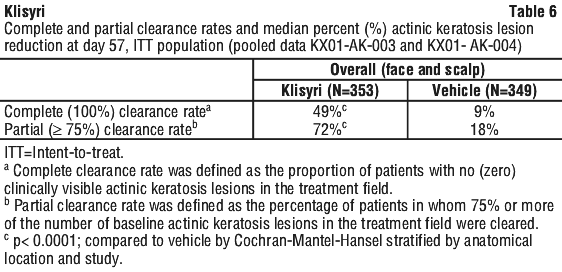
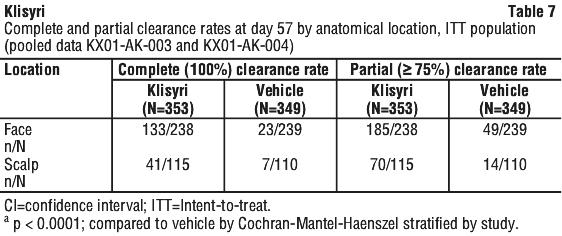
After one year, the estimated incidence of any lesions within the application area was 73%. There was a higher recurrence rate for scalp lesions compared to facial lesions. Of the patients who developed recurrences, 86% had either 1 or 2 lesions. Furthermore, 48% of patients developing recurrences reported at least 1 lesion that was not identified at the time of the initial treatment (i.e. newly occurring lesions counted as recurrences).
The safety and efficacy of Klisyri retreatment has not been evaluated in clinical trials.
5.2 Pharmacokinetic Properties
Absorption. Tirbanibulin ointment was minimally absorbed in 18 patients with actinic keratosis after topical application once daily for 5 consecutive days over an area of 25 cm2. Tirbanibulin plasma concentrations were low at steady state (mean maximum concentration [Cmax] of 0.258 nanogram/mL or 0.598 nanoM and AUC0-24h of 4.09 nanogram.h/mL).
Distribution. The protein binding of tirbanibulin to human plasma proteins is approximately 88%.
Metabolism. In vitro, tirbanibulin is mainly metabolised by CYP3A4, and to a lesser degree by CYP2C8. The main metabolic pathways are N-debenzylation and hydrolysis reactions. The most relevant metabolites were characterised in patients with actinic keratosis in a maximal use pharmacokinetic study and showed minimal systemic exposure.
Excretion. Elimination of tirbanibulin has not been fully characterized in humans.
Hepatic and renal impairment. No formal studies of Klisyri in patients with hepatic or renal impairment have been conducted. Due to the low systemic exposure to tirbanibulin after topical application of Klisyri once daily for 5 days, changes in hepatic or renal function are unlikely to be clinically significant. Therefore, no dose adjustments are considered needed (see Section 4.2 Dose and Method of Administration).
5.3 Preclinical Safety Data
Genotoxicity. Tirbanibulin was not mutagenic, in vitro, in the bacterial reverse mutation assay (Ames test). Tirbanibulin was positive in an in vitro chromosomal aberration assay with Chinese hamster ovary (CHO) cells, an in vitro mouse lymphoma assay with L5178/TK+/- cells, and an in vivo micronucleus assay in rats. Exposure to tirbanibulin in the in vivo study was 24 times the exposure in patients at the maximum recommended dose.
Carcinogenicity. No carcinogenicity studies have been conducted with tirbanibulin.
6 Pharmaceutical Particulars
6.1 List of Excipients
Propylene glycol, glyceryl monostearate 40-55 per cent.
6.2 Incompatibilities
Not applicable.
6.3 Shelf Life
In Australia, information on the shelf life can be found on the public summary of the Australian Register of Therapeutic Goods (ARTG). The expiry date can be found on the packaging.
6.4 Special Precautions for Storage
Store below 25°C. Do not refrigerate. Do not freeze.
6.5 Nature and Contents of Container
Sachets with an inner layer of linear low-density polyethylene. Each sachet contains 250 mg of ointment.
Packs of 1 or 5 single-use sachets*.
*Not all pack sizes may be marketed.
6.6 Special Precautions for Disposal
Each sachet is for single-use only. Discard sachet after use. Any unused medical product or waste material should be disposed of in accordance with local requirements.
6.7 Physicochemical Properties
Chemical structure.
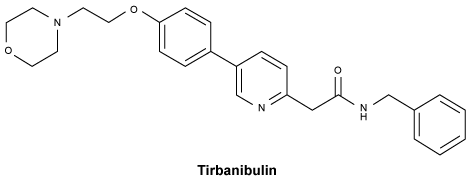
Molecular weight: 431.5.
CAS number. 897016-82-9.
7 Medicine Schedule (Poisons Standard)
Schedule 4 - Prescription Only Medicine.
Date of First Approval
19 September 2023
Date of Revision
25 February 2026
Summary Table of Changes

Reasonable care is taken to provide accurate information at the time of creation. This information is not intended as a substitute for medical advice and should not be exclusively relied on to manage or diagnose a medical condition. The Australian Commission on Safety and Quality in Health Care disclaims all liability (including for negligence) for any loss, damage, injury or any other negative effects resulting from reliance on or use of this information. Read our full disclaimer. This website uses cookies. Read our privacy policy.