
Ledaga
Brand Information
| Brand name | Ledaga |
| Active ingredient | Chlormethine |
| Schedule | S4 |
Consumer Medicine Information (CMI) leaflet
Please read this leaflet carefully before you start using the Ledaga.
Summary CMI
Ledaga
Consumer Medicine Information (CMI) summary
The full CMI on the next page has more details. If you are worried about using this medicine, speak to your doctor or pharmacist.
▼ This medicine is new or being used differently. Please report side effects. See the full CMI for further details.
1. Why am I using Ledaga?
Ledaga contains the active ingredient chlormethine. Ledaga is an anti-cancer medicine used on the skin to treat mycosis fungoides-type cutaneous T-cell lymphoma (MF-type CTCL).
For more information, see Section 1. Why am I using Ledaga? in the full CMI.
2. What should I know before I use Ledaga?
Do not use if you have ever had an allergic reaction to chlormethine or any of the ingredients listed at the end of the CMI.
Talk to your doctor if you have any other medical conditions, take any other medicines, or are pregnant or plan to become pregnant or are breastfeeding.
For more information, see Section 2. What should I know before I use Ledaga? in the full CMI.
3. What if I am taking other medicines?
Tell your doctor or pharmacist if you are taking, have recently taken, or might take any other medicines, including any medicines, vitamins or supplements that you buy without a prescription from your pharmacy, supermarket or health food shop.
4. How do I use Ledaga?
- The recommended dose is application as a thin film once a day to the affected areas.
- If you are a caregiver that is applying the gel to a patient, you must wear disposable nitrile gloves when applying this medicine to avoid contact with the medicine (this is a special type of glove; ask your doctor or pharmacist if you are not sure). Patients applying the gel themselves do not need to wear gloves but should wash their hands with soap and water immediately after applying.
More instructions can be found in Section 4. How do I use Ledaga? in the full CMI.
5. What should I know while using Ledaga?
| Things you should do |
|
| Things you should not do |
|
| Driving or using machines |
|
| Looking after your medicine |
|
For more information, see Section 5. What should I know while using Ledaga? in the full CMI.
6. Are there any side effects?
Very common side effects include skin inflammation, infections of the skin, itching (pruritus) and common side effects include skin ulcers, blisters and darkening of the skin. For more information, including what to do if you have any side effects, see Section 6. Are there any side effects? in the full CMI.
Full CMI
▼ This medicine is subject to additional monitoring. This will allow quick identification of new safety information. You can help by reporting any side effects you may get. You can report side effects to your doctor, or directly at www.tga.gov.au/reporting-problems.
Ledaga
Active ingredient(s): Chlormethine
Consumer Medicine Information (CMI)
This leaflet provides important information about using Ledaga. You should also speak to your doctor or pharmacist if you would like further information or if you have any concerns or questions about using Ledaga.
Where to find information in this leaflet:
1. Why am I using Ledaga?
2. What should I know before I use Ledaga?
3. What if I am taking other medicines?
4. How do I use Ledaga?
5. What should I know while using Ledaga?
6. Are there any side effects?
7. Product details
1. Why am I using Ledaga?
Ledaga contains the active ingredient chlormethine.
This is an anti-cancer medicine used on the skin to treat mycosis fungoides-type cutaneous T-cell lymphoma (MF-type CTCL). MF-type CTCL is a condition in which certain cells of the body's immune system called T-lymphocytes become cancerous and affect the skin. Chlormethine is a type of anti-cancer medicine called an ‘alkylating agent’. It attaches to the DNA of dividing cells, like cancer cells, which stops them from multiplying and growing.
Ledaga is for use in adults only.
2. What should I know before I use Ledaga?
Warnings
Do not use Ledaga if:
- you are allergic (hypersensitive) to chlormethine or any of the other ingredients of this medicine (listed in section 7).
Check with your doctor if you:
- have any other medical conditions
- take medicines for any other conditions
During treatment, you may be at risk of developing certain side effects. It is important you understand these risks and how to monitor for them. See additional information under Section 6. Are there any side effects?
Pregnancy and breastfeeding
Ledaga is not recommended during pregnancy because it may cause fetal harm. Check with your doctor if you are pregnant or intend to become pregnant. There is limited experience of chlormethine in pregnant women.
Ledaga is not recommended during breast feeding because of the potential for exposure to Ledaga through exposure to the mother's skin and the potential for serious adverse reactions in the breastfed child from chlormethine. Talk to your doctor if you are breastfeeding or intend to breastfeed.
Contraception
Women with reproductive potential and their partners should use a barrier method (eg. condoms or diaphragm) of contraception while using Ledaga to avoid direct exposure of reproductive organs to Ledaga.
Ask your doctor about the need for contraception before you start taking Ledaga.
Children and adolescents
Do not give this medicine to children and adolescents under the age of 18 years because the safety and effectiveness have not been established for this age group.
3. What if I am taking other medicines?
Tell your doctor or pharmacist if you are taking, have recently taken, or might take any other medicines, including any medicines, vitamins or supplements that you buy without a prescription from your pharmacy, supermarket or health food shop.
Check with your doctor or pharmacist if you are not sure about what medicines, vitamins or supplements you are taking and if these affect Ledaga.
4. How do I use Ledaga?
Always use this medicine exactly as your doctor or pharmacist has told you. Check with your doctor or pharmacist if you are not sure.
How much to use
The recommended dose is application as a thin film once a day to the affected areas. The dose is the same for elderly patients (aged 65 years and older) as for younger adult patients (aged 18 years and older).
Ledaga is intended only for use on the skin.
When to use Ledaga
The recommended dose of Ledaga is once per day. If you apply more than recommended, talk to your doctor.
You should use Ledaga at least 4 hours before or 30 minutes after showering or washing so that it can work properly.
Follow the instructions provided below and do not stop using Ledaga unless your doctor tells you to. If you stop your treatment with Ledaga, your symptoms may come back.
Your doctor may stop your treatment if you develop severe inflammation of the skin (i.e., redness and swelling), blisters and ulcers. Your doctor may restart the treatment upon improvement of your symptoms.
How to use Ledaga
If you are a caregiver that is applying the gel to a patient, you must wear disposable nitrile gloves when applying this medicine to avoid contact with the medicine (this is a special type of glove; ask your doctor or pharmacist if you are not sure). Patients applying the gel themselves do not need to wear gloves.
Ledaga is supplied inside a child-resistant transparent, sealable, plastic bag. If it is not, ask your pharmacist.
To apply Ledaga, follow these steps:
- Remove Ledaga from the refrigerator. It should be used within 30 minutes.
- Make sure your skin is completely dry. Use Ledaga at least 30 minutes after showering or washing. Do not apply moisturisers or any other skin products (including medicines applied to the skin) for 2 hours before applying Ledaga.
- Remove the cap from the tube. Use the cap to pierce the seal.
- Apply Ledaga to affected areas of the skin and allow to dry for 5 to 10 minutes.
- If Ledaga is applied to non-affected areas of the skin by mistake, wash these areas with soap and water.
After applying Ledaga follow these steps:
- Do not cover the treated area with air-or water-tight bandages after you have applied this medicine.
- Do not apply moisturisers or any other skin products (including medicines applied to the skin) for 2 hours after applying this medicine.
- Do not allow contact with an open flame or a lit cigarette until Ledaga has dried. Ledaga contains alcohol and is therefore considered flammable.
- If you are a patient who has applied the gel yourself, wash your hands with soap and water immediately after applying.
- For caregivers applying the gel, carefully remove gloves (turning them inside out during the removal to avoid contact with Ledaga) and then wash hands thoroughly with soap and water.
- With clean hands place Ledaga back in the box it came in and the box in the plastic bag. Return it to the refrigerator after each use. Keep away from children and contact with food by storing Ledaga in its box and inside the plastic bag.
If you forget to use Ledaga
Ledaga should be used regularly at the same time each day. If you miss your dose at the usual time, you can take this later in the same day.
If it is almost time for your next dose, skip the dose you missed and take your next dose when you are meant to.
Do not use a double dose to make up for a forgotten dose.
If you use too much Ledaga
If you think that you have applied too much Ledaga, you may need urgent medical attention.
You should immediately:
- phone the Poisons Information Centre
(by calling 13 11 26), or - contact your doctor, or
- go to the Emergency Department at your nearest hospital.
You should do this even if there are no signs of discomfort or poisoning.
5. What should I know while using Ledaga?
Things you should do
If you experience any skin, eye, nose or mouth irritation while using this medicine speak to your doctor. Ledaga contains inactive ingredients propylene glycol and butylhydroxytoluene that may cause skin irritation. In addition, butylhydroxytoluene may also cause irritation to the eyes and mucous membranes (i.e., mouth and nose).
Tell your doctor of any new skin lesions and have regular check-ups for signs and symptoms of skin cancer. Non-melanoma skin cancers have been reported in patients receiving the active ingredient in Ledaga. Skin cancer may occur at multiple areas, including areas not directly treated with Ledaga.
If you are a caregiver, you must avoid direct skin contact with Ledaga. Risks of direct skin contact include inflammation of the skin (dermatitis), injury to their eyes, mouth, or nose, and skin cancers. Caregivers who accidentally come into contact with Ledaga must wash the affected area right away for at least 15 minutes. Remove and wash any contaminated clothing. Get medical help right away if Ledaga gets into your eyes, mouth, or nose.
Remind any doctor, dentist or pharmacist you visit that you are using Ledaga.
Things you should not do
Do not apply the medicine near the eyes, to the inside of the nostrils, the inside of the ear or on the lips. If this happens, seek medical assistance as soon as possible.
If Ledaga gets in your eyes, it can cause pain, burning, swelling, redness, sensitivity to light, and blurred vision. It may also cause blindness and severe permanent injury to your eyes. Rinse your eyes right away for at least 15 minutes with large amounts of water, a solution known as “0.9% sodium chloride solution” or an eye-wash solution. Seek medical assistance (including an eye doctor) as soon as possible.
If this medicine gets in your mouth or nose, it can cause pain, redness, and ulcers that may be severe. Rinse the affected area right away for at least 15 minutes with large amounts of water. Seek medical assistance as soon as possible.
Driving or using machines
This medicine is not expected to have any effect on your ability to drive or to use machines.
Looking after your medicine
Store this medicine in a refrigerator (+2°C to +8°C) at all times, ensuring the tube is in the box inside the child resistant, transparent, sealable, plastic bag.
Store in the original package in order to protect from moisture.
Follow the instructions in the carton on how to take care of your medicine properly.
Keep it where young children cannot reach it.
When to discard your medicine
Do not use Ledaga (even when unopened) after 60 days of storage in the refrigerator.
Getting rid of any unwanted medicine
If you no longer need to use this medicine or it is out of date, take it to any pharmacy for safe disposal.
Do not throw away any medicines via wastewater or household waste. These measures will help protect the environment.
6. Are there any side effects?
All medicines can have side effects. If you do experience any side effects, most of them are minor and temporary. However, some side effects may need medical attention.
See the information below and, if you need to, ask your doctor or pharmacist if you have any further questions about side effects.
Less serious side effects
| Less serious side effects | What to do |
Very common side effects (may affect more than 1 in 10 people):
Common side effects (may affect up to 1 in 10 people):
The risk for these side effects is increased if you apply Ledaga to your face, genital area, anus or skin folds. | Speak to your doctor if you have any of these less serious side effects and they worry you. |
Serious side effects
| Serious side effects | What to do |
| Call your doctor straight away, or go straight to the Emergency Department at your nearest hospital if you notice any of these serious side effects. |
Tell your doctor or pharmacist if you notice anything else that may be making you feel unwell.
Other side effects not listed here may occur in some people.
Reporting side effects
After you have received medical advice for any side effects you experience, you can report side effects to the Therapeutic Goods Administration online at www.tga.gov.au/reporting-problems. By reporting side effects, you can help provide more information on the safety of this medicine.
Always make sure you speak to your doctor or pharmacist before you decide to stop taking any of your medicines.
7. Product details
This medicine is only available with a doctor's prescription.
What Ledaga contains
| Active ingredient (main ingredient) | Chlormethine Each gram of gel contains 160 micrograms of chlormethine |
| Other ingredients (inactive ingredients) |
|
Do not take this medicine if you are allergic to any of these ingredients.
What Ledaga looks like
Ledaga is a clear, colourless gel. Each aluminium tube contains 60 grams of gel and has a white screw cap.
(Aust R 338551).
Who distributes Ledaga
Juniper Biologics Pty Ltd
Level 14 Suite 3A16
275 Alfred Street
North Sydney
NSW 2060, Australia
This leaflet was prepared on 20 October 2022.
Brand Information
| Brand name | Ledaga |
| Active ingredient | Chlormethine |
| Schedule | S4 |
▼ This medicinal product is subject to additional monitoring in Australia. This will allow quick identification of new safety information. Healthcare professionals are asked to report any suspected adverse events at www.tga.gov.au/reporting-problems.
MIMS Revision Date: 01 December 2024
1 Name of Medicine
Chlormethine hydrochloride.
2 Qualitative and Quantitative Composition
Each gram of gel contains chlormethine hydrochloride equivalent to 160 micrograms of chlormethine.
For the full list of excipients, see Section 6.1.
3 Pharmaceutical Form
Gel.
Clear, colourless gel.
4 Clinical Particulars
4.1 Therapeutic Indications
Ledaga is indicated for the topical treatment of mycosis fungoides-type cutaneous T-cell lymphoma (MF-type CTCL) in adult patients.
4.2 Dose and Method of Administration
Treatment with Ledaga should be initiated by an appropriately experienced physician.
Posology. A thin film of Ledaga should be applied once daily to affected areas of the skin.
Treatment with Ledaga should be stopped for any grade of skin ulceration or blistering, or moderately severe or severe dermatitis (e.g. marked skin redness with oedema). Upon improvement, treatment with Ledaga can be restarted at a reduced frequency of once every 3 days. If reintroduction of treatment is tolerated for at least 1 week, the frequency of application can be increased to every other day for at least 1 week and then to once-daily application if tolerated.
Elderly. The dosing recommendation for elderly patients (≥ 65 years old) is the same as for younger adult patients (see Section 4.8).
Paediatric population. The safety and efficacy of Ledaga in children aged 0 to 18 years have not been established. No data are available.
Method of administration. Ledaga is for topical application to the skin.
The following instructions should be followed by patients or caregivers when applying Ledaga:
Patients must wash hands thoroughly with soap and water immediately after handling or applying Ledaga. Patients should apply Ledaga to affected areas of the skin. In case of Ledaga exposure to non-affected areas of the skin, patients should wash the exposed area with soap and water.
Caregivers must wear disposable nitrile gloves when applying Ledaga to patients. Caregivers should remove gloves carefully (turning them inside out during the removal to avoid contact with Ledaga) and wash hands thoroughly with soap and water after removal of gloves. If there is accidental skin exposure to Ledaga, caregivers must immediately wash exposed areas thoroughly with soap and water for at least 15 minutes. Remove and wash contaminated clothing.
The opening of the tube is covered with a foil safety seal. The cap should be used to puncture the seal. The tube should not be used and the pharmacist should be contacted if the seal is missing, punctured, or lifted.
Ledaga should be applied immediately or within 30 minutes after removal from the refrigerator. The tube should be returned to the refrigerator immediately after each use. With clean hands, the tube should be placed back into the original box and the box should be placed in the supplied transparent, sealable, plastic bag for storage in the refrigerator.
Ledaga should be applied to completely dry skin at least 4 hours before or 30 minutes after showering or washing. The patient should allow treated areas to dry for 5 to 10 minutes after application before covering with clothing. Occlusive (air- or water-tight) dressings should not be used on areas of the skin where Ledaga was applied.
Emollients (moisturisers) or other topical products may be applied to the treated areas 2 hours before or 2 hours after application of Ledaga.
Fire, flame, and smoking must be avoided until Ledaga has dried.
4.3 Contraindications
Hypersensitivity to chlormethine or to any of the excipients listed, see Section 6.1.
4.4 Special Warnings and Precautions for Use
Mucosal or eye exposure. Contact with mucous membranes, especially those of the eyes, must be avoided. Exposure of mucous membranes such as the oral mucosa or nasal mucosa causes pain, redness, and ulceration, and these may be severe. Exposure of the eyes to chlormethine causes pain, burns, inflammation, photophobia, and blurred vision. Blindness and severe irreversible anterior eye injury may occur.
Patients should be advised that if any mucous membrane exposure occurs:
irrigation should be performed immediately for at least 15 minutes with copious amounts of water (or sodium chloride 9 mg/mL (0.9%) solution for injection, or a balanced salt ophthalmic irrigating solution may be used if there is eye exposure), and
medical care should be obtained immediately (including ophthalmological consultation if there is eye exposure).
Local skin reactions. Patients should be assessed during treatment for skin reactions such as dermatitis (e.g. redness, swelling, inflammation), pruritus, blisters, ulceration, and skin infections. The face, genitalia, anus, and intertriginous skin are at increased risk of skin reactions to topical chlormethine. Therefore, administration of Ledaga in these areas should be avoided.
For dose modification information in case of skin reactions, see Section 4.2.
Hypersensitivity. Hypersensitivity reactions, including isolated cases of anaphylaxis, have been reported in the literature after the use of topical formulations of chlormethine (see Section 4.3; Section 4.8).
Skin cancer. Skin-directed therapies for MF-type CTCL have been associated with secondary skin cancers, although the specific contribution of chlormethine has not been established. Patients should be monitored for development of skin cancers during and after discontinuation of treatment with chlormethine.
Secondary exposure to Ledaga. Direct skin contact with Ledaga should be avoided in individuals other than the patient. Direct skin contact with Ledaga should also be avoided in non-affected areas in patients.
Risks of secondary exposure may include skin reactions, mucosal injury, and skin cancers. Recommended application instructions should be followed to prevent secondary exposure (see Section 4.2).
Excipients. The medicinal product contains propylene glycol and butylhydroxytoluene, which may cause skin irritation (e.g. contact dermatitis). In addition, butylhydroxytoluene has been reported to cause irritation to the eyes and mucous membranes.
Use in the elderly. The safety profile observed in elderly patients was consistent with that in the overall patient population. No dose adjustments are required (see Section 4.2).
Paediatric use. The safety of Ledaga in children aged 0 to 18 years has not been established. No data are available.
Effects on laboratory tests. Clinical laboratory safety data were monitored throughout the two clinical studies and no trend toward abnormal values were noted following topical administration.
4.5 Interactions with Other Medicines and Other Forms of Interactions
No interaction studies have been performed.
4.6 Fertility, Pregnancy and Lactation
Ledaga is not recommended in women of childbearing potential not using contraception.
Effects on fertility. Female patients of reproductive potential should be advised to use effective contraception during treatment with Ledaga. A barrier method of contraception should be used to avoid direct exposure of reproductive organs to Ledaga.
Males with female partners of reproductive potential should be advised to use effective contraception during treatment with Ledaga. A barrier method of contraception should be used to avoid direct exposure of reproductive organs to Ledaga.
Adverse effects on fertility have been observed with chlormethine after systemic administration in animals. Fertility was impaired in male rats with intravenous administration at doses ≥ 0.25 mg/kg every 2 weeks, and in mice (treated males paired with treated females) with intraperitoneal administration at 0.5 mg/kg/day for 4 days. The relevance to humans receiving topical chlormethine is unknown.
Use in pregnancy. (Category B3)
Ledaga is not recommended during pregnancy. Based on case reports in humans, findings in animal reproduction studies, its mechanism of action, and genotoxicity findings, chlormethine may cause fetal harm. There are case reports of children born with malformations in pregnant women systemically administered chlormethine.
Chlormethine was teratogenic and embryo-lethal after a single subcutaneous administration to animals. Advise women to avoid becoming pregnant while using Ledaga. If this medicine is used during pregnancy or if the patient becomes pregnant while taking this medicine, the patient should be apprised of the potential hazard to a fetus.
Chlormethine has been shown to cause fetal malformations, embryofetal lethality and fetal growth retardation in mice and rats after a single injection at 1-2.5 mg/kg. Animal embryofetal development studies involving topical administration of chlormethine have not been performed.
Use in lactation. Breastfeeding during treatment with Ledaga is not recommended because of the potential for topical or systemic exposure to Ledaga through exposure to the mother's skin and the potential for serious adverse reactions in the breastfed child from chlormethine. There are no data on the presence of chlormethine or its metabolites in human milk, the effects of the drug on the breastfed child, or the effects of the drug on milk production.
4.7 Effects on Ability to Drive and Use Machines
Ledaga has no or negligible influence on the ability to drive or use machines.
4.8 Adverse Effects (Undesirable Effects)
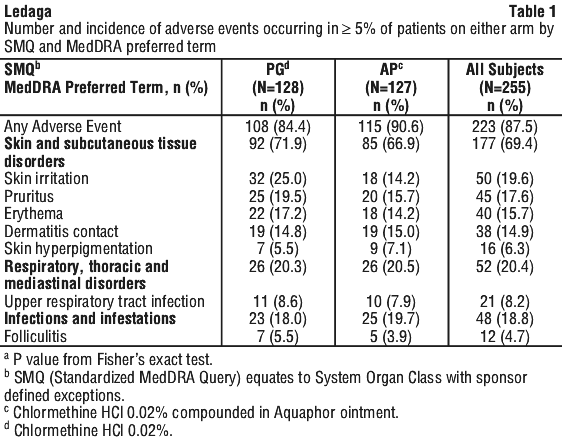
Summary of the safety profile. In a randomised-controlled trial (n=128 exposed to Ledaga for a median duration of 52 weeks), the most frequent adverse reactions to Ledaga were skin related: dermatitis (54.7%; e.g. skin irritation, erythema, rash, urticaria, skin-burning sensation, pain of the skin), pruritus (20.3%), skin infections (11.7%), skin ulceration and blistering (6.3%), and skin hyperpigmentation (5.5%). Cutaneous hypersensitivity reactions were reported in 2.3% of the treated patients.
Tabulated list of adverse events in controlled trial. See Table 1.
Postmarketing. An observational post-marketing study was undertaken in the United States. Non-serious AEs assessed as related to Chlormethine Gel were experienced by 83 or 298 patients (27.9%) in the Chlormethine Gel plus any other treatment group. No serious adverse events were assessed to be related to chlormethine gel.
Of the skin and subcutaneous tissue disorder AEs related to Chlormethine Gel, dermatitis was assessed to be related in 37 patients (12.4%), pruritus in 22 patients (7.4%) and skin irritation in 21 patients (7.0%). These rates are lower than in the registration study and which may be due to: widespread concomitant use of topical corticosteroids; periods of less frequent dosing; most patients (254/298=85.2%) were already using mechlorethamine gel for > 30 days at enrolment. Dermatitis reactions are known to occur more frequently early in treatment.
Based on the evaluation of the cumulative safety data from all global post-marketing sources, no new risks or signals have been identified with the chlormethine gel formulation.
Reporting of suspected adverse reactions. Reporting suspected adverse reactions after registration of the medicinal product is important. It allows continued monitoring of the benefit-risk balance of the medicinal product. Healthcare professionals are asked to report any suspected adverse reactions at www.tga.gov.au/reporting-problems.
4.9 Overdose
No cases of overdose after cutaneous use of Ledaga were reported during the clinical development programme or post-marketing period. Management of overdose should consist of washing the exposed area with water.
5 Pharmacological Properties
5.1 Pharmacodynamic Properties
Pharmacotherapeutic group: Antineoplastic agents, nitrogen mustard analogues, ATC code: L01AA05.
Mechanism of action. Chlormethine is a bifunctional alkylating agent that reacts with DNA to form cross-links, inducing the death of rapidly proliferating cells.
Clinical trials. The efficacy and safety of Ledaga were assessed in a randomised, multicentre, observer-blinded, active-controlled, non-inferiority clinical trial (Study 201) of 260 adult patients with Stage IA (141), IB (115), and IIA (4) MF-type CTCL who had received at least one prior skin-directed therapy. Qualifying prior therapies included topical corticosteroids, phototherapy, topical bexarotene, and topical nitrogen mustard. Patients were not required to be refractory to or intolerant of prior therapies. Patients were stratified based on stage (IA vs IB and IIA) and then randomised to receive either Ledaga (equivalent to 0.02% chlormethine HCl) or the comparator (a petroleum-based 0.02% chlormethine HCl ointment).
Study medicinal product was to be applied topically once daily for 12 months. Dosing could be suspended or continued at reduced frequency in the case of skin reactions. The median daily usage of Ledaga was 1.8 g. The maximum individual daily usage in the trial was 10.5 g of gel (i.e. 2.1 mg of chlormethine HCl).
The primary efficacy endpoint in Study 201 was the Composite Assessment of Index Lesion Severity (CAILS) response rate. The CAILS score is obtained by adding the severity score of each of the following categories for up to 5 index lesions: erythema, scaling, plaque elevation, and surface area. Severity was graded from 0 (none) to 8 (severe) for erythema and scaling; 0 to 3 for plaque elevation; and 0 to 9 for surface area. Assessment was undertaken by a blinded observer. A response was defined as an at least 50% improvement in the baseline CAILS score, confirmed at a subsequent visit at least 4 weeks later. A complete response was defined as a confirmed CAILS score of 0. A partial response was defined as an at least 50% reduction in the baseline CAILS score. Non-inferiority was considered to have been demonstrated if the lower bound of the 95% confidence interval around the ratio of response rates (Ledaga/comparator) was greater than or equal to 0.75. The CAILS score was adjusted by removal of the pigmentation score and simplification of the plaque elevation scale.
As the main secondary endpoint, patients were also evaluated using the Severity Weighted Assessment Tool (SWAT), which was based on an assessment of all lesions. The SWAT score is derived by measuring each involved area as a percentage of total body surface area (% BSA) and multiplying it by a severity weighting factor (1=patch, 2=plaque, 3=tumour or ulcer). The response criteria were the same as for CAILS.
Efficacy was evaluated in the Intent-To-Treat (ITT) population, which included all 260 randomised patients [Table 2], and in the Efficacy Evaluable (EE) population, which included 185 patients who were treated for at least 6 months with no major protocol deviations.
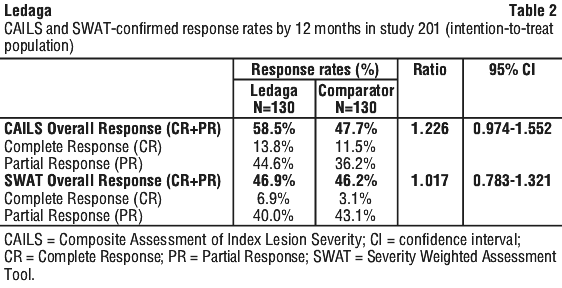
Reductions in mean CAILS scores were observed as early as at 4 weeks, with further reductions observed with continuing therapy.
In the EE population, the percentage of patients who achieved a confirmed response by CAILS was similar between disease stages IA (79.6%) and IB-IIA (73.2%).
Results in other secondary endpoints (response in percentage of body surface area affected, time to first confirmed CAILS response, duration of first confirmed CAILS response and time to disease progression) were consistent with those for CAILS and SWAT.
A small number of subjects (6.3%, 8/128) treated with Ledaga utilised topical corticosteroids. Thus, the safety of the concomitant use of Ledaga with topical corticosteroids has not yet been established.
5.2 Pharmacokinetic Properties
Patients who received Ledaga in Study 201 had no measurable concentrations of chlormethine in blood samples collected 1, 3 and 6 hours post-application on Day 1, and at the first month visit.
Similarly, patients who received chlormethine gel 0.04% in a follow-up study (Study 202) had no measurable concentrations of chlormethine or its degradation product (half-mustard) in blood collected 1 hour post-application on Day 1 or after 2, 4, or 6 months of treatment.
5.3 Preclinical Safety Data
Genotoxicity. Chlormethine was shown to be genotoxic in multiple assays, including for mutagenicity in bacteria (Ames test), chromosomal aberrations in vitro (in cultured human lymphocytes) and for clastogenicity in vivo (mouse bone marrow micronucleus test). Covalent binding to DNA is the key mechanism for the desired cytotoxic action of chlormethine.
Carcinogenicity. Chlormethine has been shown to be carcinogenic in rodents after subcutaneous and intravenous injection, and with topical dermal administration. Dermal application of chlormethine to mice at a dose of 12 to 15 mg/kg/week for 20 weeks resulted in skin tumours (squamous cell carcinomas and skin papillomas). There were no reports of systemic tumours after topical administration of chlormethine.
6 Pharmaceutical Particulars
6.1 List of Excipients
Diethylene glycol monoethyl ether, propylene glycol, isopropyl alcohol, glycerol, lactic acid, hyprolose, sodium chloride, menthol, disodium edetate, butylhydroxytoluene.
6.2 Incompatibilities
Not applicable.
6.3 Shelf Life
Unopened tube. 5 years in the freezer (-15°C to -25°C).
After defrosting. Store at 2°C to 8°C for up to 60 days (Refrigerate. Do not freeze).
Ledaga should be removed from the refrigerator just prior to application and returned to the refrigerator immediately after each use in its box inside the child-resistant, transparent, sealable, plastic bag.
6.4 Special Precautions for Storage
Store and transport at -15°C to -25°C (deep freeze).
For storage conditions after defrosting Ledaga, see Section 6.3.
6.5 Nature and Contents of Container
Ledaga is provided in a white aluminium tube with an inner lacquer and an aluminium seal and a white polypropylene screw cap. Each tube contains 60 g of gel.
6.6 Special Precautions for Disposal
Ledaga is a cytotoxic medicinal product.
Caregivers must wear nitrile gloves when handling Ledaga. Patients and caregivers must wash hands after handling Ledaga.
Ledaga is an alcohol-based product and is flammable. The recommended application instructions should be followed (see Section 4.2).
Unused refrigerated Ledaga should be discarded after 60 days, together with the plastic bag.
Any unused medicinal product or waste material, including the plastic bag and the nitrile gloves used for application, must be disposed of in accordance with local requirements.
6.7 Physicochemical Properties
Chemical structure.
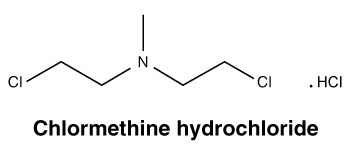
Molecular Weight: 192.51.
CAS number. 55-86-7.
7 Medicine Schedule (Poisons Standard)
Schedule 4 - Prescription Only Medicine.
Date of First Approval
22 June 2021
Date of Revision
23 October 2024
Summary Table of Changes

Reasonable care is taken to provide accurate information at the time of creation. This information is not intended as a substitute for medical advice and should not be exclusively relied on to manage or diagnose a medical condition. The Australian Commission on Safety and Quality in Health Care disclaims all liability (including for negligence) for any loss, damage, injury or any other negative effects resulting from reliance on or use of this information. Read our full disclaimer. This website uses cookies. Read our privacy policy.