
Melomed
Brand Information
| Brand name | Melomed |
| Active ingredient | Melatonin |
| Schedule | S4 |
Consumer Medicine Information (CMI) leaflet
Please read this leaflet carefully before you start using the Melomed.
Summary CMI
MELOMED
Consumer Medicine Information (CMI) summary
The full CMI on the next page has more details. If you are worried about using this medicine, speak to your doctor or pharmacist.
▼ This medicine is new or being used differently. Please report side effects. See the full CMI for further details.
1. Why am I using MELOMED?
MELOMED contains the active ingredient melatonin. MELOMED is used to treat adults with jet lag and sleep disorders in children with neurodevelopmental disorders.
For more information, see Section 1. Why am I using MELOMED? in the full CMI.
2. What should I know before I use MELOMED?
Do not use if you have ever had an allergic reaction to MELOMED or any of the ingredients listed at the end of the CMI.
Talk to your doctor if you have any other medical conditions, take any other medicines, or are pregnant or plan to become pregnant or are breastfeeding.
For more information, see Section 2. What should I know before I use MELOMED? in the full CMI.
3. What if I am taking other medicines?
Some medicines may interfere with MELOMED and affect how it works.
A list of these medicines is in Section 3. What if I am taking other medicines? in the full CMI.
4. How do I use MELOMED?
- The standard starting dose is 2 mg once daily, before bed or preferred sleep time. In some cases, your doctor may increase your dose.
- MELOMED should be taken on an empty stomach.
More instructions can be found in Section 4. How do I use MELOMED? in the full CMI.
5. What should I know while using MELOMED?
| Things you should do |
|
| Things you should not do |
|
| Driving or using machines |
|
| Looking after your medicine |
|
For more information, see Section 5. What should I know while using MELOMED? in the full CMI.
6. Are there any side effects?
The most common side effects are sleepiness, headache, dizziness, nausea, stomach cramps and hyperactivity. Tell your doctor or pharmacist immediately, if you notice any of the following side effects: signs of an allergic reaction, seizures, tightness in chest, fast or irregular heartbeat, suicide attempt or suicidal thoughts.
For more information, including what to do if you have any side effects, see Section 6. Are there any side effects? in the full CMI.
Full CMI
▼ This medicine is subject to additional monitoring. This will allow quick identification of new safety information. You can help by reporting any side effects you may get. You can report side effects to your doctor, or directly at www.tga.gov.au/reporting-problems.
MELOMED
Active ingredient(s): melatonin
Consumer Medicine Information (CMI)
This leaflet provides important information about using MELOMED. You should also speak to your doctor or pharmacist if you would like further information or if you have any concerns or questions about using MELOMED.
Where to find information in this leaflet:
1. Why am I using MELOMED?
2. What should I know before I use MELOMED?
3. What if I am taking other medicines?
4. How do I use MELOMED?
5. What should I know while using MELOMED?
6. Are there any side effects?
7. Product details
1. Why am I using MELOMED?
MELOMED contains the active ingredient melatonin. Melatonin is naturally occurring hormone produced in the body. It is one of the main hormones that helps you to sleep.
MELOMED is used for the treatment of a number of conditions.
- Jet lag in adults 18 years and older.
- Sleep Disorders in children and adolescents aged 6 to 18 years with neurodevelopmental disorders including autism spectrum disorder (ASD) and attention deficit hyperactivity disorder (ADHD)
2. What should I know before I use MELOMED?
Warnings
Do not use MELOMED if:
- you are allergic to melatonin, or any of the ingredients listed at the end of this leaflet.
Always check the ingredients to make sure you can use this medicine.
Check with your doctor if you:
- have or have had any other medical conditions,
- An autoimmune disease
- a seizure disorder such as epilepsy
- problems with your liver
- problems with your kidneys - take any medicines for any other condition.
During treatment, you may be at risk of developing certain side effects. It is important you understand these risks and how to monitor them. See additional information under Section 6. Are there any side effects?
Pregnancy and breastfeeding
Check with your doctor or pharmacist if you are pregnant or intend to become pregnant.
Melatonin is not recommended if you or your child are pregnant. Melatonin crosses the placenta and there is insufficient information on the risk this may pose to the unborn child.
Talk to your doctor or pharmacist if you are breastfeeding or intend to breastfeed.
Melatonin is not recommended if you or your child are breastfeeding. Melatonin passes into human milk, and the risk to the breast-fed child cannot be excluded.
3. What if I am taking other medicines?
Tell your doctor or pharmacist if you are taking any other medicines, including any medicines, vitamins or supplements that you buy without a prescription from your pharmacy, supermarket or health food shop.
Some medicines may interfere with MELOMED and affect how it works.
These include:
- hypnotics (such as benzodiazepines, zolpidem and zopiclone)
- fluvoxamine, thioridazine and imipramine (used to treat depression or psychiatric conditions)
- oestrogens (contraceptives or hormone replacement therapies)
- cimetidine (used to treat reflux and stomach ulcers)
- psoralens (used to treat skin conditions such as psoriasis)
- antibiotics such as ciprofloxacin, moxifloxacin and norfloxacin (known as quinolones) and rifampicin
- carbamazepine (used to treat epilepsy).
- warfarin (anticoagulant)
- alcohol
Check with your doctor or pharmacist if you are not sure about what medicines, vitamins or supplements you are taking and if these affect MELOMED.
4. How do I use MELOMED?
How much to take
Adults
- For the treatment of jet lag:
- The standard starting dose is 2 mg once daily.
- Your doctor may increase your dose up to 5 mg once daily.
Children and adolescents
- The standard starting dose is 2 mg once daily.
- Your doctor may increase your dose up to 5 mg once daily.
When to take MELOMED
Adults
- For the treatment of jet lag:
- Take the required dose at the preferred local sleep time of your travel destination.
- Only use MELOMED for a short period of time (no more than 5 days in a row).
- Avoid taking MELOMED before 8pm or after 4am.
This may make the medicine less effective.
Children and adolescents
- For treatment of sleep disorders with neurodevelopmental disorders:
- Take the required dose 30 minutes to 1 hour before bed.
- Continue using MELOMED only as long as the doctor recommends.
How to take the MELOMED oral solution
MELOMED should be taken on an empty stomach at least 1 hour before or at least 1 hour after a meal.
A 5 mL dosing spoon with dosing graduations at 1, 2, 3, 4 and 5 mL is provided with this product.
If you forget to use MELOMED
MELOMED should be used regularly at the same time each day. If you forget to take a dose, it could be taken before going to sleep that night, but after this time, no other dose should be taken before the next evening. Do not take a double dose to make up for the dose you missed.
If you have trouble remembering to take MELOMED, ask your pharmacist for some hints.
If you use too much MELOMED
If you think that you have used too much MELOMED, you may need urgent medical attention.
You should immediately:
- phone the Poisons Information Centre (by calling 13 11 26), or
- contact your doctor, or
- go to the Emergency Department at your nearest hospital.
You should do this even if there are no signs of discomfort or poisoning.
5. What should I know while using MELOMED?
Things you should do
Call your doctor straight away if you:
- Become pregnant while taking MELOMED.
Remind any doctor, dentist or pharmacist you visit that you are using MELOMED.
Things you should not do
- Do not give MELOMED to anyone else, even if they have the same condition as you.
- Do not take more than the recommended dose unless your doctor tells you to.
- Do not use this medicine to treat any other complaints unless your doctor tells you to.
Driving or using machines
MELOMED may cause drowsiness and may decrease alertness for several hours after intake. Therefore, this medicine should not be taken prior to driving or using machines.
MELOMED makes you sleepy, and it could make you sleepy in the daytime as well.
Drinking alcohol
Tell your doctor or pharmacist if you drink alcohol.
Alcohol may cause drowsiness, so should not be taken together with MELOMED.
Smoking
Tell your doctor if you smoke
Smoking may affect how well this medicine works.
Looking after your medicine
- Store below 25°C
- Store MELOMED in original packaging to protect from light.
Follow the instructions on the carton on how to take care of your medicine properly.
Store it in a cool dry place away from moisture, heat or sunlight; for example, do not store it:
- in the bathroom or near a sink, or
- in the car or on window sills.
Keep it where young children cannot reach it.
When to discard your medicine
Discard the oral solution 2 months after opening.
Getting rid of any unwanted medicine
If you no longer need to use this medicine or it is out of date, take it to any pharmacy for safe disposal.
Do not use this medicine after the expiry date.
6. Are there any side effects?
All medicines can have side effects. If you do experience any side effects, most of them are minor and temporary. However, some side effects may need medical attention.
See the information below and, if you need to, ask your doctor or pharmacist if you have any further questions about side effects.
Less serious side effects
| Less serious side effects | What to do |
Body as a whole:
| Speak to your doctor if you have any of these less serious side effects and they worry you. |
Serious side effects
| Serious side effects | What to do |
Immune system:
| Call your doctor straight away, or go straight to the Emergency Department at your nearest hospital if you notice any of these serious side effects. |
Your doctor can only detect some side effects with a medical test. Attend any medical appointments needed to monitor these side effects.
Tell your doctor or pharmacist if you notice anything else that may be making you feel unwell.
Other side effects not listed here may occur in some people.
Reporting side effects
After you have received medical advice for any side effects you experience, you can report side effects to the Therapeutic Goods Administration online at www.tga.gov.au/reporting-problems. By reporting side effects, you can help provide more information on the safety of this medicine.
Always make sure you speak to your doctor or pharmacist before you decide to stop taking any of your medicines.
7. Product details
This medicine is only available with a doctor's prescription.
What MELOMED contains
| Active ingredient (main ingredient) | melatonin |
| Other ingredients (inactive ingredients) | Oral Solution
|
| Potential allergens | Oral Solution
|
Do not take this medicine if you are allergic to any of these ingredients.
What MELOMED looks like
MELOMED oral solution is available in bottle packs of 100 mL*, 150 mL* and 200 mL (with child resistant closure).
Oral Solution
Slightly yellow to yellow transparent solution.
(AUST R 429191)
Who distributes MELOMED
Medsurge Healthcare Pty
Limited Unit 1& 2, 6-7 Gilda Court
MULGRAVE VICTORIA 3170
Tel: 1300 788 261
www.medsurgehc.com
This leaflet was prepared in July 2025
Brand Information
| Brand name | Melomed |
| Active ingredient | Melatonin |
| Schedule | S4 |
▼ This medicinal product is subject to additional monitoring in Australia. This will allow quick identification of new safety information. Healthcare professionals are asked to report any suspected adverse events at www.tga.gov.au/reporting-problems.
MIMS Revision Date: 01 March 2026
Notes
Distributed by Medsurge Healthcare Pty Ltd
1 Name of Medicine
Melatonin.
2 Qualitative and Quantitative Composition
Each 1 mL of oral solution contains 1 mg of melatonin.
Excipients with known effect. Sucralose.
For the full list of excipients, see Section 6.1 List of Excipients.
3 Pharmaceutical Form
Slightly yellow to yellow transparent solution.
4 Clinical Particulars
4.1 Therapeutic Indications
Adult. Short-term treatment of jet lag in adults aged 18 and over.
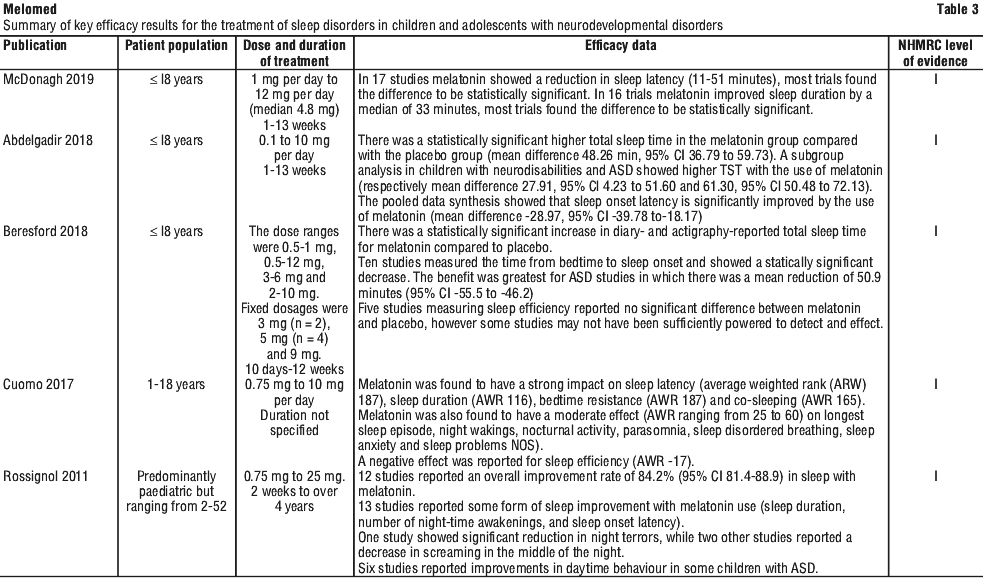
Paediatric. Sleep disorders in children and adolescents aged 6 to 18 with neurodevelopmental disorders including autism spectrum disorder (ASD) and attention deficit hyperactivity disorder (ADHD), where sleep hygiene measures have been insufficient.
4.2 Dose and Method of Administration
Dosage. Adults. Jet lag. The recommended dose is 2 mg once daily taken at the preferred local sleep time. The dose may be increased to up to a maximum of 5 mg if the standard dose does not adequately alleviate symptoms. The lowest effective dose should be used.
Melomed should be taken for the shortest period of time, with a maximum duration of 5 days. Due to the potential for incorrectly timed intake of melatonin to have no effect, or an adverse effect, on re-synchronisation following jet lag, Melomed should not be taken before 8 pm or after 4 am destination time.
Paediatrics. Neurodevelopmental disorders. The recommended starting dose is 2 mg once daily taken 30 minutes to 1 hour before bedtime. If an inadequate response has been observed, the daily dose should be increased to a maximum of 5 mg per day.
The patient should be monitored at regular intervals (at least every 6 months) to check that Melomed is still the most appropriate treatment. After at least 3 months of treatment, the physician should evaluate the treatment effect and consider stopping treatment if no clinically relevant treatment effect is seen. If a lower treatment effect is seen after titration to a higher dose, the prescriber should first consider a down-titration to a lower dose before deciding on a complete discontinuation of treatment.
Method of administration. Food can enhance the increase in plasma melatonin concentration (see Section 5.2 Pharmacokinetic Properties). Intake of melatonin with carbohydrate-rich meals may impair blood glucose control for several hours (see Section 4.4 Special Warnings and Precautions for Use). It is recommended that Melomed is administered on an empty stomach and food is not consumed 1 hour before and 1 hour after intake of Melomed Oral solution.
A 5 mL dosing spoon with dosing graduations at 1, 2, 3, 4 and 5 mL is provided with this product.
4.3 Contraindications
Hypersensitivity to the active substance or to any of the excipients listed, see Section 6.1 List of Excipients.
4.4 Special Warnings and Precautions for Use
Drowsiness. Melatonin may cause daytime drowsiness. Therefore, Melomed should be used with caution if the effects of drowsiness are likely to be associated with a risk to patient safety.
Autoimmune diseases. There is no data concerning the use of melatonin in patients with autoimmune diseases. Therefore, Melomed is not recommended in patients with autoimmune diseases.
Seizure risk. Melatonin may increase seizure frequency in patients experiencing seizures (e.g. epileptic patients). Patients suffering from seizures must be informed about this possibility before using Melomed. Melatonin may promote or increase the incidence of seizures in children and adolescents with multiple neurological defects.
Benzyl alcohol and propylene glycol. This medicine contains 6.26 mg/mL benzyl alcohol and 52 mg/mL propylene glycol in each 100 mL bottle. Benzyl alcohol may cause allergic reactions. High volumes should be used with caution and only if necessary, especially in subjects with liver or kidney impairment because of the risk of accumulation and toxicity (metabolic acidosis).
Use in hepatic impairment. Limited data indicates that daytime endogenous blood melatonin concentration is markedly elevated in patients with hepatic impairment due to reduced clearance. Therefore, Melomed is not recommended for patients with hepatic impairment.
Use in renal impairment. Limited data is available for the use of melatonin in patients with renal impairment. Therefore, Melomed is not recommended for patients with renal impairment.
Use in the elderly. Melatonin metabolism is known to decline with age. Across a range of doses, higher AUC and Cmax levels have been reported in older subjects compared to younger subjects, reflecting the lower metabolism in the elderly. Also, see Section 5.2 Pharmacokinetic Properties, Elderly.
Paediatric use (under 6 years of age). Efficacy and safety of melatonin in children under 6 years of age has not been established.
Effects on laboratory tests. No information is available on the effect of melatonin on laboratory tests.
4.5 Interactions with Other Medicines and Other Forms of Interactions
Melatonin is metabolised primarily through the CYP1A1 and CYP1A2 enzymes. As a result, drugs that affect CYP enzymes which are involved in melatonin's metabolism could potentially affect melatonin's exposure with or without potential clinical consequences.
However, there is a limited data available in terms of melatonin's potential for pharmacokinetic interactions.
Hepatic enzymes. Melatonin has been observed to induce CYP3A in vitro at supra-therapeutic concentrations. The clinical relevance of the finding is unknown. If induction occurs, plasma concentrations of concomitantly administered drugs can be reduced.
Melatonin does not appear to induce CYP1A enzymes in vitro at supra-therapeutic concentrations. Therefore, interactions between melatonin and other active substances as a consequence of melatonin's effect on CYP1A enzymes are not likely to be significant.
Melatonin's metabolism is mainly mediated by CYP1A enzymes. Therefore, interactions between melatonin and other active substances as a consequence of their effect on CYP1A enzymes is possible.
Quinolones. CYP1A2 inhibitors such as quinolones may give rise to increased melatonin exposure.
Carbamazepine and rifampicin. CYPIA2 inducers such as carbamazepine and rifampicin may give rise to reduced plasma concentrations of melatonin.
Fluvoxamine. Caution should be exercised in patients on fluvoxamine, which increases melatonin levels (17-fold higher AUC and 12-fold higher serum Cmax) by inhibiting its metabolism by hepatic cytochrome P450 (CYP) isozymes CYP1A2 and CYP2C19. The combination should be avoided.
5- or 8-methoxypsoralen. Caution should be exercised in patients on 5- or 8- methoxypsoralen (5 and 8-MOP), which increases melatonin levels by inhibiting its metabolism.
Cimetidine. Caution should be exercised in patients on cimetidine, a CYP2D inhibitor which increases plasma melatonin levels by inhibiting its metabolism.
Oestrogens. Caution should be exercised in patients on oestrogens (e.g. contraceptives or hormone replacement therapy), which increase melatonin levels by inhibiting its metabolism by CYP1A1 and CYP1A2.
Thioridazine and imipramine. Melatonin has been co-administered in studies with thioridazine and imipramine, active substances which affect the central nervous system. No clinically significant pharmacokinetic interactions were found in each case. However, melatonin co-administration resulted in increased feelings of tranquillity and difficulty in performing tasks compared to imipramine alone, and increased feelings of "muzzy-headedness" compared to thioridazine alone.
Hypnotics. Melatonin may enhance the sedative properties of benzodiazepines and non-benzodiazepine hypnotics, such as zaleplon, zolpidem and zopiclone. In a study of jet lag therapy the combination of melatonin and zolpidem resulted in a higher incidence of morning sleepiness, nausea, and confusion, increased impairment of attention, memory and coordination as well as reduced activity during the first hour after getting up, compared to zolpidem alone. The use of melatonin in combination with these drugs is not recommended.
Warfarin. Melatonin may increase the anticoagulation activity of warfarin. The combination of warfarin or other vitamin K antagonists with melatonin may require dose adjustment of the anticoagulant drugs and should be avoided.
Cigarette smoking. Cigarette smoking may decrease melatonin levels due to induction of CYP1A2.
Alcohol. Alcohol is a sedative with the ability to alter physical and mental functions. There is a potential for patients to have enhanced drowsiness when alcohol is co-administered with melatonin.
Other. There is a large amount of data in the literature regarding the effect of adrenergic agonists/antagonists, opiate agonists/antagonists, antidepressant medicinal products, prostaglandin inhibitors, benzodiazepines, tryptophan and alcohol, on endogenous melatonin secretion. Whether or not these active substances interfere with the dynamic or kinetic effects of melatonin or vice versa has not been studied.
4.6 Fertility, Pregnancy and Lactation
Effects on fertility. No significant effects on fertility or reproductive performance were observed in rats given oral melatonin prior to mating through to early gestation at doses over 900-fold the recommended clinical dose, based on surface area.
Melomed is not recommended in women and men planning pregnancy.
Use in pregnancy. (Category B3)
No clinical data on exposed pregnancies are available. In view of the lack of clinical data, use in pregnant women and by women intending to become pregnant is not recommended.
Use in lactation. Endogenous melatonin has been detected in human breast milk, thus exogenous melatonin is likely excreted into human milk. The effects of melatonin on the nursing infant have not been established. Therefore, breast-feeding is not recommended in women under treatment with Melomed.
4.7 Effects on Ability to Drive and Use Machines
No studies were identified which evaluated the impact of melatonin on the ability to drive or operate machinery. However, as melatonin may cause drowsiness, melatonin is not recommended prior to driving and using machines until the effects are known.
4.8 Adverse Effects (Undesirable Effects)
Summary of the safety profile. A review of published clinical trials indicated that the most common adverse events in adults are somnolence, headache, dizziness, nausea and stomach cramps.
A review of published clinical trials indicated that the most common adverse events in children and adolescents are somnolence, headache, nausea, seizures, dizziness and hyperactivity.
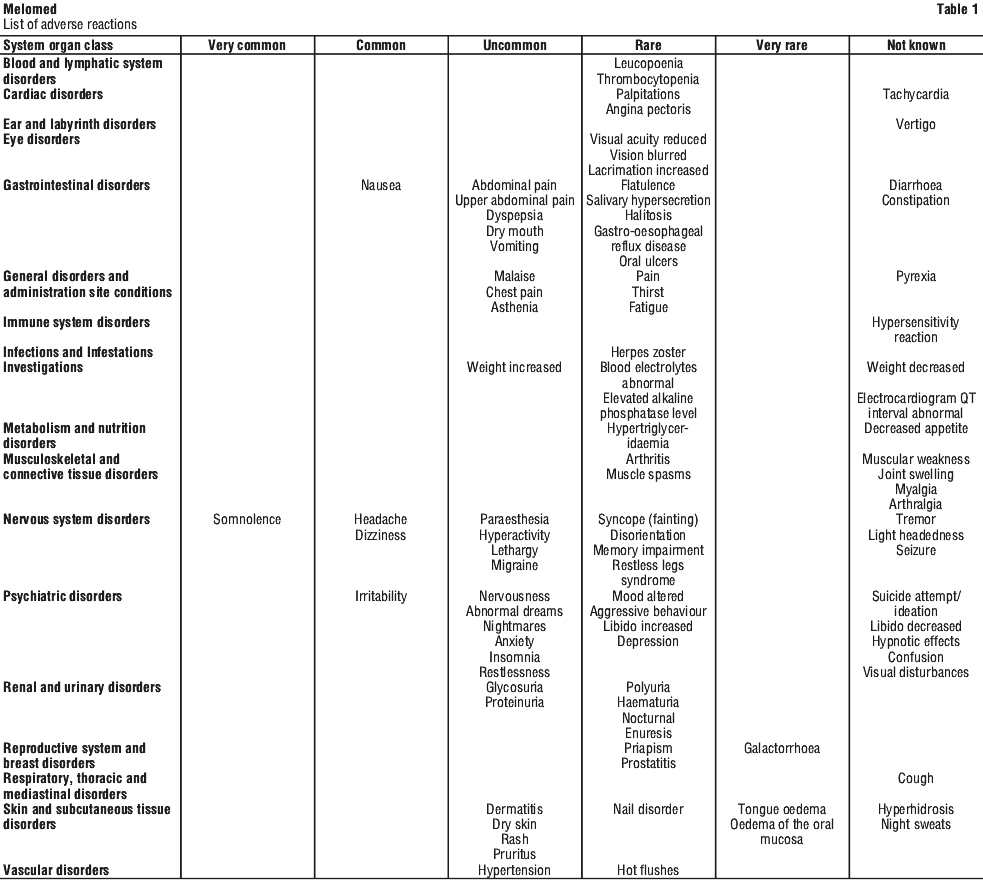
Tabulated list of adverse reactions. The adverse reactions reported in Table 1 are those generally reported for melatonin in published clinical trials and spontaneous case reports.
The adverse reactions are reported according to MedDRA system organ classification and frequencies. Frequencies are defined as: very common ((≥ 1/10); common (≥ 1/100 to < 1/10); uncommon (≥ 1/1,000 to < 1/100); rare (≥ 1/10,000 to < 1/1,000); very rare (< 1/10,000); not known (cannot be established from the available data).
Healthcare professionals are asked to report any suspected adverse reactions at www.tga.gov.au/reporting-problems.
4.9 Overdose
Ingestion of daily doses of up to 300 mg of melatonin did not cause clinically significant adverse reactions.
Drowsiness, headache, dizziness, and nausea are the most commonly reported signs and symptoms of high doses with oral melatonin. Flushes, abdominal cramps, diarrhoea, headache, and scotoma lucidum have been reported after ingestion of extremely high melatonin doses (3000 - 6600 mg) for several weeks.
In cases of overdose, general supportive measures should be employed. Gastric lavage and administration of activated charcoal can be considered.
Clearance of the active substance is expected within 12 hours of ingestion.
For information on the management of overdose, contact the Poisons Information Centre on 13 11 26 (Australia).
5 Pharmacological Properties
5.1 Pharmacodynamic Properties
Pharmacotherapeutic group: melatonin receptor agonists, ATC code: N05CH01.
Melatonin is a hormone and antioxidant. Melatonin secreted by the pineal gland is involved in the synchronisation of circadian rhythms to the diurnal light-dark cycle. Physiologically, melatonin secretion increases shortly after the onset of darkness, peaks at 2-4 and diminishes during the second half of the night. Peak melatonin secretion is almost diametrically opposite peak daylight intensity, with daylight being the primary stimulus for maintaining the circadian rhythmicity of melatonin secretion.
Melatonin has a hypnotic / sedative effect and increases propensity for sleep. Melatonin administered earlier or later than the nocturnal peak in melatonin secretion can, respectively, advance or delay the circadian rhythmicity of melatonin secretion.
Mechanism of action. The activity of melatonin at the MTI and MT2 receptors is believed to contribute to its sleep-promoting properties via their distinct actions on the circadian clock. The MT1 receptors are thought to inhibit neuronal firing, while the MT2 receptors have been implicated in the phase-shifting response.
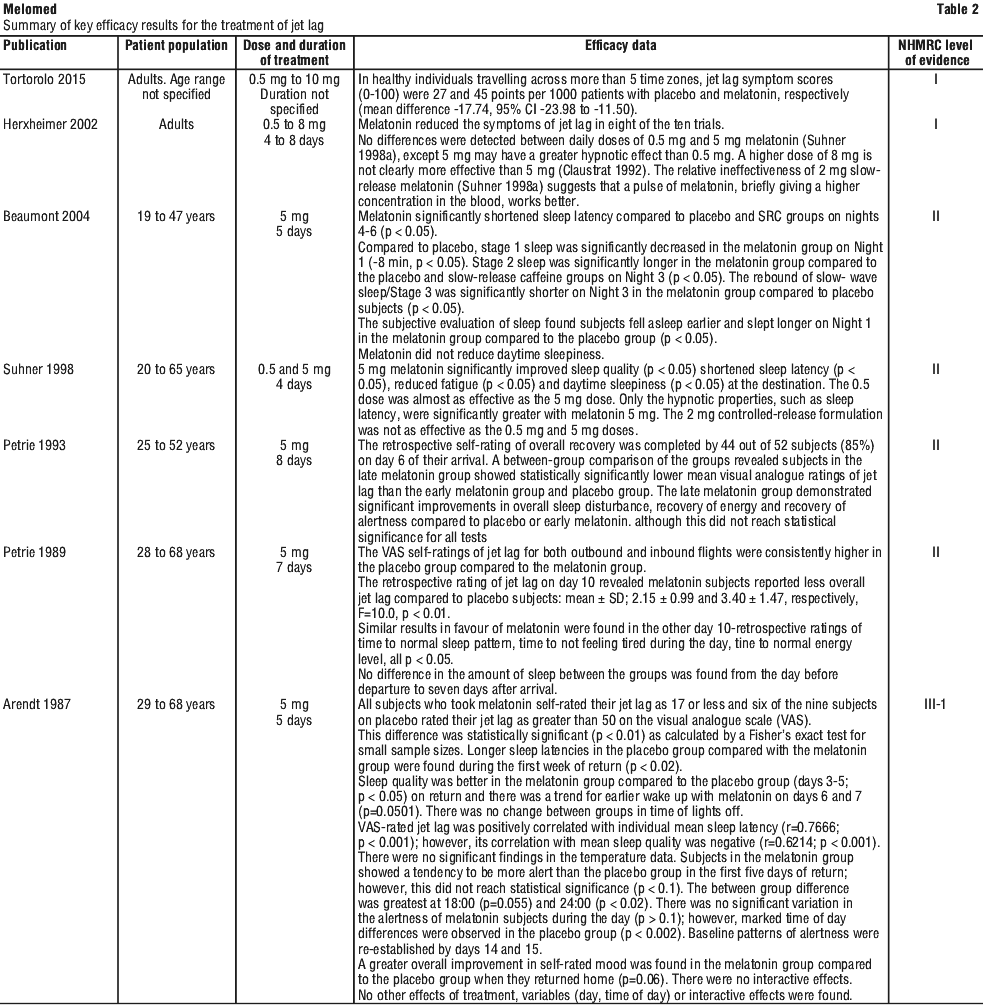
Clinical trials. Adults. Jet lag. Clinical evidence to support the use of melatonin for the short-term treatment of jet lag in adults aged 18 and over is derived from 19 published reports. Table 2 summarises the patient populations, dosage regimens, efficacy data for the pivotal studies.
5.2 Pharmacokinetic Properties
Melatonin is a small, amphiphilic molecule (molecular weight 232 g/mol) active in its parent form. Melatonin is synthesised in the human body from tryptophan via serotonin. Small quantities are obtained via diet. Data summarised below are from studies that generally involved healthy men and women, primarily young and middle-aged adults.
Absorption. Orally administered melatonin is almost completely absorbed. Oral bioavailability is ~ 15%, owing to first-pass metabolism of ~ 85%. Plasma Tmax is ~ 50 minutes. A 3 mg dose of immediate-release melatonin raises plasma melatonin Cmax to ~ 3400 picogram/mL, which is ~ 60-times the nocturnal (endogenous) plasma melatonin Cmax, though both endogenous- and exogenous Cmax show considerable inter-individual variation.
Data on the effect of intake of food at or around the time of intake of melatonin on its pharmacokinetics are limited, though suggest that concomitant food intake may increase bioavailability almost 2-fold. Food appears to have a limited effect on Tmax for immediate-release melatonin. This is not expected to affect the efficacy or safety of melatonin.
Plasma melatonin Cmax and AUC increase in a directly proportional, linear manner for oral doses of immediate-release melatonin in the range 1 - 6 mg whereas Tmax and plasma T½ remain constant.
Distribution. The in vitro plasma protein binding of melatonin is approximately 60%. Melatonin is mainly bound to albumin, alpha1-acid glycoprotein and high density lipoprotein. The binding to the other serum proteins is insignificant. The melatonin binding was constant over the range of the studied concentrations in serum. Literature data indicates that melatonin is distributed in all body fluids and is accessible at all tissues.
Metabolism. Melatonin is mainly metabolised by the liver. Experimental data suggest that the cytochrome P450 enzymes CYP1A1 and CYP1A2 are primarily responsible for melatonin metabolism, with CYP2C19 of minor importance. Melatonin is primarily metabolised to 6-hydroxymelatonin (constituting ~ 80 - 90% of melatonin metabolites recovered in the urine). N-acetylserotonin appears to be the primary minor metabolite (constituting ~ 10% of melatonin metabolites recovered in the urine). Melatonin metabolism is very rapid, with plasma 6-hydroxymelatonin level rising within minutes of exogenous melatonin entering the systemic circulation. 6-hydroxymelatonin undergoes sulphate conjugation (~ 70%) and glucuronide conjugation (~ 30%) prior to excretion.
Excretion. Plasma elimination half-life (T½) is ~ 45 minutes (normal range ~ 30 - 60 minutes) in healthy adults. The half-life, on average, is comparable or slightly shorter in children compared to adults. Dosage once daily in combination with the short half-life means minimal accumulation of melatonin during regular treatment. Melatonin metabolites are mainly eliminated by the urine, ~ 90% as sulphate and glucuronide conjugates of 6-hydroxymelatonin. Less than ~ 1% of a melatonin dose is excreted unchanged in urine.
Gender. Limited data suggest that Cmax and AUC following ingestion of immediate-release melatonin may be higher (potentially roughly double) in women compared to men, however a large variability in the pharmacokinetics is observed. Plasma melatonin half-life does not appear to be significantly different in men and women.
Pre-pubertal children. Limited data suggests that prepubertal children metabolise melatonin faster than adults and, display a significantly shorter T½ and AUC compared to adult patients.
Elderly. Data from other fonnulations of melatonin indicate that the absorption of orally ingested melatonin may be decreased up to 50% in the elderly.
Melatonin metabolism is known to decline with age. Across a range of doses, higher AUC and Cmax levels have been reported in older subjects compared to younger subjects, reflecting the lower metabolism of melatonin in the elderly. Cmax levels around 500 picogram/mL in adults (18-45) versus 1200 picogram/mL in the elderly (55-65); AUC levels around 3,000 picogram.h/mL in adults versus 6000 picogram.h/mL in the elderly.
Hepatic impairment. The liver is the primary site of melatonin metabolism and therefore, hepatic impairment results in higher endogenous melatonin levels.
Limited data indicates that daytime endogenous blood melatonin concentration is markedly elevated in patients with cirrhosis due to reduced clearance.
Renal impairment. Decreased renal function is no expected to influence the elimination of melatonin as < 1% of the dose is excreted unchanged in the urine. Melatonin is primarily excreted as metabolites; plasma levels of melatonin metabolites can be expected increase in patients with more advanced renal impairment.
5.3 Preclinical Safety Data
Genotoxicity. Results from a standard battery of in vitro and in vivo assays showed no evidence of a genotoxic potential for melatonin.
Carcinogenicity. An oral lifetime carcinogenicity study with melatonin in rats showed an increased incidence of thyroid follicular cell adenomas in males at doses around 700-fold the recommended clinical dose, based on body surface area. No neoplastic tissue histopathology was examined at lower doses and therefore the no-effect dose could not be determined. These effects were associated with liver enzyme induction in this species and are unlikely to be relevant to humans.
6 Pharmaceutical Particulars
6.1 List of Excipients
Propylene glycol, benzyl alcohol, sucralose, strawberry flavour 207420 (ARTG PI No. 114118), sodium ascorbate, purified water.
6.2 Incompatibilities
Incompatibilities were either not assessed or not identified as part of the registration of this medicine.
6.3 Shelf Life
In Australia, information on the shelf life can be found on the public summary of the Australian Register of Therapeutic Goods (ARTG). The expiry date can be found on the packaging.
6.4 Special Precautions for Storage
Store below 25°C. Store in original package in order to protect from light.
6.5 Nature and Contents of Container
A type III amber glass bottle with a white high-density polyethylene screw cover and a low-density polyethylene funnel.
A clear polypropylene, CE marked 5 ml dosing spoon with dosing graduations at 1, 2, 3, 4 and 5 ml is provided.
Melomed Oral solution is available in bottle packs of 100 mL*, 150 mL* and 200 mL (with child resistant closure).
*Not all pack sizes may be marketed.
6.6 Special Precautions for Disposal
In Australia, any unused medicine or waste material should be disposed of by taking to your local pharmacy.
6.7 Physicochemical Properties
Chemical name: N-[2-(5-methyloxy-lH-indol-3-yl)ethyl]acetamide.
Chemical structure.
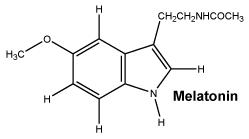
Molecular weight: 232.27.
CAS number. 73-31-4.
7 Medicine Schedule (Poisons Standard)
Schedule 4 - Prescription Only Medicine.
Date of First Approval
16 July 2025
Summary Table of Changes

Reasonable care is taken to provide accurate information at the time of creation. This information is not intended as a substitute for medical advice and should not be exclusively relied on to manage or diagnose a medical condition. The Australian Commission on Safety and Quality in Health Care disclaims all liability (including for negligence) for any loss, damage, injury or any other negative effects resulting from reliance on or use of this information. Read our full disclaimer. This website uses cookies. Read our privacy policy.