
Milrinone GH
Brand Information
| Brand name | Milrinone GH |
| Active ingredient | Milrinone |
| Schedule | S4 |
Consumer Medicine Information (CMI) leaflet
Please read this leaflet carefully before you start using the Milrinone GH.
Summary CMI
Milrinone GH
Consumer Medicine Information (CMI) summary
The full CMI on the next page has more details. If you are worried about using this medicine, speak to your doctor or pharmacist.
1. Why I am using Milrinone GH?
Milrinone GH contains the active ingredient Milrinone (as lactate). Milrinone GH is used for the short-term treatment of severe congestive heart failure. This is a condition where the heart fails to pump enough blood around the body.
For more information, see Section 1. Why I am using Milrinone GH? in the full CMI.
2. What should I know before I use Milrinone GH?
Do not use if you have ever had an allergic reaction to Milrinone or any of the ingredients listed at the end of the CMI.
Milrinone GH should not be given if you are pregnant or breastfeeding, unless you and your doctor have discussed the risks and benefits involved.
For more information, see Section 2. What should I know before I use Milrinone GH? in the full CMI.
3. What if I am taking other medicines?
Some medicines may interfere with Milrinone GH and affect how it works.
A list of these medicines is in Section 3. What if I am taking other medicines? in the full CMI.
4. How do I use Milrinone GH?
- Milrinone GH is usually given to you in hospital. It is given to you as a series of injections.
More instructions can be found in Section 4. How do I use Milrinone GH? in the full CMI.
5. What should I know while using Milrinone GH?
| Things you should do |
|
| Things you should not do |
|
| Looking after your medicine |
|
For more information, see Section 5. What should I know while using Milrinone GH? in the full CMI.
6. Are there any side effects?
Tell your doctor as soon as possible if you do not feel well while Milrinone GH is being given to you.
All medicines have side effects. Sometimes they are serious, most of the time they are not.
For more information, including what to do if you have any side effects, see Section 6. Are there any side effects? in the full CMI.
Full CMI
Milrinone GH
Active ingredient(s): Milrinone (as lactate)
Consumer Medicine Information (CMI)
This leaflet provides important information about using Milrinone GH. You should also speak to your doctor or pharmacist if you would like further information or if you have any concerns or questions about using Milrinone GH.
Where to find information in this leaflet:
1. Why I am using Milrinone GH?
2. What should I know before I use Milrinone-GH?
3. What if I am taking other medicines?
4. How do I use Milrinone GH?
5. What should I know while using Milrinone-GH?
6. Are there any side effects?
7. Product details
1. Why I am using Milrinone GH?
Milrinone GH contains the active ingredient Milrinone (as lactate). Milrinone GH is used for the short-term treatment of severe congestive heart failure. This is a condition where the heart fails to pump enough blood around the body.
The symptoms of this condition include weakness, breathlessness, fluid build-up in the tissues and a blue discolouration of the skin.
Milrinone GH also helps to maintain the output of blood from the heart in patients following heart surgery.
Milrinone GH helps improve the efficiency with which your heart pumps blood around your body.
Milrinone GH works by increasing the force by which your heart muscles work and opening up your blood vessels to allow blood to flow more freely.
2. What should I know before I use Milrinone GH?
Warnings
You must not be given Milrinone GH if:
- you are allergic to milrinone, similar medicines, or any of the ingredients listed at the end of this leaflet.
- you have certain severe problems (obstructive aortic or pulmonary valvular disease).
- you are pregnant or breastfeeding, unless you and your doctor have discussed the risks and benefits involved.
Check with your doctor if you:
- have any other medical conditions:
- you suffer from kidney disease;
- you already suffer from another heart condition;
- you are allergic to other drugs used to treat congestive heart failure.
During treatment, you may be at risk of developing certain side effects. It is important you understand these risks and how to monitor for them. See additional information under Section 6. Are there any side effects?
Pregnancy and breastfeeding
Check with your doctor if you are pregnant or intend to become pregnant.
Milrinone GH should not be given if you are pregnant or breastfeeding, unless you and your doctor have discussed the risks and benefits involved.
It is not known whether Milrinone GH can harm your baby or whether it is found in breast milk.
3. What if I am taking other medicines?
Tell your doctor or pharmacist if you are taking any other medicines, including any medicines, vitamins or supplements that you buy without a prescription from your pharmacy, supermarket or health food shop.
These medicines may be affected by milrinone, or may affect how well it works. You may need to take different amounts of your medicine, or you may need to take different medicines. Your doctor will advise you.
Your doctor and pharmacist may have more information on medicines to be careful with or avoid while taking Milrinone GH.
If you have not told your doctor about any of these things, tell them before Milrinone GH is given to you.
Check with your doctor or pharmacist if you are not sure about what medicines, vitamins or supplements you are taking and if these affect Milrinone GH.
4. How do I use Milrinone GH?
How much will be given
Milrinone GH is usually given to you in hospital. It is given to you as a series of injections as follows:
Adults
Initial Dose
One injection given slowly over a 10 minute period.
Second Dose
Milrinone GH will be diluted with intravenous fluids and injected slowly into a vein. This “infusion” may last up to 48 hours. The dose used will depend upon the severity of your condition.
Milrinone GH is not recommended for use in children.
If you have any questions about how to Milrinone GH is given, ask your doctor or pharmacist.
If you are given too much Milrinone GH
Too high a dose of Milrinone GH may cause low blood pressure. If this occurs, the dose of Milrinone GH may be reduced or the infusion temporarily stopped.
You should immediately:
- phone the Poisons Information Centre (by calling 13 11 26), or
- contact your doctor, or
- go to the Emergency Department at your nearest hospital.
You should do this even if there are no signs of discomfort or poisoning.
5. What should I know while using Milrinone GH?
Things you should do
Remind any doctor, dentist or pharmacist you visit that you are receiving Milrinone GH.
Things you should not do
- Do not take any other medicines whether they require a prescription or not without first telling your doctor.
Driving or using machines
- Ask your doctor when you can return to work involving driving, or operating machinery or heavy equipment as effects of this medicine on a person's ability to drive and use machines were not assessed as part of its registration.
Looking after your medicine
- Milrinone GH should be stored below 30°C. Do not freeze. For single use in one patient on one occasion only. Discard any remaining residue.
Keep out of the reach and sight of children.
When to discard Milrinone GH
Any portion of the contents remaining after use should be discarded.
Getting rid of any unwanted medicine
If you no longer need to use this medicine or it is out of date, hospital staff will take it to the pharmacy for safe disposal
Do not use this medicine after the expiry date.
6. Are there any side effects?
All medicines can have side effects. If you do experience any side effects, most of them are minor and temporary. However, some side effects may need medical attention.
See the information below and, if you need to, ask your doctor or pharmacist if you have any further questions about side effects.
Less serious side effects
| Less serious side effects | What to do |
Nervous system related
| Speak to your doctor if you have any of these less serious side effects and they worry you. |
Serious side effects
| Serious side effects | What to do |
Heart related
| Call your doctor straight away, or go straight to the Emergency Department at your nearest hospital if you notice any of these serious side effects. |
Tell your doctor or pharmacist if you notice anything else that may be making you feel unwell.
Other side effects not listed here may occur in some people.
Reporting side effects
After you have received medical advice for any side effects you experience, you can report side effects to the Therapeutic Goods Administration online at www.tga.gov.au/reporting-problems. By reporting side effects, you can help provide more information on the safety of this medicine.
Always make sure you speak to your doctor or pharmacist before you decide to stop taking any of your medicines.
7. Product details
This medicine is only available with a doctor's prescription.
What Milrinone GH contains
| Active ingredient (main ingredient) | Milrinone (lactate) |
| Other ingredients (inactive ingredients) | Glucose, Lactic Acid, Sodium hydroxide and Water for injections. |
| Potential allergens | NA |
Do not take this medicine if you are allergic to any of these ingredients.
What Milrinone GH looks like
Milrinone GH 10 mg/10 mL concentrated injection is a clear, colourless to pale yellow sterile solution, practically free from visible particles. (AUST R 204795)
Milrinone GH is available in vials of 10 mL and is supplied in boxes containing 1 or 10 ampoules.
Who distributes Milrinone GH
Generic Health Pty Ltd
Suite 2, Level 2
19-23 Prospect Street
Box Hill, VIC, 3128
Australia
 ghinfo@generichealth.com.au
 +61 3 9809 7900
 www.generichealth.com.au
This leaflet was prepared in October 2025.
Brand Information
| Brand name | Milrinone GH |
| Active ingredient | Milrinone |
| Schedule | S4 |
MIMS Revision Date: 01 August 2021
1 Name of Medicine
Milrinone (as lactate).
2 Qualitative and Quantitative Composition
Ampoules of 10 mL contain in each mL, 1 mg milrinone (as lactate) and 47 mg glucose, in water for injections. The pH is adjusted to between 3.2 and 4.0 with lactic acid or sodium hydroxide. The total concentration of lactic acid can vary between 0.95 mg/mL and 1.29 mg/mL. These ampoules require preparation of dilutions prior to administration to patients intravenously.
3 Pharmaceutical Form
Milrinone GH 10 mg/10 mL: Clear, colourless to pale yellow sterile solution, practically free from visible particles.
Milrinone GH concentrated injection is available as a sterile aqueous solution for intravenous injection or infusion.
4 Clinical Particulars
4.1 Therapeutic Indications
Milrinone GH concentrated injection is indicated for the short term (48 hours) intravenous therapy of severe congestive heart failure patients in intensive care and coronary care units not responding to other therapy (e.g. digoxin, diuretics, vasodilators, including ACE inhibitors). The majority of experience with intravenous milrinone has been in patients receiving digoxin and diuretics.
Milrinone GH concentrated injection is also indicated for low output states following cardiac surgery, including weaning from cardio-pulmonary bypass pump.
4.2 Dose and Method of Administration
Milrinone GH concentrated injection should be administered with a loading dose followed by a continuous infusion (maintenance dose) according to the following guidelines (see Table 1).
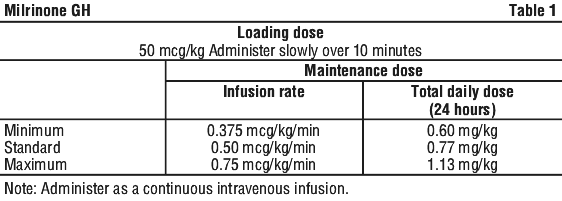
Note. See Dosage adjustment in renally impaired patients.
Dosage may be titrated to the maximum haemodynamic effect and should not exceed 1.13 mg/kg/day. Duration of therapy should depend upon patient responsiveness.
Infusion should be commenced as soon as practicable after preparation of the mixture in order to reduce microbiological hazards. Preparations not used within 24 hours should be discarded.
Intravenous infusions of milrinone should be administered as described in Table 2.
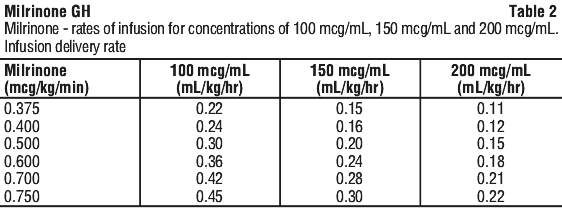
Use the following calculations in Table 3 for preparation of infusions. 0.45% sodium chloride injection, 0.9% sodium chloride injection and 5% glucose injection may be used as diluents.

Milrinone GH concentrated injection should not be diluted in sodium bicarbonate intravenous solution (see Section 6.2 Incompatibilities).
Dosage adjustment in renally impaired patients. Data obtained from patients with severe renal impairment (creatinine clearance = 0 to 30 mL/min) but without congestive heart failure have demonstrated that the presence of renal impairment significantly increases the terminal elimination half-life of milrinone. Reductions in the starting infusion rate may be necessary in patients with renal impairment. For patients with clinical evidence of renal impairment, the recommended infusion rate can be obtained from the Table 4.
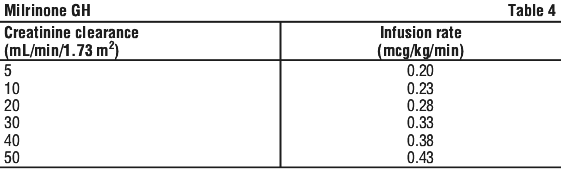
4.3 Contraindications
Milrinone GH concentrated injection should not be used in patients with severe obstructive aortic or pulmonary valvular disease, or hypertrophic subaortic stenosis. Milrinone should not be used in lieu of surgical relief of the obstruction. Like other inotropic agents, milrinone may aggravate outflow tract obstruction in these conditions.
Hypersensitivity to milrinone, other bipyridines or any other ingredient in the formulation.
4.4 Special Warnings and Precautions for Use
Myocardial ischaemia or infarction may occur in patients following cardiac surgery. Should these events occur, care should be taken with the use of milrinone as information on the safety of milrinone under these circumstances is limited.
Use of inotropic agents such as milrinone during the acute phases of a myocardial infarction may lead to an undesirable increase in myocardial oxygen consumption (MVO2). Milrinone has not increased MVO2 in patients with chronic heart failure, however, until further clinical experience with this class of drugs is gained, milrinone is not recommended during the acute phase of post myocardial infarction.
Supraventricular and ventricular arrhythmias have been observed in the high-risk population treated. In some patients, milrinone has been shown to increase ventricular ectopy, including non-sustained ventricular tachycardia. The potential for arrhythmia, present in congestive heart failure itself, may be increased by many drugs or combinations of drugs. Patients receiving milrinone should be closely monitored (including heart rate, clinical state, electrocardiogram, fluid balance, electrolytes and renal function) during infusion.
Milrinone produces a slight shortening in A-V node conduction time, indicating a potential for an increased ventricular response rate in patients with atrial flutter/fibrillation which is not being controlled with digitalis therapy. In these patients, prior digitalisation or treatment with other agents to prolong A-V node conduction time should be considered.
Milrinone may induce hypotension as a consequence of its vasodilatory action. Caution should therefore be exercised in patients with hypotension prior to treatment or in those showing excessive decreases in blood pressure during therapy with milrinone. In such cases, the infusion should be stopped until the hypotensive effect has been resolved, then resumed at a lower rate if resumption is considered necessary.
If prior vigorous diuretic therapy is suspected to have caused significant decreases in cardiac filling pressure, milrinone should be cautiously administered with monitoring of blood pressure, heart rate, and clinical symptomatology.
There is no experience in controlled trials with infusions of milrinone for periods exceeding 48 hours. Cases of infusion site reaction have been reported with intravenous milrinone therapy (see Section 4.8 Adverse Effects (Undesirable Effects)). Consequently, careful monitoring of the infusion site should be maintained so as to avoid possible extravasation.
Use in renal impairment. In patients with severe renal impairment the dose should be adjusted (see Section 4.2 Dose and Method of Administration).
Use in the elderly. There are no special dosage recommendations for the elderly patient.
Ninety percent of all patients administered milrinone in clinical studies were within the age range of 45-70 years, with a mean age of 61 years. Patients in all age groups demonstrated clinically and statistically significant responses. No age-related effects on the incidence of adverse reactions have been observed.
Controlled pharmacokinetic studies have not disclosed any age-related effects on the distribution and elimination of milrinone.
Paediatric use. Safety and effectiveness in children have not been established.
Effects on laboratory tests. Fluid and electrolyte changes, as well as serum creatinine levels and renal function should be carefully monitored during milrinone therapy. Improvement in cardiac output with resultant diuresis may necessitate a reduction in the dose of diuretic. Potassium loss due to excessive diuresis may predispose digitalised patients to arrhythmias. Therefore, hypokalaemia should be corrected by potassium supplementation in advance of or during milrinone use.
4.5 Interactions with Other Medicines and Other Forms of Interactions
No untoward clinical manifestations have been observed in patients in whom milrinone was used concurrently with the following drugs: digitalis glycosides, lidocaine (lignocaine), quinidine, hydralazine, prazosin, isosorbide dinitrate, glyceryl trinitrate, chlorthalidone, furosemide (frusemide), hydrochlorothiazide, spironolactone, captopril, heparin, warfarin, diazepam, insulin, and potassium supplements.
4.6 Fertility, Pregnancy and Lactation
Effects on fertility. In reproductive performance studies in rats, milrinone had no effect on male or female fertility at oral doses up to 32 mg/kg/day.
Use in pregnancy. (Category B3)
Oral administration of milrinone to pregnant rats and rabbits during organogenesis produced no evidence of teratogenicity at dose levels up to 40 mg/kg/day and 12 mg/kg/day, respectively. Milrinone did not appear to be teratogenic when administered intravenously to pregnant rats at doses up to 3 mg/kg/day or pregnant rabbits at doses up to 12 mg/kg/day, although an increased resorption rate was apparent at dose levels above 3 mg/kg/day (intravenous) in the latter species. There are no adequate and well-controlled studies in pregnant women. Milrinone should be used during pregnancy only if the potential benefit justifies the potential risk to the foetus.
Use in lactation. Caution should be exercised when milrinone is administered to nursing women since it is not known whether it is excreted in human milk.
4.7 Effects on Ability to Drive and Use Machines
The effects of this medicine on a person's ability to drive and use machines were not assessed as part of its registration.
4.8 Adverse Effects (Undesirable Effects)
Cardiovascular effects. Ventricular arrhythmias were reported in 12.1% of patients receiving milrinone:
Ventricular ectopic activity (8.5%), non-sustained ventricular tachycardia (2.8%), sustained ventricular tachycardia (1%) and ventricular fibrillation (0.2%). Holter recordings have demonstrated in some patients that injection of milrinone increases ventricular ectopy, including nonsustained ventricular tachycardia. Life-threatening arrhythmias are infrequent and when present have been associated with certain underlying factors such as pre-existing arrhythmias, metabolic abnormalities (e.g. hypokalaemia), abnormal digoxin levels and catheter insertion.
Very rarely (< 0.01%) cases of torsades de pointes have been reported.
Supraventricular arrhythmias were reported in 3.8% of the patients receiving milrinone. The incidence of both supraventricular and ventricular arrhythmias has not been related to the dose or plasma level of milrinone. There is no evidence for a patient subset which is at higher risk for ventricular arrhythmias.
Other cardiovascular adverse reactions include hypotension (2.9%) and angina/chest pain (1.2%).
CNS effects. Headaches, mostly mild to moderate in severity, have been reported in 2.9% of patients receiving milrinone.
Skin. Dermatological reactions such as rashes have been observed in < 0.01% of patients. Cases of infusion site reaction have been reported.
Liver. Abnormal liver function tests have been observed in < 1% of patients.
Congenital, familial and genetic disorders. Patent ductus arteriosus has been reported.
Renal and urinary disorders. Renal failure, secondary to a concomitant hypotension, has been reported.
Other effects. Other adverse reactions reported, all with an incidence of less than 1% but not definitely related to the administration of milrinone include hypokalaemia, tremor, and thrombocytopenia.
Very rarely (< 0.01%) bronchospasm and anaphylactic shock have occurred.
Reporting suspected adverse effects. Reporting suspected adverse reactions after registration of the medicinal product is important. It allows continued monitoring of the benefit-risk balance of the medicinal product. Healthcare professionals are asked to report any suspected adverse reactions at www.tga.gov.au/reporting-problems.
4.9 Overdose
Doses of milrinone may induce hypotension because of its vasodilator effect. If this occurs, administration of milrinone should be reduced or temporarily discontinued until the patient's condition stabilises. No specific antidote is known, but general measures for circulatory support should be taken.
For information on the management of overdose, contact the Poisons Information Centre on 13 11 26 (Australia).
5 Pharmacological Properties
5.1 Pharmacodynamic Properties
Pharmacotherapeutic group: Cardiac stimulants excluding cardiac glycosides, Phosphodiesterase inhibitors.
ATC code: C01CE02.
Mechanism of action. Milrinone is a positive inotrope and vasodilator, with little chronotropic activity, different in structure and mode of action from either the digitalis glycosides or catecholamines.
Milrinone, at relevant inotropic and vasorelaxant concentrations, is a selective inhibitor of peak III cAMP phosphodiesterase isozyme in cardiac and vascular muscle. This inhibitory action is consistent with cAMP mediated increases in intracellular ionised calcium and contractile force in cardiac muscle, as well as with cAMP dependent contractile protein phosphorylation and relaxation in vascular muscle. Additional experimental evidence also indicates that milrinone is not a α-adrenergic agonist, and unlike digitalis glycosides, it does not inhibit Na+/K+ ATPase activity.
Clinical studies in patients with congestive heart failure have shown that milrinone produces dose-related and plasma level-related increases in the maximum rate of increase of left ventricular pressure (dP/dt max). Studies in normal subjects have shown that milrinone produces increases in the slope of the left ventricular pressure-dimension relationship, indicating a direct inotropic effect of the drug.
Milrinone also produces dose-related and plasma concentration-related increases in forearm blood flow in patients with congestive heart failure, indicating a direct arterial vasodilator activity of the drug.
Both the inotropic and vasodilatory effects have been observed over the therapeutic range of plasma milrinone concentrations of 100 nanogram/mL to 300 nanogram/mL.
In addition to increasing myocardial contractility, milrinone improves diastolic function as evidenced by improvements in left ventricular diastolic relaxation.
Pharmacodynamics. In patients with depressed myocardial function, milrinone produces a prompt increase in cardiac output and decreases in pulmonary capillary wedge pressure and vascular resistance, without a significant increase in heart rate or myocardial oxygen consumption.
These haemodynamic improvements are both dose and plasma milrinone concentration related. Haemodynamic improvement during intravenous therapy with milrinone was accompanied by clinical symptomatic improvement, as measured by changes in New York Heart Association classification. The great majority of patients experience improvements in haemodynamic function within 5 to 15 minutes of the initiation of therapy.
In studies in congestive heart failure patients, milrinone when administered as a loading injection followed by a maintenance infusion produced significant mean initial increases in cardiac index as shown in Table 5.
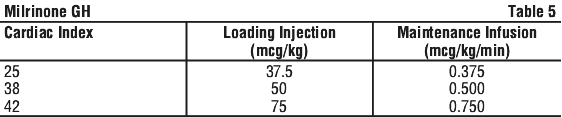
Milrinone has a favourable inotropic effect in fully digitalised patients without causing signs of glycoside toxicity. Theoretically, in cases of atrial flutter/fibrillation, it is possible that milrinone may increase ventricular response rate because of its slight enhancement of AV node conduction. In these cases, digitalis should be considered prior to the institution of therapy of milrinone.
Improvement in left ventricular function and relief of congestive heart failure symptoms in patients with ischaemic heart disease have been observed. The improvement has occurred without inducing symptoms or ECG signs in myocardial ischaemia.
The steady-state milrinone plasma levels after approximately 6-12 hours of unchanging maintenance infusion of 0.50 microgram/kg/min are approximately 200 nanogram/mL. Near maximal favourable effects of milrinone on cardiac output and pulmonary capillary wedge pressure are seen at plasma milrinone concentrations in the 150 nanogram/mL to 250 nanogram/mL range.
Clinical trials. In a double-blind, placebo controlled study in patients being weaned off cardiopulmonary bypass, 100% of patients taking milrinone were successfully weaned off bypass compared to 33% of the placebo arm patients. All patients who initially failed blinded placebo treatment were successfully weaned from cardiopulmonary bypass support following administration with open-label milrinone.
In acute states following cardiac surgery, it is unlikely that treatment need be maintained for more than 12 hours.
5.2 Pharmacokinetic Properties
Following intravenous loading, injections of 12.5 to 125.0 microgram/kg to congestive heart failure patients, milrinone has a volume of distribution of 0.38 litre/kg, a mean terminal elimination half-life of 2.3 hours, and a clearance of 0.13 litre/kg/hr. Following intravenous infusions of 0.20 to 0.70 microgram/kg/min to congestive heart failure patients, milrinone has a volume of distribution of about 0.45 litre/kg, a mean terminal elimination half-life of 2.4 hours, and a clearance of 0.14 litre/kg/hr.
These pharmacokinetic parameters were not dose-dependent, and the area under the plasma concentration versus time curve following loading injections was significantly dose-dependent.
Milrinone has been shown (by equilibrium dialysis) to be approximately 70% bound to human plasma protein.
The primary route of excretion of milrinone in man is via the urine, with much smaller amounts recovered in the faeces. The major urinary excretion products in man are milrinone (83%) and its o-glucuronide metabolite (12%).
Elimination in normal subjects via the urine is rapid, with approximately 60% recovered within the first two hours following dosing and approximately 90% recovered within the first eight hours following dosing. The mean renal clearance of milrinone is approximately 0.3 litre/min while that of the metabolites is even greater, indicative of active secretion.
5.3 Preclinical Safety Data
Genotoxicity. Whereas the Chinese Hamster Ovary Chromosome Aberration Assay was positive in the presence of a metabolic activation system, results from the Ames Test, the Mouse Lymphoma Assay, the Micronucleus Test and the in vivo Rat Bone Marrow Metaphase Analysis indicated an absence of mutagenic potential.
Carcinogenicity. Twenty-four months of oral administration of milrinone to mice at doses up to 40 mg/kg/day was unassociated with evidence of carcinogenic potential. Neither was there evidence of carcinogenic potential when milrinone was orally administered to rats at doses up to 5 mg/kg/day for 24 months or at 25 mg/kg/day for up to 18 months in males and 20 months in females.
Animal toxicity. Oral and intravenous administration of toxic dosages of milrinone to rats and dogs resulted in myocardial degeneration/fibrosis and endocardial haemorrhage, principally affecting the left ventricular papillary muscles. Coronary vascular lesions characterised by periarterial oedema and inflammation have been observed in dogs only. The myocardial/endocardial changes are similar to those produced by β-adrenergic receptor agonists such as isoprenaline, while the vascular changes are similar to those produced by minoxidil and hydralazine.
6 Pharmaceutical Particulars
6.1 List of Excipients
See Section 2 Qualitative and Quantitative Composition.
6.2 Incompatibilities
There is an immediate chemical interaction which is evidenced by the formation of a precipitate when furosemide (frusemide) is injected into an intravenous line of an infusion of milrinone. Therefore furosemide (frusemide) or bumetanide should not be administered in intravenous lines containing milrinone.
Milrinone GH concentrated injection should not be diluted in sodium bicarbonate intravenous solution.
6.3 Shelf Life
In Australia, information on the shelf life can be found on the public summary of the Australian Register of Therapeutic Goods (ARTG). The expiry date can be found on the packaging.
6.4 Special Precautions for Storage
Store below 25°C. Do not freeze. Protect from light.
From a microbiological point of view, the diluted solution should be used immediately. To reduce microbiological hazard, use as soon as practicable after dilution. If storage is necessary, hold at 2-8°C for not more than 24 hours.
Contains no antimicrobial preservative. For single use in one patient on one occasion only. Discard any remaining residue.
6.5 Nature and Contents of Container
Available in pack size of 1 ampoule or 10 ampoules.
Note: Not all pack sizes may be marketed.
Australian registration numbers. Milrinone GH 10 mg/10 mL: AUST R 204795.
6.6 Special Precautions for Disposal
In Australia, any unused medicine or waste material should be disposed of by taking to your local pharmacy.
6.7 Physicochemical Properties
Milrinone (as lactate) is a member of a class of bipyridine inotropic/vasodilator agents with phosphodiesterase activity, distinct from digitalis glycosides or catecholamines.
Milrinone is an off-white to tan crystalline compound.
Chemical structure.
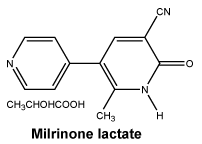
Molecular Formula: C12H9N3O (milrinone); C12H9N3O. (C3H6O3) x (milrinone as lactate).
Molecular Weight: 211.2 (milrinone); 301.3 (milrinone as lactate).
CAS number. 78415-72-2 (milrinone); 100286-97-3 (milrinone as lactate).
7 Medicine Schedule (Poisons Standard)
Schedule 4 - Prescription Only Medicine.
Date of First Approval
29 November 2013
Date of Revision
13 July 2021
Summary Table of Changes

Reasonable care is taken to provide accurate information at the time of creation. This information is not intended as a substitute for medical advice and should not be exclusively relied on to manage or diagnose a medical condition. The Australian Commission on Safety and Quality in Health Care disclaims all liability (including for negligence) for any loss, damage, injury or any other negative effects resulting from reliance on or use of this information. Read our full disclaimer. This website uses cookies. Read our privacy policy.