
Mutaflor
Brand Information
| Brand name | Mutaflor |
| Active ingredient | Escherichia coli |
| Schedule | Unscheduled |
Consumer Medicine Information (CMI) leaflet
Please read this leaflet carefully before you start using the Mutaflor.
What is in this leaflet
This leaflet answers some common questions about Mutaflor®. Ask your Doctor, Pharmacist or Health Care Practitioner if you need more information or advice.
Read this entire leaflet carefully because it contains important information for you.
Keep this leaflet with the medicine. You may need to read it again.
This medicine is available without prescription. However, you will still need to take Mutaflor® carefully to get the best results from it.
You must contact your Doctor or Healthcare Practitioner if your symptoms worsen or do not improve.
If any of the side effects are serious, or if you notice any side effects not listed in this leaflet, please tell your Doctor or Healthcare Practitioner.
In this leaflet:
- What Mutaflor® is and what it is used for.
- Before you take Mutaflor®
- How to take Mutaflor®
- Possible side effects
- How to store Mutaflor®
- Further information
1. What Mutaflor® is and what it is used for
1.1 Pharmacotherapeutic group and mode of action
Mutaflor® capsules contain as the active substance the defined non-pathogenic strain Escherichia coli (E.coli) Nissle 1917.
The therapeutic effects of Mutaflor® are strain specific and have been demonstrated by in-vitro and in-vivo experiments and clinical studies, where the following properties and modes of action were detected.
Mutaflor® is a natural colonizer of the gut. E.coli strain Nissle 1917 is a normal, non-pathogenic and non-invasive inhabitant of the human gut. By means of special adhesive organelles (fimbriae) the strain is able to attach to the mucin layer of the gut wall. The strain is well mobile by possessing flagellae, an advantage when colonizing the colon.
Motility and stool frequency
E.coli strain Nissle 1917, via the production of short chain fatty acids, modulates colonic motility.
Stimulation of colonic motility, is important for the treatment of chronic constipation.
1.2 Mutaflor® is used for
- For the relief / management of chronic constipation.
- To increase the number of bowel movements per day and the number of days on which bowel movements occur in patients with chronic constipation.
2. Before you take Mutaflor®
Constipation may be associated with other medical conditions. Any change in bowel habits should be discussed with your doctor to exlude these. Further inves tigation may be required.
2.1 Do not take Mutaflor®
- If you are allergic (hypersensitive) to E.coli strain Nissle 1917 or any of the ingredients of Mutaflor® listed at the end of this leaflet.
2.2 Taking other medicinal products
Please tell your Doctor or Healthcare Practitioner if you are taking or have recently taken any other medicinal products, including medicinal products obtained without a prescription.
Some medicines may interfere with Mutaflor®. These include:
- Certain antibiotics and sulphonamides as they may reduce the efficacy of Mutaflor®.
2.3 Pregnancy and breast feeding
The bacterium E.coli strain Nissle 1917 contained in Mutaflor® is a natural colonizer of the gut. Its presence and mode of action is restricted to the gastrointestinal tract. When used in accordance with the instructions there are no known risks during pregnancy and breast-feeding.
2.4 Driving and using machinery
No special precautions are necessary.
3. How to take Mutaflor®
Always take Mutaflor® exactly as your Doctor or Healthcare Practitioner has told you. You should check with your Doctor or Healthcare Practitioner if you are not sure.
3.1 Dosage
Unless your Doctor or Healthcare Practitioner has suggested otherwise, the usual dose (standard dose) is:
Adults:
For the first 2 days take 2 Mutaflor® capsules 3 times daily. From the third day onwards, take 4 Mutaflor® capsules daily.
Repeat periodically.
If you have any further questions on the use of this product, ask your Doctor or Pharmacist.
3.2 Method of administration
The standard dose should be taken with a meal, if possible with breakfast, and an appropriate amount of fluid. Swallow capsule whole, DO NOT break or chew.
With the onset of flatulence or if your Doctor or Healthcare Practitioner recommends a daily dose higher than the standard dose, the daily dose may be split and administered with meals spread evenly throughout the day.
3.3 Duration of treatment
Mutaflor® may be taken for up to 8 weeks. In chronic constipation that has persisted for years, Mutaflor® should be regarded as a health-maintenance treatment and the therapy therefore be repeated periodically.
3.4 If you take more Mutaflor® than you should.
No special measures are necessary.
3.5 If you forget to take Mutaflor®
Do not take a double dose to make up for a forgotten dose. Take it as soon as you remember and then go back to taking Mutaflor® as you would normally.
3.6 If you stop taking Mutaflor®
There are no special measures necessary.
If you have any further questions on the use of this product, ask your Doctor, Pharmacist or Healthcare Practitioner.
4. Possible side effects
Like other medicines, Mutaflor® can cause some side effects although not everyone will experience them. If they occur, most are likely to be minor and temporary.
For the assessment of side effects, the following data on frequency are used as a basis.
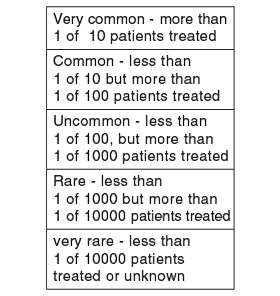
4.1 List of possible side effects
After the beginning of administration, flatulence is common. Very rarely, undesired effects of the gastrointestinal tract such as abdominal pain, gut noises, loose stools or diarrhoea, nausea and vomiting may occur.
Again very rarely, cases of skin reddening or rashes may occur. Also very rarely, cases of headache may occur.
If any of these side effects were to get serious, or if you notice any side effects not listed in this leaflet, please tell your Doctor or Healthcare Practitioner.
Ask your Doctor or Pharmacist if you do not understand anything in this list.
5. How to store Mutaflor®
Keep out of the reach and sight of children.
Do not use Mutaflor® after the expiry date, which is stated on the carton and blister.
Do not use Mutaflor® if the packaging is torn or shows signs of tampering.
Storage conditions
Store at 2 °C to 8 °C (Refrigerate. Do not freeze.)
6. Further information
6.1 What Mutaflor® contains
The active substance is Escherichia coli strain Nissle 1917.
Each enteric-coated hard capsule contains not less than 250 million CFU of Escherichia coli strain Nissle 1917.
The other ingredients are: maltodextrin, talc-purified, methacrylic acid copolymer, macrogol 4000, triethylcitrate, glycerol, titanium dioxide, iron oxide red, white beeswax, carnauba wax, shellac, gelatine capsule, capsule processing aid, purified water.
6.2 What Mutaflor® looks like and contents of the pack
- Appearance: Capsules coated with reddish-brown enteric-coating.
- Packs: Mutaflor® is available in 20, 50 and 100 pack sizes.
6.3 Manufacturer and Australian sponsor
Manufacturer:
ARDEYPHARM GmbH
Loerfeldstr. 20
58313 Herdecke
Germany
Australian sponsor:
Natural Therapy Imports
Suite 4, 74 Prospect Road
Prospect SA 5082
www.mutaflor.com.au
ARTG Number:
AUST R 194957
This leaflet was last revised in March 2012.
8570512
Brand Information
| Brand name | Mutaflor |
| Active ingredient | Escherichia coli |
| Schedule | Unscheduled |
MIMS Revision Date: 01 December 2020
1 Name of Medicine
Mutaflor Capsules.
2 Qualitative and Quantitative Composition
1 gastro-resistant hard capsule contains:
Escherichia coli strain Nissle 1917 2.5 x 10⁹ viable cells (CFU).
Australian labelling - corresponding to not less than 250 million viable cells (CFU).
For a full list of excipients, see Section 6.1.
3 Pharmaceutical Form
Gastro-resistant hard capsule.
4 Clinical Particulars
4.1 Therapeutic Indications
For the relief/management of chronic constipation.
To increase the number of bowel movements per day and the number of days on which bowel movements occur in patients with chronic constipation.
4.2 Dose and Method of Administration
Posology. Adults and adolescents. Take 3 to 4 Mutaflor capsules daily.
Method of administration. The dose should be taken with a meal, if possible with breakfast, and an appropriate amount of fluid. Avoid chewing the capsules.
With onset of flatulence the daily dose may be split and administered with meals spread evenly throughout the day.
Duration of administration. Mutaflor may be taken for up to 8 weeks. In constipation which persisted for many years Mutaflor should be regarded as a health-maintenance treatment and the therapy therefore be repeated periodically.
4.3 Contraindications
Hypersensitivity to the active substances or to any of the excipients.
4.4 Special Warnings and Precautions for Use
None.
4.5 Interactions with Other Medicines and Other Forms of Interactions
Antibiotics directed against Gram-negative bacteria and sulphonamides may reduce the efficacy of Mutaflor.
4.6 Fertility, Pregnancy and Lactation
Use in pregnancy. E. coli strain Nissle 1917 is a commensal gut inhabitant of human beings and is not being absorbed. Therefore, effects on pregnancy and lactation are not to be expected.
Use in lactation. E. coli strain Nissle 1917 is a commensal gut inhabitant of human beings and is not being absorbed. Therefore, effects on pregnancy and lactation are not to be expected.
4.7 Effects on Ability to Drive and Use Machines
Not relevant.
4.8 Adverse Effects (Undesirable Effects)
The assessment of undesirable effects was based on the following frequencies:
Very common (≥ 1/10).
Common (≥ 1/100, < 1/10).
Uncommon (≥ 1/1,000, < 1/100).
Rare (≥ 1/10,000, < 1/1,000).
Very rare (< 1/10,000), including isolated reports.
Gastrointestinal disorders. Frequently (≥ 1/100, < 1/10), initial flatulence occurs. Changes in stool consistency or stool frequency, abdominal pain, borborygmi, meteorism, nausea or vomiting were observed very rarely (< 1/10,000, including isolated reports).
Skin and subcutaneous disorders. Skin efflorescences, erythema or skin flaking were observed very rarely (< 1/10,000, including isolated reports).
Nervous system disorders. Very rarely, headache was reported.
4.9 Overdose
No case of overdose has been reported.
5 Pharmacological Properties
5.1 Pharmacodynamic Properties
Modes of action. Mutaflor capsules contain as the active substance a defined non-pathogenic bacterial strain of human origin, of the species Escherichia coli (E. coli), in a viable form capable of proliferation: E. coli strain Nissle 1917. By means of special adhesive organelles (Type F-1A, F-1C, and "curli" fimbriae) the strain is able to attach to the mucin layer of the gut wall and to form microcolonies in the form of biofilms. The strain is well mobile by possessing flagella, which is an advantage when colonizing the colon.
The effects of Mutaflor or E. coli strain Nissle 1917 were determined by in vitro experiments and in vivo examinations as well as by clinical studies. Hence, the following properties and modes of action were detected:
Antagonism. E. coli strain Nissle 1917 forms antimicrobial substances (microcins) and multiple iron-acquisition systems (siderophores), which are responsible for its direct antagonism against pathogens on the one hand and for its assertiveness, following oral administration, in the intestinal tract on the other hand. Moreover, the strain inhibits invasion of the colon mucosa by enteroinvasive pathogens.
Stabilization of the mucosal barrier in the gut. E. coli strain Nissle 1917, in cell-culture experiments on human colonocytes, stabilizes the barrier function of the epithelial cell layer and normalizes increased permeability of the gut mucosa. This strengthening of the gut barrier is based on stimulation of synthesis of an anchor protein (ZO-2) and its reorganization in tight junctions.
Immunomodulating properties. Effects on humoral immune response. Newborn infants, on colonization with E. coli strain Nissle 1917, show a significant raise of IgA and IgM levels in stool filtrates and serum. Isolated reports indicate an increase of IgA in saliva. In germ-free newborn piglets oral administration of E. coli strain Nissle 1917 leads to stimulation of development of immunocompetent cells of the gut-associated immune system (IgA and IgG producing lymphocytes, MHC-class-II-expressing cells), without showing signs of inflammation (no influx of granulocytes).
Effects on cellular immune response. In-vitro experiments revealed immunomodulating properties for E. coli strain Nissle 1917. Thus, enhanced secretory output of mouse macrophages (interleukin 6 [IL-6], tumour necrosis factor [TNF], oxygen radicals) and of human mononuclear cells from peripheral blood (interleukin 10) were detected. However, an enhanced production of TNF was not confirmed by in vivo examinations in mice and other animal models.
Moreover, enhanced cytotoxicity of mouse macrophages against intracellular parasites and thus a stronger defence against intracellular infectious agents was demonstrated ex vivo. The cell cycle and proliferation of human T lymphocytes from peripheral blood were inhibited by E. coli strain Nissle 1917, but not of T lymphocytes from gut. New recruitment of activated T lymphocytes to the gut-associated immune system may thus be blocked.
Effects on innate immunity. E. coli strain Nissle 1917 inducers the synthesis of antimicrobial peptides. Thus, the synthesis of inducible defensins in human colonocytes in vitro and, in vivo in the gut after oral administration to germ-free piglets, the production of calprotectin is stimulated. In newborn (premature) infants the innate and adaptive immune response is stimulated by oral administration of Mutaflor.
Anti-inflammatory properties. Mutaflor possesses anti-inflammatory properties. Both in in-vitro experiments in human gut epithelial cells and in in-vivo experiments in established animal models if inflammatory bowel disease, anti-inflammatory properties of E. coli strain Nissle 1917 were detected.
Properties promoting motility. E. coli strain Nissle 1917 produces short-chain fatty acids as metabolites, which are important for the energy balance of the colon mucosa. They stimulate colonic motility and blood circulation of the gut mucosa as well as enhancing sodium and chloride absorption. Stimulation of colonic motility, probably caused by acetic acid of microbial origin, is important for the treatment of chronic constipation.
Metabolic properties. The Mutaflor strain possesses multifunctional metabolic properties and is able to catabolize different carbohydrates, sugar alcohols, amino acids, and other substrates by consuming oxygen. Thus, an anaerobic milieu is created and maintained in the colon in vivo, which is important for the stability of the intestinal ecosystem.
5.2 Pharmacokinetic Properties
Due to their coating, Mutaflor capsules are resistant to gastric juice and will not dissolve before the terminal ileum. The active substance E. coli strain Nissle 1917 as a commensal bacterium colonizes the colon, is not absorbed and not metabolized. It is excreted via the faeces.
5.3 Preclinical Safety Data
E. coli strain Nissle 1917 has no toxic or pathogenic properties, neither in vitro nor in vivo. It does not form enterotoxins such as hemolysin, is not enteroinvasive, has no pathogenic adhesion characteristics and no uropathogenic properties. It is sensitive to antibiotics frequently used against Gram-negative bacteria and does not show any immunotoxic effects. In addition, E. coli strain Nissle 1917 is not serum-resistant, i.e. it is rapidly killed by human serum.
This is due to the possession of a special lipopolysaccharide with an extremely abridged side chain of the O6 antigen. The strain is thus unable to act as a sepsis causing agent.
No examinations have been done regarding reproduction toxicology. Since E. coli strain Nissle 1917 is a normal, non-pathogenic and non-invasive inhabitant of the human gut, toxic effects on reproduction or on the embryo were never detected so far and are not expected.
6 Pharmaceutical Particulars
6.1 List of Excipients
Maltodextrin, talc, methacrylic acid-methyl methacrylate copolymer (1:1), macrogol (4000), triethyl citrate, glycerol 85%, titanium dioxide, iron (III)-oxide, gelatin, white beeswax, carnauba wax, shellac, purified water.
6.2 Incompatibilities
Not applicable.
6.3 Shelf Life
12 months.
6.4 Special Precautions for Storage
Store at 2°C to 8°C (Refrigerate. Do not freeze.).
6.5 Nature and Contents of Container
Nature of container. Blisters: Cupping strips made from PVC/PVDC foil, closed by aluminium foil.
Package sizes. Packs with 20 gastro-resistant hard capsules.
Packs with 50 gastro-resistant hard capsules.
Packs with 100 gastro-resistant hard capsules.
6.6 Special Precautions for Disposal
No special requirements.
6.7 Physicochemical Properties
No data available.
7 Medicine Schedule (Poisons Standard)
Unscheduled.
Date of First Approval
28 February 2012
Date of Revision
15 August 2018
Reasonable care is taken to provide accurate information at the time of creation. This information is not intended as a substitute for medical advice and should not be exclusively relied on to manage or diagnose a medical condition. The Australian Commission on Safety and Quality in Health Care disclaims all liability (including for negligence) for any loss, damage, injury or any other negative effects resulting from reliance on or use of this information. Read our full disclaimer. This website uses cookies. Read our privacy policy.