
Naramig Tablets
Brand Information
| Brand name | Naramig Tablets |
| Active ingredient | Naratriptan |
| Schedule | S4 |
Consumer Medicine Information (CMI) leaflet
Please read this leaflet carefully before you start using the Naramig Tablets.
Summary CMI
NARAMIG tablets
Consumer Medicine Information (CMI) summary
The full CMI on the next page has more details. If you are worried about using this medicine, speak to your doctor or pharmacist.
1. Why am I using NARAMIG?
NARAMIG contains the active ingredient naratriptan (as naratriptan hydrochloride). NARAMIG is used to relieve a migraine attack.
For more information, see Section 1. Why am I using NARAMIG? in the full CMI.
2. What should I know before I use NARAMIG?
Do not use if you have ever had an allergic reaction to naratriptan or any of the ingredients listed at the end of the CMI.
Talk to your doctor if you have any other medical conditions, take any other medicines, or are pregnant or plan to become pregnant or are breastfeeding.
For more information, see Section 2. What should I know before I use NARAMIG? in the full CMI.
3. What if I am taking other medicines?
Some medicines may interfere with NARAMIG and affect how it works.
A list of these medicines is in Section 3. What if I am taking other medicines? in the full CMI.
4. How do I use NARAMIG?
- The recommended dose for adults is one 2.5 mg tablet.
- Swallow whole with a drink of water. Do not crush or chew.
- If the first dose helps with the migraine but another attack occurs, another dose can be taken at least 4 hours after.
- Do not take more than two NARAMIG tablets in any twenty-four hours.
- It is best to take your NARAMIG tablet as early as possible in the migraine attack.
More instructions can be found in Section 4. How do I use NARAMIG? in the full CMI.
5. What should I know while using NARAMIG?
| Things you should do |
|
| Things you should not do |
|
| Things to be careful of |
|
| Driving or using machines |
|
| Looking after your medicine |
|
For more information, see Section 5. What should I know while using NARAMIG? in the full CMI.
6. Are there any side effects?
Less serious side effects of NARAMIG include pain, numbness, tingling, heat or flushing in any part of the body; feelings of sleepiness, drowsiness, dizziness or tiredness; nausea (feeling sick) or vomiting; a feeling of faintness; muscle pain, stiffness, tightness or rigidity; and a reduced ability to produce saliva (dry mouth).
Serious side effects include heaviness, pressure or tightness in any part of the body including the chest or throat; irregular heartbeats; an allergic reaction; severe abdominal pain and blood in stools.
For more information, including what to do if you have any side effects, see Section 6. Are there any side effects? in the full CMI.
Full CMI
NARAMIG tablets
Active ingredient: naratriptan (as naratriptan hydrochloride)
Consumer Medicine Information (CMI)
This leaflet provides important information about using NARAMIG tablets.
You should also speak to your doctor or pharmacist if you would like further information or if you have any concerns or questions about using NARAMIG.
Where to find information in this leaflet:
1. Why am I using NARAMIG?
2. What should I know before I use NARAMIG?
3. What if I am taking other medicines?
4. How do I use NARAMIG?
5. What should I know while using NARAMIG?
6. Are there any side effects?
7. Product details
1. Why am I using NARAMIG?
NARAMIG contains the active ingredient naratriptan (as naratriptan hydrochloride). This medicine belongs to a group of drugs called serotonin agonists.
NARAMIG is used to relieve a migraine attack. It should not be used to prevent migraine attacks from occurring. NARAMIG may be used for migraine headaches with or without what is known as 'aura'.
It is thought that migraine headache is due to widening of certain blood vessels in the head. NARAMIG works by making those vessels normal again and eases the symptoms of migraine.
NARAMIG does not work in other types of headaches which are not a migraine.
NARAMIG is not addictive.
2. What should I know before I use NARAMIG?
Warnings
Do not take NARAMIG if:
- you are allergic to naratriptan hydrochloride, or any of the ingredients listed at the end of this leaflet.
- Symptoms of an allergic reaction may include shortness of breath, wheezing or difficulty in breathing; swelling of the face, lips, tongue, or any other parts of the body; rash, itching or hives on the skin. - you have or have had any of the following medical conditions:
- heart disease or heart attack
- Prinzmetal's angina (an uncommon form of angina where pain is experienced at rest rather than during activity)
- angina
- shortness of breath, pain or tightness in the chest, jaw or upper arm
- stroke, or any other blood circulation problem that affects the brain
- blood vessel problems that cause poor circulation in the arm and/or legs
- high blood pressure
- kidney disease
- liver disease. - you have taken any other medicines for migraine in the last 24 hours, such as:
- ergotamine (e.g. Cafergot)
- dihydroergotamine (e.g. Dihydergot)
- methysergide (e.g. Deseril)
- sumatriptan (e.g. Imigran)
- zolmitriptan (e.g. Zomig). - you are taking any of these antidepressants:
- SSRIs (selective serotonin reuptake inhibitors)
- SNRIs (serotonin noradrenaline reuptake inhibitors) - the expiry date printed on the pack has passed.
- the packaging is town or shows signs of tampering.
Check with your doctor if:
- you have or have had any other medical conditions, especially the following:
- migraine known as “hemiplegic”, “basilar” or “ophthalmoplegic”
- high blood cholesterol or lipid (“fat”) levels.
- a family history of heart problems
- allergic to lactose. - you take any medicines for any other condition, or have taken any other medicines in the past few days, including medicines you buy without a prescription, particularly herbal preparations containing St John's Wort and medicines prescribed for depression.
- you have had any allergy to any other medicines (including any that contain sulfur e.g. sulfonamide antibiotics), or any other substances, such as foods, preservatives, or dyes.
During treatment, you may be at risk of developing certain side effects. It is important you understand these risks and how to monitor for them. See additional information under Section 6. Are there any side effects?
Pregnancy and breastfeeding
Check with your doctor if you are pregnant or intend to become pregnant.
Talk to your doctor if you are breastfeeding or intend to breastfeed.
Breastfeeding should be discontinued for 24 hours after taking NARAMIG tablets.
3. What if I am taking other medicines?
Tell your doctor or pharmacist if you are taking any other medicines, including any medicines, vitamins or supplements that you buy without a prescription from your pharmacy, supermarket or health food shop.
Some medicines may interfere with NARAMIG and affect how it works. These include:
- Other migraine medicines (e.g. ergotamine, dihydroergotamine, methysergide, sumatriptan, zolmitriptan).
- SSRIs and SNRIs – certain types of antidepressants
- St John's Wort
Check with your doctor or pharmacist if you are not sure about what medicines, vitamins or supplements you are taking and if these affect NARAMIG.
4. How do I use NARAMIG?
How much to take
The recommended dose for adults is one 2.5 mg tablet. If the first NARAMIG tablet helps your migraine, but the migraine comes back later, you may take another tablet four hours after taking the first.
Do not take more than two NARAMIG tablets in any twenty-four hours.
When to take NARAMIG
It is best to take your NARAMIG tablet as early as possible in the migraine attack, but it will work if you take your tablet later during the attack.
Do not take more NARAMIG tablets if the first dose has not provided any relief from your symptoms.
You may take your usual headache relief medication provided it does not contain ergotamine or methysergide.
If you are not sure what to do, ask your doctor or pharmacist.
If your migraine is not relieved by NARAMIG, you may use NARAMIG tablets on another occasion to treat another migraine attack.
Provided there are no side effects, at least three separate migraine attacks can be treated with NARAMIG tablets before you and your doctor decide this medicine is ineffective for you.
How to take it
Swallow whole with a drink of water. Do not crush or chew the tablet as it has a bitter taste.
If you take too much
If you think that you have taken too much NARAMIG, you may need urgent medical attention.
You should immediately:
- phone the Poisons Information Centre
(by calling 13 11 26), or - contact your doctor, or
- go to the Emergency Department at your nearest hospital.
You should do this even if there are no signs of discomfort or poisoning.
5. What should I know while using NARAMIG?
Things you should do
Tell your doctor if, for any reason, you have not taken your medicine exactly as directed.
Otherwise, your doctor may think that it is not working and change your treatment unnecessarily.
Remind any doctor, dentist or pharmacist you visit that you are using NARAMIG.
Things you should not do
Do not give this medicine to anyone else, even if their symptoms seem like yours.
Things to be careful of
If you use NARAMIG too often, it may make your headache worse. If this happens, your doctor may tell you to stop taking NARAMIG.
Driving or using machines
Be careful before you drive or use any machines or tools until you know how NARAMIG affects you.
As with many other medicines, NARAMIG may cause drowsiness in some people.
Looking after your medicine
Keep NARAMIG tablets in their pack until it is time to take them, where the temperature stays below 30°C.
Store NARAMIG in a cool dry place, away from moisture or heat.
For example, do not store it:
- in the bathroom or near a sink, or
- in the car or on window sills
Heat and dampness can destroy some medicines.
Keep it where young children cannot reach it.
Getting rid of any unwanted medicine
If you no longer need to use this medicine or it is out of date, take it to any pharmacy for safe disposal.
6. Are there any side effects?
All medicines can have side effects. If you do experience any side effects, most of them are minor and temporary. However, some side effects may need medical attention.
It is likely that some side effects may be due to the migraine itself.
See the information below and, if you need to, ask your doctor or pharmacist if you have any further questions about side effects.
Less serious side effects
| Less serious side effects | What to do |
| Speak to your doctor if you experience any of these less serious side effects. |
Serious side effects
| Serious side effects | What to do |
| Tell your doctor immediately and do not take any more NARAMIG tablets if you experience any of these serious side effects. |
Tell your doctor or pharmacist if you notice anything else that may be making you feel unwell.
Other side effects not listed here may occur in some people.
Reporting side effects
After you have received medical advice for any side effects you experience, you can report side effects to the Therapeutic Goods Administration online at www.tga.gov.au/reporting-problems. By reporting side effects, you can help provide more information on the safety of this medicine.
Always make sure you speak to your doctor or pharmacist before you decide to stop taking any of your medicines.
7. Product details
This medicine is only available with a doctor's prescription.
What NARAMIG tablets contain
| Active ingredient (main ingredient) |
|
| Other ingredients (inactive ingredients) |
|
| Potential allergens |
|
Do not take this medicine if you are allergic to any of these ingredients.
What NARAMIG looks like
NARAMIG 2.5 mg tablets are green film coated, D-shaped and plain on both sides. The tablets have a film coating to protect the tablet and give the distinctive colour. Available in blister packs of 2 or 4 tablets.
Australian Registration number: AUST R 62900
Who distributes NARAMIG
Aspen Pharmacare Australia Pty Ltd
34-36 Chandos St
St Leonards NSW 2065
Australia
This leaflet was revised in September 2025.
Brand Information
| Brand name | Naramig Tablets |
| Active ingredient | Naratriptan |
| Schedule | S4 |
MIMS Revision Date: 01 November 2018
1 Name of Medicine
Naratriptan (as hydrochloride).
2 Qualitative and Quantitative Composition
Quantity of the active ingredient per tablet is naratriptan (as hydrochloride) 2.5 mg.
Excipients with known effect: lactose. For the full list of excipients, see Section 6.1 List of Excipients.
Naratriptan hydrochloride takes the form of a white to pale yellow microcrystalline solid. Naratriptan hydrochloride is a non-polar drug (log D = -0.34) with a solubility in water of approximately 35 mg/mL at 25°C.
3 Pharmaceutical Form
Naramig tablets are green, film-coated, D-shaped, biconvex tablets, plain on both sides. Each Naramig tablet contains 2.5 mg naratriptan base as the hydrochloride salt.
4 Clinical Particulars
4.1 Therapeutic Indications
Naramig tablets are indicated for the acute treatment of migraine attacks with or without aura.
4.2 Dose and Method of Administration
The recommended adult dose of oral Naramig is a single 2.5 mg tablet. If symptoms recur a second dose may be taken provided that there is a minimum interval of four hours between the two doses. The Naramig tablet should be swallowed whole with water.
The total daily dose should not exceed two 2.5 mg tablets in any 24 hour period.
Naramig tablets should be taken as early as possible after the onset of a migraine headache but they are effective if taken at a later stage.
If the patient does not respond to the first dose of Naramig tablets, it is unlikely that a second dose will be of benefit for the same attack. However, Naramig tablets may be used for subsequent migraine attacks.
Naramig should not be used prophylactically.
Renal impairment. The maximum total daily dose in adult patients with renal impairment is a single 2.5 mg tablet. The use of naratriptan is contraindicated in patients with severe renal impairment (creatinine clearance < 15 mL/min) (see Section 4.3 Contraindications).
Hepatic impairment. The maximum total daily dose in adult patients with hepatic impairment is a single 2.5 mg tablet. The use of naratriptan is contraindicated in patients with severe hepatic impairment (Child-Pugh grade C) (see Section 4.3 Contraindications).
4.3 Contraindications
Hypersensitivity to any component of the preparation.
A history of myocardial infarction.
Ischaemic heart disease.
Prinzmetal's angina/ coronary vasospasm.
Signs or symptoms consistent with ischaemic heart disease.
A history of cerebrovascular accident (CVA) or transient ischaemic attack (TIA).
Peripheral vascular disease.
Uncontrolled hypertension.
Concomitant use of other 5HT1-receptor agonists.
Severely impaired renal function (creatinine clearance < 15 mL/min).
Severely impaired hepatic function (Child-Pugh grade C).
4.4 Special Warnings and Precautions for Use
Naratriptan should only be used where there is a clear diagnosis of migraine.
Naratriptan is not indicated for use in the management of hemiplegic, basilar or ophthalmoplegic migraine.
Before treating headaches in patients not previously diagnosed as migraine patients, and in migraine patients who present with atypical symptoms, care should be taken to exclude other potentially serious neurological conditions. It should be noted that migraine patients may be at risk of certain cerebrovascular events (e.g. CVA or TIA).
Cardiac patients. Naratriptan should not be given to patients in whom unrecognised cardiac disease is likely without a prior evaluation for underlying cardiovascular disease. Such patients include postmenopausal women, males over 40 and patients with risk factors for coronary artery disease.
If symptoms consistent with ischaemic heart disease occur appropriate evaluation should be carried out.
Serotonin syndrome. Serotonin syndrome (including altered mental status, autonomic instability and neuromuscular abnormalities) has been reported following concomitant treatment with triptans and selective serotonin reuptake inhibitors (SSRIs)/ serotonin noradrenaline reuptake inhibitors (SNRIs). If concomitant treatment with naratriptan and an SSRI/ SNRI is clinically warranted, appropriate observation of the patient is advised (see Section 4.5 Interactions with Other Medicines and Other Forms of Interactions).
Naratriptan contains a sulfonamide component therefore there is a theoretical risk of a hypersensitivity reaction in patients with known hypersensitivity to sulphonamides.
The recommended dose of naratriptan should not be exceeded.
Overuse of acute migraine treatments has been associated with the exacerbation of headache (medication overuse headache (MOH)) in susceptible patients. Withdrawal of the treatment may be necessary.
Ophthalmic effects. Because naratriptan binds to melanin, it could accumulate in melanin rich tissues (such as the eye) over time. However, no effects on the retina related to treatment with naratriptan were noted in any of the toxicity studies. Prescribers should be aware of the possibility of long-term ophthalmological effects.
Use in hepatic impairment. The liver plays a lesser role in the clearance of orally administered naratriptan. However, for patients with mild to moderate hepatic dysfunction, dosage adjustment is still recommended (see Section 4.2 Dose and Method of Administration). Naratriptan is contraindicated for patients with severe hepatic impairment (see Section 4.3 Contraindications).
Use in renal impairment. Renal excretion is the major route for the elimination of naratriptan. Accordingly, exposure to naratriptan may be increased in patients with renal disease (see Section 5 Pharmacological Properties; Section 5.2 Pharmacokinetic Properties). For patients with mild to moderate renal dysfunction, dosage adjustment is recommended (see Section 4.2 Dose and Method of Administration). Naratriptan is contraindicated for patients with severe renal impairment (see Section 4.3 Contraindications).
Use in the elderly. There is a moderate decrease in naratriptan clearance with age (see Section 5 Pharmacological Properties; Section 5.2 Pharmacokinetic Properties). The safety and efficacy of naratriptan in individuals over 65 years have not been established.
Paediatric use. Children. There are no data available on the use of naratriptan in children under 12 years of age, therefore its use in this age group is not recommended.
Adolescents. In a clinical trial in adolescents, a very high placebo response was observed. The efficacy of naratriptan in this population has therefore not been demonstrated.
Effects on laboratory tests. No data available.
4.5 Interactions with Other Medicines and Other Forms of Interactions
Serotonin syndrome (including altered mental status, autonomic instability and neuromuscular abnormalities) has been reported following concomitant treatment with triptans and SSRIs/ SNRIs (see Section 4.4 Special Warnings and Precautions for Use).
There is no evidence of a pharmacokinetic interaction between naratriptan and β-blockers, tricyclic antidepressants, selective serotonin reuptake inhibitors, alcohol or food.
Naratriptan does not inhibit monoamine oxidase enzymes therefore interactions with monoamine oxidase inhibitors are not anticipated. In addition, the limited metabolism of naratriptan and the wide range of cytochrome P450 isoenzymes involved suggest that significant drug interactions with naratriptan are unlikely (see Section 5 Pharmacological Properties; Section 5.2 Pharmacokinetic Properties).
Although there is no clear evidence, it is possible that an interaction may occur between serotonin 5-HT1 agonists and the herbal remedy St John's wort (Hypericum perforatum), which may result in an increase in side effects.
The concomitant administration of ergotamine, derivatives of ergotamine (including methysergide) and any triptan/5-HT1 agonist with naratriptan is not recommended.
4.6 Fertility, Pregnancy and Lactation
Effects on fertility. A fertility study by the oral route of administration, during which male and female rats were dosed daily with naratriptan prior to and throughout the mating period, showed evidence of increased preimplantation loss and consequent reduction in litter size at doses producing plasma concentrations at least 50 times those attained in humans after the maximum recommended daily dose of 5 mg (based on AUC). In rats, oral doses of naratriptan of 340 mg/kg/day (greater than 500 times maximum anticipated clinical exposure based on AUC) led to testicular and epididymal atrophy in males, and an increase in the incidence of ovarian atrophy and follicular/ luteal cysts in females.
Use in pregnancy. (Category B3)
Studies in rabbits showed that after oral administration, naratriptan and/or its metabolites readily crossed the placenta and were distributed widely in the foetuses. In rats treated during organogenesis with oral naratriptan, postimplantation loss was increased and there was an increase in the incidence of skeletal variations of the foetuses at 10 mg/kg/day (greater than 10 times the exposure (based on AUC) attained in humans after the maximum recommended daily dose of 5 mg) and pup survival measured at postnatal day 20 was reduced by treatment at 340 mg/kg/day (approximately 700 times clinical exposure based on AUC). In rabbits, the incidences of variations of the fetal skeleton were increased by maternal treatment at 5 mg/kg/day (greater than 15 times the exposure (based on AUC) attained in humans after the maximum recommended daily dose of 5 mg) and variations in the major blood vessels were seen at 30 mg/kg/day (greater than 34 times the exposure (based on AUC) attained in humans after the maximum recommended daily dose of 5 mg).
There are no adequate and well controlled studies in pregnant women. Therefore, naratriptan should not be used in pregnancy unless the benefits to the mother outweigh the potential risk to the foetus.
Use in lactation. Naratriptan and/or its metabolites are secreted into the milk of lactating rats, reaching concentrations higher than those seen in maternal plasma. Therefore, breastfeeding should be discontinued for 24 hours after the administration of naratriptan.
4.7 Effects on Ability to Drive and Use Machines
Drowsiness may occur as a result of migraine or its treatment with naratriptan. Caution is recommended when skilled tasks are to be performed (e.g. driving or operating machinery).
4.8 Adverse Effects (Undesirable Effects)
Table 1 contains integrated data from six placebo controlled studies and two uncontrolled studies of naratriptan tablets in adult migraine patients.
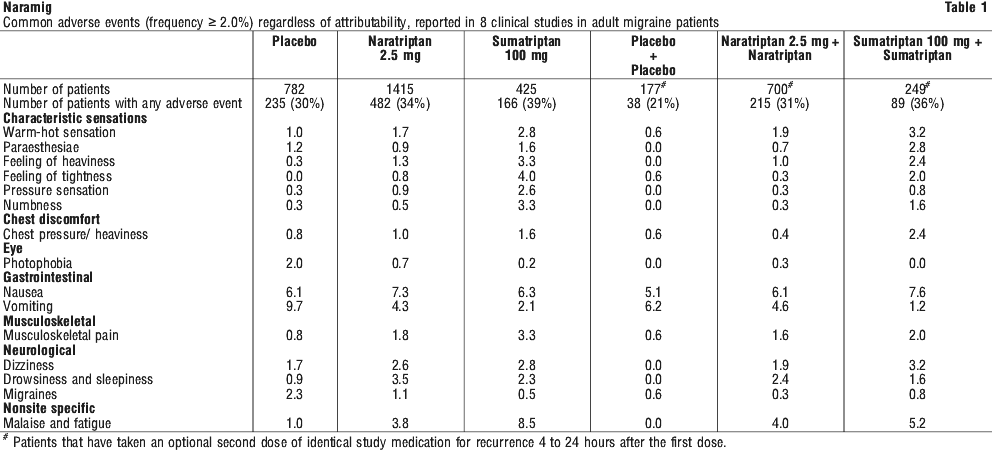
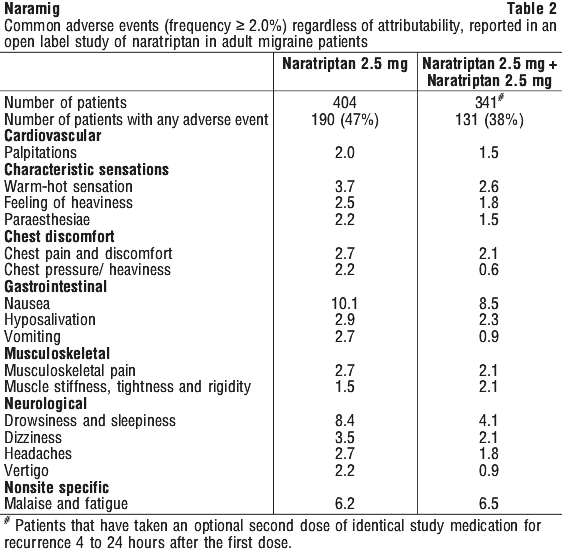
Nausea and vomiting commonly occurred but the relationship to naratriptan is not clear since the incidence was similar or greater with placebo.
There have been rare reports of ischaemic colitis.
Hypersensitivity reactions ranging from cutaneous hypersensitivity to rare cases of anaphylaxis have been reported.
Somnolence has been rarely reported.
Coronary artery vasospasm, transient ischaemic ECG changes, angina and myocardial infarction have been reported very rarely (see Section 4.3 Contraindications and Section 4.4 Special Warnings and Precautions for Use).
Peripheral vascular ischaemia has been reported very rarely.
Reporting suspected adverse effects. Reporting suspected adverse reactions after registration of the medicinal product is important. It allows continued monitoring of the benefit-risk balance of the medicinal product. Healthcare professionals are asked to report any suspected adverse reactions at www.tga.gov.au/reporting-problems.
4.9 Overdose
Administration of a high dose of naratriptan 25 mg in one healthy male subject increased systolic blood pressure by up to 71 mmHg and resulted in adverse events that included lightheadedness, tension in the neck, tiredness and a loss of coordination. Blood pressure returned to baseline by 8 hours after dosing without other pharmacological intervention.
It is unknown what effect haemodialysis or peritoneal dialysis has on the plasma concentration of naratriptan.
Treatment. If overdosage with naratriptan occurs, the patient should be monitored for at least 24 hours and standard supportive treatment applied as required.
For information on the management of overdose, contact the Poison Information Centre on 131126 (Australia).
5 Pharmacological Properties
5.1 Pharmacodynamic Properties
Mechanism of action. Naratriptan has been shown to be a selective agonist for 5-hydroxytryptamine1 (5HT1) receptors mediating vascular contraction. This receptor is found predominantly in intracranial (cerebral and dural) blood vessels. Naratriptan has high affinity for human cloned 5HT1B and 5HT1D receptors. The human 5HT1B receptor is thought to correspond to the vascular 5HT1 receptor mediating contraction of intracranial blood vessels. Naratriptan has little or no effect at other 5HT receptor (5HT2, 5HT3, 5HT4 and 5HT7) subtypes.
In animals, naratriptan selectively constricts the carotid arterial circulation. This circulation supplies blood to the extracranial and intracranial tissues such as the meninges. In humans, dilatation and/or oedema formation in these vessels is thought to be the underlying mechanism of migraine. In addition, experimental evidence suggests that naratriptan inhibits trigeminal nerve activity. Both these actions may contribute to the antimigraine action of naratriptan in humans.
Clinical trials. Seven clinical studies were conducted in 3907 adult (18-65 years) migraine patients in which a total of 15,283 attacks were treated with placebo, naratriptan tablets or sumatriptan tablets. Naratriptan tablets were used to treat at least one attack in 3204 adult patients.
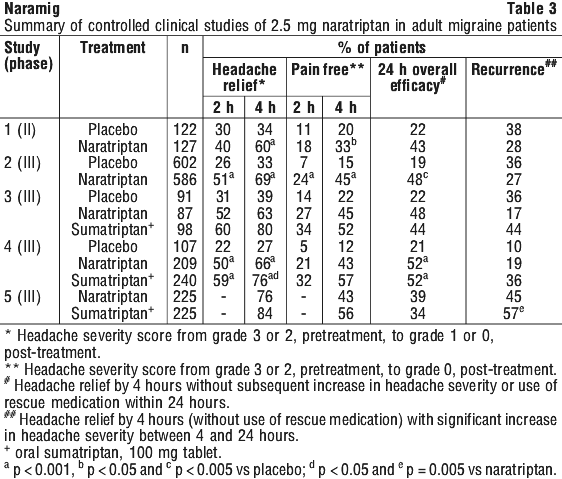
The primary efficacy parameters for adult migraine patients treated with placebo, naratriptan tablets 2.5 mg or sumatriptan tablets 100 mg in phase II or phase III studies are summarised in Table 3.
In studies that included sumatriptan 100 mg as comparator or control medication, naratriptan tablets 2.5 mg were shown to have lower incidence of recurrence but of similar 24 hour overall efficacy (Table 3, Studies 3, 4 and 5). Analysis of the secondary endpoints (migraine associated symptoms at 4 hours (nausea, photophobia or phonophobia), clinical disability at 4 hours or use of rescue medication within 24 hours) indicated that naratriptan tablets 2.5 mg were effective when compared to placebo.
Five phase III studies were conducted in adults in a nonclinical setting of doses of naratriptan tablets ranging from 0.1 mg to 2.5 mg in which patients were allowed to continue taking migraine prophylactic medication. Two of these studies included special objectives: a trial in patients with a high incidence of migraine recurrence (history of recurrence in ≥ 50% of successfully treated attacks) and a long-term (12 month) efficacy and safety study.
Interim 6 month data from the open label, 12 month safety study of naratriptan demonstrated the 2.5 mg tablet was efficacious and well tolerated in the acute treatment of migraine. A total of 7709 attacks were treated. Headache relief (at 4 hours) occurred in 68% of all attacks, and in 66% and 70% of attacks during 0 to 3 months and > 3 to 6 months, respectively. For patients treating ≤ 18 attacks during 6 months, headache relief was similar (62%) to patients treating > 18 attacks during the same period (70%).
There have been no adequate investigations of the safety and efficacy of naratriptan in patients younger than 18 years or older than 65 years.
5.2 Pharmacokinetic Properties
Absorption. Following oral administration, naratriptan is rapidly absorbed with maximum plasma concentrations observed at 2-3 hours. After administration of a naratriptan 2.5 mg tablet Cmax is approximately 8.3 nanogram/mL in women and 5.4 nanogram/mL in men.
Distribution. The oral bioavailability is 74% in women and 63% in men, with no differences in efficacy and tolerability in clinical use. Therefore, a gender related dose adjustment is not required. Plasma protein binding is low (29%) and the volume of distribution is 170 L. The mean elimination half-life (t1/2) is 6 hours. Mean clearance after intravenous administration is 470 mL/min in men and 380 mL/min in women. Renal clearance is similar in men and women (220 mL/min) and is higher than the glomerular filtration rate suggesting that naratriptan is actively secreted in the renal tubules.
Metabolism. In vitro studies showed that the metabolism of naratriptan by cytochrome P450 isoenzymes is very low and that no specific isoenzyme is involved. Consequently, significant metabolic drug interactions with naratriptan are not anticipated (see Section 4.4 Special Warnings and Precautions for Use and Section 4.5 Interactions with Other Medicines and Other Forms of Interactions).
Excretion. Naratriptan is predominantly excreted in the urine with 50% of the dose recovered as unchanged naratriptan and 30% recovered as inactive metabolites.
As renal excretion is the major route for the elimination of naratriptan, exposure to naratriptan may be increased in patients with renal disease. A study in male and female patients with renal impairment (creatinine clearance 18 to 115 mL/min, n = 15) showed 80% (approximate) increase in t1/2 and 50% (approximate) reduction in clearance when compared to healthy subjects (n = 8) (see Section 4.2 Dose and Method of Administration and Section 4.3 Contraindications).
A study in male and female patients with hepatic impairment (Child-Pugh grade A or B, n = 8) demonstrated a 40% (approximate) increase in t1/2 and a 30% (approximate) reduction in clearance when compared to healthy subjects (n = 8) (see Section 4.2 Dose and Method of Administration and Section 4.3 Contraindications).
The naratriptan AUC and Cmax were approximately 35% lower in males compared to females without differences in efficacy and tolerability in clinical use. Therefore a gender related dose adjustment is not required.
In healthy elderly subjects (age 65 to 77 years, n = 12), clearance was decreased by 26% when compared to healthy young subjects (age 24 to 44 years, n = 12) (see Section 4.4 Special Warnings and Precautions for Use).
5.3 Preclinical Safety Data
Genotoxicity. Naratriptan showed no evidence of genotoxicity in a series of assays for gene mutations (bacteria, yeast and mouse lymphoma cells). Tests for chromosomal damage in human lymphocytes in vitro and micronucleus formation in vivo showed that naratriptan was not clastogenic. However, naratriptan underwent nitrosation at acidic pH in vitro to yield a product or products which were bacterial mutagens. After oral administration of naratriptan to rats maintained on a high nitrite diet, nitroso derivatives of naratriptan were detected in the stomach. However, this did not increase the potential toxicity or carcinogenicity of naratriptan.
Carcinogenicity. In carcinogenicity studies, rats and mice were given naratriptan by oral gavage for 104 weeks. Plasma concentrations in rats and mice receiving the highest doses were at least 100 times greater than the exposure (based on AUC) attained in humans after the maximum recommended daily dose of 5 mg. The rat studies revealed an increased incidence of benign thyroid follicular cell adenoma at the highest dose tested.
6 Pharmaceutical Particulars
6.1 List of Excipients
Excipients included in the dosage form are: lactose, microcrystalline cellulose, croscarmellose sodium, magnesium stearate and Opadry Green OY-S-21027 (ARTG No 3062).
6.2 Incompatibilities
Incompatibilities were either not assessed or not identified as part of the registration of this medicine.
6.3 Shelf Life
3 years from date of manufacture.
6.4 Special Precautions for Storage
Store below 30°C.
6.5 Nature and Contents of Container
PA/Al/PVC/Al blisters packs contain 2, 4 or 6 tablets - also available in a 2 starter pack.
6.6 Special Precautions for Disposal
In Australia, any unused medicine or waste material should be disposed of by taking to your local pharmacy.
6.7 Physicochemical Properties
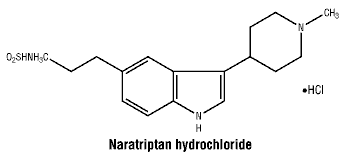
Naratriptan hydrochloride is the therapeutically active ingredient in Naramig tablets. The chemical name of naratriptan hydrochloride is 2-[3-(1-Methyl-piperidin-4-yl)-1H-indol-5-yl]- ethanesulphonic acid methylamide hydrochloride. Molecular formula: C17H25N3O2S. HCl. Molecular weight: 371.93.
Chemical structure.
7 Medicine Schedule (Poisons Standard)
S4.
Date of First Approval
03 June 1998
Date of Revision
25 June 2018
Summary Table of Changes

Reasonable care is taken to provide accurate information at the time of creation. This information is not intended as a substitute for medical advice and should not be exclusively relied on to manage or diagnose a medical condition. The Australian Commission on Safety and Quality in Health Care disclaims all liability (including for negligence) for any loss, damage, injury or any other negative effects resulting from reliance on or use of this information. Read our full disclaimer. This website uses cookies. Read our privacy policy.