
Narcan Injection
Brand Information
| Brand name | Narcan Injection |
| Active ingredient | Naloxone hydrochloride |
| Schedule | S3 | S4 |
Consumer Medicine Information (CMI) leaflet
Please read this leaflet carefully before you start using the Narcan Injection.
Summary CMI
Narcan® Injection
Consumer Medicine Information (CMI) summary
The full CMI on the next page has more details. If you are worried about using this medicine, speak to your doctor or pharmacist.
1. Why am I using Narcan Injection?
Narcan Injection contains the active ingredient naloxone hydrochloride. Narcan Injection is used to reverse the effects of opium-like substances such as morphine, heroin, and codeine.
For more information, see Section 1. Why am I using Narcan Injection? in the full CMI.
2. What should I know before I use Narcan Injection?
Do not use if you have ever had an allergic reaction to Narcan Injection or any of the ingredients listed at the end of the CMI.
Talk to your doctor if you have any other medical conditions, take any other medicines, or are pregnant or plan to become pregnant or are breastfeeding.
For more information, see Section 2. What should I know before I use Narcan Injection? in the full CMI.
3. What if I am taking other medicines?
Some medicines may interfere with Narcan Injection and affect how it works.
A list of these medicines is in Section 3. What if I am taking other medicines? in the full CMI.
4. How do I use Narcan Injection?
- Narcan Injection must only give by a doctor or nurse. They will decide what dose and how long you will receive it for. This depends on your medical condition and other factors.
More instructions can be found in Section 4. How do I use Narcan Injection? in the full CMI.
5. What should I know while using Narcan Injection?
| Things you should do |
|
| Driving or using machines |
|
| Drinking alcohol |
|
| Looking after your medicine |
|
For more information, see Section 5. What should I know while using Narcan Injection? in the full CMI.
6. Are there any side effects?
Narcan Injection may cause dizziness, headache, nausea, vomiting, pain at the site of the injection, sweating, tremor, increase in heart rate, nervousness, irritability, or restlessness, violent behaviour or agitation, shortness of breath, wheezing or difficulty breathing, swelling of the face, lips, tongue or other parts of the body, rash, itching or hives on the skin.
For more information, including what to do if you have any side effects, see Section 6. Are there any side effects? in the full CMI.
Full CMI
Narcan® Injection
Active ingredient: naloxone hydrochloride
Consumer Medicine Information (CMI)
This leaflet provides important information about using Narcan Injection. You should also speak to your doctor or pharmacist if you would like further information or if you have any concerns or questions about using Narcan Injection.
Where to find information in this leaflet:
1. Why am I using Narcan Injection?
2. What should I know before I use Narcan Injection?
3. What if I am taking other medicines?
4. How do I use Narcan Injection?
5. What should I know while using Narcan Injection?
6. Are there any side effects?
7. Product details
1. Why am I using Narcan Injection?
Narcan Injection contains the active ingredient naloxone hydrochloride. Narcan Injection belongs to a group of medicines called opioid antagonists.
Narcan Injection is used to reverse the effects of opium-like substances such as morphine, heroin, and codeine.
Your doctor may have prescribed it for another reason.
Ask your doctor if you have any questions about why this medicine has been prescribed for you. This medicine is available only with a doctor's prescription.
2. What should I know before I use Narcan Injection?
Warnings
Do not use Narcan Injection if:
- you are allergic to:
- naloxone hydrochloride
- any of the ingredients listed at the end of this leaflet.
Some of the symptoms of an allergic reaction may include:
- shortness of breath
- wheezing or difficulty breathing
- swelling of the face, lips, tongue, or other parts of the body
- rash, itching or hives on the skin.
- Always check the ingredients to make sure you can use this medicine.
Check with your doctor if you:
- have allergies to any medicines, food, preservatives or dyes
- have or have had the following medical conditions:
- heart disease
- lung disease
- kidney disease
- liver disease
- drug addiction (including and addiction to alcohol).
You should not be given Narcan Injection if:
- the solution is discoloured, cloudy, turbid, or a precipitate is present. The injection is normally a clear colourless solution.
If you are not sure whether you should be given Narcan Injection talk to your doctor.
During treatment, you may be at risk of developing certain side effects. It is important you understand these risks and how to monitor for them. See additional information under Section 6. Are there any side effects?
Pregnancy and breastfeeding
Check with your doctor if you are pregnant or intend to become pregnant.
Talk to your doctor if you are breastfeeding or intend to breastfeed.
If you have not told your doctor about any of the above, tell them before you are given Narcan Injection.
3. What if I am taking other medicines?
Tell your doctor or pharmacist if you are taking other medicines, including any medicines, vitamins or supplements that you by without a prescription from your pharmacy, supermarket, health food shop, herbalist or naturopath.
Some medicines may interfere with Narcan Injection and affect how it works.
These include but are not limited to:
- pain killers
- cough and cold remedies
- alcohol
- heart or blood pressure medications.
These medicines may be affected by Narcan Injection or may affect how well Narcan Injection works. You may need different amounts of your medicines, or you may need to take difference medicines.
Check with your doctor or pharmacist if you are not sure about what medicines, vitamins or supplements you are taking and if these affect Narcan Injection.
4. How do I use Narcan Injection?
Narcan Injection must only be given by a doctor or a healthcare professional.
How it is given
Narcan Injection can be given:
- as an injection into a muscle (intramuscular)
- just under the skin (subcutaneous) or
- as a slow injection into a vein (intravenous).
How much is given
- Your doctor will decide what dose of Narcan Injection you will receive and how long you will receive it for. This depends on your medical condition and other factors.
- Sometimes only a single dose of Narcan Injection is required.
When to use Narcan Injection
- to reverse the effects of opium-like substances such as morphine, heroin, and codeine.
If you are given too much Narcan Injection
Overdose is unlikely to occur as Narcan Injection is always given to you under the supervision of a doctor. Symptoms of an overdose may be the same as side effects but may be more severe. The symptoms of a side effect are listed under 6. Are there any side effects? below.
You should immediately:
- phone the Poisons Information Centre
(by calling 13 11 26), or - contact your doctor, or
- go to the Emergency Department at your nearest hospital.
You should do this even if there are no signs of discomfort or poisoning.
5. What should I know while using Narcan Injection?
Things you should do
If you are about to be started on any new medicine, remind your doctor and pharmacist that you have been given Narcan Injection.
Tell any other doctors, dentists, and pharmacists who treat you that you have been given Narcan Injection.
If you are going to have surgery, tell the surgeon or anaesthetist that you have been given Narcan Injection. It may affect other medicines used during the surgery.
If you are about to have any blood tests, tell your doctor that you are being given this medicine. It may interfere with the results of some tests.
If you are on a salt restricted diet, tell you doctor that you are taking this medicine. Your diet may need to be changed.
If you feel light-headed, dizzy, or faint when getting out of bed or standing up, get up slowly.
Standing up slowly, especially when you get up from a bed or a chair, will help your body get used to the change in position and blood pressure. If this problem continues to get worse talk to your doctor.
Call your doctor straight away if you:
- become pregnant while being given Narcan Injection.
Remind any doctor, dentist, pharmacist, or nurse you visit that you have been given Narcan Injection.
Driving or using machines
Do not drive or operate machinery for at least 24 hours (1 day) after you have been given Narcan Injection.
Drinking alcohol
Do not drink alcohol while you are being given this medicine.
Looking after your medicine
- Narcan Injection will be stored in the hospital or pharmacy. The medicine is kept in a cool dry place, protected from light, where the temperature stays below 25°C.
- Narcan Injection will only be opened when it is time for you to have the injection.
Keep it where young children cannot reach it.
6. Are there any side effects?
Narcan Injection helps most people reverse the life threatening opioid overdose, but it may have unwanted side effects in a few people.
All medicines can have side effects. If you do experience any side effects, most of them are minor and temporary. However, some side effects may need medical attention.
See the information below and, if you need to, ask your doctor or pharmacist if you have any further questions about side effects.
Do not be alarmed by the following list of side effects. You may not experience any of them.
Less serious side effects
| Less serious side effects | What to do |
Pain at the site of the injection may be experienced. Other side effects may include: Nervous system:
| Speak to your doctor if you have any of these less serious side effects and they worry you. This list includes the more common side effects of your medicine. |
Serious side effects
| Serious side effects | What to do |
Cardiovascular:
| Call your doctor straight away or go straight to the Emergency Department at your nearest hospital if you notice any of these serious side effects. |
Very serious side effects
| Very serious side effects | What to do |
Swelling of the face, lips, tongue or other parts of the body may be experienced. Other side effects may include: Respiratory:
| Call your doctor straight away or go straight to the Emergency Department at your nearest hospital if you notice any of these serious side effects. These side effects are very rare. |
Tell your doctor or pharmacist if you notice anything else that may be making you feel unwell.
Other side effects not listed here may occur in some people.
Reporting side effects
After you have received medical advice for any side affects you experience, you can report side effects to the Therapeutic Goods Administration online at www.tga.gov.au/reporting-problems. By reporting side effects, you can help provide more information on the safety of this medicine.
Always make sure you speak to your doctor or pharmacist before you decide to stop taking any of your medicines.
7. Product details
This medicine is only available with a doctor's prescription.
What Narcan Injection contains
| Active ingredient (main ingredient) | naloxone hydrochloride |
| Other ingredients (inactive ingredients) | sodium chloride hydrochloric acid water for injections |
Do not take this medicine if you are allergic to any of these ingredients.
Narcan Injection does not contain lactose, sucrose, gluten, tartrazine, alcohol, dyes or any preservatives.
What Narcan Injection looks like
Narcan Injection is a clear, colourless solution in ampoules of 2 mL capacity. (AUST R 57306).
Phebra product code: INJ174.
Who distributes Narcan Injection
Narcan Injection is supplied in Australia by:
Phebra Pty Ltd
19 Orion Road, Lane Cove West,
NSW 2066, Australia.
Telephone: 1800 720 020.
This leaflet was prepared in Jul 2021.
Narcan, Phebra and the Phi symbol are trademarks of Phebra Pty Ltd, 19 Orion Road, Lane Cove West, NSW 2066, Australia.

Brand Information
| Brand name | Narcan Injection |
| Active ingredient | Naloxone hydrochloride |
| Schedule | S3 | S4 |
MIMS Revision Date: 01 September 2021
1 Name of Medicine
Naloxone hydrochloride dihydrate.
2 Qualitative and Quantitative Composition
Narcan Injection is available as naloxone hydrochloride (as dihydrate) 400 micrograms in 1 mL of water for injections.
For the full list of excipients, see Section 6.1 List of Excipients.
3 Pharmaceutical Form
Narcan Injection is available as a clear colourless sterile solution for intravenous, intramuscular and subcutaneous administration in a clear glass ampoule.
4 Clinical Particulars
4.1 Therapeutic Indications
Narcan Injection is indicated for the complete or partial reversal of opioid depression, including respiratory depression, induced by opioids including natural and synthetic opioids, propoxyphene, methadone and the narcotic antagonist analgesics: nalbuphine, pentazocine and butorphanol. Narcan Injection is also indicated for the diagnosis of suspected acute opioid overdosage.
4.2 Dose and Method of Administration
Narcan Injection may be administered intravenously, intramuscularly, or subcutaneously. The most rapid onset of action is achieved by intravenous administration and it is recommended in emergency situations.
Since the duration of action of some opioids may exceed that of Narcan Injection the patient should be kept under continued surveillance, and repeated doses of Narcan Injection should be administered, as necessary.
Use in one patient on one occasion only and discard. Contains no antimicrobial preservative.
Intravenous infusion. Narcan Injection may be diluted for intravenous infusion in normal saline (sodium chloride solution) or 5% glucose solutions. The addition of 2 mg of Narcan Injection in 500 mL of either solution provides a concentration of 4 microgram/mL. Mixtures should be used within 24 hours. After 24 hours, the remaining unused solution must be discarded. The rate of administration should be titrated in accordance with the patient's response.
Parenteral drug products should be inspected visually for particulate matter and discolouration prior to administration whenever solution and container permit. Narcan Injection should not be mixed with preparations containing bisulphite, metabisulphite, long chain or high molecular weight anions, or any solution having an alkaline pH. No drug or chemical agent should be added to Narcan Injection unless its effect on the chemical and physical stability of the solution has first been established.
Usage in adults. Opioid overdose - known or suspected. An initial dose of 400 microgram to 2 mg of Narcan Injection may be administered intravenously. If the desired degree of counteraction and improvement in respiratory functions is not obtained it may be repeated at 2 to 3 minute intervals. If no response is observed after 10 mg of Narcan Injection have been administered, the diagnosis of opioid induced or partial narcotic induced toxicity should be questioned. Intramuscular or subcutaneous administration may be necessary if the intravenous route is not available.
Post-operative opioid depression. For the partial reversal of opioid depression following the use of opioids during surgery, smaller doses of Narcan Injection are usually sufficient. The dose of Narcan Injection should be titrated according to the patient and response. For the initial reversal of respiratory depression, Narcan Injection should be injected in increments of 100 to 200 microgram intravenously at two to three minute intervals to the desired degree of reversal, i.e. adequate ventilation and alertness without significant pain or discomfort. Larger than necessary dosage of Narcan Injection may result in significant reversal of analgesia and increase in blood pressure. Similarly, too rapid reversal may induce nausea, vomiting, sweating or circulatory stress.
Repeat doses of Narcan Injection may be required at one to two hour intervals depending upon the amount, type (i.e. short or long acting) and time since last administration of opioid. Supplemental intramuscular doses have been shown to produce a longer lasting effect.
Usage in children. Opioid overdose - known or suspected. The usual initial dose in children is 10 microgram/kg bodyweight given intravenously. If this dose does not result in the desired degree of clinical improvement a subsequent dose of 100 microgram/kg bodyweight may be administered. If the intravenous route of administration is not available, Narcan Injection may be administered by intramuscular or subcutaneous Injection in divided doses.
If necessary Narcan Injection can be diluted with sterile water for injections.
Post-operative opioid depression. Follow the recommendations and cautions under Adult postoperative depression. For the initial reversal of respiratory depression. Narcan Injection should be injected in increments of 5 microgram to 10 microgram intravenously at two to three minute intervals to the desired degree of reversal.
Usage in neonates. Opioid induced depression. The usual initial dose is 10 microgram/kg bodyweight administered by intravenous, intramuscular or subcutaneous injection. This dose may be repeated in accordance with the adult administration guidelines for postoperative opioid depression.
4.3 Contraindications
Narcan Injection is contraindicated in patients known to be hypersensitive to naloxone hydrochloride or to any other ingredients in Narcan Injection.
4.4 Special Warnings and Precautions for Use
Narcan Injection should be administered cautiously to persons including newborns of mothers who are known or suspected to be physically dependent on opioids. In such cases an abrupt and complete reversal of opioid effects may precipitate an acute withdrawal syndrome.
The signs and symptoms of opioid withdrawal in patients physically dependent on opioids may include, but are not limited to, the following: body aches, diarrhoea, tachycardia, fever, runny nose, sneezing, piloerection, sweating, yawning, nausea and vomiting, nervousness, restlessness or irritability, shivering or trembling, abdominal cramps, weakness, and increased blood pressure. In the neonate opioid withdrawal may also include convulsions, excessive crying and hyperactive reflexes.
The patient who has satisfactorily responded to Narcan Injection should be kept under continued surveillance and repeated doses of Narcan Injection should be administered, as necessary, since the duration of action of some opioids may exceed that of Narcan Injection. Large doses of naloxone hydrochloride in postoperative patients may result in a clear reversal in analgesia, excitement and an elevation in blood pressure. A reversal of opioid effects achieved too rapidly may induce nausea, vomiting, sweating or tachycardia.
Narcan Injection is not effective against respiratory depression due to non-opioid drugs.
Reversal of buprenorphine induced respiratory depression may be incomplete. If an incomplete response occurs, respiration should be mechanically assisted.
In addition to Narcan Injection, other resuscitative measures such as maintenance of a free airway, artificial ventilation, cardiac massage, and vasopressor agents should be available and employed when necessary to counteract acute opioid poisoning.
Abrupt postoperative reversal of opioid depression may result in nausea, vomiting, sweating, tremulousness, tachycardia, increased blood pressure, seizures, ventricular tachycardia and fibrillation, pulmonary oedema and cardiac arrest which may result in death.
Several instances of hypotension, hypertension, ventricular tachycardia and fibrillation, pulmonary oedema and cardiac arrest have been reported in postoperative patients following naloxone administration. Death, coma and encephalopathy have been reported as sequelae of these events. These have occurred in postoperative patients most of whom had pre-existing cardiovascular disorders or received other drugs which may have similar adverse cardiovascular effects. Although a direct cause and effect relationship has not been established, Narcan Injection should be used with caution in patients with pre-existing cardiac disease or patients who have received medications with potential adverse cardiovascular effects, such as hypotension, ventricular tachycardia or fibrillation and pulmonary oedema. It has been suggested that the pathogenesis of pulmonary oedema associated with the use of Narcan Injection is similar to neurogenic pulmonary oedema, i.e. a centrally mediated massive catecholamine response leading to a dramatic shift of blood volume into the pulmonary vascular bed resulting in increased hydrostatic pressures.
Narcan Injection should also be used with caution in patients with pre-existing pulmonary disease, since sudden exacerbation of underlying pulmonary disease may occur.
Each 1 mL ampoule contains 3.54 mg of sodium which corresponds to 17.7 mg of sodium per 2 mg dose (5 mL) of naloxone hydrochloride and to 3.8 mmol (88.5 mg) of sodium per maximum daily dose of 10 mg naloxone hydrochloride. This should be taken into consideration by patients on a controlled sodium diet.
Use in hepatic impairment. The safety and effectiveness of Narcan Injection in patients with liver disease have not been established in well controlled clinical trials. In one small study in patients with liver cirrhosis, plasma naloxone hydrochloride concentrations were approximately six times higher than in patients without liver disease. Caution should be exercised when Narcan Injection is administered to patients with hepatic disease.
Use in renal impairment. The safety and effectiveness of Narcan Injection in patients with renal insufficiency/ failure have not been established in well controlled clinical trials. Caution should be exercised when Narcan Injection is administered to this patient population.
Use in the elderly. No data available.
Paediatric use. See Section 4.2 Dose and Method of Administration, Usage in children and Usage in neonates.
Effects on laboratory tests. No data available.
4.5 Interactions with Other Medicines and Other Forms of Interactions
The effect of Narcan Injection is based on the interaction with opioids and opioid agonists, reversing effects of opioids; rapid reversal may precipitate acute withdrawal syndrome in opioid dependence. At the usual Narcan Injection dose there is no interaction with barbiturates and tranquilizers. Data on the interaction with alcohol are not uniform. In patients with multiple intoxication with opioids and sedatives or alcohol, the result of Narcan Injection administration may be delayed, dependent on the cause of intoxication.
Complete analgesia can be restored following administration of Narcan Injection to patients that had buprenorphine as analgesic. It is assumed that this effect is caused by the arched form of the dose response curve of buprenorphine with decreasing analgesia at (too) high doses. However, reversal of respiratory depression caused by buprenorphine is limited.
Serious hypertension has been reported following administration of naloxone hydrochloride to patients in a coma caused by clonidine overdosing.
Narcan Injection reverses the analgesic and other effects of opioid agonist/ antagonists such as pentazocine, so may precipitate withdrawal symptoms if used concurrently with these medicines in physically dependent patients.
Narcan Injection reverses the analgesic and other effects of opioid agonist analgesics, and may precipitate withdrawal symptoms if used concurrently with these medicines in physically dependent patients, including patients receiving methadone to treat opioid dependence.
When Narcan Injection is used postoperatively to reverse the central depressive effects of opioid agonists used as anaesthesia adjuncts, the dose of naloxone must be carefully titrated to achieve the desired effect without interfering with control of postoperative pain, or causing other adverse effects.
No drug or chemical agent should be added to Narcan Injection unless its effect on the chemical and physical stability of the solution has first been established. Narcan Injection should not be mixed with preparations containing sulfite, metabisulfite, long chain or high molecular weight anions, or any solution having an alkaline pH.
4.6 Fertility, Pregnancy and Lactation
Effects on fertility. Reproductive studies in mice and rats demonstrated no impairment of fertility.
Use in pregnancy. (Category B1)
Teratogenic effects. Reproduction studies performed in mice and rats at high subcutaneous doses, revealed no evidence of impaired fertility or harm to the foetus due to Narcan Injection. There are, however, no adequate and well controlled studies in pregnant women. Because animal reproduction studies are not always predictive of human response, Narcan Injection should, therefore, be administered to pregnant patients only when, in the judgement of the physician, the potential benefits outweigh the possible hazards.
Non-teratogenic effects. Risk/ benefit must be considered before Narcan Injection is administered to a pregnant woman who is known or suspected to be opioid dependent since maternal dependence may often be accompanied by foetal dependence. Naloxone crosses the placenta and may precipitate withdrawal in the foetus as well as in the mother.
Use in labour and delivery. It is not known if Narcan Injection affects the duration of labour and/or delivery.
Use in lactation. It is not known whether Narcan Injection is excreted in human milk. Because many drugs are excreted in human milk, caution should be exercised when Narcan Injection is administered to a nursing woman.
4.7 Effects on Ability to Drive and Use Machines
No studies on the effects on the ability to drive and use machines have been performed.
Patients who have received naloxone hydrochloride to reverse the effect of opioids should be warned not to take part in road traffic, to operate machinery or to engage in other activities demanding physical or mental exertion for at least 24 hours, since the effect of the opioids may return.
4.8 Adverse Effects (Undesirable Effects)
The following undesirable effects are ranked according to system organ class and to their frequency.
Within each frequency grouping, undesirable effects are presented in order of decreasing seriousness.
Very common (≥ 1/10).
Common (≥ 1/100 to < 1/10).
Uncommon (≥ 1/1,000 to < 1/100).
Rare (≥ 1/10,000 to < 1/1,000).
Very rare (< 1/10,000).
Not known (cannot be estimated from the available data).
Immune system disorders. Very rare: allergic reactions (urticaria, rhinitis, dyspnoea, Quincke's oedema), anaphylactic shock.
Nervous system disorders. Common: dizziness, headache.
Uncommon: tremor, sweating.
Rare: seizures, tension.
Seizures have occurred rarely following administration of naloxone hydrochloride; however, a causal relationship to the drug has not been established.
Cardiac disorders. Common: tachycardia.
Uncommon: arrhythmia, bradycardia.
Very rare: fibrillation, cardiac arrest.
Vascular disorders. Common: hypotension, hypertension.
Respiratory, thoracic and mediastinal disorders. Very rare: pulmonary oedema.
Gastrointestinal disorders. Very common: nausea.
Common: vomiting.
Uncommon: diarrhoea, dry mouth.
Skin and subcutaneous tissue disorders. Very rare: erythema multiforme.
One case of erythema multiforme cleared promptly after naloxone hydrochloride was discontinued.
General disorders and administration site conditions. Common: postoperative pain.
Uncommon: hyperventilation, irritation of vessel wall (after i.v. administration).
Post-operative. The following adverse events have been associated with the use of Narcan Injection in postoperative patients: hypotension, ventricular tachycardia or fibrillation, dyspnoea, pulmonary oedema, and cardiac arrest. Death, coma, and encephalopathy have been reported as sequelae of these events. Adverse cardiovascular effects have occurred most frequently in postoperative patients with a pre-existing cardiovascular disease or in those receiving other drugs that produce similar adverse cardiovascular effects.
Excessive doses of Narcan Injection in postoperative patients may result in significant reversal of analgesia and may cause agitation (see Section 4.4 Special Warnings and Precautions for Use; Section 4.2 Dose and Method of Administration, Usage in adults, Post-operative opioid depression).
Nausea and vomiting have been reported in postoperative patients who have received doses higher than recommended. However, a causal relationship has not been established, and the symptoms may be signs of too rapid antagonisation of the opioid effect.
Higher than recommended dosage in postoperative use can lead to the return of pain.
A fast reversal of opioid effect can induce hyperventilation.
Opioid depression. Abrupt reversal of opioid depression may result in nausea, vomiting, sweating, tachycardia, increased blood pressure, tremulousness, seizures, ventricular tachycardia and fibrillation, pulmonary oedema, and cardiac arrest which may result in death (see Section 4.4 Special Warnings and Precautions for Use).
Opioid dependence (see Section 4.4 Special Warnings and Precautions for Use). Agitation and paraesthesias have been infrequently reported with the use of Narcan Injection (naloxone hydrochloride, USP).
Drug abuse and dependence. Narcan Injection is an opioid antagonist.
Reporting suspected adverse effects. Reporting suspected adverse reactions after registration of the medicinal product is important. It allows continued monitoring of the benefit-risk balance of the medicinal product. Healthcare professionals are asked to report any suspected adverse reactions at www.tga.gov.au/reporting-problems.
4.9 Overdose
There is limited clinical experience with Narcan Injection overdosage in humans.
In a study, 36 patients with acute stroke received a loading dose of 4 mg/kg (10 mg/m2/min) of Narcan Injection followed immediately by 2 mg/kg/hour for 24 hours. There were a few reports of serious adverse events: seizures (2 patients), severe hypertension (1), and hypotension and/or bradycardia (3). At doses of 2 mg/kg in normal subjects, memory impairment has been reported.
Patient management. Patients who experience a Narcan Injection overdose should be treated symptomatically in a closely supervised environment. Physicians should contact a poison control centre for the most up to date patient management information.
Some chemical impurities in naloxone hydrochloride, i.e. noroxymorphone and bisnaloxone, have been shown to produce emesis in dogs when administered alone at intravenous doses equivalent to impurity levels present in naloxone at 60 times the usual human dose (10 mg/day).
For information on the management of overdose, contact the Poisons Information Centre on 131126 (Australia).
5 Pharmacological Properties
5.1 Pharmacodynamic Properties
Mechanism of action. Narcan Injection, an opioid antagonist, is a synthetic congener of oxymorphone. In structure it differs from oxymorphone in that the methyl group on the nitrogen atom is replaced by an allyl group.
Narcan Injection prevents or reverses the effects of opioids including respiratory depression, sedation and hypotension. Also, it can reverse the psychotomimetic and dysphoric effects of agonist-antagonists such as pentazocine.
Narcan Injection is an essentially pure opioid antagonist, i.e. it does not possess the agonistic or morphine-like properties characteristic of other opioid antagonists. Narcan Injection does not produce respiratory depression, psychotomimetic effects of pupillary constriction. In the absence of opioid or agonistic effects of other opioid antagonists it exhibits essentially no pharmacologic activity.
Narcan Injection has not been shown to produce tolerance or to cause physical or psychological dependence.
In the presence of physical dependence on opioids, Narcan Injection will produce withdrawal symptoms.
While the mechanism of action of Narcan Injection is not fully understood, the preponderance of evidence suggests that Narcan Injection antagonises the opioid effects by competing for the same receptor sites.
Clinical trials. No data available.
5.2 Pharmacokinetic Properties
Absorption. When Narcan Injection is administered intravenously the onset of action is generally apparent within two minutes; the onset of action is only slightly less rapid when it is administered subcutaneously or intramuscularly. The duration of action is dependent upon the dose and route of administration of Narcan Injection. Intramuscular administration produces a more prolonged effect than intravenous administration. The requirement for repeat doses of Narcan Injection, however, will also be dependent upon the amount, type and route of administration of the opioid being antagonised.
Distribution. Following parenteral administration, Narcan Injection is rapidly distributed in the body.
Metabolism. Narcan Injection is metabolised in the liver, primarily by glucuronide conjugation.
Excretion. Narcan Injection is excreted in the urine. In one study the serum half-life in adults ranged from 30 to 81 minutes (mean 64 ± 12 minutes). In a neonatal study the mean plasma half-life was observed to be 3.1 ± 0.5 hours.
5.3 Preclinical Safety Data
Genotoxicity. Not data available.
Carcinogenicity. Not data available.
6 Pharmaceutical Particulars
6.1 List of Excipients
Narcan Injection is 400 microgram of naloxone hydrochloride (as dihydrate) in 1 mL of water for injections. Each 1 mL of Narcan Injection contains 9.0 mg of sodium chloride. The pH is adjusted to 3.5 ± 0.5 with hydrochloric acid. Contains no antimicrobial preservative.
6.2 Incompatibilities
Incompatibilities were either not assessed or not identified as part of the registration of this medicine.
6.3 Shelf Life
In Australia, information on the shelf life can be found on the public summary of the Australian Register of Therapeutic Goods (ARTG)1. The expiry date can be found on the packaging.
1AUST R 57306.
6.4 Special Precautions for Storage
Store below 30°C. Protect from light.
6.5 Nature and Contents of Container
Narcan Injection is presented as a 1 mL clear glass ampoule with a red colourbreak point.
It is supplied in a pack of 10 ampoules.
Phebra product code - INJ174.
6.6 Special Precautions for Disposal
In Australia, any unused medicine or waste material should be disposed of by taking to your local pharmacy.
6.7 Physicochemical Properties
Naloxone hydrochloride dihydrate occurs as a white to slightly off-white powder, and is soluble in water, in dilute acids, and in strong alkalis, slightly soluble in alcohol: practically insoluble in ether and in chloroform.
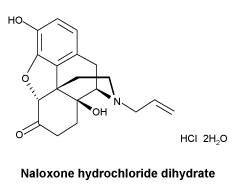
The molecular weight of naloxone hydrochloride dihydrate is 399.87. The molecular formula for naloxone hydrochloride dihydrate is C19H21NO4.HCl.2H2O.
Chemical name: (5α)-4,5-epoxy-3,14-dihydroxy-17-(2-propenyl) morphinan-6-one hydrochloride dihydrate.
Chemical structure.
7 Medicine Schedule (Poisons Standard)
Schedule 4 - Prescription Only Medicine.
Date of First Approval
02 October 1997
Date of Revision
22 July 2021
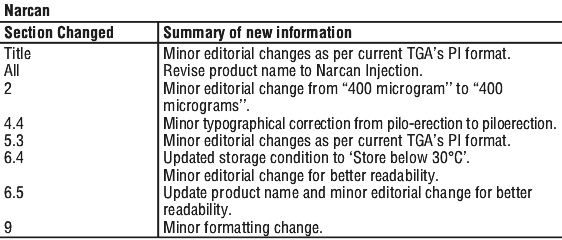
Summary Table of Changes
Reasonable care is taken to provide accurate information at the time of creation. This information is not intended as a substitute for medical advice and should not be exclusively relied on to manage or diagnose a medical condition. The Australian Commission on Safety and Quality in Health Care disclaims all liability (including for negligence) for any loss, damage, injury or any other negative effects resulting from reliance on or use of this information. Read our full disclaimer. This website uses cookies. Read our privacy policy.