
Neo-Mercazole
Brand Information
| Brand name | Neo-Mercazole |
| Active ingredient | Carbimazole |
| Schedule | S4 |
Consumer Medicine Information (CMI) leaflet
Please read this leaflet carefully before you start using the Neo-Mercazole.
Summary CMI
Neo-Mercazole
Consumer Medicine Information (CMI) summary
The full CMI on the next page has more details. If you are worried about using this medicine, speak to your doctor or pharmacist.
1. Why am I using Neo-Mercazole?
Neo-Mercazole contains the active ingredient carbimazole. Neo-Mercazole is used to treat hyperthyroidism or overactive thyroid gland (a condition where the thyroid gland produces too much thyroid hormone).
For more information, see Section 1. Why am I using Neo-Mercazole? in the full CMI.
2. What should I know before I take Neo-Mercazole?
Do not use if you have ever had an allergic reaction to Neo-Mercazole or any of the ingredients listed at the end of the CMI.
Talk to your doctor if you have any other medical conditions, take any other medicines, or are pregnant or plan to become pregnant or are breastfeeding.
For more information, see Section 2. What should I know before I take Neo-Mercazole? in the full CMI.
3. What if I am taking other medicines?
Some medicines may interfere with Neo-Mercazole and affect how it works.
A list of these medicines is in Section 3. What if I am taking other medicines? in the full CMI.
4. How do I take Neo-Mercazole?
Take Neo-Mercazole exactly as your doctor has prescribed. Your doctor will tell you how many Neo-Mercazole tablets to take each day. Swallow the tablets whole with a glass of water. Do not chew the tablets.
More instructions can be found in Section 4. How do I take Neo-Mercazole? in the full CMI.
5. What should I know while taking Neo-Mercazole?
| Things you should do | Remind any doctor, dentist or pharmacist you visit that you are taking Neo-Mercazole. Call your doctor straight away if you:
|
| Things you should not do |
|
| Driving or using machines | Be careful before you drive or use any machines or tools until you know how Neo-Mercazole affects you. |
| Looking after your medicine | Keep your tablets in the bottle until it is time to take them. Keep your tablets in a cool dry place where the temperature stays below 25°C. |
For more information, see Section 5. What should I know while taking Neo-Mercazole? in the full CMI.
6. Are there any side effects?
- Less serious side effects: nausea, headache, pain in joints, stomach upsets, skin rashes, itchiness, loss of sense of taste, hair loss.
- Serious side effects: abdominal pain, rash on the hands and feet, facial swelling, hoarseness, difficulty breathing, blood in the urine, fever, fatigue, weight loss, muscle pain.
- Very serious side effects: liver pain or yellowing of your skin or the whites of your eyes; sore throat, mouth ulcers, high temperature or fever, increased tendency for bruising or bleeding, extreme tiredness.
For more information, including what to do if you have any side effects, see Section 6. Are there any side effects? in the full CMI.
Full CMI
Neo-Mercazole
Active ingredient(s): carbimazole
Consumer Medicine Information (CMI)
This leaflet provides important information about using Neo-Mercazole.
You should also speak to your doctor or pharmacist if you would like further information or if you have any concerns or questions about using Neo-Mercazole.
Where to find information in this leaflet:
1. Why am I using Neo-Mercazole?
2. What should I know before I take Neo-Mercazole?
3. What if I am taking other medicines?
4. How do I take Neo-Mercazole?
5. What should I know while taking Neo-Mercazole?
6. Are there any side effects?
7. Product details
1. Why am I using Neo-Mercazole?
Neo-Mercazole contains the active ingredient carbimazole.
Neo-Mercazole is a medicine which belongs to the group of medicines called anti-hyperthyroidism agents. These medicines work by reducing the production of thyroid hormones.
Neo-Mercazole is used to treat hyperthyroidism or overactive thyroid gland (a condition where the thyroid gland produces too much thyroid hormone).
2. What should I know before I take Neo-Mercazole?
Warnings
Do not use Neo-Mercazole if:
- you are allergic to carbimazole, or any of the ingredients listed at the end of this leaflet.
- Always check the ingredients to make sure you can use this medicine.
Do not take Neo-Mercazole if you have any of the following medical conditions:
- growth of the thyroid gland downwards from the neck into the chest (retrosternal goitre)
- serious blood disorder
- severe liver disorder
- airway obstruction
- inflammation of the pancreas (acute pancreatitis) after administration of carbimazole or thiamazole.
Check with your doctor if you:
- have any other medical conditions, mild or moderate liver disorder
- allergic reaction to thiamazole or propylthiouracil (medicines used to treat thyroid disorders).
During treatment, you may be at risk of developing certain side effects. It is important you understand these risks and how to monitor them. See additional information under Section 6. Are there any side effects?
Pregnancy and breastfeeding
Check with your doctor if you are pregnant or intend to become pregnant.
If you get pregnant, use reliable contraception from the time you start treatment and during treatment.
Neo-Mercazole can cause harm to an unborn baby.
Talk to your doctor if you are breastfeeding or intend to breastfeed.
Neo-Mercazole crosses the placenta and passes into breast milk. Your doctor can discuss with you the risks and benefits of using Neo-Mercazole if you are pregnant or breastfeeding.
3. What if I am taking other medicines?
Tell your doctor or pharmacist if you are taking any other medicines, including any medicines, vitamins or supplements that you buy without a prescription from your pharmacy, supermarket or health food shop.
Some medicines may interfere with Neo-Mercazole and affect how it works.
- iodine or any preparation containing iodine
- theophylline, used to treat asthma or breathing problems
- medicine s called anticoagulants, which are used to thin blood e.g. warfarin
- prednisolone, used to treat allergic disorders, skin conditions, ulcerative colitis, arthritis, lupus, psoriasis or breathing disorders
- erythromycin, used to treat bacterial infections
- digitalis, used to treat heart conditions
- beta-blockers, used to treat heart conditions and high blood pressure.
These medicines may be affected by Neo-Mercazole or may affect how well it works. You may need to use different amounts of your medicines, or you may need to take different medicines.
Check with your doctor or pharmacist if you are not sure about what medicines, vitamins or supplements you are taking and if these affect Neo-Mercazole.
4. How do I take Neo-Mercazole?
How much to take
- Take Neo-Mercazole exactly as your doctor has prescribed.
- Your doctor will tell you how many Neo-Mercazole tablets to take each day.
- Be sure to keep your appointments with your doctor so that your progress can be checked.
- Your dose of Neo-Mercazole may change from time to time according to your progress.
When to take Neo-Mercazole
- Take your medicine at about the same time each day.
- Taking it at the same time each day will have the best effect. It will also help you remember when to take it.
How to take Neo-Mercazole
- Swallow the tablets whole with a glass of water.
- Do not chew the tablets.
How to long to take Neo-Mercazole
- Continue taking your medicine for as long as your doctor tells you
If you forget to take Neo-Mercazole
Neo-Mercazole should be used regularly at the same time each day.
If it is almost time for your next dose, skip the dose you missed and take your next dose when you are meant to.
Do not take a double dose to make up for the dose you missed.
Otherwise, take it as soon as you remember and then go back to taking your medicine as you would normally.
If you are not sure what to do, ask your doctor or pharmacist. If you have trouble remembering your dose, ask your
pharmacist for some hints.
If you use too much Neo-Mercazole
If you think that you have used too much Neo-Mercazole, you may need urgent medical attention.
You should immediately:
- phone the Poisons Information Centre (by calling 13 11 26), or
- contact your doctor, or
- go to the Emergency Department at your nearest hospital.
You should do this even if there are no signs of discomfort or poisoning.
5. What should I know while taking Neo-Mercazole?
Things you should do
Call your doctor straight away if you:
- become pregnant while taking Neo-Mercazole.
- develop fever or abdominal pain, as these may be signs of inflammation of the pancreas (acute pancreatitis)
- develop fatigue, weight loss and muscle and joint pain, as these may be signs of inflammation of the blood vessels (vasculitis)
You may need to stop taking Neo-Mercazole.
Remind any doctor, dentist or pharmacist you visit that you are using Neo-Mercazole.
Things you should not do
- Do not stop using this medicine suddenly or change the dosage without checking with your doctor.
- Do not let yourself run out of medicine over the weekend or on holidays.
- Do not take Neo-Mercazole to treat any other complaints unless your doctor tells you to.
- Do not give your medicine to anyone else, even if they have the same condition as you.
Driving or using machines
Be careful before you drive or use any machines or tools until you know how Neo-Mercazole affects you.
Looking after your medicine
- Keep your tablets in the bottle until it is time to take them. If you take the tablets out of the bottle they may not keep well.
- Keep your tablets in a cool dry place where the temperature stays below 25°C.
Follow the instructions in the carton on how to take care of your medicine properly.
Store it in a cool dry place away from moisture, heat or sunlight; for example, do not store it:
- in the bathroom or near a sink, or
- in the car or on window sills.
Keep it where young children cannot reach it.
A locked cupboard at least one-and-a-half metres above the ground is a good place to store medicines.
When to discard your medicine
If you no longer need to use this medicine or it is out of date, take it to any pharmacy for safe disposal.
Do not use this medicine after the expiry date.
6. Are there any side effects?
All medicines can have side effects. If you do experience any side effects, most of them are minor and temporary. However, some side effects may need medical attention.
See the information below and, if you need to, ask your doctor or pharmacist if you have any further questions about side effects.
Less serious side effects
| Less serious side effects | What to do |
| Speak to your doctor if you have any of these less serious side effects and they worry you. |
Serious side effects
| Serious side effects | What to do |
| Call your doctor straight away or go straight to the Emergency Department at your nearest hospital if you notice any of these serious side effects. |
Tell your doctor or pharmacist if you notice anything else that may be making you feel unwell.
Other side effects not listed here may occur in some people.
Reporting side effects
After you have received medical advice for any side effects you experience, you can report side effects to the Therapeutic Goods Administration online at www.tga.gov.au/reporting-problems. By reporting side effects, you can help provide more information on the safety of this medicine.
Always make sure you speak to your doctor or pharmacist before you decide to stop taking any of your medicines.
7. Product details
This medicine is only available with a doctor's prescription.
What Neo-Mercazole contains
| Active ingredient (main ingredient) | 5 mg of Carbimazole |
| Other ingredients (inactive ingredients) |
|
| Potential allergens | Lactose |
This medicine does not contain gluten.
Do not take this medicine if you are allergic to any of these ingredients.
What Neo-Mercazole looks like
Neo-Mercazole tablets are round, pale pink and are embossed with 'Neo 5' on one side and plain on the other. Each bottle contains 100 tablets.
Australian Registration Number: AUST R 194296
Who distributes Neo-Mercazole
Amdipharm Mercury (Australia) Pty Ltd
Level 9, 76 Berry Street
North Sydney NSW 2060
This leaflet was prepared in August 2025.
Amdipharm Mercury (Australia) Pty Ltd is licensed to use the trademark Neo-Mercazole
Brand Information
| Brand name | Neo-Mercazole |
| Active ingredient | Carbimazole |
| Schedule | S4 |
MIMS Revision Date: 01 October 2021
1 Name of Medicine
Carbimazole.
2 Qualitative and Quantitative Composition
Each Neo-Mercazole tablet contains 5 mg of carbimazole as the active ingredient.
Excipients with known effect. Lactose monohydrate and sucrose.
For the full list of excipients, see Section 6.1 List of Excipients.
3 Pharmaceutical Form
Neo-Mercazole 5 mg tablets are pale pink, circular biconvex tablet embossed with Neo 5 on one side and plain on the other side.
4 Clinical Particulars
4.1 Therapeutic Indications
Therapy of hyperthyroidism. Definitive therapy: induction of a permanent remission, in either primary or secondary thyrotoxicosis. Preparation for thyroidectomy. Before and after radioactive iodine treatment.
4.2 Dose and Method of Administration
It is customary to begin therapy with a dosage that will fairly quickly control the thyrotoxicosis and render the patient euthyroid, and later to reduce this.
The tablets are for oral administration.
Adults. Usual initial dosages. Mild cases, 15 to 20 mg/day in divided doses; moderate cases, 30 mg/day in divided doses; severe cases, 40 to 45 mg (up to 60 mg)/day in divided doses and should be titrated against thyroid function until the patient is euthyroid in order to reduce the risk of over-treatment and resultant hypothyroidism.
If large stores of hormone are present, as in nodular goitre, response to Neo-Mercazole may be delayed for several weeks or months, whereas in severe thyrotoxicosis, when very little hormone is stored, improvement may be detected within three to four days.
Maintenance dosage. When symptoms are controlled, the dosage should be reduced to a maintenance level, which will usually be between 10 and 15 mg daily.
Experience has shown there is a wide variation of sensitivity to the medicine from time to time in a particular patient. Serial thyroid function monitoring is recommended, together with appropriate dosage modification in order to maintain a euthyroid state. For this reason, patients should be seen monthly for the first year; and thereafter at 3 or 6 monthly intervals. Once a remission has been secured, maintenance dosage should be continued for at least 12 months, and up to 2 years of treatment may be required.
If thyroidectomy is intended, it can be carried out once the euthyroid state is achieved with Neo-Mercazole, which is then discontinued.
Changeover from thiouracils. When treatment with one of the thiouracils is replaced by Neo-Mercazole therapy, 50 mg of methylthiouracil or propylthiouracil can be taken as equivalent to 5 mg of Neo-Mercazole.
Delayed response to Neo-Mercazole therapy. If no relief is obtained within three months, the possible causes are: patients have failed to take their Neo-Mercazole (this is the most common cause); previous iodine therapy which has resulted in an increased hormone store within the gland; inadequate dosage of Neo-Mercazole.
Preparation of thyrotoxic patients for surgery. Neo-Mercazole is prescribed prior to thyroidectomy, and should then be given in sufficient dosage and for long enough to render the patient euthyroid. It should be continued up to the time of operation, but should be prescribed together with iodide during the last 2 weeks.
Elderly. No special dosage regimen is required, but care should be taken to observe the contraindications and warnings as it has been reported that the risk of a fatal outcome to neutrophil dyscrasia may be greater in the elderly (aged 65 or over).
4.3 Contraindications
Neo-Mercazole is contraindicated in patients with a previous history of adverse reactions to carbimazole or to any of the excipients in the composition.
Retrosternal goitre.
Serious pre-existing haematological conditions.
Severe hepatic insufficiency.
Patients with a history of acute pancreatitis after administration of carbimazole or its active metabolite thiamazole.
Neo-Mercazole should be given with caution if there is any degree of tracheal obstruction, as high dosage may increase thyroid enlargement and aggravate obstructive symptoms.
4.4 Special Warnings and Precautions for Use
Neo-Mercazole should only be administered if hyperthyroidism has been confirmed by laboratory tests. Dosage should be titrated against thyroid function until the patient is euthyroid in order to reduce the risk of over-treatment and resultant hypothyroidism. Serial thyroid function monitoring is recommended together with appropriate dosage modification in order to maintain a euthyroid state (see Section 4.2 Dose and Method of Administration).
As fatal cases of agranulocytosis with carbimazole have been reported and early treatment of agranulocytosis is essential, it is important that patients should always be warned about the onset of sore throats, bruising or bleeding, mouth ulcers, fever, malaise or other symptoms which might suggest bone marrow depression and should be instructed to stop the medicine and to seek medical advice immediately. In such patients, blood cell counts should be performed immediately, particularly where there is any clinical evidence of infection. Early withdrawal of the medicine will increase the chance of complete recovery.
Rare cases of pancytopaenia/ aplastic anaemia, and very rare cases of haemolytic anaemia and thrombocytopaenia have been reported (see Section 4.8 Adverse Effects (Undesirable Effects)).
Neo-Mercazole should be stopped temporarily at the time of administration of radio-iodine.
Patients unable to comply with the instructions for use or who cannot be monitored regularly should not be treated with Neo-Mercazole.
Regular full blood count checks should be carried out in patients who may be confused or have a poor memory.
Patients with rare hereditary problems of galactose intolerance, the Lapp lactase deficiency or glucose-galactose malabsorption should not take this medicine.
Precautions should be taken in patients with intrathoracic goitre, which may worsen during initial treatment with Neo-Mercazole. Tracheal obstruction may occur due to intrathoracic goitre.
There have been post-marketing reports of acute pancreatitis in patients receiving carbimazole or its active metabolite thiamazole. In case of acute pancreatitis, carbimazole should be discontinued immediately. Carbimazole must not be given to patients with a history of acute pancreatitis after administration of carbimazole or its active metabolite thiamazole. Re-exposure may result in recurrence of acute pancreatitis, with decreased time to onset.
Warnings. Cases of vasculitis resulting in severe complications have been reported in patients receiving carbimazole and methimazole therapy. These cases of vasculitis include: leukocytoclastic cutaneous vasculitis, acute kidney injury and glomerulonephritis, alveolar/pulmonary haemorrhage, CNS vasculitis, and neuropathy. Most cases were associated with anti-neutrophilic cytoplasmic antibodies (ANCA)-positive vasculitis. In some cases, vasculitis resolved/improved with drug discontinuation; however, more severe cases required treatment with additional measures including corticosteroids, immunosuppressant therapy, and plasmapheresis. If vasculitis is suspected, discontinue therapy and initiate appropriate intervention.
Women of childbearing potential and pregnancy. Women of childbearing potential have to use effective contraceptive measures during treatment.
The use of carbimazole in non-pregnant women of childbearing potential should be based on individual risk/benefit assessment (see Section 4.6 Fertility, Pregnancy and Lactation, Use in pregnancy).
The use of carbimazole in pregnant women must be based on the individual benefit/risk assessment. If carbimazole is used during pregnancy, the lowest effective dose without additional administration of thyroid hormones should be administered. Close maternal, foetal and neonatal monitoring is warranted (see Section 4.6 Fertility, Pregnancy and Lactation, Use in pregnancy).
Use in hepatic impairment. Following the onset of any signs and symptoms of hepatic disorder (pain in the upper abdomen, anorexia, general pruritus) in patients, the medicine should be stopped and liver function tests performed immediately.
Neo-Mercazole should be used with caution in patients with mild-moderate hepatic insufficiency. If abnormal liver function is discovered, the treatment should be stopped. The half-life may be prolonged due to the liver disorder.
Use in the elderly. No data available.
Paediatric use. No data available.
Effects on laboratory tests. No data available.
4.5 Interactions with Other Medicines and Other Forms of Interactions
Little is known about interactions. There is a risk of cross-allergy between carbimazole, thiamazole and propylthiouracil.
Particular care is required in case of concurrent administration of medicines capable of inducing agranulocytosis.
Since carbimazole is a vitamin K antagonist, the effect of anticoagulants could be intensified. An accurate control with regards to the anticoagulant dosage is required as hyperthyroid patients receiving treatment with carbimazole become euthyroid; additional monitoring of prothrombin time/ international normalised ratio (PT/INR) should be considered, especially before surgical procedures. Carbimazole administration may itself, rarely, result in hypoprothrombinaemia, which may increase the risk of haemorrhagic events.
The serum levels of theophylline can increase and toxicity may develop if hyperthyroidic patients are treated with antithyroid medicines without reducing the theophylline dosage.
Co-administration of prednisolone and carbimazole may result in increased clearance of prednisolone.
Carbimazole may inhibit the metabolism of erythromycin, leading to reduced clearance of erythromycin.
Serum digitalis levels may be increased when hyperthyroid patients on a stable digitalis glycoside regimen become euthyroid; a reduced dosage of digitalis glycosides may be needed.
Hyperthyroidism may cause an increased clearance of beta-adrenergic blockers with a high extraction ratio. A dose reduction of beta-blockers may be needed when a hyperthyroid patient becomes euthyroid.
Interaction studies have not been performed in paediatric patients.
4.6 Fertility, Pregnancy and Lactation
Effects on fertility. There is no information on impairment of fertility following treatment with carbimazole.
Use in pregnancy. (Category D)
Carbimazole is Pregnancy Category D - Drugs which have caused, are suspected to have caused or may be expected to cause, an increased incidence of human fetal malformations or irreversible damage. These drugs may also have adverse pharmacological effects.
Antithyroid agents may cause congenital goitre by inhibiting thyroxine synthesis in the foetus. During pregnancy these products should, therefore, only be used after carefully weighing the mother's needs against the risk to the foetus.
Studies have shown that the incidence of congenital malformations is greater in the children of mothers whose hyperthyroidism has remained untreated than in those who have been treated with carbimazole. However, very rare cases of congenital malformations have been observed following the use of carbimazole or its active metabolite methimazole during pregnancy. Cases of renal, skull, cardiovascular congenital defects, exomphalos, gastrointestinal malformation, umbilical malformations and duodenal atresia have been reported. A causal relationship of these malformations, especially choanal atresia and aplasia cutis congenital, to transplacental exposure to carbimazole and methimazole cannot be excluded. Therefore carbimazole should be used in pregnancy only when propylthiouracil is not suitable (see Section 4.4 Special Warnings and Precautions for Use).
The basal metabolic rate is raised during pregnancy and the dosage of Neo-Mercazole must be adjusted accordingly. The smallest dose compatible with rendering the patient symptom free should be employed. The dosage during the last 3 months of pregnancy should, if possible, not exceed 15 mg twice daily.
Neo-Mercazole should be discontinued 3 to 4 weeks before delivery and a course of iodine should be substituted. The danger of producing hypothyroid babies as a result of low dosage antithyroid therapy during pregnancy appears to have been grossly exaggerated.
Hyperthyroidism in pregnant women should be adequately treated to prevent serious maternal and foetal complications.
Carbimazole is able to cross the human placenta.
Based on human experience from epidemiological studies and spontaneous reporting, carbimazole is suspected to cause congenital malformations when administered during pregnancy, particularly in the first trimester of pregnancy and at high doses.
Reported malformations include aplasia cutis congenita, craniofacial malformations (choanal atresia; facial dysmorphism), exomphalos, oesophageal atresia, omphalo-mesenteric duct anomaly, and ventricular septal defect.
Carbimazole must only be administered during pregnancy after a strict individual benefit/risk assessment and only at the lowest effective dose without additional administration of thyroid hormones. If carbimazole is used during pregnancy, close maternal, foetal and neonatal monitoring is recommended (see Section 4.4 Special Warnings and Precautions for Use).
Women of childbearing potential. Women of childbearing potential have to use effective contraceptive measures during treatment (see Section 4.4 Special Warnings and Precautions for Use).
Use in lactation. Carbimazole and related medicines cross the placenta and are concentrated in the breast milk. Infants should not be breastfed by mothers taking carbimazole.
4.7 Effects on Ability to Drive and Use Machines
The effects of this medicine on a person's ability to drive and use machines were not assessed as part of its registration.
4.8 Adverse Effects (Undesirable Effects)
All toxic reactions to carbimazole occurred within 8 weeks of starting treatment, and there was no reaction in patients who received 20 mg or less of carbimazole per day. The most common minor side effects are nausea, headache, arthralgia and mild gastric distress. Mild skin rashes and pruritus can occur and these often respond to antihistamines without discontinuation of the medicine.
Adverse reactions are listed according to frequency, starting with the most frequent, and according to the following classification: very common ≥ 1/10; common ≥ 1/100, < 1/10; uncommon ≥ 1/1000, < 1/100; rare ≥ 1/10,000, < 1/1000; very rare < 1/10,000; not known: cannot be estimated from the available data.
Blood and lymphatic system disorders. Of the major toxic reactions to carbimazole, bone marrow depression including neutropaenia, eosinophilia, leukopaenia and agranulocytosis are the most serious. Fatalities with carbimazole-induced agranulocytosis have been reported.
Rare: pancytopaenia/ aplastic anaemia.
Very rare: haemolytic anaemia, thrombocytopaenia.
Patients should be warned about the onset of sore throats, bruising or bleeding, mouth ulcers, fever, and malaise (see Section 4.4 Special Warnings and Precautions for Use).
Immune system disorders. Angioedema and multi-system hypersensitivity can cause liver, lung and renal effects.
There are reports of vasculitis, often associated with the presence of anti-neutrophilic cytoplasmic antibodies (ANCA), resulting in severe complications (see Section 4.4 Special Warnings and Precautions for Use).
Endocrine disorders. Not known: insulin autoimmune syndrome (with significant reduction in blood glucose levels).
Nervous system disorders. Headache, neuritis.
Vascular disorders. Bleeding.
Gastrointestinal system disorders. Nausea, mild gastric distress, loss of sense of taste.
Not known: acute pancreatitis.
Hepatobiliary disorders. Hepatic disorders including abnormal liver function tests, hepatitis, cholestatic hepatitis, cholestatic jaundice and most commonly jaundice, have been reported; in these cases carbimazole should be withdrawn.
Skin and subcutaneous tissue disorders. Skin rash, pruritus, urticaria, hair loss.
Severe cutaneous hypersensitivity reactions have been reported in both adults and paediatric patients, including generalised dermatitis and Stevens-Johnson syndrome (very rare).
Musculoskeletal and connective tissue disorders. Arthralgia.
Isolated cases of myopathy were reported in patients complaining from myalgia. Monitoring of creatine phosphokinase (CPK) levels is recommended in these instances.
General disorders and administration site conditions. Fever, malaise.
Injury, poisoning and procedural complications. Not known: bruising.
Reporting suspected adverse effects. Reporting suspected adverse reactions after registration of the medicinal product is important. It allows continued monitoring of the benefit-risk balance of the medicinal product. Healthcare professionals are asked to report any suspected adverse reactions at www.tga.gov.au/reporting-problems.
4.9 Overdose
Symptoms. The principle manifestations of poisoning are skin rash and leukopaenia. Acute poisoning has not been reported.
Treatment. Treat toxic neuropathy by physiotherapy.
For information on the management of overdose, contact the Poisons Information Centre on 13 11 26 (Australia).
5 Pharmacological Properties
5.1 Pharmacodynamic Properties
Mechanism of action. Neo-Mercazole is an anti-thyroid agent.
Neo-Mercazole is believed to exert its antithyroid effect by 'blocking' the organic binding of iodine through inhibition of the iodination of tyrosine. It is also thought to have some action on peroxidase which is required as a catalyst in the synthesis of thyroxine by the thyroid gland. It does not affect the uptake of iodine by the thyroid gland and this is of vital importance in the treatment of thyrotoxicosis with radioactive iodine or with a combination of radioiodine and Neo-Mercazole, and also in preparation of patients for operation.
Clinical trials. No data available.
5.2 Pharmacokinetic Properties
Absorption. Carbimazole is rapidly absorbed from the gastrointestinal tract.
Metabolism. Carbimazole is completely and rapidly metabolised to methimazole and it is the latter that is responsible for the antithyroid activity of carbimazole. The mean peak plasma concentration of methimazole is reported to occur one hour after a single dose of carbimazole. The plasma half-life of methimazole is reported as between 3 and 6 hours.
Excretion. Most of an orally administered dose of carbimazole is excreted in the urine. Less than 12% may be excreted as unchanged methimazole.
5.3 Preclinical Safety Data
Genotoxicity. No data available.
Carcinogenicity. No data available.
6 Pharmaceutical Particulars
6.1 List of Excipients
Neo-Mercazole contains lactose monohydrate, sucrose, maize starch, magnesium stearate, purified talc, acacia, iron oxide red and gelatin.
6.2 Incompatibilities
Incompatibilities were either not assessed or not identified as part of the registration of this medicine.
6.3 Shelf Life
In Australia, information on the shelf life can be found on the public summary of the ARTG. The expiry date can be found on the packaging.
6.4 Special Precautions for Storage
Store below 25°C. Protect from moisture.
6.5 Nature and Contents of Container
Neo-Mercazole is available in a HDPE bottle with a polypropylene cap lined with integrated silica gel desiccant embedded in the cap. Each bottle contains 100 tablets.
6.6 Special Precautions for Disposal
In Australia, any unused medicine or waste material should be disposed of by taking to your local pharmacy.
6.7 Physicochemical Properties
Chemical structure.
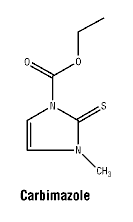
Molecular formula: C7H10N2O2S.
Molecular weight: 186.2.
Carbimazole is a white or yellowish white crystalline powder, slightly soluble in water, soluble in alcohol and in acetone.
CAS number. 22232-54-8.
7 Medicine Schedule (Poisons Standard)
Schedule 4 - Prescription Only Medicine.
Date of First Approval
23 May 2012
Date of Revision
02 September 2021
Summary Table of Changes

Reasonable care is taken to provide accurate information at the time of creation. This information is not intended as a substitute for medical advice and should not be exclusively relied on to manage or diagnose a medical condition. The Australian Commission on Safety and Quality in Health Care disclaims all liability (including for negligence) for any loss, damage, injury or any other negative effects resulting from reliance on or use of this information. Read our full disclaimer. This website uses cookies. Read our privacy policy.