
Nexium 24HR Once Daily Dosing Tablets
Brand Information
| Brand name | Nexium 24HR Once Daily Dosing Tablets |
| Active ingredient | Esomeprazole |
| Schedule | S2 |
No current CMI was found.
Brand Information
| Brand name | Nexium 24HR Once Daily Dosing Tablets |
| Active ingredient | Esomeprazole |
| Schedule | S2 |
MIMS Revision Date: 01 January 2023
1 Name of Medicine
Esomeprazole magnesium trihydrate.
2 Qualitative and Quantitative Composition
Each capsule or tablet of Nexium 24HR Once Daily Dosing (referred as Nexium 24HR elsewhere in this Product Information) contains esomeprazole magnesium trihydrate 22.3 mg (equivalent to esomeprazole 20 mg) as enteric-coated pellets.
Esomeprazole is the S-isomer of omeprazole. It is optically stable in vivo, with negligible conversion to the R-isomer.
Excipient(s) with known effect. Sucrose.
For the full list of excipients, see Section 6.1 List of Excipients.
3 Pharmaceutical Form
Nexium 24HR 20 mg capsules are approximately 11 x 5 mm with a clear body, and an amethyst cap imprinted with "NEXIUM 20 MG" in white. The capsule has a yellow centre band, and contains yellow and purple enteric coated pellets.
Nexium 24HR 20 mg tablets are light pink, oblong, biconvex, film-coated tablet engraved "20 mg" on one side and "A/EH" on the other side.
4 Clinical Particulars
4.1 Therapeutic Indications
Nexium 24HR is indicated for the symptomatic relief of frequent heartburn, acid regurgitation and other symptoms associated with gastro-oesophageal reflux disease (GORD).
4.2 Dose and Method of Administration
Dosage. Adults. For symptomatic treatment of gastro-oesophageal reflux disease (GORD), take 1 capsule (20 mg) or tablet (20 mg) once daily for at least 7 days, and up to 14 days. Patients should be referred to their doctor if symptoms persist or worsen while taking this course, or if symptoms persist or recur within two weeks of completing the course.
Children below the age of 18 years. Nexium 24HR is not intended for use in children under the age of 18.
Method of administration. Nexium 24HR capsules or tablets should be swallowed whole with liquid. The capsules or tablets must not be chewed, crushed or opened.
If required, the Nexium 24HR tablets can also be dispersed in half a glass of noncarbonated water (mineral water is not suitable). No other liquids should be used. Stir until the tablets disintegrate and drink the liquid with the pellets immediately or within 30 minutes. Rinse the glass with half a glass of water and drink. The pellets must not be chewed or crushed.
Dosage adjustment. Geriatrics. Dose adjustment is not required in the elderly.
Hepatic impairment. Dose adjustment is not required in patients with mild to moderate liver impairment (Child-Pugh A and B). For patients with severe liver impairment (Child-Pugh C), a maximum dose of 20 mg Nexium 24HR should not be exceeded (see Section 4.4 Special Warnings and Precautions for Use).
Renal impairment. Dosage adjustment is not required in patients with impaired renal function. Due to limited experience in patients with severe renal insufficiency such patients should be treated with caution.
4.3 Contraindications
Known hypersensitivity to esomeprazole, substituted benzimidazoles or any other constituents of the formulation.
Esomeprazole like other proton pump inhibitors should not be administered with atazanavir (see Section 4.5 Interactions with Other Medicines and Other Forms of Interactions, Effects of esomeprazole on other drugs).
Esomeprazole, an inhibitor of CYP2C19, is contraindicated in patients taking cilostazol.
4.4 Special Warnings and Precautions for Use
As with all antisecretory agents, in the presence of any alarm symptom (e.g. significant unintentional weight loss, recurrent vomiting, dysphagia, haematemesis or melaena) and when gastric ulcer is suspected or present, malignancy should be excluded, as treatment with esomeprazole may alleviate symptoms and delay diagnosis.
Decreased gastric acidity due to any means including proton pump inhibitors, increases gastric counts of bacteria normally present in the gastrointestinal tract. Treatment with proton pump inhibitors may lead to slightly increased risk of gastrointestinal infections such as Salmonella and Campylobacter and, in hospitalised patients, possibly also Clostridium difficile.
CYP2C19 enzyme. Approximately 3% of the population lack a functional CYP2C19 enzyme and are called poor metabolisers. In these individuals the metabolism of esomeprazole is most likely catalysed by CYP3A4. After repeated once daily administration of 40 mg esomeprazole, the mean area under the plasma concentration time curve was approximately 100% higher in poor metabolisers than in subjects having a functional CYP2C19 enzyme (extensive metabolisers). Mean plasma concentrations were increased by about 60%. These findings have no implications for the dosage of esomeprazole. In case of clopidogrel, a prodrug which is transformed into its active metabolite via CYP2C19, the plasma concentrations of the active metabolite may be decreased.
Hypomagnesaemia. Hypomagnesaemia, symptomatic and asymptomatic, has been reported rarely in patients treated with PPIs. Serious adverse events include tetany, arrhythmias, and seizures. In most patients, treatment of hypomagnesaemia required magnesium replacement and discontinuation of the PPI.
For patients expected to be on prolonged treatment or who take PPIs with medications such as digoxin or drugs that may cause hypomagnesaemia (e.g. diuretics), health care professionals may consider monitoring magnesium levels prior to initiation of PPI treatment and periodically during PPI treatment.
Hypomagnesaemia may lead to hypocalcaemia and/or hypokalaemia (see Section 4.8 Adverse Effects (Undesirable Effects)).
Gender. Following a single dose of 40 mg esomeprazole the mean area under the plasma concentration time curve is approximately 30% higher in females than in males. No gender difference is seen after repeated once daily administration. These findings have no implications for the dosage of Nexium 24HR.
Use in hepatic impairment. The metabolism of esomeprazole in patients with mild to moderate liver dysfunction (Child-Pugh A or B) may be impaired, however no dose adjustment is required. The metabolic rate is decreased in patients with severe liver dysfunction (Child-Pugh C) resulting in a doubling of the area under the plasma concentration time curve for esomeprazole. Therefore, a maximum of 20 mg should not be exceeded in patients with severe dysfunction. Esomeprazole or its major metabolites do not show any tendency to accumulate with once daily dosing (see Section 4.2 Dose and Method of Administration).
Use in renal impairment. No studies have been performed in patients with decreased renal function. Since the kidney is responsible for the excretion of the metabolites of esomeprazole but not for the elimination of the parent compound, the metabolism of esomeprazole is not expected to be changed in patients with impaired renal function.
Paediatric use. Nexium 24HR is not intended for use in children under the age of 18.
Use in the elderly. The metabolism of esomeprazole is not significantly changed in elderly subjects (71-80 years).
Effect on laboratory tests. Chromogranin A (CgA) increases due to decreased gastric acidity. The increased CgA level may interfere with investigations for neuroendocrine tumours. To avoid this interference the esomeprazole treatment should be temporarily stopped 5 to 14 days before CgA measurement and that measurements should be repeated if levels have not normalised by this time.
4.5 Interactions with Other Medicines and Other Forms of Interactions
Esomeprazole is metabolised via the CYP2C19 and CYP3A4 isoforms of the hepatic cytochrome P450 system and may be expected to interact with the pharmacokinetics of other drugs metabolised by this system.
Esomeprazole inhibits CYP2C19, the major esomeprazole metabolising enzyme. Thus, when esomeprazole is combined with drugs metabolised by CYP2C19 (see Effects of esomeprazole on other drugs), the plasma concentrations of these drugs may be increased and a dose reduction could be needed.
Other drugs that affect esomeprazole. Clarithromycin. Concomitant administration of esomeprazole and a CYP3A4 inhibitor, clarithromycin (500 mg bid), resulted in a doubling of the exposure (AUC) to esomeprazole. Dose adjustment of esomeprazole is not required.
Concomitant administration of esomeprazole and a combined inhibitor of CYP2C19 and CYP3A4, such as voriconazole, may result in more than doubling of the esomeprazole exposure. However, dose adjustment of esomeprazole, with normal dosage, is not required.
CYP3A4 is a less important pathway than CYP2C19. However, inhibitors of CYP3A4 other than clarithromycin (e.g. ketoconazole, itraconazole, erythromycin etc) may also reduce esomeprazole clearance, although this is unlikely to be of any clinical significance.
Drugs known to induce CYP2C19 or CYP3A4 or both (such as rifampicin and St John's wort) may lead to decreased esomeprazole serum levels by increasing the esomeprazole metabolism.
Effects of esomeprazole on other drugs. Cisapride. In healthy volunteers, concomitant administration of esomeprazole 40 mg resulted in a 32% increase in area under the plasma concentration time curve (AUC) and a 31% prolongation of elimination half-life (t1/2) but no significant increase in peak plasma levels of cisapride. The slightly prolonged QTc interval observed after administration of cisapride alone, was not further prolonged when cisapride was given in combination with esomeprazole (see Section 4.4 Special Warnings and Precautions for Use).
Cilostazol. Omeprazole as well as esomeprazole act as inhibitors of CYP2C19. Omeprazole, given in doses of 40 mg to healthy subjects in a crossover study, increased Cmax and AUC for cilostazol by 18% and 26%, respectively, and one of its active metabolites by 29% and 69%, respectively (see Section 4.3 Contraindications.)
Citalopram, clomipramine and imipramine. Because the plasma concentrations of these drugs may be increased by the concomitant administration of esomeprazole a dose reduction could be needed.
Clopidogrel. Results from studies in healthy subjects have shown a pharmacokinetic/ pharmacodynamic interaction between clopidogrel (300 mg loading dose/ 75 mg daily maintenance dose) and esomeprazole (40 mg p.o. daily) resulting in decreased exposure to the active metabolite of clopidogrel by an average of 40% and resulting in decreased maximum inhibition of (ADP induced) platelet aggregation by an average of 14%. Based on these data concomitant use of esomeprazole and clopidogrel should be avoided.
When clopidogrel was given together with a fixed dose combination of esomeprazole 20 mg + ASA 81 mg compared to clopidogrel alone in a study in healthy subjects there was a decreased exposure by almost 40% of the active metabolite of clopidogrel. However, the maximum levels of inhibition of (ADP induced) platelet aggregation in these subjects were similar in the clopidogrel and the clopidogrel + the combined (esomeprazole + ASA) product groups.
There are both observational and clinical studies on the clinical implications of a PK/PD interaction (with proton pump inhibitors, including omeprazole) investigating the number of major cardiovascular events when clopidogrel and proton pump inhibitors are given concomitantly.
Diazepam. Concomitant administration of 30 mg esomeprazole to healthy volunteers resulted in 45% decrease in clearance of the CYP2C19 substrate diazepam. This interaction is unlikely to be of clinical relevance.
NSAID drugs. Studies evaluating concomitant administration of esomeprazole and either naproxen (nonselective NSAID) or rofecoxib (COX-2 selective NSAID) did not identify any clinically relevant interactions in young healthy Caucasian volunteers.
Phenytoin. Concomitant administration of 40 mg esomeprazole resulted in a 13% increase in trough plasma levels of phenytoin in epileptic patients. Dose adjustment was not required in this study. It is recommended to monitor the plasma concentrations of phenytoin when treatment with esomeprazole is introduced or withdrawn.
Warfarin. Concomitant administration of 40 mg esomeprazole to warfarin treated patients showed that, despite a slight elevation in the trough plasma concentration of the less potent R-isomer of warfarin, the coagulation times were within the accepted range. However, from postmarketing use cases of elevated INR of clinical significance have been reported during concomitant treatment with warfarin. Close monitoring is recommended when initiating and ending treatment with warfarin or other coumarin derivatives.
Tacrolimus. Concomitant administration of esomeprazole has been reported to increase the serum levels of tacrolimus.
Methotrexate. When given together with proton pump inhibitors, methotrexate levels have been reported to increase in some patients. In high dose methotrexate administration a temporary withdrawal of esomeprazole may need to be considered.
Antiretroviral drugs. Concomitant administration with esomeprazole and atazanavir is contraindicated.
Omeprazole has been reported to interact with some antiretroviral drugs. The clinical importance and the mechanisms behind these reported interactions are not always known. Increased gastric pH during omeprazole treatment may change the absorption of the antiretroviral drug. Other possible interaction mechanisms are via CYP2C19. For some antiretroviral drugs, such as atazanavir, decreased serum levels have been reported when given together with omeprazole and concomitant administration is not recommended. For other antiretroviral drugs, such as saquinavir, increased serum levels have been reported. There are also some antiretroviral drugs for which unchanged serum levels have been reported when given with omeprazole. Due to the similar pharmacodynamic effects and pharmacokinetic properties of omeprazole and esomeprazole, concomitant administration with esomeprazole and antiretroviral drugs is not recommended.
Medicinal products with pH dependent absorption. The decreased intragastric acidity during treatment with esomeprazole and other PPIs, might increase or decrease the absorption of drugs if the mechanism of absorption is influenced by gastric acidity. In common with the use of other inhibitors of acid secretion or antacids, the absorption of drugs such as ketoconazole, itraconazole and erlotinib can decrease and the absorption of drugs such as digoxin can increase during treatment with esomeprazole. Concomitant treatment with omeprazole (20 mg daily) and digoxin in healthy subjects increased the bioavailability of digoxin by 10% (up to 30% in two out of ten subjects).
Potential interactions that have been excluded. Amoxicillin or quinidine. Esomeprazole has been shown to have no clinically relevant effects on the pharmacokinetics of amoxicillin or quinidine.
4.6 Fertility, Pregnancy and Lactation
Effects on fertility. A fertility study has not been conducted on esomeprazole. However, there was no evidence that omeprazole impaired fertility in the rat at an estimated exposure (plasma AUC) of 1-2.5 times the maximum clinical exposure for adults.
Use in pregnancy. (Category B3)
For esomeprazole limited clinical data on exposed pregnancies are available. Nexium 24HR should only be given to pregnant women if its use is considered essential.
Esomeprazole was not teratogenic in rats or rabbits at oral doses up to 800 and 250 micromol/kg.day, respectively [corresponding to respective exposures (plasma AUC) of about 6-10 times and 0.04 times the anticipated clinical value in adults]. However, in rabbits, esomeprazole was associated with reduced fetal weights and an increased incidence of minor skeletal anomalies, although these effects were most probably related to the maternal toxicity of esomeprazole in this species. No effects on the fetuses were observed in the rat teratology study, in which an adequate systemic exposure to esomeprazole was achieved.
Use in lactation. It is not known if esomeprazole or its metabolites appear in human breast milk. No studies in lactating women have been performed. Therefore Nexium 24HR should not be used during breastfeeding.
4.7 Effects on Ability to Drive and Use Machines
Esomeprazole is not likely to affect the ability to drive or use machines.
4.8 Adverse Effects (Undesirable Effects)
Nexium 24HR is well tolerated.
Clinical trials and postmarketing data. The following adverse reactions have been identified or suspected in the clinical trials programme and/or from postmarketing experience for esomeprazole. None was found to be dose related.
Adverse reactions within each body system are listed in descending order of frequency (very common: ≥ 10%; common: ≥ 1% and < 10%; uncommon: ≥ 0.1% and < 1%; rare ≥ 0.01% and < 0.1%; very rare: < 0.01%). These include the following:
Blood and lymphatic system disorders. Rare: leukopenia, thrombocytopenia. Very rare: agranulocytosis, pancytopenia.
Immune system disorders. Rare: hypersensitivity reactions, e.g. angioedema and anaphylactic reaction/shock.
Metabolism and nutrition disorders. Uncommon: peripheral oedema. Rare: hyponatraemia. Very rare: hypomagnesaemia; hypomagnesaemia may result in hypokalaemia and/or hypocalcaemia.
Psychiatric disorders. Uncommon: insomnia. Rare: agitation, confusion, depression. Very rare: aggression, hallucination.
Nervous system disorders. Common: headache. Uncommon: dizziness, paraesthesia, somnolence. Rare: taste disturbance.
Eye disturbances. Rare: blurred vision.
Ear and labyrinth disorders. Uncommon: vertigo.
Respiratory, thoracic and mediastinal disorders. Rare: bronchospasm.
Gastrointestinal disorders. Common: abdominal pain, diarrhoea, flatulence, nausea/ vomiting, constipation. Uncommon: dry mouth. Rare: stomatitis, gastrointestinal candidiasis. Very rare: microscopic colitis. Frequency not known: withdrawal of long-term PPI therapy can lead to aggravation of acid-related symptoms and may result in rebound acid hypersecretion.
Hepatobiliary disorders. Uncommon: increased liver enzymes. Rare: hepatitis with or without jaundice. Very rare: hepatic failure, hepatic encephalopathy.
Skin and subcutaneous tissue disorders. Uncommon: dermatitis, pruritus, urticaria, rash. Rare: alopecia, photosensitivity. Very rare: erythema multiforme, Stevens-Johnson syndrome, toxic epidermal necrolysis (TEN).
Musculoskeletal, connective tissue and bone disorders. Rare: arthralgia, myalgia. Very rare: muscular weakness.
Renal and urinary disorders. Very rare: interstitial nephritis.
Reproductive system and breast disorders. Very rare: gynaecomastia.
General disorders and administration site conditions. Rare: malaise, hyperhidrosis.
Reporting suspected adverse effects. Reporting suspected adverse reactions after registration of the medicinal product is important. It allows continued monitoring of the benefit-risk balance of the medicinal product. Healthcare professionals are asked to report any suspected adverse reactions at www.tga.gov.au/reporting-problems.
4.9 Overdose
The symptoms described in connection with deliberate esomeprazole overdose are transient. The symptoms described in connection with 280 mg were gastrointestinal symptoms and weakness. Single doses of 80 mg esomeprazole were uneventful.
Esomeprazole is extensively protein bound and is therefore not readily dialyzable. As in any case of overdose, treatment should be symptomatic and general supportive measures should be utilised. No specific antidote is known.
For information on the management of overdose, contact the Poisons Information Centre on 13 11 26 (Australia).
5 Pharmacological Properties
5.1 Pharmacodynamic Properties
Mechanism of action. Nexium 24HR (esomeprazole magnesium trihydrate) reversibly reduces gastric acid secretion by specifically inhibiting the gastric enzyme H+,K+-ATPase proton pump in the parietal cell. Both the R and S-isomer of omeprazole have similar pharmacodynamic activity. In humans, acid control with esomeprazole is dose dependent and is significantly greater, more sustained and less variable compared to that obtained with equal doses of omeprazole.
Esomeprazole is a weak base and is concentrated and converted to the active form in the highly acidic environment of the secretory canaliculi of the parietal cell, where it inhibits the enzyme H+,K+-ATPase (the acid pump) and inhibits both basal and stimulated acid secretion.
Effect on gastric acid secretion. After oral dosing with esomeprazole 20 mg and 40 mg the onset of effect occurs within one hour. After repeated administration with 20 mg esomeprazole once daily for five days, mean peak acid output after pentagastrin stimulation is decreased 90% when measured 6-7 hours after dosing on day five.
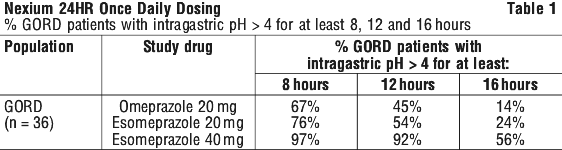
After five days of oral dosing with 20 mg and 40 mg of esomeprazole, intragastric pH above 4 was maintained for a mean time of 13 hours and 17 hours, respectively, over 24 hours in symptomatic GORD patients. The corresponding time for omeprazole 20 mg of 10 hours was significantly shorter. In this study plus another, the percentage of GORD patients maintaining an intragastric pH above 4 for at least 8, 12 and 16 hours are tabulated in Table 1.
Using AUC as a surrogate parameter for plasma concentration, a relationship between inhibition of acid secretion and exposure has been shown.
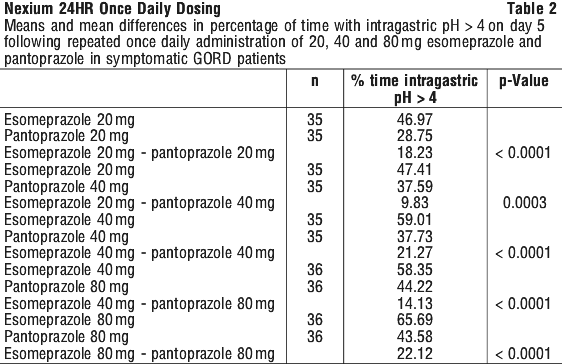
A 6-way crossover study was conducted to investigate the dose response relationship assessed by intragastric pH monitoring after repeated once daily oral doses of 20, 40 and 80 mg of esomeprazole and 20, 40 and 80 mg of pantoprazole in symptomatic GORD patients. Results are provided in Table 2.
An increased number of ECL cells possibly related to the increased serum gastrin levels, have been observed in some patients during long-term treatment with esomeprazole.
During long-term treatment with antisecretory drugs gastric glandular cysts have been reported to occur. These changes are a physiological consequence of pronounced inhibition of acid secretion, are benign and appear reversible.
Clinical trials. Symptomatic treatment of GORD in patients with normal endoscopy. At the time of registration, five randomised, double blind controlled clinical trials (n = 3,362) were evaluated to assess the efficacy of esomeprazole in the complete resolution of heartburn at 4 weeks comparing esomeprazole 20 mg or 40 mg with omeprazole 20 mg or placebo. Study B7 was a dose finding study, two studies compared esomeprazole 40 mg and omeprazole 20 mg (B8 and B9), and two compared esomeprazole 20 mg, 40 mg and placebo (B16 and B17).
There were no apparent differences in any of the studies between population subsets based on gender, age, race or H. pylori status in the proportion of patients with complete resolution of heartburn by treatment. The proportion of patients with complete resolution of heartburn at 4 weeks in studies B7, B8 and B9 (n = 2,645), independent of treatment, was approximately 60%. There was no statistically significant difference between any of the treatment groups with regard to complete resolution of heartburn at 2 weeks or 4 weeks.
In studies B16 and B17 the proportion of patients (n = 717) with complete resolution of heartburn at 4 weeks was significantly higher for esomeprazole 20 mg and 40 mg compared to placebo.
5.2 Pharmacokinetic Properties
Absorption. Esomeprazole is acid labile and is administered orally as enteric coated pellets in capsules or tablets. The enteric coating film, protecting the esomeprazole magnesium trihydrate, dissolves at a pH above 5.5. Hence esomeprazole magnesium trihydrate is not released until the pellets are emptied into the duodenum.
Once esomeprazole magnesium trihydrate dissolves in this near neutral environment, the esomeprazole ion transforms to its neutral form and is absorbed as such. In vivo conversion to the R-isomer is negligible. Absorption is rapid with peak plasma levels of esomeprazole occurring approximately 1 to 2 hours after the dose. The absolute bioavailability is 50% after a single dose of 20 mg esomeprazole and increases to 68% after repeated once daily administration.
Food intake both delays and decreases the absorption of esomeprazole although this has no significant influence on the effect of esomeprazole on intragastric acidity.
Distribution. The apparent volume of distribution at steady-state in healthy subjects is approximately 0.22 L/kg bodyweight. Esomeprazole is 97% protein bound.
Metabolism. Esomeprazole is completely metabolised by the cytochrome P450 system (CYP450). The intrinsic clearance of esomeprazole (S-isomer) is one-third of that of the R-isomer, resulting in a higher AUC with less interindividual variation compared to the racemate. The major part of the metabolism of esomeprazole is dependent on the polymorphic CYP2C19, responsible for the formation of the hydroxy and desmethyl metabolites of esomeprazole. The remaining part is dependent on another specific isoform, CYP3A4, responsible for the formation of esomeprazole sulphone, the main metabolite in plasma.
The parameters below reflect mainly the pharmacokinetics in individuals with a functional CYP2C19 enzyme, extensive metabolisers.
Total plasma clearance is about 17 L/h after a single dose and about 9 L/h after repeated administration. The plasma elimination half-life is about 1.3 hours after repeated once daily dosing. The area under the plasma concentration time curve increases with repeated administration of esomeprazole. This increase is dose dependent and results in a nonlinear dose AUC relationship after repeated administration. This time and dose dependency is due to a decrease of first-pass metabolism and systemic clearance probably caused by an inhibition of the CYP2C19 enzyme by esomeprazole and/or its sulphone metabolite. Esomeprazole is completely eliminated from plasma between doses with no tendency for accumulation during once daily administration.
Excretion. The major metabolites of esomeprazole have no effect on gastric acid secretion. Almost 80% of an oral dose of Nexium 24HR is excreted as metabolites in the urine, the remainder in the faeces. Less than 1% of the parent drug is found in urine.
5.3 Preclinical Safety Data
Genotoxicity. Esomeprazole was negative in a bacterial gene mutation assay. In clastogenicity tests, esomeprazole was positive (as was omeprazole) in an in vitro chromosome aberration test in human lymphocytes. However, two in vivo tests (a mouse micronucleus test and an in vivo chromosome aberration test in rat bone marrow) in the presence of long and high systemic exposure to esomeprazole, showed that esomeprazole was not clastogenic under in vivo conditions. Exposure levels in man are well below those at which clastogenic effects occurred in vitro.
Carcinogenicity. Preclinical bridging studies between the enantiomer esomeprazole and the racemate (omeprazole) showed that these compounds are pharmacologically and toxicologically similar at equivalent systemic exposure. Thus, the extensive preclinical database for omeprazole is also relevant for the safety assessment of esomeprazole.
No carcinogenicity studies have been conducted on esomeprazole. However, omeprazole (the racemate) produced enterochromaffin-like (ECL) cell hyperplasia and gastric carcinoids in rats. In a 104-week study in rats, carcinoids were observed at doses (on a mg/m2 basis) which ranged from 0.4- to 30-fold the maximum clinical dose for adults. However, a no-effect dose level was not determined in female rats. A similar effect was not observed in a 78 week mouse carcinogenicity study with omeprazole. These gastric effects in the rat are believed to be the result of sustained, pronounced hypergastrinaemia secondary to reduced production of gastric acid. Similar effects are elicited by other proton pump inhibitors, H2-receptor antagonists and by partial fundectomy.
6 Pharmaceutical Particulars
6.1 List of Excipients
Nexium 24HR capsules. Capsule content. Glyceryl monostearate, hyprolose, hypromellose, magnesium stearate, methacrylic acid copolymer, polysorbate 80, suglets sugar spheres 250/355 micrometres (sucrose and maize starch), purified talc, triethyl citrate, titanium dioxide (E171), carmine (E120), indigo carmine aluminium lake (E132), iron oxide yellow (E172).
Capsule shell. Gelatin, erythrosine, indigo carmine (E132), allura red AC (E129).
Printing ink. Povidone, propylene glycol, shellac, sodium hydroxide, titanium dioxide (E171).
Band. Gelatin, iron oxide yellow (E172).
Nexium 24HR tablets. Glyceryl monostearate, hyprolose, hypromellose, magnesium stearate, methacrylic acid copolymer, microcrystalline cellulose, synthetic paraffin, macrogol 6000, polysorbate 80, crospovidone, sodium stearylfumarate, purified talc, triethyl citrate, sugar spheres (maize starch and sucrose), titanium dioxide, iron oxide red CI77491, iron oxide yellow CI77492.
6.2 Incompatibilities
Incompatibilities were either not assessed or not identified as part of the registration of this medicine.
6.3 Shelf Life
In Australia, information on the shelf life can be found on the public summary of the Australian Register of Therapeutic Goods (ARTG). The expiry date can be found on the packaging.
6.4 Special Precautions for Storage
Store below 25°C.
Store in the original package in order to protect from moisture.
6.5 Nature and Contents of Container
Nexium 24HR capsules. Container type. High-density polyethylene (HDPE) bottle with an induction seal closure and child resistant closure containing 14 capsules. The bottle also contains a sealed container with silica gel desiccant.
Pack size. Nexium 24HR capsules are available in a bottle of 14 capsules.
Nexium 24HR tablets. Nexium 24HR tablets are available in blister pack of 7 and 14 tablets.
6.6 Special Precautions for Disposal
In Australia, any unused medicine or waste material should be disposed of in accordance with local requirements.
6.7 Physicochemical Properties
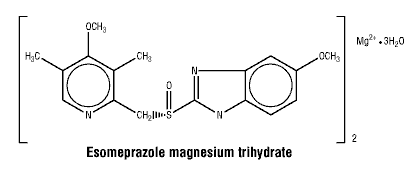
The chemical name of esomeprazole magnesium trihydrate is di-(S)-5-methoxy-2- [[(4-methoxy-3,5-dimethyl-2-pyridinyl) methyl]sulfinyl]- 1H-benzimidazole magnesium salt trihydrate.
Chemical structure.
Molecular weight: 767.2 (trihydrate).
CAS number. 217087-09-7.
7 Medicine Schedule (Poisons Standard)
Schedule 2 - Pharmacy Medicine when indicated for the relief of heartburn and other symptoms of gastro-oesophageal reflux disease, in packs containing not more than 14 days' supply.
Date of Revision
19 September 2022
Summary Table of Changes

Reasonable care is taken to provide accurate information at the time of creation. This information is not intended as a substitute for medical advice and should not be exclusively relied on to manage or diagnose a medical condition. The Australian Commission on Safety and Quality in Health Care disclaims all liability (including for negligence) for any loss, damage, injury or any other negative effects resulting from reliance on or use of this information. Read our full disclaimer. This website uses cookies. Read our privacy policy.