
Nicorette QuickMist
Brand Information
| Brand name | Nicorette QuickMist |
| Active ingredient | Nicotine |
| Schedule | Unscheduled |
No current CMI was found.
Brand Information
| Brand name | Nicorette QuickMist |
| Active ingredient | Nicotine |
| Schedule | Unscheduled |
MIMS Revision Date: 01 October 2025
1 Name of Medicine
Nicotine.
2 Qualitative and Quantitative Composition
Nicorette QuickMist contains nicotine. 0.07 mL contains 1 mg nicotine, corresponding to 1 mg nicotine/spray dose and is available in 2 flavours: freshmint and cool berry.
Nicorette QuickMist also contains alcohol.
For the full list of excipients, see Section 6.1 List of Excipients.
3 Pharmaceutical Form
Nicorette QuickMist is a clear to weakly opalescent, colourless to light yellow solution presented in spray form.
4 Clinical Particulars
4.1 Therapeutic Indications
An aid for the treatment of tobacco and nicotine vaping dependence by relieving nicotine withdrawal symptoms, thereby facilitating cessation in smokers and vapers motivated to quit.
For smokers and vapers who are currently unable or not ready to stop smoking and vaping abruptly, the mouth spray may also be used as part of a reduction strategy as a step towards stopping completely.
Advice and support normally improve success rate.
4.2 Dose and Method of Administration
Smoking and vaping cessation. After priming, the spray nozzle should be pointed as close to the open mouth as possible. The top of the dispenser is then pressed releasing one spray into the mouth, avoiding the lips. The patient should not inhale while spraying to avoid getting spray into the respiratory tract. For best results, do not swallow for a few seconds after spraying. Do not eat or drink when administering the mouth spray.
Patients should stop smoking and vaping completely during the course of treatment with the mouth spray.
Children. Nicorette QuickMist should not be administered to children under 12 years of age.
Adults and elderly. The following lists the recommended usage schedule for Nicorette QuickMist during full treatment (step I) and during tapering (step II and step III) (see Table 1). Up to 4 sprays per hour may be used. No more than 2 sprays per dosing episode should be used and no more than 64 sprays (4 sprays per hour, over 16 hours) in any 24 hour period.
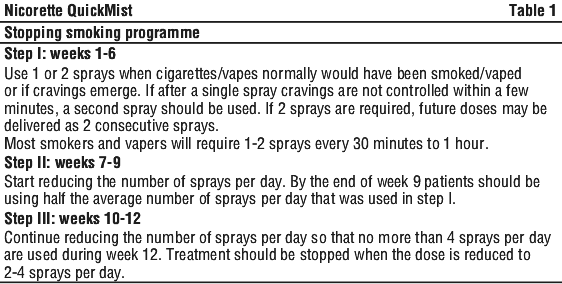
To help stay smoke or vape free after step III, patients may continue to use the spray in situations when they are strongly tempted to smoke or vape. One spray may be used in situations where there is an urge to smoke or vape, with a second spray if one spray does not help within a few minutes. No more than four sprays per day should be used during this period.
Regular use of the mouth spray beyond 6 months is generally not recommended. Some ex-smokers/vapers may need treatment with the spray longer to avoid returning to smoking/vaping. Any remaining mouth spray should be retained to be used in the event of sudden cravings.
Adolescents (12 to 18 years). When deciding whether to recommend NRT an assessment should be made on the individual's nicotine dependence, motivation to quit and willingness to accept counselling. Counselling is considered to be vitally important in the effective treatment of tobacco and nicotine vaping dependence in this age group.
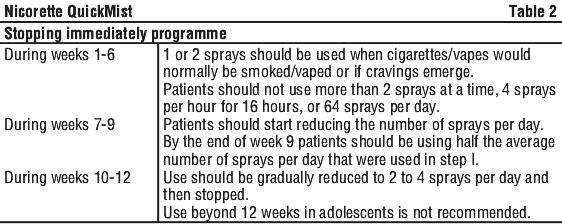
Use for up to 6 weeks to break the habit of smoking/vaping, and then gradually reduce mouth spray use over a 6 week period. When daily use is 2 to 4 sprays, use should be stopped. See Table 2.
Combination treatment (for smokers only). Combination therapy may be needed by some patients who have relapsed in the past or if they experience cravings using single therapy.
If patients have repeatedly relapsed using single therapy they should seek professional advice from their doctor or pharmacist.
Nicorette QuickMist in combination with Nicorette 16 hr Invisipatch can be used if breakthrough craving is experienced or there is difficulty in controlling cravings for cigarettes. In people who are unable to quit smoking using single NRT, the combination is more effective than either product alone, increasing the patient's chances of successfully quitting.
The Nicorette 16 hr Invisipatch patch should be applied daily to an intact area of the skin upon waking and removed at bedtime. After applying the Nicorette 16 hr Invisipatch patch, the Nicorette QuickMist should be used as required when cravings occur.
For heavier smokers (more than 15 cigarettes a day). One Nicorette 25 mg/16 hr Invisipatch patch should be applied daily for 12 weeks. The Nicorette QuickMist mouth spray should be used as required when breakthrough cravings occur, at a dose of 1 or 2 sprays every 30-60 minutes. The maximum number of doses of mouth spray used in conjunction with the Nicorette 25 mg/16 hr Invisipatch is 32 sprays per day (two sprays per hour for 16 hours).
After the initial 12 weeks treatment period, weaning may be done by either:
using the Nicorette 15 mg/16 hr Invisipatch patch for 2 weeks, followed by the Nicorette 10 mg/16 hr Invisipatch patch for 2 weeks, while maintaining the number of sprays of mouth spray that have been routinely used; then gradually reducing the number of sprays once the patch is no longer used; or
stopping use of the Nicorette 25 mg/16 hr Invisipatch patch, and then gradually reducing the sprays from the mouth spray.
For lighter smokers (less than 15 cigarettes a day). One Nicorette 15 mg/16 hr Invisipatch patch should be applied daily for 12 weeks. The Nicorette QuickMist mouth spray should be used as required when breakthrough cravings occur, at a dose of 1 or 2 sprays every 30-60 minutes. The maximum number of doses of mouth spray used in conjunction with the Nicorette 15 mg/16 hr Invisipatch is 32 sprays per day (two sprays per hour for 16 hours).
After the initial 12 weeks treatment period, weaning may be done by either:
using the Nicorette 10 mg/16 hr Invisipatch patch for 4 weeks, while maintaining the number of sprays of mouth spray that have been routinely used; then gradually reducing the number of sprays once the patch is no longer used; or
stopping use of the Nicorette 15 mg/16 hour Invisipatch patch and then gradually reducing the number of doses of Nicorette QuickMist that are being used.
Smoking and vaping reduction (reducing to stop). Adults 18 years and over. The smoker/vaper should use Nicorette QuickMist between smoking/vaping episodes in order to prolong intervals between cigarettes/vapes, with the aim of reducing smoking/vaping as much as possible.
If the smoker/vaper has not achieved a reduction in the number of cigarettes/vapes per day after 6 weeks, he or she should consult a healthcare professional. This six week time period is given to the smoker/vaper to allow them to familiarise themselves with Nicorette QuickMist and to deal with craving symptoms while they attempt to reduce their smoking/vaping.
Smokers/vapers who do reduce their smoking/vaping with Nicorette QuickMist should make a cessation attempt as soon as they feel ready, but not later than 6 months after they start using Nicorette QuickMist.
When making a cessation attempt, the smoking/vaping cessation instructions, above, can be followed.
If the smoker/vaper has not made a cessation attempt within 9 months of commencing treatment he or she should consult a healthcare professional.
Adolescents 12 to 18 years. The recommended duration of nicotine replacement therapy in adolescents is 12 weeks. Assessment by a healthcare professional is required before commencing the smoking/vaping reduction program in adolescents.
4.3 Contraindications
Nicorette QuickMist should not be administered to nontobacco users or patients with known hypersensitivity to nicotine or any component of the mouth spray.
Use in children. Nicorette QuickMist should not be administered to children under 12 years of age.
4.4 Special Warnings and Precautions for Use
Any risks that may be associated with NRT are substantially outweighed by the well established dangers of continued smoking. The risks of continued vaping are not yet established.
Care should be taken not to spray the eyes whilst administering the mouth spray.
Underlying cardiovascular disease. In stable cardiovascular disease Nicorette QuickMist presents a lesser hazard than continuing to smoke. However dependent smokers currently hospitalised as a result of myocardial infarction, severe dysrrhythmia or cerebrovascular accident (CVA) and who are considered to be haemodynamically unstable should be encouraged to stop smoking with nonpharmacological interventions. If this fails, Nicorette QuickMist may be considered, but as data on safety in this patient group are limited, initiation should only be under medical supervision. The risks of continued vaping are not yet established.
Diabetes mellitus. Patients with diabetes mellitus should be advised to monitor their blood sugar levels more closely than usual when NRT is initiated as reductions in nicotine induced catecholamine release can affect carbohydrate metabolism.
GI disease. Swallowed nicotine may exacerbate symptoms in patients suffering from oesophagitis, gastritis or peptic ulcers and oral NRT preparations should be used with caution in these conditions. Nicorette QuickMist should be avoided if oral or pharyngeal inflammation is present.
Use in renal impairment. Nicorette QuickMist should be used with caution in patients with severe renal impairment as the clearance of nicotine or its metabolites may be decreased with the potential for increased adverse effects.
Use in hepatic impairment. Nicorette QuickMist should be used with caution in patients with moderate to severe hepatic impairment as the clearance of nicotine or its metabolites may be decreased with the potential for increased adverse effects.
Phaeochromocytoma and uncontrolled hyperthyroidism. Nicotine, from both NRT and smoking, causes the release of catecholamines from the adrenal medulla. Therefore, Nicorette QuickMist should be used with caution in patients with uncontrolled hyperthyroidism or phaeochromocytoma.
Epilepsy and seizures. Caution should be exercised in patients with a history of epilepsy or seizures during introduction of nicotine replacement therapy. Tobacco smoke contains substances - including nicotine - which act on brain receptors, and the changes in intake of these when switching from smoked tobacco to nicotine replacement therapy during quitting may affect seizure threshold.
Transferred dependence. Transferred dependence can occur but is both less harmful and easier to break than smoking dependence.
Danger in small children. Doses of nicotine tolerated by adult and adolescent smokers can produce severe toxicity in small children that may be fatal. Products containing nicotine should not be left where they may be misused, handled or ingested by children.
Use in the elderly. Total clearance of nicotine is reduced in elderly smokers to a variable extent and is considered not supportive of general age dependent dose adjustments.
Paediatric use. Nicorette QuickMist should not be administered to children under 12 years of age.
Continued smoking while using NRT. Nicorette QuickMist can be safely used while smoking. The adverse event profile (incidence and severity of events) of intermittent NRT products in studies to reduce smoking did not differ markedly from that in smoking cessation studies. Intermittent use of intermittent dosing NRT products and cigarettes does not appear to produce more side effects than use of NRT alone. Most regular smokers are adept at self titration of their nicotine in order to maintain their plasma nicotine levels within a narrow range.
Effects on laboratory tests. No data available.
4.5 Interactions with Other Medicines and Other Forms of Interactions
No clinically relevant interactions between nicotine replacement therapy and other drugs have definitely been established. However nicotine may possibly enhance the haemodynamic effects of adenosine i.e. increase in blood pressure and heart rate and also increase pain response (angina pectoris type chest pain) provoked by adenosine administration.
Stopping smoking. Polycyclic aromatic hydrocarbons in tobacco smoke induce the metabolism of drugs metabolised by CYP1A2 (and possibly by CYP1A1). When a smoker stops smoking, this may result in slower metabolism and a consequent rise in blood levels of such drugs. This is of potential clinical importance for products with a narrow therapeutic window, e.g. theophylline, clozapine and ropinirole.
4.6 Fertility, Pregnancy and Lactation
Effects on fertility. Animal experiments have shown that nicotine exposure results in decreased birth weight, decreased litter size and decrease survival of offspring.
There is no or limited data regarding the effect of vaping on fertility.
Use in pregnancy. (Category D)
Nicotine is harmful to the foetus. The harmful effects of cigarette smoking on maternal and foetal health are clearly established. Short-term exposure during the first trimester is unlikely to cause a hazard to the foetus.
NRT is not contraindicated in pregnancy. The decision to use NRT should be made on a risk/ benefit assessment as early on in the pregnancy as possible with the aim of discontinuing use as soon as possible.
Smoking during pregnancy is associated with risks such as intrauterine growth retardation, premature birth or stillbirth. Stopping smoking is the single most effective intervention for improving the health of both pregnant smoker and her baby. The earlier abstinence is achieved the better.
Ideally smoking cessation during pregnancy should be achieved without NRT. However for women unable to quit on their own, NRT may be recommended to assist a quit attempt.
Nicotine passes to the foetus affecting breathing movements and has a dose dependent effect on placental/ fetal circulation. However the risk of using NRT to the foetus is lower than that expected with tobacco smoking, due to lower maximal plasma nicotine concentration and no additional exposure to polycyclic hydrocarbons and carbon monoxide.
Intermittent dosing products may be preferable as these usually provide a lower daily dose of nicotine than patches. However, patches may be preferred if the woman is suffering from nausea during pregnancy. If patches are used they should be removed before going to bed.
There is no or limited data regarding the effect of vaping in pregnancy.
Use in lactation. NRT is not contraindicated in lactation. Nicotine from smoking and NRT is found in breast milk. However the amount of nicotine the infant is exposed to is relatively small and less hazardous than the second hand smoke they would otherwise be exposed to.
Using intermittent dose NRT preparations, such as Nicorette Chewing Gums, Lozenges, Inhalator or Mouth Spray may minimize the amount of nicotine in the breast milk as the time between administrations of NRT and feeding can be more easily prolonged. Women should breastfeed just before using the product.
There is no or limited data regarding the effect of vaping in lactating women.
4.7 Effects on Ability to Drive and Use Machines
Nicotine replacement therapy has no or negligible influence on the ability to drive and use machines.
4.8 Adverse Effects (Undesirable Effects)
Nicorette QuickMist may cause adverse effects similar to those associated with nicotine administered by other means and are mainly dose dependent.
Patients quitting habitual tobacco use by any means could expect to suffer from an associated nicotine withdrawal syndrome that includes four or more of the following: dysphoria or depressed mood, insomnia, irritability, frustration or anger, anxiety, difficulty concentrating, restlessness or impatience, decreased heart rate, increased appetite or weight gain. These have been observed in those using the mouth spray. In addition to these, other cessation associated symptoms were seen in those using the mouth spray: dizziness, presyncopal symptoms, cough, constipation, mouth ulceration, gingival bleeding and nasopharyngitis.
The nicotine withdrawal effects of vaping cessation have not been established, however it is anticipated that many of the effects relating to nicotine withdrawal will be the same as those seen with tobacco smoking cessation.
Local adverse effects of administration are similar to those seen with other orally delivered forms. Irritation in the mouth or throat and hiccups may be experienced during the first few days of treatment, however most patients adapt to this with ongoing use.
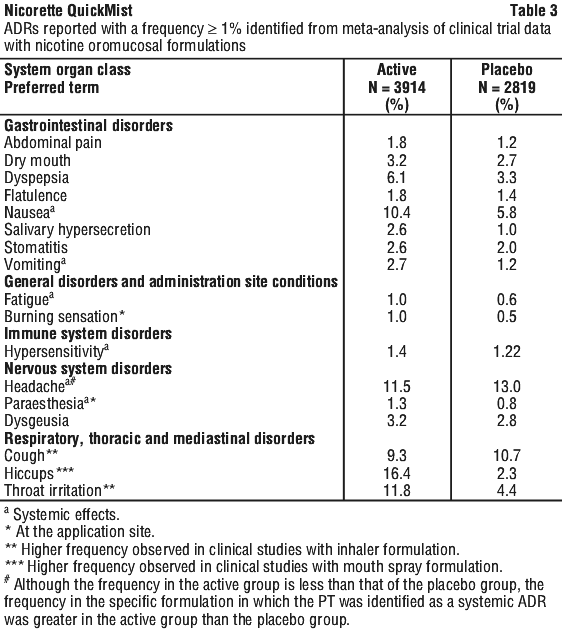
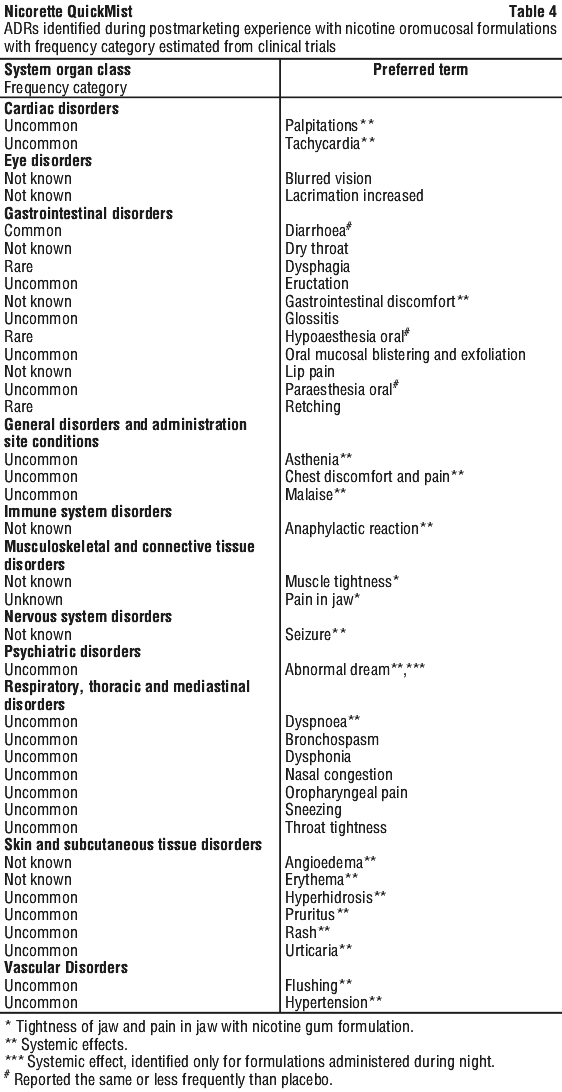
Clinical trial data. The safety of nicotine from clinical trial data is based on data on a meta-analysis of randomized clinical trials (RCTs) for the treatment of smoking cessation. Adverse Drug Reactions (ADRs) with oromucosal formulations identified from clinical trials are presented in Table 3.
Healthcare professionals are asked to report any suspected adverse reactions at: www.tga.gov.au/reporting-problems.
4.9 Overdose
Excessive use of nicotine from either NRT and/or smoking/vaping might cause symptoms of an overdose.
Symptoms of overdosage are those of acute nicotine poisoning and include nausea, salivation, vomiting, abdominal pain, diarrhoea, sweating, headache, dizziness, disturbed hearing and marked weakness. At high doses, these symptoms may be followed by hypotension, weak and irregular pulse, breathing difficulties, prostration, circulatory collapse and general convulsions.
Overdosage with nicotine can occur if the patient has a very low pretreatment nicotine intake or uses other forms of nicotine. The acute minimum lethal oral dose of nicotine in nonsmokers is believed to be 40-60 mg.
Doses of nicotine that are tolerated by adult smokers during treatment may produce severe symptoms of poisoning in small children and may prove fatal. The lethal dose of nicotine in a small child is approximately 10-15 mg. Suspected nicotine poisoning in a child should be considered a medical emergency and treated immediately.
Management of overdose. If mouth spray is ingested, activated charcoal should be given as soon as possible.
For information on the management of overdose, contact the Poison Information Centre on 13 11 26 (Australia).
The administration of nicotine should be stopped immediately and the patient should be treated symptomatically. Activated charcoal reduces gastrointestinal absorption of nicotine.
5 Pharmacological Properties
5.1 Pharmacodynamic Properties
Mechanism of action. Nicotine is a natural alkaloid which has ganglion stimulating properties and produces a wide range of pharmacological actions.
The use of nicotine is widespread in the form of tobacco products, chronic use of which is causally linked to a variety of serious diseases. Many smokers develop a dependence due to an interaction of pharmacological, social and psychological factors.
Nicorette QuickMist is a treatment aid in smoking and vaping cessation. Clinical studies have shown that nicotine replacement from nicotine containing products can help people give up smoking by relief of abstinence symptoms associated with smoking cessation.
Abrupt cessation of the established, regular use of tobacco containing products results in the characteristic syndrome, with withdrawal symptoms including cravings (urges to smoke).
Clinical studies have shown that nicotine replacement products can help smokers abstain from smoking by raising blood nicotine levels and relieving these withdrawal symptoms.
A parallel, double-blind, placebo-controlled, randomised pharmacodynamic study conducted in solus, regular vapers has shown that the mouth spray is effective in relieving momentary urges to vape (cravings) following ad lib use of the spray over 11 hours. A significantly higher proportion of subjects (p < 0.001) in the mouth spray group (82.6%) had a maximum reduction of at least 50% vs. baseline in momentary urges-to-vape scores during the two hours follow-up compared to the placebo group (55.1%).
Compared to nicotine gum or nicotine lozenge, the absorption of nicotine from the mouth spray is more rapid and based on prior experience with nicotine replacement therapy, this will result in a faster onset of relief of cravings and other symptoms. A single dose study in 200 healthy smokers demonstrated that two sprays of 1 mg reduced urges to smoke one minute after administration and to a significantly greater extent than nicotine lozenge 4 mg during the first 1, 3, 5, and 10 minutes. The observed median estimated times to 25% and 50% reductions in perceived cravings relative to baseline levels were approximately 3 times shorter for 2 sprays of 1 mg mouth spray than for nicotine lozenge 4 mg.
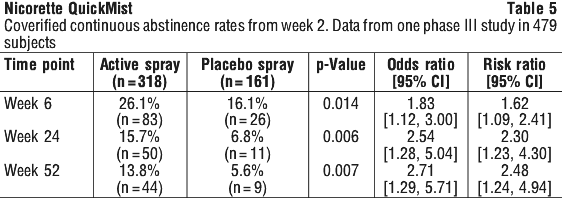
Clinical trials. A total of 479 smokers motivated to quit were enrolled in a multicenter, randomized, double blind, placebo controlled, 52 week smoking cessation study. Subjects received full treatment for the first 6 weeks, subsequently reducing use over the next 6 weeks. Occasional use of the product was allowed up to week 24. The primary objective of the study was to evaluate the efficacy of Nicorette mouth spray versus placebo in achieving continuous abstinence from the week 2 visit until and including the week 6, week 24, and week 52 visits, respectively. Nicorette mouth spray was 2.5 (RR 2.48) times more effective at helping smokers quit at 52 weeks (p = 0.007) compared to placebo. See Table 5 for smoking cessation rates.
5.2 Pharmacokinetic Properties
The pharmacokinetics of nicotine has been extensively studied, and variations in delivery format have been found to have significant effects on rate and extent of absorption.
The pharmacokinetics of the mouth spray has been studied in 4 studies. The studies enrolled a total of 141 subjects.
The oral spray form means that the nicotine dose is administered instantaneously, and as a result the absorption of nicotine from the mouth spray is rapid. In trials, nicotine uptake from the oral nicotine spray was detected at 2 minutes, the first time point tested.
A maximum concentration of 5.3 nanogram/mL is reached within 13 minutes after administration of a 2 mg dose. The nicotine AUCs over the first 10 minutes after administration of the mouth spray at a dose of 1 and 2 mg exceeds those observed with nicotine gum and nicotine lozenge at doses of 4 mg (0.48 and 0.64 h.nanogram/mL vs. 0.33 and 0.33 h.nanogram/mL).
AUC∞ estimates show that the bioavailability of nicotine administered by mouth spray is similar to or somewhat higher than that of nicotine gum or lozenge. The nicotine AUC∞ for the mouth spray 2 mg was 14.0 h.nanogram/mL as compared with 23.0 h.nanogram/mL and 26.7 h.nanogram/mL for nicotine gum 4 mg and nicotine lozenge 4 mg, respectively.
Steady-state average nicotine plasma concentrations achieved after administration of the maximum dose (i.e. 2 sprays of the mouth spray 1 mg every 30 minutes) are approximately 28.8 nanogram/mL as compared with 23.3 nanogram/mL for nicotine gum 4 mg (1 gum, hourly) and 25.5 nanogram/mL for nicotine lozenge 4 mg (1 lozenge, hourly).
There is a very small deviation from dose linearity of AUC∞ and Cmax after administration of the mouth spray as shown with single doses of 1, 2, 3 and 4 sprays.
The volume of distribution following IV administration of nicotine is about 2 to 3 L/kg. The major eliminating organ is the liver, the kidney and lung also metabolise nicotine. More than 20 metabolites of nicotine have been identified, all of which are believed to be less active than the parent compound.
The primary metabolite of nicotine in plasma, cotinine, is eliminated with a terminal half-life of 15 to 20 hours; and the plasma concentrations of cotinine at exceed that of nicotine by 10-fold.
The mean plasma clearance of nicotine is about 70 L/hour and the elimination half life is 2-3 hours.
The primary urinary metabolites are cotinine (15% of the dose) and trans-3-hydroxy-cotinine (45% of the dose). About 10% of nicotine is excreted unchanged in the urine. As much as 30% of nicotine may be excreted unchanged in the urine with high flow rates and acidification of the urine below pH 5.
Plasma protein binding of nicotine is less than 5%. Therefore, changes in nicotine binding from use of concomitant drugs or alterations of plasma proteins by disease states would not be expected to have significant effects on nicotine kinetics.
Progressive severity of renal impairment is associated with decreased total clearance of nicotine. Nicotine clearance was on average decreased by 50% in smokers with severe renal impairment. Raised nicotine levels have been seen in smokers undergoing hemodialysis.
The pharmacokinetics of nicotine is unaffected in cirrhotic patients with mild liver impairment (Child-Pugh score 5) and decreased in cirrhotic patients with moderate liver impairment (Child-Pugh score 7). There are no differences in nicotine kinetics between men and women.
5.3 Preclinical Safety Data
Genotoxicity. In vivo tests of genotoxicity have been negative.
In vitro genotoxicity testing of nicotine has yielded predominantly negative results. There are some equivocal results when testing at high nicotine concentrations.
Carcinogenicity. Results of carcinogenicity assays do not provide any clear evidence of a tumorigenic effect of nicotine.
6 Pharmaceutical Particulars
6.1 List of Excipients
Nicorette QuickMist Freshmint in addition to the active contains: propylene glycol, anhydrous ethanol, trometamol, poloxamer 407, glycerol, sodium hydrogen carbonate, levomenthol, mint flavour, cooling flavour, sucralose, acesulfame potassium, hydrochloric acid and purified water.
Nicorette QuickMist Cool Berry in addition to the active contains: propylene glycol, anhydrous ethanol, trometamol, poloxamer 407, glycerol, sodium hydrogen carbonate, levomenthol, berry flavour, cooling flavour, sucralose, acesulfame potassium, hydrochloric acid and purified water.
The mouth spray contains small amounts of ethanol (alcohol), less than 100 mg per spray.
6.2 Incompatibilities
Incompatibilities were either not assessed or not identified as part of the registration of this medicine.
6.3 Shelf Life
Nicorette QuickMist Freshmint: 30 months.
Nicorette QuickMist Cool Berry: 24 months.
6.4 Special Precautions for Storage
Store below 25°C.
6.5 Nature and Contents of Container
13.2 mL is filled in a PET bottle. One bottle contains 150 sprays of 1 mg. The bottle is placed in a dispenser with a mechanical spray pump. The dispenser has a child resistant feature.
Pack sizes: 1x1 dispenser, 2x1 dispensers, 3x1 dispensers.
Not all pack sizes may be marketed.
6.6 Special Precautions for Disposal
In Australia, any unused medicine or waste material should be disposed of in accordance with local requirements.
6.7 Physicochemical Properties
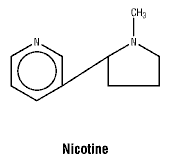
Chemical structure.
7 Medicine Schedule (Poisons Standard)
Unscheduled.
Date of Revision
24 June 2025
Summary Table of Changes

Reasonable care is taken to provide accurate information at the time of creation. This information is not intended as a substitute for medical advice and should not be exclusively relied on to manage or diagnose a medical condition. The Australian Commission on Safety and Quality in Health Care disclaims all liability (including for negligence) for any loss, damage, injury or any other negative effects resulting from reliance on or use of this information. Read our full disclaimer. This website uses cookies. Read our privacy policy.