
NortriTABS
Brand Information
| Brand name | NortriTABS |
| Active ingredient | Nortriptyline |
| Schedule | S4 |
Consumer Medicine Information (CMI) leaflet
Please read this leaflet carefully before you start using the NortriTABS.
Summary CMI
NortriTABS
Consumer Medicine Information (CMI) summary
The full CMI on the next page has more details. If you are worried about using this medicine, speak to your doctor or pharmacist.
1. Why am I using NortriTABS?
NortriTABS contains the active ingredient Nortriptyline hydrochloride insert active ingredient. NortriTABS is used to treat depression.
For more information, see Section 1. Why am I using NortriTABS? in the full CMI.
2. What should I know before I use NortriTABS?
Do not use if you have ever had an allergic reaction to Nortriptyline hydrochloride or any of the ingredients listed at the end of the CMI.
Talk to your doctor if you have any other medical conditions, take any other medicines, or are pregnant or plan to become pregnant or are breastfeeding.
For more information, see Section 2. What should I know before I use NortriTABS? in the full CMI.
3. What if I am taking other medicines?
Some medicines may interfere with NortriTABS and affect how it works.
A list of these medicines is in Section 3. What if I am taking other medicines? in the full CMI.
4. How do I use NortriTABS?
The usual adult dose for NortriTABS is 75 to 100 mg daily, in 3 or 4 divided doses. For elderly patients, 25 to 50 mg daily in divided doses is recommended.
More instructions can be found in Section 4. How do I use NortriTABS? in the full CMI.
5. What should I know while using NortriTABS?
| Things you should do |
|
| Things you should not do |
|
| Driving or using machines |
|
| Drinking alcohol |
|
| Looking after your medicine |
|
For more information, see Section 5. What should I know while using NortriTABS? in the full CMI.
6. Are there any side effects?
Common side effects include drowsiness, nausea or vomiting, diarrhoea and stomach pain.
Serious side effects include body temperature changes (low and high), difficulty in breathing, palpitations
For more information, including what to do if you have any side effects, see Section 6. Are there any side effects? in the full CMI.
Full CMI
NortriTABS
Active ingredient(s): Nortriptyline hydrochloride
Consumer Medicine Information (CMI)
This leaflet provides important information about using NortriTABS. You should also speak to your doctor or pharmacist if you would like further information or if you have any concerns or questions about using NortriTABS.
Where to find information in this leaflet:
1. Why am I using NortriTABS?
2. What should I know before I use NortriTABS?
3. What if I am taking other medicines?
4. How do I use NortriTABS?
5. What should I know while using NortriTABS?
6. Are there any side effects?
7. Product details
1. Why am I using NortriTABS?
NortriTABS contains the active ingredient Nortriptyline hydrochloride. NortriTABS is used to treat depression.
There are many different types of medicines used to treat depression. NortriTABS belongs to a group of medicines called tricyclic antidepressants (TCAs). TCAs are thought to work by their action on brain chemicals called amines, which are involved in controlling mood.
2. What should I know before I use NortriTABS?
Warnings
Do not use NortriTABS if:
- you are allergic to Nortriptyline hydrochloride, or any of the ingredients listed at the end of this leaflet.
- Always check the ingredients to make sure you can use this medicine.
- you are allergic to any other similar medicines such as other tricyclic antidepressants.
Check with your doctor if you:
- are taking another medicine for depression called a monoamine oxidase inhibitor (MAOI), or have been taking a MAOI within the last 14 days.
- are taking another medicine for sedation or anxiety. If you take both medicines together, you may have an allergic reaction. take any medicines for any other condition
- have an irregular heartbeat or have had a heart attack within the previous 8 weeks.
- have or have had any of the following medical conditions:
- heart disease
- diabetes
- glaucoma (increased pressure in the eye)
- difficulty in urinating
- thyroid problems
- epilepsy or seizures
- mental illnesses such as mania or schizophrenia.
During treatment, you may be at risk of developing certain side effects. It is important you understand these risks and how to monitor for them. See additional information under Section 6. Are there any side effects?
Pregnancy and breastfeeding
Check with your doctor if you are pregnant or intend to become pregnant.
It may affect your developing baby if you take it during pregnancy.
Talk to your doctor if you are breastfeeding or intend to breastfeed.
3. What if I am taking other medicines?
Tell your doctor or pharmacist if you are taking any other medicines, including any medicines, vitamins or supplements that you buy without a prescription from your pharmacy, supermarket or health food shop.
Some medicines and NortriTABS may interfere with each other. These include:
- cimetidine, a medicine used to treat ulcers and gastric reflux
- fluoxetine, a medicine used to treat depression
- quinidine, a medicine used to treat heart disease
- chlorpropamide, a medicine used to treat diabetes
- carbamazepine, a medicine used to treat epilepsy
- medicines used to treat high blood pressure
- medicines used to treat thyroid problems.
These medicines may be affected by NortriTABS or may affect how well it works. You may need different amounts of your medicines, or you may need to take different medicines.
Check with your doctor or pharmacist if you are not sure about what medicines, vitamins or supplements you are taking and if these affect NortriTABS.
4. How do I use NortriTABS?
How much to take
- Your doctor will tell you how much NortriTABS you need to take each day.
- The usual adult dose for NortriTABS is 75 to 100 mg daily, in 3 or 4 divided doses. For elderly patients, 25 to 50 mg daily in divided doses is recommended.
- Your doctor may increase or decrease your dose depending on your condition.
- Swallow the tablets whole with a full glass of water.
When to take NortriTABS
- NortriTABS should be used taken at about the same time(s) each day.
- Taking it at the same time each day will have the best effect. It will also help you remember when to take it
How long to take it
- Continue taking your medicine for as long as your doctor tells you.
- For depression, the length of treatment will depend on how quickly your symptoms improve. Most antidepressants take time to work so don't be discouraged if you do not feel better right away. While some symptoms may be relieved sooner than others, NortriTABS commonly takes 2 to 4 weeks before you feel much better.
- If you do not start to feel better in about 4 weeks, check with your doctor.
If you forget to use NortriTABS
NortriTABS should be used regularly at the same time each day.
If it is almost time for your next dose, skip the dose you missed and take your next dose when you are meant to.
Do not take a double dose to make up for the dose you missed.
Otherwise, take it as soon as you remember, and then go back to taking your medicine as you would normally.
If you have trouble remembering to take your medicine, ask your pharmacist for some hints.
If you use too much NortriTABS
If you think that you have used too much NortriTABS, you may need urgent medical attention.
You should immediately:
- phone the Poisons Information Centre
(by calling 13 11 26), or - contact your doctor, or
- go to the Emergency Department at your nearest hospital.
You should do this even if there are no signs of discomfort or poisoning.
Symptoms of an overdose may include confusion, blurred vision, dizziness, body temperature changes (low and high), difficulty in breathing and increased heartbeat.
5. What should I know while using NortriTABS?
Things you should do
If you are going to have surgery, tell the surgeon or anaesthetist that you are taking this medicine.
Call your doctor straight away if you:
- experience any of the following symptoms, especially if they are severe, you have not had these symptoms before, or they happen very suddenly:
- anxiety or agitation
- panic attacks
- difficulty sleeping
- hostility or impulsiveness
- restlessness
- overactivity or uninhibited behaviour
- you have any thoughts about suicide or doing harm to yourself.
- Mouth feels dry and this lasts for more than 2 weeks. NortriTABS can cause dry mouth.
Warning signs of suicide:
- All thoughts or talk about suicide or violence are serious. If you or someone you know is showing the following warning signs, either contact your doctor or a mental health advisor right away, or go to the nearest hospital for treatment:
- thoughts or talk about death or suicide
- thoughts or talk about self-harm or doing harm to others
- any recent attempts of self-harm
- an increase in aggressive behaviour, or irritability or
- agitation.
Remind any doctor, dentist or pharmacist you visit that you are using NortriTABS.
Things you should not do
- Do not take NortriTABS to treat any other complaints unless your doctor tells you to.
- Do not give your medicine to anyone else, even if they have the same condition as you.
- Do not stop taking your medicine or lower the dosage without checking with your doctor.
- Stopping NortriTABS suddenly may cause unwanted side effects, such as nausea, headache or generally feeling unwell.
- Your doctor may decide to reduce your dose, or the interval of your dose over 1 or 2 weeks.
Driving or using machines
Be careful before you drive or use any machines or tools until you know how NortriTABS affects you.
NortriTABS may cause drowsiness in some people. If you feel drowsy, do not drive, operate machinery or do anything else that could be dangerous.
Drinking alcohol
Tell your doctor if you drink alcohol.
Be careful when drinking alcohol while you are taking this medicine.
Combining NortriTABS and alcohol can make you more sleepy, dizzy or light-headed.
Your doctor may suggest that you avoid alcohol while you are being treated with NortriTABS.
Be careful to avoid exposure to sunlight while you are taking NortriTABS, as symptoms of sunburn may occur more quickly than normal.
Looking after your medicine
- Keep your tablet in the blister pack until it is time to take them.
- If you take the tablets out of the blister pack they may not keep well.
- Keep your tablets in a cool dry place where the temperature stays below 25°C.
Follow the instructions in the carton on how to take care of your medicine properly.
Store it in a cool dry place away from moisture, heat or sunlight; for example, do not store it:
- in the bathroom or near a sink, or
- in the car or on window sills.
Keep it where young children cannot reach it.
Getting rid of any unwanted medicine
If you no longer need to use this medicine or it is out of date, take it to any pharmacy for safe disposal.
Do not use this medicine after the expiry date.
6. Are there any side effects?
All medicines can have side effects. If you do experience any side effects, most of them are minor and temporary. However, some side effects may need medical attention.
See the information below and, if you need to, ask your doctor or pharmacist if you have any further questions about side effects.
Less serious side effects
| Less serious side effects | What to do |
| Speak to your doctor if you have any of these less serious side effects and they worry you. |
Serious side effects
| Serious side effects | What to do |
| Call your doctor straight away, or go straight to the Emergency Department at your nearest hospital if you notice any of these serious side effects. |
Tell your doctor or pharmacist if you notice anything else that may be making you feel unwell.
Other side effects not listed here may occur in some people.
Reporting side effects
After you have received medical advice for any side effects you experience, you can report side effects to the Therapeutic Goods Administration online at www.tga.gov.au/reporting-problems. By reporting side effects, you can help provide more information on the safety of this medicine.
Always make sure you speak to your doctor or pharmacist before you decide to stop taking any of your medicines.
7. Product details
This medicine is only available with a doctor's prescription.
What NortriTABS contains
| Active ingredient (main ingredient) |
|
| Other ingredients (inactive ingredients) |
|
Do not take this medicine if you are allergic to any of these ingredients.
What NortriTABS looks like
NortriTABS tablets are available in 2 strengths, 10 mg and 25 mg.
NortriTABS tablets are available in packs of 50.
The 10 mg tablets are white to offwhite, round, biconvex, uncoated tablets, debossed 'NM' on one side and '10' on the other side.
Australia Registration Numbers:
10 mg: AUST R 220998
25 mg: AUST R 220997
Who distributes NortriTABS
Amdipharm Mercury (Australia) Pty Ltd
Level 9, 76 Berry Street
North Sydney NSW 2060
This leaflet was prepared in December 2025.
Brand Information
| Brand name | NortriTABS |
| Active ingredient | Nortriptyline |
| Schedule | S4 |
MIMS Revision Date: 01 July 2020
1 Name of Medicine
Nortriptyline hydrochloride.
2 Qualitative and Quantitative Composition
NortriTABS 10 mg and 25 mg tablets contain 10 mg and 25 mg nortriptyline (present as the hydrochloride) as the active ingredient, respectively.
Excipients with known effect. Lactose monohydrate.
For the full list of excipients, see Section 6.1 List of Excipients.
3 Pharmaceutical Form
NortriTABS 10 mg. White to off white, round, biconvex, uncoated tablets, debossed 'NM' on one side and '10' on other side.
NortriTABS 25 mg. White to off white, round, biconvex, uncoated tablets, debossed 'NM' on one side and '25' on other side.
4 Clinical Particulars
4.1 Therapeutic Indications
NortriTABS is indicated for the treatment of major depression.
4.2 Dose and Method of Administration
NortriTABS is not recommended for children.
NortriTABS is administered orally in the form of tablets. Lower than usual dosages are recommended for elderly patients and adolescents. The dosage for outpatients should also be lower than that for hospitalised patients who will be under close supervision. The physician should initiate dosage at a low level and increase it gradually, noting carefully the clinical response and any evidence of intolerance. Following remission, maintenance medication may be required for a longer period of time at the lowest dose that will maintain remission.
If a patient develops minor adverse reactions, the dosage should be reduced. The drug should be discontinued promptly if adverse effects of a serious nature or allergic manifestations occur.
Usual adult dose. 25 mg 3 or 4 times daily; dosage should begin at a low level and be increased as required. Doses above 100 mg per day are not recommended.
Use in children and adolescents (< 18 years). The safety and efficacy of nortriptyline for the treatment of depression or other psychiatric disorders in children and adolescents aged less than 18 years has not been satisfactorily established. Nortriptyline should not be used in this age group for the treatment of depression or other psychiatric disorders (see Section 4.4 Special Warnings and Precautions for Use).
Elderly patients. 25 to 50 mg per day, in divided doses.
Plasma levels. Optimal responses to nortriptyline have been associated with plasma concentrations of 50 to 150 microgram/L. Higher concentrations may be associated with more adverse experiences. Plasma concentrations are difficult to measure, and physicians should consult with the laboratory professional staff.
Older patients have been reported to have larger plasma concentrations of the active nortriptyline metabolite 10-hydroxy-nortriptyline. In one case, this was associated with apparent cardiotoxicity despite nortriptyline concentrations within the "therapeutic range". Clinical findings should predominate over plasma concentrations as primary determinants of dosage changes.
4.3 Contraindications
The use of nortriptyline or other tricyclic antidepressants concurrently with a monoamine oxidase (MAO) inhibitor is contraindicated. Hyperpyretic crises, severe convulsions and fatalities have occurred when similar tricyclic antidepressants were used in such combinations. It is advisable to have discontinued the MAO inhibitor for at least two weeks before treatment with nortriptyline is started.
Patients hypersensitive to nortriptyline should not be given the drug.
Cross sensitivity between nortriptyline and other dibenzazepines is a possibility.
Nortriptyline is contraindicated during the acute recovery period after myocardial infarction.
4.4 Special Warnings and Precautions for Use
Clinical worsening and suicide risk associated with psychiatric disorders. The risk of suicide attempt is inherent in depression and may persist until significant remission occurs. This risk must be considered in all depressed patients.
Patients with depression may experience worsening of their depressive symptoms and/or the emergence of suicidal ideation and behaviours (suicidality) whether or not they are taking antidepressant medications, and this risk may persist until significant remission occurs. As improvement may not occur during the first few weeks or more of treatment, patients should be closely monitored for clinical worsening and suicidality, especially at the beginning of a course of treatment, or at the time of dose changes, either increases or decreases.
Consideration should be given to changing the therapeutic regimen, including possibly discontinuing the medication, in patients whose depression is persistently worse or whose emergent suicidality is severe, abrupt in onset, or was not part of the patient's presenting symptoms. Patients (and caregivers of patients) should be alerted about the need to monitor for any worsening of their condition and/or the emergence of suicidal ideation/behaviour or thoughts of harming themselves and to seek medical advice immediately if these symptoms present. Patients with co-morbid depression associated with other psychiatric disorders being treated with antidepressants should be similarly observed for clinical worsening and suicidality.
Patients with a history of suicide-related events, or those exhibiting a significant degree of suicidal ideation prior to commencement of treatment, are at greater risk of suicidal thoughts or suicide attempts, and should receive careful monitoring during treatment.
Pooled analyses of 24 short-term (4 to 16 weeks), placebo-controlled trials of nine antidepressant medicines (SSRIs and other) in 4400 children and adolescents with major depressive disorder (16 trials), obsessive compulsive disorder (4 trials), or other psychiatric disorders (4 trials) have revealed a greater risk of adverse events representing suicidal behaviour or thinking (suicidality) during the first few months of treatment in those receiving antidepressants. The average risk of such events in patients treated with an antidepressant was 4% compared with 2% of patients given placebo. There was considerable variation in risk among the antidepressants, but there was a tendency towards an increase for almost all antidepressants studied. The risk of suicidality was most consistently observed in the major depressive disorder trials, but there were signals of risk arising from trials in other psychiatric indications (obsessive compulsive disorder and social anxiety disorder) as well. No suicides occurred in these trials. It is unknown whether the suicidality risk in children and adolescent patients extends to use beyond several months. The nine antidepressant medicines in the pooled analyses included five SSRIs (citalopram, fluoxetine, fluvoxamine, paroxetine, sertraline) and four non-SSRIs (bupropion, mirtazapine, nefazodone, venlafaxine).
Pooled analysis of short term studies of antidepressant medications have also shown an increased risk of suicidal thinking and behaviour, known as suicidality, in young adults ages 18 to 24 during initial treatment (generally the first one to two months). Short term studies did not show an increase in the risk of suicidality with antidepressants compared to placebo in adults beyond the age of 24 years; there was a reduction with antidepressants compared to placebo in adults aged 65 years and older.
Symptoms of anxiety, agitation, panic attacks, insomnia, irritability, hostility (aggressiveness), impulsivity, akathisia (psychomotor restlessness), hypomania, and mania, have been reported in adults, adolescents and children being treated with antidepressants for major depressive disorder as well as for other indications, both psychiatric and non-psychiatric. Although a causal link between the emergence of such symptoms and either worsening of depression and/or emergence of suicidal impulses has not been established, there is concern that such symptoms may be precursors of emerging suicidality.
Families and caregivers of children and adolescents being treated with antidepressants for major depressive disorder and for any other condition (psychiatric or non-psychiatric) should be informed about the need to monitor these patients for the emergence of agitation, irritability, unusual changes in behaviour, and other symptoms described above, as well as the emergence of suicidality, and to report such symptoms immediately to health care providers. It is particularly important that monitoring be undertaken during the initial few months of antidepressant treatment or at times of dose increase or decrease.
Bipolar disorder and activation of mania/hypomania. A major depressive episode may be the initial presentation of bipolar disorder. It is generally believed that treating such an episode with an antidepressant alone can increase the likelihood of precipitation of a mixed/manic episode in patients at risk of bipolar disorder. Prior to initiating treatment with an antidepressant, patients should be adequately screened to determine if they are at risk for bipolar disorder; such screening should include a detailed psychiatric history, including a family history of suicide, bipolar disorder and depression.
Prescriptions for NortriTABS should be written for the smallest quantity of tablets consistent with good patient management, in order to reduce the risk of overdose.
Patients with cardiovascular disease should be given nortriptyline only under close supervision because of the tendency of the drug to produce sinus tachycardia and to prolong the conduction time. Myocardial infarction, arrhythmia and strokes have occurred.
The antihypertensive action of guanethidine and similar agents may be blocked.
Because of its anticholinergic activity, nortriptyline should be used with great caution in patients with glaucoma or a history of urinary retention.
Patients with a history of seizures should be followed closely when NortriTABS is administered, since this drug is known to lower the convulsive threshold.
Great care is required if nortriptyline is administered to hyperthyroid patients or to those receiving thyroid medication, since cardiac arrhythmias may develop.
Impairment of motor co-ordination. Nortriptyline may impair the mental and/or physical abilities required for the performance of hazardous tasks, such as operating machinery or driving a car; therefore, the patient should be warned accordingly.
Excessive consumption of alcohol in combination with nortriptyline therapy may have a potentiating effect, which may lead to the danger of increased suicide attempts or overdosage, especially in patients with histories of emotional disturbances or suicidal ideation. The patient should be informed that the response to alcohol may be exaggerated.
The use of nortriptyline in schizophrenic patients may result in an exacerbation of the psychosis or may activate latent schizophrenic symptoms.
If the drug is given to overactive or agitated patients, increased anxiety and agitation may occur.
In manic depressive patients, nortriptyline may cause symptoms of the manic phase to emerge.
Troublesome patient hostility may be aroused by the use of nortriptyline.
Epileptiform seizures may accompany its administration, as is true of other drugs of its class.
When it is essential, the drug may be administered with electroconvulsive therapy, although the hazards may be increased. Discontinue the drug for several days, if possible, prior to elective surgery.
The possibility of a suicidal attempt by depressed patients remains after the initiation of treatment; in this regard, it is important that the least possible quantity of drug be dispensed at any given time.
Both elevation and lowering of blood sugar levels have been reported.
Use in the elderly. See Section 4.2 Dose and Method of Administration; Section 4.8 Adverse Effects (Undesirable Effects).
Paediatric use. The safety and efficacy of nortriptyline for the treatment of depression or other psychiatric disorders in children and adolescents aged less than 18 years has not been satisfactorily established. Nortriptyline should not be used in this age group for the treatment of depression or other psychiatric disorders.
Effects on laboratory tests. No data available.
4.5 Interactions with Other Medicines and Other Forms of Interactions
Steady-state serum concentrations of the tricyclic antidepressants are reported to fluctuate significantly as cimetidine is either added or deleted from the drug regimen. Serious anticholinergic symptoms (severe dry mouth, urinary retention, blurred vision) have been associated with elevations in the serum levels of the tricyclic antidepressant when cimetidine is added to the drug regimen. In addition, higher than expected steady-state serum concentrations of the tricyclic antidepressant have been observed when therapy is initiated in patients already taking cimetidine. Alternatively, decreases in the steady-state serum concentration of the tricyclic antidepressant have been reported in well-controlled patients on concurrent therapy, on discontinuance of cimetidine. The therapeutic efficacy of the tricyclic antidepressant may be compromised in these patients as cimetidine is discontinued. Several of the tricyclic antidepressants have been cited in these reports.
There have been greater than two-fold increases in previously stable plasma levels of other antidepressants, including nortriptyline, when Prozac 20 (fluoxetine hydrochloride) has been administered in combination with these agents. Fluoxetine and its active metabolite, norfluoxetine, have a long half-life (4 to 16 days for norfluoxetine) which might affect strategies during conversion from one drug to the other.
Administration of reserpine during therapy with a tricyclic antidepressant has been shown to produce a "stimulating" effect in some depressed patients. Close supervision and careful adjustment of the dosage are required when nortriptyline is used with other anticholinergic drugs and sympathomimetic drugs.
A case of significant hypoglycaemia has been reported in a Type II diabetic patient maintained on chlorpropamide (250 mg/day) after the addition of nortriptyline (125 mg/day).
The concomitant administration of quinidine and nortriptyline may result in a significantly longer plasma half-life, higher AUC and lower clearance of nortriptyline.
Guanethidine and similar agents, thyroid medication, alcohol. See Section 4.4 Special Warnings and Precautions for Use.
Drugs metabolised by P450IID6. A subset (3% to 10%) of the population has reduced activity of certain drug metabolising enzymes such as cytochrome P450 isoenzyme P450IID6. Such individuals are referred to as "poor metabolisers" of drugs such as debrisoquin, dextromethorphan and the tricyclic antidepressants. These individuals may have higher than expected plasma concentrations of tricyclic antidepressants when given usual doses. In addition, certain drugs that are metabolised by this isoenzyme, including many antidepressants (tricyclic antidepressants, selective serotonin reuptake inhibitors and others), may inhibit the activity of this isoenzyme, and thus may make normal metabolisers resemble poor metabolisers with regard to concomitant therapy with other drugs metabolised by this enzyme system, leading to drug interactions.
Concomitant use of tricyclic antidepressants with other drugs metabolised by cytochrome P450IID6 may require lower doses than usually prescribed for either the tricyclic antidepressant or the other drug. Therefore, co-administration of tricyclic antidepressants with other drugs that are metabolised by this isoenzyme, including other antidepressants, phenothiazines, carbamazepine and type 1C antiarrhythmics (e.g. propafenone, flecainide and encainide), or that inhibit this enzyme (e.g. quinidine), should be approached with caution.
4.6 Fertility, Pregnancy and Lactation
Effects on fertility. Animal reproduction studies have yielded inconclusive results.
Use in pregnancy. (Category C)
Tricyclic antidepressants have not been shown to be associated with an increased incidence of birth defects. However, there is evidence of interference with central monoamine neurotransmission in rats. Care should be taken that there are sound indications for the use of these antidepressants in pregnancy.
Safe use of nortriptyline during pregnancy and lactation has not been established; therefore, when the drug is administered to pregnant patients, nursing mothers, or women of childbearing age, the potential benefits must be weighed against the possible hazards.
Daily feeding of nortriptyline at a diet level of 0.05 percent from day 5 to day 20 of the gestation period had no deleterious effects on foetal development of rabbits. Rats fed diets containing the equivalent of 30 mg per kg daily from the time of weaning until maturity and during breeding studies showed no indications of teratogenesis in the foetuses of two litters.
Use in lactation. See Section 4.6 Fertility, Pregnancy and Lactation, Use in pregnancy.
4.7 Effects on Ability to Drive and Use Machines
The effects of this medicine on a person's ability to drive and use machines were not assessed as part of its registration.
4.8 Adverse Effects (Undesirable Effects)
Included in the following list are a few adverse reactions that have not been reported with this specific drug. However, the pharmacologic similarities among the tricyclic antidepressant drugs require that each of the reactions be considered when nortriptyline is administered.
Cardiovascular. Hypotension, hypertension, tachycardia, palpitation, myocardial infarction, arrhythmias, heart block, stroke.
Psychiatric. Confusional states (especially in the elderly) with hallucinations, disorientation, delusions; anxiety, restlessness, agitation; insomnia, panic, nightmares; hypomania; exacerbation of psychosis.
Neurological. Numbness, tingling, paraesthesias of extremities; incoordination, ataxia, tremors; peripheral neuropathy; extrapyramidal symptoms; seizures, alteration in EEG patterns; tinnitus.
Anticholinergic. Dry mouth and, rarely, associated sublingual adenitis or gingivitis; blurred vision, disturbance of accommodation, mydriasis; constipation, paralytic ileus; urinary retention, delayed micturition, dilation of the urinary tract.
Allergic. Skin rash, petechiae, urticaria, itching, photosensitisation (avoid excessive exposure to sunlight); oedema (general or of face and tongue), drug fever, cross sensitivity with other tricyclic drugs.
Haematologic. Bone marrow depression, including agranulocytosis; aplastic anaemia; eosinophilia; purpura; thrombocytopenia.
Gastrointestinal. Nausea and vomiting, anorexia, epigastric distress, diarrhoea; peculiar taste, stomatitis, abdominal cramps, black tongue, constipation, paralytic ileus.
Endocrine. Gynaecomastia in the male; breast enlargement and galactorrhoea in the female; increased or decreased libido, impotence; testicular swelling; elevation or depression of blood sugar levels; syndrome of inappropriate ADH (antidiuretic hormone) secretion.
Other. Jaundice (simulating obstructive); altered liver function, hepatitis and liver necrosis; weight gain or loss; perspiration; flushing; urinary frequency, nocturia; drowsiness, dizziness, weakness, fatigue; headache; parotid swelling; alopecia.
Withdrawal symptoms. Though these are not indicative of addiction, abrupt cessation of treatment after prolonged therapy may produce nausea, headache, and malaise.
Reporting suspected adverse effects. Reporting suspected adverse reactions after registration of the medicinal product is important. It allows continued monitoring of the benefit-risk balance of the medicinal product. Healthcare professionals are asked to report any suspected adverse reactions at www.tga.gov.au/reporting-problems.
4.9 Overdose
Deaths may occur from overdosage with this class of drugs. Multiple drug ingestion (including alcohol) is common in deliberate tricyclic antidepressant overdose. As the management is complex and changing, it is recommended that the physician contact a poison control centre for current information on treatment. Signs and symptoms of toxicity develop rapidly after tricyclic antidepressant overdose; therefore, hospital monitoring is required as soon as possible.
Manifestations. Critical manifestations of overdose include: cardiac dysrhythmias, severe hypotension, convulsions and CNS depression, including coma. Changes in the electrocardiogram, particularly in QRS axis or width, are clinically significant indicators of tricyclic antidepressant toxicity. Other signs of overdose may include: confusion, disturbed concentration, transient visual hallucinations, dilated pupils, agitation, hyperactive reflexes, stupor, drowsiness, muscle rigidity, vomiting, hypothermia, hyperpyrexia or many of the symptoms listed under Section 4.8 Adverse Effects (Undesirable Effects).
Treatment. In managing overdosage, consider the possibility of multiple drug overdoses, interaction among drugs and unusual drug kinetics in your patient. Protect the patient's airway and support ventilation and perfusion. Meticulously monitor and maintain, within acceptable limits, the patient's vital signs, blood gases, serum electrolytes, etc. Absorption of drugs from the gastrointestinal tract may be decreased by giving activated charcoal. Repeated doses of charcoal over time may hasten elimination of some drugs that have been absorbed. Safeguard the patient's airway when employing charcoal.
Ventricular arrhythmias, especially when accompanied by lengthened QRS intervals, may respond to alkalinisation by hyperventilation or administration of sodium bicarbonate. It is important to monitor and manage serum electrolyte levels. Refractory arrhythmias may respond to propranolol, bretylium, or lidocaine (lignocaine). Quinidine and procainamide usually should not be used because they may exacerbate arrhythmias and conduction already slowed by the overdosage. Seizures may respond to diazepam. Phenytoin has pharmacologic properties that may be helpful in dealing with both the seizures and cardiac rhythm disturbances of tricyclic antidepressant overdose. Although the prophylactic use of phenytoin has been suggested, it is not yet of proven value.
Diuresis and dialysis remove little of the tricyclic antidepressant present in the body of a patient who has taken an overdose. Haemoperfusion is of unproven benefit. The patient who has taken a tricyclic overdose should be monitored closely, at least until the QRS duration is normal.
For information on the management of overdose, contact the Poisons Information Centre on 13 11 26 (Australia).
5 Pharmacological Properties
5.1 Pharmacodynamic Properties
Mechanism of action. The mechanism of mood elevation by such tricyclic antidepressants is at present unknown. Nortriptyline is not a monoamine oxidase inhibitor. It inhibits the activity of such diverse agents as histamine, 5-hydroxytryptamine and acetylcholine. It increases the pressor effect of noradrenaline but blocks the pressor effect of phenethylamine. Studies suggest that nortriptyline interferes with the transport, release and storage of catecholamines. Operant conditioning techniques in rats and pigeons suggest that nortriptyline has a combination of stimulant and depressant properties.
Clinical trials. No data available.
5.2 Pharmacokinetic Properties
No data available.
5.3 Preclinical Safety Data
Genotoxicity. No data available.
Carcinogenicity. No data available.
6 Pharmaceutical Particulars
6.1 List of Excipients
NortriTABS contains maize starch, magnesium stearate and lactose monohydrate.
6.2 Incompatibilities
Incompatibilities were either not assessed or not identified as part of the registration of this medicine.
6.3 Shelf Life
In Australia, information on the shelf life can be found on the public summary of the Australian Register of Therapeutic Goods (ARTG). The expiry date can be found on the packaging.
6.4 Special Precautions for Storage
Store below 25°C.
6.5 Nature and Contents of Container
NortriTABS 10 mg. HDPE bottles - pack of 100 tablets: AUST R 221001*.
PA/Al/PVC/Al blisters - pack of 50 tablets: AUST R 220998.
NortriTABS 25 mg. HDPE bottles - pack of 100 tablets: AUST R 220985*.
PA/Al/PVC/Al blisters - pack of 50 tablets: AUST R 220997.
*Not available in the Australian market.
6.6 Special Precautions for Disposal
In Australia, any unused medicine or waste material should be disposed of by taking to your local pharmacy.
6.7 Physicochemical Properties
Chemical structure.
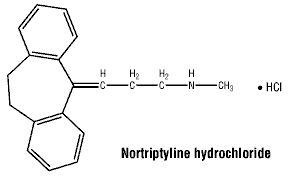
Molecular weight: 299.8.
Chemical name: (Nortriptyline hydrochloride): 5-(3-methylamino-propylidene)- 10,11-dihydro- 5H-dibenzo [a,d] cycloheptene hydrochloride.
CAS number. 894-71-3.
7 Medicine Schedule (Poisons Standard)
S4 - Prescription Only Medicine.
Date of First Approval
02 April 2015
Date of Revision
11 May 2020
Reasonable care is taken to provide accurate information at the time of creation. This information is not intended as a substitute for medical advice and should not be exclusively relied on to manage or diagnose a medical condition. The Australian Commission on Safety and Quality in Health Care disclaims all liability (including for negligence) for any loss, damage, injury or any other negative effects resulting from reliance on or use of this information. Read our full disclaimer. This website uses cookies. Read our privacy policy.