
Numit 5% Cream
Brand Information
| Brand name | Numit 5% Cream |
| Active ingredient | Lidocaine (lignocaine) + Prilocaine |
| Schedule | S2 |
Consumer Medicine Information (CMI) leaflet
Please read this leaflet carefully before you start using the Numit 5% Cream.
Full CMI
numit™ 5% cream
Active ingredient(s): lidocaine and prilocaine
Consumer Medicine Information (CMI)
This leaflet provides important information about using numit 5% cream. You should also speak to your doctor or pharmacist if you would like further information or if you have any concerns or questions about using numit 5% cream.
Where to find information in this leaflet:
1. Why am I using numit 5% cream?
2. What should I know before I use numit 5% cream?
3. What if I am taking other medicines?
4. How do I use numit 5% cream?
5. What should I know while using numit 5% cream?
6. Are there any side effects?
7. Product details
1. Why am I using numit 5% cream?
numit 5% cream contains the active ingredients lidocaine and prilocaine, both are local anaesthetics.
These local anaesthetics are combined with special agents which allow the products to pass through the skin. Once through the skin the numbing effect they produce allows minor surgical procedures to be performed with a complete or significant reduction in pain.
These procedures can include insertion of IV catheters, mechanical cleansing or debridement of leg ulcers, blood sampling, vaccination, superficial surgical procedures, including split skin grafting; minor superficial cosmetic procedures. Topical anaesthesia of genital skin prior to superficial surgical procedures or infiltration analgesia.
numit 5% cream is not addictive.
2. What should I know before I use numit 5% cream?
Warnings
Do not use numit 5% cream if:
- you are allergic to lidocaine or prilocaine, or any of the ingredients listed at the end of this leaflet.
Always check the ingredients to make sure you can use this medicine. - you have any open wounds except leg ulcers.
Check with your doctor or pharmacist if you:
- have any other medical conditions, e.g. dermatitis, methaemoglobinaemia, glucose-6-phosphate dehydrogenase deficiency and mollusca contasgiosa. It may not be safe for you or your child to use numit 5% cream if you have any of these conditions.
- take any medicines for any other condition
- intend to use it to treat other complaints
- have allergies to local anaesthetic, eg those used at the dentist
- have allergies to adhesives or sticking plasters
If you or your child have an allergic reaction, you may get a skin rash, hay fever or an asthma attack.
During treatment, you may be at risk of developing certain side effects. It is important you understand these risks and how to monitor for them. See additional information under Section 6. Are there any side effects?
Pregnancy and breastfeeding
Check with your doctor or pharmacist if you are pregnant or intend to become pregnant. The ingredients in numit 5% cream have been used for many years and no ill effects have been shown if they are used while you are pregnant.
Talk to your doctor or pharmacist if you are breastfeeding or intend to breastfeed. Only very small amounts of numit 5% cream get into the blood so there is a risk your baby can take in numit 5% cream from breast milk if you are breast feeding, it is unlikely to cause any problems.
numit 5% cream should not be used in premature babies.
We do not have enough knowledge yet to be sure if it is safe in premature babies.
3. What if I am taking other medicines?
Tell your doctor or pharmacist if you are taking any other medicines, including any medicines, vitamins or supplements that you buy without a prescription from your pharmacy, supermarket or health food shop.
Some medicines may interfere with numit 5% cream and affect how it works.
- a sulphonamide antibiotic eg sulfatrimoxazole
- medicines used to treat irregular heartbeat such as amiodarone
- other local anaesthetic
Check with your doctor or pharmacist if you are not sure about what medicines, vitamins or supplements you are taking and if these affect numit 5% cream.
4. How do I use numit 5% cream?
How much to use
- Follow the instructions provided with the medicine.
- Do not exceed the recommended dosage as this can cause harmful side effects, particularly in infants under 3 months of age.
When to use numit 5% cream
On intact skin:
The most important thing to do is be sure that you apply numit 5% cream at least one hour before you are due to have the procedure except for skin grafting where a two hour application time is required or for procedures on male genital skin where only fifteen minutes is required.
Leg ulcers:
If you are using numit 5% cream on leg ulcers you only need to apply the cream 30 minutes before your ulcer is going to be cleaned.
numit 5% cream can be left on for several hours and still work.
If you use too much numit 5% cream
If you think that you have used too much numit 5% cream, you may need urgent medical attention.
You should immediately:
- phone the Poisons Information Centre
(by calling 13 11 26), or - contact your doctor, or
- go to the Emergency Department at your nearest hospital.
You should do this even if there are no signs of discomfort or poisoning.
Do not exceed the maximum recommended dose or length of administration. Children, particularly those aged below 3 months of age, are at an increased risk of serious adverse effects in overdose.
For most procedures, it is difficult to use too much numit 5% cream. Be careful not to use too much in procedures where larger amounts may be required, such as cosmetic hair removal (see Package Insert for maximum amounts). Using too much numit 5% cream may cause unwanted side effects. Some of these can be serious such as methaemoglobinaemia (a condition where the blood cannot take enough oxygen to your blood) or cardiovascular effects (effects on your heart and lungs). If you use too much numit 5% cream, you may notice the following:
- nervousness
- dizziness
- difficulty breathing
- numbness of the mouth
- your skin turning blue (a symptom of - methaemoglobinaemia)
- blurred vision
- shaky hands
- a rash where numit 5% cream has not been applied.
5. What should I know while using numit 5% cream?
Things you should do
Be sure to follow the instructions in the pack insert on how to apply numit 5% cream carefully.
Make sure the dressing covering cream is firmly fixed, especially on young children.
If you or your child are using numit 5% cream on leg ulcers, only use the tube once. Throw out any cream left in the tube after use.
Remind any doctor, dentist or pharmacist you visit that you are using numit 5% cream.
Things you should not do
- Do not use on broken skin, unless a doctor has told you to.
- Do not apply to large areas of the body, except on the advice of a healthcare practitioner.
- If you do not follow the application duration instruction, your or your child's appointment may have to be delayed, or the procedure may hurt more than it would otherwise.
- Do not apply near eyes. It may cause eye irritation. If numit 5% cream does get into your eyes, immediately rinse them with large amounts of water and contact your doctor or pharmacist for advice.
- Do not use numit 5% cream on leg ulcers for longer than 2 months without checking with your doctor or pharmacist.
- Do not exceed the recommended dose. Exceeding the recommended dose or length of application may be harmful.
Looking after your medicine
- Keep your cream in the pack until it is time to use it.
- If you squeeze too much numit 5% cream out of the tube it should be discarded, it should not be kept.
- Do not let it freeze.
Follow the instructions in the carton on how to take care of your medicine properly.
Store it in a cool dry place where the temperature stays below 30°C. Keep away from moisture, heat or sunlight; for example, do not store it:
- in the bathroom or near a sink, or
- in the car or on window sills.
Keep it where young children cannot reach it.
Getting rid of any unwanted medicine
If you no longer need to use this medicine or it is out of date, take it to any pharmacy for safe disposal.
Do not use this medicine after the expiry date.
6. Are there any side effects?
All medicines can have side effects. If you do experience any side effects, most of them are minor and temporary. However, some side effects may need medical attention.
See the information below and, if you need to, ask your doctor or pharmacist if you have any further questions.
Mild side effects
| Less serious side effects | What to do |
| Skin: Any local reaction such as itching, swelling, paleness, redness or a burning sensation. | Remove numit 5% cream and discontinue use. Speak to your doctor or pharmacist if you have any of these less serious side effects and they worry you. |
Rare side effects
| Serious side effects | What to do |
Skin:
Respiratory: difficulty breathing Head: dizziness Hands: shaky | Remove numit 5% cream and discontinue use. Call your doctor straight away, or go straight to the Emergency Department at your nearest hospital if you notice any of these serious side effects. |
Please refer to 'If you use too much numit 5% cream' for specific side effects as a result of overdose.
Tell your doctor or pharmacist if you notice anything else that may be making you feel unwell.
Other side effects not listed here may occur in some people.
Reporting side effects
After you have received medical advice for any side effects you experience, you can report side effects to the Therapeutic Goods Administration online at www.tga.gov.au/reporting-problems. By reporting side effects, you can help provide more information on the safety of this medicine.
7. Product details
This medicine is available over-the-counter without a doctor's prescription.
What numit 5% cream contains
| Active ingredient (s) (main ingredient (s)) | Lidocaine, Prilocaine |
| Other ingredients (inactive ingredients) | Carbomer 934P, Ethoxylated hydrogenated castor oil, Purified water, Sodium hydroxide |
Do not take this medicine if you are allergic to any of these ingredients.
What numit 5% cream looks like
numit 5% cream is a soft glossy cream in either a 10g or 30g tube (Aust R 265292). 5g tube is not currently marketed.
Who distributes numit 5% cream
Ego Pharmaceuticals Pty. Ltd.
13-31 Malcolm Road, Braeside 3195
Australia.
This leaflet was prepared in August 2025.
Brand Information
| Brand name | Numit 5% Cream |
| Active ingredient | Lidocaine (lignocaine) + Prilocaine |
| Schedule | S2 |
MIMS Revision Date: 01 November 2025
1 Name of Medicine
Lidocaine and prilocaine.
2 Qualitative and Quantitative Composition
Numit contains lidocaine 2.5% w/w (25 mg/g) and prilocaine 2.5% w/w (25 mg/g).
For the full list of excipients, see Section 6.1 List of Excipients.
3 Pharmaceutical Form
Numit is a soft, white cream for topical application.
Numit is non-sterile.
4 Clinical Particulars
4.1 Therapeutic Indications
Numit is indicated for topical anaesthesia of the skin prior to insertion of IV catheters, mechanical cleansing or debridement of leg ulcers, cleaning ulcers, blood sampling, vaccination; superficial surgical procedures, including split skin grafting, minor surgical cosmetic procedures. Topical anaesthesia of genital skin prior to superficial surgical procedures or infiltration anaesthesia.
4.2 Dose and Method of Administration
In order to avoid cross contamination, infection control procedures and principles should be strictly adhered to during application of Numit.
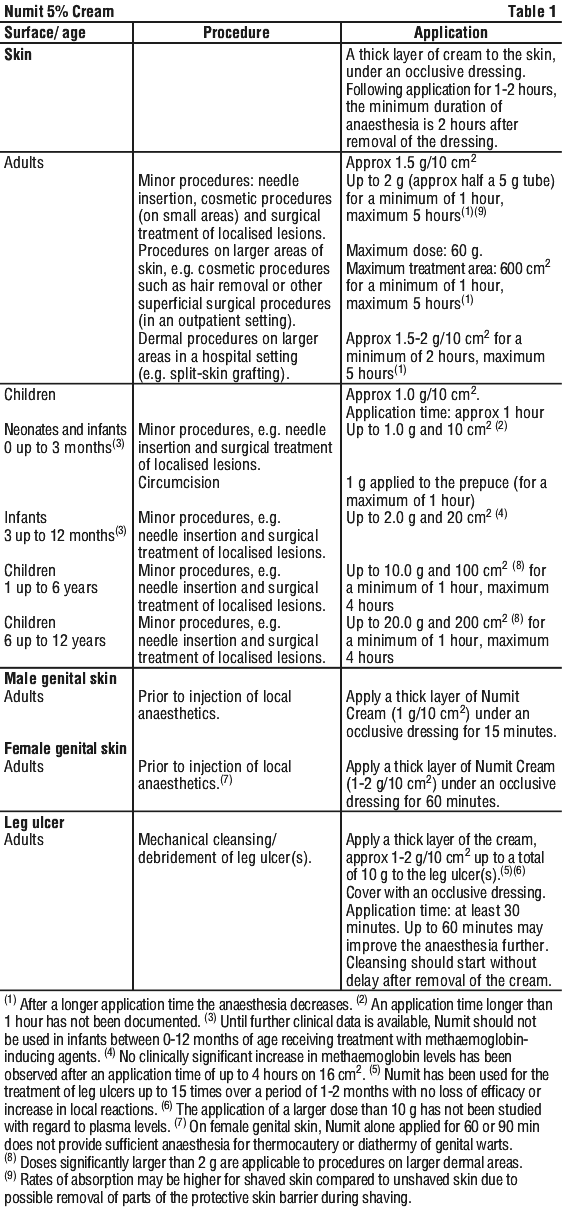
Pharmacokinetic data for application longer than 4 hours is not available in children. In adults, there is no benefit in application times longer than 5 hours, as the analgesic effectiveness of the cream dissipates over time.
Use in elderly. No dosage adjustment is required when Numit is applied to intact skin in the elderly.
Use in premature infants with a gestational age of less than 37 weeks is not recommended (see Section 4.4 Special Warnings and Precautions for Use).
Unscrew tube cap and peel off security seal. When used on leg ulcers discard the tube with any remaining Numit after each occasion that a patient is treated.
A 1 g dose of Numit cream is achieved by squeezing Numit from the tube into a circular area with diameter of approximately 20 mm (the size of a 2 dollar coin) to a depth of approximately 4 mm. Keep the tube in close contact with the skin until the correct amount has been applied.
A 1 g dose of Numit cream can also be achieved by squeezing a length of Numit of approximately 3.5 cm from the tube.
See Table 1 for dosing instructions.
4.3 Contraindications
Hypersensitivity to prilocaine, lidocaine or any local anaesthetics of the amide type.
Hypersensitivity to any of the excipients of Numit cream.
Glucose-6-phosphate dehydrogenase deficiency or congenital or idiopathic methaemoglobinaemia.
4.4 Special Warnings and Precautions for Use
Open wounds. Numit should not be applied to open wounds other than leg ulcers, due to insufficient data on absorption from these sites.
Atopic dermatitis. Care should be taken when applying Numit to skin areas with atopic dermatitis. A shorter application time (15-30 minutes) may be sufficient.
Eyes. Numit should not be applied to or near to the eyes since it causes corneal irritation. Damage to the eye may also occur from undetected foreign bodies. Special care should be employed to reduce the risk of rubbing the eyes with Numit. It is therefore important that the patch or occlusive dressing should be secured against accidental dislocation, especially in young children.
Middle ear. Lidocaine/prilocaine 5% cream is not recommended in any clinical situation in which its penetration into the middle ear is possible. In studies in rodents (guinea pigs) lidocaine/prilocaine 5% cream was found to have an ototoxic effect when instilled directly into the middle ear, however no abnormalities were observed when lidocaine/prilocaine 5% cream was applied to the animals' external auditory canal.
Lidocaine/prilocaine 5% cream caused minor structural damage to the tympanic membrane in rats when applied directly to the membrane. The relevance of these findings to the clinical situation is unknown.
Genital mucosa. Lidocaine/prilocaine 5% cream is presently not recommended for use on genital mucosa. Available data suggest that the anaesthetic efficacy of Numit on genital mucosa may be variable.
Vaccination. Lidocaine and prilocaine have bactericidal and antiviral properties in concentrations above 0.5-2%. A clinical trial with MMR vaccine administered subcutaneously demonstrated that lidocaine/prilocaine 5% cream does not adversely affect antibody response.
There are no data on effects of Numit on other live viral vaccines administered subcutaneously. When lidocaine/prilocaine 5% cream is used prior to intradermal BCG vaccination, the results of vaccination should be monitored.
Use in the elderly. No data available.
Paediatric use. Until further clinical data are available, lidocaine/prilocaine 5% cream should not be used in infants between 0 and 12 months of age receiving treatment with methaemoglobin inducing agents such as sulphonamides (also see Section 4.9 Overdose) or in preterm infants with a gestational age less than 37 weeks.
Studies have been unable to demonstrate the efficacy of lidocaine/prilocaine 5% cream for heel lancing in neonates.
Lidocaine/prilocaine 5% cream should not be applied to the genital mucosa of children owing to insufficient data on absorption. However, when used in neonates for circumcision (genital skin), a dose of 1.0 g lidocaine/prilocaine 5% cream on the prepuce has proven to be safe.
In children/ neonates younger than 3 months of age, a transient increase in methaemoglobin is commonly observed up to 12 hours after an application of lidocaine/prilocaine 5% cream.
Caution is required in those at risk of methaemoglobinaemia. Repeated applications of lidocaine/prilocaine 5% cream in neonates and infants have not been studied and should be avoided.
Use in premature infants with a gestational age of less than 37 weeks is not recommended.
Effects on laboratory tests. No data available.
4.5 Interactions with Other Medicines and Other Forms of Interactions
Antiarrhythmic drugs class III. Patients treated with antiarrhythmic drugs class III (e.g. amiodarone) should be kept under close surveillance and ECG monitoring considered, since cardiac effects may be additive.
Specific interaction studies with lidocaine and antiarrhythmic drugs class III (e.g. amiodarone) have not been performed, but caution is advised.
Drugs reducing clearance of lidocaine. Drugs that reduce the clearance of lidocaine (for example, cimetidine or beta-blockers) may cause potentially toxic plasma concentrations when lidocaine (e.g. Numit) is given in repeated high doses over a long time period. Such interactions should therefore be of no clinical importance following short-term treatment with lidocaine (e.g. Numit) at recommended doses.
Methaemoglobinaemia inducing agents. Numit may accentuate the formation of methaemoglobin in patients treated with other drugs known to induce methaemoglobinaemia (e.g. sulphonamides).
Other local anaesthetic agents. With large doses of Numit, the risk of additional systemic toxicity should be considered in patients receiving other local anaesthetics or agents structurally related to local anaesthetics, e.g. mexiletine.
Drugs reducing clearance of lidocaine. Drugs that reduce the clearance of lidocaine (for example cimetidine or beta-blockers) may cause potentially toxic plasma concentrations when lidocaine (e.g. Numit) is given in repeated doses over a long time period. Such interactions should therefore be of no clinical importance following short-term treatment with lidocaine (e.g. Numit) at recommended doses.
4.6 Fertility, Pregnancy and Lactation
Effects on fertility. No data available.
Use in pregnancy. (Category A)
Category A: Drugs which have been taken by a large number of pregnant women and women of child bearing age without any proven increase in the frequency of malformations or other direct or indirect harmful effects on the foetus having been observed.
Use in lactation. No information is available on the excretion of lidocaine, prilocaine or their metabolites into breast milk following the administration of Numit.
Following parenteral administration, lidocaine is excreted into breast milk. Because of low maternal systemic absorption following application of recommended doses of Numit, the amount of lidocaine and prilocaine that may be ingested by the breastfed infant would be extremely small.
4.7 Effects on Ability to Drive and Use Machines
The effects of this medicine on a person's ability to drive and use machines were not assessed as part of its registration.
4.8 Adverse Effects (Undesirable Effects)
Intact skin. Common events (≥ 1% and < 10%). Skin. Transient local reactions at the application site such as, paleness, erythema (redness) and oedema.
Uncommon events (≥ 0.1% and < 1%). Skin sensations (an initial mild burning sensation, itch or warmth at the application site).
Rare events (< 0.1%). General. In rare cases, local anaesthetic preparations have been associated with allergic reactions (in the most severe instances anaphylactic shock).
Rare cases of discrete local lesions at the application site, described a purpuric or petechial, have been reported, especially after longer application times in children with atopic dermatitis or mollusca contagiosa. Increased methaemoglobin level. Methaemoglobinaemia and/or cyanosis. Corneal irritation after accidental eye exposure.
Leg ulcer. Common events (≥ 1% and < 10%). Skin. Transient local reactions at the application site such as, paleness, erythema (redness) and oedema.
Skin sensations (an initial mild burning sensation, itch or warmth at the application site).
Uncommon events (≥ 0.1% and < 1%). Skin. Skin irritation (at the application site).
Rare events (< 0.1%). General. In rare cases, local anaesthetic preparations have been associated with allergic reactions (in most severe instances anaphylactic shock).
Reporting suspected adverse effects. Reporting suspected adverse reactions after registration of the medicinal product is important. It allows continued monitoring of the benefit-risk balance of the medicinal product. Healthcare professionals are asked to report any suspected adverse reactions at www.tga.gov.au/reporting-problems.
4.9 Overdose
Rare cases of methaemoglobinaemia have been reported.
Prilocaine in high doses may cause an increase in the methaemoglobin level particularly in conjunction with methaemoglobinaemia inducing agents (e.g. sulphonamides). Clinically significant methaemoglobinaemia should be treated with a slow intravenous injection of methylene blue.
In the unlikely event of systemic toxicity following epidermal application of Numit, the signs and symptoms anticipated would be similar in nature to those observed following other routes of administration of local anaesthetics. Owing to slow absorption into the circulation from intact skin, a patient with signs of toxicity should be observed for several hours after treatment.
Systemic toxicity to amide type local anaesthetics is initially manifested as CNS excitation and may result in a slow onset of nervousness, dizziness, blurred vision and tremors followed by drowsiness, convulsions, unconsciousness and possibly respiratory arrest.
Toxic cardiovascular reactions to local anaesthetics are usually depressant in nature, may occur rapidly and with little warning and can lead to peripheral vasodilation, hypotension, myocardial depression, bradycardia and possible cardiac arrest. Severe neurological symptoms (convulsions, CNS depression) must be treated symptomatically by respiratory support and administration of anticonvulsive drugs.
For information on the management of overdose, contact the Poisons Information Centre on 131126 (Australia).
5 Pharmacological Properties
5.1 Pharmacodynamic Properties
Mechanism of action. Lidocaine and prilocaine are both amide type local anaesthetic agents. Both agents stabilise the neuronal membrane preventing the initiation and conduction of nerve impulses thereby effecting local anaesthetic action.
Numit provides dermal anaesthesia. The depth and quality of anaesthesia depends upon the application time and the applied dose.
Local anaesthesia with Numit is achieved after 60 minutes application. Numit cream should be applied under an occlusive, impermeable dressing. Following the application of Numit cream for 1-2 hours, the duration of anaesthesia is at least 2 hours after removal of the occlusive dressing.
Reliable anaesthesia for the cleansing of leg ulcers is achieved after an application time of 30 minutes in most patients. An application time of 60 minutes may improve the anaesthesia. The cleansing procedure should start within 10 minutes of removal of the cream. There is no clinical data regarding cleaning started after 10 minutes of cream removal.
A reduced number of cleansing sessions are required to achieve a clean ulcer when Numit is used compared to a placebo.
No negative effects on ulcer healing or bacterial flora have been observed.
Numit may cause transient local peripheral vasoconstriction or vasodilation, observed as transient paleness or redness, at the treated area.
Clinical trials. In clinical trials with lidocaine/prilocaine 5% cream, venepuncture or venous catheterisation was pain free in 50-59% patients, slightly painful in 35-40% and painful in 3-6%. Anaesthesia may be less for skin structures below the deep fascia.
In clinical trials in adults assessing pain associated with intramuscular influenza vaccination and intramuscular and subcutaneous injections of saline solution, lidocaine/prilocaine 5% cream significantly reduced injection pain relative to placebo.
In clinical trials in infants and children assessing pain associated with subcutaneous and intramuscular vaccination, lidocaine/prilocaine 5% cream significantly reduced injection pain behaviours and pain scores relative to placebo.
In clinical trials assessing the effects of lidocaine/prilocaine 5% cream on intramuscular and subcutaneous, live and nonlive vaccines, it was demonstrated that lidocaine/prilocaine 5% cream does not adversely affect antibody response. A clinical trial assessing the effect of lidocaine/prilocaine 5% cream application prior to intracutaneous BCG injection demonstrated that lidocaine/prilocaine 5% cream did not affect the immunisation response.
5.2 Pharmacokinetic Properties
Absorption. Systemic absorption and anaesthetic efficacy of lidocaine and prilocaine is dependent upon the characteristics of the leg ulcer, the applied dose, total application area, application time, thickness of the skin (which varies between different areas of the body), other conditions such as skin diseases, and shaving.
Intact skin. The extent of systemic absorption was approximately 10% following application to the face (10 g/100 cm2 for 2 hours). Maximum plasma levels (mean 0.16 and 0.06 microgram/mL of lidocaine and prilocaine respectively) were reached after approximately 2.5 hours.
After application to the thigh in adults (60 g cream/400 cm2 for 3 hours) the extent of absorption was approximately 5% of lidocaine and prilocaine. Maximum plasma concentrations (mean 0.12 and 0.07 microgram/mL) were reached approximately 2-6 hours after the application.
In adults, a thick layer of lidocaine/prilocaine 5% cream (corresponding to approximately 150 g) has been applied to intact skin areas of up to 1,300 cm2 for application times of up to 7 hours. The highest individual plasma levels observed to date were 1.1 microgram/mL lidocaine and 0.2 microgram/mL prilocaine. These levels were below those at which symptoms of toxicity would be expected to occur (5-10 microgram/mL either agent; also see Section 4.8 Adverse Effects (Undesirable Effects)).
Leg ulcers. Following a single application for 30 minutes of 5 to 10 g of lidocaine/prilocaine 5% cream to leg ulcers, the maximum plasma levels of lidocaine (range 0.05-0.25 microgram/mL, one individual value of 0.84 microgram/mL) and of prilocaine (0.02-0.08 microgram/mL) were reached within 1-2.5 hours.
After an application time of 24 hours the maximum plasma levels of lidocaine (0.19-0.71 microgram/mL) and of prilocaine (0.06-0.28 microgram/mL) were usually reached within 2-4 hours.
Following repeated applications for 30-60 minutes of 2-10 g lidocaine/prilocaine 5% cream 3-7 times a week, for up to 15 doses, during a period of one month, there was no apparent accumulation in plasma of lidocaine and its metabolites monoglycinexylidide and 2,6-xylidine or of prilocaine and its metabolite orthotoluidine. The maximum observed plasma levels for lidocaine, monoglycinexylidide and 2,6-xylidine were 0.41, 0.03 and 0.01 microgram/mL respectively. The maximum observed plasma levels for prilocaine and orthotoluidine were 0.08 microgram/mL and 0.01 microgram/mL respectively.
Children. Following the application of 1.0 g of lidocaine/prilocaine 5% cream in neonates below 3 months of age, to approximately 10 cm2 for one hour, the maximum plasma concentration of lidocaine and prilocaine were 0.135 microgram/mL and 0.107 microgram/mL respectively.
Following the application of 2.0 g of lidocaine/prilocaine 5% cream in infants between 3 and 12 months of age, to approximately 16 cm2 for four hours, the maximum plasma concentrations of lidocaine and prilocaine were 0.155 microgram/mL and 0.131 microgram/mL respectively.
Following the application of 10.0 g of lidocaine/prilocaine 5% cream in children between 2 and 3 years of age, to approximately 100 cm2 for two hours, the maximum plasma concentrations of lidocaine and prilocaine were 0.315 microgram/mL and 0.215 microgram/mL respectively.
Following the application of 10.0-16.0 g of lidocaine/prilocaine 5% cream in children between 6 and 8 years of age, to approximately 100-160 cm2 for two hours, the maximum plasma concentrations of lidocaine and prilocaine were 0.299 microgram/mL and 0.110 microgram/mL respectively.
Pharmacokinetic data for application longer than 4 hours is not available in children. In adults, there is no benefit in application times longer than 5 hours, as the analgesic effectiveness of the cream dissipates over time.
5.3 Preclinical Safety Data
Genotoxicity. Genotoxicity tests with lidocaine are inconclusive. In genotoxicity studies, a metabolite of lidocaine, 2,6-xylidine, showed evidence of activity in some tests but not in other tests.
Carcinogenicity. A metabolite of lidocaine, 2,6-xylidine has been shown to have carcinogenic potential (nasal and subcutaneous tumours) in preclinical toxicological studies evaluating chronic exposure. A metabolite of prilocaine, o-toluidine, has also shown evidence of mutagenic activity in some genotoxicity tests but not others. o-toluidine has also been shown to have carcinogenic potential (e.g. renal, bladder, spleen subcutaneous tumours) in preclinical toxicological studies.
6 Pharmaceutical Particulars
6.1 List of Excipients
Each gram of Numit cream contains ethoxylated hydrogenated castor oil, purified water, carbomer 934P and sodium hydroxide as excipients.
6.2 Incompatibilities
Incompatibilities were either not assessed or not identified as part of the registration of this medicine.
6.3 Shelf Life
In Australia, information on the shelf life can be found on the public summary of the Australian Register of Therapeutic Goods (ARTG). The expiry date can be found on the packaging.
6.4 Special Precautions for Storage
Store below 30°C.
6.5 Nature and Contents of Container
5 g laminate tube*, 10 g laminate tube and 30 g laminate tube, packed into a carton.
*Not currently marketed in Australia.
6.6 Special Precautions for Disposal
In Australia, any unused medicine or waste material should be disposed of by taking to your local pharmacy.
6.7 Physicochemical Properties
Numit cream is a 1:1 oil/water emulsion of an eutectic mixture of lidocaine and prilocaine.
When lidocaine and prilocaine are mixed in equal amounts, the solid pure bases of lidocaine and prilocaine form an oil at temperatures above 16°C (i.e. a eutectic mixture). By avoiding the need for nonaqueous solvent, higher concentrations of local anaesthetic in the cream can be achieved and maintained during application.
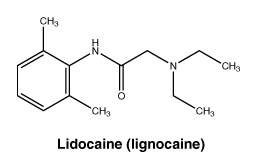
Lidocaine. Molecular formula: C14H22N2O. Molecular weight: 234.3.
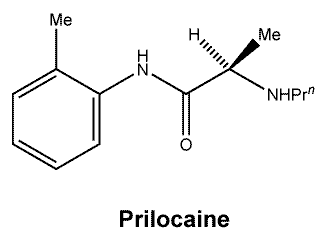
Prilocaine. Molecular formula: C13H20N2O. Molecular weight: 220.3.
Chemical structure.
7 Medicine Schedule (Poisons Standard)
S2 (Pharmacy Medicine).
Date of First Approval
01 December 2015
Date of Revision
07 April 2025
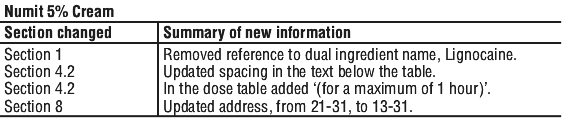
Summary Table of Changes
Reasonable care is taken to provide accurate information at the time of creation. This information is not intended as a substitute for medical advice and should not be exclusively relied on to manage or diagnose a medical condition. The Australian Commission on Safety and Quality in Health Care disclaims all liability (including for negligence) for any loss, damage, injury or any other negative effects resulting from reliance on or use of this information. Read our full disclaimer. This website uses cookies. Read our privacy policy.