
OncoTICE
Brand Information
| Brand name | OncoTICE |
| Active ingredient | Bacillus calmette-guerin, TICE strain |
| Schedule | S4 |
Consumer Medicine Information (CMI) leaflet
Please read this leaflet carefully before you start using the OncoTICE.
Summary CMI
OncoTICE®
Consumer Medicine Information (CMI) summary
The full CMI on the next page has more details. If you are worried about using this medicine, speak to your healthcare provider.
1. Why am I using OncoTICE?
OncoTICE contains the active ingredient Mycobacterium bovis (Bacillus Calmette and Guerin (BCG) strain). OncoTICE is used for the treatment of superficial bladder cancer by stimulating the body's natural ability to fight disease. It is also used to prevent the disease from recurring after bladder surgery.
For more information, see Section 1. Why am I using OncoTICE? in the full CMI.
2. What should I know before I use OncoTICE?
Do not use if you have ever had an allergic reaction to OncoTICE or any of the ingredients listed at the end of the CMI.
Talk to your healthcare provider if you have any other medical conditions, take any other medicines, or are pregnant or plan to become pregnant or are breastfeeding.
For more information, see Section 2. What should I know before I use OncoTICE? in the full CMI.
3. What if I am taking other medicines?
Some medicines may interfere with OncoTICE and affect how it works.
A list of these medicines is in Section 3. What if I am taking other medicines? in the full CMI.
4. How do I use OncoTICE?
- OncoTICE will be instilled into the bladder via a sterile tube (catheter) by a healthcare provider.
- Your healthcare provider will decide on the duration and frequency of treatment for you.
More instructions can be found in Section 4. How do I use OncoTICE? in the full CMI.
5. What should I know while using OncoTICE?
| Things you should do |
|
For more information, see Section 5. What should I know while using OncoTICE? in the full CMI.
6. Are there any side effects?
Like all medicines, OncoTICE can cause side effects, although not everybody gets them. Your healthcare provider will discuss these with you and will explain the risks and benefits of your treatment. When you get OncoTICE, you can have some serious side effects
For more information, including what to do if you have any side effects, see Section 6. Are there any side effects? in the full CMI.
Full CMI
OncoTICE®
Active ingredient: Mycobacterium bovis (Bacillus Calmette and Guerin (BCG) strain)
Consumer Medicine Information (CMI)
This leaflet provides important information about using OncoTICE. You should also speak to your healthcare provider if you would like further information or if you have any concerns or questions about using OncoTICE.
Where to find information in this leaflet:
1. Why am I using OncoTICE?
2. What should I know before I use OncoTICE?
3. What if I am taking other medicines?
4. How do I use OncoTICE?
5. What should I know while using OncoTICE?
6. Are there any side effects?
7. Product details
1. Why am I using OncoTICE?
OncoTICE contains the active ingredient Mycobacterium bovis (Bacillus Calmette and Guerin (BCG) strain).
OncoTICE belongs to the group of medicines called immunostimulants. These medicines stimulate certain parts of the immune system.
OncoTICE is used for the treatment of superficial bladder cancer by stimulating the body's natural ability to fight disease. It is also used to prevent the disease from recurring after bladder surgery.
2. What should I know before I use OncoTICE?
Warnings
Do not use OncoTICE if:
- you are allergic to Mycobacterium bovis (Bacillus Calmette and Guerin (BCG) strain), or any of the ingredients listed at the end of this leaflet. Always check the ingredients to make sure you can use this medicine.
- you have a urinary tract infection. If you have cystitis (inflammation of the bladder), you will receive a course of antibiotics before treatment with OncoTICE starts. The treatment with antibiotics needs to be finished before treatment with OncoTICE starts.
- you have blood in your urine
- you have active tuberculosis - your healthcare provider will probably do a skin reaction test (Mantoux) to assist in making this diagnosis.
- you are being treated with anti-tuberculosis medicines.
- you suffer from an impaired immune system (reduced immunity against infectious diseases), irrespective of the cause.
- you are HIV-positive
- you are pregnant or are breast feeding your baby
During treatment, you may be at risk of developing certain side effects. It is important you understand these risks and how to monitor for them. See additional information under Section 6. Are there any side effects?
Pregnancy and breastfeeding
Check with your healthcare provider if you are pregnant or intend to become pregnant.
Talk to your healthcare provider if you are breastfeeding or intend to breastfeed.
Special Instructions
Take special care with OncoTICE in the following situations:
- Before the first time OncoTICE is instilled in your bladder, your healthcare provider will probably perform a skin reaction test (Mantoux) to investigate if you have an active tuberculosis infection. If a skin test (Mantoux test) is performed after treatment with OncoTICE, it may be positive.
- If the bladder wall or urethra is damaged during catheterisation, treatment will need to be postponed until the lesion is healed.
- It is important that infection with the HIV virus is excluded. It may be necessary that a blood sample is taken to test for HIV. Your healthcare provider may also ask if there are any risk factors, such as unsafe sex, use of shared needles if you use intravenous drugs, or received blood transfusions.
- To protect your partner from transmission of the BCG bacteria, it is advisable to refrain from sexual intercourse during the week following treatment with OncoTICE. The use of a condom may protect your partner provided it is used correctly and does not tear.
3. What if I am taking other medicines?
Tell your healthcare provider if you are taking any other medicines, including any medicines, vitamins or supplements that you buy without a prescription from your pharmacy, supermarket or health food shop.
Some medicines may interfere with OncoTICE and affect how it works.
Medicines that may reduce the effect of OncoTICE include:
- Antibiotics
- Medicines that suppress the immune system (immune suppressants) such as anticancer drugs
- Medicines that suppress the production of bone marrow cells (bone marrow suppressants)
- Radiation therapy
If you are using any of these medicines or undergoing one of these therapies, your healthcare provider will postpone treatment with OncoTICE.
Check with your healthcare provider if you are not sure about what medicines, vitamins or supplements you are taking and if these affect OncoTICE.
4. How do I use OncoTICE?
How OncoTICE is used
OncoTICE will be introduced into the bladder by a healthcare provider.
The contents of one vial will be dissolved in 50mL of saline solution. A sterile tube (catheter) will be inserted into the bladder through the normal urine passage and the bladder will be emptied of urine. The OncoTICE solution will be instilled into the bladder via the tube.
For cancer of the bladder, 7 to 14 days should elapse before BCG is administered following biopsy or traumatic catheterisation. The treatment schedule comprises a weekly instillation for the first 6 weeks, followed by a monthly treatment for a period of 12 months.
If you have had bladder surgery, your healthcare provider will start using OncoTICE between 10 and 15 days later. It will generally be given once a week for 6 weeks, then an instillation in the 8th and 12th week followed by monthly instillations from month 4 through to month 12.
- Your healthcare provider will decide on the duration and frequency of treatment for you.
If you are given too much OncoTICE
In the unlikely event that more than one vial is administered, you will be monitored for signs of BCG infection, and if indicated, you may be treated with anti-tuberculosis medication.
5. What should I know while using OncoTICE?
Things you should do
- Refrain from drinking any fluid in the four hours prior to receiving this product and during the two hours the OncoTICE remains in the bladder.
- It is important you move around while OncoTICE is in the bladder. The solution must remain in the bladder for two hours and you should not empty your bladder during this period. After two hours the bladder should be emptied in a sitting position
- For six hours after treatment the bladder should continue to be emptied in a sitting position.
- Two cups of household bleach should be added to the toilet containing the urine and left to stand for 15 minutes before flushing.
Remind any healthcare provider you visit that you are using OncoTICE.
Driving or using machines
- There is no warning that your ability to drive or operate machines will be affected.
Looking after your medicine
- Store OncoTICE at 2°C to 8°C, protect from light and use before the expiry date on the product label. The product in solution can be stored for a maximum of 2 hours under these conditions.
Keep it where young children cannot reach it.
6. Are there any side effects?
All medicines can have side effects. If you do experience any side effects, most of them are minor and temporary. However, some side effects may need medical attention.
OncoTICE is generally well tolerated.
If you do experience unusual symptoms or feel unwell after receiving this medication, please inform your healthcare provider.
See the information below and, if you need to, ask your healthcare provider if you have any further questions about side effects.
Very Common side effects (in more than 10% patients)
| Very Common side effects | What to do |
| Speak to your healthcare provider if you have any of these side effects |
Common side effects (1% -10% of patients)
| Common side effects | What to do |
| Speak to your healthcare provider if you have any of these side effects. |
Uncommon side effects (0.1% - 1% of patients)
| Uncommon side effects | What to do |
| Speak to your healthcare provider if you have any of these side effects. |
Rare side effects (0.01% - 0.1% of patients):
| Rare side effects | What to do |
| Speak to your healthcare provider if you have any of these side effects. |
Very Rare side effects (less than 0.01% patients)
| Very Rare side effects | What to do |
| Speak to your healthcare provider if you have any of these side effects. |
Other side effects
| Other observed side effects | What to do |
| Speak to your healthcare provider if you have any of these side effects. |
| Side effects (Unknown frequency) | What to do |
| Speak to your healthcare provider if you have any of these side effects. |
In case you develop these symptoms or any new or worsening symptoms, you are advised to contact your healthcare provider, immediately.
Tell your healthcare provider if you notice anything else that may be making you feel unwell.
Other side effects not listed here may occur in some people.
Reporting side effects
After you have received medical advice for any side effects you experience, you can report side effects to the Therapeutic Goods Administration online at www.tga.gov.au/reporting-problems. By reporting side effects, you can help provide more information on the safety of this medicine.
Always make sure you speak to your healthcare provider before you decide to stop taking any of your medicines.
7. Product details
This medicine is only available with a doctor's prescription.
What OncoTICE contains
| Active ingredient (main ingredient) | Mycobacterium bovis (Bacillus Calmette and Guerin (BCG) strain) |
| Other ingredients (inactive ingredients) | lactose monohydrate asparagine citric acid monohydrate dibasic potassium phosphate magnesium sulfate heptahydrate ferric ammonium citrate glycerol zinc formate dihydrate strong ammonia solution. |
Do not take this medicine if you are allergic to any of these ingredients.
What OncoTICE looks like
OncoTICE is a freeze-dried preparation containing two hundred million - eight hundred million Colony Forming Units of Mycobacterium bovis (Bacillus Calmette and Guerin (BCG) strain) in sealed glass vials (Aust R 59912).
Who distributes OncoTICE
Merck Sharp & Dohme (Australia) Pty Limited
Level 1, Building A 26 Talavera Road
Macquarie Park NSW 2113 Australia
This leaflet was prepared in October 2025.
RCN000028118-AU
Copyright © 2025 Merck & Co., Inc., Rahway, NJ, USA, and its affiliates. All rights reserved.
Brand Information
| Brand name | OncoTICE |
| Active ingredient | Bacillus calmette-guerin, TICE strain |
| Schedule | S4 |
MIMS Revision Date: 01 December 2025
1 Name of Medicine
Mycobacterium bovis (Bacillus Calmette and Guerin (BCG) strain).
2 Qualitative and Quantitative Composition
OncoTICE is a freeze-dried preparation of live, attenuated Mycobacterium bovis (Bacillus Calmette and Guerin (BCG) strain) (Tice BCG).
The freeze-dried BCG preparation contains 2-8 x 10⁸ colony forming units (CFU) of Tice BCG. After reconstitution in 50 mL saline (0.9% sodium chloride solution) the suspension contains 0.4-1.6 x 10⁷ CFU/mL.
For the full list of excipients, see Section 6.1 List of Excipients.
3 Pharmaceutical Form
White to off-white cake or powder (for instillation fluid for intravesical use) containing 2-8 x 10⁸ CFU Tice BCG.
4 Clinical Particulars
4.1 Therapeutic Indications
OncoTICE is used as a treatment of primary or recurrent carcinoma in situ (CIS) of the urinary bladder. OncoTICE is also used after transurethral resection for the prevention of recurrence of high grade and/or relapsing superficial papillary transitional cell carcinoma of the urinary bladder (viz papillary carcinoma stage TA [grade 2 or 3] or T1 [grade 1, 2, or 3]). OncoTICE is only recommended for stage TA grade 1 tumours, when there is judged to be a high risk of tumour recurrence.
4.2 Dose and Method of Administration
Reconstitution, preparation and administration of OncoTICE suspension for bladder instillation. OncoTICE is incompatible with hypotonic and hypertonic solutions.
OncoTICE contains live, attenuated mycobacteria. Because of the potential risk for transmission, it should be prepared, handled and disposed of as a biohazard material. The use of needleless closed-system transfer device products may be considered when transferring OncoTICE from primary packaging to instillation equipment.
Perform the following procedures under aseptic conditions:
Reconstitution. Add 1 mL of preservative-free sterile physiological saline (0.9% sodium chloride) solution by means of a sterile syringe to the contents of 1 vial of OncoTICE. Ensure that the needle is inserted through the centre of the rubber stopper of the vial. Allow to stand for a few minutes. Then gently swirl the vial until a homogenous suspension is obtained. (Caution: avoid forceful agitation.)
Preparation of the suspension for instillation. Dilute the reconstituted suspension in sterile physiological saline (0.9% sodium chloride) up to a volume of 49 mL.
Rinse the vial with another 1 mL of preservative-free sterile physiological saline (0.9% sodium chloride).
Add the rinse fluid to the reconstituted suspension for a final volume of 50 mL.
Mix the suspension carefully.
The suspension is now ready for use; it contains a total of 2-8 x 10⁸ CFU of BCG.
Note. Do not filter the contents of the OncoTICE vial.
Dosage. Each instillation comprises 2-8 x 10⁸ CFU the contents of one reconstituted and diluted vial of OncoTICE suspended in physiological saline (0.9% sodium chloride) up to a total volume of 50 mL as indicated above.
Carcinoma in situ of the bladder (CIS). After biopsy or traumatic catheterisation, OncoTICE should not be given for 7 to 14 days or until the urinary mucosa has healed (see Section 4.4 Special Warnings and Precautions for Use). The treatment schedule for CIS of the bladder comprises a weekly instillation with OncoTICE during the first 6 weeks, the 'induction treatment' followed by a maintenance treatment consisting of monthly OncoTICE instillations over a period of 12 months.
Adjuvant therapy after transurethral resection of superficial papillary carcinoma of the bladder (free of CIS). After transurethral resection of superficial papillary carcinoma of the bladder, adjuvant therapy with OncoTICE (where indicated) should not be given for 10 to 15 days or until the urinary mucosa has healed (see Section 4.4 Special Warnings and Precautions for Use). The treatment schedule comprises the weekly instillation of OncoTICE during the first 6 weeks, followed by an instillation in the 8th week and the 12th week and thereafter monthly instillations for months 4 through 12 after initiation of treatment.
The duration and frequency of the maintenance treatment course should be evaluated on the basis of tumour classification and clinical diagnosis.
Administration. Insert a catheter via the urethra into the bladder and drain the bladder completely.
The reconstituted 50 mL OncoTICE suspension is instilled into the bladder by gravity flow (i.e. natural flow without force or added pressure) via the catheter.
After instillation, remove the catheter.
The instilled OncoTICE suspension must remain in the bladder for a period of 2 hours.
During this period care should be taken that the instilled OncoTICE suspension has sufficient contact with the whole mucosal surface of the bladder. Therefore the patient should not be immobilised or, in the case of a bed-ridden patient, should be turned over from back to abdomen and vice versa every 15 minutes.
When the OncoTICE suspension has been retained in the bladder for two hours, have the patient void the instilled suspension. Urine should be voided in the sitting position for 6 hours after treatment and two cups of household bleach should be added to the toilet before flushing. The bleach and urine should be left to stand in the toilet for 15 minutes before flushing.
Note. The patient must not ingest any fluid during a period starting 4 hours prior to instillation, until bladder evacuation is permitted (i.e. 2 hours after instillation).
4.3 Contraindications
The intravesical instillation of OncoTICE is contraindicated in the following cases:
Urinary tract infections, or concurrent febrile illness. Therapy with OncoTICE should be interrupted until the bacterial culture from urine becomes negative and therapy with antibiotics or urinary antiseptics is stopped.
Gross haematuria. In these cases, OncoTICE therapy should be stopped or postponed until the haematuria has been successfully treated or has resolved.
Clinical evidence of existing active tuberculosis.
Active tuberculosis should be ruled out in individuals who are PPD positive before starting treatment with OncoTICE.
Treatment with anti-tuberculosis drugs such as streptomycin, para-amino salicylic acid (PAS), isoniazid (INH), rifampicin and ethambutol.
Patients with impaired immune response irrespective whether this impairment is congenital or caused by disease (e.g. AIDS, leukaemia, lymphoma), drugs or other therapy (cytotoxic drugs, radiation).
Asymptomatic carriers with a positive HIV serology and in patients receiving steroids at immunosuppressive doses or other immunosuppressive therapies.
Pregnancy and lactation.
Seven to fourteen days should elapse before BCG is administered following biopsy or traumatic catheterisation.
4.4 Special Warnings and Precautions for Use
OncoTICE is not a vaccine for the prevention of cancer.
The use of OncoTICE may cause tuberculin sensitivity.
The use of OncoTICE has been associated with disseminated BCG infection and in some cases death has resulted. Most cases have involved patients with impaired immune response.
Intravesical instillations should be postponed in the presence of fever, suspected infection, or during treatment with antibiotics.
Small bladder capacity has been associated with increased risk of severe local reactions and should be considered in deciding to use OncoTICE therapy.
OncoTICE contains viable attenuated mycobacteria and should be handled as potentially infectious. All equipment and material used during reconstitution and instillation should be handled and disposed of as biohazardous material.
Before the first intravesical instillation of OncoTICE, a tuberculin test should be performed. If this test is positive, the intravesical instillation of OncoTICE is contraindicated only if there is supplementary medical evidence for an active tuberculous infection.
Instillation of OncoTICE onto a bleeding mucosa may increase the risk of systemic BCG infection. It is recommended to delay OncoTICE administration in such patients until mucosal damage has been healed.
Traumatic catheterisation or other injuries to the urethra or bladder mucosa can promote systemic BCG infection. It is recommended to delay OncoTICE administration in such patients until mucosal damage has healed.
It is recommended that patients known to be at risk of HIV infection be adequately screened prior to commencing therapy.
Patients should be monitored for the presence of symptoms of BCG infection and signs of toxicity after each intravesical treatment.
OncoTICE should not be administered intravenously, subcutaneously nor intramuscularly.
In order to protect the partner, the patient should be recommended to either refrain from intercourse within one week after OncoTICE instillation, or to use a condom.
Reconstitution, preparation and administration of the OncoTICE suspension should be performed under aseptic conditions.
Spillage of OncoTICE suspension may cause Tice BCG contamination. Any spilled OncoTICE suspension should be cleaned by covering with paper towels soaked with tuberculocidal disinfectant for at least 10 minutes. All waste materials should be disposed of as biohazard material.
Accidental exposure to Tice BCG could occur through self-inoculation, by dermal exposure through an open wound, or by inhalation or ingestion of OncoTICE suspension. Tice BCG exposure should not produce significant adverse health outcomes in healthy individuals. However, in case of suspected, accidental self-inoculation, PPD skin testing is advised at the time of the accident and six weeks later to detect skin test conversion.
Care should be taken not to traumatise the urinary tract or to introduce contaminants into the urinary system.
Use in the elderly. No data available.
Paediatric use. Safety and effectiveness for carcinoma of the urinary bladder in children have not been established.
Effects on laboratory tests. No data available.
4.5 Interactions with Other Medicines and Other Forms of Interactions
OncoTICE is sensitive to most antibiotics and in particular the routinely used anti-tuberculous drugs such as streptomycin, para-amino salicylic acid (PAS), isoniazid (INH), rifampicin and ethambutol. It is unknown whether interactions occur during the intravesical instillation of OncoTICE. Therefore the anti-tumour activity of OncoTICE may be influenced by concomitant therapy with antibiotics. If a patient is being treated with an antibiotic, postponement of the intravesical instillation is recommended until the end of the antibiotic treatment (also see Section 4.3 Contraindications).
Studies on possible interactions with other drugs have not been performed.
Immunosuppressants and/or bone marrow depressants and/or radiation may interfere with the development of the immune response and thus with anti-tumour efficacy and should therefore not be used in combination with OncoTICE.
4.6 Fertility, Pregnancy and Lactation
Effects on fertility. No data available.
Use in pregnancy. (Category B2)
OncoTICE instillation for carcinoma of the bladder is contraindicated during pregnancy.
Use in lactation. OncoTICE instillation for carcinoma of the bladder is contraindicated during lactation.
4.7 Effects on Ability to Drive and Use Machines
The effects of this medicine on a person's ability to drive and use machines were not assessed as part of its registration. However, based on the pharmacodynamic profile of OncoTICE, it is assumed that the product will not affect the ability to drive and to use machines.
4.8 Adverse Effects (Undesirable Effects)
Clinical trial data. Intravesical OncoTICE therapy for superficial urothelial cell carcinoma of the bladder was generally well tolerated by most patients during clinical trials. Toxicity and side effects appear to be directly related to the cumulative number of CFU of BCG administered during the total number of instillations.
Common side effects of intravesical OncoTICE instillation are. Frequency and urgency of micturition, haematuria and dysuria. In most patients these symptoms develop from the second or third instillation onwards. The cystitis and typically inflammatory reactions (granulomata) which occur in the mucosa of the urinary bladder after instillation of BCG, and which cause these symptoms, may be an essential part of the anti-tumour activity of the BCG instillation. Often the symptoms disappear within two days after instillation and the cystitis does not require treatment. During the maintenance treatment course with BCG, the symptoms of cystitis may be more pronounced and prolonged. Symptomatic treatment; postpone next OncoTICE treatment until complete resolution. If complete resolution has not occurred within one week, administer isoniazid 300 mg daily until complete resolution.
Malaise, a low grade fever and/or flu-like syndrome. These symptoms usually appear within 4 hours after instillation and last for 24 - 48 hours.
Complications other than the above-mentioned inflammatory symptoms are far less frequent and among these the most common are:
Fever higher than 39°C. The fever typically resolves within 1 or 2 days when treated with antipyretics (preferably paracetamol) and fluids. However, frequently, it is not possible to distinguish these uncomplicated febrile reactions from an early systemic BCG infection and treatment with tuberculostatic chemotherapeutics may be indicated.
Systemic infection due to traumatic catheterisation, bladder perforation or early BCG instillation after extensive TUR of the urothelial cell carcinoma of the bladder. There is a possibility of death if systemic BCG infection occurs. These systemic infections may be manifested initially by pneumonitis, hepatitis and/or cytopenia after a period of fever and malaise during which symptoms progressively increase. Patients with manifest symptoms of therapy-induced systemic tuberculous BCG infection should be adequately treated with tuberculostatic agents according to treatment schedules used for tuberculous infections. In case of systemic infection, initial therapy comprises the triple drug therapy (isoniazid - rifampicin - ethambutol) with or without cycloserine for some weeks and can be continued by therapy with isoniazid and rifampicin. Rifampicin plus isoniazid are given when there are signs of an active BCG infection without systemic involvement. In these cases, further treatment with the Tice BCG is contraindicated.
Granulomatous prostatitis. The majority of these patients are asymptomatic and require no treatment.
Haemorrhagic cystitis may also occur.
In rare cases, arthritis/arthralgias, major haematuria, hepatic granuloma, coagulopathy, skin rash, transient urethral obstruction, orchitis, epididymitis or bladder contracture may occur. If these rare complications occur, it is almost exclusively during the maintenance treatment regimen with OncoTICE. Cases of arthritis, arthralgia, and skin rash may be hypersensitivity reactions of the patient to BCG.
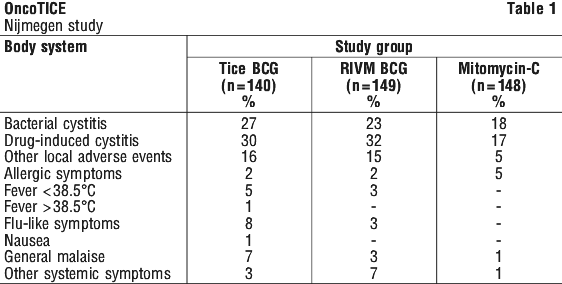
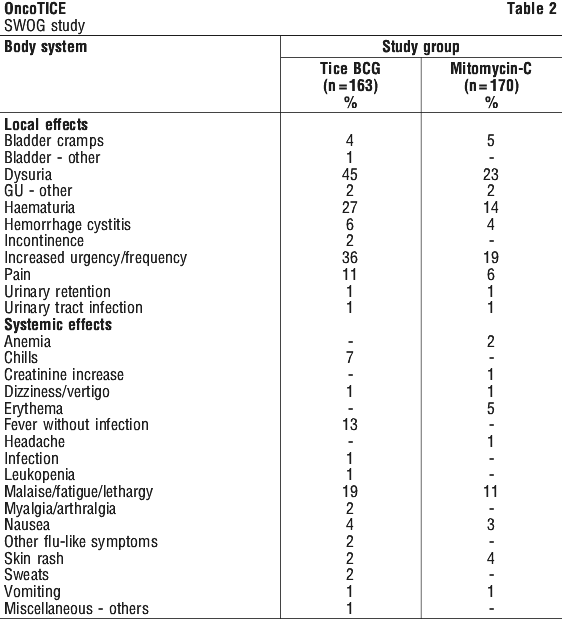
The percentage of patients with at least one adverse event, with causality to the study drug, are tabulated for the comparative study of intravesical instillation of Mitomycin-c, RIVM BCG and Tice BCG (Nijmegen study), and the comparative study of intravesical instillation of Tice BCG and Mitomycin-c (SWOG study). It includes all adverse events reported with an incidence of 1% or greater. A dash represents an incidence of less than 1%. See Tables 1 and 2.
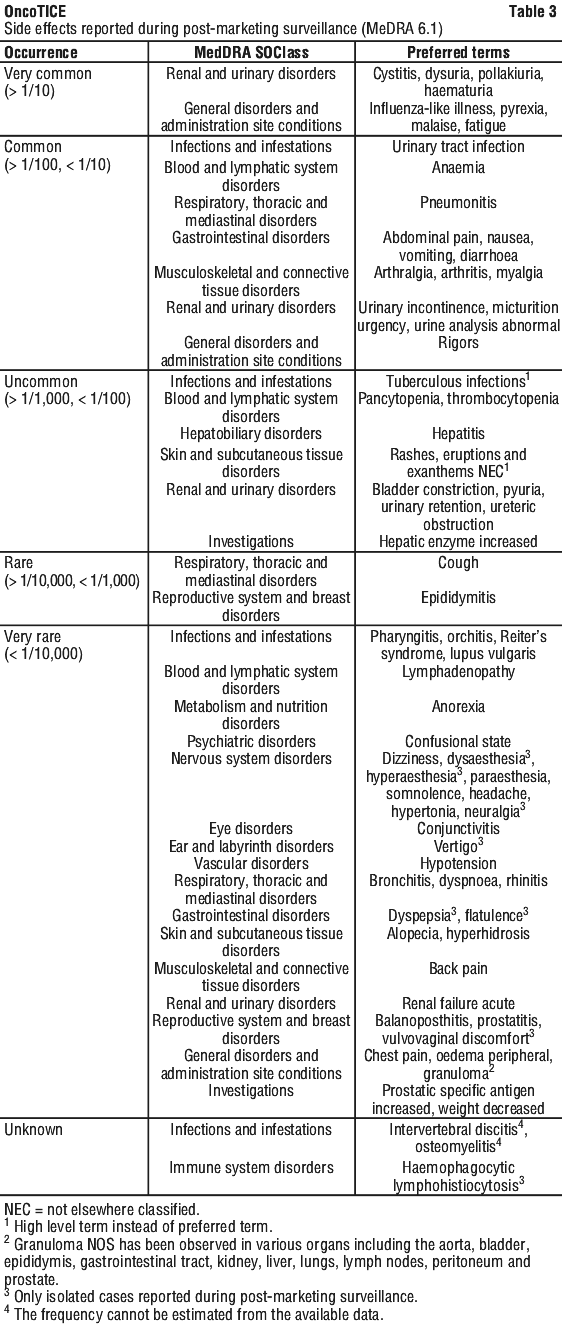
Systemic BCG infections could be due to traumatic catheterisation, bladder perforation or premature BCG instillation after extensive TUR of a superficial carcinoma of the bladder. These systemic infections may be manifested by pneumonitis, hepatitis, cytopenia, vasculitis, infective aneurysm, osteomyelitis, intervertebral discitis and/or sepsis after a period of fever and malaise during which symptoms progressively increase. Disseminated infection may present many months to years after treatment. Patients with symptoms of therapy-induced systemic BCG infection should be adequately treated with anti-tuberculosis drugs according to treatment schedules used for tuberculosis infections. In these cases, further treatment with OncoTICE BCG is contraindicated.
Reporting suspected adverse effects. Reporting suspected adverse reactions after registration of the medicinal product is important. It allows continued monitoring of the benefit-risk balance of the medicinal product. Healthcare professionals are asked to report any suspected adverse reactions at www.tga.gov.au/reporting-problems.
4.9 Overdose
Administration of more than one vial of OncoTICE per instillation constitutes an overdose. In case of overdosage, the patient should be closely monitored for signs of systemic BCG infection and, if indicated, treated with anti-tuberculous medication.
For information on the management of overdose, contact the Poisons Information Centre on 131126 (Australia).
5 Pharmacological Properties
5.1 Pharmacodynamic Properties
Mechanism of action. OncoTICE is an immunostimulating agent (ATC code L03AX03). It has anti-tumour activity, but the exact mechanism of action is not known. Study data suggest that an active nonspecific immune response takes place. BCG invokes a local inflammatory response involving a variety of immune cells, such as macrophages, natural killer cells and T cells.
Clinical trials. A clinical trial has been carried out to compare the efficacy and safety of intravesically administered Tice BCG, RIVM BCG and Mitomycin-c in 469 patients with primary and recurrent superficial bladder cancer including CIS (Nijmegen study). Patients in the BCG groups received 6 weekly instillations of one ampoule BCG. In patients who received BCG as initial treatment, if recurrence was detected at 3 months then the tumour was resected and a second 6 week course of BCG was given. At the end of the study 79 patients (56%) of the 140 evaluable subjects treated with Tice BCG were free of bladder cancer.
The efficacy and toxicity of intravesical Mitomycin-c and Tice BCG for recurrent superficial stage TA and T1 transitional cell carcinoma of the bladder were studied in a comparative clinical study in which 349 patients were included (SWOG study). Patients in the BCG group received instillations of one ampoule of Tice BCG weekly for 6 weeks, in week 8 and 12, and thereafter monthly for months 4 through 12. At the end of the study 133 of 174 (76%) of evaluable patients treated with Tice BCG were disease free.
In all these studies children were not included.
5.2 Pharmacokinetic Properties
Absorption. Tice BCG can bind specifically to fibronectin in the bladder wall.
Distribution. Not applicable.
Metabolism. Not applicable.
Excretion. Most instilled OncoTICE will be excreted with the first urine void two hours after the instillation.
5.3 Preclinical Safety Data
Genotoxicity. No remarkable results.
Carcinogenicity. No remarkable results.
6 Pharmaceutical Particulars
6.1 List of Excipients
The culture medium from which the freeze-dried cake is prepared has the following relative composition: lactose monohydrate 150 g, Sauton medium 250 mL and water 750 mL. The following excipients are also included: asparagine, citric acid monohydrate, dibasic potassium phosphate, magnesium sulfate heptahydrate, ferric ammonium citrate, glycerol, zinc formate dihydrate and strong ammonia solution. No preservatives have been added.
6.2 Incompatibilities
OncoTICE is incompatible with hypotonic and hypertonic solutions.
6.3 Shelf Life
The expiry date indicated on the label only applies if the vials are stored under the conditions indicated.
6.4 Special Precautions for Storage
Freeze-dried OncoTICE must be stored at a temperature between 2 and 8°C and protected from light.
In-use stability of the reconstituted product has been demonstrated for 2 hours at 2-8°C protected from light. To reduce microbial hazard, the product should be used immediately. If storage is necessary, hold at 2-8°C for not more than 2 hours.
6.5 Nature and Contents of Container
Pack of one, three or six* glass vials. Each 2 mL capacity vial contains 2-8 x 10⁸ CFU of Mycobacterium bovis (Bacillus Calmette and Guerin (BCG) strain) in freeze-dried form.
* Not available in Australia.
6.6 Special Precautions for Disposal
In Australia, any unused medicine or waste material should be disposed of in accordance with local requirements.
6.7 Physicochemical Properties
Chemical structure. No data available.
CAS number. The CAS Registry Number is 76-60-8.
7 Medicine Schedule (Poisons Standard)
Prescription Only Medicine (Schedule 4).
Date of First Approval
27 May 1997
Date of Revision
09 October 2025
Summary Table of Changes

Reasonable care is taken to provide accurate information at the time of creation. This information is not intended as a substitute for medical advice and should not be exclusively relied on to manage or diagnose a medical condition. The Australian Commission on Safety and Quality in Health Care disclaims all liability (including for negligence) for any loss, damage, injury or any other negative effects resulting from reliance on or use of this information. Read our full disclaimer. This website uses cookies. Read our privacy policy.