
Panadol Rapid Caplets; Panadol Rapid Soluble Tablets
Brand Information
| Brand name | Panadol Rapid Caplets; Panadol Rapid Soluble Tablets |
| Active ingredient | Paracetamol |
| Schedule | Unscheduled | S2 | S3 |
Consumer Medicine Information (CMI) leaflet
Please read this leaflet carefully before you start using the Panadol Rapid Caplets; Panadol Rapid Soluble Tablets.
Full CMI
Panadol Rapid Caplets
Active ingredient(s): Paracetamol 500 mg
Consumer Medicine Information (CMI)
This leaflet provides important information about using Panadol Rapid Caplets. You should also speak to your doctor or pharmacist if you would like further information or if you have any concerns or questions about using Panadol Rapid Caplets.
Where to find information in this leaflet:
1. Why am I using Panadol Rapid Caplets
2. What should I know before I use Panadol Rapid Caplets
3. What if I am taking other medicines?
4. How do I use Panadol Rapid Caplets
5. What should I know while using Panadol Rapid Caplets
6. Are there any side effects?
7. Product details
1. Why am I using Panadol Rapid Caplets
Panadol Rapid Caplets contain the active ingredient paracetamol.
Paracetamol works to stop the pain messages from getting through to the brain. It also acts in the brain to reduce fever.
Paracetamol is used for the fast effective temporary relief of pain and discomfort associated with various pain states including:
- Headache
- Muscular aches
- Period pain
- Toothache
- Migraine headache
- Colds and flu
- Tension headache
Paracetamol also reduces fever.
2. What should I know before I use Panadol Rapid Caplets
Warnings
Always read the label and follow the directions for use. Incorrect use could be harmful. If symptoms persist, see your healthcare professional.
Do not take more than the recommended dose as it may cause serious harm to your liver.
Do not use Panadol Rapid Caplets if:
- you are allergic to paracetamol, or any of the ingredients listed at the end of this leaflet.
- Always check the ingredients to make sure you can use this medicine.
- you are taking any other prescription or non-prescription medicines containing paracetamol to treat pain, fever, symptoms of cold and flu, or to aid sleep.
- the expiry date printed on the pack has passed or if the packaging is torn or shows signs of tampering.
Check with your doctor or pharmacist if you:
- have or have had any other medical conditions such as liver or kidney problems
- are underweight or malnourished
- regularly drink alcohol – you may need to avoid using this product altogether or limit the amount of paracetamol that you take.
- have a severe illness, severe infection including blood infection, are severely malnourished or are a chronic heavy alcohol user as this may increase the risk of metabolic acidosis (a blood and fluid abnormality). Signs of metabolic acidosis include:
- deep, rapid, difficult breathing
- feeling sick (nausea), being sick (vomiting)
- loss of appetite
- drowsiness
Contact your doctor immediately if you think you may be affected.
Two Panadol Rapid Caplets contain 352 mg sodium. If you are on a low sodium diet, ask your doctor about using these medicines before you take them.
During treatment, you may be at risk of developing certain side effects. It is important you understand these risks and how to monitor for them. See additional information under Section 6. Are there any side effects?
If you are not sure whether you should start using this medicine, talk to your pharmacist or doctor
Consider taking the lowest effective dose for the shortest period of time.
Pregnancy and breastfeeding
Check with your doctor or pharmacist if you are pregnant or intend to become pregnant.
This product is suitable for breastfeeding.
3. What if I am taking other medicines?
Tell your doctor or pharmacist if you are taking any other medicines, including any medicines, vitamins or supplements that you buy without a prescription from your pharmacy, supermarket or health food shop.
Some medicines and paracetamol may interfere with each other. These include:
- Warfarin or similar medicines used to thin the blood
- Metoclopramide, a medicine used to control nausea and vomiting
- Medicines used to treat epilepsy or fits
- Chloramphenicol, an antibiotic used to treat ear and eye infections
- Alcohol
- Probenecid, a medicine used to treat gout or sometimes given with an antibiotic
- Cholestyramine, a medicine used to treat high cholesterol levels in the blood
- Flucloxacillin (an antibiotic), due to a serious risk of blood and fluid abnormality (metabolic acidosis)
Your pharmacist and doctor will have more information on these and other medicines to be careful with or avoid while using this medicine.
Check with your doctor or pharmacist if you are not sure about what medicines, vitamins or supplements you are taking and if these affect Panadol Rapid Caplets.
4. How do I use Panadol Rapid Caplets
Follow all directions given to you by your pharmacist or doctor carefully. They may differ from the information contained in this leaflet.
If you do not understand the instructions on the box, ask your pharmacist or doctor for help.
Use the smallest dose that you need to treat your symptoms and use the medicine for the shortest period of time necessary.
Do not exceed the stated or recommended dose.
How much to take
Do not take more frequently than every 4 hours.
Swallow with water or other fluid
Adults and children aged 12 years and over: Take 2 tablets every four to six hours as needed. Do not take more than 8 tablets in 24 hours.
Do not use in children under 12 years.
How long to use it
- Adults: Only take paracetamol for a few days at a time unless your doctor tells you to take it for longer.
- Children 12-17 years: Only give paracetamol to children for up to 48 hours unless a doctor has told you to give it for longer.
If you use too much Panadol Rapid Caplets
If you think that you have used too much Panadol Rapid Caplets, you may need urgent medical attention.
If you think that you or anyone else may have taken too much PANADOL RAPID CAPLETS, you should IMMEDIATELY:
- phone the Poisons Information Centre
(by calling 13 11 26 for Australia, 0800 764 766 for NZ), or - go to the Emergency Department at your nearest hospital.
Do this even if there are no signs of discomfort or poisoning because of the risk of delayed, serious liver damage or failure if left untreated.
5. What should I know while using Panadol Rapid Caplets
Things you should do
See your doctor if your symptoms do not improve.
Remind any doctor, dentist or pharmacist you visit that you are using Panadol Rapid Caplets.
Things you should not do
Do not use Panadol Rapid Caplets to treat any other complaints unless your pharmacist or doctor tells you to.
Adults: Do not use for more than a few days at a time unless your doctor tells you to.
Children: Do not give Panadol Rapid Caplets for more than 48 hours unless a doctor has told you to.
Driving or using machines
Be careful before you drive or use any machines or tools until you know how Panadol Rapid Caplets affects you.
Drinking alcohol
Tell your doctor or pharmacist if you drink alcohol.
Only drink small quantities of alcohol (beer, wine or spirits) while using paracetamol.
Drinking large quantities of alcohol while taking paracetamol may increase the risk of liver side effects.
Looking after your medicine
Follow the instructions in the carton on how to take care of your medicine properly.
Store your medicine in a cool dry place where the temperature stays below 30°C.
Keep away from moisture, heat or sunlight; for example, do not store it:
- in the bathroom or near a sink, or
- in the car or on window sills.
Keep your medicine in the original pack until it is time to take it.
Keep out of sight and reach of children.
A locked cupboard at least one-and-a-half metres above the ground is a good place to store medicines.
Getting rid of any unwanted medicine
If you no longer need to use this medicine or it is out of date, take it to any pharmacy for safe disposal.
Do not use this medicine after the expiry date.
6. Are there any side effects?
Tell your pharmacist or doctor as soon as possible if you do not feel well while you are using PANADOL RAPID CAPLETS.
This medicine helps most people with various types of pain but it may have unwanted side effects. All medicines can have side effects. Sometimes they are serious, most of the time they are not. You may need medical attention if you get some of the side effects.
Do not be alarmed by the following list of side effects. You may not experience any of them.
Ask your pharmacist or doctor to answer any questions you may have.
If any of the following happen, stop using the product and tell your pharmacist or doctor immediately or go to Accident and Emergency at your nearest hospital:
Serious side effects
| Serious side effects | What to do |
| Call your doctor straight away, or go straight to the Emergency Department at your nearest hospital if you notice any of these serious side effects. |
The above list includes very serious side effects. You may need urgent medical attention or hospitalisation.
Tell your doctor or pharmacist if you notice anything else that may be making you feel unwell.
Other side effects not listed here may occur in some people.
Reporting side effects
After you have received medical advice for any side effects you experience, you can report side effects to the Therapeutic Goods Administration online at www.tga.gov.au/reporting-problems. By reporting side effects, you can help provide more information on the safety of this medicine.
7. Product details
This medicine is available over-the-counter without a doctor's prescription.
What Panadol Rapid Caplets contain
| Active ingredient (main ingredient) | Paracetamol 500 mg |
| Other ingredients (inactive ingredients) | carnauba wax colloidal anhydrous silica hypromellose macrogol 8000 magnesium stearate maize starch microcrystalline cellulose polydextrose povidone pregelatinised maize starch purified water sodium bicarbonate sodium starch glycollate titanium dioxide triacetin |
| Potential allergens | Two Panadol Rapid Caplets contain 352 mg sodium. |
Do not take this medicine if you are allergic to any of these ingredients.
What Panadol Rapid Caplets looks like
Panadol Rapid Caplets are white to off-white capsule-shaped film coated tablets with flat edges. One face of the tablet is debossed with the letter "P" and "--" on the other side.
AUST R 332528 (Panadol Rapid Caplets (reformulation))
Who distributes Panadol Rapid Caplets
Haleon Australia
Level 48, 8 Parramatta Square,
10 Darcy Street, Parramatta NSW
2150 and Auckland, New Zealand
This leaflet was prepared in April 2026.
Brand Information
| Brand name | Panadol Rapid Caplets; Panadol Rapid Soluble Tablets |
| Active ingredient | Paracetamol |
| Schedule | Unscheduled | S2 | S3 |
MIMS Revision Date: 01 September 2025
1 Name of Medicine
Paracetamol.
2 Qualitative and Quantitative Composition
Active ingredient: paracetamol 500 mg/tablet.
Excipients: the maximum recommended daily dose of 8 caplets contains 1.4 g (61 mmol) of sodium, which should be taken into account by those on a low sodium diet.
For the full list of excipients, see Section 6.1 List of Excipients.
3 Pharmaceutical Form
Panadol Rapid Caplets. White to off-white capsule shaped film coated tablets with flat edges. One face of the tablet is debossed with the letter "P" and "--" on the other side.
4 Clinical Particulars
4.1 Therapeutic Indications
For fast relief of acute pain. Reduces fever.
4.2 Dose and Method of Administration
Panadol Rapid Caplets. Adults and children aged 12 years and over. 2 caplets every four to six hours with water as required (maximum of 8 caplets in 24 hours). Maximum daily dose: 4000 mg.
Children under 12 years. Not recommended for children under the age of 12 years.
General dosage instructions. Adults. Do not use for more than a few days at a time without medical advice.
Children 12-17 years. Do not use for more than 48 hours except on medical advice.
Should not be used with other paracetamol-containing products.
Minimum dosing interval: 4 hours.
Do not exceed the stated dose.
The lowest dose necessary to achieve efficacy should be used for the shortest duration of treatment.
If symptoms persist, medical advice must be sought.
Do not exceed the stated dose.
Keep out of sight and reach of children.
4.3 Contraindications
These products are contraindicated in patients with a previous history of hypersensitivity to paracetamol or to any of the excipients.
4.4 Special Warnings and Precautions for Use
Identified precautions. Contains paracetamol. Do not use with any other paracetamol containing products. The concomitant use with other products containing paracetamol may lead to an overdose.
Paracetamol overdose may cause liver failure which may require liver transplant or lead to death.
If symptoms persist, medical advice must be sought.
Keep out of sight and reach of children.
High anion gap metabolic acidosis. Cases of high anion gap metabolic acidosis (HAGMA) due to pyroglutamic acidosis have been reported in patients with severe illness such as severe renal impairment and sepsis, or patients with malnutrition and other sources of glutathione deficiency (e.g. chronic alcoholism) who were treated with paracetamol at therapeutic dose for a prolonged period or a combination of paracetamol and flucloxacillin. If HAGMA due to pyroglutamic acidosis is suspected, prompt discontinuation of paracetamol and close monitoring is recommended. The measurement of urinary 5-oxoproline may be useful to identify pyroglutamic acidosis as underlying cause of HAGMA in patients with multiple risk factors.
Use in hepatic impairment. Paracetamol should be used with caution in patients with impaired liver function: Underlying liver disease increases the risk of paracetamol-related liver damage.
Patients who have been diagnosed with liver impairment must seek medical advice before taking this medication.
Cases of hepatic dysfunction/failure have been reported in patients with depleted glutathione levels, such as those who are severely malnourished, anorexic, have a low body mass index, are chronic heavy users of alcohol or have sepsis.
In patients with glutathione depleted states the use of paracetamol may increase the risk of metabolic acidosis.
Use in renal impairment. Paracetamol should be used with caution in patients with impaired kidney function. Administration of paracetamol to patients with moderate to severe renal impairment may result in accumulation of paracetamol conjugates.
Patients who have been diagnosed with kidney impairment must seek medical advice before taking this medication.
Use in the elderly. No data available.
Paediatric use. Panadol Rapid Caplets are not recommended for children under 12 years of age.
Effects on laboratory tests. No data available.
4.5 Interactions with Other Medicines and Other Forms of Interactions
The following interactions with paracetamol have been noted:
The anticoagulant effect of warfarin and other coumarins may be enhanced by prolonged regular daily use of paracetamol with increased risk of bleeding; occasional doses have no significant effect. Anticoagulant dosage may require reduction if paracetamol and anticoagulants are taken for a prolonged period of time.
Paracetamol absorption is increased by substances that increase gastric emptying, e.g. metoclopramide.
Paracetamol absorption is decreased by substances that decrease gastric emptying, e.g. propantheline, antidepressants with anticholinergic properties, and narcotic analgesics.
Paracetamol may increase chloramphenicol concentrations.
The risk of paracetamol toxicity may be increased in patients receiving other potentially hepatotoxic drugs or drugs that induce liver microsomal enzymes such as alcohol and anticonvulsant agents.
Paracetamol excretion may be affected and plasma concentrations altered when given with probenecid.
Cholestyramine reduces the absorption of paracetamol if given within 1 hour of paracetamol.
Caution should be taken when paracetamol is used concomitantly with flucloxacillin as concurrent intake has been associated with high anion gap metabolic acidosis due to pyroglutamic acidosis, especially in patients with risks factors (see Section 4.4).
4.6 Fertility, Pregnancy and Lactation
Effects on fertility. No data available.
Use in pregnancy. (Category A)
Paracetamol has been taken by a large number of pregnant women and women of childbearing age without any proven increase in the frequency of malformations or other direct or indirect harmful effects on the foetus having been observed.
As with the use of any medicine during pregnancy, pregnant women should seek medical advice before taking paracetamol. The lowest effective dose and shortest duration of treatment should be considered.
Use in lactation. Paracetamol is excreted in small amounts (< 0.2%) in breast milk. Maternal ingestion of paracetamol in usual analgesic doses does not appear to present a risk to the breastfed infants. Available published data do not contraindicate breastfeeding.
4.7 Effects on Ability to Drive and Use Machines
The effects of this medicine on a person's ability to drive and use machines were not assessed as part of its registration.
4.8 Adverse Effects (Undesirable Effects)
Reporting suspected adverse effects. Reporting suspected adverse reactions after registration of the medicinal product is important. It allows continued monitoring of the benefit-risk balance of the medicinal product. Healthcare professionals are asked to report any suspected adverse reactions at www.tga.gov.au/reporting-problems.
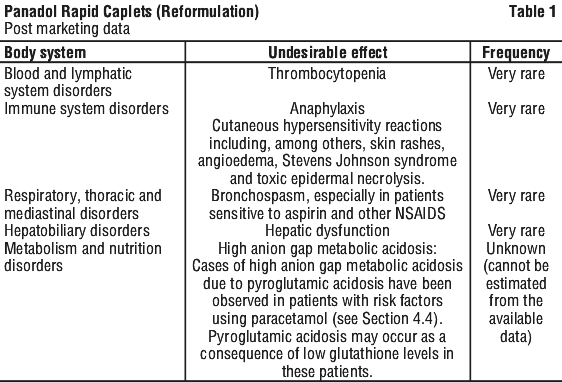
Adverse events from historical clinical trial data are both infrequent and from small patient exposure. Accordingly, events reported from extensive post-marketing experience at therapeutic/labelled doses and considered attributable are tabulated below by system organ class and frequency.
The following convention has been utilised for the classification of undesirable effects: very common (≥ 1/10), common (≥ 1/100, < 1/10), uncommon (≥ 1/1,000, < 1/100), rare (≥ 1/10,000, < 1/1,000), very rare (< 1/10,000), not known (cannot be estimated from available data).
Adverse event frequencies have been estimated from spontaneous reports received through post-marketing data. See Table 1.
4.9 Overdose
If an overdose is taken or suspected, contact the Poisons Information Centre immediately for advice (131 126), or the patient should go to the nearest hospital straight away. This should be done even if they feel well because of the risk of delayed, serious liver damage.
Treatment. Immediate medical management is required in the event of an overdose, even if the symptoms of overdose are not present.
Paracetamol overdose may cause liver failure which may require liver transplant or lead to death. Acute pancreatitis has been observed, usually with hepatic dysfunction and liver toxicity.
Administration of N-acetylcysteine may be required.
Activated charcoal may reduce absorption of paracetamol if given within one hour after oral ingestion. In patients who are not fully conscious or have impaired gag reflex, consideration should be given to administering activated charcoal via a nasogastric tube, once the airway is protected.
Symptoms and management of excessive sodium bicarbonate. In the event of overdose, clinicians should be aware of the sodium and bicarbonate content in the Panadol Rapid.
Each Panadol Rapid Caplets contains about 7.65 mmol of sodium and 7.5 mmol of bicarbonate.
High doses of sodium bicarbonate may result in gastrointestinal symptoms including stomach cramps, belching, flatulence, abdominal pain, bloating and abdominal distension.
In addition, excessive sodium may cause hypernatraemia; electrolytes should be monitored and patients managed accordingly.
Excessive bicarbonate may lead to hypokalaemia and metabolic alkalosis, especially in patients with impaired renal function. Treatment consists mainly of appropriate correction of fluid and electrolyte balance.
5 Pharmacological Properties
5.1 Pharmacodynamic Properties
Mechanism of action. Paracetamol is a para-aminophenol derivative that exhibits analgesic and anti-pyretic activity. It does not possess anti-inflammatory activity. Its mechanism of action is believed to include inhibition of prostaglandin synthesis, primarily within the central nervous system. It is given by mouth for mild to moderate pain and to reduce fever.
Clinical trials. No data available.
5.2 Pharmacokinetic Properties
Absorption. Paracetamol is rapidly and almost completely absorbed from the gastrointestinal tract with peak plasma concentration occurring about 10 to 60 minutes after oral administration. Food intake delays paracetamol absorption.
Panadol Rapid is a tablet formulation which contains sodium bicarbonate and is intended to increase the rate of gastric emptying (by forming an isosmotic solution of sodium bicarbonate in the stomach) thereby allowing more rapid absorption of paracetamol. Paracetamol is rapidly absorbed from the post-gastric mucosa but not from the stomach.
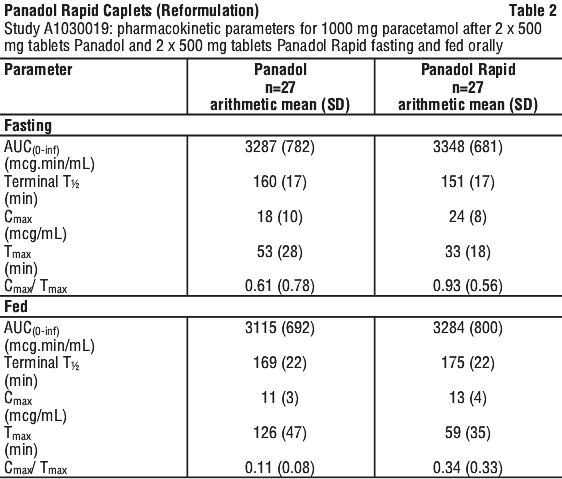
A pivotal bioequivalence study (study A1030019), conducted in healthy volunteers, demonstrated that Panadol Rapid was bioequivalent to standard Panadol tablets for AUC(0-inf) under both fasting and fed conditions following the administration of a dose of 1000 mg (2 x 500 mg tablets). This indicates that at a dose of 2 x 500 mg tablets, the extent of paracetamol absorption from Panadol Rapid was equivalent to that of standard Panadol. Tmax was statistically significantly earlier with Panadol Rapid in both the fasting and fed states. The Cmax/Tmax ratio which is a measure of the rate of absorption was also statistically significantly higher for Panadol Rapid in both the fasting and fed states. This indicates that at a dose of 2 x 500 mg tablets, the rate of paracetamol absorption from Panadol Rapid was faster than standard Panadol. A summary of the pharmacokinetic parameters from the bioequivalence study A1030019 is included in Table 2.
Metabolism. Paracetamol is metabolised extensively in the liver and excreted in the urine mainly as inactive glucuronide and sulphate conjugates.
The metabolites of paracetamol include a minor hydroxylated intermediate which has hepatotoxic activity. This intermediate metabolite is detoxified by conjugation with glutathione. However, it can accumulate following paracetamol overdosage (more than 150 mg/kg or 10 g total paracetamol ingested) and, if left untreated, can cause irreversible liver damage.
Paracetamol is metabolised differently by infants and children compared to adults, the sulphate conjugate being predominant.
Excretion. Paracetamol is excreted in the urine mainly as the inactive glucuronide and sulphate conjugates. Less than 5% is excreted unchanged. The elimination half-life varies from about one to three hours. Approximately 85% of a dose of paracetamol is excreted in urine as free and conjugated paracetamol within 24 hours after ingestion.
5.3 Preclinical Safety Data
Genotoxicity. No data available.
Carcinogenicity. No data available.
6 Pharmaceutical Particulars
6.1 List of Excipients
Panadol Rapid Caplets. Sodium bicarbonate, cellulose - microcrystalline, starch - pregelatinised maize, sodium starch glycolate, starch - maize, water - purified, magnesium stearate, hypromellose, colloidal anhydrous silica, povidone, titanium dioxide, polydextrose, glycerol triacetate, carnauba wax, macrogol 8000.
6.2 Incompatibilities
Incompatibilities were either not assessed or not identified as part of the registration of this medicine.
6.3 Shelf Life
In Australia, information on the shelf life can be found on the public summary of the Australian Register of Therapeutic Goods (ARTG). The expiry date can be found on the packaging.
6.4 Special Precautions for Storage
Store below 30°C.
6.5 Nature and Contents of Container
Panadol Rapid Caplets. Packs of 12, 16, 20, 32, 40, 48 and 80 caplets. 'Handipak' of 8 and 10 caplets.
Not all pack sizes may be marketed.
6.6 Special Precautions for Disposal
In Australia, any unused medicine or waste material should be disposed of in accordance with local requirements.
6.7 Physicochemical Properties
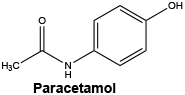
Chemical structure.
7 Medicine Schedule (Poisons Standard)
Unscheduled in packs of 16 caplets or less.
Schedule 2 (Pharmacy Medicine) in packs of more than 16 caplets, but less than 50 caplets.
Schedule 3 (Pharmacist Only Medicine) in packs of more than 50 caplets.
Date of First Approval
26 March 2020
Date of Revision
10 July 2025
Summary Table of Changes

Reasonable care is taken to provide accurate information at the time of creation. This information is not intended as a substitute for medical advice and should not be exclusively relied on to manage or diagnose a medical condition. The Australian Commission on Safety and Quality in Health Care disclaims all liability (including for negligence) for any loss, damage, injury or any other negative effects resulting from reliance on or use of this information. Read our full disclaimer. This website uses cookies. Read our privacy policy.