
Pedea
Brand Information
| Brand name | Pedea |
| Active ingredient | Ibuprofen |
| Schedule | S4 |
Consumer Medicine Information (CMI) leaflet
Please read this leaflet carefully before you start using the Pedea.
Summary CMI
PEDEA®
Consumer Medicine Information (CMI) summary
The full CMI on the next page has more details. If you are worried about using this medicine, speak to your doctor or pharmacist.
1. What is PEDEA® used for?
PEDEA® contains the active ingredient Ibuprofen. PEDEA® is used in premature babies to close the patent ductus arteriosus.
For more information, see Section 1. What is PEDEA® used for? in the full CMI.
2. Before your baby is given PEDEA®
Do not give PEDEA® if your baby has ever had an allergic reaction to ibuprofen or any of the ingredients listed at the end of the CMI.
Talk to your doctor if your baby has any other medical conditions or takes any other medicines.
For more information, see Section 2. Before your baby is given PEDEA® in the full CMI.
3. Taking other medicines
Some medicines may interfere with PEDEA® and affect how it works.
A list of these medicines is in Section 3. Taking other medicines in the full CMI.
4. How PEDEA® is given
- The doctor will decide what dose and how many courses of treatment are required.
More instructions can be found in Section 4. How PEDEA® is given in the full CMI.
5. While your baby is taking PEDEA®
| Things you should do |
|
| Things you should not do |
|
| Looking after your medicine |
|
For more information, see Section 5. While your baby is taking PEDEA® in the full CMI.
6. Are there any side effects?
All medicines can have side effects. Sometimes they are serious, most of the time they are not. Your baby may need medical treatment if they get some of the side effects. Some of the serious side effects are slow heart beat, blood in the urine, unusual bleeding or bruising, abnormal kidney functions and serios skin reactions.
For more information, including what to do if you have any side effects, see Section 6. Are there any side effects? in the full CMI.
Full CMI
1. What is PEDEA® used for?
PEDEA® contains the active ingredient Ibuprofen.
PEDEA® is used in premature babies to close the patent ductus arteriosus.
While a baby is inside its mother's womb it does not need to use its lungs. An unborn baby has a blood vessel called a 'ductus arteriosus' near the heart which allows the baby's blood to bypass its lungs and circulate to the rest of its body.
When the baby is born and starts using its lungs the ductus arteriosus normally closes up. However, in some cases this does not happen.
The doctor has prescribed PEDEA® for your baby because your baby has a ductus arteriosus which has not closed properly. PEDEA® can help close this blood vessel.
If the ductus arteriosus remains open, blood intended for the body may be returned to the lungs, overloading the lung's blood vessels, making the lungs and heart work harder to pump blood to the rest of the body. This can lead to failure to gain weight, shortness of breath, a fast heart rate, frequent chest infections, and sometimes heart failure.
PEDEA® belongs to a group of medicines called Non-Steroidal Anti-Inflammatory Drugs (NSAIDs). These medicines can be used to treat swelling, redness, pain and fever.
PEDEA® works by stopping the production of prostaglandin, a naturally occurring chemical in the body which keeps the ductus arteriosus open.
The reduction of these levels by PEDEA® is essential for the treatment of PDA.
Ask your doctor if you have any questions about why Pedea has been prescribed for your baby.
2. Before your baby is given PEDEA®?
Warnings
There are other things regarding PEDEA® which the baby's doctor should know about.
Do not use PEDEA® if:
- Your baby is allergic to Ibuprofen, or any of the ingredients listed at the end of this leaflet.
- Your baby has allergies to:
- Any other medicines including aspirin or other NSAID medicines
- Any other substances, such as foods, preservatives or dyes - Your baby has high bilirubin levels in their blood
- Your baby has a life threatening infection
- Your baby has bleeding, especially in the brain or stomach
- Your baby has blood clotting problems
- Your baby has low blood platelet count
- Your baby has or is suspected of having an intestinal problem, called necrotising enterocolitis
- Your baby has severe kidney problems
- Your baby has heart disease at birth and it is necessary for them to have a patent ductus arteriosus for satisfactory blood flow in the lungs and throughout the body
Always check the ingredients to make sure you can use this medicine.
PEDEA® should not be given if:
- The packaging is torn or shows signs of tampering
- The expiry date (EXP) printed on the pack has passed If the medicine is given after the expiry date has passed, it may not work.
Your baby's doctor will be aware of these, but if you are worried or confused, please talk to the doctor treating your baby.
During treatment, you may be at risk of developing certain side effects. It is important you understand these risks and how to monitor for them. See additional information under Section 6. Are there any side effects?
3. Taking other medicines
Tell your doctor or pharmacist if your baby is taking any other medicines, including any medicines, vitamins or supplements that you buy without a prescription from your pharmacy, supermarket or health food shop.
There are certain medicines, which if given together with PEDEA®, may cause unwanted effects. These include:
- Aspirin, or other NSAIDs
- Diuretics, also called fluid or water tablets
- Blood thinners such as warfarin, heparin
- Antibiotics called aminoglycosides, such as gentamicin
- Corticosteroids such as prednisolone
- Nitric oxide
These medicines may be affected by PEDEA® or may affect how well it works. Your baby may need to take different or use different amounts of medicines.
Your baby's doctor will be aware of the effects of PEDEA® and the effects these medicines can have on each other, but if you are worried or confused, you should talk to the doctor.
Check with your doctor or pharmacist if you are not sure about what medicines, vitamins or supplements your baby is taking and if these affect PEDEA®.
4. How PEDEA® is given
How much to use
The doctor will decide what dose and how many courses of treatment are required. This depends on your baby's condition and other factors, such as their age and weight.
When to use PEDEA®
- Babies with patent ductus arteriosus are cared for in a special newborn intensive care unit where the baby's condition is closely monitored.
- Your baby will be given PEDEA® by a doctor or nurse, who will know how to make up the injection.
- Once the ampoule containing the PEDEA® solution has been opened, any unused portion of the solution should be discarded.
How long is PEDEA® given for
One course of PEDEA® treatment is given as three infusions, each 24 hours apart. If the ductus arteriosus does not close 48 hours after the last injection or if it re-opens, a second course may be given.
If the condition is unchanged after the second course of therapy, surgery of the patent ductus arteriosus may then be necessary.
5. While your baby Is taking PEDEA®
Before administration of PEDEA®, your doctor will perform a sonogram of your baby's heart in order to detect a
patent ductus arteriosus and to exclude other conditions.
Your doctor may ask you to have your baby's kidney and gastrointestinal functions, and blood tested from time to time to make sure the medicine is working and to prevent unwanted side effects.
PEDEA® may inhibit blood cells which help blood to clot, so premature newborn babies should be monitored for signs of bleeding.
If your baby has also been prescribed aminoglycosides (a group of antibiotics), the doctor may need to do tests regularly to check the blood levels of the antibiotic.
Remind any doctor, dentist or pharmacist who treat your baby that they are taking this medicine.
If your baby is about to be started on any new medication, remind your doctor and pharmacist that they are taking Pedea.
If your baby is given too much Pedea
If your baby has taken more PEDEA® than they should, or if children have taken medicine by accident always contact a doctor or nearest hospital to get an opinion of the risk and advice on action to be taken.
You should immediately:
- phone the Poisons Information Centre
- (by calling 13 11 26), or
- contact your doctor, or
- go to the Emergency Department at your nearest hospital.
You should do this even if there are no signs of discomfort or poisoning.
The symptoms of overdose can include nausea, stomach pain, vomiting (maybe blood streaked), gastrointestinal bleeding, diarrhoea, headache, ringing in the ears, confusion and shaky eye movement. Also, agitation, somnolence, disorientation or coma may occur.
Occasionally patients develop convulsions. At high doses, drowsiness, chest pain, palpitations, loss of consciousness, convulsions (mainly in children), weakness and dizziness, blood in urine, excess acid in the blood, low levels of potassium in your blood, cold body feeling, inability of kidneys to work properly and breathing problems have been reported.
Further, the prothrombin time/INR may be prolonged, probably due to interference with the actions of circulating clotting factors. Acute renal failure and liver damage may occur. Exacerbation of asthma is possible in asthmatics. Furthermore, there may be low blood pressure and reduced breathing.
Looking after your medicine
PEDEA will be stored in the hospital pharmacy or on the ward.
It is kept where the temperature stays below 30°C.
6. Are there any side effects?
All medicines can have side effects. Sometimes they are serious, most of the time they are not. Your baby may need medical treatment if they get some of the side effects.
See the information below and, if you need to, ask your doctor or pharmacist if you have any further questions about side effects.
Your baby may not experience any of them
Less serious side effects
| Less serious side effects | What to do |
Gastrointestinal disorders
| Speak to your doctor, pharmacist or nurse if your baby has any of these less serious side effects and they worry you. |
Serious side effects
| Serious side effects | What to do |
Gastrointestinal disorders
| Tell your doctor, pharmacist or nurse immediately if your baby has any of these serious side effects. |
Skin reactions
| Your doctor should discontinue Pedea immediately if any of these side effects occur. |
Tell your doctor or pharmacist if you notice anything else that may be making your baby feel unwell.
Other side effects not listed here may occur in some people.
Reporting side effects
After you have received medical advice for any side effects you experience, you can report side effects to the Therapeutic Goods Administration online at www.tga.gov.au/reporting-problems. By reporting side effects, you can help provide more information on the safety of this medicine.
Always make sure you speak to your doctor or pharmacist before you decide to stop taking any of your medicines.
7. Product details
This medicine is only available with a doctor's prescription.
What PEDEA® contains
| Active ingredient (main ingredient) | ibuprofen |
| Other ingredients (inactive ingredients) |
|
| Potential allergens | This medicine does not contain lactose or gluten |
Do not take this medicine if you are allergic to any of these ingredients.
What PEDEA® looks like
PEDEA® 5 mg/ml, solution for injection is dispensed in a 2 ml colourless glass ampoule. Each pack contains four ampoules.
PEDEA® 5 mg/mL solution for injection is a colourless to slightly yellow solution. Each mL contains 5 mg of ibuprofen.
Aust R 273093.
Who distributes PEDEA®
Recordati Rare Diseases Australia Pty Ltd
Level 10
100 Arthur Street
North Sydney
NSW 2060
Australia
Australia Phone: +61 (0) 408 061 403
rrdaustraliainfo@recordati.com
Under License From:
Recordati Rare Diseases SARL 70 avenue du Général de
Gaulle, 92800 Puteaux, France
This leaflet was prepared in January 2026.
Brand Information
| Brand name | Pedea |
| Active ingredient | Ibuprofen |
| Schedule | S4 |
MIMS Revision Date: 01 March 2026
1 Name of Medicine
Ibuprofen.
2 Qualitative and Quantitative Composition
Pedea is a 5 mg/mL solution for intravenous infusion in a 2 mL vial containing ibuprofen as the active ingredient.
Ibuprofen is a white to almost white crystalline powder, insoluble in water, freely soluble in organic solvents (acetone, methanol and methylene chloride). It dissolves in alkali hydroxides and carbonates.
For the full list of excipients, see Section 6.1 List of Excipients.
3 Pharmaceutical Form
Pedea 5 mg/mL solution for intravenous infusion is a colourless to slightly yellow solution. Each mL contains 5 mg of ibuprofen. Pedea 5 mg/mL, solution for intravenous infusion is dispensed in 2 mL colourless One-Point-Cut (OPC) type I glass ampoules and is supplied in packs of 4 x 2 mL ampoules.
4 Clinical Particulars
4.1 Therapeutic Indications
Pedea is indicated for the treatment of haemodynamically significant patent ductus arteriosus in preterm newborn infants less than 34 weeks of gestational age.
4.2 Dose and Method of Administration
Treatment with Pedea should only be carried out in a neonatal intensive care unit under the supervision of an experienced neonatologist.
A course of therapy is defined as three intravenous infusions of Pedea given at 24-hour intervals. The first infusion should be given after the first 6 hours of life.
The ibuprofen dose is adjusted to the body weight as follows:
1st infusion: 10 mg/kg,
2nd and 3rd infusions: 5 mg/kg.
If anuria or manifest oliguria occurs after the first or second dose, the next dose should be withheld until urine output returns to normal levels. If the ductus arteriosus does not close 48 hours after the last infusion or if it re-opens, a second course of 3 doses, as above, may be given.
If the condition is unchanged after the second course of therapy, surgery of the patent ductus arteriosus may then be necessary.
Administration. For intravenous use only.
Chlorhexidine should not be used to disinfect the neck of the ampoule, as it is not compatible with the Pedea solution. Therefore, for asepsis of the ampoule before use, ethanol 60% or isopropyl alcohol 70% is recommended. When disinfecting the neck of the ampoule with an antiseptic, to avoid any interaction, the ampoule must be completely dry before opening.
Pedea should be administered as a short infusion over 15 minutes, preferably undiluted. If necessary, the infusion volume may be adjusted with either sodium chloride 9 mg/mL (0.9%) solution for injection or glucose 50 mg/mL (5%) solution for injection. Pedea is for single use in one patient only. Discard any residue.
The total volume of solution infused should take into account the total daily fluid volume administered.
Pedea solution must not be in contact with any acidic solution such as certain antibiotics or diuretics. Before and after administration of Pedea, rinse the infusion line over 15 minutes with 1.5 to 2 mL of either sodium chloride 9 mg/mL (0.9%) or glucose 50 mg/mL (5%), solution for injection.
4.3 Contraindications
Pedea should not be administered in the following instances:
Hypersensitivity to the active substance or to any of the excipients;
Life-threatening infection;
Active bleeding, especially intracranial or gastrointestinal haemorrhage;
Thrombocytopenia or coagulation defects;
Significant impairment of renal function;
Congenital heart disease in which patency of the ductus arteriosus is necessary for satisfactory pulmonary or systemic blood flow (e.g. pulmonary atresia, severe tetralogy of Fallot, severe coarctation of the aorta);
Known or suspected necrotising enterocolitis.
4.4 Special Warnings and Precautions for Use
Before administration of Pedea, an adequate echocardiographic examination should be performed in order to detect a haemodynamically significant patent ductus arteriosus and to exclude pulmonary hypertension and ductal-dependent congenital heart disease.
Since prophylactic use in the first 3 days of life (starting within 6 hours of birth) in preterm newborn infants less than 28 weeks of gestational age was associated with increased pulmonary and renal adverse events, Pedea should not be used prophylactically at any gestational age. In particular, severe hypoxaemia with pulmonary hypertension was reported in 3 infants within one hour of the first infusion and was reversed within 30 min after start of inhaled nitric oxide therapy.
If hypoxaemia occurs during or following Pedea infusion, close attention should be paid to pulmonary pressure.
Since ibuprofen was shown in vitro to displace bilirubin from its binding site to albumin, the risk of bilirubin encephalopathy in premature newborn infants may be increased. Therefore, ibuprofen should not be used in infants with marked elevated bilirubin concentration.
Pedea should be administered carefully to avoid extravasation and potential resultant irritation to tissues.
As ibuprofen may inhibit platelet aggregation, premature neonates should be monitored for signs of bleeding.
As ibuprofen may decrease the clearance of aminoglycosides, strict surveillance of their serum levels is recommended during co-administration with ibuprofen.
Careful monitoring of both renal and gastrointestinal function is recommended.
Chlorhexidine should not be used to disinfect the ampoule prior to opening as it is not compatible with the Pedea solution (see Section 4.2 Dose and Method of Administration).
Severe skin reactions. Serious skin reactions, some of them fatal, have been reported in association with the use of NSAIDs. Exfoliative dermatitis, Stevens-Johnson syndrome, and toxic epidermal necrolysis have been reported rarely with NSAID use, and drug reaction with eosinophilia and systemic symptoms (DRESS) syndrome (see Drug reaction with eosinophilia with systemic symptoms (DRESS)) has been reported very rarely. Patients appear to be at highest risk for these events early in the course of therapy: the onset of the event occurring in the majority of cases within the first month of treatment. Acute generalised exanthematous pustulosis (AGEP) has been reported in relation to ibuprofen-containing products. Treatment should be discontinued at the first appearance of signs and symptoms of severe skin reactions such as skin rash, mucosal lesions, or any other sign of hypersensitivity.
Drug reaction with eosinophilia with systemic symptoms (DRESS). DRESS has been reported in patients using NSAIDs. Some of these events have been fatal or life-threatening. DRESS typically, although not exclusively, presents with fever, rash, lymphadenopathy, and/or facial swelling. Other clinical manifestations may include hepatitis, nephritis, haematological abnormalities, myocarditis, or myositis. Sometimes symptoms of DRESS may resemble an acute viral infection. Eosinophilia is often present. Because this disorder is variable in its presentation, other organ systems not noted here may be involved. It is important to note that early manifestations of hypersensitivity, such as fever or lymphadenopathy, may be present even though rash is not evident. If such signs or symptoms are present, discontinue the NSAID and evaluate the patient immediately.
4.5 Interactions with Other Medicines and Other Forms of Interactions
The concomitant use of Pedea with the following medical products is not recommended:
Diuretics. Ibuprofen may reduce the effect of diuretics; whilst the diuretic may increase the risk of nephrotoxicity of NSAIDs in dehydrated patients.
Anticoagulants. Ibuprofen may increase the effect of anticoagulants and enhance the risk of bleeding.
Nitric oxide. As both medicinal products have an inhibitory effect on platelet function, their combination may in theory increase the risk of bleeding.
Corticosteroids. Ibuprofen may increase the risk of gastrointestinal bleeding.
Other NSAIDs. The concomitant use of more than one NSAID should be avoided because of the increased risk of adverse reactions.
Aminoglycosides. Since ibuprofen may decrease the clearance of aminoglycosides, their co-administration may increase the risk of nephrotoxicity and ototoxicity.
4.6 Fertility, Pregnancy and Lactation
Effects on fertility. No data available in indicated population.
Use in pregnancy. (Category C)
No data available in indicated population.
Use in lactation. No data available in indicated population.
4.7 Effects on Ability to Drive and Use Machines
No specific studies have been conducted to assess the direct effect of Pedea on the ability to drive and use machines.
4.8 Adverse Effects (Undesirable Effects)
Clinical development studies. A total of 273 patients have been treated with Pedea for ductus arteriosus closure during sponsored clinical development studies during which Pedea was injected at various doses either as a curative or as a prophylactic treatment for ductus arteriosus closure. In one of these studies, 66 patients were injected with saline to serve as control (see Section 5.1 Pharmacodynamic Properties, Clinical trials). Table 1 compiles the most frequent serious adverse events recorded after injection with placebo (N = 66) or with Pedea (N = 273) during development studies.
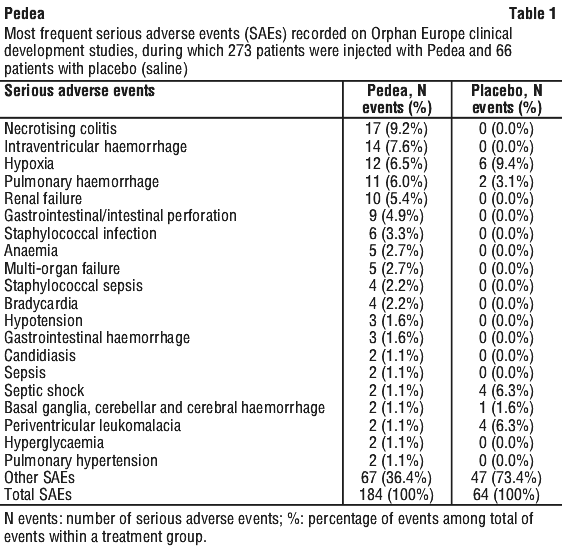
Post-marketing experience. Based on the number of Pedea ampoules sold since granting of marketing authorisation in Europe (2004), it is estimated that a total of 162,006 patients have been treated with Pedea worldwide. The most frequent safety cases spontaneously reported between 2004 and 2020 are listed below, by system organ class in order of decreasing frequencies. Frequencies are defined as: very common (≥ 1/10), common (≥ 1/100, < 1/10) and uncommon (≥ 1/1,000, < 1/100), rare (< 100/100,000), or very rare (< 10/100,000).
Gastrointestinal disorders. Rare: intestinal perforation and necrotising colitis. Very rare: gastrointestinal haemorrhage and abdominal distension. Unknown: gastric perforation.
Renal and urinary disorders. Rare: renal failure acute, oliguria, renal failure. Very rare: anuria.
General disorders and administration site conditions. Rare: drug ineffective. Very rare: death, general physical health deterioration, generalised oedema, malaise, oedema, oedema peripheral, pneumatosis, death neonatal.
Investigation. Rare: blood creatinine increased. Very rare: blood urea increased and urine output decreased.
Nervous system disorders. Rare: intraventricular haemorrhage.
Respiratory, thoracic and mediastinal disorders. Very rare: bronchopulmonary dysplasia, pulmonary arterial hypertension, pulmonary haemorrhage and pulmonary hypertension.
Metabolism and nutrition disorders. Very rare: hyponatraemia and sodium retention.
Cardiac disorders. Very rare: arrhythmia, atrioventricular block second degree, bradycardia, cardiac failure, cyanosis central, persistent foetal circulation and tachycardia.
Infections and infestations. Very rare: infection, neonatal infection, sepsis, sepsis neonatal, septic shock.
Vascular disorders. Very rare: circulatory collapse, haemorrhage intracranial, hypertension, pallor, pulmonary hypertension, shock, and vasoconstriction.
Injury, poisoning and procedural complications. Very rare: inappropriate schedule of drug administration, incorrect dose administered, incorrect route of drug administration, prescribed overdose, underdose.
Blood and lymphatic system disorders. Very rare: thrombocytopenia and thrombocytopenia microangiopathy.
Eye disorders. Very rare: retinopathy and retinopathy of prematurity.
Surgical and medical procedures. Very rare: laser therapy and off label use.
Musculoskeletal and connective tissue disorders. Very rare: hypotonia and necrotising fasciitis.
Pregnancy, puerperium and perinatal conditions. Very rare: bronchopulmonary dysplasia.
Skin and subcutaneous tissue disorders. Very rare: rash macular and rash morbilliform. Not known: acute generalised exanthematous pustulosis (AGEP), drug reaction with eosinophilia and systemic symptoms (DRESS syndrome).
Overall, during the period from 2004 and 2021, a total of 576 adverse events to Pedea injected for ductus closure were spontaneously reported for an estimated exposure of around 162,000 patients. As for the clinical trial experience, necrotising enterocolitis and intraventricular haemorrhage were among the most frequently reported adverse events following Pedea injection, and have each been reported in around 25 of 100,000 patients treated.
Reporting suspected adverse effects. Reporting suspected adverse reactions after registration of the medicinal product is important. It allows continued monitoring of the benefit-risk balance of the medicinal product. Healthcare professionals are asked to report any suspected adverse reactions at ww.tga.gov.au/reporting-problems.
4.9 Overdose
No case of overdose has been reported with intravenous ibuprofen in preterm newborn infants.
However, overdose has been described in infants and children administered oral ibuprofen: CNS depression, seizures, gastrointestinal disturbances, bradycardia, hypotension, apnoea, abnormal renal function, haematuria have been observed. Massive overdose (up to more than 1000 mg/kg) has been reported to induce coma, metabolic acidosis, and transient renal failure. All patients recovered with conventional treatment. Only one recorded death has been published: after an overdose of 469 mg/kg, a 16-month old child developed an apnoeic episode with seizures and fatal aspiration pneumonia.
The management of ibuprofen overdose is primarily supportive.
Prolonged use at higher than recommended doses or overdose may result in renal tubular acidosis and hypokalaemia.
For information on the management of overdose, contact the Poison Information Centre on 131126 (Australia).
5 Pharmacological Properties
5.1 Pharmacodynamic Properties
Mechanism of action. Ibuprofen is a non-steroidal anti-inflammatory drug (NSAID) that possesses anti-inflammatory, analgesic and antipyretic activity. Ibuprofen is a racemic mixture of S (+) and R (-) enantiomers. In vivo and in vitro studies indicate that the S (+) isomer is responsible for the clinical activity. Ibuprofen is a non-selective inhibitor of cyclooxygenase, leading to reduced synthesis of prostaglandins. Since prostaglandins are involved in the persistence of the ductus arteriosus after birth, this effect is believed to be the main mechanism of action of ibuprofen in this indication.
In a dose-response study of Pedea in 40 preterm newborn infants, the ductus arteriosus closure rate associated to the 10-5-5 mg/kg dose regimen was 75% (6/8) in neonates of 27-29 weeks' gestation and 33% (2/6) in neonates of 24-26 weeks' gestation.
Clinical trials. Clinical development study. A multicenter double-blind randomised placebo-controlled study was undertaken to compare the prophylactic (N = 55) versus the curative (N = 66) use of Pedea for inducing patent ductus arteriosus (PDA) closure. Upon confirmation of PDA patency, patients from the curative group received a course of 3 placebo injections in their first three days of life before receiving Pedea treatment. The success rate was assessed by the percentage of patients with a closed PDA as evidenced by Echo-Doppler. Among 66 patients from the curative group, 25 patients received curative Pedea treatment and in 12 of these patients (48%) this resulted in PDA closure. The success rate in the curative treatment group did not appear to be correlated to the gestational age (see Table 2).
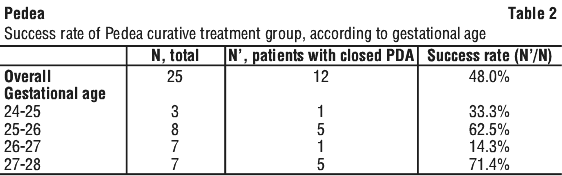
Safety was assessed by recording the occurrence of adverse events in both curative and prophylactic treatment groups (see Table 3).
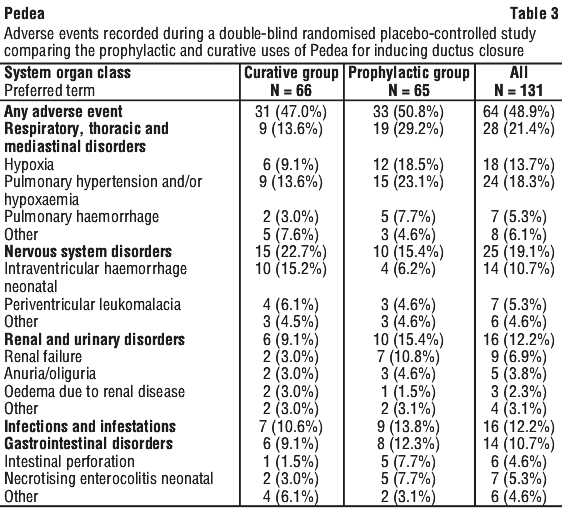
Retrospective study in Germany. A retrospective study was undertaken in the neonatology centre of the Charité-Virchow Hospital in Berlin (Germany), about the intravenous use of indomethacin, from 1998 to 2001 (N = 89) and of ibuprofen, from 2001 to 2003 (N = 93), for the treatment of PDA. In order to assess efficacy, the percentage of patients presenting a closed PDA after one treatment course was compared between both products (see Table 4).
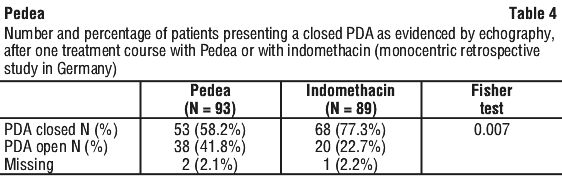
5.2 Pharmacokinetic Properties
Absorption. Although a great variability is observed in the premature population, peak plasma concentrations are measured around 35-40 mg/L after the initial loading dose of 10 mg/kg as well as after the last maintenance dose, whatever gestational and postnatal age. Residual concentrations are around 10-15 mg/L 24 hours after the last dose of 5 mg/kg.
Plasma concentrations of the S-enantiomer are much higher than those of the R-enantiomer, which reflects a rapid chiral inversion of the R- to the S-form in a proportion similar to adults (about 60%).
Distribution. The apparent volume of distribution is on average 200 mL/kg (62 to 350 according to various studies). The central volume of distribution may depend on the status of the ductus and decrease as the ductus closes.
Metabolism. In vitro studies suggest that, similarly to other NSAIDs, ibuprofen is highly bound to plasma albumin, although this seems to be significantly lower (95%) compared with adult plasma (99%). Ibuprofen competes with bilirubin for albumin binding in newborn infant serum and, as a consequence, the free fraction of bilirubin may be increased at high ibuprofen concentrations.
Excretion. Elimination rate is markedly lower than in older children and adults, with an elimination half-life estimated at approximately 30 hours (16-43). The clearance of both enantiomers increases with gestational age, at least in the range of 24 to 28 weeks.
PK-PD relationship. In preterm newborns, ibuprofen significantly reduced plasma concentrations of prostaglandins and their metabolites, particularly PGE2 and 6-keto-PGF-1-alpha. Low levels were sustained up to 72 hours in neonates who received 3 doses of ibuprofen, whereas subsequent re-increases were observed at 72 hours after only 1 dose of ibuprofen.
5.3 Preclinical Safety Data
Genotoxicity. No data available in indicated population.
Carcinogenicity. No data available in indicated population.
6 Pharmaceutical Particulars
6.1 List of Excipients
Each mL of Pedea contains the following inactive ingredients: trometamol (3.78 mg), sodium hydroxide (0.14 mg), sodium chloride (7.3 mg), hydrochloric acid and water for injections. The headspace within the ampoules is filled with nitrogen.
6.2 Incompatibilities
Incompatibilities were either not assessed or not identified as part of the registration of this medicine.
6.3 Shelf Life
In Australia, information on the shelf life can be found on the public summary of the Australian Register of Therapeutic Goods (ARTG). The expiry date can be found on the packaging.
6.4 Special Precautions for Storage
Store below 30°C. Do not freeze.
6.5 Nature and Contents of Container
Pedea is dispensed as a 2 mL solution in a colourless, type I glass ampoule. Each pack contains four ampoules.
6.6 Special Precautions for Disposal
In Australia, any unused medicine or waste material should be disposed of by taking to your local pharmacy.
6.7 Physicochemical Properties
Chemical structure.
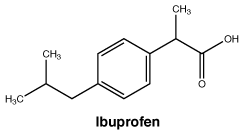
Relative molecular mass: 206.3 g/mol.
CAS number. (CAS no. 15687-27-1).
7 Medicine Schedule (Poisons Standard)
Schedule 4 (Prescription Only Medicine).
Date of First Approval
14 March 2017
Date of Revision
28 January 2026
Summary Table of Changes

Reasonable care is taken to provide accurate information at the time of creation. This information is not intended as a substitute for medical advice and should not be exclusively relied on to manage or diagnose a medical condition. The Australian Commission on Safety and Quality in Health Care disclaims all liability (including for negligence) for any loss, damage, injury or any other negative effects resulting from reliance on or use of this information. Read our full disclaimer. This website uses cookies. Read our privacy policy.