
Phentermine XR-WGR
Brand Information
| Brand name | Phentermine XR-WGR |
| Active ingredient | Phentermine |
| Schedule | S4 |
Consumer Medicine Information (CMI) leaflet
Please read this leaflet carefully before you start using the Phentermine XR-WGR.
Summary CMI
PHENTERMINE XR-WGR
Consumer Medicine Information (CMI) summary
The full CMI on the next page has more details. If you are worried about using this medicine, speak to your doctor or pharmacist.
1. Why am I taking PHENTERMINE XR-WGR?
PHENTERMINE XR-WGR contains the active ingredient phentermine. PHENTERMINE XR-WGR is used to reduce body weight in obese or overweight patients. For more information, see Section 1. Why am I taking PHENTERMINE XR-WGR? in the full CMI.
2. What should I know before I take PHENTERMINE XR-WGR?
Do not use if you have ever had an allergic reaction to phentermine or any of the ingredients listed at the end of the CMI.
There are a number of circumstances in which a person should not use this medicine or may need to use caution. It is important to understand if these apply to you before taking PHENTERMINE XR-WGR (see the full CMI for more details).
Talk to your doctor if you have any other medical conditions, take any other medicines, or are pregnant or plan to become pregnant or are breastfeeding.
For more information, see Section 2. What should I know before I take PHENTERMINE XR-WGR? in the full CMI.
3. What if I am taking other medicines?
Some medicines may interfere with PHENTERMINE XR-WGR and affect how it works.
A list of these medicines is in Section 3. What if I am taking other medicines? in the full CMI.
4. How do I take PHENTERMINE XR-WGR?
- Carefully follow all directions given by your doctor or other healthcare professionals and never change the dose yourself.
- The usual dose of PHENTERMINE XR-WGR is one capsule a day.
- Swallow the capsule whole with plenty of water. Do not chew or open the capsules.
More instructions can be found in Section 4. How do I take PHENTERMINE XR-WGR? in the full CMI.
5. What should I know while taking PHENTERMINE XR-WGR?
| Things you should do |
|
| Things you should not do |
|
| Driving or using machines |
|
| Drinking alcohol |
|
| Looking after your medicine |
|
For more information, see Section 5. What should I know while taking PHENTERMINE XR-WGR? in the full CMI.
6. Are there any side effects?
Common side effects include changes in your heartbeat, high blood pressure, restlessness, trouble sleeping, nervousness, tremor, headache, dizziness, fainting, nausea, vomiting, diarrhoea or constipation, stomach cramps, dry or unpleasant taste in mouth, trouble urinating, skin rashes, sexual function problems, feelings of extreme happiness followed by depression and tiredness.
Serious side effects include heart attack, stroke, chest pain, myocardial infarction and difficulty breathing.
For more information, including what to do if you have any side effects, see Section 6. Are there any side effects? in the full CMI.
Full CMI
PHENTERMINE XR-WGR
Active ingredient(s): Phentermine (fen-ter-mean)
Consumer Medicine Information (CMI)
This leaflet provides important information about using PHENTERMINE XR-WGR. You should also speak to your doctor or pharmacist if you would like further information or if you have any concerns or questions about taking PHENTERMINE XR-WGR.
Where to find information in this leaflet:
1. Why am I taking PHENTERMINE XR-WGR?
2. What should I know before I take PHENTERMINE XR-WGR?
3. What if I am taking other medicines?
4. How do I take PHENTERMINE XR-WGR?
5. What should I know while taking PHENTERMINE XR-WGR?
6. Are there any side effects?
7. Product details
1. Why am I taking PHENTERMINE XR-WGR?
PHENTERMINE XR-WGR contains the active ingredient phentermine. Phentermine is combined with a resin which slowly releases the phentermine so the effect of PHENTERMINE XR-WGR lasts all day.
PHENTERMINE XR-WGR is used to reduce body weight in obese or overweight patients.
PHENTERMINE XR-WGR is an appetite suppressant that works by directly affecting the area of the brain that controls your appetite making you feel less hungry.
PHENTERMINE XR-WGR should be used as a part of an overall weight management plan, which includes a medically controlled diet and exercise program.
Your doctor will assess whether PHENTERMINE XR-WGR is suitable for you.
2. What should I know before I take PHENTERMINE XR-WGR?
Warnings
Do not use PHENTERMINE XR-WGR if:
- You are allergic to phentermine, or any of the ingredients listed at the end of this leaflet. Always check the ingredients to make sure you can use this medicine. Some of the symptoms of an allergic reaction may include:
- shortness of breath
- wheezing or difficulty breathing
- swelling of the face, lips, tongue, or other parts of the body
- rash, itching or hives on the skin. - You are taking any similar medicines to reduce weight.
- You have any of the following medical conditions:
- very high blood pressure
- high blood pressure in the lungs
- problems with your heart valves
- disease related to blood vessels in the brain
- severe heart disease including changes in the rhythm or rate of the heartbeat
- narrowing of the blood vessels due to thickening or hardening of the blood vessel wall
- overactive thyroid gland
- psychiatric illness including anorexia nervosa (loss of appetite) and depression
- glaucoma (high pressure in the eye). - It is past the expiry date printed on the pack or if the packaging is torn or shows signs of tampering.
- You are a child under the age of 12 years. Safety and effectiveness in children younger than 12 years have not been established.
- You are elderly.
- You are currently taking, or have taken within the last 14 days, antidepressant medicines called mono-amine oxidase inhibitors (MAOIs).
- You have previously misused drugs or alcohol.
Check with your doctor if you:
- Have any other medical conditions including:
- high blood pressure
- heart disease such as angina (chest pain)
- diabetes
- epilepsy - Take any medicines for any other condition.
During treatment, you may be at risk of developing certain side effects. It is important you understand these risks and how to monitor for them. See additional information under Section 6. Are there any side effects?
Pregnancy and breastfeeding
Check with your doctor if you are pregnant or intend to become pregnant.
Talk to your doctor if you are breastfeeding or intend to breastfeed.
3. What if I am taking other medicines?
Tell your doctor or pharmacist if you are taking any other medicines, including any medicines, vitamins or supplements that you buy without a prescription from your pharmacy, supermarket or health food shop.
Some medicines may interfere with PHENTERMINE XR-WGR and affect how it works.
These include:
- other medicines for weight reduction
- medicines for depression or obsessive-compulsive disorder or other mental illness
- ergot-like medicines for migraine
- some cough and cold remedies
- thyroid hormones
- medicines for lowering high blood pressure.
Check with your doctor or pharmacist if you are not sure about what medicines, vitamins or supplements you are taking and if these affect PHENTERMINE XR-WGR.
4. How do I take PHENTERMINE XR-WGR?
How much to take
- The usual dose is one capsule a day, however your doctor will prescribe the right dose for you.
- Swallow the capsules whole with plenty of water. Do not chew or open the capsules.
- Carefully follow the instructions provided and use PHENTERMINE XR-WGR until your doctor tells you to stop.
Increasing the dose may not necessarily make you lose more weight or make you lose weight faster. However, you will more likely experience side effects. Your doctor will tell you how long you are to take PHENTERMINE XR-WGR for.
When to take PHENTERMINE XR-WGR
- Take PHENTERMINE XR-WGR first thing in the morning, at breakfast time so that it does not keep you awake at night.
- Taking PHENTERMINE XR-WGR at the same time each day will have the best effect. It will also help you remember when to take it. It does not matter if you take this medicine before or after food.
- Do not change the dose unless your doctor tells you to do so.
If you forget to use PHENTERMINE XR-WGR
PHENTERMINE XR-WGR should be used regularly at the same time each day. If you miss your dose at breakfast, take it no later than lunchtime.
If you take PHENTERMINE XR-WGR any later than lunchtime you may have trouble sleeping at night.
If it is almost time for your next dose, skip the dose you missed and take your next dose when you are meant to.
Do not take a double dose to make up for the dose you missed.
If you use too much PHENTERMINE XR-WGR
If you think that you have taken too much PHENTERMINE XR-WGR, you may need urgent medical attention.
You should immediately:
- phone the Poisons Information Centre
(by calling 13 11 26 in Australia), or - contact your doctor, or
- go to the Emergency Department at your nearest hospital.
You should do this even if there are no signs of discomfort or poisoning.
5. What should I know while taking PHENTERMINE XR-WGR?
Things you should do
- Remind any doctor, dentist or pharmacist you visit that you are taking PHENTERMINE XR-WGR.
- If you are going to have surgery, tell the surgeon or anaesthetist that you are taking PHENTERMINE XR-WGR.
- Check with your doctor or pharmacist before you start to take any cough or cold medication.
Call your doctor straight away if you:
- Become pregnant while taking this medicine.
- Experience sudden or rapid weight loss, difficulty breathing, chest pain, fainting, and swelling of the lower limbs and if you cannot exercise as much as you usually can.
Things you should not do
- Do not take PHENTERMINE XR-WGR to treat any other conditions unless your doctor tells you to.
- Do not give your medicine to anyone else, even if they have the same condition as you.
Driving or using machines
Be careful before you drive or use any machines or tools until you know how PHENTERMINE XR-WGR affects you.
Drinking alcohol
Tell your doctor if you drink alcohol.
Do not drink alcohol whilst taking PHENTERMINE XR-WGR.
Looking after your medicine
Follow the instructions in the carton on how to take care of your medicine properly.
- Keep your capsules in the blister-foil in the carton until it is time to take them.
- Store PHENTERMINE XR-WGR below 30°C in a cool dry place away from moisture, heat, or sunlight; for example, do not store it:
- in the bathroom or near a sink, or
- in the car or on windowsills.
Keep it where young children cannot reach it.
Getting rid of any unwanted medicine
If you no longer need to use this medicine or it is out of date, take it to any pharmacy for safe disposal.
Do not use this medicine after the expiry date.
6. Are there any side effects?
All medicines can have side effects. If you do experience any side effects, most of them are minor and temporary. However, some side effects may need medical attention.
See the information below and, if you need to, ask your doctor or pharmacist if you have any further questions about side effects.
Less serious side effects
| Less serious side effects | What to do |
| Speak to your doctor if you have any of these less serious side effects and they worry you. |
Serious side effects
| Serious side effects | What to do |
| Call your doctor straight away, or go straight to the Emergency Department at your nearest hospital if you notice any of these serious side effects. |
Tell your doctor or pharmacist if you notice anything else that may be making you feel unwell.
Other side effects not listed here may occur in some people.
Reporting side effects
After you have received medical advice for any side effects you experience, you can report side effects to the Therapeutic Goods Administration online at www.tga.gov.au/reporting-problems.
By reporting side effects, you can help provide more information on the safety of this medicine.
Always make sure you speak to your doctor or pharmacist before you decide to stop taking any of your medicines.
7. Product details
This medicine is only available with a doctor's prescription.
What PHENTERMINE XR-WGR contains
| Active ingredient (main ingredient) | Phentermine |
| Other ingredients (inactive ingredients) | lactose monohydrate liquid paraffin magnesium stearate gelatin titanium dioxide iron oxide black (CI 77499) sodium polystyrene sulfonate In addition: PHENTERMINE XR-WGR 15 mg contains: brilliant blue FCF (CI 42090) iron oxide yellow (CI 77492) PHENTERMINE XR-WGR 30 mg contains: iron oxide red (CI 77491) PHENTERMINE XR-WGR 40 mg contains: erythrosine (CI 45430) sunset yellow FCF (CI 5985) |
| Potential allergens | Contain sugars as lactose monohydrate |
Do not take this medicine if you are allergic to any of these ingredients.
PHENTERMINE XR-WGR capsules are gluten-free.
What PHENTERMINE XR-WGR looks like
PHENTERMINE XR-WGR capsules are available in three strengths in packs of 30 capsules:
15 mg - AUST R 310853
Grey and green and marked PHE 15
30 mg - AUST R 310860
Grey and reddish brown and marked PHE 30
40 mg - AUST R 310857
Grey and orange and marked PHE 40
Who distributes PHENTERMINE XR-WGR
Wagner Pharmaceuticals Pty Ltd
6 Albert Street
Preston VIC 3072
Tel: 1800 936 140
This leaflet was prepared in April 2024
Brand Information
| Brand name | Phentermine XR-WGR |
| Active ingredient | Phentermine |
| Schedule | S4 |
MIMS Revision Date: 01 April 2025
Notes
Distributed by Wagner Pharmaceuticals Pty Ltd
1 Name of Medicine
Phentermine (as hydrochloride).
2 Qualitative and Quantitative Composition
Each Phentermine XR-WGR capsule contains phentermine as an ion-exchange resin complex equivalent to 15, 30 or 40 mg phentermine depending on strength.
Excipients of known effect. Lactose monohydrate and sulphites (from gelatin capsules).
For the full list of excipients, see Section 6.1 List of Excipients.
3 Pharmaceutical Form
Modified release capsules.
15 mg. Grey and green coloured, marked with 'PHE15'.
30 mg. Grey and reddish brown, marked with 'PHE30'.
40 mg. Grey and orange, marked with 'PHE40'.
The ion-exchange resin is quite stable, highly insoluble and without pharmacological effect until it reacts with cations (hydrogen, potassium, sodium etc.) present in the gastrointestinal fluids. Phentermine is then released from the resin complex at a rate dependent on the total concentration of these cations. Since this concentration is fairly constant throughout the entire gastrointestinal tract, continuous and controlled ionic release occurs over a 10 to 14 hour period.
4 Clinical Particulars
4.1 Therapeutic Indications
Phentermine is an anorectic agent indicated in the management of obesity as a short-term adjunct in a medically monitored comprehensive regimen of weight reduction based, for example, on exercise, diet (caloric/kilojoule restriction) and behaviour modification in obese patients with a body mass index (BMI) of 30 kg/m2 or greater. The treatment with phentermine can be initiated in overweight patients with a lower BMI (25 to 29.9 kg/m2), which increases the risk of morbidity from a number of disorders. Secondary organic causes of obesity should be excluded by diagnosis before prescribing this agent.
4.2 Dose and Method of Administration
Adults and adolescents over 12 years. One capsule daily at breakfast, swallowed whole. Evening dosing should be avoided, as this agent may induce insomnia. It is recommended that treatment should be initiated under the care of physicians experienced in the treatment of obesity.
The recommended starting dose is 30 mg daily. Larger framed individuals may require 40 mg daily. The recommended maintenance dose, either continuous or intermittent is 15 to 40 mg daily depending on responsiveness. The recommended dose of phentermine should not be exceeded to increase the effect. Phentermine should not be combined with other appetite suppressants. Patients require medical review after a defined course of treatment, which should not exceed three months.
Children under 12 years. Phentermine is not recommended for children under the age of 12 years as safety and efficacy have not been established.
Elderly. Phentermine is not recommended for the elderly.
4.3 Contraindications
Pulmonary artery hypertension.
Existing heart valve abnormalities or heart murmurs.
Moderate to severe arterial hypertension.
Cerebro-vascular disease.
Severe cardiac disease including arrhythmias, advanced arteriosclerosis.
Known hypersensitivity to sympathomimetic drugs.
Hyperthyroidism.
Agitated states or a history of psychiatric illnesses including anorexia nervosa and depression.
Glaucoma.
History of drug/ alcohol abuse or dependence.
Concomitant treatment with Monoamine Oxidase (MAO) Inhibitors or within 14 days following their administration.
4.4 Special Warnings and Precautions for Use
Phentermine capsules are indicated only as short-term monotherapy for the management of exogenous obesity. The safety and efficacy of combination therapy with phentermine and any other drug products for weight loss have not been established. Therefore, co-administration of drug products for weight loss is not recommended.
Since the selective serotonin reuptake inhibitors (e.g. fluoxetine, sertraline, paroxetine), ergot-like drugs and clomipramine affect serotonin disposition there remains a theoretical risk that combination of these agents with phentermine may also be associated with cardiac valvular disease and is not recommended. There is no direct scientific evidence to confirm this theory.
Valvular heart disease. Serious regurgitate cardiac valvular disease, primarily affecting the mitral, aortic and/or tricuspid valves, has been reported in otherwise healthy persons who had taken a combination of fenfluramine or dexfenfluramine with phentermine for weight loss. The aetiology of these valvulopathies has not been established and their course in individuals after the drugs are stopped is not known. There have been no reported cases to date of valvular heart disease occurring with the use of phentermine alone.
Primary pulmonary hypertension (PPH). Cases of severe, sometime fatal primary pulmonary hypertension, have been reported in patients who have received anorectics. In a case-control epidemiological study, the duration of treatment with anorectic agents, not including phentermine, beyond three months significantly increases the risk of PPH. However, patients treated with phentermine require medical review at least every 3 months (see Section 4.2 Dose and Method of Administration). PPH has been reported in patients receiving fenfluramine/dexfenfluramine combined with phentermine. The possibility of an association between PPH and the use of phentermine alone cannot be ruled out; there have been very rare cases of PPH in patients who reportedly have taken phentermine alone. The initial symptom of PPH is usually dyspnoea. Other early symptoms include: angina pectoris, syncope, lower extremity oedema or the unexplained onset or aggravation of diminished exercise tolerance. Under these circumstances, treatment should be immediately discontinued and the patient referred to a specialist unit for investigation.
Use with caution in the following circumstances. Phentermine should be used with caution in patients with mild hypertension. In the first days of treatment, determine that there is no loss of blood pressure control.
In patients receiving phentermine, response to insulin and oral hypoglycaemic agents may vary due to alterations in dietary regimes. This should be kept in mind if phentermine is used in diabetic patients.
Inappropriate use has been reported with similar drugs and the possibility of this occurrence should be considered with phentermine.
Cardiovascular and cerebrovascular events have rarely been reported, mainly in association with rapid weight loss. Weight loss should be gradual and controlled in obese patients undergoing treatment with Phentermine. Phentermine should be used with caution in patients with established coronary artery disease. A single case of exacerbation of angina pectoris in a patient with established coronary artery disease has been reported.
Phentermine should be used with caution in patients receiving psychotropic drugs, including sedatives and agents with sympathomimetic activity.
Phentermine should be used with caution in epileptic patients.
Phentermine should be used with caution in patients receiving anti-hypertensive agents.
Use in the elderly. Phentermine is not recommended for the elderly.
Paediatric use. Phentermine is not recommended for children.
Effects on laboratory tests. There are no reports to-date to suggest that phentermine interferes with laboratory or diagnostic tests.
4.5 Interactions with Other Medicines and Other Forms of Interactions
Phentermine should be used with caution in patients receiving sympathomimetic agents. Phentermine antagonises adrenergic neurone blocking drugs such as clonidine, methyldopa and guanethidine and may decrease their hypotensive effect. The effects of phentermine are potentiated by Monoamine Oxidase Inhibitors (see Section 4.3 Contraindications) and may result in a hypertensive crisis. The concurrent use of thyroid hormones with phentermine may increase the CNS stimulation that can occur with phentermine. Alcohol may increase CNS side effects such as dizziness, lightheadedness and confusion, and its concurrent use should be avoided with phentermine.
4.6 Fertility, Pregnancy and Lactation
Effects on fertility. In rats, administration of phentermine at a dose 10 times the maximum human dose on a mg/m2 basis abolished oestrous cycling. There is no information on the potential of phentermine to impair fertility in humans.
Use in pregnancy. (Category B2)
Weight reduction using appetite suppression drugs is not recommended during pregnancy. In rats, administration of phentermine during late gestation at a dose 7 times the maximum human dose on a mg/m2 basis had no adverse effects on dams or offspring. There is no information on the teratological potential of phentermine. Because of inadequate evidence of safety in human pregnancy, phentermine should not be used in pregnant women.
Use in lactation. There is no data available on the safety of phentermine in lactation and as such, its use in lactating women should be avoided.
4.7 Effects on Ability to Drive and Use Machines
Phentermine may impair the ability to perform activities requiring mental alertness, such as driving and operating machinery, and patients therefore should be cautioned accordingly.
4.8 Adverse Effects (Undesirable Effects)
Cardiovascular. See Section 4.4 Special Warnings and Precautions for Use, Valvular heart disease and Primary pulmonary hypertension (PPH). The most common reported reactions are palpitations, tachycardia, elevation of blood pressure, precordial pain. Rare occurrences of cardiovascular or cerebrovascular events have been described with anorectic agents. In particular stroke, angina, myocardial infarction, cardiac failure and cardiac arrest have been reported.
Central nervous system. Overstimulation, restlessness, nervousness, insomnia, tremor, dizziness and headache. Rarely euphoria may occur and this may be followed by fatigue and depression. Psychotic episodes and hallucinations are rare side effects.
Gastrointestinal. Nausea, vomiting, dry mouth, abdominal cramps, unpleasant taste, diarrhoea, constipation.
Other. Micturition disturbances, rash, impotence, changes in libido, facial oedema.
Reporting suspected adverse effects. Reporting suspected adverse reactions after registration of the medicinal product is important. It allows continued monitoring of the benefit-risk balance of the medicinal product. Healthcare professionals are asked to report any suspected adverse reactions at www.tga.gov.au/reporting-problems.
4.9 Overdose
Symptoms. Initially irritability, rapid respiration, agitation, euphoria, restlessness, hyperreflexia, disorientation and tremor, aggressiveness, hallucinations and panic states may occur, followed by cardiac arrhythmias, convulsions, fatigue, central nervous system depression and coma. Cardiovascular consequences include hypertension, hypotension and circulatory collapse. Gastrointestinal symptoms include nausea, vomiting, diarrhoea and abdominal cramps.
Treatment. The treatment is largely symptomatic. Activated charcoal may reduce absorption of the medicine if given within one or two hours after ingestion. In patients who are not fully conscious or have impaired gag reflex, consideration should be given to administering activated charcoal via a nasogastric tube, once the airway is protected. Diazepam, preferably by mouth (cautiously by intravenous injection) can be used to control marked excitement and convulsions. Provided renal function is adequate, elimination of phentermine has been shown to be assisted by acidification of the urine. There is insufficient experience to recommend haemodialysis or peritoneal dialysis.
For information on the management of overdose, contact the Poisons Information Centre on 13 11 26 (Australia).
5 Pharmacological Properties
5.1 Pharmacodynamic Properties
Mechanism of action. Phentermine is a sympathomimetic amine with significant anorectic activity in animal models. Its appetite suppressant effect is generally considered to be exerted through the hypothalamus, but it is not certain that this is the only effect related to weight loss. Phentermine has major effects on the dopaminergic and noradrenergic nervous systems. The cardiovascular effects include a pressor response and increase in heart rate and force of contraction.
Clinical trials. No data available.
5.2 Pharmacokinetic Properties
Absorption. Absorption of phentermine is almost complete. The rate of absorption from the resin complex is significantly slower than that from the hydrochloride salt resulting in a lower and later peak blood level. Phentermine is readily absorbed from the gastro-intestinal tract.
Metabolism and excretion. Following an oral dose of phentermine capsule, one study demonstrated urinary excretion of unchanged drug ranging from 62.7% to 84.8% in 72 hours. The remainder is metabolised in the liver. The half-life of phentermine is about 25 hours. In one study in volunteers acidification of the urine reduced the half-life to 7-8 hours.
5.3 Preclinical Safety Data
Genotoxicity. Phentermine was not mutagenic in a bacterial gene mutation assay, however, studies to assess the potential for chromosomal damage have not been performed.
Carcinogenicity. No studies have been performed to determine the potential of phentermine for carcinogenesis.
6 Pharmaceutical Particulars
6.1 List of Excipients
Each Phentermine XR-WGR capsule also contains, as inactive ingredients: sodium polystyrene sulfonate, lactose monohydrate, liquid paraffin, magnesium stearate, gelatin, titanium dioxide, iron oxide black (CI 77499), brilliant blue FCF (CI 42090) (15 mg), iron oxide yellow (CI 77492) (15 mg), iron oxide red (CI 77491) (30 mg), erythrosine (CI 45430) (40 mg), sunset yellow FCF (CI 15985) (40 mg), TekPrint SW-9008 Black ink (ARTG2328).
Phentermine XR-WGR capsules are gluten free.
6.2 Incompatibilities
Incompatibilities were either not assessed or not identified as part of the registration of this medicine.
6.3 Shelf Life
In Australia, information on the shelf life can be found on the public summary of the Australian Register of Therapeutic Goods (ARTG). The expiry date can be found on the packaging.
6.4 Special Precautions for Storage
Store below 25°C.
6.5 Nature and Contents of Container
Capsules supplied in PVC/PVDC/Aluminium blisters of 7 and 30 capsules.
6.6 Special Precautions for Disposal
In Australia, any unused medicine or waste material should be disposed of by taking to your local pharmacy.
6.7 Physicochemical Properties
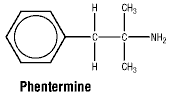
Chemical structure. Phentermine (phenyl tertiary butylamine, C10H15N). The chemical structure is:
7 Medicine Schedule (Poisons Standard)
S4 - Prescription Only Medicine.
Date of First Approval
11 August 2021
Date of Revision
24 April 2024
Summary Table of Changes
Reasonable care is taken to provide accurate information at the time of creation. This information is not intended as a substitute for medical advice and should not be exclusively relied on to manage or diagnose a medical condition. The Australian Commission on Safety and Quality in Health Care disclaims all liability (including for negligence) for any loss, damage, injury or any other negative effects resulting from reliance on or use of this information. Read our full disclaimer. This website uses cookies. Read our privacy policy.