
Plasma-Lyte 148 Intravenous Infusion
Brand Information
| Brand name | Plasma-Lyte 148 Intravenous Infusion |
| Active ingredient | Sodium chloride + Sodium gluconate + Sodium acetate trihydrate + Potassium chloride + Magnesium chloride hexahydrate |
| Schedule | Unscheduled |
Consumer Medicine Information (CMI) leaflet
Please read this leaflet carefully before you start using the Plasma-Lyte 148 Intravenous Infusion.
Summary CMI
Plasma-Lyte 148 Intravenous Infusion
Consumer Medicine Information (CMI) summary
The full CMI on the next page has more details. If you are worried about using this medicine, speak to your doctor or pharmacist.
1. Why am I receiving Plasma-Lyte 148?
Plasma-Lyte 148 Intravenous Infusion (Plasma-Lyte 148) contains a mix of fluid and salts (electrolytes). Plasma-Lyte 148 is used as a source of water and salts.
For more information, see Section 1. Why am I receiving Plasma-Lyte 148? in the full CMI.
2. What should I know before I receive Plasma-Lyte 148?
Do not use if you have ever had an allergic reaction to any of the ingredients listed at the end of the CMI.
Talk to your doctor if you have any other medical conditions, take any other medicines, or are pregnant or plan to become pregnant or are breastfeeding.
For more information, see Section 2. What should I know before I receive Plasma-Lyte 148? in the full CMI.
3. What if I am taking other medicines?
Some medicines may interfere with Plasma-Lyte 148 and affect how it works.
A list of these medicines is in Section 3. What if I am taking other medicines? in the full CMI.
4. How is Plasma-Lyte 148 given?
- Your doctor or trained nurse will give Plasma-Lyte 148 by an infusion (drip) into a vein (intravenously).
- Your doctor will decide how much Plasma-Lyte 148 to give. The amount depends on your need and condition.
More instructions can be found in Section 4. How is Plasma-Lyte 148 given? in the full CMI.
5. What should I know while receiving Plasma-Lyte 148?
| Things you should do |
|
| Things you should not do |
|
| Driving or using machines |
|
| Drinking alcohol |
|
| Looking after your medicine |
|
For more information, see Section 5. What should I know while receiving Plasma-Lyte 148? in the full CMI.
6. Are there any side effects?
For more information on what to do if you have any side effects, see Section 6. Are there any side effects? in the full CMI.
Full CMI
Plasma-Lyte 148 Intravenous Infusion
Active ingredient(s): sodium chloride, sodium gluconate, sodium acetate trihydrate, potassium chloride, magnesium chloride hexahydrate
Consumer Medicine Information (CMI)
This leaflet provides important information about using Plasma-Lyte 148 Intravenous Infusion (Plasma-Lyte 148). You should also speak to your doctor, nurse or pharmacist if you would like further information or if you have any concerns or questions about using Plasma-Lyte 148.
Where to find information in this leaflet:
1. Why am I receiving Plasma-Lyte 148?
2. What should I know before I receive Plasma-Lyte 148?
3. What if I am taking other medicines?
4. How is Plasma-Lyte 148 given?
5. What should I know while receiving Plasma-Lyte 148?
6. Are there any side effects?
7. Product details
1. Why am I receiving Plasma-Lyte 148?
Plasma-Lyte 148 contains the active ingredients:
- Sodium chloride
- Sodium gluconate
- Sodium acetate trihydrate
- Potassium chloride
- Magnesium chloride hexahydrate
Plasma-Lyte 148 is used as a source of water and electrolytes (salts).
2. What should I know before I receive Plasma-Lyte 148?
Warnings
Do not use Plasma-Lyte 148 if:
- you are allergic to any of the ingredients listed at the end of this leaflet.
- Always check the ingredients to make sure you can use this medicine.
Check with your doctor if you :
- have metabolic acidosis, or metabolic/respiratory alkalosis (abnormal blood pH)
- have heart, kidney and/or liver disorders
- have conditions that may cause retention of fluid or sodium in the body and oedema (build-up of fluid under the skin, particularly around the ankles, feet or legs)
- have abnormal blood levels of calcium, chloride, magnesium, potassium and/or sodium
- have aldosteronism (a disease that causes high levels of a hormone called aldosterone)
- have eclampsia or pre-eclampsia (high blood pressure during pregnancy)
- have myasthenia gravis (a disease that causes progressive muscle weakness)
- have conditions that may cause high blood levels of potassium (hyperkalaemia) such as kidney failure, adrenocortical insufficiency, dehydration or extensive tissue damage or burns
- have any other medical conditions
- take any medicines for any other condition
During treatment, you may be at risk of developing certain side effects. It is important you understand these risks and how to monitor for them. See additional information under Section 6. Are there any side effects?
Pregnancy and breastfeeding
Check with your doctor if you are pregnant or intend to become pregnant.
Talk to your doctor if you are breastfeeding or intend to breastfeed.
3. What if I am taking other medicines?
Tell your doctor or pharmacist if you are taking any other medicines, including any medicines, vitamins or supplements that you buy without a prescription from your pharmacy, supermarket or health food shop.
Some medicines and Plasma-Lyte 148 may interfere with each other and put your health at risk.
Medicines that may lead to more sodium or fluid in the body include:
- corticosteroids (anti-inflammatory medicines)
- corticotrophin (used for diagnosis or to treat swelling)
Medicines that are affected by changes in body pH include:
- aspirin/salicylates (anti-inflammatory medicines)
- barbiturates (used to treat epilepsy)
- lithium (used to treat psychiatric illnesses)
- sympathomimetics such as pseudoephedrine (used in cough and cold preparations), ephedrine, quinidine and dexamphetamine (for treatment of ADHD).
Medicines that may lead to high levels of potassium in your blood include:
- potassium-sparing diuretics (amiloride, spironolactone, triamterene)
- angiotensin converting enzyme inhibitors or angiotensin II receptor antagonist (used in treatment of high blood pressure)
- tacrolimus and cyclosporin (used to prevent rejection of a transplant)
Medicines that may lead to very low sodium levels in your blood include:
- clofibrate, a medicine to lower cholesterol
- antiepileptics (anti-seizure medicines) such as carbamazepine and oxcarbazepine
- chemotherapy medicines for cancer such as chlorpropamide, vincristine, ifosfamide, cyclophosphamide
- medicines to treat depression and anxiety
- antipsychotics, that help manage psychosis
- pain relievers such as opioids and NSAIDS
- medicines to treat diabetes such as desmopressin and vasopressin
- terlipressin, a medicine to treat liver and kidney problems
- oxytocin, a medicine used to induce labour and control postpartum bleeding
- diuretics, medicines used to increase urine output.
Check with your doctor or pharmacist if you are not sure about what medicines, vitamins or supplements you are taking and if these affect Plasma-Lyte 148.
4. How is Plasma-Lyte 148 given?
How it is given
- Your doctor or trained nurse will give Plasma-Lyte 148 by an infusion (drip) into a vein (intravenously).
- It is usually given in a hospital, clinic or nursing home. The infusion requires special equipment and medical training. You may receive it at home if your doctor has arranged for it.
How much is given
- Your doctor will decide how much Plasma-Lyte 148 to give. The amount depends on your need and condition.
- Your doctor will decide how long you need to be given this medicine.
If you are given too much Plasma-Lyte 148
The doctor or nurse giving you Plasma-Lyte 148 is highly trained and qualified, so it is unlikely that you will be given an overdose.
If you think that you have been given too much, you may need urgent medical attention.
You should immediately:
- phone the Poisons Information Centre
(by calling 13 11 26), or - contact your doctor, or
- go to the Emergency Department at your nearest hospital.
You should do this even if there are no signs of discomfort or poisoning.
5. What should I know while receiving Plasma-Lyte 148?
Things you should do
Remind any doctor, nurse, dentist or pharmacist you visit that you are using Plasma-Lyte 148.
Things you should not do
- Do not stop using this medicine suddenly.
Driving or using machines
Be careful before you drive or use any machines or tools until you know how Plasma-Lyte 148 affects you.
The effects of Plasma-Lyte 148 on driving and using machines or tools have not been studied.
Drinking alcohol
Tell your doctor if you drink alcohol.
It is unknown how alcohol may affect Plasma-Lyte 148.
Looking after your medicine
You will not have to handle or store Plasma-Lyte 148. It will be stored in the pharmacy or the hospital ward, below 30°C.
If for any reason you need to keep this product at home it should be stored in a locked cupboard.
- Store below 30°C.
- Do not freeze.
Follow the instructions in the carton on how to take care of your medicine properly.
Store it in a cool dry place away from moisture, heat or sunlight; for example, do not store it:
- in the bathroom or near a sink, or
- in the car or on window sills.
Keep it where young children cannot reach it.
Getting rid of any unwanted medicine
This medicine is for single use, and for one person only. Your doctor or nurse will discard any unused medicine. They will not save unused portions for later, either for you or anyone else.
If you no longer need to use this medicine or it is out of date, take it to any pharmacy for safe disposal.
Do not use this medicine after the expiry date.
6. Are there any side effects?
All medicines can have side effects. If you do experience any side effects, most of them are minor and temporary. However, some side effects may need medical attention.
See the information below and, if you need to, ask your doctor or pharmacist if you have any further questions about side effects.
Less serious side effects
| Less serious side effects | What to do |
Infusion site-related:
| Speak to your doctor if you have any of these less serious side effects and they worry you. |
Serious side effects
| Serious side effects | What to do |
Allergic reaction-related:
| Call your doctor straight away, or go straight to the Emergency Department at your nearest hospital if you notice any of these serious side effects. |
Tell your doctor or pharmacist if you notice anything else that may be making you feel unwell.
Other side effects not listed here may occur in some people.
Reporting side effects
After you have received medical advice for any side effects you experience, you can report side effects to the Therapeutic Goods Administration online at www.tga.gov.au/reporting-problems. By reporting side effects, you can help provide more information on the safety of this medicine.
Always make sure you speak to your doctor or pharmacist before you decide to stop taking any of your medicines.
7. Product details
This medicine is only available with a doctor's prescription.
What Plasma-Lyte 148 contains
| Active ingredients (main ingredients) |
|
| Other ingredients (inactive ingredients) | Sodium hydroxide, water for Injections |
Do not take this medicine if you are allergic to any of these ingredients.
What Plasma-Lyte 148 looks like
Plasma-Lyte 148 (approx. pH 7.4) Intravenous Infusion is a clear solution in VIAFLEX (plastic) bags. It is available in the following bag sizes:
- Plasma-Lyte 148 (approx. pH 7.4) 500mL injection bag
(Aust R 231424) - Plasma-Lyte 148 (approx. pH 7.4) 1000mL injection bag
(Aust R 231425)
Who distributes Plasma-Lyte 148
Baxter Healthcare Pty Ltd
1 Baxter Drive
Old Toongabbie
NSW 2146
Australia
This leaflet was prepared in September 2025
Baxter, Plasma-Lyte and VIAFLEX are trademarks of Baxter International Inc.
Brand Information
| Brand name | Plasma-Lyte 148 Intravenous Infusion |
| Active ingredient | Sodium chloride + Sodium gluconate + Sodium acetate trihydrate + Potassium chloride + Magnesium chloride hexahydrate |
| Schedule | Unscheduled |
MIMS Revision Date: 01 July 2025
1 Name of Medicine
Sodium chloride, sodium gluconate, sodium acetate trihydrate, potassium chloride and magnesium chloride hexahydrate.
2 Qualitative and Quantitative Composition
Plasma-Lyte 148 (approx. pH 7.4) intravenous (IV) infusion is a sterile, clear, nonpyrogenic isotonic solution in a single dose container for intravenous administration. It contains no antimicrobial agents. The approximate osmolality is 271 mOsm/kg. An injection with an osmolality within the range of 250 to 350 mOsm/kg is considered to be isotonic. Administration of substantially hypertonic solutions may cause vein damage.
Each 1000 mL of Plasma-Lyte 148 (approx. pH 7.4) IV infusion contains:
Active ingredient. Sodium chloride 5.26 g, sodium gluconate 5.02 g, sodium acetate trihydrate 3.68 g, potassium chloride 370 mg, magnesium chloride hexahydrate 300 mg.
Excipient. Sodium hydroxide (pH adjustment), water for injections q.s. to 1000 mL.
Solution properties. pH range 6.5 to 8.0, approximate osmolality 271 mOsm/kg, approximate kilojoules 66 kJ.
Plasma-Lyte 148 (approx. pH 7.4) IV infusion when administered intravenously is a source of water, electrolytes, and calories.
Each 1000 mL of Plasma-Lyte 148 (approx. pH 7.4) IV infusion has ionic concentration of: sodium 140 mmol, potassium 5 mmol, magnesium 1.5 mmol, chloride 98 mmol, acetate 27 mmol, gluconate 23 mmol.
For the full list of excipients, see Section 6.1 List of Excipients.
3 Pharmaceutical Form
Solution for intravenous infusion.
4 Clinical Particulars
4.1 Therapeutic Indications
Plasma-Lyte 148 (approx. pH 7.4) IV infusion is indicated as a source of water and electrolytes or as an alkalinising agent.
4.2 Dose and Method of Administration
Dosage. As directed by the physician. Dosage, rate, and duration of administration are to be individualised and depend upon the indication for use, the patient's age, weight, clinical condition, and concomitant treatment, and on the patient's clinical and laboratory response to treatment.
Each Viaflex container is for single patient use only.
Parenteral medicine products should be inspected visually for particulate matter and discolouration prior to the administration whenever solution and container permit. Do not administer unless solution is clear and seal is intact.
All injections in Viaflex plastic containers are intended for intravenous administration using sterile equipment.
Directions for use of Viaflex plastic container. Warning. Do not use plastic containers in series connections. Such use could result in air embolism due to residual air being drawn from the primary container before administration of the fluid from the secondary container is complete (see Section 4.4 Special Warnings and Precautions for Use, Risk of air embolism).
To open. Tear overwrap down side at slit and remove solution container. Some opacity of the plastic due to moisture absorption during the sterilisation process may be observed. This is normal and does not affect the solution quality or safety. The opacity will diminish gradually. Check for minute leaks by squeezing the inner bag firmly. If leaks are found, discard solution, as sterility may be impaired. If supplemental medication is desired, follow the directions below.
Preparation for administration. Plasma-Lyte 148 (approx. pH 7.4) IV infusion is sterile preparation. Thus, aseptic technique must be applied throughout the administration.
(1) Suspend container from eyelet support.
(2) Remove plastic protector from outlet port at the bottom of container.
(3) Attach administration set.
To add medications. Warning. Additives may be incompatible. Additives known or determined to be incompatible must not be used. Consult with a pharmacist, if available. As with all parenteral solutions, compatibility of the additives with the solution must be assessed before addition. Before adding a substance or medication, verify that it is soluble and/or stable in water and that the pH range of Plasma-Lyte 148 (approx. pH 7.4) IV infusion is appropriate. After addition, check for possible colour change and/or the appearance of precipitates, insoluble complexes or crystals. The instructions for use of the medication to be added and other relevant literature must be consulted (see Section 6.2 Incompatibilities).
If, in the informed judgement of the physician, it is deemed advisable to introduce additives, use aseptic technique. Mix thoroughly when additives have been introduced. Do not store solutions containing additives.
To add medication before solution administration. Prepare medication site. Using syringe with 0.63 to 0.80 mm needle, puncture resealable medication port and inject. Mix solution and medication thoroughly. For high-density medication such as potassium chloride, squeeze ports while ports are upright and mix thoroughly.
To add medication during solution administration. Close clamp on the set. Prepare medication site. Using syringe with 0.63 to 0.80 mm needle, puncture resealable medication port and inject. Remove container from IV pole and/or turn to upright position. Evaluate both ports by squeezing them while container is in the upright position. Mix solution and medication thoroughly. Return container to in use position and continue administration.
After opening the container, the contents should be used immediately and should not be stored for a subsequent infusion. Do not reconnect any partially used containers.
4.3 Contraindications
Plasma-Lyte 148 (approx. pH 7.4) IV infusion is contraindicated in patients with a known hypersensitivity to the product.
4.4 Special Warnings and Precautions for Use
Plasma-Lyte 148 (approx. pH 7.4) IV infusion is not indicated for:
the treatment of hypochloremic hypokalaemic alkalosis and should be used with caution, if at all, in patients with hypochloremic hypokalaemic alkalosis;
the primary treatment of severe metabolic acidosis;
the treatment of hypomagnesaemia.
Although Plasma-Lyte 148 (approx. pH 7.4) IV infusion has a potassium concentration similar to the concentration in plasma, it is insufficient to produce a useful effect in case of severe potassium deficiency; therefore, it should not be used for correction of severe potassium deficiency.
Hypersensitivity reactions. Hypersensitivity/infusion reactions, including anaphylactoid reactions, have been reported with Plasma-Lyte 148 (approx. pH 7.4) IV infusion. The infusion must be stopped immediately if any signs or symptoms of a suspected hypersensitivity reaction develop. Appropriate therapeutic countermeasures must be instituted as clinically indicated.
Fluid and/or solute overload and electrolyte disturbances. Depending on the volume and rate of infusion, intravenous administration of Plasma-Lyte 148 (approx. pH 7.4) IV infusion can cause:
fluid and/or solute overloading resulting in dilution of serum electrolyte concentrations, overhydration/hypervolaemia, congested states, including pulmonary congestion and oedema;
clinically relevant electrolyte disturbances and acid-base imbalance.
The risk of dilutional states is inversely proportional to the electrolyte concentrations of the infusion. The risk of solute overload causing congested states with peripheral and pulmonary oedema is directly proportional to the electrolyte concentrations of the infusion.
Clinical evaluation and periodic laboratory determinations are necessary to monitor changes in fluid balance, electrolyte concentrations, and acid base balance during prolonged parenteral therapy or whenever the condition of the patient warrants such evaluation.
Hyponatraemia. Monitoring of serum sodium is important for all fluids. High volume infusion must be used under specific monitoring in patients with cardiac or pulmonary failure, and in patients with non-osmotic vasopressin release (including SIADH), due to the risk of hospital acquired hyponatraemia.
Acute hyponatraemia can lead to acute hyponatraemic encephalopathy (cerebral oedema) characterised by headache, nausea, seizures, lethargy and vomiting. Patients with cerebral oedema are at particular risk of severe, irreversible and life-threatening cerebral injury.
Use in patients with or at risk of hypermagnesaemia. Solutions containing magnesium should be used with caution, if at all, in patients with:
hypermagnesaemia or conditions predisposing to hypermagnesaemia including, but not limited to, severe renal impairment or magnesium therapy such as eclampsia; myasthenia gravis.
Use in patients with or at risk of alkalosis. Plasma-Lyte 148 (approx. pH 7.4) IV infusion should be used with particular caution, if at all, in patients with alkalosis or at risk for alkalosis. Excess administration of Plasma-Lyte 148 (approx. pH 7.4) IV infusion may result in metabolic alkalosis.
The administration of acetate or gluconate ions should be done with great care in those conditions in which there is an increased level or an impaired utilisation of these ions, such as severe hepatic insufficiency.
Use in patients with hypervolaemia or overhydration, or conditions that cause sodium retention and oedema. Plasma-Lyte 148 (approx. pH 7.4) IV infusion should be administered with particular caution, if at all, to hypervolaemia or overhydrated patients.
Plasma-Lyte 148 (approx. pH 7.4) IV infusion should be administered with particular caution, if at all, to patients with conditions that may cause sodium retention, fluid overload and oedema, such as patients with primary hyperaldosteronism, secondary hyperaldosteronism (associated with, for example, hypertension, congestive heart failure, renal artery stenosis, or nephrosclerosis), or preeclampsia.
Plasma-Lyte 148 (approx. pH 7.4) IV infusion should be used with great care, if at all, in patients with congestive heart failure, severe renal insufficiency, and in clinical states in which there exists oedema with sodium retention.
Use in patients with hypocalcaemia. Plasma-Lyte 148 (approx. pH 7.4) IV infusion contains no calcium and an increase in plasma pH due to its alkalinising effect may lower the concentration of ionised (not protein-bound) calcium. Plasma-Lyte 148 (approx. pH 7.4) IV infusion should be administered with particular caution, if at all, to patients with hypocalcaemia.
Use in patients with or at risk of hyperkalaemia. Plasma-Lyte 148 (approx. pH 7.4) IV infusion should be used with caution, if at all, in patients with hyperkalaemia or conditions predisposing to hyperkalaemia (such as severe renal impairment or adrenocortical insufficiency, acute dehydration or extensive tissue injury or burns) and in patients with cardiac disease and in conditions where potassium retention is present.
Use in patients with severe renal impairment. Plasma-Lyte 148 (approx. pH 7.4) IV infusion should be administered with particular caution, if at all, to patients with severe renal impairment. In patients with diminished renal function, administration of Plasma-Lyte 148 (approx. pH 7.4) IV infusion may result in sodium and/or potassium or magnesium retention.
Risk of air embolism. Do not connect flexible plastic containers in series in order to avoid air embolism due to possible residual air contained in the primary container.
Pressurising intravenous solutions contained in flexible plastic containers to increase flow rates can results in air embolism if the residual air in the container is not fully evacuated prior to administration.
Use of a vented intravenous administration set with the vent in the open position could result in air embolism. Vented intravenous administration sets with the vent in the open position should not be used with flexible plastic containers.
Other. The Viaflex plastic container is fabricated from a specially formulated polyvinyl chloride (PL 146 plastic). The amount of water that can permeate from inside the container into the overwrap is insufficient to affect the solution significantly. Solutions in contact with the plastic container can leach out certain chemical components from the plastic in very small amounts, however, biological testing was supportive of the safety of the plastic container materials.
Use in the elderly. Clinical studies of Plasma-Lyte 148 (approx. pH 7.4) IV infusion did not include sufficient numbers of subjects aged 65 and over to determine whether they respond differently from younger subjects. Other reported clinical experience has not identified differences in responses between the elderly and younger patients. In general, dose selection for an elderly patient should be cautious, usually starting at the low end of the dosing range, reflecting the greater frequency of decreased hepatic, renal or cardiac function, and of concomitant disease or medicine therapy.
When selecting the type of infusion solution and the volume/rate of infusion for an elderly patient, consider that elderly patients are generally more likely to have cardiac, renal, hepatic and other diseases and/or concomitant drug therapy.
Paediatric use. Safety and effectiveness of Plasma-Lyte 148 (approx. pH 7.4) IV infusion in paediatric patients have not been established by adequate or well controlled trials, however, the use of electrolyte solutions in the paediatric population is referenced in the medical literature. The precautions and adverse reactions identified in this document should be observed in the paediatric population.
Effects on laboratory tests. There have been reports of false-positive test results using the Bio Rad Laboratories Platelia Aspergillus EIA test in patients receiving Baxter gluconate containing Plasma-Lyte solutions. These patients were subsequently found to be free of Aspergillus infection. Therefore, positive test results for this test in patients receiving Baxter gluconate containing Plasma-Lyte solutions should be interpreted cautiously and confirmed by other diagnostic methods.
4.5 Interactions with Other Medicines and Other Forms of Interactions
Caution must be exercised in the administration of Plasma-Lyte 148 (approx. pH 7.4) IV infusion to patients treated with drugs that may increase the risk of sodium and fluid retention such as corticosteroids or corticotropin.
Caution is advised when administering Plasma-Lyte 148 (approx. pH 7.4) IV infusion to patients treated with drugs for which renal elimination is pH dependent. Due to its alkalinising effect (formation of bicarbonate), Plasma-Lyte 148 (approx. pH 7.4) IV infusion may interfere with the elimination of such drugs:
renal clearance of acidic drugs such as salicylates, barbiturates and lithium may be increased;
renal clearance of alkaline drugs such as sympathomimetics (e.g. ephedrine, pseudoephedrine), quinidine or dextroamphetamine (dexamphetamine) sulfate may be decreased.
Because of its potassium content, Plasma-Lyte 148 (approx. pH 7.4) IV infusion should be administered with caution in patients treated with agents or products that can cause hyperkalaemia or increase the risk of hyperkalaemia, such as potassium sparing diuretics (amiloride, spironolactone, triamterene) with ACE inhibitors, angiotensin II receptor antagonists or the immunosuppressants tacrolimus and cyclosporin.
Caution is advised when administering Plasma-Lyte 148 (approx. pH 7.4) IV infusion to patients treated with drugs leading to an increased vasopressin effect. The below listed drugs increase the vasopressin effect, leading to reduced renal electrolyte free water excretion and may increase the risk of hyponatraemia following treatment with IV fluids (see Section 4.4 Special Warnings and Precautions for Use; Section 4.8 Adverse Events (Undesirable Events)):
drugs stimulating vasopressin release such as chlorpropamide, clofibrate, carbamazepine, vincristine, selective serotonin reuptake inhibitors (SSRIs), 3.4-methylenedioxy-N-methamphetamine, ifosfamide, antipsychotics, opioids;
drugs potentiating vasopressin action such as chlorpropamide, non-steroidal anti-inflammatories (NSAIDS), cyclophosphamide;
vasopressin analogues such as desmopressin, oxytocin, vasopressin, terlipressin.
Caution is advised when administering Plasma-Lyte 148 (approx. pH 7.4) IV infusion to patients treated with drugs that may increase the risk of hyponatraemia, such as diuretics and antiepileptics (e.g. oxcarbazepine).
See Section 6.2 Incompatibilities.
4.6 Fertility, Pregnancy and Lactation
Effects on fertility. Studies with Plasma-Lyte 148 (approx. pH 7.4) IV infusion have not been performed to evaluate effect on fertility.
Use in pregnancy. (No Category)
There are no adequate data from the use of Plasma-Lyte 148 (approx. pH 7.4) IV infusion in pregnant women. The potential risks and benefits for each specific patient should be carefully considered before using Plasma-Lyte 148 (approx. pH 7.4) IV infusion in pregnant women.
Use in lactation. There are no adequate data from the use of Plasma-Lyte 148 (approx. pH 7.4) IV infusion in lactating women. The potential risks and benefits for each specific patient should be carefully considered before using Plasma-Lyte 148 (approx. pH 7.4) IV infusion in lactating women.
4.7 Effects on Ability to Drive and Use Machines
There is no information of the effects of Plasma-Lyte 148 (approx. pH 7.4) IV infusion on the ability to operate an automobile or other heavy machinery.
4.8 Adverse Effects (Undesirable Effects)
Reactions that may occur because of the solution or the technique of administration include febrile response or infection at the site of infusion. Other reactions that may occur include circulatory effects: extravasation, hypervolaemia, venous thrombosis, phlebitis extending from the site of injection.
If an adverse reaction does occur, discontinue the infusion, evaluate the patient, institute appropriate therapeutic countermeasures, and save the remainder of the fluid for examination if deemed necessary.
The following adverse reactions have been reported in the postmarketing experience with unspecified Plasma-Lyte 148 (approx. pH 7.4) IV infusion and Plasma-Lyte products without glucose, listed by MedDRA system organ class (SOC), then by preferred term in order of severity, where feasible:
Immune system disorders. Hypersensitivity/ infusion reactions including anaphylactoid reaction and the following manifestations: tachycardia, palpitations, chest pain, chest discomfort, dyspnoea, respiratory rate increased, flushing, hyperaemia, asthenia, feeling abnormal, piloerection, oedema peripheral and pyrexia.
General disorders and administration site conditions. Infusion site reactions e.g. infusion site pain and burning sensation.
Other adverse reactions reported with other similar products are:
other manifestations of hypersensitivity/ infusion reactions including hypotension, wheezing, urticaria, cold sweat and chills; hyperkalaemia; hyponatraemia; hyponatraemic encephalopathy.
Reporting suspected adverse effects. Reporting suspected adverse reactions after registration of the medicinal product is important. It allows continued monitoring of the benefit-risk balance of the medicinal product. Healthcare professionals are asked to report any suspected adverse reactions at www.tga.gov.au/reporting-problems.
4.9 Overdose
If overdosage is suspected (through the monitoring of electrolytes, especially sodium and potassium), administration of the medicine should be discontinued and the patient observed closely.
Excessive administration of Plasma-Lyte 148 (approx. pH 7.4) IV infusion may lead to metabolic alkalosis. Metabolic alkalosis may be accompanied by hypokalaemia as well as a decrease in ionised serum calcium and magnesium.
An excessive volume of Plasma-Lyte 148 (approx. pH 7.4) IV infusion may lead to fluid and sodium overload with a risk of oedema (peripheral and/or pulmonary) particularly when renal sodium excretion is impaired.
Excessive administration of potassium may lead to the development of hyperkalaemia, especially in patients with severe renal impairment.
Excessive administration of magnesium may lead to hypermagnesaemia.
Also see Section 4.4 Special Warnings and Precautions for Use.
When assessing an overdose, any additives in the solution must be also be considered. The effect of overdose may require immediate medical attention and treatment.
For information on the management of overdose, contact the Poisons Information Centre on 13 11 26 (Australia).
5 Pharmacological Properties
5.1 Pharmacodynamic Properties
Mechanism of action. Plasma-Lyte 148 (approx. pH 7.4) IV infusion is a source of water and electrolytes. It is capable of inducing diuresis depending on the clinical condition of the patient.
Plasma-Lyte 148 (approx. pH 7.4) IV infusion produces a metabolic alkalinising effect. Acetate and gluconate ions are metabolised ultimately to carbon dioxide and water, which requires the consumption of hydrogen cations.
Clinical trials. No data available.
5.2 Pharmacokinetic Properties
No data available.
5.3 Preclinical Safety Data
Genotoxicity. Studies with Plasma-Lyte 148 (approx. pH 7.4) IV infusion have not been performed to evaluate mutagenic potential.
Carcinogenicity. Studies with Plasma-Lyte 148 (approx. pH 7.4) IV infusion have not been performed to evaluate carcinogenic potential.
6 Pharmaceutical Particulars
6.1 List of Excipients
Water for injections, sodium hydroxide (for pH adjustment).
6.2 Incompatibilities
Additives may be incompatible with Plasma-Lyte 148 (approx. pH 7.4) IV infusion. As with all parenteral solutions, compatibility of the additives with the solution must be assessed before addition. Consult a pharmacist if available.
6.3 Shelf Life
In Australia, information on the shelf life can be found on the public summary of the Australian Register of Therapeutic Goods (ARTG). The expiry date can be found on the packaging.
6.4 Special Precautions for Storage
Store below 30°C. Do not freeze.
6.5 Nature and Contents of Container
Plasma-Lyte 148 (approx. pH 7.4) IV infusion plastic containers is available as shown in Table 1:

6.6 Special Precautions for Disposal
Any unused product or waste material should be disposed of in accordance with local requirements.
6.7 Physicochemical Properties
Chemical structure. Sodium chloride. Molecular formula: NaCl.
Molecular weight: 58.44.
Appearance: colourless or white crystal.
Solubility: freely soluble in water.
Sodium gluconate (sodium D-gluconate).
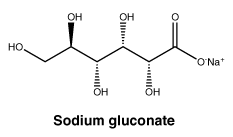
Molecular weight: 218.14.
Appearance: white to off white crystalline powder.
Solubility: very soluble in water; sparingly soluble in alcohol; insoluble in ether.
Sodium acetate trihydrate.
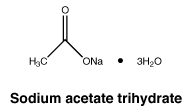
Molecular weight: 136.1.
Appearance: white crystalline solid.
Solubility: hygroscopic, very soluble in water; moderately soluble in ethanol.
Potassium chloride. Molecular formula: KCl.
Molecular weight: 74.55.
Appearance: colourless or white crystal.
Solubility: freely soluble in water.
Magnesium chloride hexahydrate. Molecular formula: MgCl2.6H2O.
Molecular weight: 203.31.
Appearance: white or colourless crystalline solid.
Solubility: very soluble in water.
CAS number. Sodium chloride. CAS No.: 7647-14-5.
Sodium gluconate (sodium D-gluconate). CAS No.: 527-07-1.
Sodium acetate trihydrate. CAS No.: 6131-90-4.
Potassium chloride. CAS No.: 7447-40-7.
Magnesium chloride hexahydrate. CAS No.: 7791-18-6.
7 Medicine Schedule (Poisons Standard)
Not scheduled.
Date of First Approval
11 December 2014
Date of Revision
30 May 2019
Summary Table of Changes
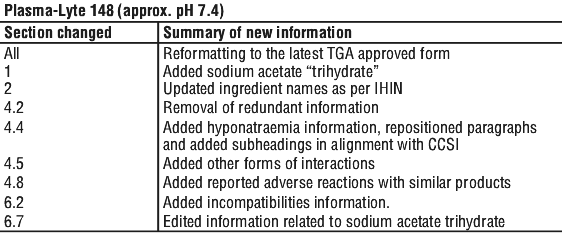
Reasonable care is taken to provide accurate information at the time of creation. This information is not intended as a substitute for medical advice and should not be exclusively relied on to manage or diagnose a medical condition. The Australian Commission on Safety and Quality in Health Care disclaims all liability (including for negligence) for any loss, damage, injury or any other negative effects resulting from reliance on or use of this information. Read our full disclaimer. This website uses cookies. Read our privacy policy.