
Potassium Dihydrogen Phosphate 13.6% Concentrated Injection for Infusion
Brand Information
| Brand name | Potassium Dihydrogen Phosphate 13.6% Concentrated Injection for Infusion |
| Active ingredient | Potassium phosphate, monobasic |
| Schedule | Unscheduled |
Consumer Medicine Information (CMI) leaflet
Please read this leaflet carefully before you start using the Potassium Dihydrogen Phosphate 13.6% Concentrated Injection for Infusion.
Summary CMI
Potassium Dihydrogen Phosphate 13.6% Concentrated Injection for Infusion
Consumer Medicine Information (CMI) summary
The full CMI on the next page has more details. If you are worried about using this medicine, speak to your doctor or pharmacist.
1. Why is Potassium Dihydrogen Phosphate Injection being given?
Potassium Dihydrogen Phosphate Injection contains the active ingredient monobasic potassium phosphate. Potassium Dihydrogen Phosphate Injection is used to treat patients with lower than normal levels of potassium or phosphate in their blood when the patient is unable to take potassium phosphate by mouth.
For more information, see Section 1. Why is Potassium Dihydrogen Phosphate Injection being given? in the full CMI.
2. What should I know before Potassium Dihydrogen Phosphate Injection is given?
Do not use if you have ever had an allergic reaction to Potassium Dihydrogen Phosphate Injection or any of the ingredients listed at the end of the CMI.
Talk to your doctor if you have any other medical conditions, take any other medicines, or are pregnant or plan to become pregnant or are breastfeeding.
For more information, see Section 2. What should I know before Potassium Dihydrogen Phosphate Injection is given? in the full CMI.
3. What if I am using other medicines?
Some medicines may interfere with Potassium Dihydrogen Phosphate Injection and affect how it works.
A list of these medicines is in Section 3. What if I am using other medicines? in the full CMI.
4. How is Potassium Dihydrogen Phosphate Injection given?
Your doctor will decide what dose and low long Potassium Dihydrogen Phosphate Injection you will receive. This depends on your medical condition and your weight or age and whether you are taking any other medicines. A doctor or nurse will give you the injection.
More instructions can be found in Section 4. How is Potassium Dihydrogen Phosphate Injection given? in the full CMI.
5. What should I know while using Potassium Dihydrogen Phosphate Injection?
| Things you should do |
|
| Things you should not do |
|
| Looking after the medicine |
|
For more information, see Section 5. What should I know while using Potassium Dihydrogen Phosphate Injection? in the full CMI.
6. Are there any side effects?
Side effects include nausea, vomiting, diarrhoea, stomach pain, tingling or numbness of the hands or feet, weakness or heaviness of the legs or muscles, mental confusion, dizziness or light-headedness, changes in heart rate, slow or irregular heartbeat etc.
For more information, including what to do if you have any side effects, see Section 6. Are there any side effects? in the full CMI.
Full CMI
Potassium Dihydrogen Phosphate 13.6% Concentrated Injection for Infusion
Active ingredient: monobasic potassium phosphate
Consumer Medicine Information (CMI)
This leaflet provides important information about using Potassium Dihydrogen Phosphate Injection. You should also speak to your doctor or pharmacist if you would like further information or if you have any concerns or questions about using Potassium Dihydrogen Phosphate Injection.
Where to find information in this leaflet:
1. Why is Potassium Dihydrogen Phosphate Injection being given?
2. What should I know before Potassium Dihydrogen Phosphate Injection is given?
3. What if I am using other medicines?
4. How is Potassium Dihydrogen Phosphate Injection given?
5. What should I know while using Potassium Dihydrogen Phosphate Injection?
6. Are there any side effects?
7. Product details
1. Why is Potassium Dihydrogen Phosphate Injection being given?
Potassium Dihydrogen Phosphate Injection contains the active ingredient monobasic potassium phosphate.
Potassium Dihydrogen Phosphate Injection is used to treat:
- patients with lower than normal levels of potassium or phosphate in their blood when the patient is unable to take potassium phosphate by mouth.
- patients who need to lower the pH of urine.
Ask your doctor if you have any questions about why this medicine has been prescribed for you.
Your doctor may have prescribed it for another reason.
2. What should I know before Potassium Dihydrogen Phosphate Injection is given?
Warnings
You should not be given Potassium Dihydrogen Phosphate Injection if:
- you are allergic to monobasic potassium phosphate or have increased sensitivity to potassium.
Always check the ingredients to make sure you can use this medicine. - you have:
- a dangerously fast heart beat
- severe burns
- acute dehydration
- heat cramps
- high levels of potassium in the blood
- high levels of phosphate in the blood - you have the following medical conditions:
- higher than normal levels of adrenal hormones known as hyperadrenalism
- lower than normal levels of adrenal hormones known as Addison's Disease
- kidney disease causing less urine than normal or severe kidney disease
- certain types of kidney stones
Check with your doctor if you:
- have allergies to any other medicines, foods, preservatives or dyes.
- have any other medical conditions:
- any disease which affects the adrenal gland
- any disease affecting the excretion of potassium
- heart disease
- muscle weakness
- too much acid in the blood which may cause an increased rate of breathing
- slow or irregular heart beat - have medical conditions that cause low levels of calcium in the blood:
- hypoparathyroidism or low levels of parathyroid hormones
- osteomalacia-a disease causing softening of the bones
- inflammation of the pancreas
- rickets
- myotonia congenita
- rhabdomyolysis - on a low salt diet
You may require chloride as well as potassium.
During treatment, you may be at risk of developing certain side effects. It is important you understand these risks and how to monitor them. See additional information under Section 6. Are there any side effects?
Pregnancy and breastfeeding
Check with your doctor if you are pregnant or intend to become pregnant.
Talk to your doctor if you are breastfeeding or intend to breastfeed.
Your doctor can discuss with you the risks and benefits involved.
3. What if I am using other medicines?
Tell your doctor or pharmacist if you are taking any other medicines, including any medicines, vitamins or supplements that you buy without a prescription from your pharmacy, supermarket or health food shop.
Some medicines may interfere with Potassium Dihydrogen Phosphate Injection and affect how it works. These include:
- medicines containing calcium, potassium and/or phosphate
- medicines that reduce the excretion of potassium such as spironolactone or triamterene
- medicines used to treat heart disease such as digitalis glycosides
- medicines used to treat high blood pressure and some heart conditions known as ACE inhibitors
- medicines used to relieve pain, swelling and other symptoms of inflammation, including arthritis
- aspirin
Potassium Dihydrogen Phosphate Injection should not be mixed or taken at the same time as products containing:
- aluminium
- calcium
- magnesium
Check with your doctor or pharmacist if you are not sure about what medicines, vitamins or supplements you are taking and if these affect Potassium Dihydrogen Phosphate Injection.
Your doctor and pharmacist have more information on medicines to be careful with or avoid while being given this medicine.
4. How is Potassium Dihydrogen Phosphate Injection given?
How much to be given
- Your doctor will decide what dose and how long the Potassium Dihydrogen Phosphate Injection to be given. This depends on your medical condition and other factors, such as your weight or age and whether or not you are taking any other medicines.
How it is given
- Potassium Dihydrogen Phosphate Injection must only be given by a doctor or nurse.
- The injection is a concentrated solution and must be diluted before use. It will be diluted with a large volume of intravenous solution and then infused slowly into a vein.
If too much Potassium Dihydrogen Phosphate Injection is given
Potassium Dihydrogen Phosphate Injection must only be given by a doctor or nurse, so an overdose is not likely to occur.
Some medical conditions may result in too much potassium or phosphate in the blood. Your doctor or nurse will monitor the level of potassium and phosphate in your blood and any change in heart function.
Symptoms of an overdose are the same as side effects. The symptoms of side effects are listed under the section titled Side effects.
If you think you have been given too much Potassium Dihydrogen Phosphate Injection, you may need urgent medical attention.
You should immediately:
- phone the Poisons Information Centre
(by calling 13 11 26), or - contact your doctor, or
- go to the Emergency Department at your nearest hospital.
You should do this even if there are no signs of discomfort or poisoning.
5. What should I know while using Potassium Dihydrogen Phosphate Injection?
Things you should do
If you are about to start on any new medicine, remind your doctor and pharmacist that you have been given Potassium Dihydrogen Phosphate Injection.
Tell any other doctors, dentists, and pharmacists who treat you that you have been given this medicine.
If you are going to have surgery, tell the surgeon or anaesthetist that you have been given this medicine. It may affect other medicines used during surgery.
If you are about to have any blood tests, tell your doctor that you have been given this medicine. It may interfere with the results of some tests.
Keep all your doctor's appointments so that your progress can be checked. Your doctor may do some tests from time to time to make sure the medicine is working and to prevent unwanted side effects.
Driving or using machines
Be careful before you drive or use any machines or tools until you know how Potassium Dihydrogen Phosphate Injection affects you.
If you feel light-headed, dizzy or faint when getting out of bed or standing up, get up slowly.
Standing up slowly, especially when you get up from bed or chairs, will help your body get used to the change in position and blood pressure. If this problem continues or gets worse, talk to your doctor.
Looking after your medicine
Potassium Dihydrogen Phosphate Injection will be stored in the surgery, pharmacy or ward of a hospital. The injection is kept in a cool dry place where the temperature stays below 25°C.
The injection will be opened for use on you. It will be used only once and then it will be discarded. It will never be stored after it is opened or used for more than one person.
6. Are there any side effects?
All medicines can have side effects. If you do experience any side effects, most of them are minor and temporary. However, some side effects may need medical attention.
See the information below and, if you need to, ask your doctor or pharmacist if you have any further questions about side effects.
Tell your doctor or nurse as soon as possible if you do not feel well while you are being given Potassium Dihydrogen Phosphate Injection.
Do not be alarmed by the following list of Side effects. You may not experience any of them.
Ask your doctor to answer any questions you may have.
Side effects
| Side effects | What to do |
General:
| Call your doctor straight away, or go straight to the Emergency Department at your nearest hospital if you notice any of these serious side effects. |
Tell your doctor or pharmacist if you notice anything else that may be making you feel unwell.
Other side effects not listed here may occur in some people.
Some side effects can only be found when your doctor does tests from time to time to check your progress.
Reporting side effects
After you have received medical advice for any side effects you experience, you can report side effects to the Therapeutic Goods Administration online at www.tga.gov.au/reporting-problems. By reporting side effects, you can help provide more information on the safety of this medicine.
Always make sure you speak to your doctor or pharmacist before you decide to stop taking any of your medicines.
7. Product details
This medicine is only available with a doctor's prescription.
What Potassium Dihydrogen Phosphate Injection contains
| Active ingredient (main ingredient) | monobasic potassium phosphate |
| Other ingredients (inactive ingredients) | water for injections |
Potassium Dihydrogen Phosphate Injection does not contain gluten, lactose, sucrose, tartrazine or any other azo dyes, alcohol or any preservatives.
Do not take this medicine if you are allergic to any of these ingredients.
What Potassium Dihydrogen Phosphate Injection looks like
Potassium Dihydrogen Phosphate Injection is a sterile, clear and colourless, or faintly straw coloured, particle-free solution in a clear glass vial.
Potassium Dihydrogen Phosphate Injection is available in 1.36 g/10 mL vials, packaged in a pack of 10 (Aust R 23183).
Who distributes Potassium Dihydrogen Phosphate Injection
Phebra Pty Ltd
17-19 Orion Road
Lane Cove West, NSW 2066
Australia
Telephone: 1800 720 020

This leaflet was prepared in November 2025.
Phebra and the Phi symbol are registered trademarks of Phebra Pty Ltd.
Brand Information
| Brand name | Potassium Dihydrogen Phosphate 13.6% Concentrated Injection for Infusion |
| Active ingredient | Potassium phosphate, monobasic |
| Schedule | Unscheduled |
MIMS Revision Date: 01 June 2021
1 Name of Medicine
Monobasic potassium phosphate.
2 Qualitative and Quantitative Composition
Potassium Dihydrogen Phosphate Concentrated Injection contains 136.1 mg/mL monobasic potassium phosphate.
Each mL of solution contains 1.0 millimole (1.0 mEq) of potassium and 1.0 millimole (1.0 mEq) of phosphate. The pH of the solution is 3.5 - 5.0.
For the full list of excipients, see Section 6.1 List of Excipients.
3 Pharmaceutical Form
Potassium Dihydrogen Phosphate Concentrated Injection is a sterile, clear and colourless, or faintly straw coloured, particle-free solution.
4 Clinical Particulars
4.1 Therapeutic Indications
Potassium Dihydrogen Phosphate Concentrated Injection is indicated for:
the treatment of severe hypophosphataemia (serum levels < 0.3 mmol/L) and other degrees of hypophosphataemia when oral therapy is not possible;
lowering the pH of urine;
the treatment of potassium depletion in patients with hypokalaemia; IV administration is indicated when the patient is unable to take potassium orally or if hypokalaemia is severe.
4.2 Dose and Method of Administration
Potassium Dihydrogen Phosphate Concentrated Injection is administered by slow intravenous infusion. The injection must be diluted before use. For the treatment of severe hypophosphataemia, the following doses are suggested.
Adults. Up to 10 mmol phosphate administered over 12 hours. The dose may be repeated at 12 hour intervals until serum phosphate exceeds 0.3 mmol/L.
Children. 0.15 to 0.33 mmol/kg administered over six hours. The dose may be repeated at six hour intervals until serum phosphate exceeds 0.6 mmol/L. The dose should not exceed the maximum recommended adult dose. The rate of infusion should not exceed 0.2 mmol/kg/hour.
For the treatment of hypokalaemia, the following doses are suggested. The dose and rate of injection are dependent upon the individual patient's condition. The usual maximum concentration is 40 mmol/L. In patients whose serum potassium concentration is above 2.5 mmol/L, the rate of infusion should not exceed 10 mmol/hour. The total dose should not exceed 200 mmol/24 hours.
If urgent treatment is required (serum potassium concentration less than 2 mmol/L with ECG changes or paralysis), infuse potassium in a suitable concentration at a rate of 40 mmol/hour, up to a rate of 400 mmol/24-hour period. In critical states, potassium may be infused in saline (unless saline is contraindicated) rather than in glucose solutions, as the latter may decrease serum potassium concentrations.
Diluent's compatibility. Potassium Dihydrogen Phosphate Concentrated Injection has been reported to be compatible with the following IV infusion fluids:
Glucose-Ringers injection combinations, Glucose-lactated Ringers injection combinations, Glucose 5% in lactated Ringers injection, Glucose-saline combinations, Glucose 5% in sodium chloride 0.9%, Glucose 2.5% in water, Glucose 5% in water, Glucose 10% in water, Glucose 20% in water, Ringer's injection, Lactated Ringer's injection, Sodium chloride 0.45%, Sodium chloride 0.9%, Sodium chloride 3%.
4.3 Contraindications
Potassium Dihydrogen Phosphate Concentrated Injection is contraindicated in:
Patients with severe renal function impairment (less than 30% normal) since there is an increased risk of hyperphosphataemia in these patients. The symptoms of hypophosphataemia include muscle weakness, paraesthesia, convulsions, cardiomyopathy, respiratory failure and haematological abnormalities. Prolonged hypophosphataemia may result in rickets or osteomalacia.
Patients with hyperkalaemia.
Addison's disease.
Urolithiasis (magnesium ammonium phosphate type, infected) as it may exacerbate the condition.
Renal impairment with oliguria or azotaemia.
Ventricular fibrillation.
Hyperadrenalism associated with adrenogenital syndrome.
Extensive tissue breakdown as in severe burns.
Acute dehydration.
Heat cramps.
Increased sensitivity to potassium administration as in adynamia episodica hereditaria or congenital paramyotonia.
4.4 Special Warnings and Precautions for Use
Potassium. The use of potassium salts in patients with chronic renal disease, adrenal insufficiency or any other condition which impairs potassium excretion requires particularly careful monitoring of the serum potassium concentration and appropriate dosage adjustment.
Hypokalaemia should not be treated by the concomitant administration of potassium salts and potassium sparing diuretic (e.g. spironolactone or triamterene), since the simultaneous administration of these agents can produce severe hyperkalaemia.
In patients on a low salt diet particularly, hypokalaemic hypochloraemic alkalosis is a possibility that may require chloride as well as potassium supplementation.
The treatment of potassium depletion, particularly in the presence of cardiac disease, renal disease or acidosis, requires careful attention to acid/base balance and appropriate monitoring of serum electrolytes, the ECG and the patient's clinical status.
Potassium should be used with caution in diseases associated with heart block since increased serum potassium may increase the degree of block.
Hyperkalaemia. Monobasic potassium phosphates should be avoided in patients with hyperkalaemia. Sodium phosphates may be substituted.
Phosphate. Phosphate should be administered with caution in conditions where high phosphate levels may be encountered, such as hypoparathyroidism, chronic renal disease, rhabdomyolysis, acute dehydration, pancreatitis, severe renal insufficiency and extensive tissue damage (such as severe burns).
Phosphate should be administered with caution in conditions where low calcium levels may be encountered, such as hypoparathyroidism, osteomalacia, chronic renal disease, acute pancreatitis, rhabdomyolysis, rickets, myotonia congenita and heart disease (particularly in digitalised patients, see Section 4.5 Interactions with Other Medicines and Other Forms of Interactions), since these conditions may be exacerbated by the potassium in the injection.
The cause of hypophosphataemia should be identified and treated. Caution should be used where patients may be hypocalcaemic.
Serum electrolyte and especially phosphate levels in the body and renal function should be monitored during treatment.
Warnings. In patients with impaired mechanisms for excreting potassium, administration of potassium salts can produce hyperkalaemia and cardiac arrest. This is an important concern in patients given IV potassium. Potentially fatal hyperkalaemia can develop rapidly and be asymptomatic. In patients being given potassium, especially by IV, monitoring of serum electrolytes, the ECG and the patient's clinical status is indicated.
Use in the elderly. No data available.
Paediatric use. No data available.
Effect on laboratory tests. Saturation of bone binding sites by phosphate ions may cause decreased bone uptake of technetium Tc99m labelled contrast agents in bone imaging.
Phosphates should not be administered to patients with severely impaired renal function. Aluminium, calcium, or magnesium salts should not be administered concomitantly with phosphates as they bind phosphate thus impairing its absorption from the gastrointestinal tract.
4.5 Interactions with Other Medicines and Other Forms of Interactions
Angiotensin converting enzyme (ACE) inhibitors. Concurrent use with Potassium Dihydrogen Phosphate Concentrated Injection may result in hyperkalaemia, especially in patients with renal impairment.
Calcium containing medicines. Concurrent use with phosphate and calcium containing medicines may increase the risk of deposition of calcium in soft tissues.
Digitalis glycosides. The administration of Potassium Dihydrogen Phosphate Concentrated Injection in digitalised patients with severe or complete heart block may result in hyperkalaemia.
Potassium sparing diuretics. Concurrent use with Potassium Dihydrogen Phosphate Concentrated Injection may result in hyperkalaemia, especially in patients with renal impairment.
Nonsteroidal anti-inflammatory agents (NSAIDs). Concurrent use with Potassium Dihydrogen Phosphate Concentrated Injection may result in hyperkalaemia, especially in patients with renal impairment.
Phosphate containing medicines. Concurrent use with Potassium Dihydrogen Phosphate Concentrated Injection may result in hyperphosphataemia, especially in patients with impaired renal function.
Potassium containing medicines. Concurrent use with Potassium Dihydrogen Phosphate Concentrated Injection may result in hyperkalaemia, especially in patients with renal impairment.
Salicylates. Concurrent use with Potassium Dihydrogen Phosphate Concentrated Injection may increase the serum concentration of salicylates, since salicylate excretion is decreased in acidified urine. This may result in toxic salicylate concentrations when phosphate is administered to patients already stabilised on salicylates.
4.6 Fertility, Pregnancy and Lactation
Effects on fertility. No data available.
Use in pregnancy. Animal reproduction studies have not been conducted with this product. It is not known whether this product can adversely affect the fetus when administered to a pregnant woman. Therefore, Potassium Dihydrogen Phosphate Concentrated Injection is not recommended for use during pregnancy.
Use in lactation. It is not known whether phosphates are excreted into breast milk, therefore, Potassium Dihydrogen Phosphate Concentrated Injection is not recommended for use during lactation.
4.7 Effects on Ability to Drive and Use Machines
The effects of this medicine on a person's ability to drive and use machines were not assessed as part of its registration.
4.8 Adverse Effects (Undesirable Effects)
Adverse effects which may occur after parenteral administration also include hypocalcaemic tetany, hypotension, oedema and acute renal failure. Adverse effects occur less frequently after oral administration due to poor absorption from the gastrointestinal tract, but nausea, vomiting, diarrhoea and abdominal pain have been reported.
Hyperphosphataemia, accompanied by hypocalcaemia or other severe electrolyte disturbances and resulting in tetany and even death, has been reported on a number of occasions following the use of phosphate enemas; infants or children have often been the subjects of these adverse effects. Rectal gangrene has been associated with the use of phosphate enemas in elderly patients and was believed to be due to a direct necrotising effect of the phosphate on the rectum.
Cardiovascular. Uncommon: hypotension. Rare: myocardial infarction.
Endocrine. Uncommon: fluid retention as indicated by swelling of feet, lower legs or weight gain; hyperkalaemia leading to confusion, tiredness or weakness, irregular or slow heart rate, numbness or tingling around lips, hands or feet, unexplained anxiety, weakness or heaviness of legs, shortness of breath or troubled breathing; hypernatraemia leading to confusion, tiredness or weakness, convulsions, oliguria or decreased frequency of micturition, tachycardia, headache or dizziness, increased thirst; hyperphosphataemia, hypocalcaemia or hypomagnesaemia leading to convulsions, muscle cramps, numbness, tingling, pain or weakness in hands or feet, shortness of breath or troubled breathing, tremor; extraskeletal calcification as nephrocalcinosis has been reported in children with hypophosphataemic rickets treated with phosphate supplements.
Genitourinary. Rare: acute renal failure.
The symptoms and signs of potassium intoxication include paraesthesias of the extremities, flaccid paralysis, listlessness, mental confusion, weakness and heaviness of the legs, fall in blood pressure, cardiac arrhythmias and heart block. Hyperkalaemia may exhibit the following ECG abnormalities: disappearance of the P-wave, widening and slurring of QRS complex, changes of the S-T segment, tall peaked T-waves. Nausea, vomiting, diarrhoea and abdominal discomfort have been reported.
Treatment of adverse effects involves withdrawal of phosphate, general supportive measures and correction of serum electrolyte concentrations, especially calcium.
Reporting suspected adverse effects. Reporting suspected adverse reactions after registration of the medicinal product is important. It allows continued monitoring of the benefit-risk balance of the medicinal product. Healthcare professionals are asked to report any suspected adverse reactions at www.tga.gov.au/reporting-problems.
4.9 Overdose
Phosphate. Excessive administration of phosphate, particularly by the intravenous route, may cause hyperphosphataemia but this rarely occurs unless there is renal failure. Hyperphosphataemia may also occur in the presence of acidosis, acromegaly, haemolysis, hypoparathyroidism, tissue destruction, or vitamin D toxicity. Hyperphosphataemia leads in turn to hypocalcaemia, which may be severe, and to ectopic calcification. Secondary hyperparathyroidism may develop in the presence of renal failure.
Treatment of overdosage involves the following measures: immediate cessation of phosphate therapy; correction of serum electrolyte concentrations, especially calcium; general supportive treatment.
Potassium. Symptoms. If excretory mechanisms are impaired or if IV potassium is administered too rapidly, potentially fatal hyperkalaemia can result (see Section 4.3 Contraindications; Section 4.4 Special Warnings and Precautions for Use). However, hyperkalaemia is usually asymptomatic and may be manifested only by an increased serum potassium concentration and characteristic ECG changes (peaking of T-waves, loss of P-wave, depression of S-T segment and prolongation of the QT interval). Late manifestations include muscle paralysis and cardiovascular collapse from cardiac arrest. Should any of these manifestations occur, discontinue potassium administration immediately.
Treatment. If hyperkalaemia develops, the following measures should be considered: elimination of foods and medications containing potassium and of potassium sparing diuretics; IV administration of 300 to 500 mL/hour of 10% glucose solution containing 10 to 20 units of insulin/1000 mL; correction of acidosis, if present, with IV sodium bicarbonate; use of exchange resins, haemodialysis, or peritoneal dialysis; in presence of life-threatening cardiac arrhythmias, IV administration of 10 to 50 mL calcium gluconate 10% over 5 minutes. Continuous ECG monitoring is mandatory.
In treating hyperkalaemia in digitalised patients, too rapid a lowering of the serum potassium concentration can produce digitalis toxicity.
For information on the management of overdose, contact the Poisons Information Centre on 131126 (Australia).
5 Pharmacological Properties
5.1 Pharmacodynamic Properties
Mechanism of action. Potassium. Potassium ion is the principal intracellular ion of most body tissues. Potassium ions are involved in a number of essential physiological processes, including the maintenance of intracellular tonicity, the transmission of nerve impulses, the contraction of cardiac, skeletal and smooth muscle, and the maintenance of normal renal function.
Phosphate. Phosphate is found mainly as calcium phosphate in the skeleton and soft tissues of the body.
Phosphate is the principle anion of intracellular fluid. Apart from its essential role in bone structure, and as intracellular buffers, phosphate is also important in many metabolic and enzymatic pathways.
Clinical trials. No data available.
5.2 Pharmacokinetic Properties
Absorption. Approximately two thirds of the ingested phosphate is absorbed from the gastrointestinal tract.
Distribution. Phosphate is the principle anion of intracellular fluid. Phosphate is found mainly as calcium phosphate in the skeleton and soft tissues of the body.
Metabolism. No data available.
Excretion. Excretion of potassium occurs via the kidneys and normally any amounts given in excess of intracellular requirements are rapidly eliminated.
Excess phosphate is primarily excreted in the urine with the remainder being excreted in the faeces. Parathyroid hormone decreases the tubular reabsorption of phosphate, thereby increasing urinary excretion. Calcium concentrations in the body are inversely proportional to the amount of phosphate, via the control of calcitriol.
5.3 Preclinical Safety Data
Genotoxicity. No data available.
Carcinogenicity. No data available.
6 Pharmaceutical Particulars
6.1 List of Excipients
Potassium Dihydrogen Phosphate Concentrated Injection contains water for injections.
6.2 Incompatibilities
Phosphates are incompatible with calcium, or magnesium containing solutions. Admixture will lead to precipitates being formed in the solution. Other solutions containing other cations such as iron and aluminium may also precipitate.
6.3 Shelf Life
In Australia, information on the shelf life can be found on the public summary of the Australian Register of Therapeutic Goods (ARTG)1. The expiry date can be found on the packaging.
1 AUST R 23183.
6.4 Special Precautions for Storage
Store below 25°C.
6.5 Nature and Contents of Container
Potassium Dihydrogen Phosphate Concentrated Injection is presented as a 10 mL glass vial clear Type 1 glass vial with a grey chlorobutyl rubber stopper with an aluminium cap sealed with a red flip-off seal in cartons of 10 vials.
Phebra Product Code - INJ089.
6.6 Special Precautions for Disposal
In Australia, any unused medicine or waste material should be disposed of in accordance with local requirements.
6.7 Physicochemical Properties
Monobasic potassium phosphate is a white or almost white, odourless, crystalline powder or colourless crystals. It is freely soluble in water and practically insoluble in alcohol.
Chemical structure. The molecular weight of the compound is 136.1. The molecular formula is KH2PO4.
CAS number. 7778-77-0.
7 Medicine Schedule (Poisons Standard)
Unscheduled.
Date of First Approval
14 October 1991
Date of Revision
15 April 2021
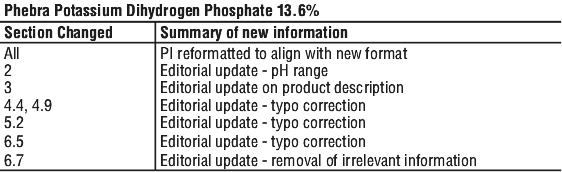
Summary Table of Changes
Reasonable care is taken to provide accurate information at the time of creation. This information is not intended as a substitute for medical advice and should not be exclusively relied on to manage or diagnose a medical condition. The Australian Commission on Safety and Quality in Health Care disclaims all liability (including for negligence) for any loss, damage, injury or any other negative effects resulting from reliance on or use of this information. Read our full disclaimer. This website uses cookies. Read our privacy policy.