
Predsol Suppository and Retention Enema
Brand Information
| Brand name | Predsol Suppository and Retention Enema |
| Active ingredient | Prednisolone |
| Schedule | S4 |
Consumer medicine information (CMI) leaflet
Please read this leaflet carefully before you start using the Predsol Suppository and Retention Enema
Summary CMI
Predsol suppository and retention enema
Consumer Medicine Information (CMI) summary
The full CMI on the next page has more details. If you are worried about using this medicine, speak to your doctor or pharmacist.
1. Why am I using PREDSOL?
PREDSOL contains the active ingredient prednisolone (as prednisolone sodium phosphate). PREDSOL is used to treat many types of inflammation in the rectum and large intestine.
For more information, see Section 1. Why am I using PREDSOL? in the full CMI.
2. What should I know before I use PREDSOL?
Do not use if you have ever had an allergic reaction to PREDSOL or any of the ingredients listed at the end of the CMI.
Talk to your doctor if you have any other medical conditions, take any other medicines, or are pregnant or plan to become pregnant or are breastfeeding.
For more information, see Section 2. What should I know before I use PREDSOL? in the full CMI.
3. What if I am taking other medicines?
Some medicines may interfere with PREDSOL and affect how it works.
A list of these medicines is in Section 3. What if I am taking other medicines? in the full CMI.
4. How do I use PREDSOL?
- Suppository: Insert into the rectum as directed by your doctor at bedtime and/or after morning defecation
- Retention enema: empty into rectum as instructed in Section 4. How do I use PREDSOL at bedtime
More instructions can be found in Section 4. How do I use PREDSOL? in the full CMI.
5. What should I know while using PREDSOL?
| Things you should do |
|
| Things you should not do |
|
| Looking after your medicine |
|
For more information, see Section 5. What should I know while using PREDSOL? in the full CMI.
6. Are there any side effects?
Common side effects of PREDSOL include itching and burning. In patients receiving immunosuppressive therapy, use of PREDSOL may worsen pre-existing infection. Serious side effects are rare and may occur if PREDSOL is used for a long time. This includes hypothalamic-pituitary-adrenal (HPA) axis suppression, which your doctor may decide to monitor for. Other serious side effects include sudden changes of vision; convulsions; and signs of allergic reaction - such as shortness of breath, wheezing or difficulty in breathing; swelling of the face, lips, tongue or any other parts of the body; rash, itching or hives on the skin.
For more information, including what to do if you have any side effects, see Section 6. Are there any side effects? in the full CMI.
Full CMI
1. Why am I using PREDSOL?
PREDSOL contains the active ingredient prednisolone (as prednisolone sodium phosphate), which is a type of glucocorticoid belonging to a group of medicines called corticosteroids.
PREDSOL suppositories are used in the treatment of many different conditions such as:
- haemorrhagic and granular proctitis (a type of inflammation in the rectum)
- post radiation proctitis (inflammation in the rectum following radiation therapy)
- rectal complications of Crohn's disease (inflammation of the intestine).
PREDSOL retention enemas are used in the treatment of ulcerative colitis and Crohn's disease.
PREDSOL suppositories and PREDSOL retention enemas are for use in the rectum only. They should not be taken by mouth.
Ask your doctor if you have any questions about why PREDSOL has been prescribed for you.
Your doctor may have prescribed it for another reason, for example, haemorrhoids.
This medicine is only available with a doctor's prescription.
2. What should I know before I use PREDSOL?
Warnings
Do not use PREDSOL if:
- You are allergic to prednisolone or any of the ingredients listed at the end of this leaflet.
Some symptoms of an allergic reaction may include shortness of breath, wheezing or difficulty in breathing; swelling of the face, lips, tongue or any other parts of the body; rash, itching or hives on the skin.
Always check the ingredients to make sure you can use this medicine. - You have any of the following health conditions:
- tuberculous and fungal infections (such as tinea, thrush or ringworm) of the skin.
- acute herpes simplex (such as cold sores, shingles or chicken pox), vaccinia (cow pox), varicella (a rare form of chicken pox).
- any viral infection. - You are currently on oral or intravenous corticosteroid therapy or have markedly impaired circulation (check with your doctor).
- The area around the rectum is traumatised or showing signs of inflammation.
- The expiry date on the pack has passed.
It may have no effect at all or an entirely unexpected effect if you use it after the expiry date. - The bottle shows signs of having been tampered with.
Check with your doctor if you:
Take any medicines for any other condition.
Have had any allergy to any other medicines, or any other substances, such as foods, preservatives, or dyes.
During treatment, you may be at risk of developing certain side effects. It is important you understand these risks and how to monitor for them. See additional information under Section 6. Are there any side effects?
Pregnancy and breastfeeding
Check with your doctor if you are pregnant or intend to become pregnant.
PREDSOL should not be used during pregnancy unless your doctor specifically tells you to.
Talk to your doctor if you are breastfeeding or intend to breastfeed.
Use in children
Do not use in children unless specifically directed by your doctor.
3. What if I am taking other medicines?
Tell your doctor or pharmacist if you are taking or using any other medicines, including any medicines, ointments, lotions, creams, vitamins or supplements that you buy without a prescription from your pharmacy, supermarket or health food shop.
Some medicines may interfere with PREDSOL and affect how it works. These include:
- antacids, antidiabetic agents (oral or insulin), digitalis glycosides, diuretics, barbiturates, phenytoin, rifampicin, potassium supplements, ritrodine, foods or medications containing sodium, somatren, somatropin, vaccines, live viruses.
- troleandomycin, ketoconazole may require the dose of PREDSOL to be reduced.
- chronic, high dose aspirin may have its effects reduced so it should be closely monitored.
- The effects of anticoagulants may be variable, so close monitoring is required.
The above medicines may either reduce the effectiveness of PREDSOL, reduce its own effectiveness and/or react with PREDSOL resulting in untoward or sometimes dangerous side effects.
Your doctor or pharmacist has more information on medicines to be careful with or avoid while using PREDSOL.
Check with your doctor or pharmacist if you are not sure about what medicines, vitamins or supplements you are taking and if these affect PREDSOL.
4. How do I use PREDSOL?
How to use it
Suppository:
Insert into the rectum gently as directed.
Retention enema:
- The enema may be warmed before use, by placing the bag in a vessel of hot water for a few minutes.
- Lie down on the left side with the knees drawn up.
- Remove the stopper from the bag, lubricate the nozzle with petroleum jelly and gently insert about half the length of the nozzle into the rectum.
- The bag should then be slowly rolled up like a tube of toothpaste until it is emptied, taking a minute or two to do so.
- The nozzle should then be removed, with the bag still rolled up, and the whole unit discarded.
- Roll over to lie face down for three to five minutes but you may sleep in any comfortable position.
When to use it
Suppository:
Use as directed by your doctor.
The usual dose is one at bedtime and the other after morning defecation.
When response is good, treatment may continue for some months or until investigation shows improvement.
Retention enema:
Use as directed by your doctor.
The usual dose is one enema at night, on retiring to bed, for two to four weeks.
Treatment may be continued if the response is good but should not be persisted with if response is inadequate.
How long to use it for
Continue to use PREDSOL for as long and exactly as your doctor tells you.
If you use less than you should, it may not work as well and your medical condition may not improve. Using it more frequently may not improve your condition any faster and may cause or increase side effects.
If you forget to use it
Use it as soon as you remember and then return to your normal dosing time.
If your next dose is almost due, leave using PREDSOL until that time.
Do not try to make up for missed doses by using more than one dose at a time.
This may increase the chance of getting an unwanted side effect.
If it is accidently swallowed
If you or someone else accidently swallows PREDSOL, you or they may need urgent medical attention.
You should immediately:
- phone the Poisons Information Centre
(by calling 13 11 26), or - contact your doctor, or
- go to the Emergency Department at your nearest hospital.
You should do this even if there are no signs of discomfort or poisoning.
5. What should I know while using PREDSOL?
Things you should do
- Tell your doctor if you feel PREDSOL is not helping your condition or if you have any problems or difficulties during or after using PREDSOL.
- Tell all doctors, pharmacists and dentists who treat you that you use PREDSOL.
- Tell your doctor if, you become pregnant while using PREDSOL.
- Tell your doctor if, for any reason, you have not used your PREDSOL as prescribed.
Otherwise, your doctor may think that it was not effective and change your treatment unnecessarily.
Things you should not do
- Do not give PREDSOL to anyone else even though their symptoms seem similar to yours.
- Do not use PREDSOL for other conditions unless your doctor tells you.
This medicine has been prescribed for you for a specific condition. If you use it for another condition it may not work or may make the condition worse. - Do not give it to small children.
Things to be careful of
- Do not use PREDSOL for a longer time than your doctor recommends.
If you use it for longer than recommended or use more than the prescribed dose, the chances of systemic absorption of the drug through the rectum and the chance of side effects increases. - Ask your doctor or pharmacist if you are concerned about the length of time you have used this medicine.
- Do not swallow PREDSOL.
This medicine is only to be used in the rectum.
Driving or using machines
As with any new medicine, you should take care when driving or operating machinery until you know how PREDSOL affects you.
Looking after your medicine
Keep PREDSOL in a cool dry place, protected from light, where the temperature stays below 25°C.
This is especially important for PREDSOL suppository, as it will help to prevent it from melting.
Store it in a cool dry place away from moisture, heat or sunlight; for example, do not store it:
- in the bathroom or near a sink, or
- in the car or on window sills.
Heat and dampness can destroy some medicines.
Follow the instructions in the package on how to take care of your medicine properly.
Keep it where young children cannot reach it.
A locked cupboard at least one-and-a-half metres above ground is a good place to store medicines.
When to discard your medicine
Discard any unused enema bags three months after first opening the outer plastic bag.
Getting rid of any unwanted medicine
If you no longer need to use this medicine or it is out of date, take it to any pharmacy for safe disposal.
Do not use this medicine after the expiry date.
6. Are there any side effects?
Tell your doctor or pharmacist as soon as possible if you do not feel well while using PREDSOL.
All medicines can have side effects. If you do experience any side effects, most of them are minor and temporary. However, some side effects may need medical attention.
See the information below and, if you need to, ask your doctor or pharmacist if you have any further questions about side effects.
Less serious side effects
| Less serious side effects | What to do |
general changes to the body:
| Speak to your doctor if you have any of these less serious side effects and they worry you. |
Serious side effects
| Serious side effects | What to do |
| Call your doctor straight away, or go straight to the Emergency Department at your nearest hospital if you notice any of these serious side effects. |
The risk of undesirable effects increases with prolonged use.
Some side effects can only be detected by your doctor. So it is important to visit your doctor for regular check-ups when PREDSOL is used for long periods of time.
Such side effects can include:
- osteoporosis or other changes in bone which can result in an increased chance of fractures due to brittleness or softening of the bone.
- changes in other hormone levels in your body
- changes in the body's ability to handle glucose (steroid diabetes)
- increased blood pressure
- slow heart rate
- increased pressure in the skull
- increased pressure in the eye (glaucoma).
Hypothalamic-pituitary-adrenal (HPA) axis suppression
There is a possibility of systemic absorption of prednisolone, especially if PREDSOL is used for a long time. This may result in hypothalamic-pituitary-adrenal (HPA) axis suppression, especially in children.
HPA involve three organs that regulate and maintain hormone levels in the body. Your doctor will decide if there is a need for a test to monitor the hormone levels in the blood.
Tell your doctor or pharmacist if you notice anything else that may be making you feel unwell.
Other side effects not listed here may occur in some people.
Do not be alarmed by this list of possible side effects.
You may not experience any of them.
Reporting side effects
After you have received medical advice for any side effects you experience, you can report side effects to the Therapeutic Goods Administration online at www.tga.gov.au/reporting-problems. By reporting side effects, you can help provide more information on the safety of this medicine.
Always make sure you speak to your doctor or pharmacist before you decide to stop taking any of your medicines.
7. Product details
This medicine is only available with a doctor's prescription.
What PREDSOL suppository contains
| Active ingredient (main ingredient) | prednisolone 5 mg (as prednisolone sodium phosphate) |
| Other ingredients (inactive ingredients) | hard fat |
There are no preservatives or colouring agents in PREDSOL suppositories.
What PREDSOL retention enema contains
| Active ingredient (main ingredient) | prednisolone 20 mg/100 mL (as prednisolone sodium phosphate) |
| Other ingredients (inactive ingredients) |
|
Nipastat GL75 is a preservative which contains methyl hydroxybenzoate, ethyl hydroxybenzoate, propyl hydroxybenzoate, butyl hydroxybenzoate and isobutyl hydroxybenzoate.
Do not use this medicine if you are allergic to any of these ingredients.
What PREDSOL looks like
Suppository:
White to off-white bullet shape with no defects.
Available in PVC/PVdC/PE blister packs of 10 suppositories.
(AUST R 56510)
Retention enema:
A clear, colourless liquid free from haze and substantially free from particulate matter. The solution is sealed in a disposable PVC bag fitted with an individual nozzle.
Each carton contains seven (7) 100 mL bags.
(AUST R 12518)
Who distributes PREDSOL
Aspen Pharmacare Australia Pty Ltd
34-36 Chandos St
St Leonards NSW 2065
Australia
This leaflet was prepared in August 2025.
Brand Information
| Brand name | Predsol Suppository and Retention Enema |
| Active ingredient | Prednisolone |
| Schedule | S4 |
MIMS Revision Date: 01 February 2025
1 Name of Medicine
Prednisolone (as sodium phosphate).
2 Qualitative and Quantitative Composition
Predsol suppository contains prednisolone 5 mg (as sodium phosphate).
Predsol retention enema contains prednisolone 20 mg/100 mL (as sodium phosphate).
List of excipients with known effect. Nipastat GL75 which contains methyl hydroxybenzoate, ethyl hydroxybenzoate, propyl hydroxybenzoate, butyl hydroxybenzoate and isobutyl hydroxybenzoate.
For the full list of excipients, see Section 6.1 List of Excipients.
3 Pharmaceutical Form
Predsol suppository is a white to off white suppository of regular shape with no defects, air occlusion or dirt present.
Predsol retention enema is a clear, colourless liquid free from haze and substantially free from particulate matter.
4 Clinical Particulars
4.1 Therapeutic Indications
Predsol suppository is indicated for the treatment of haemorrhagic and granular proctitis, post-radiation proctitis and rectal complication of Crohn's disease.
Predsol retention enema provides local corticosteroid treatment for rectal and rectosigmoidal disease in ulcerative colitis and Crohn's disease.
4.2 Dose and Method of Administration
Predsol suppository. Administer twice daily, one at bedtime and the other after morning defecation. When response is good, treatment should be continued for some months or, ideally, until sigmoidoscopic or proctoscopic appearances are normal. If symptoms recur, treatment should at once be resumed.
Predsol retention enema. Use one enema nightly on retiring, for two to four weeks. Treatment may be continued in patients showing progressive improvement, but it should not be persisted with if the response has been inadequate. Some patients may relapse after an interval but are likely to respond equally well to a repeated course of treatment. The enema, as packed, is not suitable for use in children.
It may be warmed before administration by placing the bag in a vessel of hot water for a few minutes. Patient must lie down on left side with knees drawn up. Remove the stopper from the bag, lubricate the nozzle with petroleum jelly and gently insert about half the length of the nozzle in the rectum. The bag should then be slowly rolled up like a tube of toothpaste until it is emptied, taking a minute or two to do so. The nozzle should then be removed, with the bag still rolled up, and the whole unit discarded. The patient should then roll over to lie face down for three to five minutes but may sleep in any comfortable position.
Patients should be instructed to discard any unused enema bags 3 months after first opening the outer packaging.
4.3 Contraindications
Hypersensitivity to prednisolone or any of the excipients.
Tuberculous and fungal conditions, acute herpes simplex, vaccinia (cow pox), varicella (chicken pox) and all viral infections.
Traumatised mucosa and/or sepsis in anorectal region.
Concurrent oral or intravenous corticosteroid therapy.
Topical steroid should not be used in patients with markedly impaired circulation, as ulceration in anorectal region may occur.
4.4 Special Warnings and Precautions for Use
For rectal use only. If irritation, rash or rectal bleeding develop Predsol should be discontinued and alternate therapy instituted.
The possibility of systemic absorption of steroids administered via the rectal route is relatively high; therefore, there may be a need for periodic evaluation of hypothalamo-pituitary-adrenal (HPA) - axis suppression by using the urinary free cortisol test or the corticotrophin stimulation test. If the HPA-axis suppression is evident, withdrawal should be attempted and the frequency of application reduced.
Manifestations of adrenal suppression in children include retardation of linear growth, delayed weight gain, low plasma cortisol concentrations and lack of response to corticotrophin stimulation. Manifestations of intracranial hypertension include bulging fontanelles, headache and bilateral papilloedema. Rectal corticosteroid therapy in children should be limited to the minimum amount necessary for therapeutic efficacy; chronic topical corticosteroid therapy may interfere with growth and development.
Drug induced secondary adrenocortical insufficiency may be minimised by gradual reduction in dosage.
If infection in the anorectal region is present, suitable antifungal or antibacterial agents should be used first. If the infection does not respond promptly to therapy, corticosteroid therapy should be discontinued until the infection has been controlled. Corticosteroids may mask the signs of infection.
Caution is required if there is a probability of impending perforation, abscess or other pyrogenic infection or with diverticulitis, active or latent peptic ulcer, renal insufficiency, hypertension, osteoporosis or myasthenia gravis.
There is an enhanced effect of corticosteroids in patients with hypothyroidism and in those with cirrhosis.
Prolonged use of large quantities of rectal corticosteroids may also result in atrophic striae.
Administration of corticosteroids via rectal route should also be used with caution in patients with impaired T-cell function or in those patients receiving other immunosuppressive therapy. The immunosuppressive effects of corticosteroids may be associated with impairment of the normal function of T-cells and macrophages. The result of this impairment may be the activation of latent infection or exacerbation of intercurrent infections, including those caused by Candida, Mycobacterium, Toxoplasma, Strongyloides, Pneumocystis, Cryptococcus, Nocardia and Amoeba.
Visual disturbance. Visual disturbance may be reported with systemic and topical corticosteroid use. If a patient presents with symptoms such as blurred vision or other visual disturbances, the patient should be considered for referral to an ophthalmologist for evaluation of possible causes which may include cataract, glaucoma or rare diseases such as central serous chorioretinopathy (CSCR) which have been reported after use of systemic and topical corticosteroids.
Use in the elderly. No data available.
Paediatric use. Long-term therapy in infants should be avoided as adrenal suppression may occur. Growth and weight gain changes should be carefully followed and these may result from either the disease or adrenal suppression.
Effects on laboratory tests. Glucocorticoids may decrease 131I uptake and protein-bound iodine concentrations, making it difficult to monitor the therapeutic response of patients receiving the drugs for thyroiditis. Glucocorticoids may produce false negative results in the nitroblue tetrazolium test for systemic bacterial infection. Glucocorticoids may suppress reactions to skin tests.
4.5 Interactions with Other Medicines and Other Forms of Interactions
Drug interactions may occur if a significant level of prednisolone is systemically absorbed via the rectal route.
The following drug interactions with corticosteroids have been reported for administration of prednisolone by an oral route. These drug interactions with corticosteroids have been selected on the basis of their potential clinical significance: antacids; antidiabetic agents (oral or insulin); digitalis glycosides; diuretics; drugs which induce hepatic microsomal enzymes such as barbiturates, phenytoin and rifampicin; potassium supplements; ritodrine; sodium-containing medications or foods; somatrem or somatropin; vaccines; live viruses or other immunisations.
Drugs that induce hepatic enzymes such as phenobarbital, phenytoin and rifampicin may increase the clearance of corticosteroids and may require increases in corticosteroid dose to achieve the desired response.
Drugs such as troleandomycin and ketoconazole may inhibit the metabolism of corticosteroids and thus decrease their clearance. Therefore, the dose of corticosteroid should be titrated to avoid steroid toxicity. Corticosteroids may increase the clearance of chronic high dose aspirin. This could lead to decreased salicylate serum levels or increase the risk of salicylate toxicity when corticosteroid is withdrawn. Aspirin should be used cautiously in conjunction with corticosteroids in patients suffering from hypoprothrombinemia.
The effect of corticosteroids on oral anticoagulants is variable. There are reports of enhanced as well as diminished effects of anticoagulants when given concurrently with corticosteroids. Therefore, coagulation indices should be monitored to maintain the desired anticoagulant effect.
4.6 Fertility, Pregnancy and Lactation
Effects on fertility. No data available.
Use in pregnancy. (Category A)
Safety of the use of corticosteroids administered via the rectal route in pregnant women has not been established. In vivo studies using pregnant animals have shown that use of large amounts of topical corticosteroids may cause foetal abnormalities. Therefore, topical corticosteroids should be used in pregnancy only when the potential benefits justify the possible risk to the foetus. The drugs should not be used in large amounts or for prolonged periods in pregnant women.
Use in lactation. Prednisolone is excreted into breast milk. Corticosteroids should be used with caution in nursing mothers.
4.7 Effects on Ability to Drive and Use Machines
The effects of this medicine on a person's ability to drive and use machines were not assessed as part of its registration. However, adverse effects of these medicines include convulsion, vertigo and visual disturbances such as blurred vision which could affect the ability to drive or use machines (see Section 4.8 Adverse Effects (Undesirable Effects)).
4.8 Adverse Effects (Undesirable Effects)
Reporting suspected adverse effects. Reporting suspected adverse reactions after registration of the medicinal product is important. It allows continued monitoring of the benefit-risk balance of the medicinal product. Healthcare professionals are asked to report any suspected adverse reactions at www.tga.gov.au/reporting-problems.
Atrophy of the rectal mucosa may occur. Epidermal thinning, telangiectasia, increased fragility of cutaneous blood vessels, purpura and atrophic striae are also reported.
Other adverse dermatological effects of corticosteroids include acneiform eruption; vesiculation; irritation; pruritus; hypertrichosis; rosacea-like eruptions on the face; erythema; hyperesthesia; perioral dermatitis; burning or stinging sensation; folliculitis and hypopigmentation.
Adverse dermatological effects usually improve when the drug is discontinued but may persist for long periods; atrophic striae may be permanent. In addition to the other adverse dermatological effects of corticosteroid therapy, maceration of the skin and miliaria may occur, especially when occlusive dressings are used. Topically applied steroids are generally nonsensitising but allergic contact dermatitis may occur rarely.
Rebound effect may cause dependency on steroids and slowing of healing process.
Rectal corticosteroids should also be used with caution in patients with impaired T-cell function or in those patients receiving other immunosuppressive therapy. The result may be the activation of latent infection or exacerbation of intercurrent infections.
The risk of undesirable local effects increases with prolonged use. Improper use may mask or worsen bacterial, parasitic or viral infections.
The adverse reactions associated with the use of corticosteroids in the large doses necessary to produce a therapeutic response result from excessive action on electrolyte balance; excessive action on other aspects of metabolism including gluconeogenesis; the action on tissue repair and healing; and an inhibitory effect on the secretion of corticotrophin by the anterior pituitary gland. Disturbance of electrolyte and water balance is manifest in sodium retention with oedema and hypertension, and in the increased excretion of potassium with the development of hypokalaemic alkalosis. In extreme cases cardiac failure may be induced. Disturbances of electrolyte balance are common with the naturally occurring corticotrophins, cortisone, deoxycortone and hydrocortisone but are less frequent with the synthetic derivatives prednisone and prednisolone. Other metabolic effects include mobilisation of calcium and phosphorus with osteoporosis and spontaneous fractures; nitrogen depletion and hyperglycaemia with accentuation or precipitation of the diabetic state. The insulin requirements of diabetic patients are increased and appetite is often increased.
The effect on tissue repair manifests as peptic ulceration with haemorrhage and perforation, delayed wound healing and increased liability to infection. Increased susceptibility to all kinds of infection, including sepsis, fungal and viral infection, has been reported.
Large doses of corticosteroids or corticotrophins may produce symptoms typical of hyperactivity of the adrenal cortex, with moonface, buffalo hump, flushing striae and acne sometimes leading to a fully developed Cushing's syndrome. If administration of the hormone is discontinued immediately on the appearance of these symptoms, they are usually reversed but such sudden cessation may be dangerous. The dose of corticosteroid required to cause a decrease or absence of corticotrophin in the blood with consequent atrophy of the adrenal cortex and the time required for its occurrence are very variable. Acute adrenal insufficiency with loss of consciousness may occur during prolonged treatment or on cessation of treatment and may be precipitated by an infection or trauma.
Growth retardation in children has been reported and in this respect cortisone is only one-tenth as potent as prednisone and prednisolone. Other toxic effects include mental and neurological disturbances, intracranial hypertension and, on sudden reduction of dosage during the treatment of rheumatoid arthritis, fatalities attributed to lesions of small arteries and arterioles similar to polyarteritis.
Infections may be masked since corticosteroids have marked anti-inflammatory and antipyretic properties and may produce a feeling of well-being. The administration of corticosteroids may also cause a reduction in the number of circulating lymphocytes. Muscular weakness is an occasional side effect of most corticosteroids, particularly when they are taken in large doses.
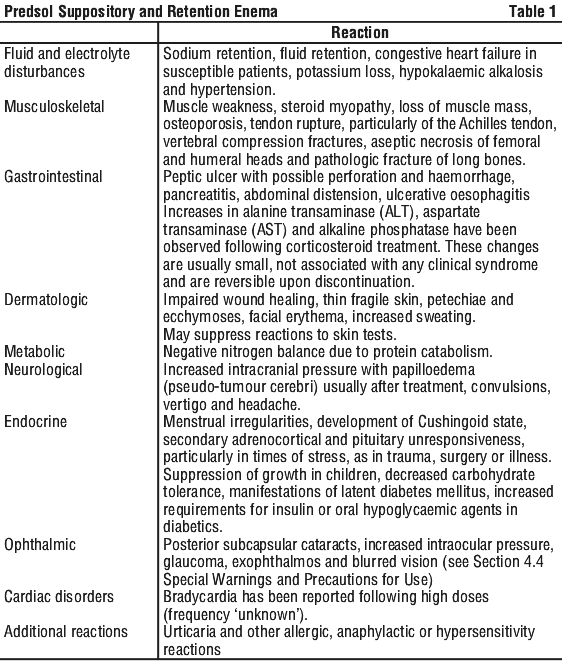
Toxic effects occur with all corticosteroid preparations and their incidence rises steeply if dosage increases much above 8 mg daily of oral prednisolone or its equivalent. See Table 1.
4.9 Overdose
If acute ingestion or accidental poisoning occurs, treatment should be symptomatic and supportive. Excessive chronic exposure results in adverse systemic effects. In such cases the use of rectal corticosteroid should be discontinued, with the consideration to tapering dose. Emesis or activated charcoal is not usually indicated unless multiple ingestions are suspected.
For information on the management of overdose, contact the Poisons Information Centre on 13 11 26 (Australia).
5 Pharmacological Properties
5.1 Pharmacodynamic Properties
Mechanism of action. Prednisolone is a synthetic corticosteroid with glucocorticoid and anti-inflammatory effects. Prednisolone exceeds hydrocortisone in glucocorticoid and anti-inflammatory activity, being about three times more potent on a weight for weight basis than the parent hormone, but is considerably less active than hydrocortisone in mineralocorticoid activity.
Prednisolone, like hydrocortisone, is a potent therapeutic agent influencing the biochemical behaviour of most tissues of the body.
The mechanism of action of corticosteroids is thought to be by control of protein synthesis. Corticosteroids react with receptor proteins in the cytoplasm of sensitive cells in many tissues to form a steroid receptor complex.
Corticosteroids are palliative symptomatic treatment by virtue of their anti-inflammatory effects; they are never curative.
Clinical trials. No data available.
5.2 Pharmacokinetic Properties
Absorption. Greater than 20% of a dose may be systemically absorbed when a corticosteroid like prednisolone is administered by a rectal route; the absorption may increase to 50% if the mucosa is inflamed or damaged.
Distribution. Prednisolone is 90 to 95% bound to plasma proteins.
Metabolism. Prednisolone is conjugated in the liver and to some extent in the kidney.
Excretion. Prednisolone is excreted in the urine as free and conjugated metabolites, together with an appreciable proportion of unchanged prednisolone. Prednisolone crosses the placenta and small amounts are excreted in breast milk.
5.3 Preclinical Safety Data
Genotoxicity. No data available.
Carcinogenicity. No data available.
6 Pharmaceutical Particulars
6.1 List of Excipients
Predsol suppository contains hard fat. There are no preservatives.
Predsol retention enema contains sodium hydroxide, dibasic sodium phosphate heptahydrate, monobasic sodium phosphate, disodium edetate, Nipastat GL75 (preservative) and purified water. Nipastat GL75 contains methyl hydroxybenzoate, ethyl hydroxybenzoate, propyl hydroxybenzoate, butyl hydroxybenzoate and isobutyl hydroxybenzoate.
6.2 Incompatibilities
Incompatibilities were either not assessed or not identified as part of the registration of this medicine.
6.3 Shelf Life
In Australia, information on the shelf life can be found on the public summary of the Australian Register of Therapeutic Goods (ARTG). The expiry date can be found on the packaging.
6.4 Special Precautions for Storage
Store below 25°C. Protect from light.
6.5 Nature and Contents of Container
Predsol suppository: PVC/PVdC/PE blister packs of 10.
Predsol retention enema: Each carton contains seven (7) 100 mL disposable PVC bags with nozzle.
6.6 Special Precautions for Disposal
In Australia, any unused medicine or waste material should be disposed of by taking to your local pharmacy.
6.7 Physicochemical Properties
Prednisolone sodium phosphate is a white or slightly yellow hygroscopic crystalline powder or friable granules, odourless or with a slight odour. Prednisolone sodium phosphate 27 mg is approximately equivalent to 20 mg of prednisolone. It is soluble in 1 in 4 of water, 1 in 13 of methyl alcohol, slightly soluble in chloroform and very slightly soluble in acetone. A 0.5% solution in water has a pH of 7.5 to 9.0. Store in airtight containers. Protect from light.
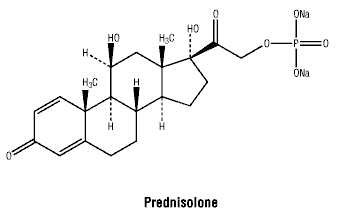
Chemical name: 11β,17,21-trihydroxypregna-1,4-diene- 3,20-dione 21-(disodium phosphate). Molecular formula is C21H27Na2O8P and molecular weight is 484.4.
Chemical structure.
7 Medicine Schedule (Poisons Standard)
Prescription only medicine: S4.
Date of Revision
26 November 2024
Summary Table of Changes

Reasonable care is taken to provide accurate information at the time of creation. This information is not intended as a substitute for medical advice and should not be exclusively relied on to manage or diagnose a medical condition. NPS MedicineWise disclaims all liability (including for negligence) for any loss, damage or injury resulting from reliance on or use of this information. Read our full disclaimer. This website uses cookies. Read our privacy policy.