
Prostin VR
Brand Information
| Brand name | Prostin VR |
| Active ingredient | Alprostadil |
| Schedule | S4 |
Consumer Medicine Information (CMI) leaflet
Please read this leaflet carefully before you start using the Prostin VR.
Summary CMI
Prostin® VR
Consumer Medicine Information (CMI) summary
The full CMI on the next page has more details. If you are worried about this medicine, speak to your child's doctor.
1. Why is my child being treated with Prostin VR?
Prostin VR contains the active ingredient alprostadil. Prostin VR is used to keep a blood vessel called the ductus arteriosis open temporarily after your child is born. This helps some children with certain heart defects, for blood to flow around their body until their condition is treated, as usually the blood vessel closes soon after birth.
For more information, see Section 1. Why is my child being treated with Prostin VR? in the full CMI.
2. What should I know before my child is treated with Prostin VR?
Talk to your doctor if your child has any other medical conditions.
For more information, see Section 2. What should I know before my child is treated with Prostin VR? in the full CMI.
3. How is Prostin VR given?
Prostin VR should only be used under the supervision of healthcare professionals trained in the care of children, usually in the newborn intensive care unit. Prostin VR is diluted and given by continuous infusion (a slow drip) into the bloodstream.
More instructions can be found in Section 3. How is Prostin VR given? in the full CMI.
4. What should I know while my child is treated with Prostin VR?
Your child will be closely monitored, including their breathing, heart rate and blood pressure, during treatment.
For more information, see Section 4. What should I know while my child is treated with Prostin VR? in the full CMI.
5. Are there any side effects?
Tell your child's doctor or nurse straight away if you notice any of these side effects: flushing, pauses in breathing (apnea) or wheezing, fever, slow or fast heart rate, swelling, diarrhoea, fits or convulsions, bruising or uncontrolled bleeding, low volume of urine (wee) or blood in wee or stool (poo), stiffness.
There are other possible side effects that you will not notice that your doctor will monitor closely for.
For more information, see Section 5. Are there any side effects? in the full CMI.
Full CMI
Prostin® VR
Active ingredient(s): alprostadil
Consumer Medicine Information (CMI)
This leaflet provides important information about Prostin VR. You should also speak to your doctor or pharmacist if you would like further information or if you have any concerns or questions about Prostin VR.
Where to find information in this leaflet:
1. Why is my child being treated with Prostin VR?
2. What should I know before my child is treated with Prostin VR?
3. How is Prostin VR given?
4. What should I know while my child is treated with Prostin VR?
5. Are there any side effects?
6. Product details
1. Why is my child being treated with Prostin VR?
Prostin VR contains the active ingredient alprostadil.
Prostin VR is used to keep a blood vessel called the ductus arteriosis open temporarily after your child is born. Normally, this blood vessel closes soon after birth. In some children who are born with heart defects, this blood vessel needs to be kept open for a longer time so that enough blood can reach the rest of the body. Once the child's heart defect is treated, Prostin VR is usually no longer needed and the blood vessel should close.
Your doctor may prescribe Prostin VR for other reasons. Ask your doctor if you have any questions about why Prostin VR has been prescribed for your child.
2. What should I know before my child is treated with Prostin VR?
Some information is given below. Talk to your doctor if you have any concerns or questions about your child's treatment.
Prostin VR should not be given in:
- Children with the following medical conditions:
- a blue appearance of the skin, lips and nails due to poor blood flow through the lungs
- abnormal or unusual blood flow between the lungs and the heart
Check with your doctor if:
- Your child has had any medical conditions, especially the following:
- history of bleeding tendencies
- a breathing problem where the lungs have difficulty holding in air (respiratory distress syndrome).
During treatment, your child should be closely monitored for certain side effects. See additional information under Section 5. Are there any side effects?
3. How is Prostin VR given?
How it is given
- Prostin VR should only be used under the supervision of healthcare professionals trained in the care of children, usually in the newborn intensive care unit.
- Prostin VR is diluted and given by continuous infusion (as a slow drip) into the bloodstream.
- Your child's breathing, heart rate and blood pressure will be closely monitored while Prostin VR is being given.
How much is given
- Your child's doctor will decide what dose will be given.
- Prostin VR Injection is generally not given for more than 2-3 days at a time. It will be given for the shortest time possible to treat your child properly. Treatment courses may be repeated more than once.
- Treatment will usually start within 4 days after birth.
If too much Prostin VR is given (overdose)
Overdose is unlikely as treatment will be given by trained healthcare professional. Your child will be closely monitored during treatment. Your doctor has information on how to recognise and treat an overdose. The possible side effects of overdose are the same as those listed below under 5. Are there any side effects?, and particularly fever and flushing.
4. What should I know while my child is treated with Prostin VR?
Your child will be closely monitored, including their breathing, heart rate and blood pressure, during treatment. Immediately inform your child's doctor or nurse straight away if you notice any of the symptoms listed in 5. Are there any side effects? below.
5. Are there any side effects?
All medicines can have side effects. Your child will be closely monitored for any signs of side effects during treatment of Prostin VR.
See the information below and ask your doctor or nurse if you have any further questions about side effects.
Side effects that you may notice
| Side effects | What to do |
| Inform your child's doctor straight away if you notice any of these side effects. |
Additional side effects that your child's doctor will also monitor for
| Side effects | What to do |
| Your child's doctor will monitor for any of these side effects. |
Tell your doctor or pharmacist if you notice anything else in your child. Other side effects not listed here may occur in some people.
Reporting side effects
After you have received medical advice for any side effects your child experiences, you can report side effects to the Therapeutic Goods Administration online at www.tga.gov.au/safety/reporting-problems. By reporting side effects, you can help provide more information on the safety of this medicine.
6. Product details
This medicine is only available with a doctor's prescription and administered by a healthcare professional only.
What Prostin VR contains
| Active ingredient (main ingredient) | alprostadil |
| Other ingredients (inactive ingredients) | ethanol |
Prostin VR does not contain lactose, sucrose, gluten, tartrazine or any other azo dyes.
What Prostin VR looks like
Prostin VR is a sterile, clear, colourless solution for infusion. It is available in a 500 micrograms/mL strength ampoule. (AUST R 47641)
How is Prostin VR stored
Prostin VR will normally be stored under the correct conditions in the hospital.
Who distributes Prostin VR
Pfizer Australia Pty Ltd
Sydney NSW
Toll Free Number: 1800 675 229
www.pfizermedicalinformation.com.au
This leaflet was prepared in December 2025.
© Pfizer Australia Pty Ltd 2025
®Registered Trademark
Brand Information
| Brand name | Prostin VR |
| Active ingredient | Alprostadil |
| Schedule | S4 |
MIMS Revision Date: 01 July 2025
1 Name of Medicine
Alprostadil (also known as prostaglandin E1).
2 Qualitative and Quantitative Composition
Each 1 mL ampoule contains 500 micrograms alprostadil.
Excipient(s) with known effect. Ethanol.
For the full list of excipients, see Section 6.1 List of Excipients.
3 Pharmaceutical Form
Solution for injection.
Prostin VR is a clear, colourless solution.
4 Clinical Particulars
4.1 Therapeutic Indications
Prostin VR is indicated for palliative, not definitive, therapy to temporarily maintain the patency of the ductus arteriosus until corrective or palliative surgery can be performed in neonates who have congenital heart defects and who depend upon a patent ductus for survival. Such congenital heart defects include pulmonary atresia, pulmonary stenosis, tricuspid atresia, tetralogy of Fallot, interruption of the aortic arch, coarctation of the aorta, mitral atresia, or transposition of the great vessels with or without other defects.
4.2 Dose and Method of Administration
Dosage. Prostin VR should be administered only by medically trained personnel in facilities in which paediatric patients can receive or have access to paediatric intensive care.
Infusion should begin with 0.1 micrograms alprostadil per kilogram of body weight per minute. Doses above 0.1 micrograms per kilogram per minute, do not appear to offer additional benefits. When an effect is achieved, decrease the infusion to the lowest possible dose while maintaining the desired effects.
Method of administration. The preferred route of administration for Prostin VR is by continuous intravenous infusion into a large vein. Alternatively, Prostin VR may be administered through an umbilical artery catheter placed at the ductal opening. Adverse effects have occurred with both routes of administration although the types of reactions are different. The incidences of flushing were higher with intra-arterial than with intravenous administration. See Section 4.8 Adverse Effects (Undesirable Effects).
Dilution instructions. Withdraw the appropriate volume of Prostin VR from the ampoule and dissolve in sterile sodium chloride injection. Dilute to volumes appropriate for the pump delivery system available.
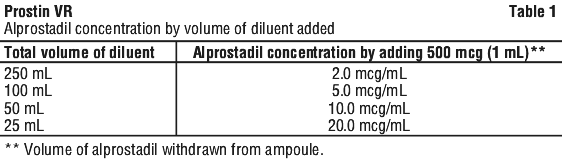
The following alprostadil concentrations (microgram/mL) shown in Table 1 are achieved by adding alprostadil 500 microgram to various volumes of diluent. (Also see Equation 1.)


The infusion solution may be mixed conveniently in a graduated mixing chamber inserted between the IV bottle and the pump.
Change the dosage from 0.1 micrograms per kilogram of body weight per minute to 0.05 micrograms per kilogram of body weight per minute by reducing the pump rate to one-half the original rate.
Neither Prostin VR nor the further diluted solutions contain an antimicrobial agent. To avoid microbial contamination hazards, the diluted infusion solutions should be used prepared fresh every 24 hours and used as soon as possible. Any solution not used within 24 hours should be discarded. See Section 6.4 Special Precautions for Storage.
Product is for single use in one patient only. Discard any residue.
If undiluted Prostin VR comes in direct contact with a plastic container the solution may turn hazy. Should this occur, the solution should be discarded. Also see Section 6.2 Incompatibilities.
4.3 Contraindications
Prostin VR is contraindicated in the following patients.
Cyanotic neonates with persistent fetal circulation.
Neonates with total anomalous pulmonary venous return below the diaphragm; neonates with polysplenia or asplenia in whom pulmonary atresia is combined with anomalous pulmonary venous return which may be obstructed.
Prostin VR may precipitate pulmonary oedema because of increased pulmonary blood flow in these patients.
4.4 Special Warnings and Precautions for Use
Approximately 10% to 12% of neonates treated with Prostin VR experienced apnoea. Apnoea is seen most often in neonates weighing less than 2 kg at birth and usually appears during the first hour of drug infusion. Therefore, Prostin VR should be used where facilities for ventilatory assistance and intubation are immediately available.
Some studies suggest that PGE1 administration causes a weakening effect on the structure of the wall of the ductus arteriosus rendering the vessels prone to laceration. These effects may extend into the wall of the aorta and may cause problems in surgical procedures.
Cortical proliferation of the long bones has followed long-term infusions of alprostadil in infants and dogs. The proliferation in infants regressed after withdrawal of the drug.
The administration of Prostin VR to neonates may result in gastric outlet obstruction secondary to antral hyperplasia. This effect appears to be related to duration of therapy and the cumulative dose of the drug. Neonates receiving Prostin VR at recommended doses for more than 120 hours should be closely monitored for evidence of antral hyperplasia and gastric outlet obstruction. Prostin VR should be infused for the shortest time and at the lowest dose which will produce the desired effects. The risk of long-term infusion of Prostin VR should be weighed against the possible benefits that critically ill infants may derive from its administration.
In general, it is recommended that the preparation should not be administered for more than 2 or 3 days at a time. Since Prostin VR appears most effective within 96 hours after birth, every effort should be made to start infusion of the drug during this period.
Use Prostin VR cautiously in neonates with histories of bleeding tendencies.
Care should be taken to avoid the use of Prostin VR in neonates with respiratory distress syndrome (hyaline membrane disease), which sometimes can be confused with cyanotic heart disease. If full diagnostic facilities are not immediately available, cyanosis (pO2 less than 40 mmHg) and restricted pulmonary blood flow apparent on X-ray are good indicators of congenital heart defects.
In all neonates, intermittently monitor arterial pressure by umbilical artery catheter, auscultation, or with a Doppler transducer. Should arterial pressure fall significantly, decrease the rate of infusion immediately.
This product contains ethanol. Ethanol may cause CNS depressant effects such as somnolence and may alter the effects of other medicines. Co-administration with medicines containing e.g. propylene glycol or ethanol may lead to accumulation of ethanol and induce adverse effects, particularly in young children with low or immature metabolic capacity.
Use in the elderly. No data available.
Paediatric use. Indicated for use in paediatric patients. See Section 4.1 Therapeutic Indications.
Effects on laboratory tests. No data available.
4.5 Interactions with Other Medicines and Other Forms of Interactions
No data available.
4.6 Fertility, Pregnancy and Lactation
Effects on fertility. Long term fertility studies have not been done.
Use in pregnancy. No data available.
Use in lactation. Alprostadil should not be used in lactating women.
4.7 Effects on Ability to Drive and Use Machines
No data available.
4.8 Adverse Effects (Undesirable Effects)
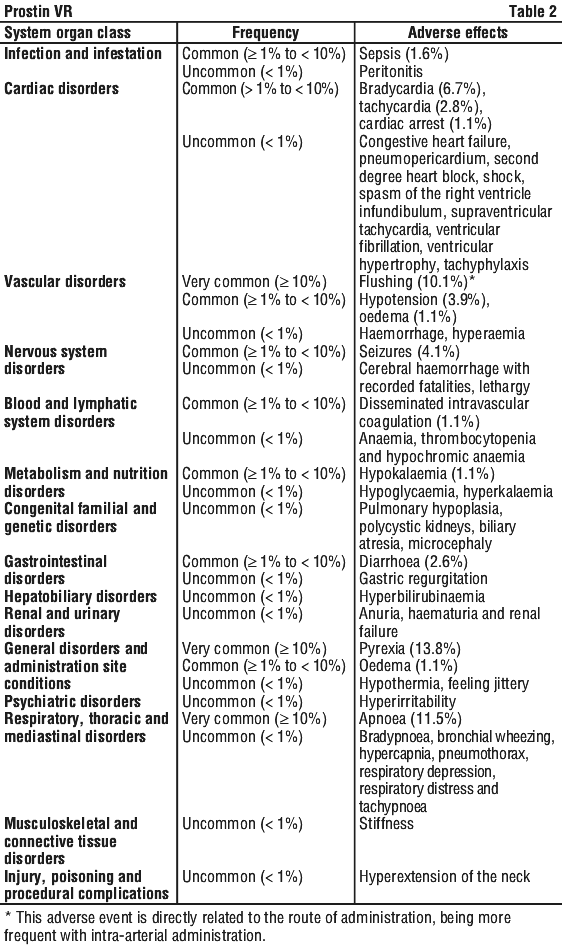
The following undesirable effects have been observed and reported during treatment with alprostadil. See Table 2.
Cortical proliferation of the long bones. Following long-term infusion of Prostin VR, cortical proliferation of long bones has been reported.
Reporting suspected adverse effects. Reporting suspected adverse reactions after registration of the medicinal product is important. It allows continued monitoring of the benefit-risk balance of the medicinal product. Healthcare professionals are asked to report any suspected adverse reactions at www.tga.gov.au/safety/reporting-problems.
4.9 Overdose
Overdose data is limited. Apnoea, bradycardia, pyrexia, hypotension and flushing may be signs of drug overdose. If apnoea or bradycardia occur, the infusion should be discontinued and the appropriate medical treatment initiated.
There is no antidote for alprostadil overdose. Treatment is symptomatic and supportive. Support respiratory and cardiac function. Monitor pulmonary function, vital signs, ECG and pulse oximetry, and fluid and electrolyte status in patients with significant diarrhoea.
Caution should be used if the infusion is restarted. If pyrexia or hypotension occur, the infusion rate should be reduced until these symptoms subside. Flushing is usually attributed to incorrect intra-arterial catheter placement and is usually alleviated by repositioning the tip of the catheter.
For information on the management of overdose, contact the Poisons Information Centre on 13 11 26 (Australia).
5 Pharmacological Properties
5.1 Pharmacodynamic Properties
Mechanism of action. The mechanism of action of alprostadil is unknown but an active role for prostaglandin in maintaining ductus patency during fetal life is supported by the presence of biosynthetic pathways in the ductus, the constrictor effect of prostaglandin synthetase inhibitors and the relaxant action of PGE2 and related agents.
Alprostadil relaxes the ductus arteriosus in early postnatal life and supports its patency when continuously infused intravenously or intra-arterially in neonates with congenital heart defects who depend on a patent ductus for survival. The desired pharmacological effects are obtained with an initial dosage of 0.1 micrograms per kilogram per minute. Higher doses do not offer added benefit. Postnatally, the ductus arteriosus rapidly loses its responsiveness to alprostadil and consequently alprostadil appears to be most effective within 96 hours after birth, particularly when the pre-infusion arterial pO2 is less than 40 mmHg.
In laboratory animals and humans, alprostadil can lower blood pressure, probably by relaxing the smooth muscle of the cardiovascular system. Alprostadil can elevate body temperature and this effect has been observed in some neonates receiving the drug.
Clinical trials. No data available.
5.2 Pharmacokinetic Properties
Distribution. Intravenously administered alprostadil is rapidly distributed and metabolised and the pulmonary vascular bed removes about 68% of the drug in a single pass. Alprostadil is weakly bound to serum albumin.
Metabolism. The estimated half-life of alprostadil is 5 to 10 minutes.
Excretion. The major route of elimination of alprostadil and its metabolites is via the kidneys.
5.3 Preclinical Safety Data
Genotoxicity. Testicular atrophy and/or degeneration has been observed in rats receiving high doses (10 mg/day for 35 days or longer) of PGE1. The relevance of this to the human neonate is not known.
Carcinogenicity. Long-term carcinogenicity studies have not been done. No potential for mutagenic activity was revealed in assays of gene mutation in bacterial and mammalian cells, or in DNA damage assays; however, alprostadil has not been tested in assays for chromosomal damage.
6 Pharmaceutical Particulars
6.1 List of Excipients
Ethanol.
6.2 Incompatibilities
If undiluted Prostin VR comes in direct contact with a plastic container, plasticisers are leached from the sidewalls and the solution may turn hazy. Should this occur the solution should be discarded. See Section 6.6 Special Precautions for Disposal.
In the absence of compatibility studies, this medicinal product must not be mixed with other medicinal products.
6.3 Shelf Life
In Australia, information on the shelf life can be found on the public summary of the Australian Register of Therapeutic Goods (ARTG). The expiry date can be found on the packaging.
6.4 Special Precautions for Storage
Store at 2°C to 8°C. (Refrigerate. Do not freeze).
Neither Prostin VR nor the further diluted solutions contain an antimicrobial agent. From a microbiological point of view, fresh infusion solutions should be prepared every 24 hours and the medicinal product should be used immediately. Any solution more than 24 hours old should be discarded.
6.5 Nature and Contents of Container
Prostin VR is available in 1 mL type I clear glass ampoules. Supplied in packs of 5 x 1 mL ampoules.
6.6 Special Precautions for Disposal
In Australia, any unused medicine or waste material should be disposed of in accordance with local requirements.
6.7 Physicochemical Properties
Chemical structure.
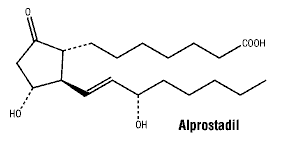
It is a white to off white crystalline powder with a melting point between 110°C and 116°C. Its solubility at 35°C is 8,000 micrograms per 100 mL double distilled water.
CAS number. 745-65-3.
7 Medicine Schedule (Poisons Standard)
Prescription only medicine (S4).
Date of First Approval
14 January 1994
Date of Revision
04 June 2025
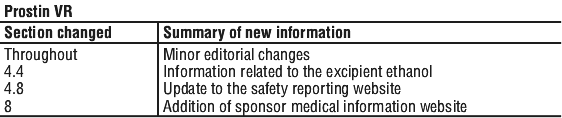
Summary Table of Changes
Reasonable care is taken to provide accurate information at the time of creation. This information is not intended as a substitute for medical advice and should not be exclusively relied on to manage or diagnose a medical condition. The Australian Commission on Safety and Quality in Health Care disclaims all liability (including for negligence) for any loss, damage, injury or any other negative effects resulting from reliance on or use of this information. Read our full disclaimer. This website uses cookies. Read our privacy policy.