
Resonium A
Brand Information
| Brand name | Resonium A |
| Active ingredient | Sodium polystyrene sulfonate |
| Schedule | S4 |
Consumer Medicine Information (CMI) leaflet
Please read this leaflet carefully before you start using the Resonium A.
Summary CMI
Resonium A®
Consumer Medicine Information (CMI) summary
The full CMI on the next page has more details. If you are worried about using this medicine, speak to your doctor or pharmacist.
1. Why am I using Resonium A?
Resonium A contains the active ingredient sodium polystyrene sulfonate. Resonium A is used to help remove excessive amounts of potassium from the blood. For more information, see Section 1. Why am I using Resonium A? in the full CMI.
2. What should I know before I use Resonium A?
Do not use if you have ever had an allergic reaction to Resonium A or any of the ingredients listed at the end of the CMI, have a bowel obstruction, or have low levels of potassium. Talk to your doctor if you have any other medical conditions, take any other medicines, or are pregnant or plan to become pregnant or are breastfeeding. For more information, see Section 2. What should I know before I use Resonium A? in the full CMI.
3. What if I am taking other medicines?
Some medicines may interfere with Resonium A and affect how it works. A list of these medicines is in Section 3. What if I am taking other medicines? in the full CMI.
4. How do I use Resonium A?
- Resonium A can be given by mouth or rectally (via the back passage).
- The usual oral doses are 15 g three to four times daily for adults, and 1 g/kg of body weight in divided doses for children. Take Resonium A at least 3 hours before or 3 hours after other oral medications.
- The usual rectal (back passage) doses are 30 - 50 g in 150 mL of water or 10% dextrose in water, as a retention enema for adults, with lower dosages usually used for infants and children. Your pharmacist will make this up. For infants and children, this enema will usually be given by a doctor or nurse.
More instructions can be found in Section 4. How do I use Resonium A? in the full CMI.
5. What should I know while using Resonium A?
| Things you should do |
|
| Things you should not do |
|
| Looking after your medicine |
|
For more information, see Section 5. What should I know while using Resonium A? in the full CMI.
6. Are there any side effects?
Less serious side effects include nausea and vomiting, constipation, diarrhoea, muscle cramps, loss of appetite and gastric irritation. Speak to your doctor if you have any of these less serious side effects and they worry you. Serious side effects include swelling of the face, lips, mouth or throat, which may cause difficulty in swallowing or breathing, hives, fainting, severe stomach pain, rectal pain, bloating, severe constipation, severe nausea and vomiting, black, bloody or tarry stools, coughing up blood, or vomit that looks like coffee grounds. Call your doctor straight away, or go straight to the Emergency Department at your nearest hospital if you notice any of these serious side effects. For more information, including what to do if you have any side effects, see Section 6. Are there any side effects? in the full CMI.
Full CMI
Resonium A®
Active ingredient: sodium polystyrene sulfonate
Consumer Medicine Information (CMI)
This leaflet provides important information about using Resonium A. You should also speak to your doctor or pharmacist if you would like further information or if you have any concerns or questions about using Resonium A.
Where to find information in this leaflet:
1. Why am I using Resonium A?
2. What should I know before I use Resonium A?
3. What if I am taking other medicines?
4. How do I use Resonium A?
5. What should I know while using Resonium A?
6. Are there any side effects?
7. Product details
1. Why am I using Resonium A?
Resonium A contains the active ingredient sodium polystyrene sulfonate. This sodium polystyrene sulfonate contains sodium atoms. This sodium is swapped for potassium in the body, particularly in the large intestine. Resonium A does not enter the bloodstream from the intestine. It is passed (with the potassium ions) with the faeces.
Resonium A is used to help remove excessive amounts of potassium from the blood.
2. What should I know before I use Resonium A?
Warnings
Do not use Resonium A if:
- you are allergic to sodium polystyrene sulfonate, or any of the ingredients listed at the end of this leaflet.
Always check the ingredients to make sure you can use this medicine. - a bowel obstruction
- low levels of potassium (less than 5 mmol/L)
Check with your doctor if you:
- have any other medical conditions, especially the following:
- any heart conditions
- high blood pressure
- problems with your bowel or constipation
- delayed gastric emptying
- abnormal bowel movements (after surgery or drug usage), as these may cause a variety of disorders including colonic distension and severe constipation (bowel movements occur less often than usual or consist of hard, dry stools that are often painful or difficult to pass)
- kidney problems
- oedema (swelling with fluid) - plan to have surgery
- take any medicines for any other condition
- taking a sweetener called sorbitol (a sugar-free sweetener used to sweeten food). This is because taking Resonium A alone or taking sorbitol at the same time can cause narrowing of the gut wall (gastrointestinal stenosis) and reduced blood flow to the gut wall (intestinal ischemia) causing severe damage to your gut (necrosis and perforation). You must not take any sorbitol whilst using Resonium A.
During treatment, you may be at risk of developing certain side effects. It is important you understand these risks and how to monitor for them. See additional information under Section 6. Are there any side effects?
Pregnancy and breastfeeding
Do not take it if you are pregnant or intend to become pregnant. Like most medicines of this kind, Resonium A is not recommended to be used during pregnancy.
Do not take it if you are breastfeeding or intend to breastfeed. It is not known whether Resonium A passes into breast milk.
Newborn babies
- Do not give oral Resonium A to newborn babies. Orally administered Resonium A has caused bowel obstruction in newborns.
- Resonium A should only be given rectally to newborns.
3. What if I am taking other medicines?
Tell your doctor or pharmacist if you are taking any other medicines, including any medicines, vitamins or supplements that you buy without a prescription from your pharmacy, supermarket or health food shop.
Some medicines may interfere with Resonium A and affect how it works. These include:
- sorbitol
- digoxin, a medicine used for heart problems
- laxatives
- thyroxine, a medicine for hypothyroidism
- lithium, a medicine which can be used to treat bipolar disorder
- antacids containing aluminium or magnesium
These medicines may be affected by Resonium A, or may affect how well it works. You may need to use different amounts of your medicine, or take different medicines. Your doctor or pharmacist will advise you.
Take Resonium A at least 3 hours before or 3 hours after other oral medications.
Check with your doctor or pharmacist if you are not sure about what medicines, vitamins or supplements you are taking and if these affect Resonium A.
4. How do I use Resonium A?
Resonium A can be given by mouth or rectally (via the back passage).
How much to take / use
- The amount of Resonium A you need to take will depend upon the amount of potassium in your blood.
- Your doctor will decide exactly how much Resonium A you need to take.
- Follow the instructions provided and use Resonium A until your doctor tells you to stop.
The usual doses are:
Oral
Adults:
- 15 g three to four times daily.
Children:
- 1 g/kg of body weight in divided doses.
Resonium A powder is usually given by mouth as a suspension in a small amount of water (3-4 mL per gram of powder), or it may be mixed with some sweetened liquid (but not fruit juices, which contain potassium). For children it is preferably given with a drink (not a fruit juice because of the high potassium content) or a little jam or honey.
Do not mix Resonium A with fruit juices or sorbitol.
Take Resonium A at least 3 hours before or 3 hours after other oral medications.
If you have been diagnosed with delayed gastric emptying, ask your doctor for instructions on when to take Resonium A.
Once the mixture has been prepared it should be used straight away. If it needs to be stored, it should be stored for no longer than 24 hours. Once reconstituted, Resonium A is a cream to light brown coloured suspension in which small white particles may be visible.
Rectal (via the back passage)
Adults:
- 30 - 50 g in 150 mL of water or 10% dextrose in water, as a retention enema. Your pharmacist will make this up.
Infants & children:
- Lower dosages are usually used.
- You will usually be given the enema by a doctor or nurse.
If you forget to take / use Resonium A
Do not try to make up for missed doses by taking more than one dose at a time. This may increase the chance of getting an unwanted side effect.
If it is almost time for your next dose, skip the dose you missed and take your next dose when you are meant to.
Do not take a double dose to make up for the dose you missed.
If you are not sure what to do, ask your doctor or pharmacist.
If you use too much Resonium A
If you think that you have used too much Resonium A, you may need urgent medical attention.
You should immediately:
- phone the Poisons Information Centre
((by calling 13 11 26 in Australia or 0800 764 766 in New Zealand)), or - contact your doctor, or
- go to the Emergency Department at your nearest hospital.
You should do this even if there are no signs of discomfort or poisoning. You may need urgent medical attention.
Large doses of Resonium A may cause serious potassium ion deficiency. If you take too much you may feel irritable, confused, have muscle weakness, have diminished reflexes or paralysis.
5. What should I know while using Resonium A?
Things you should do
Take Resonium A exactly as prescribed.
Be sure to keep all of your appointments with your doctor so that your progress can be checked.
Your doctor will regularly check the potassium, calcium and magnesium levels in your blood. The doctor may change the dose or stop the Resonium A depending on what the results of these blood tests are.
If you are about to be started on any new medicine, tell your doctor or pharmacist that you are taking Resonium A.
If you plan to have surgery that needs a general anaesthetic, tell your doctor or dentist that you are taking this medicine.
Call your doctor straight away if you:
- If you become pregnant while you are taking this medicine, stop taking it and tell your doctor or pharmacist immediately.
Remind any doctor, dentist or pharmacist you visit that you are using Resonium A.
Things you should not do
- Do not take more than the recommended dose unless your doctor tells you to.
- Do not give this medicine to anyone else, even if they have the same condition as you.
- Do not use this medicine to treat any other complaints unless your doctor tells you to.
- Do not stop taking Resonium A, or lower the dosage, without checking with your doctor.
Looking after your medicine
- Keep Resonium A in a cool, dry place where the temperature stays below 30°C.
Follow the instructions in the carton on how to take care of your medicine properly.
Store it in a cool dry place away from moisture, heat or sunlight; for example, do not store it:
- in the bathroom or near a sink, or
- in the car or on window sills.
Keep it where young children cannot reach it.
Getting rid of any unwanted medicine
If you no longer need to use this medicine or it is out of date, take it to any pharmacy for safe disposal.
Do not use this medicine after the expiry date.
6. Are there any side effects?
All medicines can have side effects. If you do experience any side effects, most of them are minor and temporary. However, some side effects may need medical attention.
See the information below and, if you need to, ask your doctor or pharmacist if you have any further questions about side effects.
Less serious side effects
| Less serious side effects | What to do |
Gastrointestinal or gut-related:
| Speak to your doctor if you have any of these less serious side effects and they worry you. These are mild side effects of this medicine and are usually short-lived. |
Serious side effects
| Serious side effects | What to do |
Allergic reaction-related:
| Call your doctor straight away, or go straight to the Emergency Department at your nearest hospital if you notice any of these serious side effects. If you have them, you may have had a serious allergic reaction to Resonium A. You may need urgent medical attention or hospitalisation. These side effects are very rare. |
Tell your doctor or pharmacist if you notice anything else that may be making you feel unwell.
Other side effects not listed here may occur in some people.
Reporting side effects
After you have received medical advice for any side effects you experience, you can report side effects to the Therapeutic Goods Administration online at www.tga.gov.au/reporting-problems in Australia or in New Zealand at pophealth.my.site.com/carmreportnz/s/.
By reporting side effects, you can help provide more information on the safety of this medicine.
Always make sure you speak to your doctor or pharmacist before you decide to stop taking any of your medicines.
7. Product details
This medicine is only available with a doctor's prescription.
What Resonium A contains
| Active ingredient (main ingredient) | Each 100 g contains 99.934 g of sodium polystyrene sulfonate |
| Other ingredients (inactive ingredients) | vanillin saccharin |
| Potential allergens | Resonium A does not contain gluten, sucrose, lactose, tartrazine or any other azo dyes. |
Do not take this medicine if you are allergic to any of these ingredients.
What Resonium A looks like
Resonium A is a buff-coloured powder with a vanilla odour.
Resonium A comes in a container containing 454 g of powder. The container also contains a plastic spoon which, when filled level measures 15 g of powder (Aust R 15497).
Who distributes Resonium A
Distributed in Australia by:
sanofi-aventis australia pty ltd
12-24 Talavera Road
Macquarie Park NSW 2113
Freecall No: 1800 818 806
Email: medinfo.australia@sanofi.com
Distributed in New Zealand by:
Pharmacy Retailing (NZ) Ltd t/a Healthcare Logistics
PO Box 62027
Sylvia Park Auckland 1644
Freecall: 0800 283 684
Email: medinfo.australia@sanofi.com
This leaflet was prepared in October 2024.
resonium-a-ccdsv7-cmiv5-16oct24
Brand Information
| Brand name | Resonium A |
| Active ingredient | Sodium polystyrene sulfonate |
| Schedule | S4 |
MIMS Revision Date: 01 September 2024
1 Name of Medicine
Sodium polystyrene sulfonate.
2 Qualitative and Quantitative Composition
Resonium A contains 99.93% sodium polystyrene sulfonate, saccharin sodium and vanillin.
The sodium content is approximately 4.1 mmol (100 mg) per gram of Resonium A.
Excipients with known effect. Saccharin.
3 Pharmaceutical Form
Buff coloured powder.
4 Clinical Particulars
4.1 Therapeutic Indications
Treatment of hyperkalaemia.
4.2 Dose and Method of Administration
Resonium A is for oral or rectal administration only. The dosage recommendations detailed below are a guide only; the precise requirements should be determined on the basis of regular clinical and serum electrolyte monitoring.
Adults. Oral. 15 g three to four times daily. Each dose should be given as a suspension in a small amount of water or, for greater palatability, in syrup (but not fruit juices, which contain potassium), in the ratio of 3-4 mL per gram of resin.
Administer at least 3 hours before or 3 hours after other oral medications. For patients with gastroparesis, a 6-hour separation should be considered (see Section 4.4 Special Warnings and Precautions for Use; Section 4.5 Interactions with Other Medicines and Other Forms of Interactions).
Rectal. In cases where vomiting or upper gastrointestinal problems, including paralytic ileus, may make oral administration difficult, Resonium A may be given rectally in a suspension of 30 g to 50 g resin in 150 mL water or 10% dextrose in water, given as a daily retention enema. In the initial stages, administration by this route as well as orally may help to achieve a more rapid lowering of the serum potassium level.
The enema should if possible be retained for at least nine hours, following which the colon should be irrigated to remove the resin. If both routes are used at first, it is probably unnecessary to continue rectal administration once the oral resin has reached the rectum.
Infants and children. Oral. Lower doses should be employed using, as a guide, a rate of 1 mmol potassium per gram of resin as the basis for calculation. An appropriate initial dose is 1 g/kg body weight daily in divided doses, in acute hyperkalaemia. For maintenance therapy, dosage may be reduced to 0.5 g/kg body weight daily in divided doses. Each dose should be given as a suspension in a small amount of water or, for greater palatability, in syrup (but not fruit juices, which contain potassium), in the ratio of 3-4 mL per gram of resin.
Rectal. When the resin cannot be given by mouth, it may be given rectally using a dose at least as great as that which would have been given orally, diluted in the same ratio as described for adults. Following retention of the enema, the colon should be irrigated to ensure adequate removal of the resin.
In the initial stages, administration by this route as well as orally may help to achieve a more rapid lowering of the serum potassium level. If both routes are used at first, it is probably unnecessary to continue rectal administration once the oral resin has reached the rectum.
4.3 Contraindications
History of hypersensitivity to polystyrene sulfonate resins.
Serum potassium levels less than 5 mmol/L.
Obstructive bowel disease.
Resonium A should not be administered orally to neonates and is contraindicated in neonates with reduced gut motility (e.g. post-operatively or drug induced).
4.4 Special Warnings and Precautions for Use
Due to the risk of severe gastrointestinal disorders, the use of polystyrene sulfonate is not recommended in patients with compromised gastrointestinal motility (including immediate post-surgery or drug-induced).
Serious potassium deficiency can result from Resonium A therapy. It is imperative to determine serum potassium levels at least daily and more frequently when indicated, especially in patients on digoxin. Therapy should be discontinued when serum potassium falls below 5 mmol/L.
Caution is advised when Resonium A is administered to patients in whom an increase in sodium load may be detrimental (i.e. severe congestive heart failure, severe hypertension, renal damage or marked oedema). In such instances, adequate clinical and biochemical control is essential.
Like all cation-exchange resins, Resonium A is not totally selective for potassium in its actions and small amounts of other cations such as magnesium and calcium can also be lost during treatment. Accordingly, patients receiving Resonium A should be monitored for all applicable electrolyte disturbances.
In the event of clinically significant constipation, treatment with the resin should be discontinued until normal bowel habit is resumed. Magnesium containing laxatives should not be used (see Section 4.5 Interactions with Other Medicines and Other Forms of Interactions).
With oral administration, care should be taken to avoid aspiration, which may lead to bronchopulmonary complications.
Gastrointestinal stenosis, intestinal ischaemia and its complications (necrosis and perforation), some of them fatal, were reported in patients treated with polystyrene sulfonate alone or in combination with sorbitol. Concomitant use of sorbitol with sodium polystyrene sulfonate is not recommended (see Section 4.5 Interactions with Other Medicines and Other Forms of Interactions; Section 4.8 Adverse Effects (Undesirable Effects)).
Since effective lowering of serum potassium with Resonium A may take hours to days, treatment with this drug alone may be insufficient to rapidly correct severe hyperkalaemia, often associated with states of rapid tissue breakdown e.g. burns or trauma. In such instances, some form of dialysis may be imperative. If hyperkalaemia is so marked as to constitute a medical emergency, immediate treatment with intravenous glucose and insulin or intravenous sodium bicarbonate may be necessary as a temporary measure to lower serum potassium while other long-term potassium lowering therapy is being prepared.
Binding to other orally administered medications. Resonium A may bind to orally administered medications, which could decrease their gastrointestinal absorption and efficacy. Avoid co-administration of Resonium A with other orally administered medications. Administer Resonium A at least 3 hours before or 3 hours after other oral medications. For patients with gastroparesis, a 6-hour separation should be considered (see Section 4.4 Special Warnings and Precautions for Use; Section 4.5 Interactions with Other Medicines and Other Forms of Interactions).
Use in the elderly. No data available.
Paediatric use. In neonates, Resonium A should not be given by the oral route.
In children and neonates particular care should be observed with rectal administration, as excessive dosage or inadequate dilution could result in impaction of the resin.
Due to the risk of digestive haemorrhage, colic necrosis or sodium overload, particular care should be observed in premature infants or low birth weight infants.
Effects on laboratory tests. No data available.
4.5 Interactions with Other Medicines and Other Forms of Interactions
Concomitant use not recommended. Resonium A has the potential to bind to other orally administered medications. Binding of Resonium A to other oral medications could cause decrease in their gastrointestinal absorption and efficacy. Dosing separation of Resonium A from other orally administered medications is recommended (see Section 4.2 Dose and Method of Administration).
Concomitant use of sorbitol with sodium polystyrene sulfonate is not recommended due to cases of intestinal necrosis, and other serious gastrointestinal adverse reactions, which may be fatal (see Section 4.4 Special Warnings and Precautions for Use; Section 4.8 Adverse Effects (Undesirable Effects)).
To be used with caution. Cation donating agents may reduce the effectiveness of the resin in binding potassium.
Non-absorbable cation containing antacids and laxatives (such as magnesium hydroxide); and concomitant oral use of cation exchange resins has been reported to cause systemic alkalosis.
Aluminium hydroxide. Intestinal obstruction due to concretions of aluminium hydroxide has been reported when aluminium hydroxide was combined with the resin.
Digoxin. The toxic effects of digoxin on the heart, especially various ventricular arrhythmias and AV nodal depression/dissociation are likely to be exaggerated if hypokalaemia is allowed to develop.
Lithium. Possible decrease of lithium absorption.
Thyroxine. Possible decrease of thyroxine absorption.
4.6 Fertility, Pregnancy and Lactation
Effects on fertility. No data available.
Use in pregnancy. (Category B2)
No data are available regarding the use of polystyrene sulfonate resins in pregnancy. The administration of Resonium A in pregnancy is not advised unless the potential benefits outweigh any potential risks.
Use in lactation. No data are available regarding the use of polystyrene sulfonate resins in lactation. The administration of Resonium A during breast-feeding, therefore, is not advised unless the potential benefits outweigh any potential risks.
4.7 Effects on Ability to Drive and Use Machines
The effects of this medicine on a person's ability to drive and use machines were not assessed as part of its registration.
4.8 Adverse Effects (Undesirable Effects)
Metabolism and nutrition disorders. In accordance with its pharmacological actions, the resin may give rise to sodium retention, hypokalaemia and hypocalcaemia and their related clinical manifestations (see Section 4.4 Special Warnings and Precautions for Use). Cases of hypomagnesemia, have been reported.
Respiratory, thoracic and mediastinal disorders. Some cases of acute bronchitis and/or bronchopneumonia associated with inhalation of particles of sodium polystyrene sulfonate have been described.
Gastrointestinal disorders. Gastric irritation, anorexia, constipation, nausea, vomiting and occasionally diarrhoea may also occur. Large doses in elderly individuals may cause faecal impaction. These effects may be obviated through usage of the resin in enemas. Faecal impaction following rectal administration, particularly in children, and gastrointestinal concretions (bezoars) following oral administration have been reported.
Gastrointestinal stenosis and intestinal obstruction have also been reported possibly due to co-existing pathology or inadequate dilution of the resin.
Gastrointestinal ischemia, ischemic colitis, gastrointestinal tract ulceration or necrosis which could lead to intestinal perforation have been reported following administration of sodium polystyrene sulfonate, which is sometimes fatal (see Section 4.4 Special Warnings and Precautions for Use).
Reporting suspected adverse reactions. Reporting suspected adverse reactions after registration of the medicinal product is important. It allows continued monitoring of the benefit-risk balance of the medicinal product. Healthcare professionals are asked to report any suspected adverse reactions at www.tga.gov.au/reporting-problems.
4.9 Overdose
Biochemical disturbances resulting from overdosage may give rise to clinical signs and symptoms of hypokalaemia, including irritability, confusion, delayed thought processes, muscle weakness, hyporeflexia or paralysis. Apnoea may be a serious consequence of this progression. ECG changes may be consistent with hypokalaemia; cardiac arrhythmia may occur. Hypocalcaemic tetany may occur. Appropriate measures should be taken to monitor and correct serum electrolytes, and the resin should be removed from the alimentary tract by appropriate use of laxatives or enemas.
For information on the management of overdose, contact the Poisons Information Centre on 13 11 26 (Australia).
5 Pharmacological Properties
5.1 Pharmacodynamic Properties
Pharmacotherapeutic group: Drugs for treatment of hyperkalemia and hyperphosphatemia, ATC code: V03AE01.
Mechanism of action. It has an in vitro exchange capacity of approximately 3.1 mmol of potassium per gram of resin. However, in vivo the actual amount of potassium bound is closer to 1 mmol of potassium per gram.
Clinical trials. No data available.
5.2 Pharmacokinetic Properties
Absorption. Sodium polystyrene sulfonate is not absorbed from the gastrointestinal tract.
Distribution. Sodium polystyrene sulfonate removes potassium from the body by exchanging it within the gut for sodium.
Metabolism. No data available.
Excretion. For the most part, this action occurs in the large intestine, which excretes potassium to a greater degree than does the small intestine.
The efficiency of potassium exchange is unpredictable and variable.
5.3 Preclinical Safety Data
Genotoxicity. No data available.
Carcinogenicity. No data available.
6 Pharmaceutical Particulars
6.1 List of Excipients
See Section 2 Qualitative and Quantitative Composition.
6.2 Incompatibilities
Incompatibilities were either not assessed or not identified as part of the registration of this medicine.
6.3 Shelf Life
In Australia, information on the shelf life can be found on the public summary of the Australian Register of Therapeutic Goods (ARTG). The expiry date can be found on the packaging.
6.4 Special Precautions for Storage
Store below 30°C. Store in a dry place.
Suspensions of the resin should be freshly prepared and not stored beyond 24 hours. Once reconstituted, Resonium A is a cream to light brown coloured suspension in which small white particulates may remain visible.
6.5 Nature and Contents of Container
High density polyethylene (HDPE) bottle with cap composed of low and density polyethylene (LDPE/HDPE) containing 454 g of sodium polystyrene sulfonate powder and a HDPE dosing spoon.
6.6 Special Precautions for Disposal
In Australia, any unused medicine or waste material should be disposed of by taking to your local pharmacy.
6.7 Physicochemical Properties
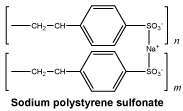
Sodium polystyrene sulfonate is a cation exchange resin prepared in the sodium phase.
Chemical structure.
7 Medicine Schedule (Poisons Standard)
Schedule 4 (Prescription Only Medicine).
Date of First Approval
10 September 1991
Date of Revision
23 July 2024
Summary Table of Changes

Reasonable care is taken to provide accurate information at the time of creation. This information is not intended as a substitute for medical advice and should not be exclusively relied on to manage or diagnose a medical condition. The Australian Commission on Safety and Quality in Health Care disclaims all liability (including for negligence) for any loss, damage, injury or any other negative effects resulting from reliance on or use of this information. Read our full disclaimer. This website uses cookies. Read our privacy policy.